



SETD8/KMT5A
SETD8, also known as KMT5A, is the sole mammalian lysine methyltransferase that monomethylates histone H4 at lysine 20 (H4K20me1)[1][2]. This modification regulates chromatin compaction, transcription of oncogenes and tumor suppressors, and DNA double-strand break repair pathway choice[3][2]. SETD8 additionally methylates non-histone proteins including p53 and proliferating cell nuclear antigen (PCNA), modulating cell cycle progression, apoptosis, and DNA replication[1][4][5]. In cancer models, SETD8 overexpression correlates with enhanced proliferation, invasion, and metastasis, as observed in hepatocellular carcinoma, triple-negative breast cancer, and neuroblastoma[6][7][4]. Mechanistically, SETD8-mediated methylation of SNIP1 and p53 attenuates tumor suppressive signaling, promoting oncogenesis and chemoresistance[7][5]. Compared with other lysine methyltransferases, SETD8 uniquely targets H4K20 and specific non-histone lysines, establishing functional specificity over isoforms[3][1]. Pharmacological inhibition using selective compounds such as UNC0379, SGSS05-NS3, and MS2928 restores p53 activity, suppresses tumor growth, and enhances cytotoxic T-cell responses in xenograft and preclinical models[4][8][9]. These inhibitors exhibit isoform selectivity, covalent binding, and robust cellular efficacy, enabling their use in functional studies of SETD8-dependent pathways and therapeutic explorations[9][8]. Overall, SETD8 is a critical epigenetic regulator of chromatin state, DNA repair, and tumorigenic signaling, making it a validated target for experimental and preclinical cancer research[6][3][1].
References:
- [1]. Suzaki N, et al. Impact of SETD8/KMT5A overexpression on hepatocellular carcinoma progression and prognosis. PLoS One. 2026 Apr 13;21(4):e0337503. [Content Brief]
- [2]. Della Monica R, et al. Multiple functions of the lysine methyltransferase KMT5a in cancer: potential targets for innovative therapies. Clin Epigenetics. 2025 Sep 29;17(1):152. [Content Brief]
- [3]. Milite C, et al. The emerging role of lysine methyltransferase SETD8 in human diseases. Clin Epigenetics. 2016 Sep 22;8:102. [Content Brief]
- [4]. Liu Z, et al. SGSS05-NS3, a covalent SETD8 inhibitor that activates p53 pathway in neuroblastoma. J Exp Clin Cancer Res. 2025 Dec 19;45(1):5. [Content Brief]
- [5]. Yu B, et al. KMT5A-methylated SNIP1 promotes triple-negative breast cancer metastasis by activating YAP signaling. Nat Commun. 2022 Apr 21;13(1):2192. [Content Brief]
- [6]. Veschi V, et al. C1Q+ TPP1+ macrophages promote colon cancer progression through SETD8-driven p53 methylation. Mol Cancer. 2025 Mar 31;24(1):102. [Content Brief]
- [7]. Tian X, et al. Genome editing or small molecule inhibition of KMT5A in CAR-T cells enhances antitumor immunity. J Immunother Cancer. 2025 Sep 12;13(9):e012160. [Content Brief]
- [8]. Xu L, et al. Roles for the methyltransferase SETD8 in DNA damage repair. Clin Epigenetics. 2022 Mar 4;14(1):34. [Content Brief]
- [9]. Chen H, et al. Discovery of a Potent, Selective, and In Vivo Efficacious Covalent Inhibitor for Lysine Methyltransferase SETD8. J Med Chem. 2026 Feb 26;69(4):4255-4269. [Content Brief]
All Product Categories
-
SETD8/KMT5A Related Products (5)
Related Products (5)

-
UNC0379
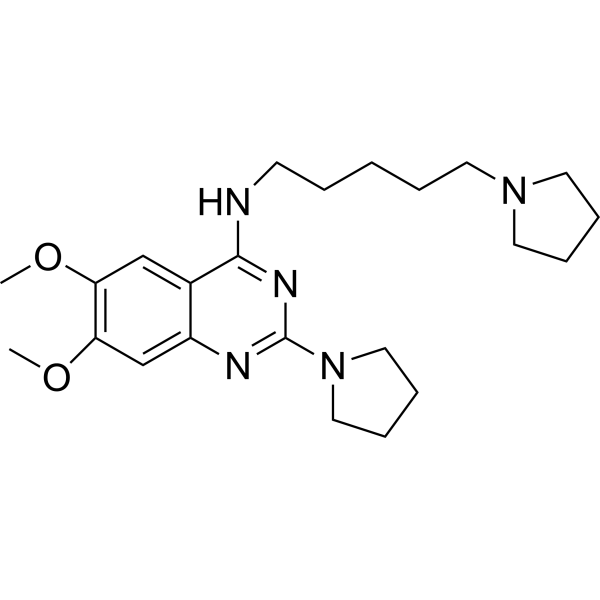 0 ImagesUNC0379 is a selective, substrate-competitive inhibitor of lysine methyltransferase SETD8 (KMT5A) with an IC50 of 7.3 μM, KD value of 18.3 μM. UNC0379 can be used in the research of inflammation and cancers, such as pulmonary fibrosis, ovarian cancer, neuroblastoma.
-
MS4322
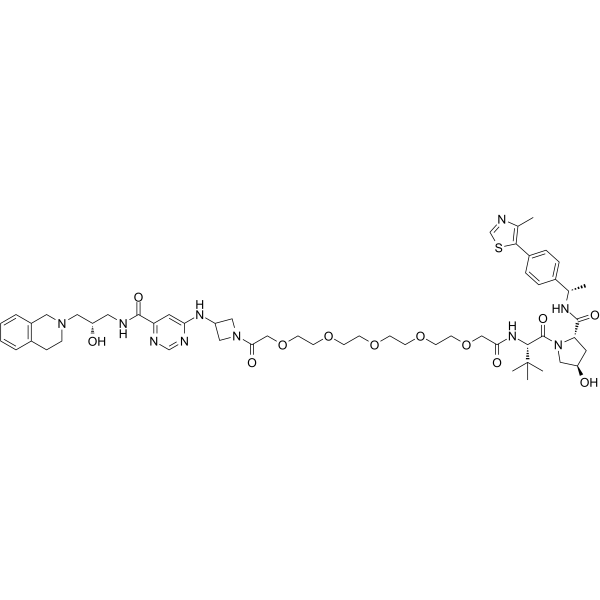 0 ImagesSynonyms: YS43-22MS4322 (YS43-22) is a specific PRMT5 PROTAC degrader. MS4322 reduces the PRMT5 protein level with a DC50 of 1.1 μM in MCF-7 cells. MS4322 inhibits the methyltransferase activity of PRMT5 with an IC50 of 18 nM. MS4322 promotes ubiquitination and degradation of PRMT5. MS4322 can be used for the research of breast cancer, lung cancer, and hepatocellular cancer. (Pink: PRMT5 ligand (HY-173092); Blue: E3 ligase ligand HY-112078); Black: linker (HY-124780); E3+linker (HY-173093 )).
-
BVT948
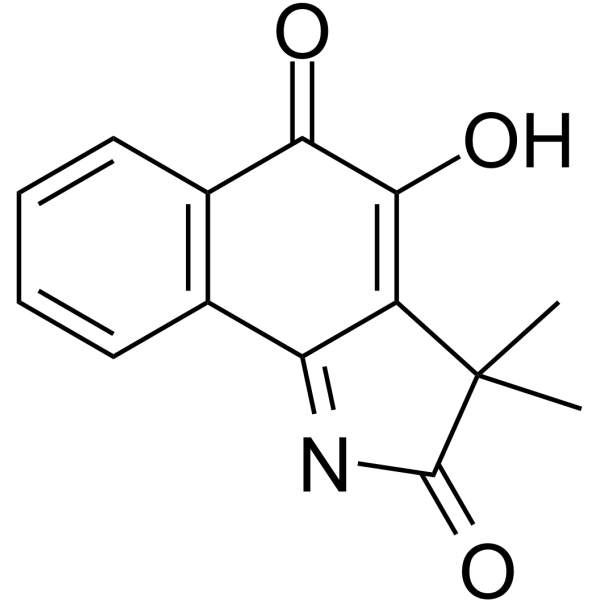 0 ImagesBVT948 is a protein tyrosine phosphatase (PTP) inhibitor which can also inhibit several cytochrome P450 (P450) isoforms and lysine methyltransferase SETD8 (KMT5A).
-
MS4322 (isomer)
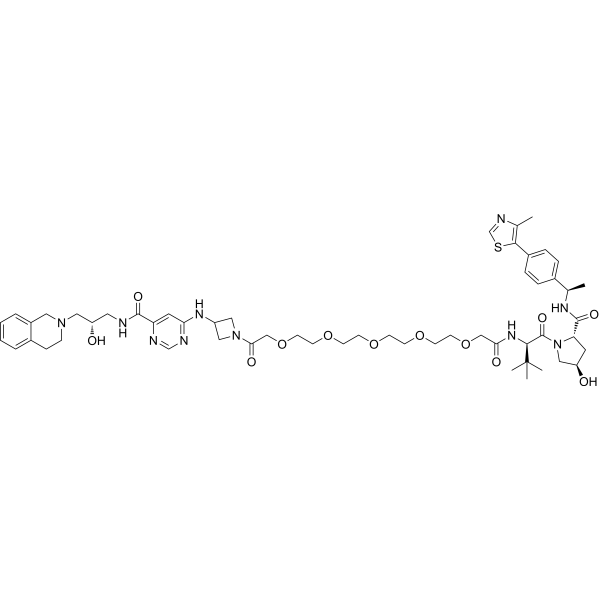 0 ImagesSynonyms: YS43-22 (isomer)MS4322 (YS43-22) isomer is an isomer of MS4322. MS4322 is a specific PRMT5 PROTAC degrader. MS4322 reduces the PRMT5 protein level with a DC50 of 1.1 μM in MCF-7 cells. MS4322 inhibits the methyltransferase activity of PRMT5 with an IC50 of 18 nM. MS4322 promotes ubiquitination and degradation of PRMT5. MS4322 can be used for the research of breast cancer, lung cancer, and hepatocellular cancer.
-
MS2928
 0 ImagesCat. No.: HY-181849MS2928 is a selective SETD8 inhibitor with an IC50 of 0.14 μM against SETD8 methyltransferase activity. MS2928 reduces cellular H4K20me1 levels and inhibits proliferation of SETD8-overexpressing multiple myeloma cells. MS2928 inhibits tumor growth in xenograft mouse models of SETD8-overexpressing multiple myeloma. MS2928 can be used for the study of SETD8 biological functions and multiple myeloma.



