



P-glycoprotein
P-gp; Pgp; Multidrug resistance protein 1; MDR1; ATP-binding cassette sub-family B member 1; ABCB1; Cluster of differentiation 243; CD243
P-glycoprotein (P-gp) also known as multidrug resistance protein 1 (MDR1) is an important protein of the cell membrane that pumps many foreign substances out of cells. More formally, it is an ATP-dependent efflux pump with broad substrate specificity. P-gp is extensively distributed and expressed in the intestinal epithelium where it pumps xenobiotics (such as toxins or drugs) back into the intestinal lumen, in liver cells where it pumps them into bile ducts, in the cells of the proximal tubular of the kidney where it pumps them into urine-conducting ducts, and in the capillary endothelial cells comprising the blood–brain barrier and blood-testis barrier, where it pumps them back into the capillaries. Some cancer cells also express large amounts of P-gp, which renders these cancers multi-drug resistant. P-gp is an ATP-dependent drug efflux pump for xenobiotic compounds with broad substrate specificity. It is responsible for decreased drug accumulation in multidrug-resistant cells and often mediates the development of resistance to anticancer drugs. This protein also functions as a transporter in the blood–brain barrier.
All Product Categories
-
P-glycoprotein Inhibitors
(279)
View all products
-
P-glycoprotein Agonists
(2)
View all products
-
P-glycoprotein Antagonist
(1)
View all products
-
P-glycoprotein Activators
(4)
View all products
-
P-glycoprotein Modulators
(24)
View all products
-
P-glycoprotein Inducer
(1)
View all products
-
P-glycoprotein Controls
(3)
View all products
-
P-glycoprotein Substrates
(22)
View all products
-
P-glycoprotein Ligands
(2)
View all products
-
P-glycoprotein Related Products (381)
Related Products (381)

-
Antibodies (3)
-
Sulfanitran-13C6
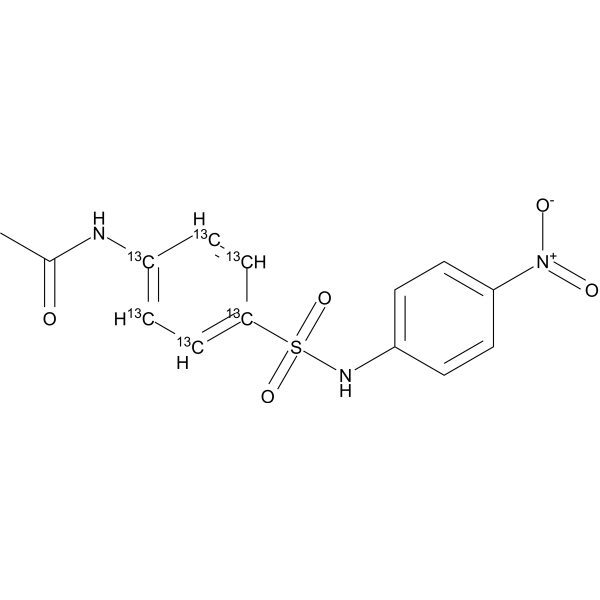 0 ImagesCat. No.: HY-B0947S1CAS No.: 1353867-79-4Sulfanitran-13C6 is the 13C labeled Sulfanitran. Sulfanitran is an antibacterial and anticoccidial agent used in poultry feeds. Sulfanitran also is a multidrug resistance protein 2 (MRP2) stimulator that can increase the affinity of MRP2 for estradiol-17-β-D-glucuronide (E217βG).

-
P-gp-IN-36
 0 ImagesCat. No.: HY-181773P-gp-IN-36 is a potent P-glycoprotein (P-gp) inhibitor with an EC50 of approximately 1 μM. P-gp-IN-36 inhibits the efflux function of P-glycoprotein, overcoming P-gp-mediated multidrug resistance in cancer cells. P-gp-IN-36 inhibits STAT3 phosphorylation and reduces total STAT3 expression. P-gp-IN-36 sensitizes P-gp-expressing cancer cells to the cytostatic effects of conventional cytostatic drugs. P-gp-IN-36 can be used for the research of multidrug-resistant cancer.
-
Anticancer agent 108
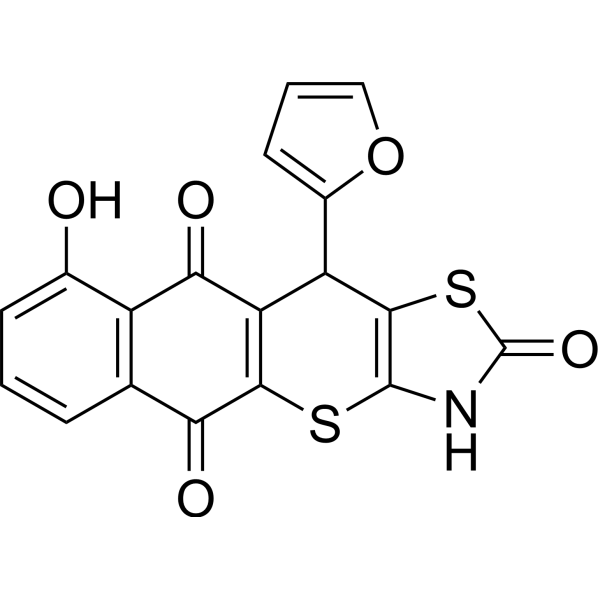 0 ImagesCat. No.: HY-149240Anticancer agent 108 (Compound 3.10) is a potent P-gp inhibitor with significant antitumor activity and less toxicity to normal and pseudonormal cells. Anticancer agent 108 (Compound 3.10) had no acute toxic effect on С57BL/6 mice.
-
WS-691
 0 ImagesCat. No.: HY-182253CAS No.: 2035417-32-2WS-691 is an orally active, selective ABCB1 modulator. WS-691 selectively stabilizes ABCB1 via direct binding to ABCB1. WS-691 inhibits the efflux function of ABCB1 and activates ABCB1 ATPase activity. WS-691 elevates intracellular Paclitaxel (HY-B0015) levels and reduces the required dose of Paclitaxel in cancer cells overexpressing ABCB1. WS-691 increases the sensitivity of colon cancer cells to Paclitaxel.
-
PID-9
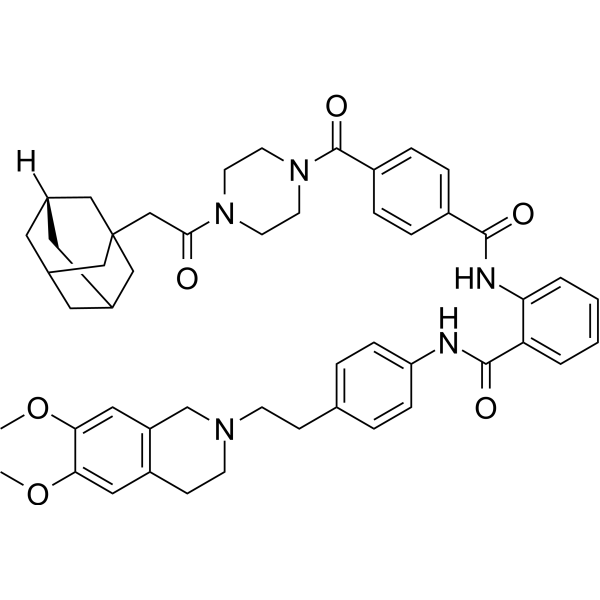 0 ImagesCat. No.: HY-162369PID-9 is a P-glycoprotein inhibitor. PID-9 has multidrug resistance (MDR) reversal activity (IC50 = 0.1338 μM) and low toxicity. PID-9 inhibits the transport function of P-gp without downregulating P-gp expression.
-
Neostenine
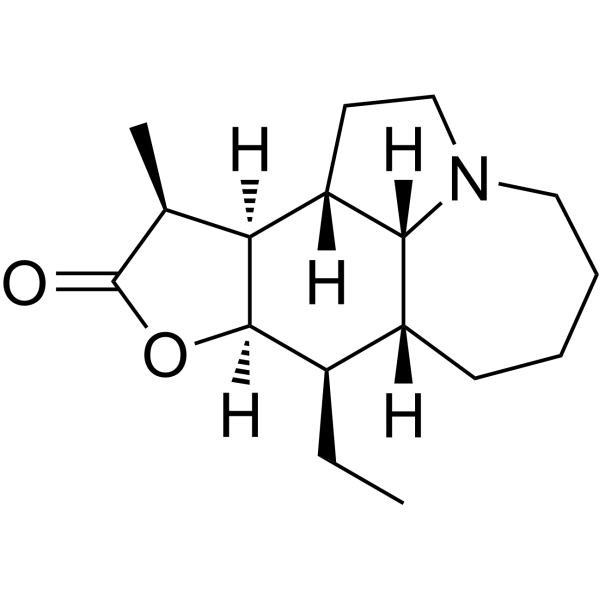 0 ImagesCat. No.: HY-N3197CAS No.: 477953-07-4Synonyms: (+)-NeostenineNeostenine is a stenine-type Stemona alkaloid, with antitussive activity. Neostenine is also a substrate of P-glycoprotein with high absorptive permeability in Caco-2 monolayer model. Neostenine also shows oral activity for intestinal application.
-
Biricodar dicitrate
 0 ImagesCat. No.: HY-13574CAS No.: 174254-13-8Synonyms: VX 710-3Biricodar dicitrate (VX 710-3) is the dicitrate salt form of Biricodar (HY-13574A). Biricodar dicitrate is an inhibitor for P-glycoprotein and multidrug resistance-associated protein 1 (MRP-1), which increases the accumulation of chemotherapy drugs within cancer cells and shows effective chemosensitizing activity in multidrug resistant cells.
-
Levomilnacipran-d10 hydrochloride
 0 ImagesCat. No.: HY-14794ASCAS No.: 2747914-23-2Synonyms: (1S,2R)-Milnacipran-d10 hydrochloride; F2695-d10 hydrochlorideLevomilnacipran-d10 ((1S,2R)-Milnacipran-d10) hydrochloride is deuterium labeled Levomilnacipran hydrochloride (HY-B0168B). Levomilnacipran ((1S,2R)-Milnacipran) hydrochloride is the enantiomer of Milnacipran (HY-B0168) and a strong substrate of P-gp that can cross the blood-brain barrier. Levomilnacipran hydrochloride is a serotonin and norepinephrine reuptake inhibitor, with IC50 values of 10.5 nM and 19.0 nM, and Ki values of 92.2 nM and 1.2 nM for human norepinephrine transporter (NET) and serotonin transporter (SERT), respectively. Levomilnacipran hydrochloride has antidepressant and anxiolytic activities. Levomilnacipran hydrochloride can be used for the research of depression.
-
P-gp inhibitor 24
 0 ImagesCat. No.: HY-159085P-gp inhibitor 24 (Compound 10) is an inhibitor for P-glycoprotein (P-gp)), that inhibits the P-gp mediated fluorescent dye efflux. P-gp inhibitor 24 exhibits multidrug resistance (MDR) reversal effect, enhances the cytotoxicity of Vincristine (HY-N0488) and Etoposide (HY-13629) in cancer cells.
-
2-Propylpent-4-ynoic acid
 0 ImagesCat. No.: HY-W787758CAS No.: 24102-11-2Synonyms: 4-yn-VPA2-Propylpent-4-ynoic acid (4-yn-VPA) is a HDAC inhibitor (with an IC50 of 0.5 mM against human HDAC). 2-Propylpent-4-ynoic acid also induces P-glycoprotein function, and exhibits teratogenicity, fetal growth inhibition and neurotoxicity. 2-Propylpent-4-ynoic acid shows significant stereospecific teratogenic effects, with the S-enantiomer being more teratogenic than the R-enantiomer and other analogs. The neurotoxicity of 2-Propylpent-4-ynoic acid is independent of its stereochemical structure. 2-Propylpent-4-ynoic acid has been used in studies related to the pathogenesis of colon cancer and neural tube defects such as exencephaly.
-
Trifluoperazine-d3 dihydrochloride
 0 ImagesCat. No.: HY-B0532ASCAS No.: 1432064-02-2Trifluoperazine-d3 (dihydrochloride) is deuterium labeled Trifluoperazine (dihydrochloride). Trifluoperazine dihydrochloride, an antipsychotic agent, acts by blocking central dopamine receptors. Trifluoperazine dihydrochloride is a potent α1-adrenergic receptor antagonist. Trifluoperazine dihydrochloride is a potent NUPR1 inhibitor exerting anticancer activity. Trifluoperazine dihydrochloride is a calmodulin inhibitor, and also inhibits P-glycoprotein. Trifluoperazine dihydrochloride can be used for the research of schizophrenia. Trifluoperazine dihydrochloride acts as a reversible inhibitor of influenza virus morphogenesis.
-
Muscone (Standard)
 0 ImagesMuscone (Standard) is the analytical standard of Muscone. This product is intended for research and analytical applications. Muscone is the main active monomer of traditional Chinese medicine musk. Muscone inhibits NF-κB and NLRP3 inflammasome activation. Muscone remarkably decreases the levels of inflammatory cytokines (IL-1β, TNF-α and IL-6), and ultimately improves cardiac function and survival rate.
-
Tyroservatide
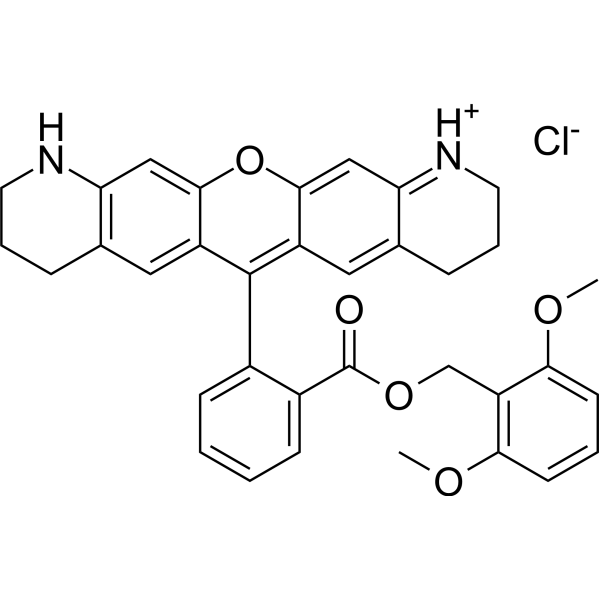
 0 ImagesCat. No.: HY-106035CAS No.: 154039-16-4Synonyms: YSVTyroservatide (YSV) is an active, low-molecular-weight polypeptide that has been shown to have antitumor effects on hepatocellular carcinoma and lung cancer cell.
-
P-gp inhibitor 25
 0 ImagesCat. No.: HY-168008CAS No.: 3031431-31-6P-gp inhibitor 25 (compound 16c) is a P-gp inhibitor. P-gp inhibitor 25 can enhance the oral absorption of paclitaxel (HY-B0015). P-gp inhibitor 25 can be used in anti-cancer research.
-
Norverapamil-d7
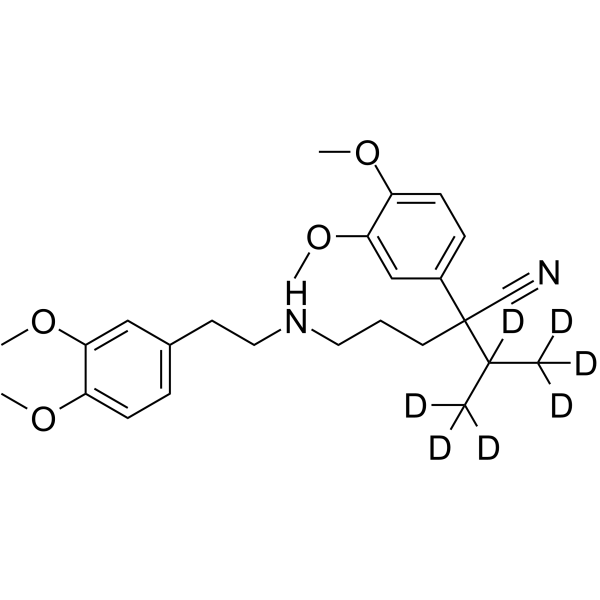 0 ImagesCat. No.: HY-135328SCAS No.: 263175-44-6Synonyms: (±)-Norverapamil-d7; D591-d7Norverapamil-d7 is a deuterium labeled Norverapamil ((±)-Norverapamil). Norverapamil, an N-demethylated metabolite of Verapamil, is a L-type calcium channel blocker and a P-glycoprotein (P-gp) function inhibitor.
-
N-Desmethyl imatinib mesylate
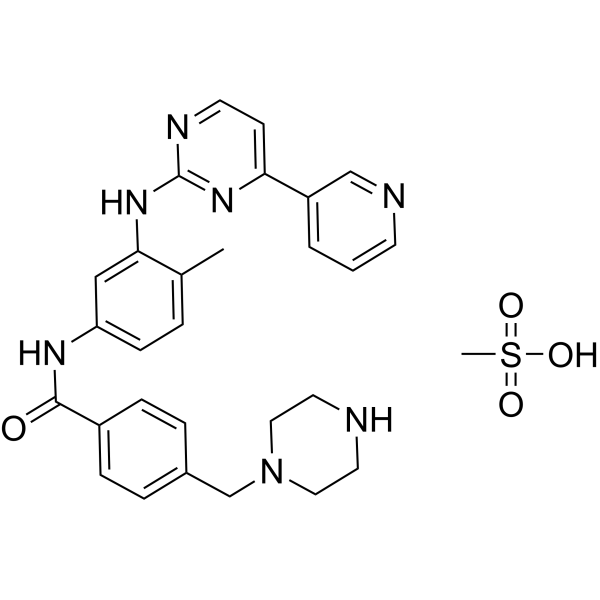 0 ImagesCat. No.: HY-G0017ACAS No.: 404844-03-7Synonyms: Norimatinib mesylate; Imatinib metabolite N-Desmethyl imatinib mesylate; CGP 74588 mesylateN-Desmethyl imatinib mesylate (Norimatinib mesylate) is an active metabolite of Imatinib (HY-15463), a selective c‑Abl inhibitor, and a substrate of P‑glycoprotein. N-Desmethyl imatinib mesylate binds to the c-Abl catalytic domain to prevent substrate phosphorylation, inhibits c-Abl-mediated α-synuclein activation and downstream inflammatory signaling pathways. N-Desmethyl imatinib mesylate induces apoptosis in K562 human leukemia cells. N-Desmethyl imatinib mesylate exhibits significantly elevated plasma levels in gastrointestinal stromal tumor (GIST) settings following mild SARS CoV 2 infection. N-Desmethyl imatinib mesylate can be used for the research of Parkinson’s disease, gastrointestinal stromal tumor, and chronic myeloid leukemia.
-
Poloxamer 183 (L63)
 0 ImagesCat. No.: HY-D1005A9CAS No.: 9003-11-6Synonyms: PEG-PPG-PEG, 2650 (Average)Poloxamer 183 L63 is a block copolymer of polyoxyethylene and polyoxypropylene with an average molecular weight of 2000. Poloxamer has the ability to inhibit P-gp. Poloxamer 183 exhibits antimicrobial activity and can inhibit Mycobacterium avium. Poloxamer 183 can be used as a cosmetic ingredient.
-
Sinapine thiocyanate (Standard)
 0 ImagesSinapine (thiocyanate) (Standard) is the analytical standard of Sinapine (thiocyanate). This product is intended for research and analytical applications. Sinapine thiocyanate is an alkaloid isolated from seeds of the cruciferous species. Sinapine thiocyanate exhibits anti-inflammatory, anti-oxidant, anti-tumor, anti-angiogenic and radio-protective effects. Sinapine thiocyanate is also an acetylcholinesterase (AChE) inhibitor and can be used for the research of Alzheimer’s disease, ataxia, myasthenia gravis, and Parkinson’s disease.




