



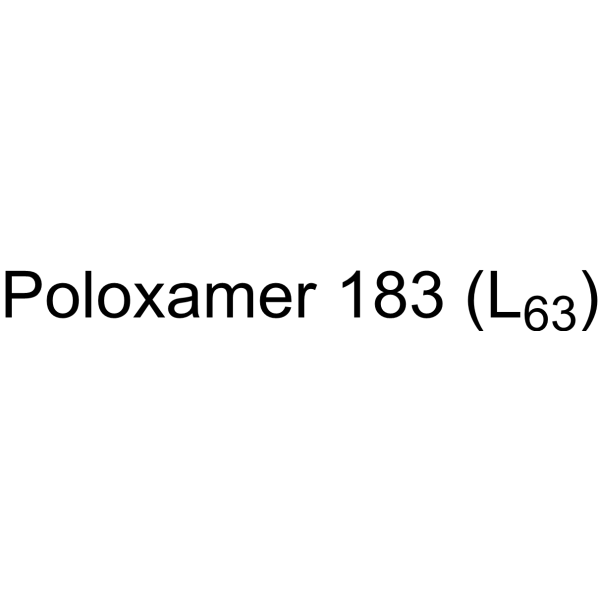
Poloxamer 183 (L63)
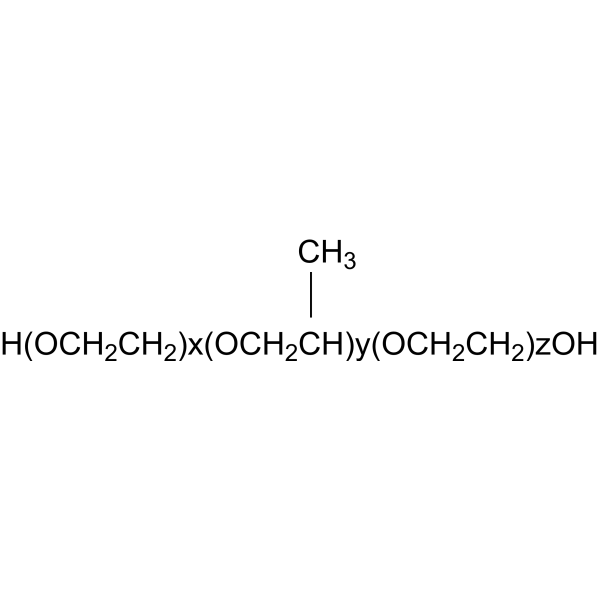
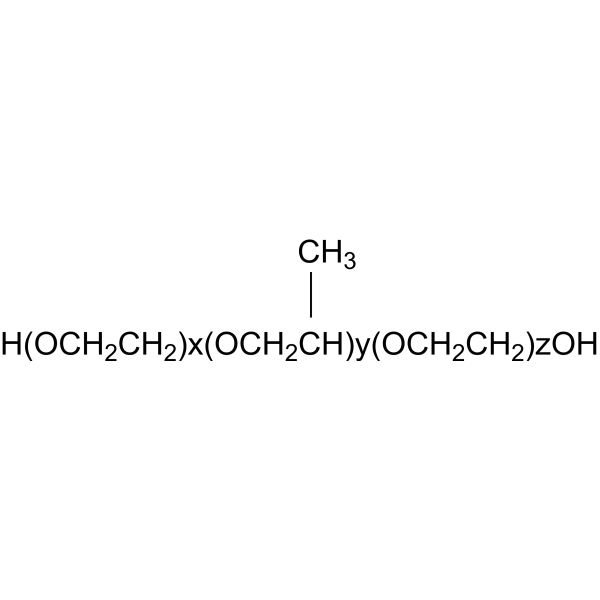
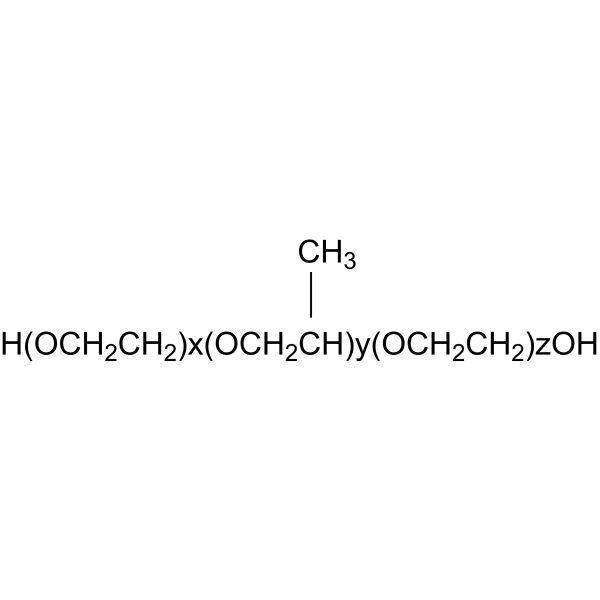
Poloxamer 183 L63 is a block copolymer of polyoxyethylene and polyoxypropylene with an average molecular weight of 2000. Poloxamer has the ability to inhibit P-gp. Poloxamer 183 exhibits antimicrobial activity and can inhibit Mycobacterium avium. Poloxamer 183 can be used as a cosmetic ingredient.
Nur für Forschungszwecke. Wir verkaufen nicht an Patienten.
- CAS. Nr.: 9003-11-6
- Molecular Weight:2650 (Average)
-
Speicherung:
Please store the product under the recommended conditions in the Certificate of Analysis.

To place orders, for customer services and technical support, please contact: MedChemExpress USA
Tel: 609-228-6898 E-mail: [email protected] [email protected]


-
 Biologische Aktivität
-
Chemical Information
- Protokoll
- Reinheit & Dokumentation
- Verweise
-
 Help & FAQs


-
HY-D1005
Poloxamer 407 (F127)LPL Receptor Inhibitor -
HY-D1005A
Poloxamer 188Linear Copolymer -
HY-D1005H
Poloxamer 188 (F68)Nonionic Linear Copolymer -
HY-D1005A6
Poloxamer 124 (L44)Biochemical Assay Agent -
HY-D1005A22
Poloxamer 338 (F108)Biochemical Assay Agent -
HY-D1005A25
Poloxamer 403 (P123)Biochemical Assay Agent -
HY-D1005A23
Poloxamer 401 (L121)Biochemical Assay Agent -
HY-D1005A10
Poloxamer 184 (L64)Biochemical Assay Agent -
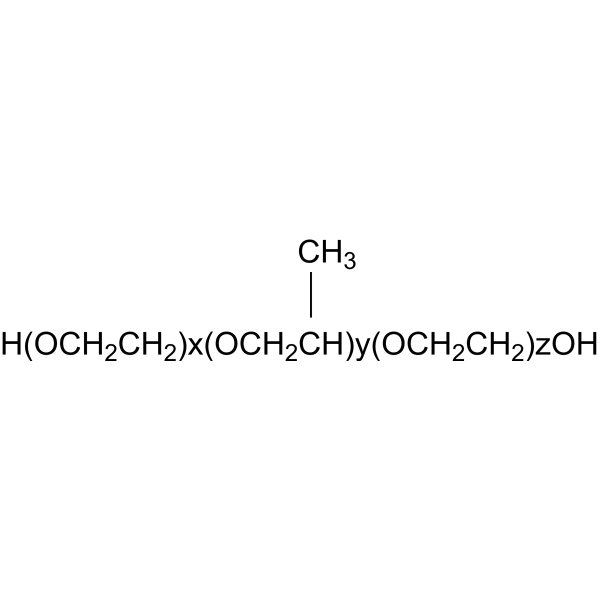
HY-D1005B
Poloxamer 237 (F87)Alcohol Substance -
HY-D1005A2
Poloxamer 105 (L35)Biochemical Assay Agent -
HY-D1005A8
Poloxamer 181 (L61)Biochemical Assay Agent -

HY-D1005K
Poloxamer L64Biochemical Assay Reagent


Biologische Aktivität
Beschreibung
In Vitro
Poloxamer 183 (1 mg/mL) can inhibit 80% of Mycobacterium avium[1].
Poloxamer has the ability to inhibit P-gp[2].
Poloxamer has been proposed as an agent carrier to improve agent efficacy and reduce side effects[2].
MedChemExpress (MCE) has not independently confirmed the accuracy of these methods. They are for reference only. Further protocols information, click here.


Chemical Information
-
CAS. Nr. 9003-11-6
-
Molecular Weight 2650 (Average)
-
SMILES
[Poloxamer 183 (L63)]
-
Synonyms
PEG-PPG-PEG, 2650 (Average)
-
Versand
Room temperature in continental US; may vary elsewhere.
-
Speicherung
Please store the product under the recommended conditions in the Certificate of Analysis.

Protokoll
-
Research Protocol for Infectious Diseases
Infectious-disease experiments test how pathogens interact with host barriers, innate immune receptors, inflammatory signaling, pathogen replication, and tissue injury; pattern-recognition receptors such as TLRs, RIG-I-like receptors, NOD-like receptors, and inflammasomes detect microbial molecules and activate NF-κB, interferon, and cytokine responses. The central hypothesis is that infection severity reflects the balance between pathogen burden and host response: protective inflammation restricts pathogen growth, whereas excessive or mislocalized inflammation contributes to tissue damage and disease phenotype. Unresolved questions include which host pathways are protective versus pathogenic, why some infection models fail to translate to human disease, and which combined readouts best predict clinically relevant infection outcomes.


Reinheit & Dokumentation
Verweise
[1]. Singh-Joy SD, et al., Safety assessment of poloxamers 101, 105, 108, 122, 123, 124, 181, 182, 183, 184, 185, 188, 212, 215, 217, 231, 234, 235, 237, 238, 282, 284, 288, 331, 333, 334, 335, 338, 401, 402, 403, and 407, poloxamer 105 benzoate, and poloxamer 182 dibenzoate as used in cosmetics. Int J Toxicol. 2008;27 Suppl 2:93-128. [Content Brief]
[2]. Hunter RL, et al., Enhancement of antibiotic susceptibility and suppression of Mycobacterium avium complex growth by poloxamer 331. antimicrob Agents Chemother. 1995 Feb;39(2):435-9. [Content Brief]
[3]. Mello JC, et al. Enhancement of chlorpromazine antitumor activity by Pluronics F127/L81 nanostructured system against human multidrug resistant leukemia. Pharmacol Res. 2016 Sep;111:102-112. [Content Brief]

Calculators
Konzentration (Stammlösung) × Volumen (Stammlösung) = Konzentration (Ziellösung) × Volumen (Ziellösung)


Poloxamer 183 (L63) Related Classifications
HY-D1005A9 Related Classifications
 Powered by Bioz