



TLR7 Antagonist
- 1
-
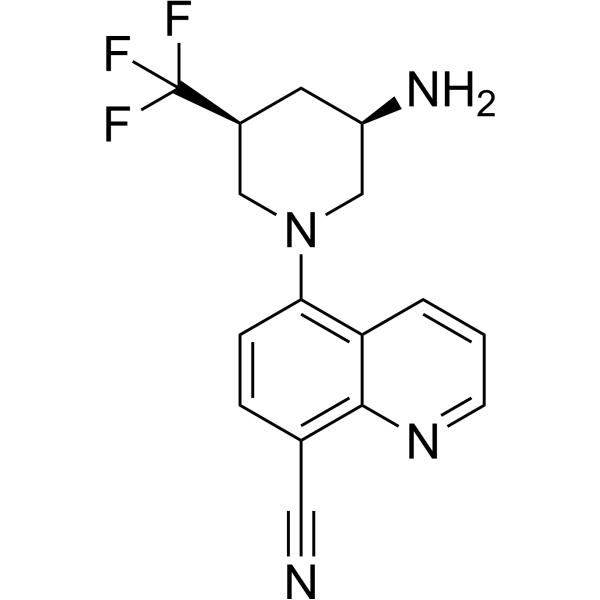
Enpatoran
 0 ImagesSynonyms: M5049
Enpatoran (M5049) is an orally active and selective TLR7/8 antagonist. Enpatoran inhibits the activation of the downstream type I interferon pathway. Enpatoran is used in studies of cutaneous lupus erythematosus, systemic lupus erythematosus with cutaneous manifestations, and psoriasis.
-
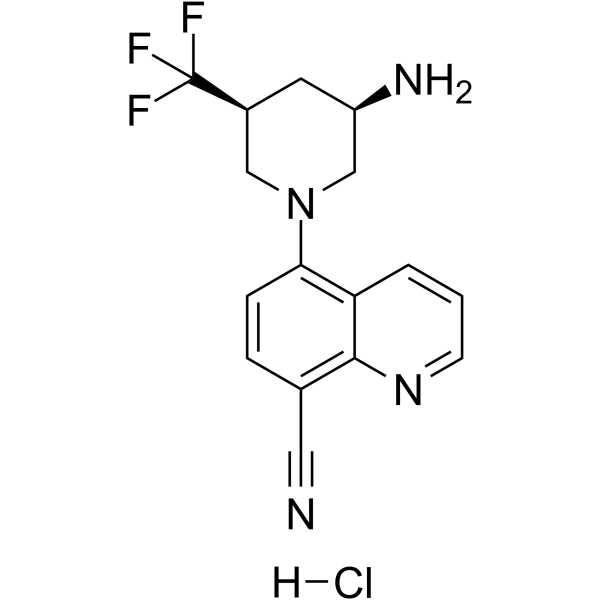
Enpatoran hydrochloride
 0 ImagesSynonyms: M5049 hydrochloride
Enpatoran hydrochloride (M5049 hydrochloride) is an orally active and selective TLR7/8 antagonist. Enpatoran hydrochloride inhibits the activation of the downstream type I interferon pathway. Enpatoran hydrochloride is used in studies of cutaneous lupus erythematosus, systemic lupus erythematosus with cutaneous manifestations, and psoriasis.
-
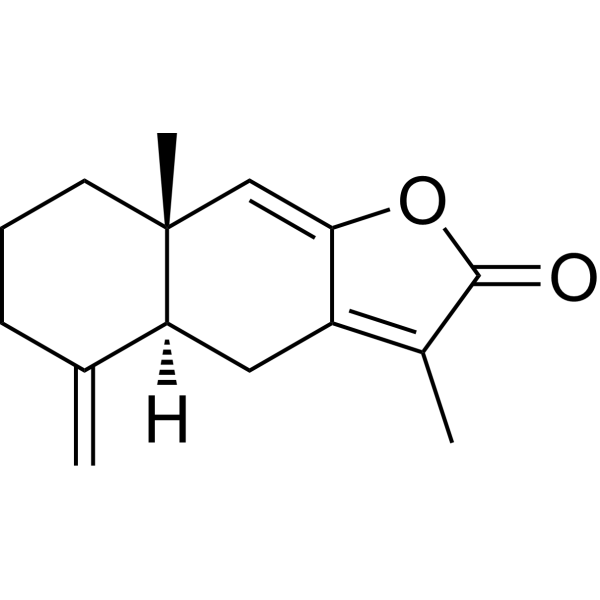
Atractylenolide I
 0 Images
Atractylenolide I is a sesquiterpene derived from the rhizome of Atractylodes macrocephala, possesses diverse bioactivities, such as neuroprotective, anti-allergic, anti-inflammatory and anticancer properties. Atractylenolide I reduces protein levels of phosphorylated JAK2 and STAT3 in A375 cells, and acts as a TLR4-antagonizing agent.
-
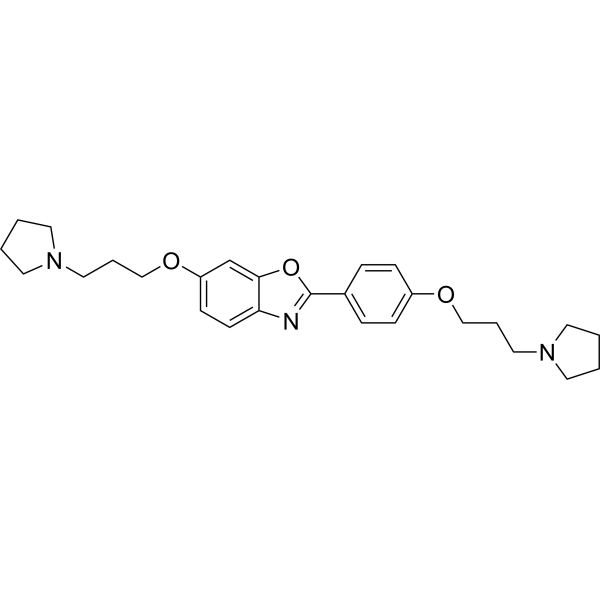
E6446
 0 Images
E6446 is a potent and orally acitve TLR7 and TLR9 antagonist, used in the research of deleterious inflammatory responses. E6446 is also a potent SCD1 inhibitor (KD: 4.61 μM), significantly inhibiting adipogenic differentiation and hepatic lipogenesis through SCD1-ATF3 signaling. E6446 also improves liver pathology in high-fat diet (HFD)-fed mice and may be useful in the study of non-alcoholic fatty liver disease (NAFLD).
-
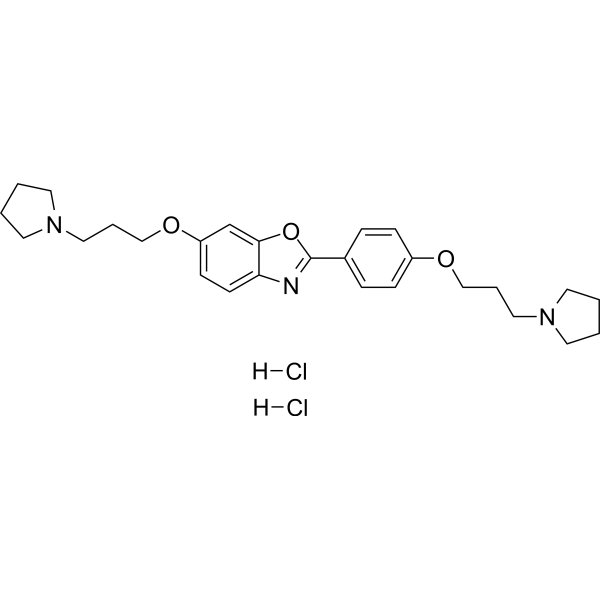
E6446 dihydrochloride
 0 Images
E6446 dihydrochloride is a potent and orally acitve TLR7 and TLR9 antagonist, used in the research of deleterious inflammatory responses. E6446 dihydrochloride is also a potent SCD1 inhibitor (KD: 4.61 μM), significantly inhibiting adipogenic differentiation and hepatic lipogenesis through SCD1-ATF3 signaling. E6446 dihydrochloride also improves liver pathology in high-fat diet (HFD)-fed mice and may be useful in the study of non-alcoholic fatty liver disease (NAFLD).
-
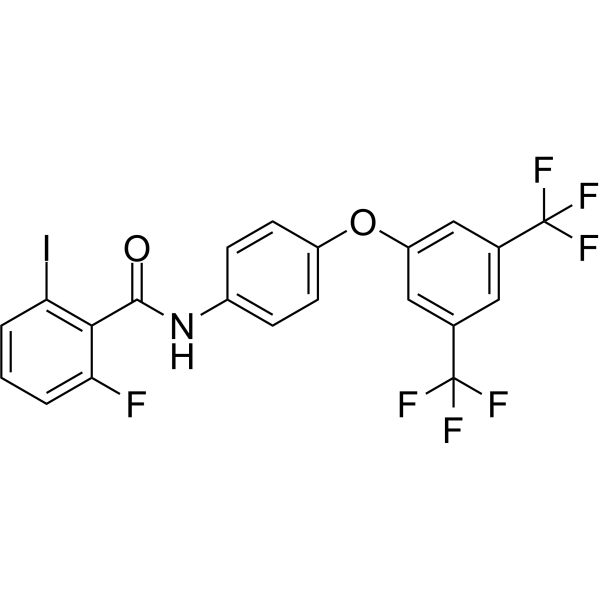
CU-115
 0 Images
CU-115 is a potent TLR8 antagonist (IC50=1.04 µM), and shows selective for TLR8 over TLR7 (IC50=>50 µM). CU-115 decreases TNF-α and IL-1β production activated by R-848 in THP-1 cells.
-
TLR9 antagonist 1
 0 ImagesCat. No.: HY-178037CAS No.: 3105410-45-2
TLR9 antagonist 1 is a selective hTLR9 antagonist with an IC50 of 0.1 nM against hTLR9. TLR9 antagonist 1 exhibits favorable pharmacokinetic and pharmacodynamic properties. TLR9 antagonist 1 can be used in the research of systemic lupus erythematosus.
-
TLR7/8/9 antagonist-3
 0 ImagesCat. No.: HY-187531CAS No.: 2403782-38-5
TLR7/8/9 antagonist-3 is an orally active antagonist of TLR7, TLR8 and TLR9, with human IC50 values of 0.008 μM, 0.006 μM and 0.072 μM, respectively. TLR7/8/9 antagonist-3 blocks agonist-induced activation of hTLR7, hTLR8, hTLR9, mTLR7 and mTLR9, and reduces serum IFNα and TNFα levels. TLR7/8/9 antagonist-3 can be used in the research of autoimmune diseases.
-
SMU-R39
 0 ImagesCat. No.: HY-175782
SMU-R39 is a TLR7 and TLR8 antagonist with IC50 values of 3.22 μM and 0.24 μM, respectively. SMU-R39 binds to recombinant mTLR7 protein (KD = 2.36 μM) and to recombinant hTLR8 protein (KD = 105 nM). SMU-R39 suppresses downstream NF-κB and MAPK signaling, and reduces secretion/transcription of pro-inflammatory cytokines (TNF-α, IL-1β, IL-6) in PBMCs and THP-1 cells. SMU-R39 demonstrates anti-inflammatory efficacy in Imiquimod (IMQ) (HY-B0180)-induced psoriasis mouse model. SMU-R39 can be used for the study of autoimmune diseases such as psoriasis.
-
TLR7 antagonist-1
 0 ImagesCat. No.: HY-181796CAS No.: 3104353-70-7
TLR7 antagonist-1 (Compound 44#) is an orally active, selective TLR7 antagonist with an IC50 value of 0.3 nM against TLR7. TLR7 antagonist-1 selectively binds to TLR7, inhibits its activation, and downregulates the c-Rel signaling pathway. TLR7 antagonist-1 downregulates the mRNA levels of proinflammatory cytokines IL-1β, IL-6, and TNF-α. TLR7 antagonist-1 alleviates Imiquimod (HY-B0180)-induced psoriasis-like skin lesions. TLR7 antagonist-1 is applicable to research related to psoriasis.
-
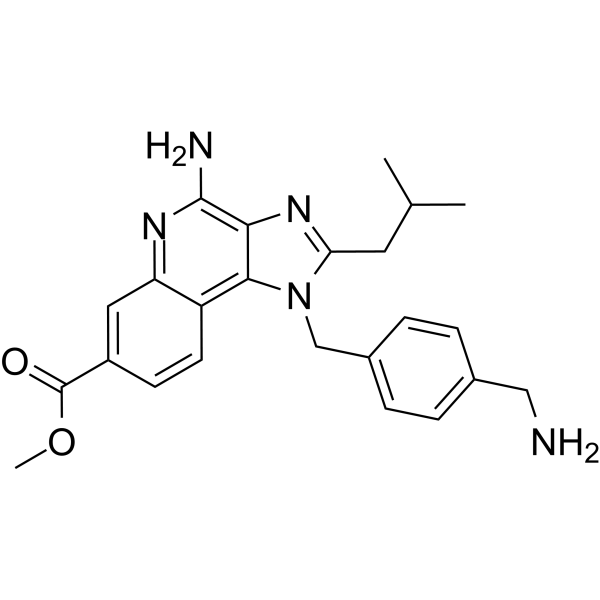
TLR7/8 antagonist 1
 0 ImagesCat. No.: HY-145886CAS No.: 2901020-63-9
TLR7/8 antagonist 1 (Compound 16c) is a competitive TLR7/8 antagonist with IC50 values of 3.91 μM and 2.19 μM, respectively. TLR7/8 antagonist 1 reduces agonist-induced production of proinflammatory cytokines, including TNFα, IFNγ and IL-1β.
-
Enpatoran dihydrochloride
 0 ImagesCat. No.: HY-134581BCAS No.: 2409589-21-3Synonyms: M5049 dihydrochloride
Enpatoran dihydrochloride (M5049 dihydrochloride) is an orally active and selective TLR7/8 antagonist. Enpatoran dihydrochloride inhibits the activation of the downstream type I interferon pathway. Enpatoran dihydrochloride is used in studies of cutaneous lupus erythematosus, systemic lupus erythematosus with cutaneous manifestations, and psoriasis.
- 1



