



Amylases
Amylases are crucial enzymes which hydrolyze internal glycosidic linkages in starch and produce as primary products dextrins and oligosaccharides. Amylases are classified into α-amylase, β-amylase, and glucoamylase based on their three-dimensional structures, reaction mechanisms, and amino acid sequences. Amylases have innumerable applications in clinical, medical, and analytical chemistries as well as in food, detergent, textile, brewing, and distilling industries.
All Product Categories
-
Amylases Related Products (105)
Related Products (105)

-
α-glucosidase/PTP1B-IN-1
 0 ImagesCat. No.: HY-168185α-glucosidase/PTP1B-IN-1 (compound 8a) is a potent α-glucosidase and PTP1B inhibitor with an IC50 value of 66.3 μM and 47.0 μM, respectively. α-glucosidase/PTP1B-IN-1 exhibits excellent activities against α-amylase with an IC50 of 30.62 μM. α-glucosidase/PTP1B-IN-1 can dock into the active pockets of α-glucosidase and PTP1B. α-glucosidase/PTP1B-IN-1 has potential to reduce the postprandial blood glucose and is used for Type 2 diabetes mellitus.
-
α-Amylase/α-Glucosidase-IN-7
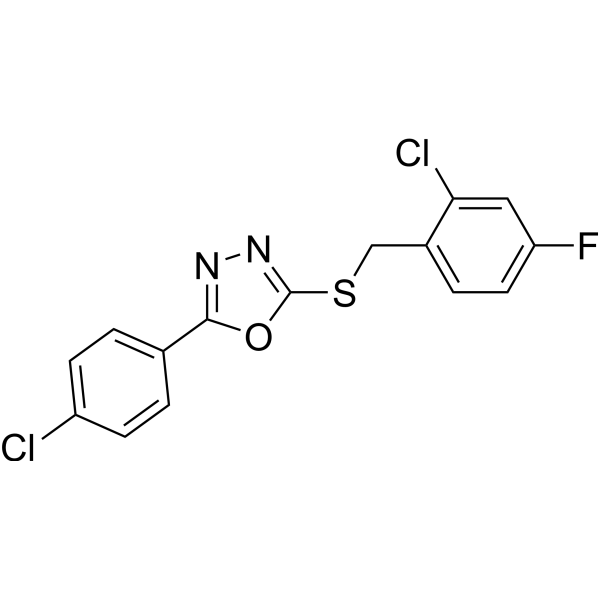 0 ImagesCat. No.: HY-162036CAS No.: 1038094-94-8α-Amylase/α-Glucosidase-IN-7 (Compound 3f) is a competitive α-glucosidase and α-amylase enzyme inhibitor with IC50 values of 18.52 and 20.25 µM, respectively. α-Amylase/α-Glucosidase-IN-7 can also effectively inhibit AChE and BChE, with IC50 values of 9.25 and 10.06 µM respectively. α-Amylase/α-Glucosidase-IN-7 can be used in diabetes and Alzheimer’s research.
-
α-Amylase/α-Glucosidase-IN-8
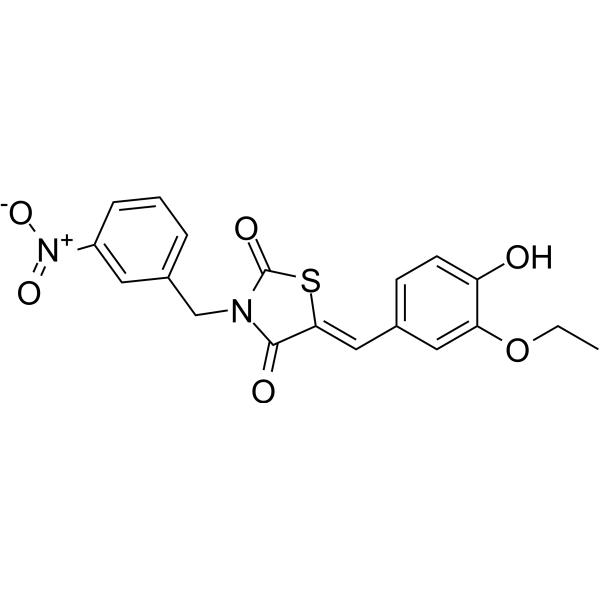 0 ImagesCat. No.: HY-162169α-Amylase/α-Glucosidase-IN-8 (Compound 7p) is a potent dual inhibitor of α-amylase and α-glucosidase, with IC50s of 10.19 and 10.33 μM, respectively. α-Amylase/α-Glucosidase-IN-8 has good anti-oxidant activity(IC50 = 14.93 μM). α-Amylase/α-Glucosidase-IN-8 can be used for the research of diabetes.
-
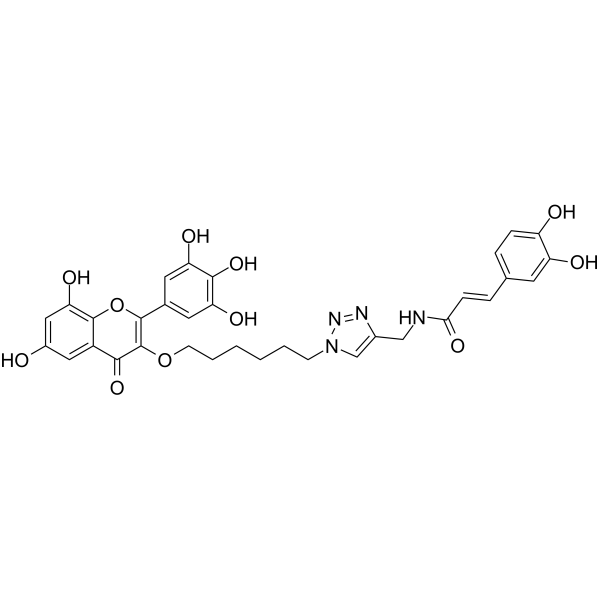
Quercetin 3-(6″-caffeoylsophoroside)
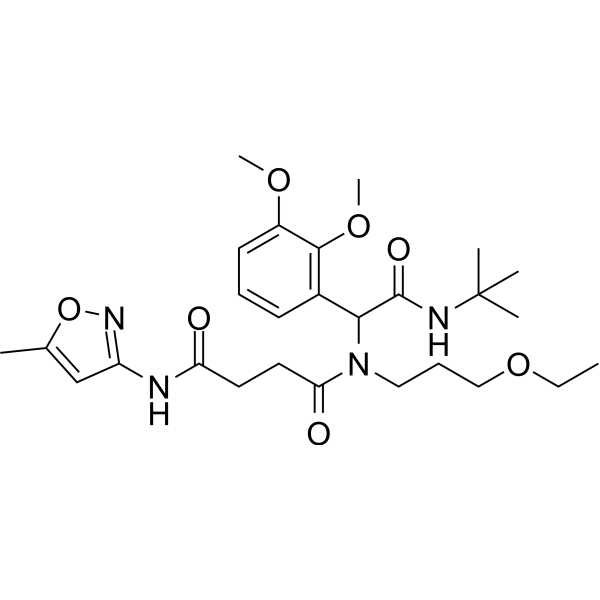 0 ImagesCat. No.: HY-N11844CAS No.: 1032595-77-9Quercetin 3-(6″-caffeoylsophoroside) is an orally active α-amylase inhibitor, with an IC50 of 73.66 μg/mL. Quercetin 3-(6″-caffeoylsophoroside) presents in thehydro-methanolic extract of Cardamine hirsuta Linn. Quercetin 3-(6″-caffeoylsophoroside) shows the antidiabetic activities by oxidative stress reduction and α-amylase inhibition. Quercetin 3-(6″-caffeoylsophoroside) can be used for diabetes mellitus research.
-
3,4,6-Tri-O-galloyl-D-glucose
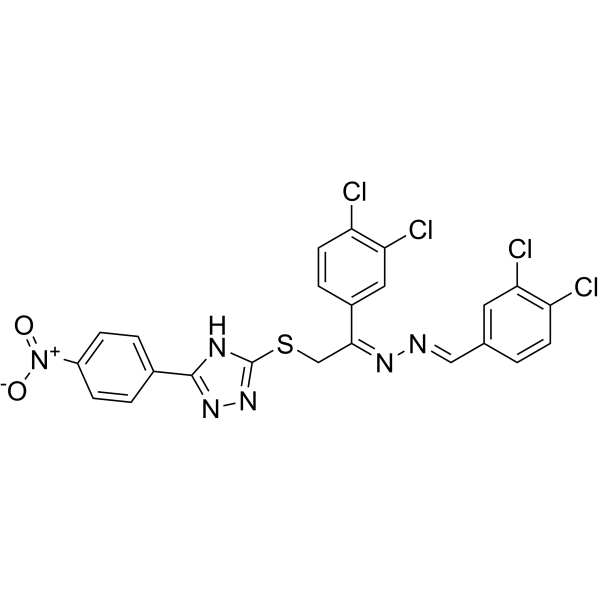
 0 ImagesCat. No.: HY-N17215CAS No.: 99523-99-6Synonyms: 3,4,6-Trigalloylglucose3,4,6-Tri-O-galloyl-D-glucose (3,4,6-Trigalloylglucose) is an α-amylase (porcine α-amylase IC50 = 334.6 μM; Ki = 307.5 μM) and α-glucosidase (yeast α-glucosidase IC50 = 46.5 μM; Ki = 39.9 μM) mixed type inhibitor. 3,4,6-Tri-O-galloyl-D-glucose exhibits free radical scavenging ability, ferric-reducing power, and antioxidant activity. 3,4,6-Tri-O-galloyl-D-glucose can be used for the research of diabetes.
-
Antidiabetic agent 5
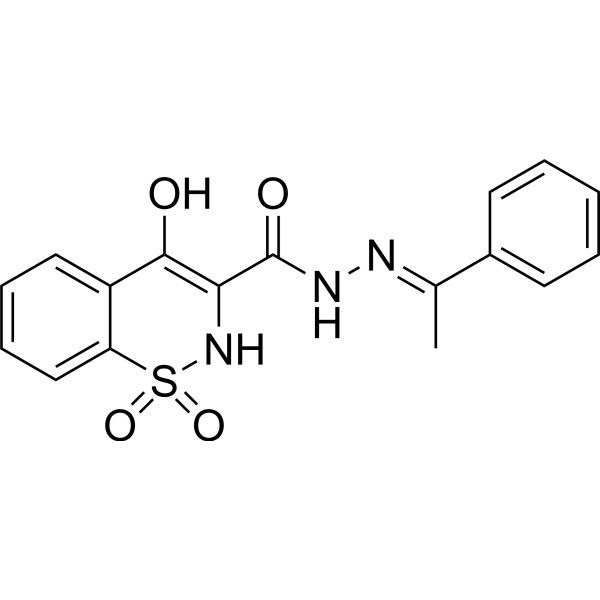 0 ImagesCat. No.: HY-161429CAS No.: 2152667-21-3Antidiabetic agent 5 (compound S1) is a antidiabetic agent. Antidiabetic agent 5 inhibits the activity of α-glucosidase and α-amylase with IC50 values of 3.91,8.89 μM,respectively. Antidiabetic agent 5 decreases sugar levels. Antidiabetic agent 5 has the potential for the research of type-II diabetes.
-
Dendromoniliside D
 0 ImagesCat. No.: HY-N17294CAS No.: 603995-11-5Dendromoniliside D is a sesquiterpene glycoside. Dendromoniliside D can be isolated from D. nobile. Dendromoniliside D inhibits α-amylase. Dendromoniliside D can be used in the research of liver cancer, lung cancer, and breast cancer.
-
α-Amylase-IN-13
 0 ImagesCat. No.: HY-178363CAS No.: 3085413-64-2α-Amylase-IN-13 is an orally active, selective, brain-penetrant α-amylase inhibitor (IC50 = 0.71 μM). α-Amylase-IN-13 inhibits α-amylase through a mixed type of inhibition mechanism. α-Amylase-IN-13 leads to a significant reduction in blood glucose level in diabetic rats. α-Amylase-IN-13 causes significant histopathological improvements in the kidney, liver, and pancreas. α-Amylase-IN-13 can be used for the study of diabetic complications.
-
4',5-Dihydroxy-3,3',7,8-tetramethoxyflavone
 0 ImagesCat. No.: HY-W507839CAS No.: 571-71-14',5-Dihydroxy-3,3',7,8-tetramethoxyflavone is a 3-methoxyflavonoid compound. 4',5-Dihydroxy-3,3',7,8-tetramethoxyflavone inhibits α-Amylase.
-
Vulgarin
 0 ImagesVulgarin is an orally active, naturally occurring eudesmane sesquiterpene with multiple biological activities including anti-inflammatory and antioxidant properties. Vulgarin targets and inhibits HMGB1, NF-κB and iNOS, while regulating key genes involved in hepatic gluconeogenesis; it also blocks inflammatory signaling pathways and inhibits the production and release of pro-inflammatory cytokines such as TNF-α and IL-1β. Vulgarin effectively alleviates pancreatic oxidative stress by reducing lipid peroxidation levels and restoring antioxidant enzyme activity. Vulgarin reverses abnormally elevated serum pancreatic enzyme levels, preserves the integrity of pancreatic acinar cells, and reduces pancreatic edema, hemorrhage and inflammatory infiltration. Vulgarin remodels the function of pancreatic endocrine cells, restores insulin content in β cells, and downregulates glucagon levels in α cells and somatostatin levels in δ cells. Vulgarin can be used in studies related to pancreatic injury and diabetes.
-
Ladyginoside A
 0 ImagesCat. No.: HY-N16656CAS No.: 38424-95-2Ladyginoside A is a triterpenoid saponin found in the leaves of Polyscias fruticosa (L.) Harms. Ladyginoside A has inhibitory activities against α-amylase and α-glucosidase, and can regulate carbohydrate metabolism. Ladyginoside A also exhibits potential anti-inflammatory and mast cell stabilizing effects. Ladyginoside A can be used for the researches of inflammation and metabolic disease, such as diabetes.
-
α‑Amylase-IN-1
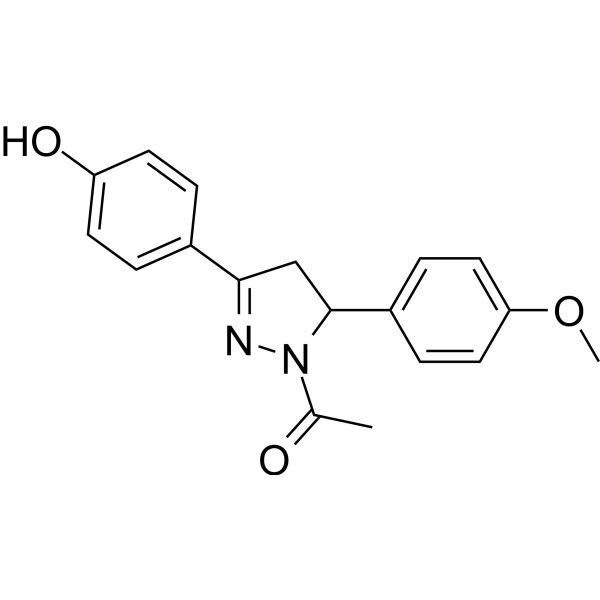 0 Imagesα Amylase-IN-1 (Compound 11) is an α-Amylase inhibitor with an IC50 value of 0.5509 μM. α Amylase-IN-1 has antioxidant activity with an IC50 value of 53.49 μM for scavenging DPPH free radicals. IC50 can be used in the study of diabetes and oxidative stress-related diseases.
-
Pinocembrin-7-O-(4'',6''-hexahydroxydiphenoyl)-β-D-glucoside
 0 ImagesCat. No.: HY-187050CAS No.: 1825287-22-6Pinocembrin-7-O-(4'',6''-hexahydroxydiphenoyl)-β-D-glucoside is an α-Amylase (HY-B2193) inhibitor with an IC50 of 0.14 μmol/mL. Pinocembrin-7-O-(4'',6''-hexahydroxydiphenoyl)-β-D-glucoside can be used for the research of diabetes mellitus.
-
Rubusoside (Standard)
 0 ImagesRubusoside (Standard) is the analytical standard of Rubusoside. This product is intended for research and analytical applications. Rubusoside is a diterpene glycoside that is also a sweetener and solubilizer with anti-angiogenic, anti-cancer, anti-obesity, anti-allergic and anti-asthmatic effects. Rubusoside attenuates airway hyperresponsiveness and reduces inflammatory cells in bronchoalveolar lavage fluid (BALF), reducing OVA (HY-W250978)-induced airway inflammation. Rubusoside also prevents palmitic acid-induced lipotoxicity in pancreatic INS-1 cells, reduces the transport of human glucose transporters GLUT-1 and fructose GLUT-5, and inhibits NF-κB and α-amylase (α-amylase).
-
2,3,4-Trihydroxybenzoic acid (Standard)
 0 Images2,3,4-Trihydroxybenzoic acid (Standard) is the analytical standard substance of 2,3,4-Trihydroxybenzoic acid. This product is used for research and analytical applications. 2,3,4-Trihydroxybenzoic acid is an α-amylase inhibitor with an IC50 of 17.30 mM against porcine α-amylase. 2,3,4-Trihydroxybenzoic acid increases cellular p21 and p27 protein levels. 2,3,4-Trihydroxybenzoic acid inhibits cancer cell growth and delays starch digestion to suppress postprandial hyperglycemia. 2,3,4-Trihydroxybenzoic acid can be used in research related to colorectal cancer, breast cancer and type 2 diabetes.
-
Gibbestatin B
 0 ImagesCat. No.: HY-N14506CAS No.: 89687-34-3Gibbestatin B inhibits the expression of α-amylase induced by gibberellin in De-embryoned rice and barley (IC50 is 25-50 ppm), and has no anti-bacterial, anti-yeast and anti-fungal effects at 100 ppm.
-
Momilactone B
 0 ImagesMomilactone B is an inhibitor of α-amylase and α-glucosidase, with an IC50 of 146.85 μg/mL against Aspergillus oryzae α-amylase and an IC50 of 612.03 μg/mL against Saccharomyces cerevisiae α-glucosidase. Momilactone B upregulates the expression of p21Waf1/Cip1, reduces the kinase activity of Cdk4 and Cdk6, induces cell cycle arrest and apoptosis in cancer cells, and triggers irreversible cell death via cell membrane damage. Momilactone B inhibits the growth of neighboring plant species and serves as a major contributing factor to the allelopathy of rice. Momilactone B can be used in studies related to rice allelopathy, type 2 diabetes, colon cancer and leukemia.
-
Chrysin-7-O-glucuronide (Standard)
 0 ImagesCat. No.: HY-N2376RCAS No.: 35775-49-6Chrysin-7-O-glucuronide (Standard) is the analytical standard of Chrysin-7-O-glucuronide (Hy-N2376). This product is intended for research and analytical applications. Chrysin-7-O-glucuronide is a flavonoid found in Scutellaria baicalensis. Chrysin-7-O-glucuronide inhibits α-glucosidase and α-amylase with IC50 values of 612.13 and 980.73 μg/mL. Chrysin-7-O-glucuronide suppresses NF-κB signaling activity. Chrysin-7-O-glucuronide scavenges free radicals, acts as a tight junction protector, and mitigates intestinal mucosal barrier injury. Chrysin-7-O-glucuronide can be used for the research of type 2 diabetes and severe acute pancreatitis-induced intestinal mucosal barrier injury.



