



Isotope-Labeled Compounds
Isotope-labeled compounds are chemical substances in which some atoms in their molecules are replaced by isotope atoms. The range of stable isotope products can cover from gases to complex molecules. Isotope-labeled compounds could provide a site-specific investigation of structures, making molecules easily detectable by mass spectrometry and NMR, and maintaining the physico-chemical properties of the target molecule at the same time.
MCE isotope-labeled compounds are all stable isotope-labeled compounds and are non-radioactive labeled substances. MCE isotope-labeled compounds are unique tools for identifying and understanding biological and chemical processes. Stable isotope-labeled products are now getting more and more popular among scientists. The scope of application is gradually penetrating into various scientific fields, such as life sciences, food and medicine, agriculture, environment, geology, etc. Stable isotope-labeled compounds have a wide range of applications in the Life Science areas, such as Metabolomics, Proteomics, Clinical studies, Deuterium drugs, etc.
All Product Categories
-
Isotope-Labeled Compounds Related Products (11100)
Related Products (11100)

-
Deferasirox-13C6
 0 ImagesCat. No.: HY-17359S1CAS No.: 1261392-79-3Synonyms: ICL 670-13C6Deferasirox-13C6 (ICL 670-13C6) is 13C labeled Deferasirox. Deferasirox (ICL 670) is an orally available iron chelator used for the management of transfusional iron overload.
-
Benzophenone-9-d6
 0 ImagesCat. No.: HY-136883SSynonyms: Disodium 3,3'-carbonylbis[4-hydroxy-6-methoxybenzenesulphonate]-d6Benzophenone-9-d6 (Disodium 3,3'-carbonylbis[4-hydroxy-6-methoxybenzenesulphonate]-d6) is deuterium labeled Benzophenone-9.
-
Cyclamic acid-d4 sodium
 0 ImagesCat. No.: HY-W014839S1CAS No.: 1627119-76-9Synonyms: Sodium cyclamate-d4; Cyclohexylsulfamic acid-d4 sodiumCyclamic acid-d4 (Sodium cyclamate-d4) sodium is the deuterium labeled Cyclamic acid sodium (HY-W014839). Cyclamic acid sodium (Sodium cyclamate) is a commonly used sweetener. Cyclamic acid sodium is toxic to osteoblasts and can inhibit cell proliferation, induce apoptosis and reduce cell mineralization. Cyclamic acid sodium causes focal necrosis of bladder organs in rats in vitro, which can promote bladder cancer, but some studies have shown that low doses of Cyclamic acid sodium have no carcinogenic effect. In addition, Cyclamic acid sodium has no effect on insulin and glucagon secretion induced by arginine.
-
Retinoic acid-d3-1
 0 ImagesCat. No.: HY-14649S6CAS No.: 3041101-53-2Synonyms: Vitamin A acid-d3-1; all-trans-Retinoic acid-d3-1; ATRA-d3-1Retinoic acid-d3-1 is the deuterium labeled Retinoic acid (HY-14649). Retinoic acid is a metabolite of vitamin A that plays important roles in cell growth, differentiation, and organogenesis. Retinoic acid is a natural agonist of RAR nuclear receptors, with IC50s of 14 nM for RARα/β/γ. Retinoic acid bind to PPARβ/δ with Kd of 17 nM. Retinoic acid acts as an inhibitor of transcription factor Nrf2 through activation of retinoic acid receptor alpha.
-
Cyclopropane-carbonyl Chloride-d5
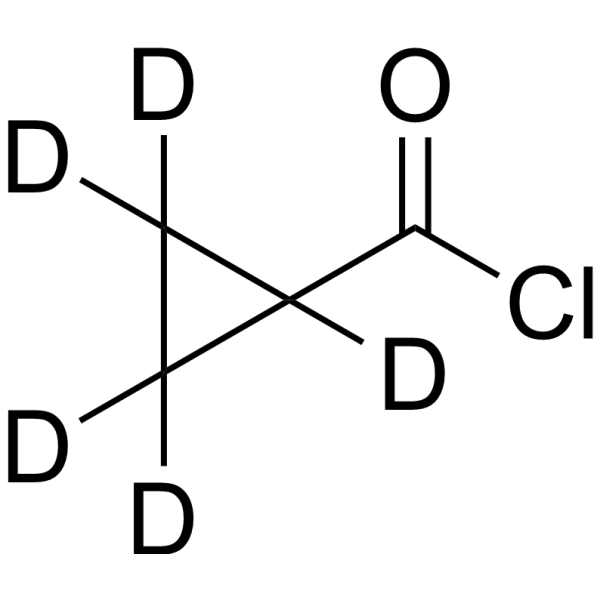 0 ImagesCat. No.: HY-41532SCAS No.: 1219794-96-3Cyclopropane-carbonyl Chloride-d5 is the deuterium labeled Cyclopropanecarboxylic acid chloride.
-
Fmoc-D-Arg(Pbf)-OH-d6
 0 ImagesCat. No.: HY-W010698SFmoc-D-Arg(Pbf)-OH-d6 is the deuterium labeled Fmoc-D-Arg(Pbf)-OH (HY-W010698). Fmoc-D-Arg(Pbf)-OH is an arginine derivative.
-
6-Heptyltetrahydro-2H-pyran-2-one-d4
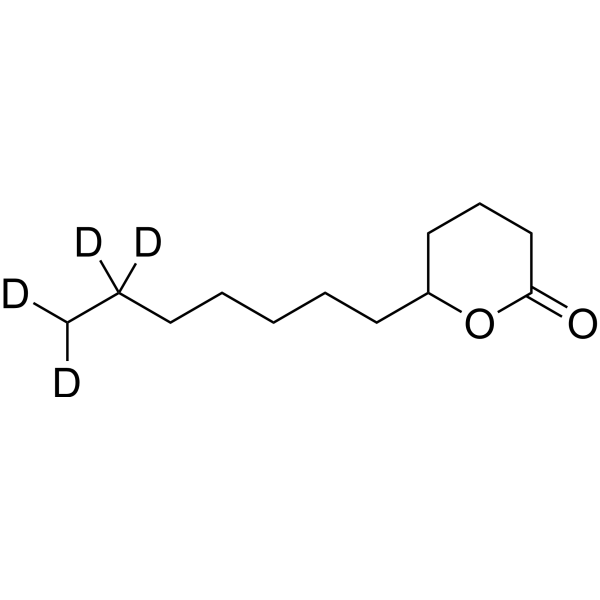 0 ImagesCat. No.: HY-W009815S1CAS No.: 1394230-38-6Synonyms: δ-Laurolactone-d46-Heptyltetrahydro-2H-pyran-2-one-d4 is deuterated labeled 6-Heptyltetrahydro-2H-pyran-2-one.
-
1-Cyclopropyl-6-fluoro-7-(4-formylpiperazin-1-yl)-4-oxo-1,4-dihydroquinoline-3-carboxylic acid-d8
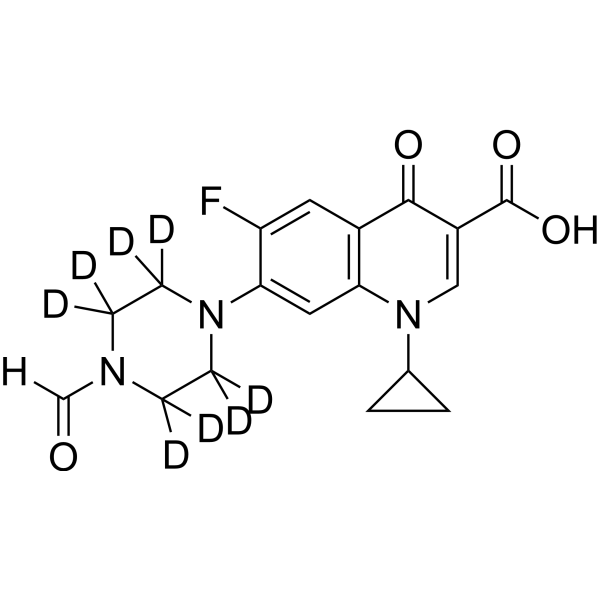 0 ImagesCat. No.: HY-W285163SSynonyms: Formyl Ciprofloxacin-d81-Cyclopropyl-6-fluoro-7-(4-formylpiperazin-1-yl)-4-oxo-1,4-dihydroquinoline-3-carboxylic acid-d8 is deuterated labeled 1-Cyclopropyl-6-fluoro-7-(4-formylpiperazin-1-yl)-4-oxo-1,4-dihydroquinoline-3-carboxylic acid.
-
Piretanide-d4
 0 ImagesCat. No.: HY-119816SCAS No.: 1246816-90-9Piretanide-d4 is the deuterium labeled Piretanide. Piretanide is an oral active, relatively safe and effective diuretic. Piretanide has the potential for the research of congestive heart failure with a potential advantage of having potassium-sparing properties. Piretanide can also be used for the research of hypertension[1][2].
-
DL-Proline-2-d1
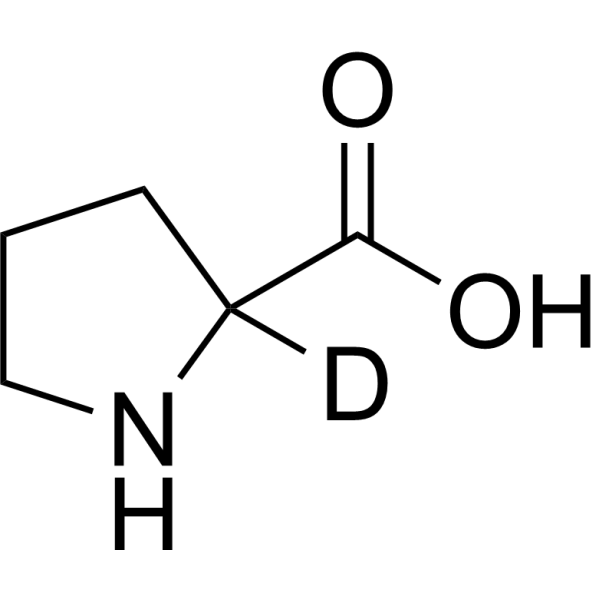 0 ImagesDL-Proline-2-d1 is the deuterated-labeled DL-Proline (HY-W012908). DL-Proline is a racemic mixture of D-Proline and L-Proline, belonging to cyclic imino acids with a five-membered ring structure. DL-Proline serves as a key structural unit in peptide synthesis. DL-Proline stabilizes β-turn conformations and affects the secondary structure of peptide segments. DL-Proline exhibits biological activities such as regulating peptide segment conformations and enhancing cyclic peptide stability. DL-Proline can be used in research on diseases related to peptide structure and function, including cancer and bacterial infections.
-
Polθ-IN-1-d3
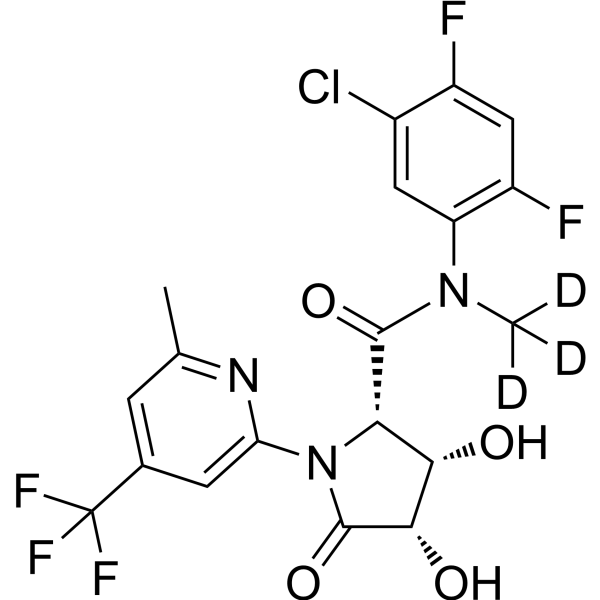 0 ImagesCat. No.: HY-139593SCAS No.: 2598122-35-9Polθ-IN-1-d3 (example 1) is a deuterated Polθ inhibitor used for cancer study (extracted from patent WO2021028670).
-
N-Desmethyl clomipramine-d6
 0 ImagesCat. No.: HY-12388S1Synonyms: Desmethylclomipramine-d6; Norclomipramine-d6N-Desmethyl clomipramine-d6 (Desmethylclomipramine-d6) is deuterium labeled N-Desmethyl clomipramine. Desmethylclomipramine (Norclomipramine) is a metabolite of Clomipramine (HY-B0457A) and can be used for neurological research.
-
Certepetide-13C2,15N
 0 ImagesCat. No.: HY-P3448S1Synonyms: CEND-1-13C2,15N; iRGD-13C2,15N; LSTA1-13C2,15NCertepetide-13C2,15N (CEND-1-13C2,15N) is the 13C- and 15N-labeled Certepetide (HY-P3448). Certepetide (CEND-1) is a bifunctional cyclic peptide (a.k.a. iRGD). Certepetide is a tumor-penetrating enhancer via RGD motif interaction with alphav-integrins and via activating NRP-1, and transforms the solid tumor microenvironment into a temporary agent conduit. Certepetide accumulates in tumors, and is used in the research of pancreatic cancer and other solid tumors.
-
Guanfacine-13C,d5 hydrochloride
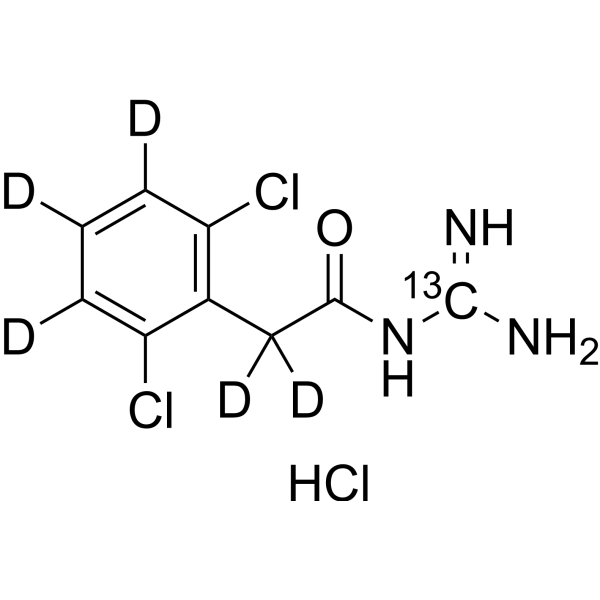 0 ImagesCat. No.: HY-17416S2Guanfacine-13C,d5 hydrochloride is the deuterium and 13C labeled Guanfacine hydrochloride (HY-17416). Guanfacine hydrochloride is an orally active noradrenergic α2A agonist and has high selective for the α2A receptor subtype. Guanfacine has effects in producing hypotension and sedation. Guanfacine can be used for the research of a variety of prefrontal cortex (PFC) cognitive disorders, including tourette's syndrome and attention deficit hyperactivity disorder (ADHD).
-
Silybin B-d3
 0 ImagesCat. No.: HY-N7046SSynonyms: Silibinin B-d3Silybin B-d3 (Silibinin B-d3) is a deuterated Silybin B (HY-N7046). Silybin B (Silibinin B) is an orally active amyloid-β aggregation inhibitor and ATR pathway activator, that can cross the blood-brain barrier. Silybin B inhibits Aβ fibril formation and promotes amorphous aggregate formation, while activating the ATR-mediated DNA damage repair pathway and inhibiting JNK/p38 MAPK signaling. Silybin B can reduce Cisplatin (HY-17394)-induced neuronal DNA damage and apoptosis. Silybin B has anti-oxidative stress, cell cycle regulation and neuroprotective activities. Silybin B is mainly used in the study of Alzheimer's disease and Cisplatin chemotherapy-related neurotoxicity.
-
5-F-UTP-13C,19F,d1
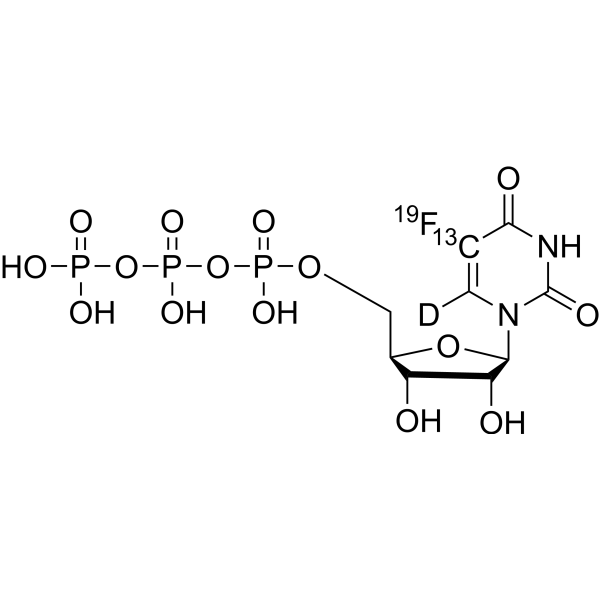 0 ImagesCat. No.: HY-134178S1Synonyms: 5-Fluorouridine 5'-triphosphate-13C,19F,d1
-
N-Propionyl Mesalazine-d3
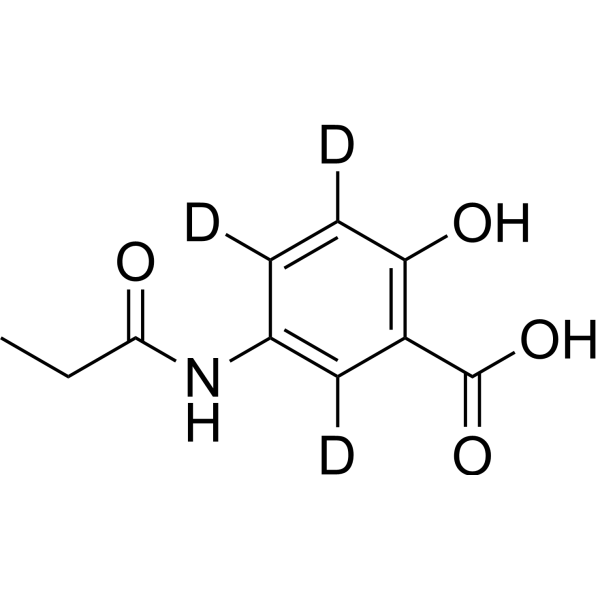 0 ImagesCat. No.: HY-132402SCAS No.: 1330265-97-8N-Propionyl Mesalazine-d3 is the deuterium labeled N-Propionyl Mesalazine.
-
Mal-C6-Gly-Phe-Cpg-7-MAD-MDCPT-d2
 0 ImagesCat. No.: HY-183681S1CAS No.: 3013694-23-7Mal-C6-Gly-Phe-Cpg-7-MAD-MDCPT-d2 is the deuterium labeled Mal-C6-Gly-Phe-Cpg-7-MAD-MDCPT.
-
Prostaglandin E2-1-glyceryl ester-d5
 0 ImagesCat. No.: HY-114826SSynonyms: PGE2-1-glyceyl ester-d5Prostaglandin E2-1-glyceryl ester-d5 (PGE2-1-glyceyl ester-d5) is deuterium labeled Prostaglandin E2-1-glyceryl ester. Prostaglandin E2-1-glyceryl ester, a Prostaglandin Glycerol Ester, is an endocannabinoid ligand for the CB1 receptor. Prostaglandin E2-1-glyceryl ester induces rapid, transient elevation of intracellular free Ca2+.
-
Protriptyline (N-methyl-d3) hydrochloride
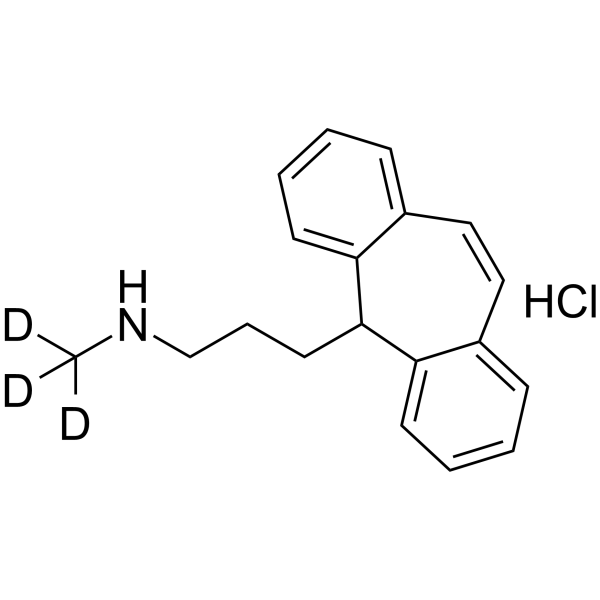 0 ImagesCat. No.: HY-B0949SCAS No.: 1435934-21-6Protriptyline (N-methyl-d3) (hydrochloride) is the deuterium labeled Protriptyline hydrochloride. Protriptyline hydrochloride is a tricyclic antidepressant (TCA), specifically a secondary amine, for the treatment of depression and ADHD. Unique among the TCAs, protriptyline tends to be energizing instead of sedating, used for narcolepsy to achieve a wakefulness-promoting effect.



