



Nuclear Hormone Receptor 4A/NR4A
All Product Categories
-
Nuclear Hormone Receptor 4A/NR4A Agonists
(15)
View all products
-
Nuclear Hormone Receptor 4A/NR4A Antagonist
(1)
View all products
-
Nuclear Hormone Receptor 4A/NR4A Activators
(3)
View all products
-
Nuclear Hormone Receptor 4A/NR4A Modulators
(2)
View all products
-
Nuclear Hormone Receptor 4A/NR4A Control
(1)
View all products
-
Nuclear Hormone Receptor 4A/NR4A Ligand
(1)
View all products
-
Nuclear Hormone Receptor 4A/NR4A Related Products (29)
Related Products (29)

- 1
- 2
-
4A7C-301
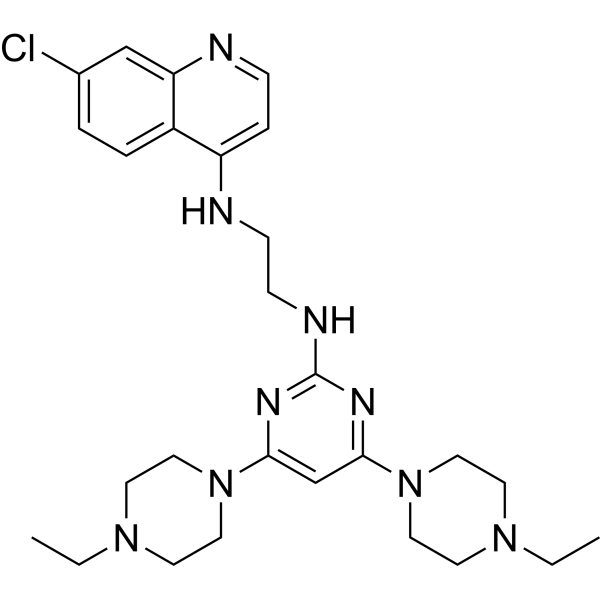 0 Images4A7C-301 is a blood-brain barrier-permeable Nurr1 agonist, with IC50 values of 48.22 nM and 107.71 nM for binding to Nurr1-LBD in the [3H]-CQ competition assay and TR-FRET assay, respectively. The EC50 of 4A7C-301 for activating Nurr1 transcriptional activity is 6.53 μM, and its EC50 in N27-A dopaminergic cells is approximately 0.2 μM. 4A7C-301 binds directly to Nurr1-LBD, enhances the transcriptional function of Nurr1, and restores the reduction of Nurr1 protein induced by MPP+ or αSyn. 4A7C-301 alleviates oxidative stress and mitochondrial dysfunction, protects midbrain dopaminergic neurons, inhibits microglial activation, and restores impaired autophagic flux. 4A7C-301 can be used in studies related to neuroprotection and Parkinson's disease.
-
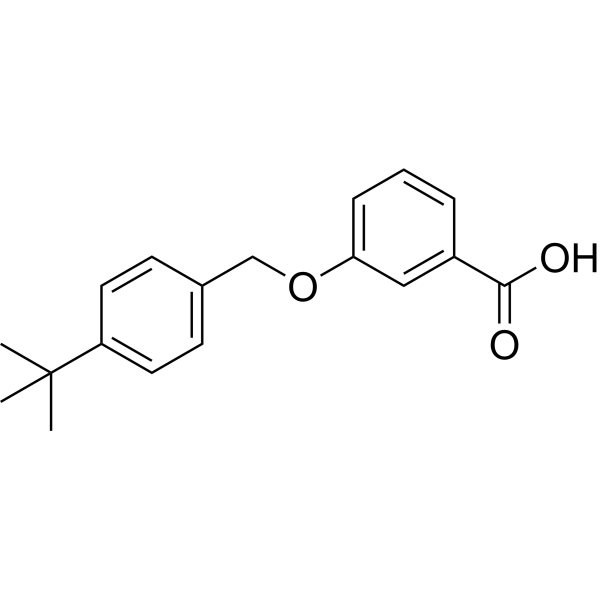
NR4A agonist-1
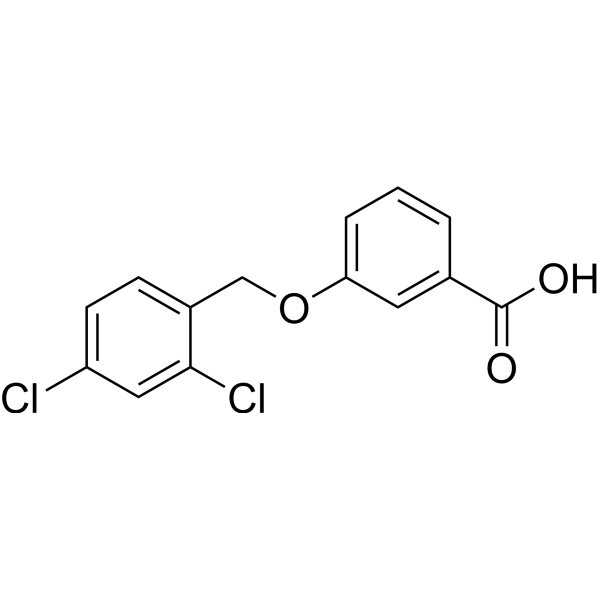 0 ImagesNR4A agonist-1, a fatty acid mimetic (FAM), is a potent NR4A agonist. NR4A agonist-1 exhibits high agonist potency on NR4A receptors Nurr1, Nur77, and NOR-1, with EC50s of 0.09 μM, 0.04 μM, and 0.15 μM, respectively.
-
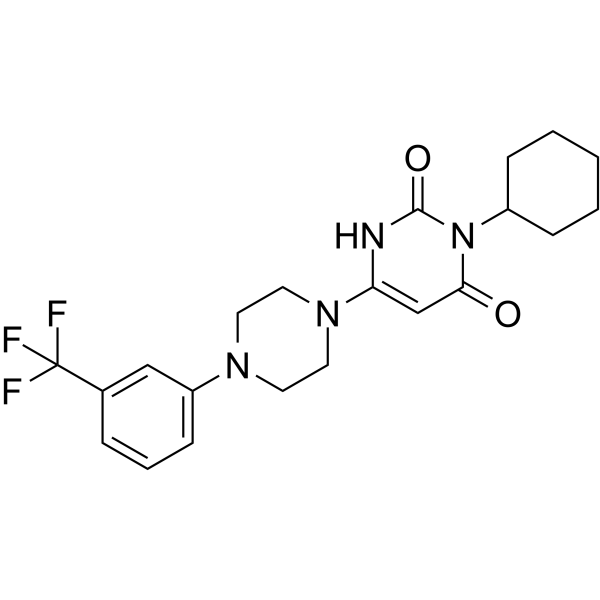
Nurr1 agonist 7
 0 ImagesNurr1 agonist 7 (compound 110) is a Nurr1 agonist with an EC50 value of 0.12 μM.
-
Amoitone B
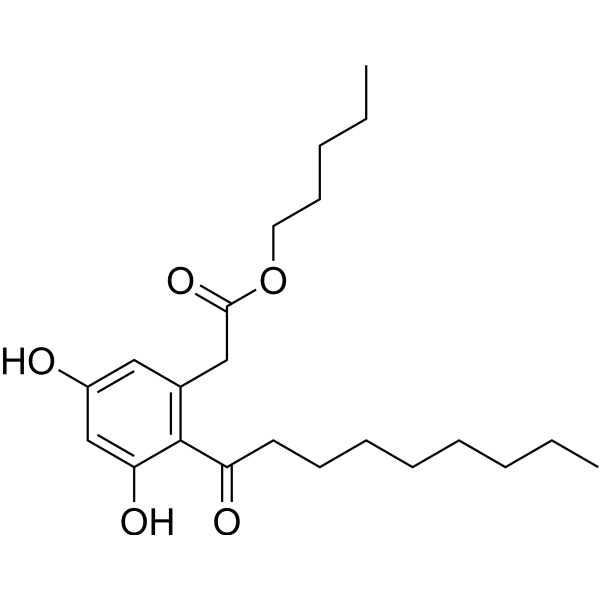 0 ImagesAmoitone B, a derivative of cystosporone B, is an agonist of NR4A1. Amoitone B has anticancer activity.
-
XCT0135908
 0 ImagesCat. No.: HY-119612CAS No.: 300837-31-4Synonyms: XCTXCT0135908 (XCT) is a selective Nurr1-RXRα activator with an EC50 value of 0.3 μM in human dopaminergic SH-SY5Y cells. XCT0135908 protects dopaminergic cells against the Parkinson’s disease-related toxin MPP+. XCT0135908 can be used for the research of Parkinson’s disease.
-
BRF110
 0 ImagesCat. No.: HY-138967CAS No.: 2095489-35-1BRF110 is an orally active, blood-brain barrier-penetrant Nurr1-RXRα heterodimer activator with an EC50 of 0.9 μM in human systems. BRF110 increases the mRNA level of BDNF, upregulates the transcription of TH, AADC and GCH1 to elevate striatal dopamine levels. BRF110 exhibits neuroprotective activity against MPP+-induced cytotoxicity. BRF110 prevents dopaminergic neuron death, protects nerve cells from toxic damage, and improves motor coordination in mouse models. BRF110 can be used in research related to Parkinson's disease.
-
Nurr1 agonist 4
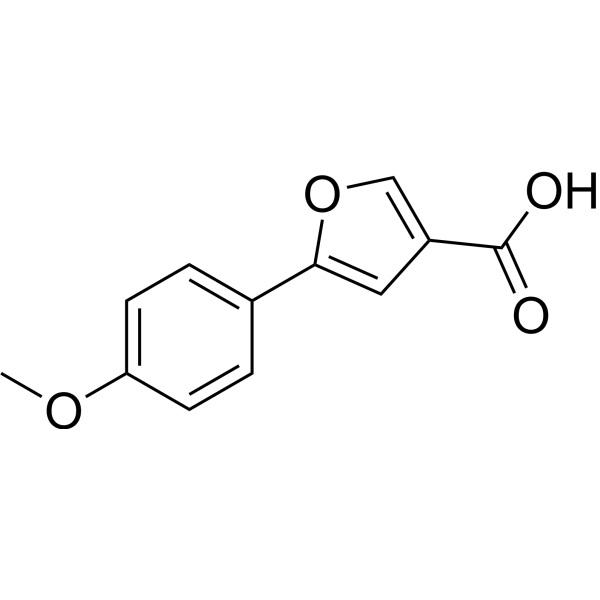 0 ImagesNurr1 agonist 4 (compound 8) is a high-affinity Nurr1 agonist with EC50 of 2.1 μM.
-
Amodiaquine dihydrochloride dihydrate (Standard)
 0 ImagesSynonyms: Amodiaquin dihydrochloride dihydrate (Standard)Amodiaquine (dihydrochloride dihydrate) (Standard) is the analytical standard of Amodiaquine (dihydrochloride dihydrate). This product is intended for research and analytical applications. Amodiaquine dihydrochloride dihydrate (Amodiaquin dihydrochloride dihydrate), a 4-aminoquinoline class of antimalarial agent, is a potent and orally active histamine N-methyltransferase inhibitor. Amodiaquine dihydrochloride dihydrate is also a Nurr1 agonist and specifically binds to Nurr1-LBD (ligand binding domain) with an EC50 of ~20 μM. Anti-inflammatory effect.
-
Prostaglandin E2-biotin
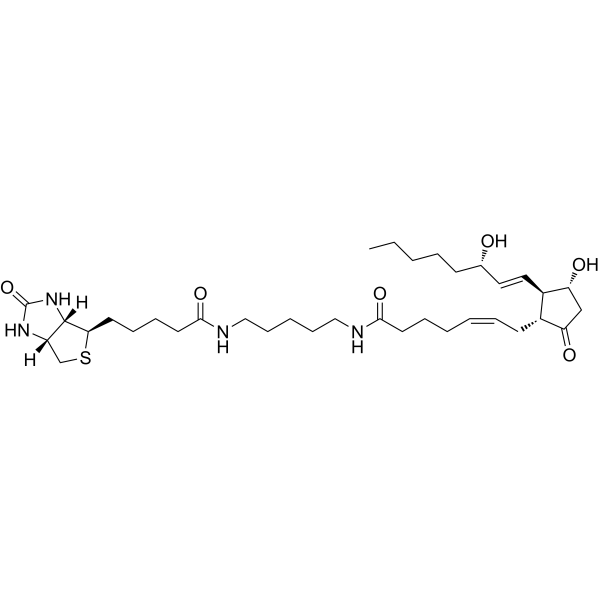 0 ImagesCat. No.: HY-157807CAS No.: 2641624-60-2Prostaglandin E2-biotin is a prostaglandin analog. Prostaglandin E2-biotin can be used for research of Nurr1-related disease, such as cancer and autoimmune disease.
-
NOT Receptor Modulator 1
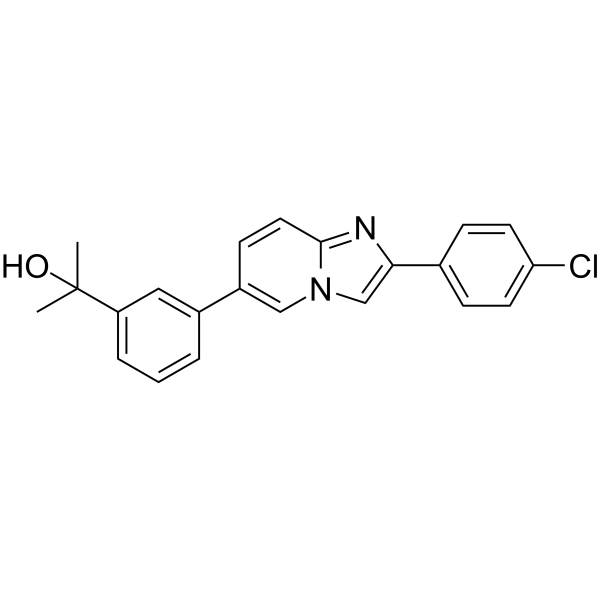 0 ImagesNOT Receptor Modulator 1 is a nuclear receptor Nurr-1/NOT modulator extracted from patent WO 2008034974 A1, Example 39 in table1.
-
Teduglutide-Leu(13C6,15N) sodium
 0 ImagesCat. No.: HY-P1624S1Synonyms: ALX-0600-Leu(13C6,15N) sodiumTeduglutide-Leu(13C6,15N) (ALX-0600-Leu(13C6,15N)) sodium is the 13C- and 15N-labeled Teduglutide (HY-P1624). Teduglutide (ALX-0600) is an analog of human glucagon like peptide-2 (GLP-2). Teduglutide can activate the expression of nuclear receptor subfamily 4 group a member 1 (NR4a1)/nur77 and intestinal FXR signaling in human hepatic stellate cells, thereby improving liver inflammation and fibrosis in mice with sclerosing cholangitis. Teduglutide can alleviate intestinal dysfunction in mice, improve lung injury, alleviate obesity related neuroinflammation and cell apoptosis.
-
ST-CY14
 0 ImagesCat. No.: HY-P10873ST-CY14 is an inhibitor for Nur77-PPARγ interaction with an EC50 of 3.15 μM, that binds to Nur77 (Kd=32 nM), blocks Nur77 from being ubiquitinated and degraded by PPARγ, reduces fatty acid uptake and mitochondrial respiration, and inhibits the transcription of CD36 and FABP4. ST-CY14 inhibits the proliferation and migration of cancer cell MCF7 and MDA-MB-231. ST-CY14 inhibits tumor growth and bone metastasis in mouse models.
-
Nurr1 agonist 6
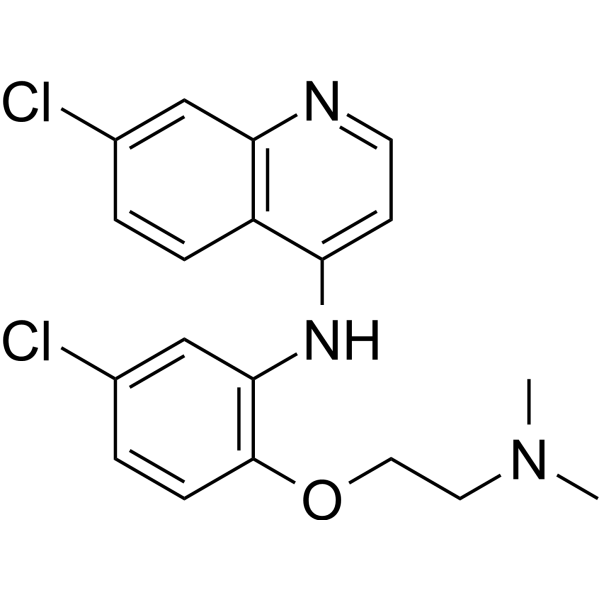 0 ImagesCat. No.: HY-149609CAS No.: 3033875-47-4Nurr1 agonist 6 (compound 13) is a Nurr1 agonist with Kd value of 1.5 μM and EC50 value of 3 μM.
-
Digoxigenin bisdigitoxoside
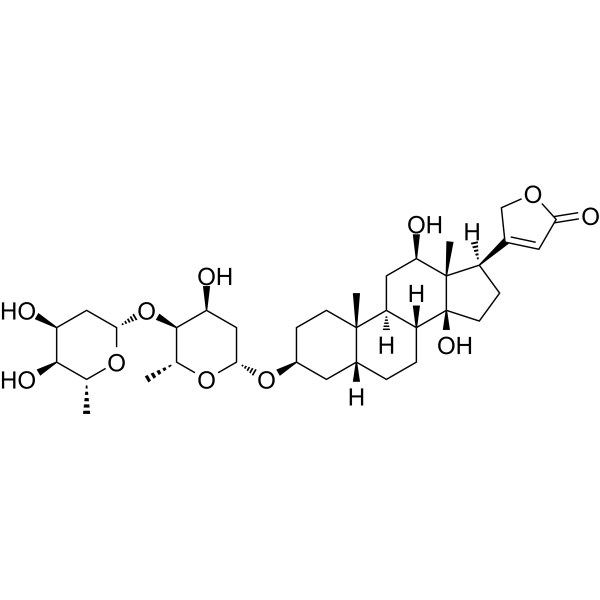 0 ImagesDigoxigenin bisdigitoxoside is an anticancer agent and an active derivative of cardiac glycosides. Cardiac glycosides exert their apoptotic effects through the Nur77-dependent apoptotic pathway. Digoxigenin bisdigitoxoside is cytotoxic.
-
Nurr1 agonist 11
 0 ImagesCat. No.: HY-162786CAS No.: 1090335-04-8Nurr1 agonist 11 (compound 53) is a selective and potent Nurr1 agonist with an IC50 of 26 µM. Nurr1 agonist 11 has the ability to cross a cellular model of the blood-brain-barrier (BBB) .
-
DdBIC
 0 ImagesCat. No.: HY-180786CAS No.: 3085711-53-8DdBIC is a pyroptosis inducer. DdBIC binds to Nur77 and triggers its translocation to mitochondria, activates SDHA to deplete succinyl-CoA, disrupts heme homeostasis, induces electron leakage, and elicits mitochondrial ROS production. DdBIC induces mitochondrial ROS that oxidatively activates OMA1, promotes OPA1 cleavage and its release into the cytoplasm, activates the integrated stress response via PERK, and ultimately activates granzyme B to cleave GSDMC. DdBIC can be used for the study of melanoma.
-
Teduglutide TFA
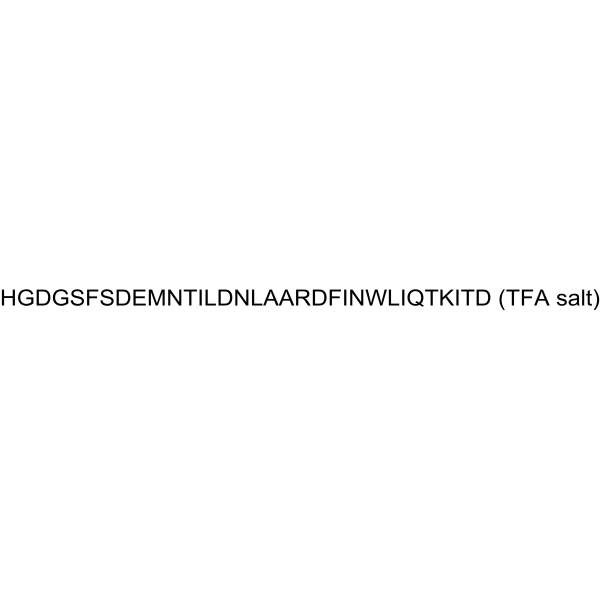 0 ImagesCat. No.: HY-P1624ASynonyms: ALX-0600 TFATeduglutide TFA is a dipeptidyl peptidase IV resistant glucagon-like peptide 2 (GLP-2) analogue. Teduglutide TFA can activate the expression of nuclear receptor subfamily 4 group a member 1 (NR4a1)/nur77 and intestinal FXR signaling in human hepatic stellate cells, thereby improving liver inflammation and fibrosis in mice with sclerosing cholangitis. Teduglutide TFA can alleviate intestinal dysfunction in mice, improve lung injury, alleviate obesity related neuroinflammation and cell apoptosis.
-
Anticancer agent 257
 0 ImagesCat. No.: HY-169906CAS No.: 2891997-46-7Anticancer agent 257 (compound of formula (I)) is an anticancer agent with Nur77 and Nurrl modulating effects.
-
Amodiaquine-d10 hydrochloride
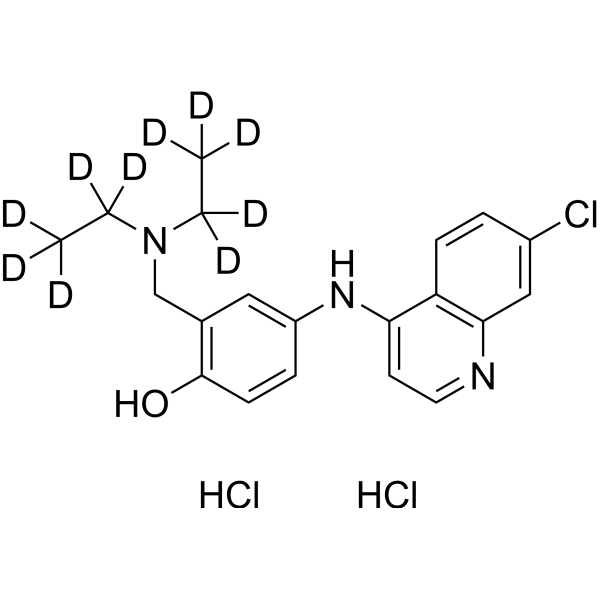 0 ImagesCat. No.: HY-B1322AS1Synonyms: Amodiaquin-d10Amodiaquine-d10 hydrochloride is deuterated labeled Amodiaquine (HY-B1322A). Amodiaquine (Amodiaquin), a 4-aminoquinoline class of antimalarial agent, is a potent and orally active histamine N-methyltransferase inhibitor. Amodiaquine is also a Nurr1 agonist and specifically binds to Nurr1-LBD (ligand binding domain) with an EC50 of ~20 μM. Anti-inflammatory effect.
- 1
- 2



