



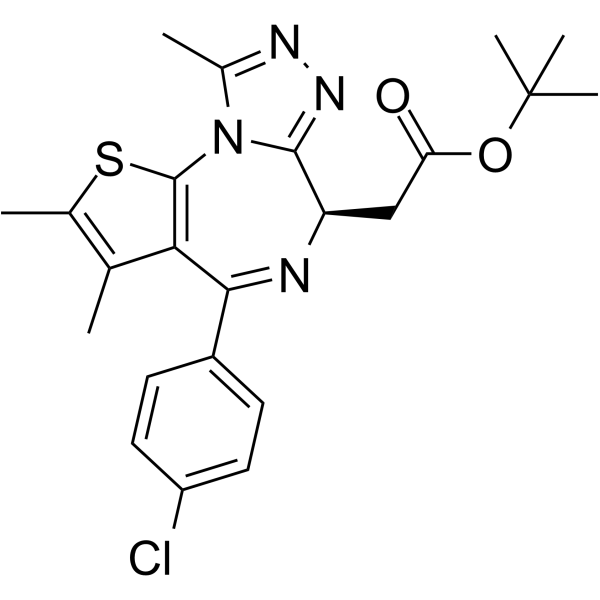
(R)-(-)-JQ1 Enantiomer
Based on 10 publication(s) in Google Scholar
(R)-(-)-JQ1 Enantiomer is the stereoisomer of (+)-JQ1. (+)-JQ1 potently decreases expression of both BRD4 target genes, whereas (R)-(-)-JQ1 Enantiomer has no effect.
For research use only. We do not sell to patients.
- Purity : 99.79%
- CAS No.: 1268524-71-5
- Formula: C23H25ClN4O2S
- Molecular Weight:456.99
-
Storage:Powder -20°C, 3 years , 4°C, 2 years ; In solvent -80°C, 2 years , -20°C, 1 year

To place orders, for customer services and technical support, please contact: MedChemExpress USA
Tel: 609-228-6898 E-mail: [email protected] [email protected]


-
 Biological Activity
-
Chemical Information
-
Solvent & Solubility
- Protocols
- Purity & Documentation
- References
-
 Help & FAQs


-
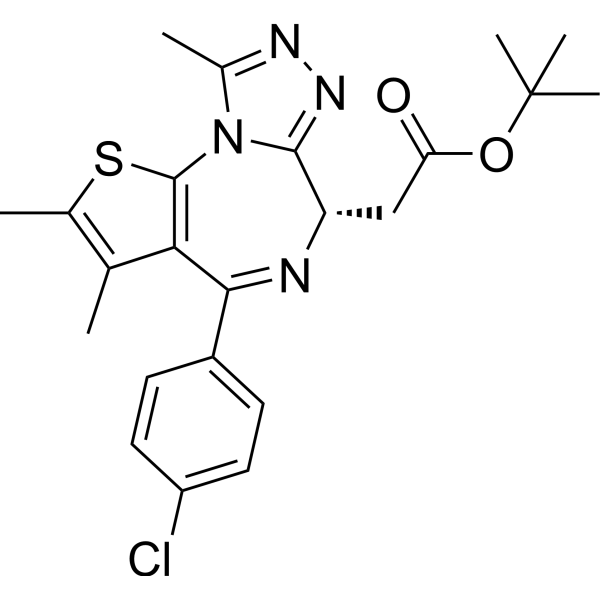
HY-13030
(+)-JQ-1BET Inhibitor -
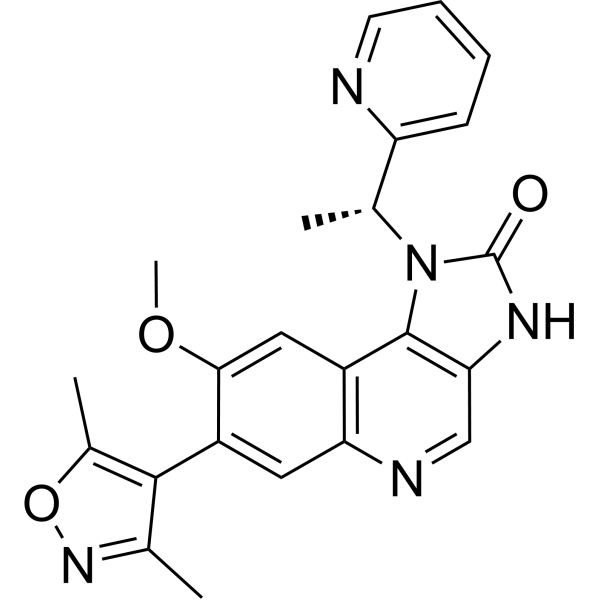
HY-13235
I-BET151BRD2/3/4 Inhibitor -
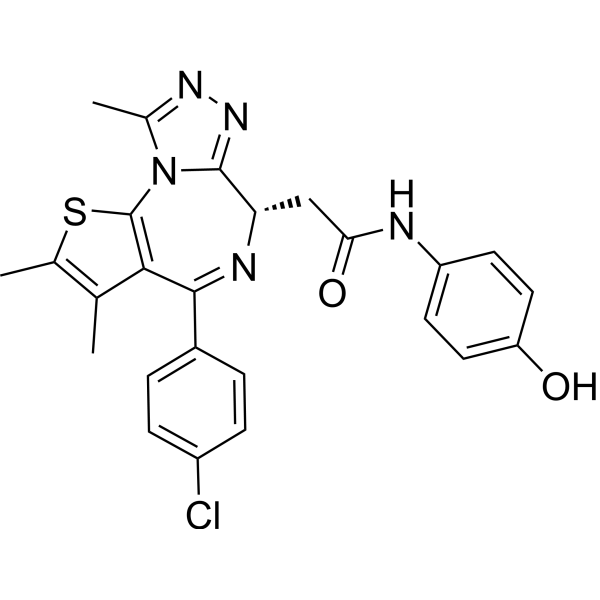
HY-15743
BirabresibBRD2/3/4 Inhibitor -
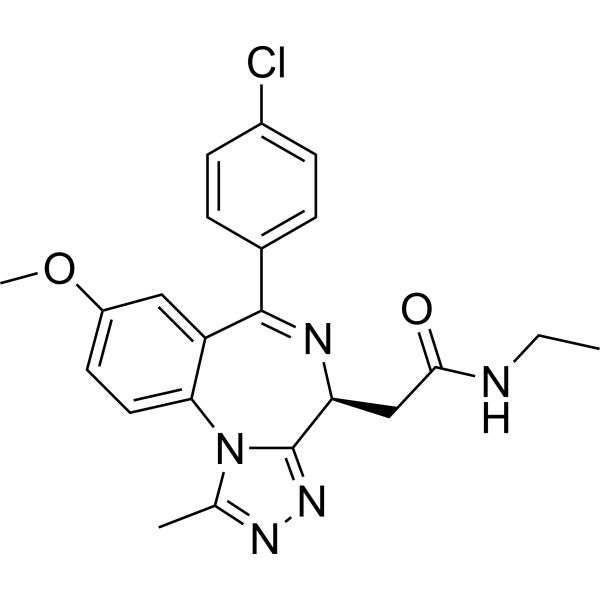
HY-13032
MolibresibBET Inhibitor -
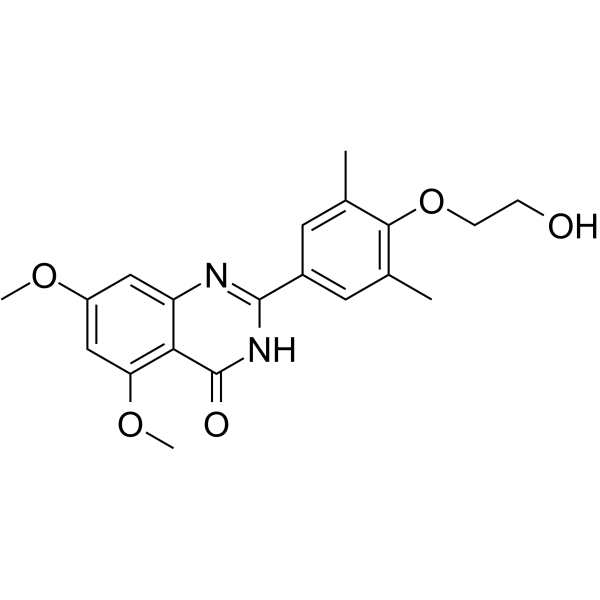
HY-16652
ApabetaloneBET Inhibitor -
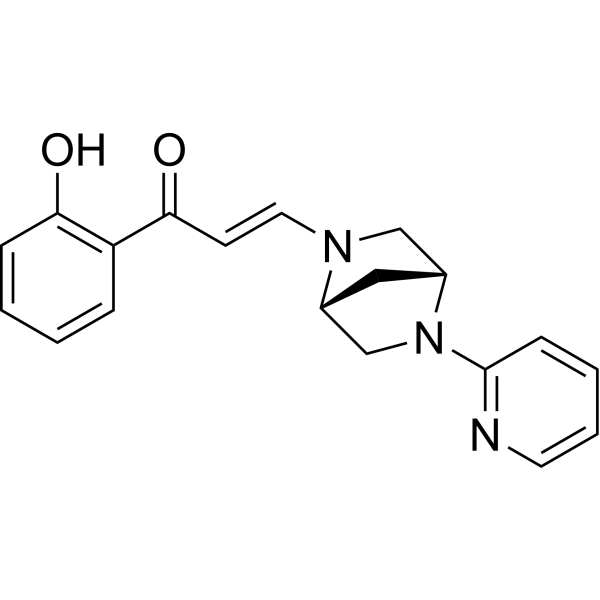
HY-12409
PFI-3SMARCA2/4 Bromodomain Inhibitor -
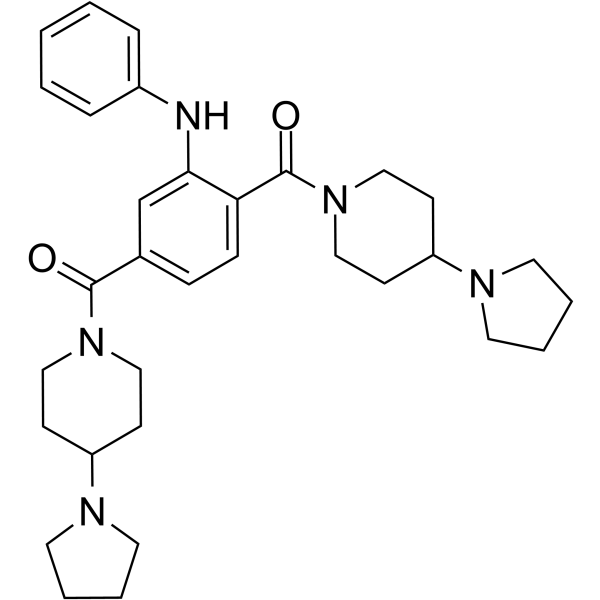
HY-15649
UNC1215L3MBTL3 Inhibitor -
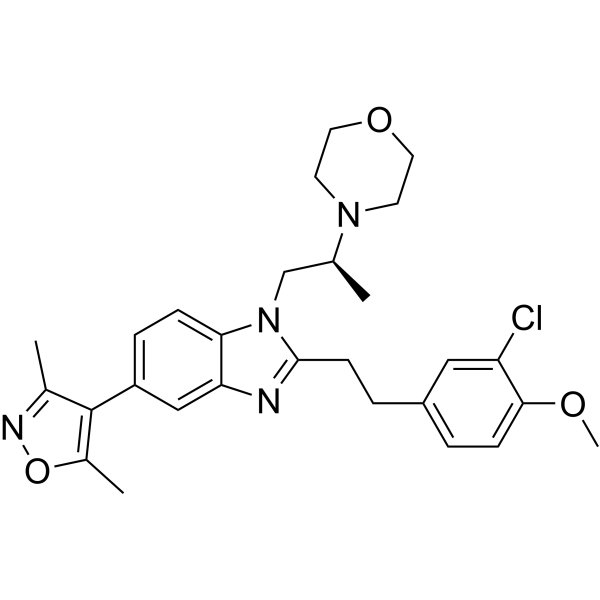
HY-15826
SGC-CBP30CBP/p300 Inhibitor -
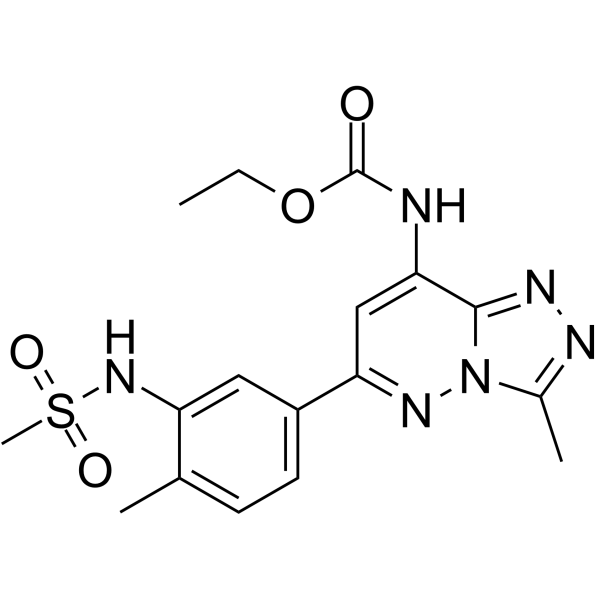
HY-15815
BromosporineBET Inhibitor -
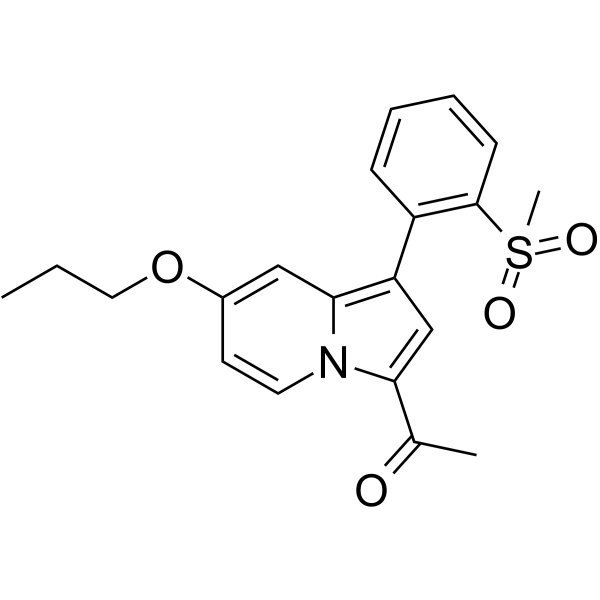
HY-15658
GSK2801BAZ2A/B Inhibitor -
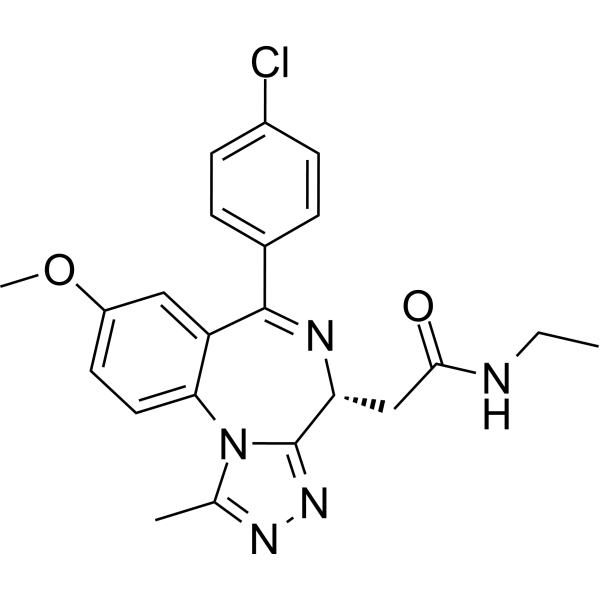
HY-13032A
GSK 525768AInactive Enantiomer of GSK525762A -
HY-13960
GSK1324726ABET Inhibitor
Publications Citing Use of MedChemExpress (MCE) (R)-(-)-JQ1 Enantiomer
More- Sci Adv. 2022 Aug 5;8(31):eabo5633. [Abstract]
- Cell Death Dis. 2020 Jun 15;11(6):459. [Abstract]
- Proc Natl Acad Sci U S A. 2019 Feb 19;116(8):2961-2966. [Abstract]
- EMBO Mol Med. 2018 Apr;10(4):e8163. [Abstract]
- Br J Pharmacol. 2020 Jul;177(13):2959-2973. [Abstract]
- Front Pharmacol. 2020 Jul 10:11:1043. [Abstract]
- J Mol Cell Cardiol. 2019 Feb:127:83-96. [Abstract]
- Sci Rep. 2018 Aug 1;8(1):11554. [Abstract]
- Noncoding RNA. 2025 Apr 29;11(3):33. [Abstract]
- bioRxiv. 2024 July 12.
 Customer Validation & Images

-
WB
-
WB
-
WB


Biological Activity
Description
IC50 & Target
BET bromodomain[1]
In Vitro
(R)-(-)-JQ1 Enantiomer shows no significant interaction with any bromodomain. Besides, (R)-(-)-JQ1 Enantiomer is comparatively inactive in nuclear protein in testis (NUT) midline carcinoma (NMC)[1].
MedChemExpress (MCE) has not independently confirmed the accuracy of these methods. They are for reference only. Further protocols information, click here.


Chemical Information
-
CAS No. 1268524-71-5
-
Appearance Solid
-
Molecular Weight 456.99
-
Formula C23H25ClN4O2S
-
Color Light yellow to yellow
-
SMILES
O=C(C[C@H]1N=C(C2=C(N3C1=NN=C3C)SC(C)=C2C)C4=CC=C(C=C4)Cl)OC(C)(C)C
-
Shipping
Room temperature in continental US; may vary elsewhere.
-
Storage
Powder -20°C 3 years 4°C 2 years In solvent -80°C 2 years -20°C 1 year


Publications (10)
-
Journal Impact Factor
-
Most Recent
-
Sci Adv
Identification of the NRF2 transcriptional network as a therapeutic target for trigeminal neuropathic pain. [Abstract]2022 Aug 5;8(31):eabo5633. PMID: 35921423 -
Cell Death Dis
Brd4 inhibition ameliorates Pyocyanin-mediated macrophage dysfunction via transcriptional repression of reactive oxygen and nitrogen free radical pathways. [Abstract]2020 Jun 15;11(6):459. PMID: 32541671 -
Proc Natl Acad Sci U S A
2019 Feb 19;116(8):2961-2966. PMID: 30718431 -
EMBO Mol Med
An FGFR3/MYC positive feedback loop provides new opportunities for targeted therapies in bladder cancers. [Abstract]2018 Apr;10(4):e8163. PMID: 29463565
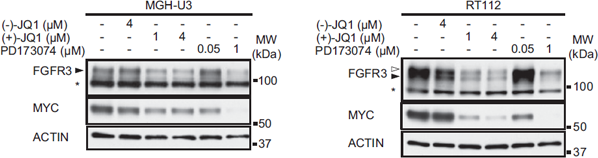
(R)-(-)-JQ1 Enantiomer purchased from MedChemExpress. Usage Cited in: EMBO Mol Med. 2018 Apr;10(4):e8163. [Abstract]
Western blot analysis of MYC and FGFR3 expression in lysates from MGH-U3 and RT112 cells treated with (+)-JQ1 (1 or 4 μM) for 48 h. Anti-actin antibody is used as a loading control. Pan-FGFR inhibitor, PD173074 (50 nM and 1 μM), and inactive enantiomer (-)-JQ1 (4 μM) are used as controls.
-
Br J Pharmacol
JQ1, a bromodomain inhibitor, suppresses Th17 effectors by blocking p300-mediated acetylation of RORγt. [Abstract]2020 Jul;177(13):2959-2973. PMID: 32060899 -
Front Pharmacol
A Bromodomain-Containing Protein 4 (BRD4) Inhibitor Suppresses Angiogenesis by Regulating AP-1 Expression. [Abstract]2020 Jul 10:11:1043. PMID: 32765266 -
J Mol Cell Cardiol
Inhibition of BRD4 attenuates transverse aortic constriction- and TGF-β-induced endothelial-mesenchymal transition and cardiac fibrosis. [Abstract]2019 Feb:127:83-96. PMID: 30529267
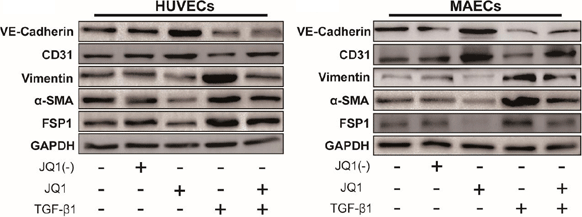
(R)-(-)-JQ1 Enantiomer purchased from MedChemExpress. Usage Cited in: J Mol Cell Cardiol. 2019 Feb:127:83-96. [Abstract]
The expression of EndMT-related proteins, VE-cadherin, CD31, vimentin, α-SMA and FSP1, were compared among Ctrl, JQ1(-), JQ1, TGF-β1, and TGF-β1+JQ1 groups in both HUVECs and MAECs.
-
Sci Rep
Enhancement of adenovirus infection and adenoviral vector-mediated gene delivery by bromodomain inhibitor JQ1. [Abstract]2018 Aug 1;8(1):11554. PMID: 30068949
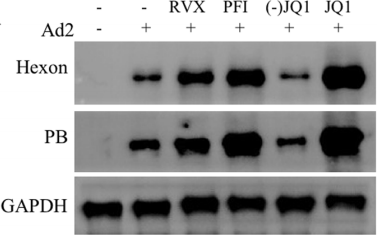
(R)-(-)-JQ1 Enantiomer purchased from MedChemExpress. Usage Cited in: Sci Rep. 2018 Aug 1;8(1):11554. [Abstract]
A549 cells are mock-treated (0.1% DMSO in culture medium) or treated with RVX-208 at 500 nM, PFI-1 at 500 nM, JQ1 at 300 nM, or with 300 nM (-)-JQ1, an inactive enantiomer of JQ1. The cells are then infected with Ad2 at 1 PFU/cell for 24 h. Viral hexon and penton base (PB) protein is detected by immunoblotting analysis.
-
Noncoding RNA
Bromodomain and Extra-Terminal Family Proteins BRD2, BRD3, and BRD4 Contribute to H19-Dependent Transcriptional Regulation of Cell Adhesion Molecules, Modulating Metastatic Dissemination Program in Prostate Cancer. [Abstract]2025 Apr 29;11(3):33. PMID: 40407591 -


Solvent & Solubility
In Vitro:
DMSO : ≥ 100 mg/mL (218.82 mM; Hygroscopic DMSO has a significant impact on the solubility of product, please use newly opened DMSO)
* "≥" means soluble, but saturation unknown.
Please refer to the solubility information to select the appropriate solvent. Once prepared, please aliquot and store the solution to prevent product inactivation from repeated freeze-thaw cycles.
Storage method and period of stock solution: -80°C, 2 years; -20°C, 1 year. When stored at -80°C, please use it within 2 years. When stored at -20°C, please use it within 1 year.
Please refer to the solubility information to select the appropriate solvent. Once prepared, please aliquot and store the solution to prevent product inactivation from repeated freeze-thaw cycles.
Storage method and period of stock solution: -80°C, 2 years; -20°C, 1 year. When stored at -80°C, please use it within 2 years. When stored at -20°C, please use it within 1 year.
Concentration (start) × Volume (start) = Concentration (final) × Volume (final)
In Vivo:
Select the appropriate dissolution method based on your experimental animal and administration route.
- For the following dissolution methods, please ensure to first prepare a clear stock solution using an In Vitro approach and then sequentially add co-solvents:
- To ensure reliable experimental results, the clarified stock solution can be appropriately stored based on storage conditions. As for the working solution for In Vivo experiments, it is recommended to prepare freshly and use it on the same day.
- The percentages shown for the solvents indicate their volumetric ratio in the final prepared solution. If precipitation or phase separation occurs during preparation, heat and/or sonication can be used to aid dissolution.
Add each solvent one by one: 10% DMSO 40% PEG300 5% Tween-80 45% Saline
Solubility: ≥ 2.75 mg/mL (6.02 mM); Clear solution
This protocol yields a clear solution of ≥ 2.75 mg/mL (saturation unknown).
Taking 1 mL working solution as an example, add 100 μL DMSO stock solution (27.5 mg/mL) to 400 μL PEG300, and mix evenly; then add 50 μL Tween-80 and mix evenly; then add 450 μL Saline to adjust the volume to 1 mL.
Preparation of Saline: Dissolve 0.9 g sodium chloride in ddH₂O and dilute to 100 mL to obtain a clear Saline solution.
Add each solvent one by one: 10% DMSO 90% (20% SBE-β-CD in Saline)
Solubility: ≥ 2.75 mg/mL (6.02 mM); Clear solution
This protocol yields a clear solution of ≥ 2.75 mg/mL (saturation unknown).
Taking 1 mL working solution as an example, add 100 μL DMSO stock solution (27.5 mg/mL) to 900 μL 20% SBE-β-CD in Saline, and mix evenly.
Preparation of 20% SBE-β-CD in Saline (4°C, storage for one week): 2 g SBE-β-CD powder is dissolved in 10 mL Saline, completely dissolve until clear.
In Vivo Dissolution Calculator
Please enter the basic information of animal experiments:
-
-
-
-
Recommended: Prepare an additional quantity of animals to account for potential losses during experiments.
Please enter your animal formula composition:
-
%DMSO +
Recommended: Keep the proportion of DMSO in working solution below 2% if your animal is weak.
-
%+
-
+%Tween-80 + +
-
%Saline +
The co-solvents required include: DMSO, . All of co-solvents are available by MedChemExpress (MCE). , Tween 80. All of co-solvents are available by MedChemExpress (MCE).
Working solution concentration: 0.22 mg/mL
Method for preparing stock solution: mg drug dissolved in μL DMSO. Stock solution concentration: mg/mL.
1. Take μL DMSO stock solution;
2. Add μL .
μL , mix evenly;
3. Then add μL Tween 80, mix evenly;
4. Then add μL
Please ensure that the stock solution in the first step is dissolved to a clear state, and add co-solvents in sequence. You can use ultrasonic heating (ultrasonic cleaner, recommended frequency 20-40 kHz), vortexing, etc. to assist dissolution.

Protocols
-
RNA extraction experimental
By lysing cells, releasing RNA, and removing impurities such as proteins and DNA, high-purity RNA products are finally obtained. The commonly used traditional method is the guanidine isothiocyanate/phenol/chloroform method (Trizol), which is suitable for a variety of animal materials including animal tissues, microorganisms, cultured cells, etc., and most plant materials.


Purity & Documentation
-
Data Sheet (280 KB)
-
SDS (393 KB)
- English - EN (393 KB)
- Français - FR (393 KB)
- Deutsch - DE (393 KB)
- Norwegian - NO (393 KB)
- Español - ES (393 KB)
- Swedish - SV (393 KB)
- Italian - IT (393 KB)
- Korean - KR (393 KB)
- Portuguese - PT (393 KB)
-
Handling Instructions (2659 KB)
References
[1]. Filippakopoulos, et al. Selective inhibition of BET bromodomains. Nature. 2010 Dec 23;468(7327):1067-73. [Content Brief]
[2]. Mahe M, et al. An FGFR3/MYC positive feedback loop provides new opportunities for targeted therapies in bladder cancers. EMBO Mol Med. 2018 Apr;10(4). pii: e8163. [Content Brief]


Complete Stock Solution Preparation Table
Please refer to the solubility information to select the appropriate solvent. Once prepared, please aliquot and store the solution to prevent product inactivation from repeated freeze-thaw cycles.
Storage method and period of stock solution: -80°C, 2 years; -20°C, 1 year. When stored at -80°C, please use it within 2 years. When stored at -20°C, please use it within 1 year.
| Optional Solvent | Concentration Solvent Mass | 1 mg | 5 mg | 10 mg | 25 mg |
|---|---|---|---|---|---|
| DMSO | 1 mM | 2.1882 mL | 10.9412 mL | 21.8823 mL | 54.7058 mL |
| 5 mM | 0.4376 mL | 2.1882 mL | 4.3765 mL | 10.9412 mL | |
| 10 mM | 0.2188 mL | 1.0941 mL | 2.1882 mL | 5.4706 mL | |
| 15 mM | 0.1459 mL | 0.7294 mL | 1.4588 mL | 3.6471 mL | |
| 20 mM | 0.1094 mL | 0.5471 mL | 1.0941 mL | 2.7353 mL | |
| 25 mM | 0.0875 mL | 0.4376 mL | 0.8753 mL | 2.1882 mL | |
| 30 mM | 0.0729 mL | 0.3647 mL | 0.7294 mL | 1.8235 mL | |
| 40 mM | 0.0547 mL | 0.2735 mL | 0.5471 mL | 1.3676 mL | |
| 50 mM | 0.0438 mL | 0.2188 mL | 0.4376 mL | 1.0941 mL | |
| 60 mM | 0.0365 mL | 0.1824 mL | 0.3647 mL | 0.9118 mL | |
| 80 mM | 0.0274 mL | 0.1368 mL | 0.2735 mL | 0.6838 mL | |
| 100 mM | 0.0219 mL | 0.1094 mL | 0.2188 mL | 0.5471 mL |


(R)-(-)-JQ1 Enantiomer Related Classifications
HY-13030A Related Classifications
 Powered by Bioz