



ACHE Antibody (YA3883)
(Synonyms: YT; ACEE; ARACHE; N-ACHE; Apoptosis related acetylcholinesterase antibody)
Based on 1 Customer Validation
ACHE Antibody (YA3883) is a Mouse-derived and non-conjugated IgG1 monoclonal antibody, targeting to ACHE.
-
Host:
Mouse
-
Isotype:
IgG
-
Application:
WB, IHC-P, FC
-
Reactivity :
Human, Mouse, Monkey, Rat
-
Formulation:
Supplied in PBS with 0.05% sodium azide
-
Conjugation:
Non-conjugated


To place orders, for customer services and technical support, please contact: MedChemExpress USA
Tel: 609-228-6898 E-mail: [email protected] [email protected]





Applications
| Application |
WB

WB: Western Blot
|
IHC-P
IHC-P: Immunohistochemistry-Paraffin
|
FC
FC: Flow Cytometry
|
|---|---|---|---|
| Dilution Ratio | 1:500-1:2000 | 1:200-1:1000 | 1:200-1:400 |


Product Details
ACHE Antibody (YA3883) is a Mouse-derived and non-conjugated IgG1 monoclonal antibody, targeting to ACHE.
-
Host Mouse

-
Clonality Monoclonal

-
Species ReactivityHuman, Mouse, Monkey, Rat
-
Observed Molecular WeightObserved band size: 75kDa
Note: Due to possible protein modifications or aggregation, the molecular weight should be confirmed by actual measurement, and the predicted value is for reference only.

-
Calculated Molecular Weight Predicted band size: 68 kDa

Purified recombinant fragment of human ACHE aa 587-611(KLH).
affinity purified.
Non-conjugated
Unmodified
IgG


Product Properties
-
Appearance
Solution
-
Formulation
Supplied in PBS with 0.05% sodium azide
-
Concentration
Batch-dependent, Please check the COA for the concentration of each lot. Check Lot Concentration
-
Storage & Stability
Stored at -20°C for 1 year. Avoid repeated freeze / thaw cycles.
-
Shipping
Shipping with blue ice.


Verification Images
-
 Western blot analysis of extracts from Hela (lane 2, 20ug), Mouse brain (lane 3, 20ug), NIH/3T3 (lane 4, 20ug) and Jurkat (lane 5, 20ug) using ACHE Antibody (HY-P84186). Proteins were transferred to a PVDF membrane and blocked with 5% non-fat milk in TBST at 4°C overnight. The primary antibody (1/1000) and Loading control antibody (Beta Actin, HY-P80993, 1/10,000) was used in 5% non-fat milk in TBST for 2 hour at room temperature. Goat Anti-Mouse IgG-HRP Secondary Antibody (HY-P8004,1/10,000) was used for 1 hour at room temperature.
 -
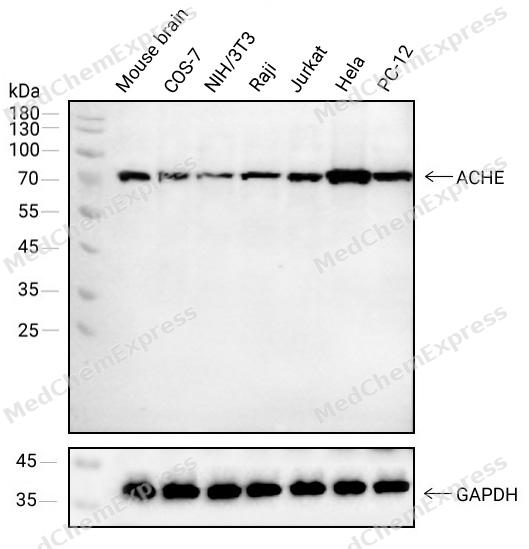 Western blot analysis of extracts from Mouse brain(lane 1(40μg) ),COS-7(lane 2(40μg) ),NIH/3T3(lane 3(40μg) ),Raji(lane 4(40μg) ),Jurkat(lane 5(40μg) ),Hela(lane 6(40μg) )and PC-12(lane 7(40μg) ) using ACHE antibody. Proteins were transferred to a NC membrane and blocked with 5% Skim milk in TBST for 2 hour at room temperature. The primary antibody ( 1/1000) and Loading control antibody (GAPDH,1/1000) was used in 5% Skim milk in TBST at 4°C overnight. Goat Anti-Mouse IgG-HRP Secondary Antibody (1/10,000) was used for 1 hour at room temperature.
 -
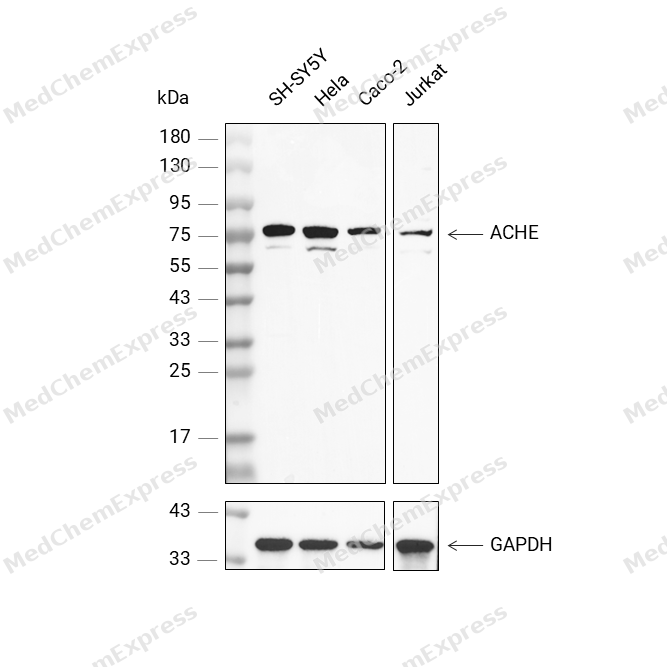 Western blot analysis was performed on protein extracts (30 μg) from SH-SY5Y (lane 2), Hela (lane 3), Caco-2 (lane 4), and Jurkat (lane 5) using ACHE antibody. Proteins were transferred onto a 0.45 μm PVDF membrane using the Trans-Blot® Turbo™ system for 13 min. The membrane was then blocked with 5% nonfat milk in TBST (HY-K1025) for 1 h at room temperature. Thhe primary antibody (1:500) and loading control antibody GAPDH Antibody (HRP) (HY-P80954A) (1:5000) were diluted in 5% nonfat milk in TBST and incubated with the membrane overnight at 4°C. After washing, the membrane of primary antibody was incubated with HRP-conjugated goat anti-rabbit/mouse IgG secondary antibody (HY-P8001/HY-P8004) (1:5000) diluted in 5% nonfat milk in TBST for 1 h at room temperature. Protein bands were visualized using an Ultra High Sensitivity ECL detection kit (HY-K1005).
 -
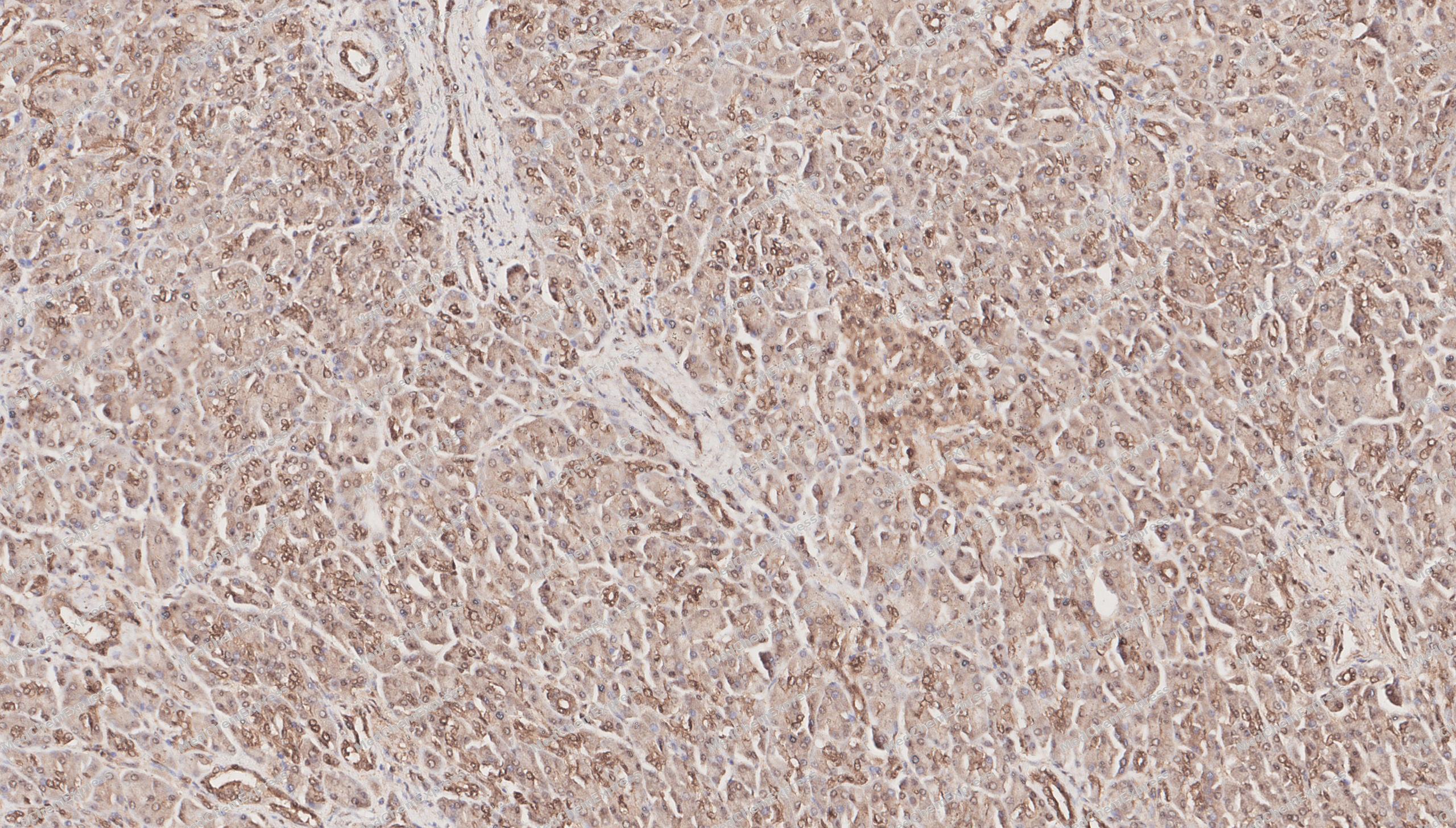 Immunohistochemical analysis of paraffin-embedded human Pancreatic cancer tissue using ACHE antibody was performed. The section was pretreated using high-temperature mediated EDTA antigen retrieval buffer (pH 9.0), for 20 minutes. The tissues were incubated with primary antibody (HY-P84186, 1:900 dilution) at room temperature for 20 minutes. Detection was performed using an HRP conjugated compact polymer system. DAB was used as the chromogen. The tissues were counterstained with hematoxylin and mounted with neutral balsam mounting medium.
 -
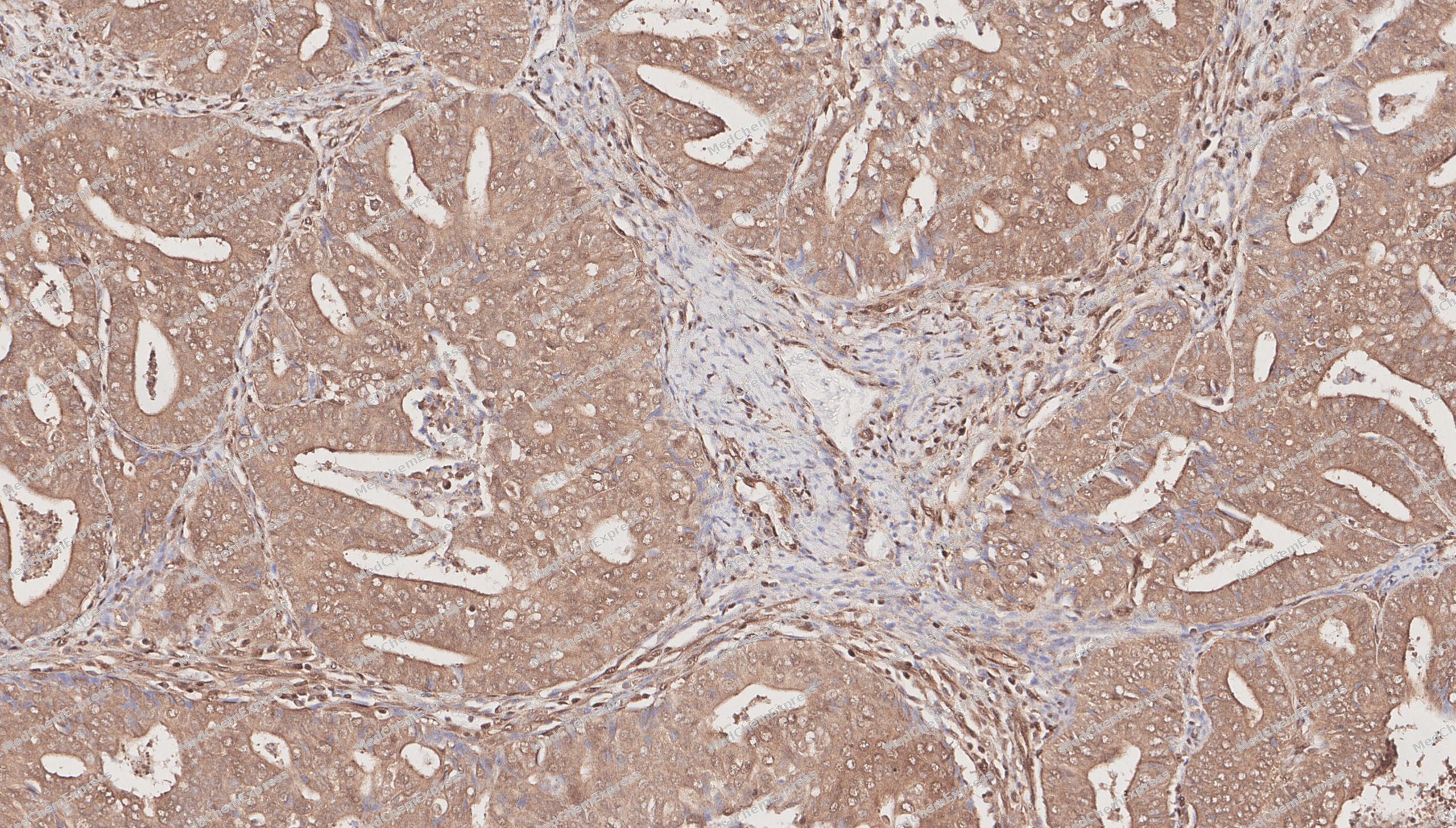 Immunohistochemical analysis of paraffin-embedded human Endometrial carcinoma tissue using ACHE antibody was performed. The section was pretreated using high-temperature mediated EDTA antigen retrieval buffer (pH 9.0), for 20 minutes. The tissues were incubated with primary antibody (HY-P84186, 1:900 dilution) at room temperature for 20 minutes. Detection was performed using an HRP conjugated compact polymer system. DAB was used as the chromogen. The tissues were counterstained with hematoxylin and mounted with neutral balsam mounting medium.
 -
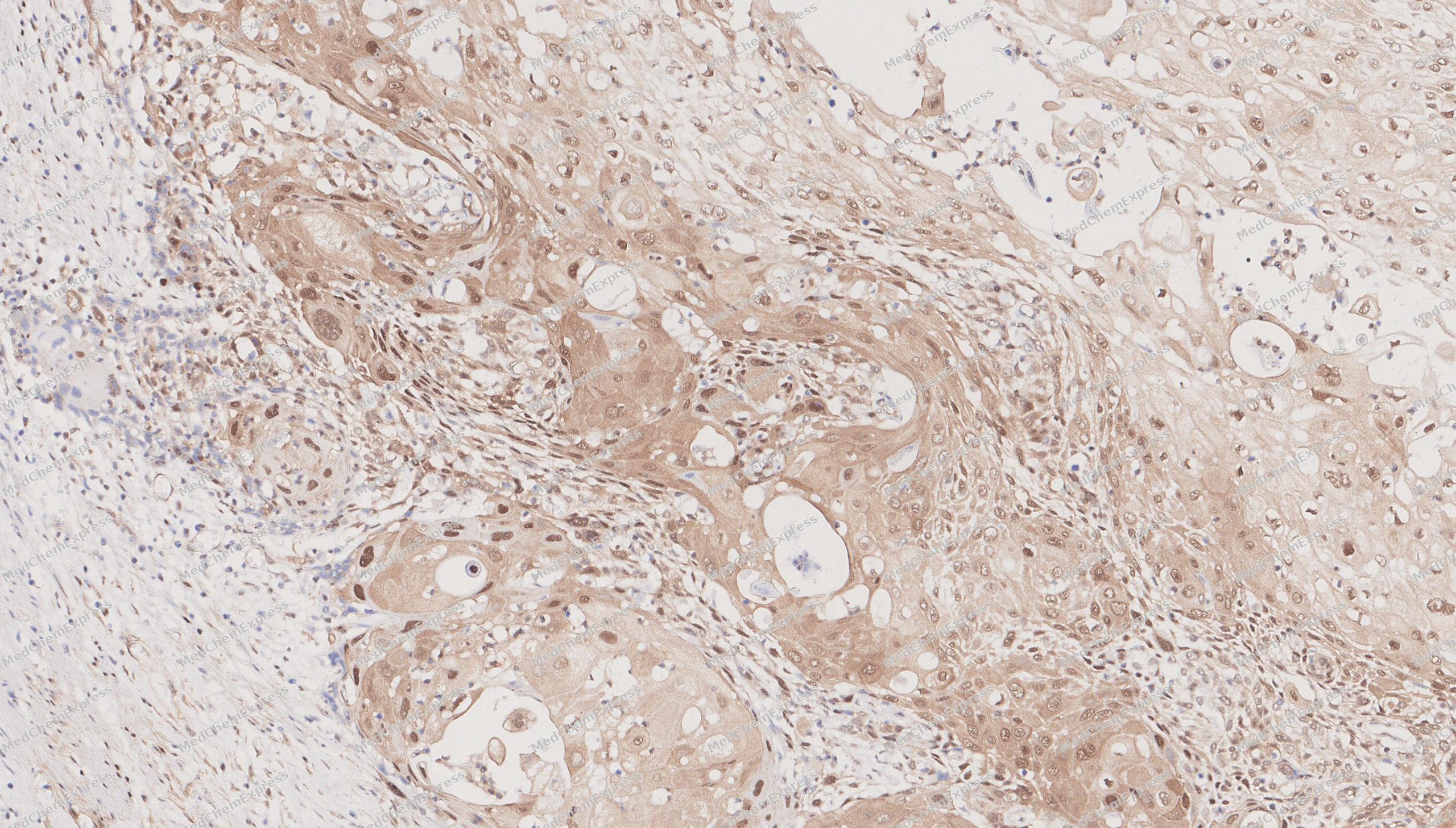 Immunohistochemical analysis of paraffin-embedded human esophagus tissue using ACHE antibody was performed. The section was pretreated using high-temperature mediated EDTA antigen retrieval buffer (pH 9.0), for 20 minutes. The tissues were incubated with primary antibody (HY-P84186, 1:900 dilution) at room temperature for 20 minutes. Detection was performed using an HRP conjugated compact polymer system. DAB was used as the chromogen. The tissues were counterstained with hematoxylin and mounted with neutral balsam mounting medium.
 -
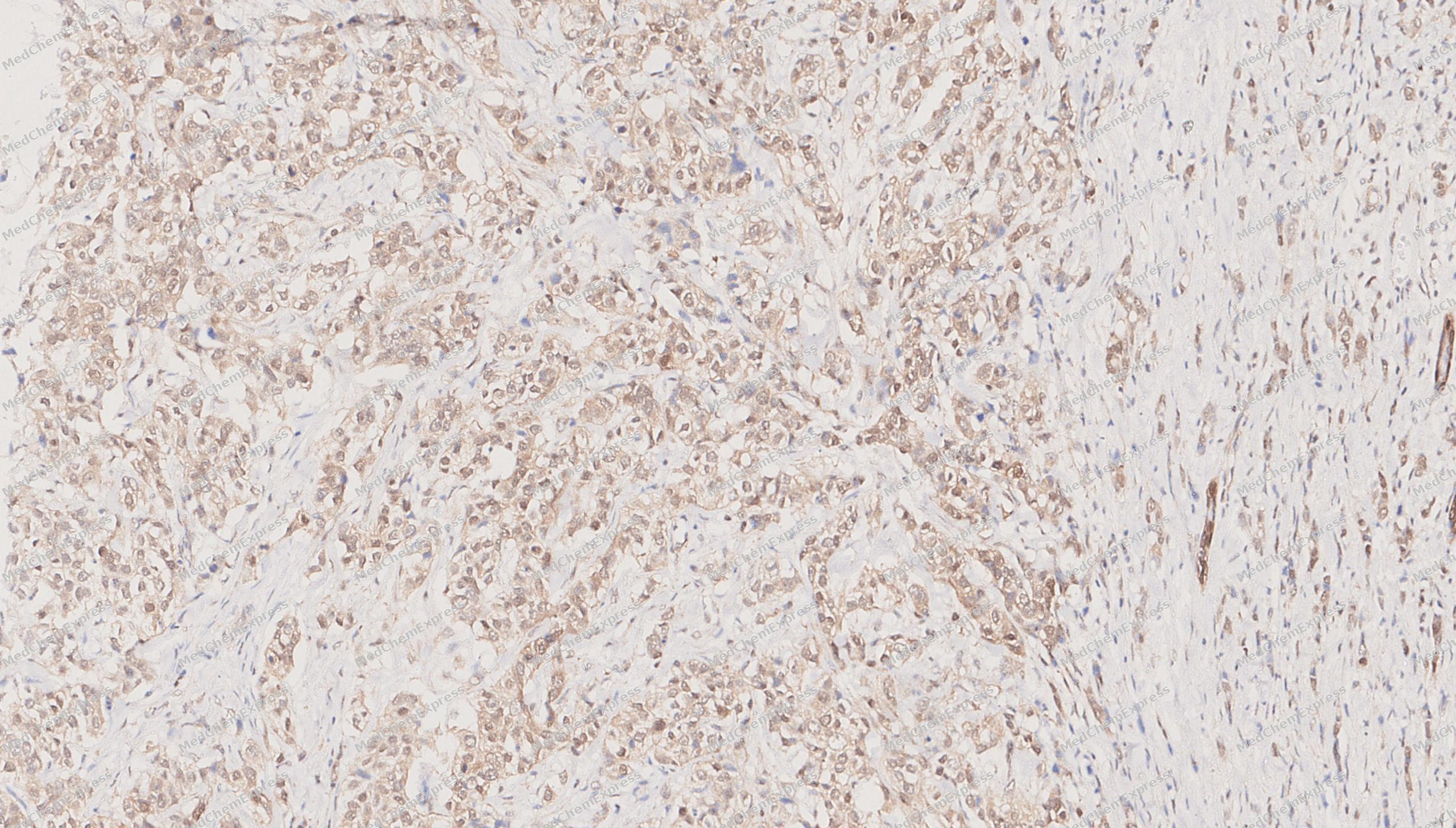 Immunohistochemical analysis of paraffin-embedded human clear cell renal cell carcinoma tissue using ACHE antibody was performed. The section was pretreated using high-temperature mediated EDTA antigen retrieval buffer (pH 9.0), for 20 minutes. The tissues were incubated with primary antibody (HY-P84186, 1:900 dilution) at room temperature for 20 minutes. Detection was performed using an HRP conjugated compact polymer system. DAB was used as the chromogen. The tissues were counterstained with hematoxylin and mounted with neutral balsam mounting medium.
 -
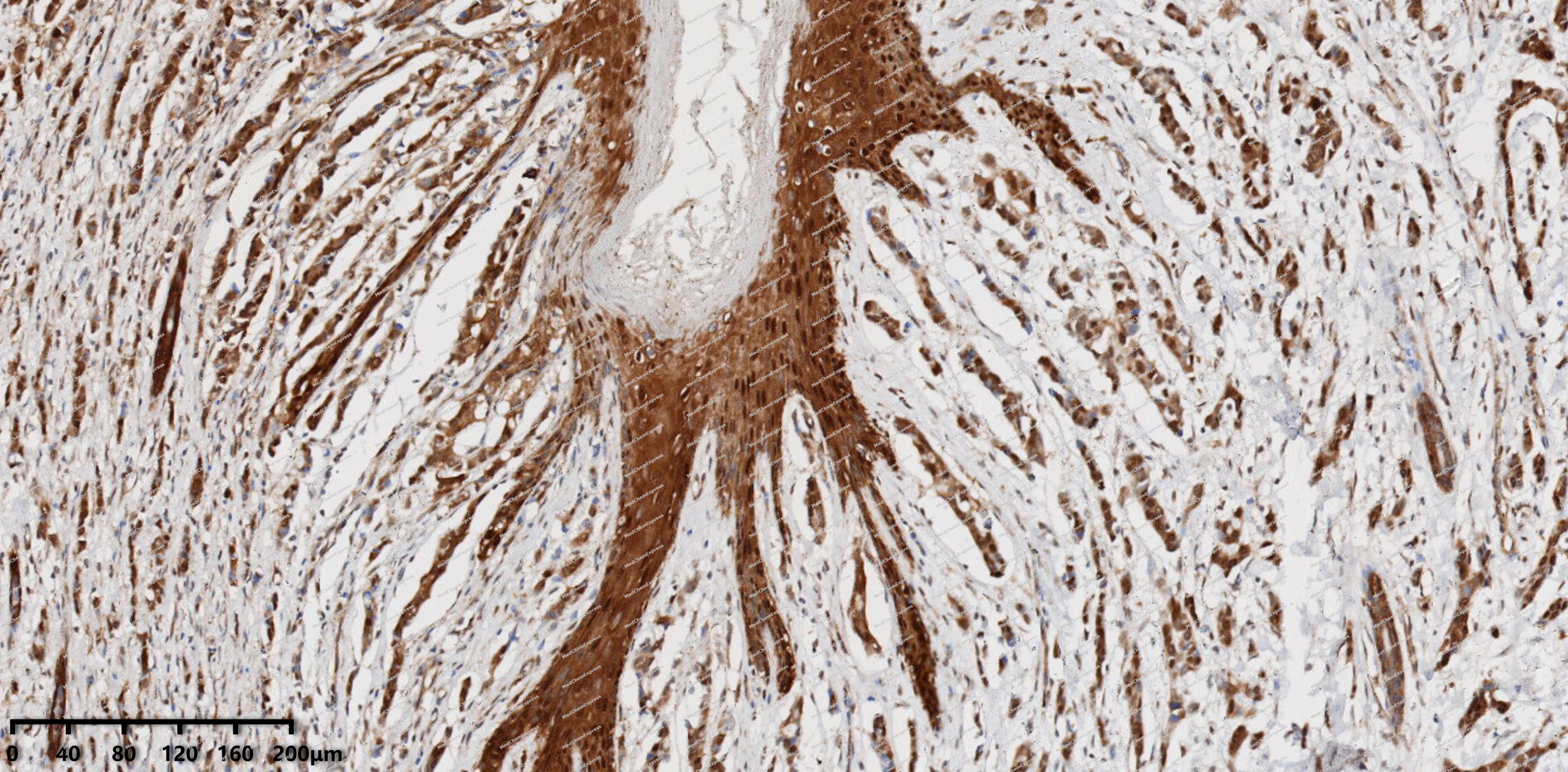 Immunohistochemical analysis of paraffin-embedded human breast cancer tissue using ACHE antibody was performed. The section was pretreated using high-temperature mediated EDTA antigen retrieval buffer (pH 9.0), for 20 minutes. The tissues were incubated with primary antibody (HY-P84186, 1:900 dilution) at room temperature for 20 minutes. Detection was performed using an HRP conjugated compact polymer system. DAB was used as the chromogen. The tissues were counterstained with hematoxylin and mounted with neutral balsam mounting medium.
 -
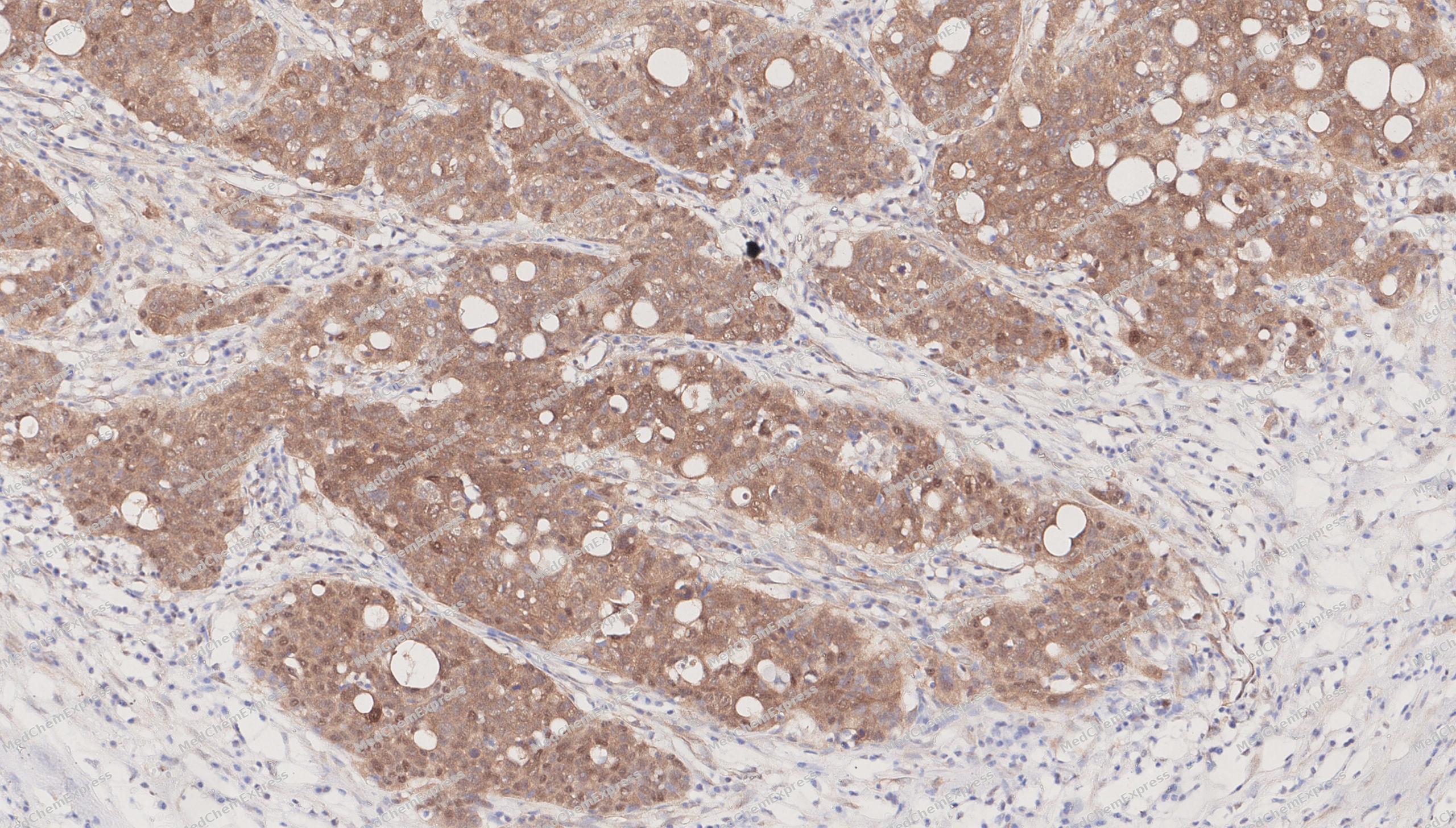 Immunohistochemical analysis of paraffin-embedded human gastric cancer tissue using ACHE antibody was performed. The section was pretreated using high-temperature mediated EDTA antigen retrieval buffer (pH 9.0), for 20 minutes. The tissues were incubated with primary antibody (HY-P84186, 1:900 dilution) at room temperature for 20 minutes. Detection was performed using an HRP conjugated compact polymer system. DAB was used as the chromogen. The tissues were counterstained with hematoxylin and mounted with neutral balsam mounting medium.
 -
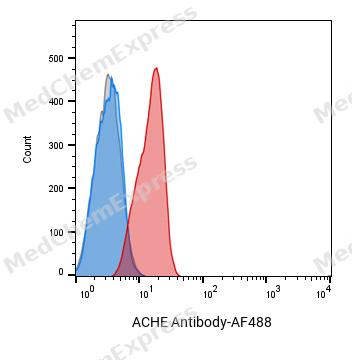 Flow cytometric analysis of 1X10^6 HL-60 cells labeling ACHE Antibody(red). Cells were fixed with 4% paraformaldehyde and permeabilised with 0.2% Triton X-100. Then stained with the primary antibody at 1/400 dilution overnight at 4℃. AF 488 Goat Anti-mouse IgG H&L was used as the secondary antibody at 1/1,000 dilution for 45 minutes at room temperature. Mouse IgG Isotype Control (blue) was used as the isotype control, cells without incubation with primary antibody were used as the unlabeled control (black).


Background
-
Function
Acetylcholinesterase (AChE) is the principal cholinergic enzyme that rapidly hydrolyzes acetylcholine at cholinergic synapses and neuromuscular junctions, thereby terminating neurotransmission and maintaining synaptic signaling fidelity[1]. Mechanistically, AChE regulates cholinergic pathway activity through efficient acetylcholine clearance, a process that is essential for normal neuronal communication and neuromuscular function[1]. Beyond its catalytic role, AChE displays multiple molecular forms and has been implicated in cellular interactions, neuronal activity modulation, and pathological states, supporting broader biological functions outside classical neurotransmission[1]. In neurodegenerative disease models, particularly Alzheimer’s disease (AD), altered cholinergic signaling is closely associated with cognitive impairment, and cholinesterase inhibition remains a major symptomatic therapeutic strategy[2][3]. Compared with the related isoform butyrylcholinesterase (BChE), AChE is the predominant cholinesterase in the brain and plays a primary role in synaptic acetylcholine hydrolysis, whereas BChE may compensate when AChE activity is reduced and exhibits distinct pathological changes during AD progression[3][4]. For experimental and translational applications, reversible and dual AChE/BChE inhibitors, including rivastigmine, are widely used to enhance cholinergic neurotransmission and investigate mechanisms underlying neurodegeneration and cognitive dysfunction[2][3].
-
Subcellular Localization
Synapse; Secreted; Cell membrane; Peripheral membrane protein; Nucleus; Cell membrane; Lipid-anchor, GPI-anchor; Extracellular side
-
Expression
Tissue_specificity:Isoform H is highly expressed in erythrocytes -
Isoforms & Post-Translational Modification
P22303 has 4 isomers: P22303-1: 67796 Da (predicted); P22303-2: 67376 Da (predicted); P22303-4: 65560 Da (predicted); P22303-3: 58352 Da (predicted).
-
Subunit
Interacts with PRIMA1. The interaction with PRIMA1 is required to anchor it to the basal lamina of cells and organize into tetramers (By similarity). Isoform H generates GPI-anchored dimers; disulfide linked. Isoform T generates multiple structures, ranging from monomers and dimers to collagen-tailed and hydrophobic-tailed forms, in which catalytic tetramers are associated with anchoring proteins that attach them to the basal lamina or to cell membranes. In the collagen-tailed forms, isoform T subunits are associated with a specific collagen, COLQ, which triggers the formation of isoform T tetramers, from monomers and dimers. Isoform R may be monomeric
-
SwissProt ID
-
Synonyms
YT; ACEE; ARACHE; N-ACHE; Apoptosis related acetylcholinesterase antibody


Documentation
-
Data Sheet (260 KB)
-
SDS (251 KB)
- English - EN (251 KB)
- Français - FR (251 KB)
- Deutsch - DE (251 KB)
- Norwegian - NO (251 KB)
- Español - ES (251 KB)
- Swedish - SV (251 KB)
- Italian - IT (251 KB)
- Korean - KR (251 KB)
- Portuguese - PT (251 KB)
-
User Guide for Antibodies (1077 KB)
References
[1]. Massoulié J, et al. Structure and functions of acetylcholinesterase and butyrylcholinesterase. Prog Brain Res. 1993;98:139-46. [Content Brief]
[2]. Walczak-Nowicka ŁJ, et al. Acetylcholinesterase Inhibitors in the Treatment of Neurodegenerative Diseases and the Role of Acetylcholinesterase in their Pathogenesis. Int J Mol Sci. 2021 Aug 27;22(17):9290. [Content Brief]
[3]. Nordberg A, et al. A review of butyrylcholinesterase as a therapeutic target in the treatment of Alzheimer's disease. Prim Care Companion CNS Disord. 2013;15(2):PCC.12r01412. [Content Brief]
[4]. Geula C, et al. Butyrylcholinesterase, cholinergic neurotransmission and the pathology of Alzheimer's disease. Drugs of Today (Barcelona, Spain : 1998). 2004 Aug;40(8):711-721. [Content Brief]

 Powered by Bioz
