



Beta Tubulin Antibody (YA585)
(Synonyms: TUBB5, OK/SW-cl.56, TUBB, Tubulin beta chain, Tubulin beta-5 chain)Based on 3 publication(s) in Google Scholar
beta Tubulin Antibody is a non-conjugated and Rabbit origined IgG monoclonal antibody, targeting to beta Tubulin. It can be used as a loading control antibody.
-
Host:
Rabbit
-
Isotype:
IgG
-
Application:
WB, ICC/IF, IHC-P, FC
-
Reactivity :
Human, Mouse, Rat
-
Formulation:
1.Supplied in 1*TBS (pH7.4), 0.05% BSA and 40% Glycerol. Preservative: 0.05% Sodium Azide.
2.Supplied in 50mM Tris-Glycine(pH 7.4), 0.15M NaCl, 40%Glycerol, 0.01% sodium azide and 0.05% BSA.
3.Supplied in 1xPBS(pH 7.4), 150mM NaCl, 50% Glycerol, 0.02% Sodium azide and 0.05% BSA.
Please refer to the lot-specific COA for specific buffer information.
-
Conjugation:
Non-conjugated




To place orders, for customer services and technical support, please contact: MedChemExpress USA
Tel: 609-228-6898 E-mail: [email protected] [email protected]



-

HY-P80137
GAPDH Antibody (YA418) -
HY-P8001
HRP-conjugated Goat Anti-Rabbit IgG H&L -
HY-P80438
Beta Actin Antibody (YA823) -
HY-P80372
Vinculin Antibody (YA010) -
HY-P8002
AF488-conjugated Goat Anti-Rabbit IgG H&L -
HY-P83730
Beta Actin Antibody(YA3459) -
HY-P80720
IL-1 beta Antibody -
HY-P80246
NLRP3 Antibody (YA266) -
HY-P86522
N Cadherin Antibody (YA6214) -
HY-P80276
Phospho-AKT1(Ser473) Antibody (YA227)
Publications Citing Use of MedChemExpress (MCE) Beta Tubulin Antibody (YA585)
More
 3 Publications Citing Use of MCE Beta Tubulin Antibody (YA585) (2)
-
WB
-
WB


Applications
| Application |
WB

WB: Western Blot
|
ICC/IF
ICC/IF: Immunocytochemistry/
Immunofluorescence |
IHC-P
IHC-P: Immunohistochemistry-Paraffin
|
FC
FC: Flow Cytometry
|
|---|---|---|---|---|
| Dilution Ratio | 1:5000-1:10000 | 1:50-1:200 | 1:100-1:400 | 1:100 |


Product Details
beta Tubulin Antibody is a non-conjugated and Rabbit origined IgG monoclonal antibody, targeting to beta Tubulin. It can be used as a loading control antibody.
-
Host Rabbit

-
Clonality Recombinant,Monoclonal

-
Species ReactivityHuman, Mouse, Rat
-
Observed Molecular WeightObserved band size: 55 kDa
Note: Due to possible protein modifications or aggregation, the molecular weight should be confirmed by actual measurement, and the predicted value is for reference only.

-
Calculated Molecular Weight Predicted band size: 50 kDa

Entrez Gene: 81027 Human ; 545486 Mouse ; 679312 Rat
SwissProt: Q9H4B7 Human ; A2AQ07 Mouse ;
OMIM: 613112 Human
Synthetic peptide corresponding to Human beta Tubulin.
Endogenous
Protein A affinity purified.
Non-conjugated
Unmodified
IgG


Product Properties
-
Appearance
Solution
-
Formulation
1.Supplied in 1*TBS (pH7.4), 0.05% BSA and 40% Glycerol. Preservative: 0.05% Sodium Azide.
2.Supplied in 50mM Tris-Glycine(pH 7.4), 0.15M NaCl, 40%Glycerol, 0.01% sodium azide and 0.05% BSA.
3.Supplied in 1xPBS(pH 7.4), 150mM NaCl, 50% Glycerol, 0.02% Sodium azide and 0.05% BSA.
Please refer to the lot-specific COA for specific buffer information. -
Concentration
Batch-dependent, Please check the COA for the concentration of each lot. Check Lot Concentration
-
Storage & Stability
Stored at -20°C for 1 year. Avoid repeated freeze / thaw cycles.
-
Shipping
Shipping with blue ice.


Publications (3)
-
Journal Impact Factor
-
Most Recent
-
Sci Rep
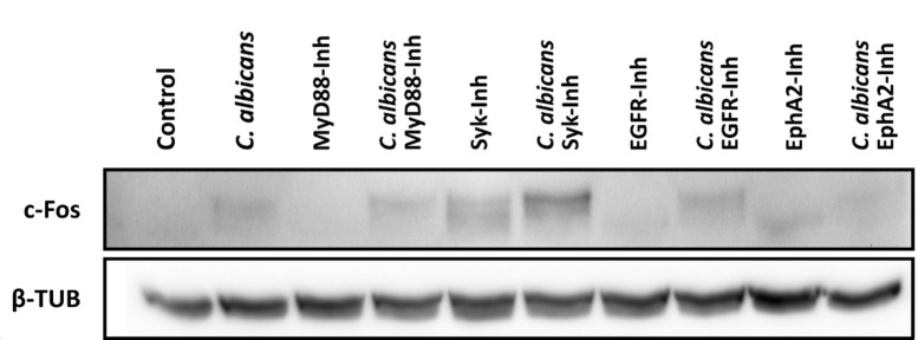
Enhancement of melanoma aggressiveness via p38-MAPK, HIF-1α pathways, and metabolic reprogramming induced by Candida albicans. [Abstract]2025 Nov 17;15(1):40227. PMID: 41249785
Beta Tubulin Antibody (YA585) purchased from MedChemExpress. Usage Cited in: Sci Rep. 2025 Nov 17;15(1):40227. [Abstract]
The housekeeping protein β-Tubulin (Cat. # HY-P80487) diluted 1:1,000 in TBSM were used as primary antibodies (MedChemExpress) and incubated with the membrane overnight at 4℃. After three 5 min washes with TBS, goat anti-rabbit IgG diluted 1:5,000 in TBSM was used as secondary antibody and incubated with the membrane for 30 min.
-
Toxicol Appl Pharmacol
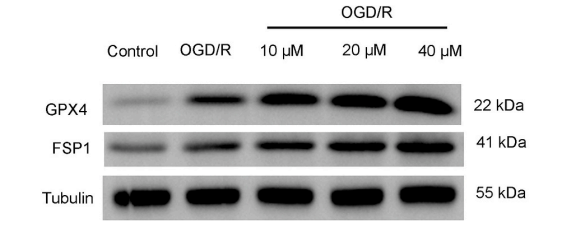
Ginkgolide B binds to GPX4 and FSP1 to alleviate cerebral ischemia/reperfusion injury in rats. [Abstract]2025 Jan 22:495:117237. PMID: 39855311
Beta Tubulin Antibody (YA585) purchased from MedChemExpress. Usage Cited in: Toxicol Appl Pharmacol. 2025 Jan 22:495:117237. [Abstract]
The collected mitochondrial proteins (20 μg) were separated using 12% gel electrophoresis and transferred to polyvinylidene fluoride (PVDF) membranes. The membranes were blocked with 5% milk for 1.5 h at 37 ℃ and incubated with primary antibodies overnight at 4 ℃. Beta Tubulin Antibody (YA585) (1:2000).


Verification Images
-
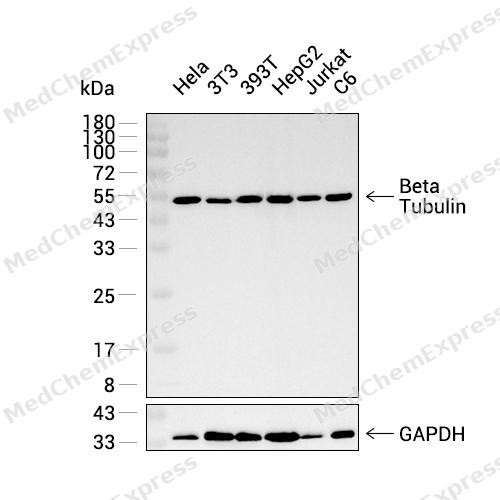 Western blot analysis was performed on extracts from Hela (lane 1, 20 μg), 3T3 (lane 2, 20 μg), 293T (lane 3, 20 μg), HepG2 (lane 4, 20 μg), Jurkat (lane 5, 20 μg), and C6 (lane 6, 20 μg) using beta Tubulin Rabbit mAb.Proteins were transferred to a PVDF membrane and blocked with 5% non - fat milk in TBST at 4°C overnight.The primary antibody (1:1000 dilution) and the loading control antibody (GAPDH, HY-P2804, 1:5000 dilution) were incubated in 5% non-fat milk in TBST for 1 hour at 37°C.Goat Anti - Rabbit IgG - HRP Secondary Antibody (1:20000 dilution) was then applied for 40 minutes at 37°C.
 -
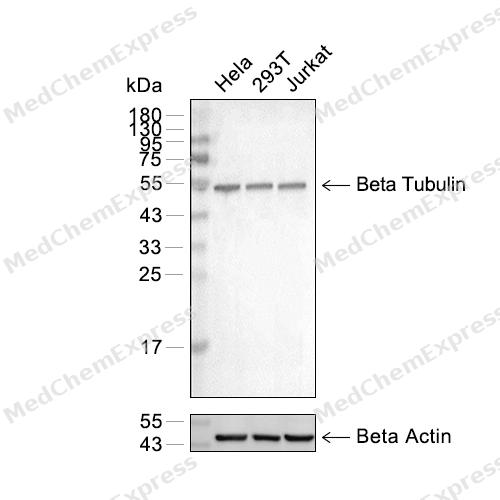 Western blot analysis of extracts from Hela (lane 2(20μg), HEK293T (lane 3(20μg), Jurkat (lane 4(20μg) using Beta Tubulin (HY-P80487) Rabbit mAb. Proteins were transferred to a PVDF membrane and blocked with 5% BSA in TBST for 2 hour at room temperature. The primary antibody (HY-P80487, 1/1000) and Loading control antibody (Beta Actin, HY-P80438, 1/3000) was used in 5% BSA in TBST at 4°C overnight. Goat Anti-Mouse/Rabbit IgG-HRP Secondary Antibody (HY-P8004/HY-P8001, 1/10,000) was used for 1 hour at room temperature.
 -
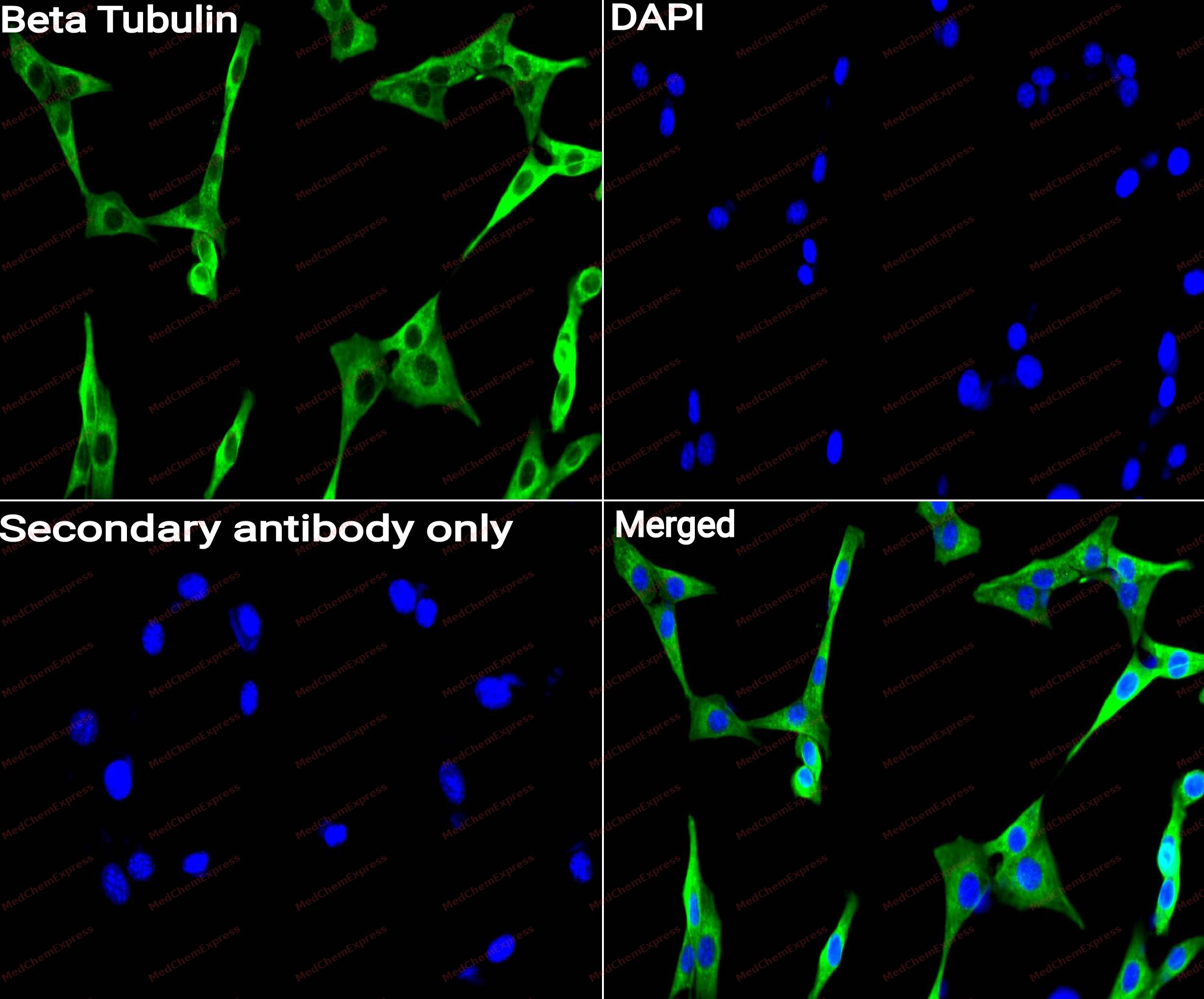 Immunocytochemistry analysis of NIH3T3 cells labeling Beta Tubulin with Beta Tubulin antibody (HY-P80487) at 1/50 dilution. Cells were fixed in 4% paraformaldehyde for 15 minutes at room temperature, permeabilized with 0.1% Triton X-100 for 10 minutes at room temperature, then blocked with QuickBlock™ Blocking Buffer for Immunol Staining for 10 min at room temperature. Cells were then incubated with Beta Tubulin antibody (HY-P80487) at 1/50 dilution in QuickBlock™ Blocking Buffer for Immunol Staining at 4 ℃. Alexa Fluor® 488-conjugated AffiniPure Goat Anti-Rabbit IgG H&L(HY-P8002, Green) was used as the secondary antibody at 1/1,000 dilution. PBS instead of the primary antibody was used as the secondary antibody only control. The Nuclear counterstain was DAPI (Blue).
 -
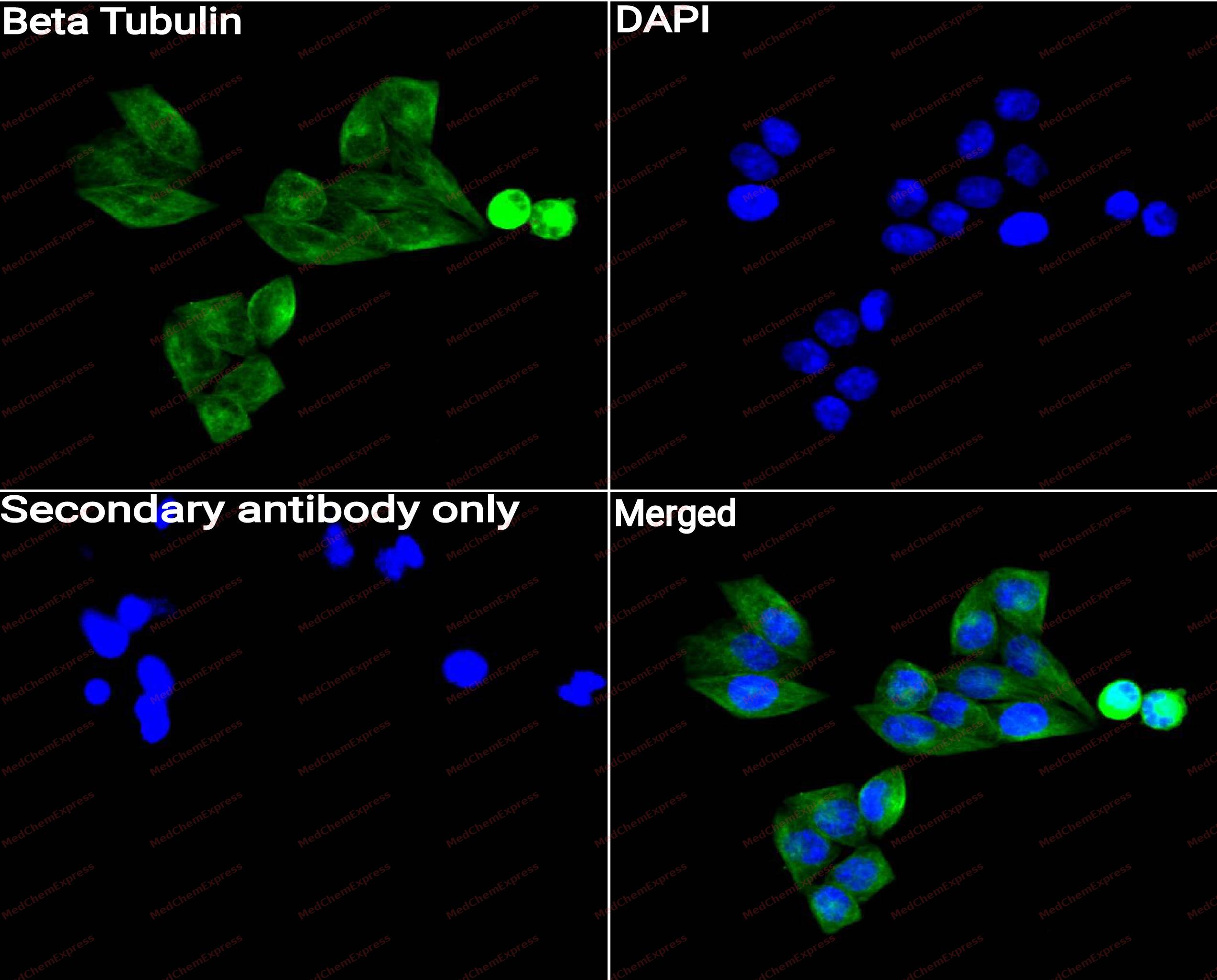 Immunocytochemistry analysis of Hela cells labeling Beta Tubulin with Beta Tubulin (HY-P80487) at 1/50 dilution. Cells were fixed in 4% paraformaldehyde for 15 minutes at room temperature, permeabilized with 0.1% Triton X-100 for 10 minutes at room temperature, then blocked with QuickBlock™ Blocking Buffer for Immunol Staining for 10 min at room temperature. Cells were then incubated with Beta Tubulin antibody (HY-P80487) at 1/50 dilution in QuickBlock™ Blocking Buffer for Immunol Staining at 4 ℃. Alexa Fluor® 488-conjugated AffiniPure Goat Anti-Rabbit IgG H&L(HY-P8002, Green) was used as the secondary antibody at 1/1,000 dilution. PBS instead of the primary antibody was used as the secondary antibody only control. The Nuclear counterstain was DAPI (Blue).
 -
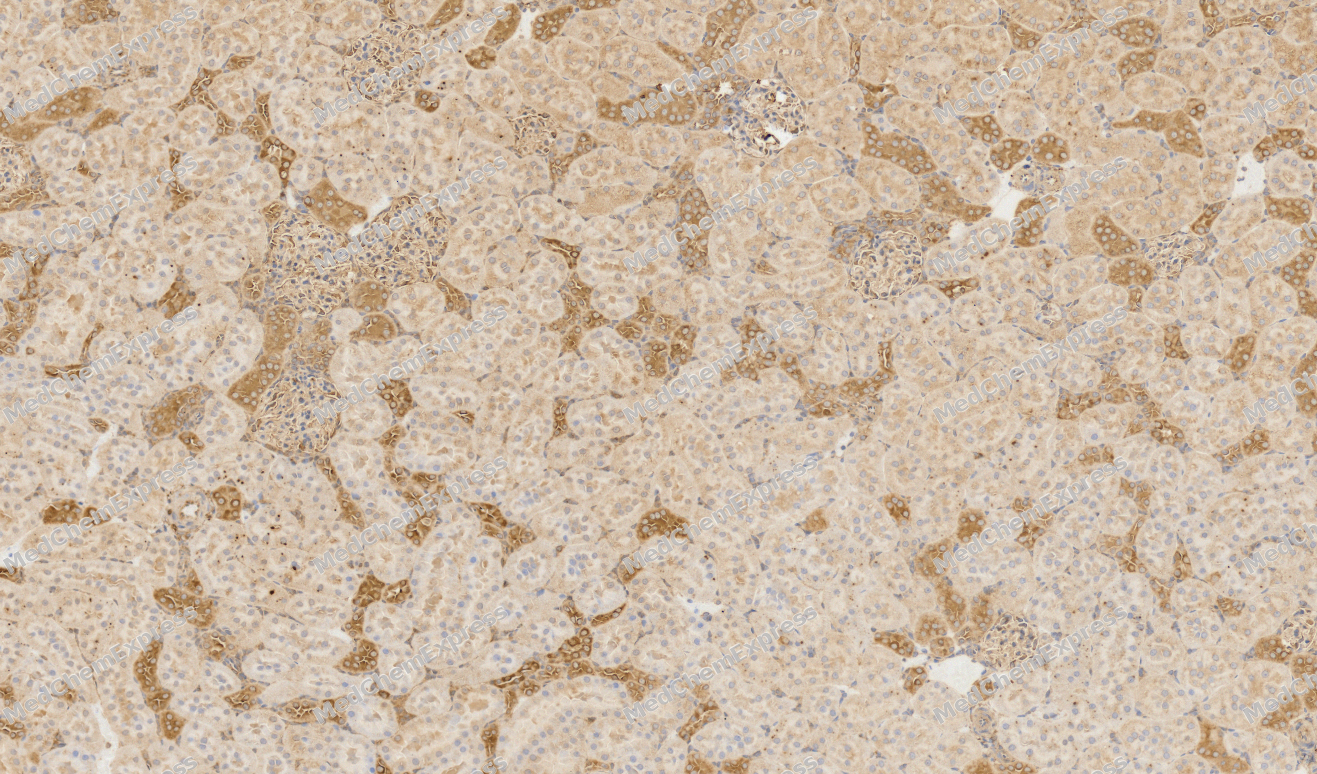
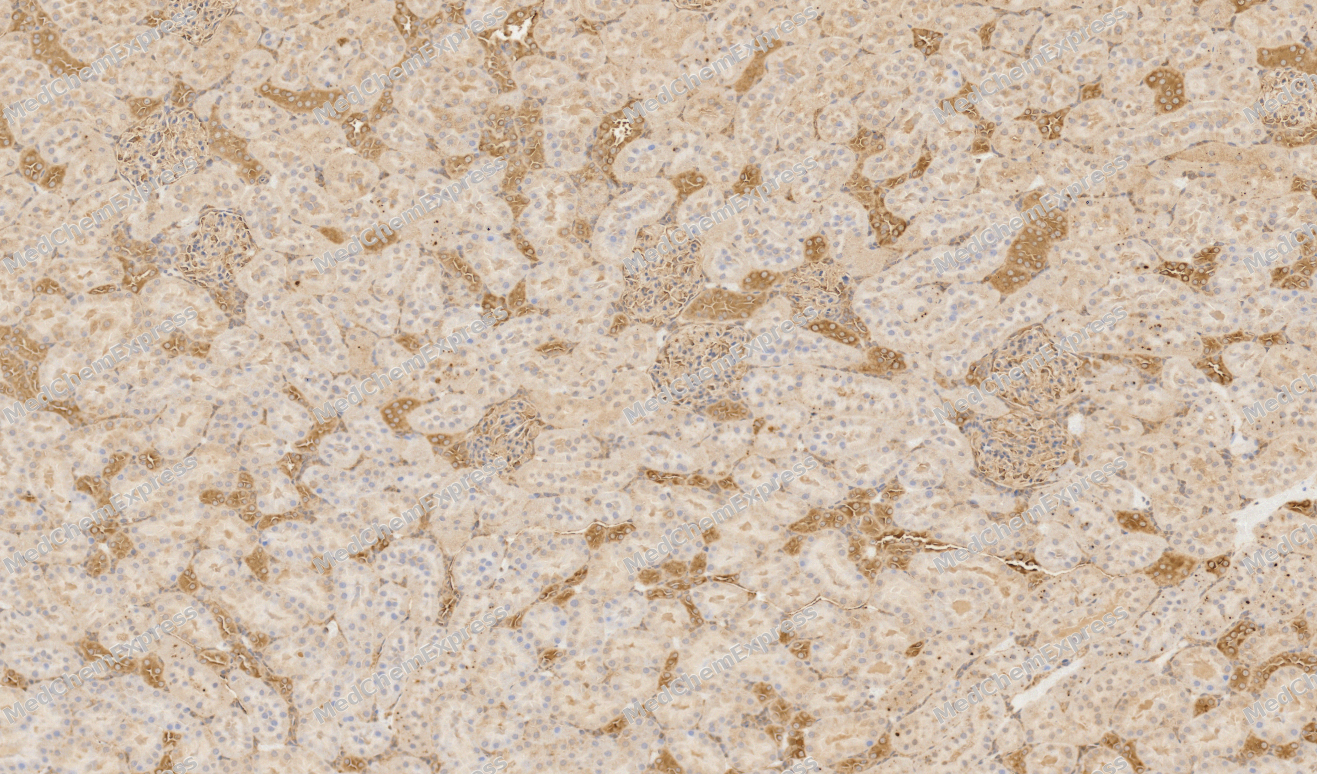 Immunohistochemical analysis of paraffin-embedded Rat kdiney tissue using Beta Tubulin Antibody. The section was pre-treated using heat mediated antigen retrieval with Tris-EDTA buffer (pH 9.0) for 8 minutes. The tissues were blocked in QuickBlock for 20 minutes at room temperature, washed with ddH2O and PBS, and then probed with the primary antibody (HY-P80487, 1/400) in 4℃ overnight. The detection was performed using an HRP conjugated compact polymer system. DAB was used as the chromogen. Tissues were counterstained with hematoxylin and mounted with DPX.
 -
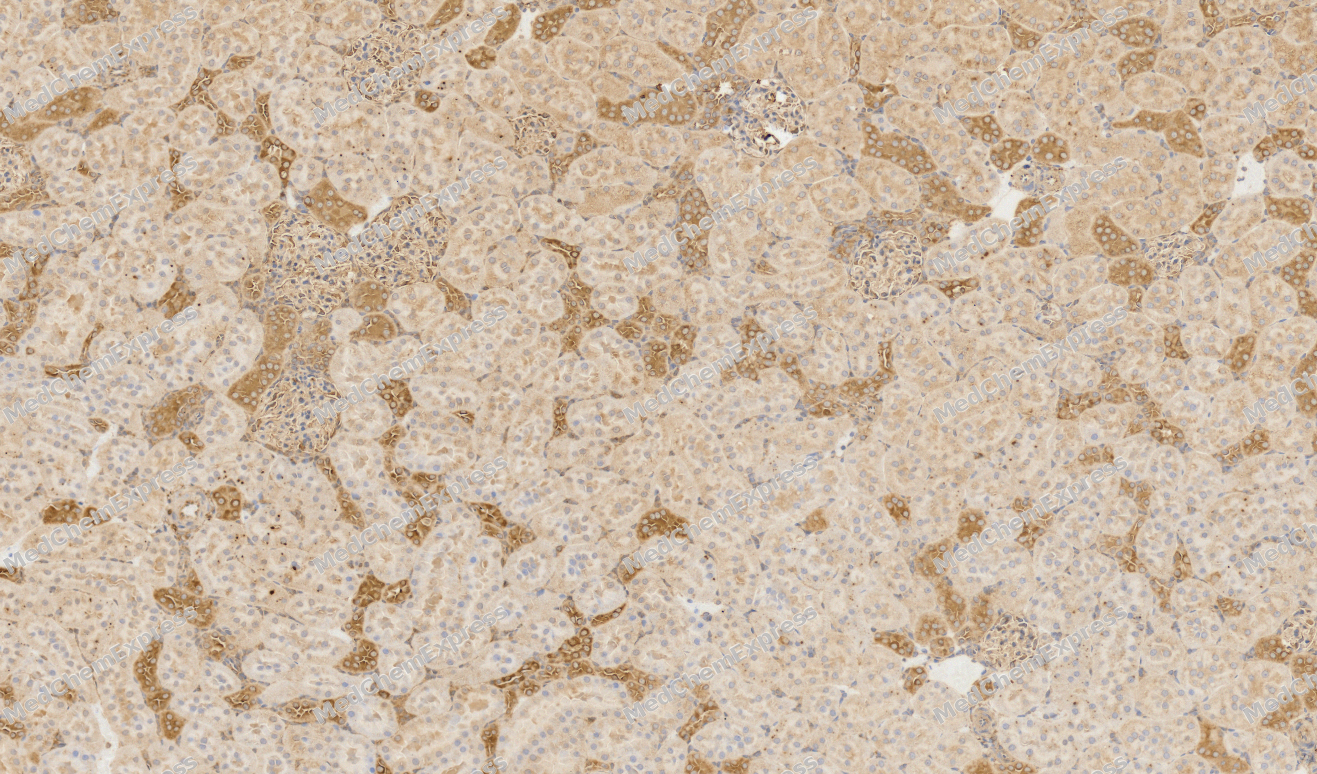 Immunohistochemical analysis of paraffin-embedded Rat kdiney tissue using Beta Tubulin Antibody. The section was pre-treated using heat mediated antigen retrieval with Tris-EDTA buffer (pH 9.0) for 8 minutes. The tissues were blocked in QuickBlock for 20 minutes at room temperature, washed with ddH2O and PBS, and then probed with the primary antibody (HY-P80487, 1/400) in 4℃ overnight. The detection was performed using an HRP conjugated compact polymer system. DAB was used as the chromogen. Tissues were counterstained with hematoxylin and mounted with DPX.
 -
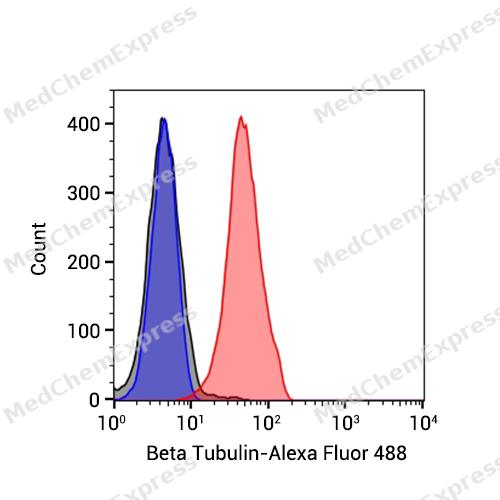 Flow cytometric analysis of 1X10^6 NIH3T3 cells labeling Beta Tubulin Antibody(HY-P80487, red). Cells were fixed with 4% paraformaldehyde and permeabilised with 90% methanol. Then stained with the primary antibody at 1μg/mL dilution for an hour at 4℃. Alexa Fluor® 488-conjugated AffiniPure Goat Anti-Rabbit IgG H&L (HY-P8002) was used as the secondary antibody at 1/1,000 dilution for 30 minutes at 4℃. Rabbit IgG Isotype Control (HY-P80879, blue) was used as the isotype control, cells without incubation with primary antibody were used as the unlabeled control (black).


Background
-
Function
Beta Tubulin is a Tubulin is the major constituent of microtubules, a cylinder consisting of laterally associated linear protofilaments composed of alpha- and beta-tubulin heterodimers. Microtubules grow by the addition of GTP-tubulin dimers to the microtubule end, where a stabilizing cap forms. Below the cap, tubulin dimers are in GDP-bound state, owing to GTPase activity of alpha-tubulin
-
Subcellular Localization
Cytoplasm, cytoskeleton
-
Expression
Tissue_specificity:This gene is widely expressed in all tissues of the body, with the highest expression levels in the spleen, thymus, and immature brain tissue.
Induction:Autoregulated by feedback control of mRNA degradation (PubMed:31727855) . In excess of soluble tubulin, nascent beta-tubulin chain binds TTC5/STRAP cofactor through the MREI motif which triggers cotranslation degradation of tubulin mRNA (PubMed:31727855) -
Subunit
Heterodimer of alpha and beta chains (PubMed:26637975). A typical microtubule is a hollow water-filled tube with an outer diameter of 25 nm and an inner diameter of 15 nM. Alpha-beta heterodimers associate head-to-tail to form protofilaments running lengthwise along the microtubule wall with the beta-tubulin subunit facing the microtubule plus end conferring a structural polarity. Microtubules usually have 13 protofilaments but different protofilament numbers can be found in some organisms and specialized cells. Interacts with CIMAP3 (PubMed:20643351). Interacts with DIAPH1 (PubMed:23325789). Interacts with MX1 (By similarity). May interact with RNABP10 (By similarity). Interacts with CFAP157 (By similarity). Nascent tubulin polypeptide interacts (via beta-tubulin MREI motif) with TTC5/STRAP; this interaction results in tubulin mRNA-targeted degradation (PubMed:31727855)
-
SwissProt ID
-
Synonyms
TUBB5, OK/SW-cl.56, TUBB, Tubulin beta chain, Tubulin beta-5 chain
-
Research Field
Signal Transduction
Documentation
-
Data Sheet (234 KB)
-
SDS (251 KB)
- English - EN (251 KB)
- Français - FR (251 KB)
- Deutsch - DE (251 KB)
- Norwegian - NO (251 KB)
- Español - ES (251 KB)
- Swedish - SV (251 KB)
- Italian - IT (251 KB)
- Korean - KR (251 KB)
- Portuguese - PT (251 KB)
-
User Guide for Antibodies (1077 KB)

 Powered by Bioz
