



Phospho-Chk2 (Thr68) Antibody
(Synonyms: CHEK2; CDS1; CHK2; RAD53; Serine/threonine-protein kinase Chk2; CHK2 checkpoint homolog; Cds1 homolog; Hucds1; hCds1; Checkpoint kinase 2)Based on 3 publication(s) in Google Scholar
Phospho-Chk2 (Thr68) Antibody is a Rabbit-derived and non-conjugated IgG polyclonal antibody, targeting to Phospho-Chk2 (Thr68).
-
Host:
Rabbit
-
Isotype:
IgG
-
Application:
WB, ICC/IF, IHC-P
-
Reactivity :
Human, Mouse, Rat
-
Formulation:
Supplied in 1*PBS (pH 7.3), 50% glycerol and 0.5% BSA. Preservative: 0.02% sodium azide.
-
Conjugation:
Non-conjugated


To place orders, for customer services and technical support, please contact: MedChemExpress USA
Tel: 609-228-6898 E-mail: [email protected] [email protected]



Publications Citing Use of MedChemExpress (MCE) Phospho-Chk2 (Thr68) Antibody
More

Applications
| Application |
WB

WB: Western Blot
|
IHC-P
IHC-P: Immunohistochemistry-Paraffin
|
ICC/IF
ICC/IF: Immunocytochemistry/
Immunofluorescence |
|---|---|---|---|
| Dilution Ratio | 1:500-1:1000 | 1:50-1:100 | 1:50-1:200 |


Product Details
Phospho-Chk2 (Thr68) Antibody is a Rabbit-derived and non-conjugated IgG polyclonal antibody, targeting to Phospho-Chk2 (Thr68).
-
Host Rabbit

-
Clonality Polyclonal

-
Species ReactivityHuman, Mouse, Rat
-
Observed Molecular WeightObserved band size: 61 kDa
Note: Due to possible protein modifications or aggregation, the molecular weight should be confirmed by actual measurement, and the predicted value is for reference only.

-
Calculated Molecular Weight Predicted band size: 61 kDa

Entrez Gene: 11200 Human ; 50883 Mouse ; 114212 Rat
SwissProt: O96017 Human ; Q9Z265 Mouse ;
OMIM: 609265 Human
Synthetic phosphopeptide corresponding to residues surrounding Thr68 of Human Chk2.AA range:35-84.
Endogenous
affinity purified
Non-conjugated
Phosphorylated
IgG


Product Properties
-
Appearance
Solution
-
Formulation
Supplied in 1*PBS (pH 7.3), 50% glycerol and 0.5% BSA. Preservative: 0.02% sodium azide.
-
Concentration
Batch-dependent, Please check the COA for the concentration of each lot. Check Lot Concentration
-
Storage & Stability
Stored at -20°C for 1 year. Avoid repeated freeze / thaw cycles.
-
Shipping
Shipping with blue ice.


Publications (3)
-
Journal Impact Factor
-
Most Recent
-
Adv Sci (Weinh)
DMAP1 Deficiency Suppresses Lung Cancer Progression by Destabilizing Replication Fork and Activating IFN Signaling-Mediated Anti-tumor Immunity. [Abstract]2026 Jun;13(33):e17634. PMID: 41904944 -
Toxicol Lett
Aristolochic acid-induced DNA adduct formation triggers acute DNA damage response in rat kidney proximal tubular cells. [Abstract]2025 Apr:406:1-8. PMID: 39955082


Verification Images
-
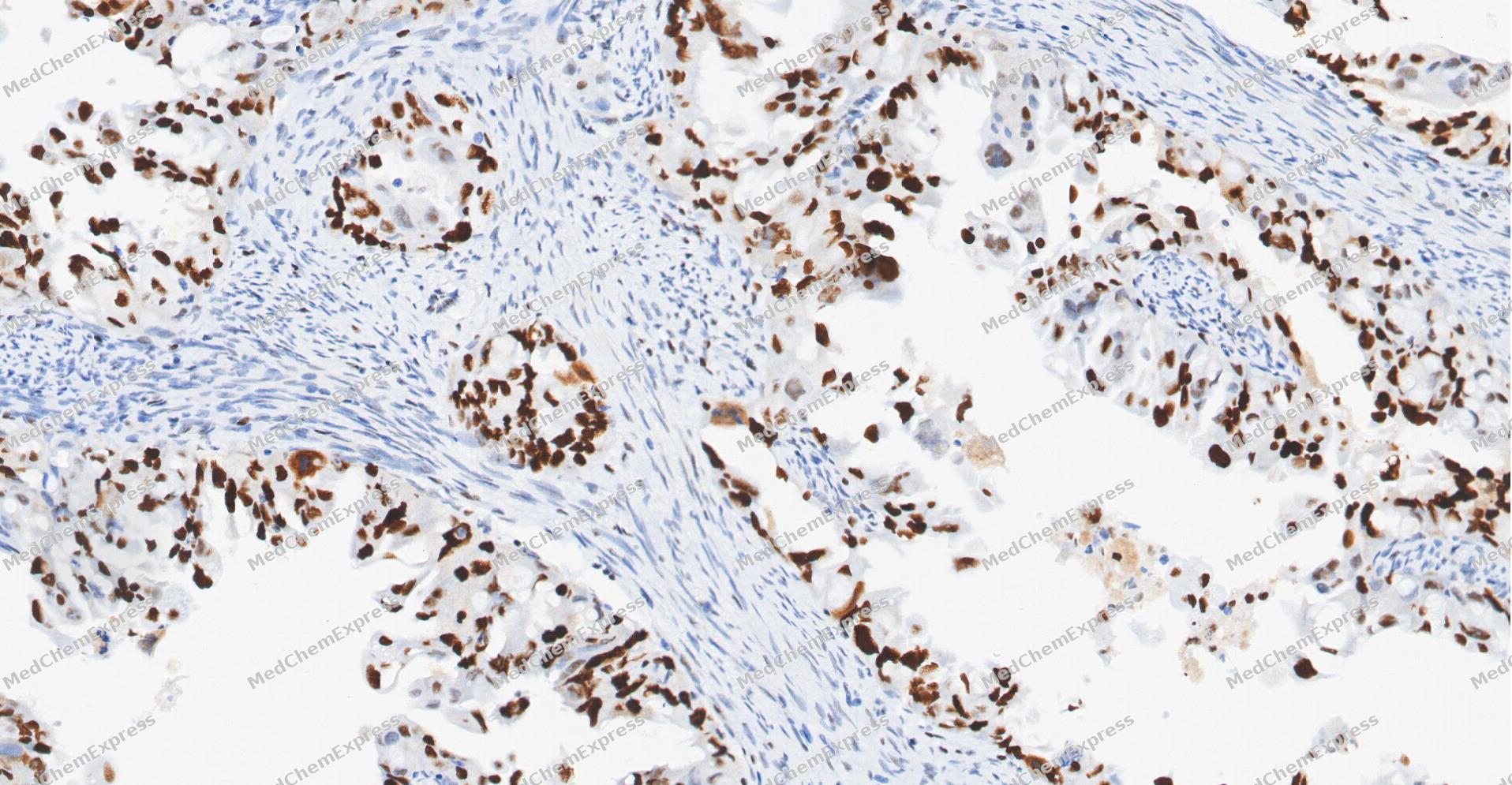 Immunohistochemical analysis of paraffin-embedded human Endometrial Carcinoma tissue using Phospho-Chk2 antibody was performed. The section was pretreated using high-temperature and high-pressure mediated EDTA antigen retrieval buffer (pH 9.0), for 5 minutes. The tissues were incubated with primary antibody (HY-P80799, 1:100 dilution) at room temperature for 60 minutes. Detection was performed using an HRP conjugated compact polymer system. DAB was used as the chromogen. The tissues were counterstained with hematoxylin and mounted with neutral balsam mounting medium.
 -
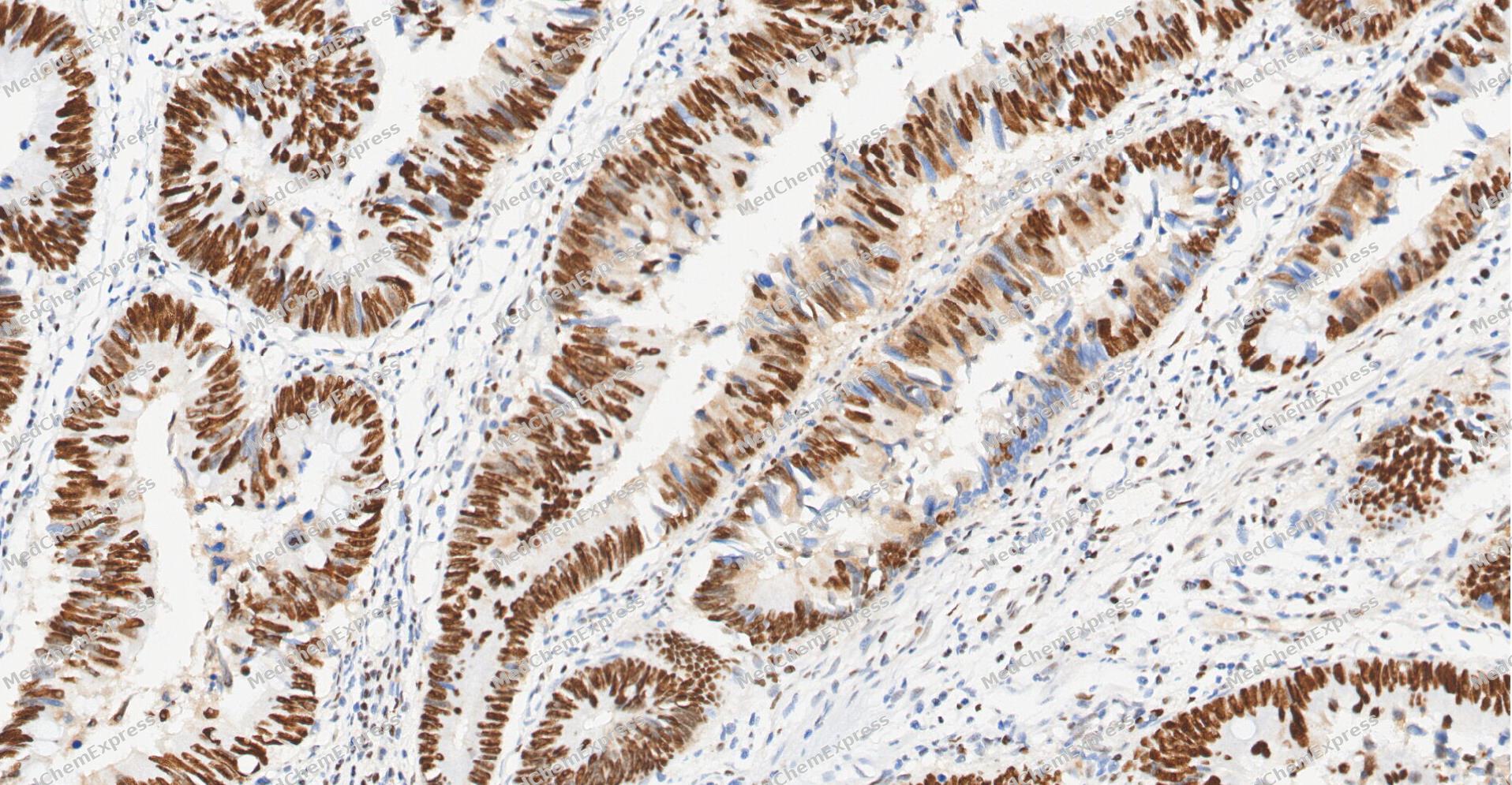 Immunohistochemical analysis of paraffin-embedded human Colon cancer tissue using Phospho-Chk2 antibody was performed. The section was pretreated using high-temperature and high-pressure mediated EDTA antigen retrieval buffer (pH 9.0), for 5 minutes. The tissues were incubated with primary antibody (HY-P80799, 1:100 dilution) at room temperature for 60 minutes. Detection was performed using an HRP conjugated compact polymer system. DAB was used as the chromogen. The tissues were counterstained with hematoxylin and mounted with neutral balsam mounting medium.
 -
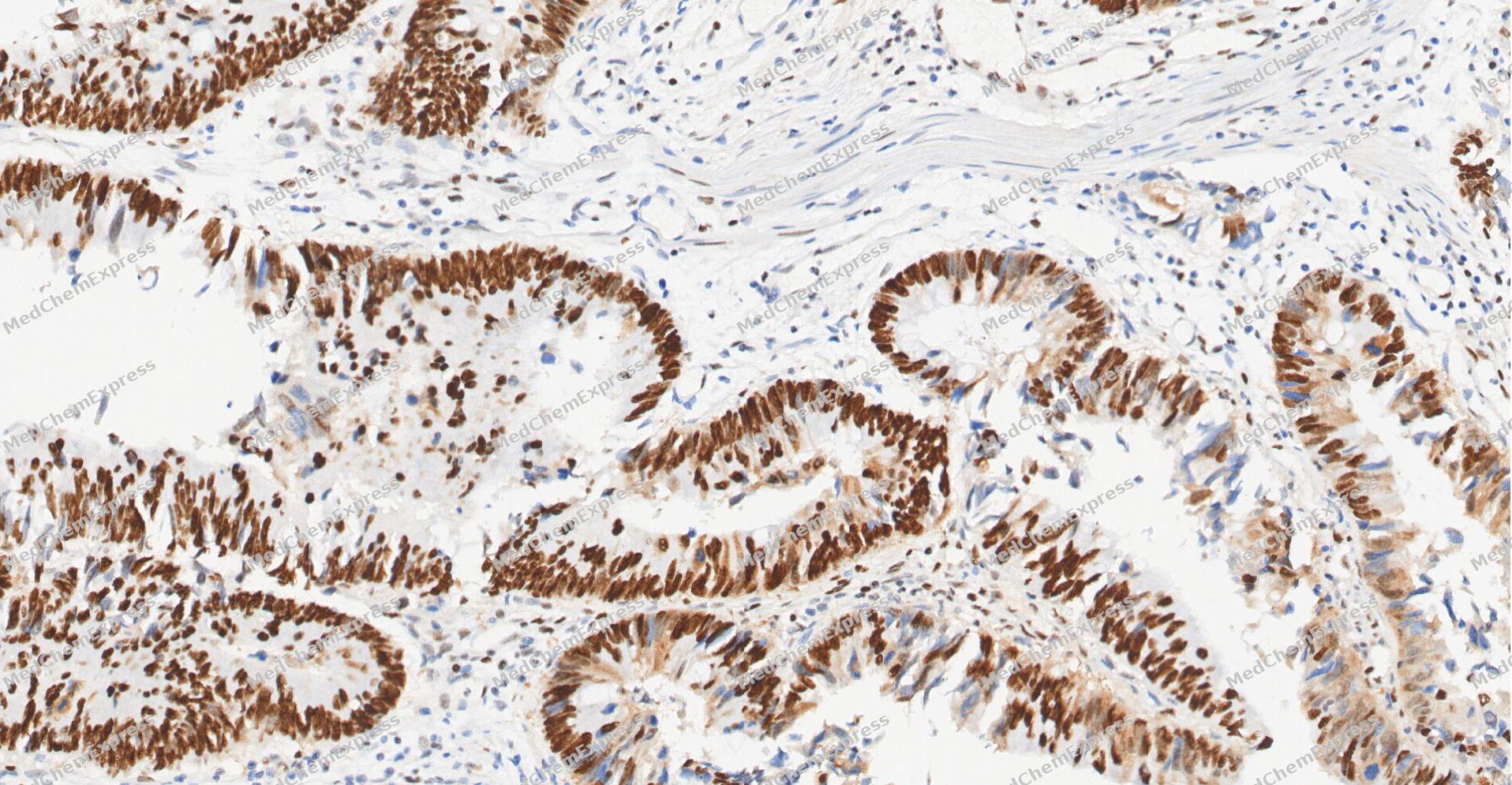 Immunohistochemical analysis of paraffin-embedded human Colon cancer tissue using Phospho-Chk2 antibody was performed. The section was pretreated using high-temperature and high-pressure mediated EDTA antigen retrieval buffer (pH 9.0), for 5 minutes. The tissues were incubated with primary antibody (HY-P80799, 1:100 dilution) at room temperature for 60 minutes. Detection was performed using an HRP conjugated compact polymer system. DAB was used as the chromogen. The tissues were counterstained with hematoxylin and mounted with neutral balsam mounting medium.
 -
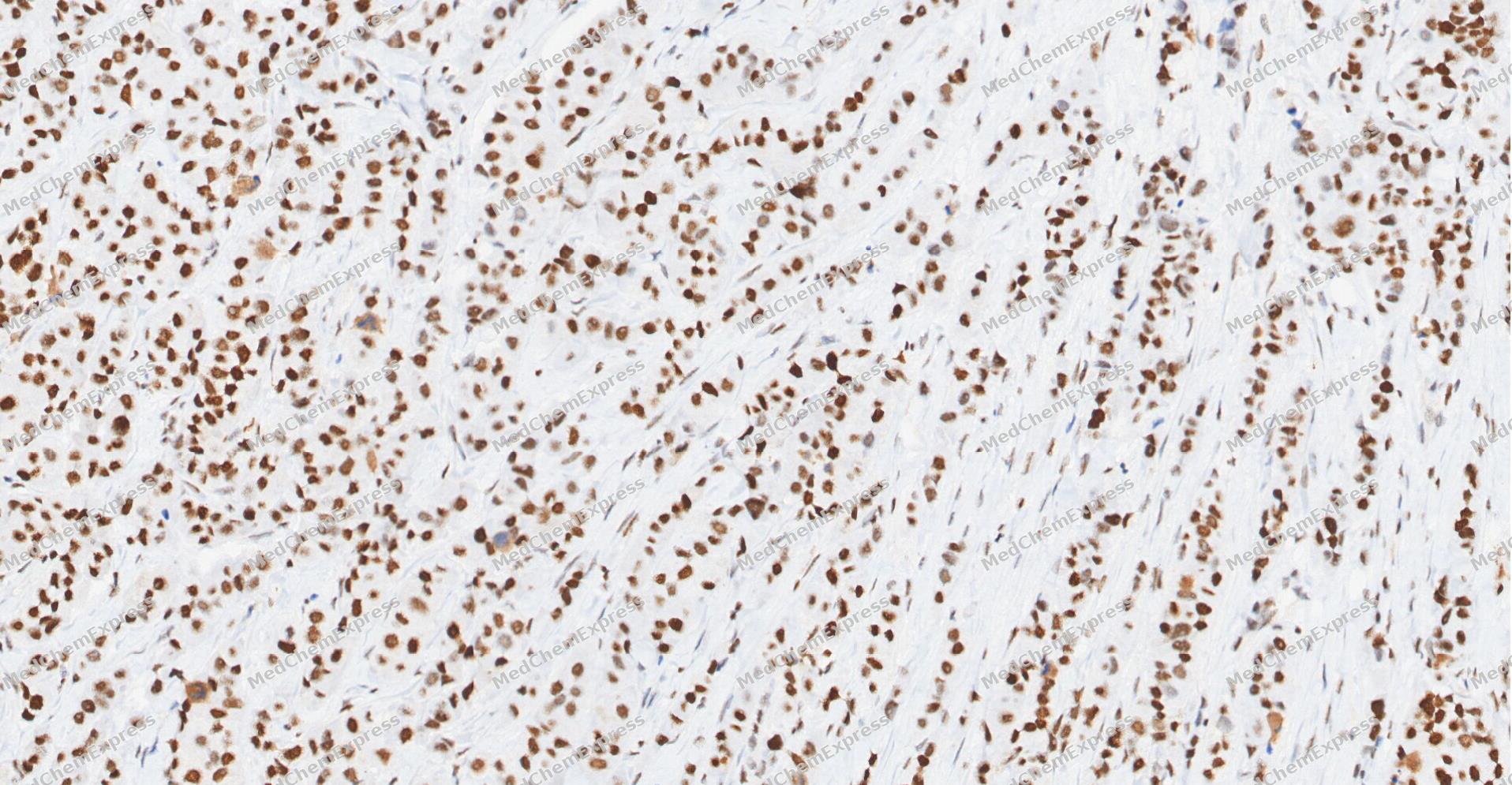 Immunohistochemical analysis of paraffin-embedded human Breast Cancer tissue using Phospho-Chk2 antibody was performed. The section was pretreated using high-temperature and high-pressure mediated EDTA antigen retrieval buffer (pH 9.0), for 5 minutes. The tissues were incubated with primary antibody (HY-P80799, 1:100 dilution) at room temperature for 60 minutes. Detection was performed using an HRP conjugated compact polymer system. DAB was used as the chromogen. The tissues were counterstained with hematoxylin and mounted with neutral balsam mounting medium.
 -
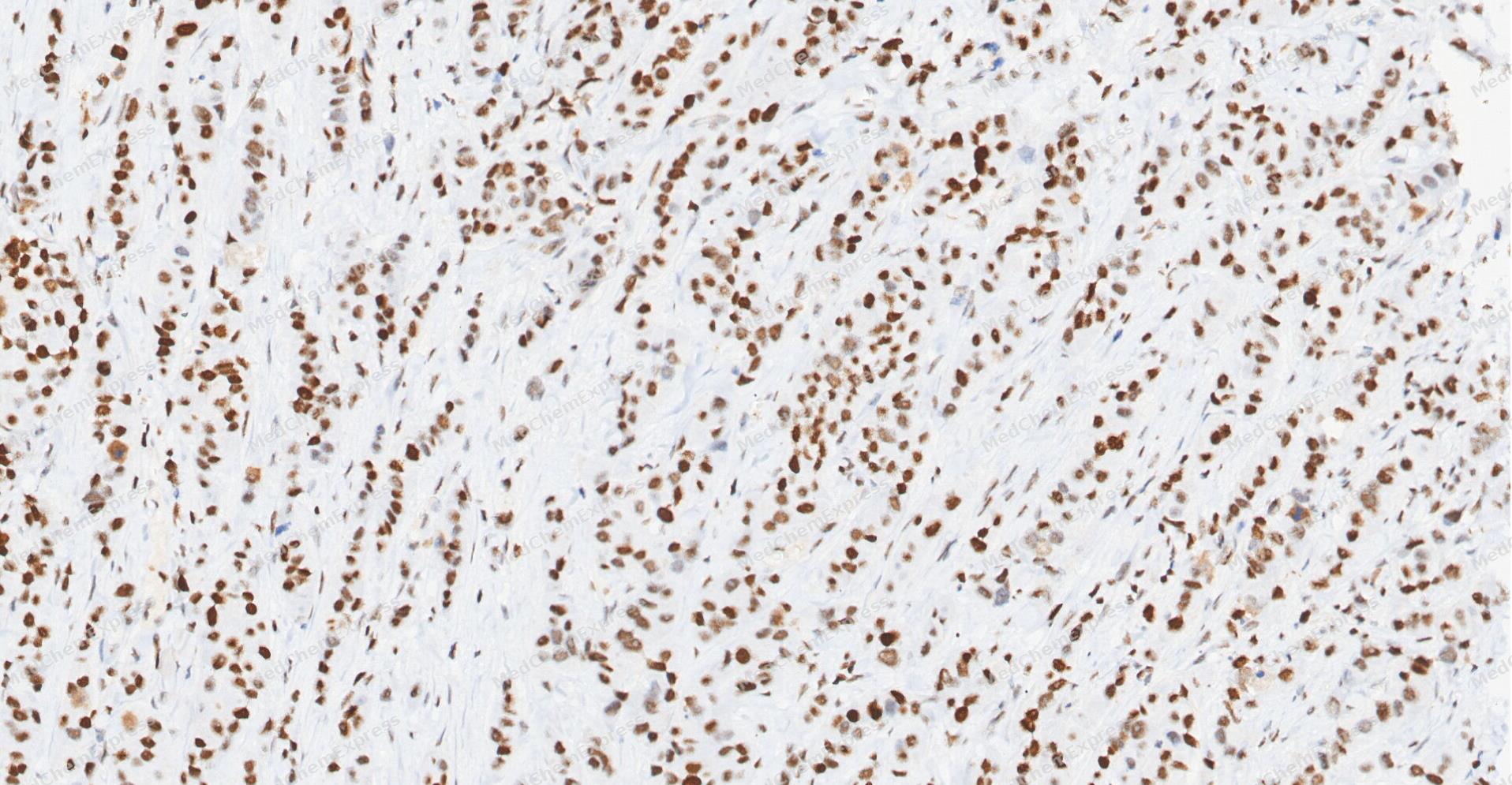 Immunohistochemical analysis of paraffin-embedded human Breast Cancer tissue using Phospho-Chk2 antibody was performed. The section was pretreated using high-temperature and high-pressure mediated EDTA antigen retrieval buffer (pH 9.0), for 5 minutes. The tissues were incubated with primary antibody (HY-P80799, 1:100 dilution) at room temperature for 60 minutes. Detection was performed using an HRP conjugated compact polymer system. DAB was used as the chromogen. The tissues were counterstained with hematoxylin and mounted with neutral balsam mounting medium.
 -
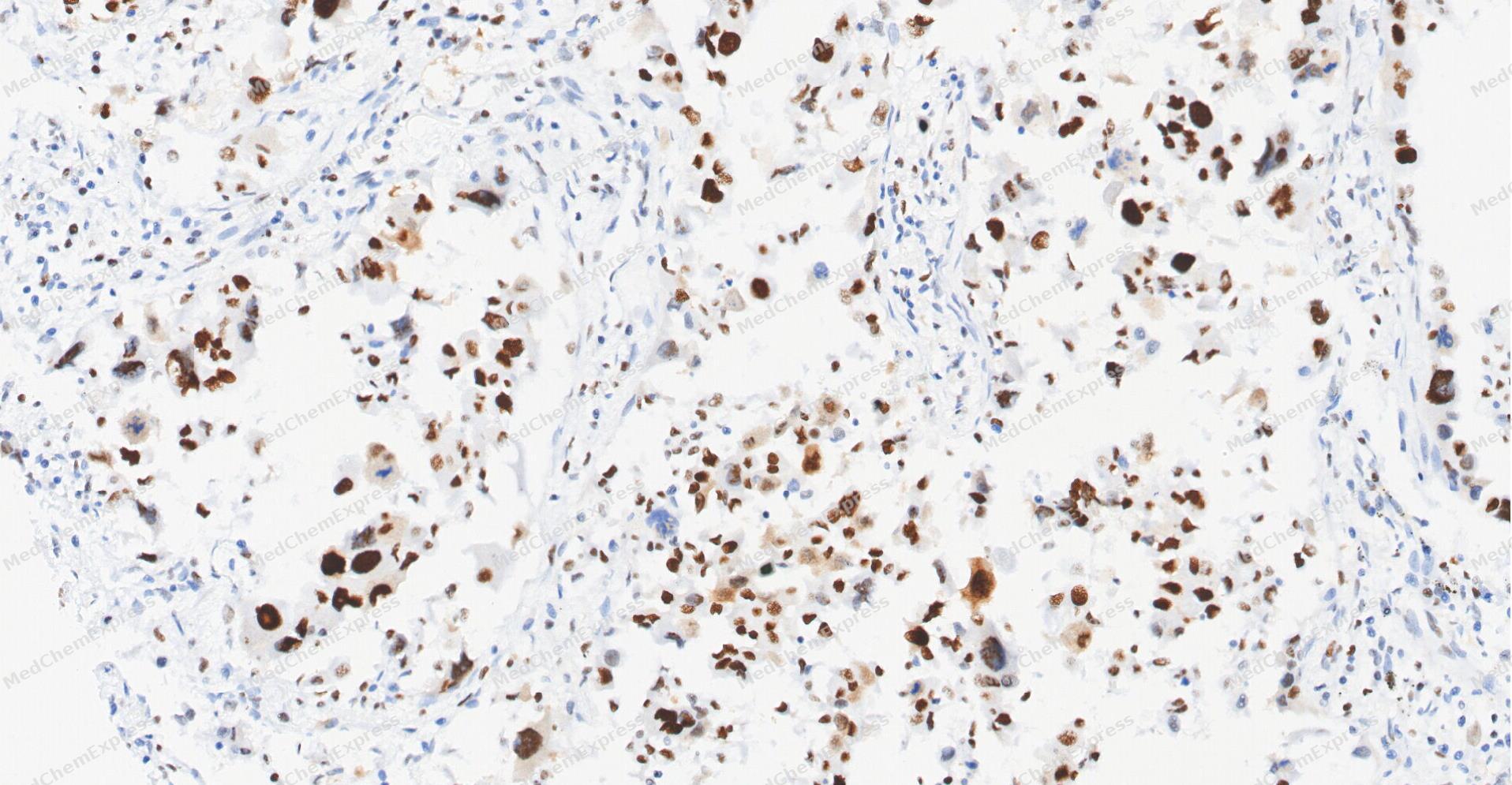 Immunohistochemical analysis of paraffin-embedded human Lung Adenocarcinoma tissue using Phospho-Chk2 antibody was performed. The section was pretreated using high-temperature and high-pressure mediated EDTA antigen retrieval buffer (pH 9.0), for 5 minutes. The tissues were incubated with primary antibody (HY-P80799, 1:100 dilution) at room temperature for 60 minutes. Detection was performed using an HRP conjugated compact polymer system. DAB was used as the chromogen. The tissues were counterstained with hematoxylin and mounted with neutral balsam mounting medium.
 -
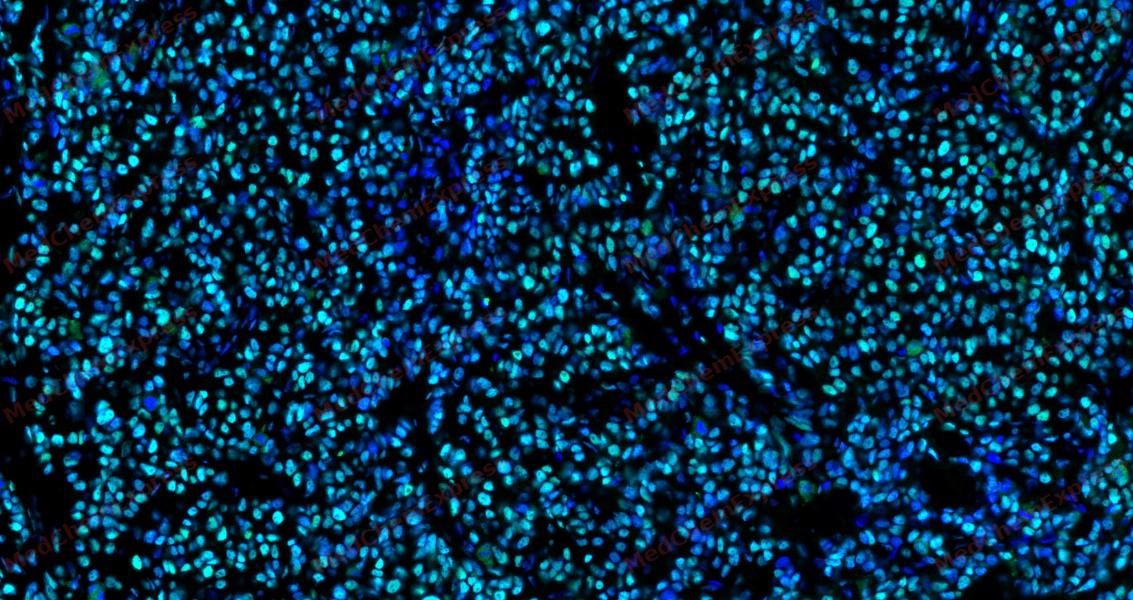 Tyramide signaling amplification based immunofluorescence was performed on paraffin-embedded human Breast Cancer tissue using Phospho-Chk2 (Thr68) antibody. Antigen retrieval was performed in EDTA buffer pH 9.0 (95 °C, 20 min) followed by cooling to RT. Then incubated with primary antibody (HY-P80799, 1:300 dilution) at room temperature for 60 minutes and HRP conjugated secondary antibody for 10 minutes. Fluorescence was then developed with Vari Fluor 532 TSA (200×)(HY-D1832). The tissues were counterstained with DAPI and mounted with Anti-fade mounting medium.
 -
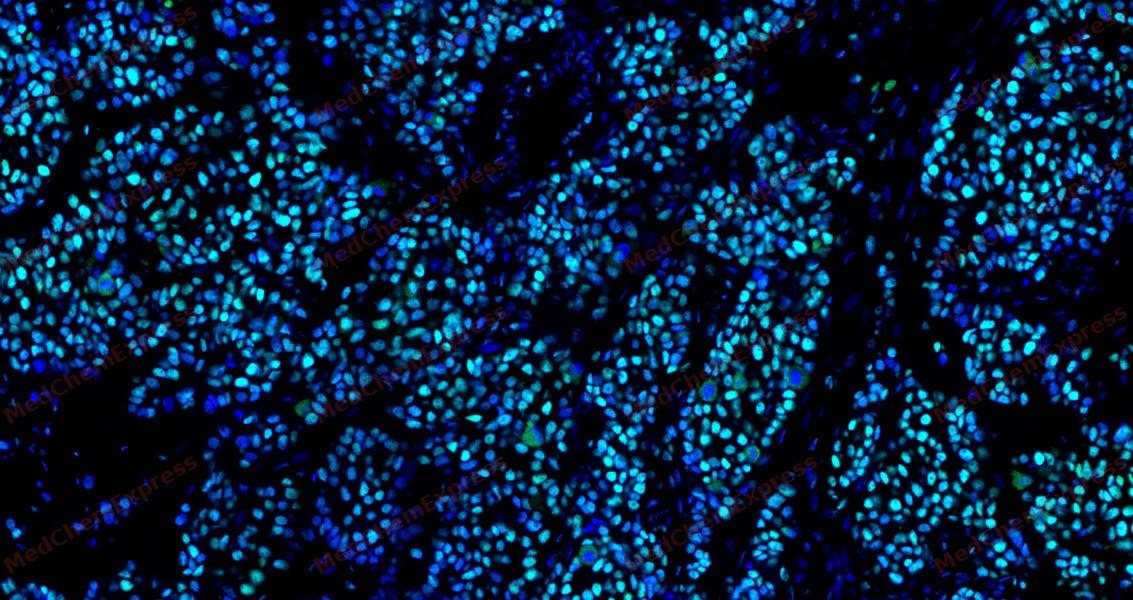 Tyramide signaling amplification based immunofluorescence was performed on paraffin-embedded human Breast Cancer tissue using Phospho-Chk2 (Thr68) antibody. Antigen retrieval was performed in EDTA buffer pH 9.0 (95 °C, 20 min) followed by cooling to RT. Then incubated with primary antibody (HY-P80799, 1:300 dilution) at room temperature for 60 minutes and HRP conjugated secondary antibody for 10 minutes. Fluorescence was then developed with Vari Fluor 532 TSA (200×)(HY-D1832). The tissues were counterstained with DAPI and mounted with Anti-fade mounting medium.
 -
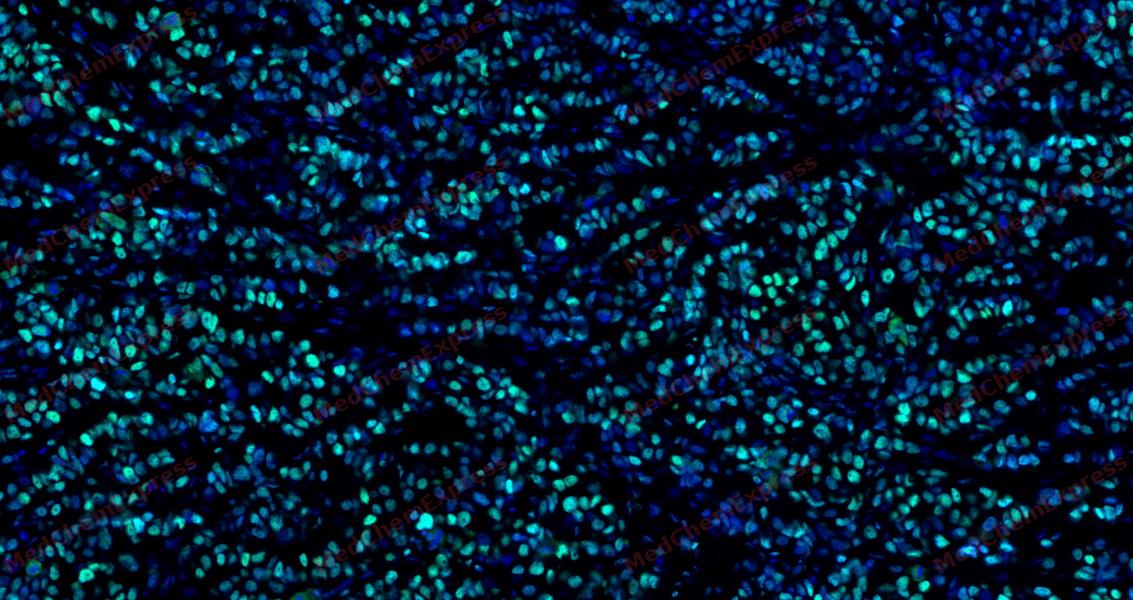 Tyramide signaling amplification based immunofluorescence was performed on paraffin-embedded human Breast Cancer tissue using Phospho-Chk2 (Thr68) antibody. Antigen retrieval was performed in EDTA buffer pH 9.0 (95 °C, 20 min) followed by cooling to RT. Then incubated with primary antibody (HY-P80799, 1:300 dilution) at room temperature for 60 minutes and HRP conjugated secondary antibody for 10 minutes. Fluorescence was then developed with Vari Fluor 532 TSA (200×)(HY-D1832). The tissues were counterstained with DAPI and mounted with Anti-fade mounting medium.
 -
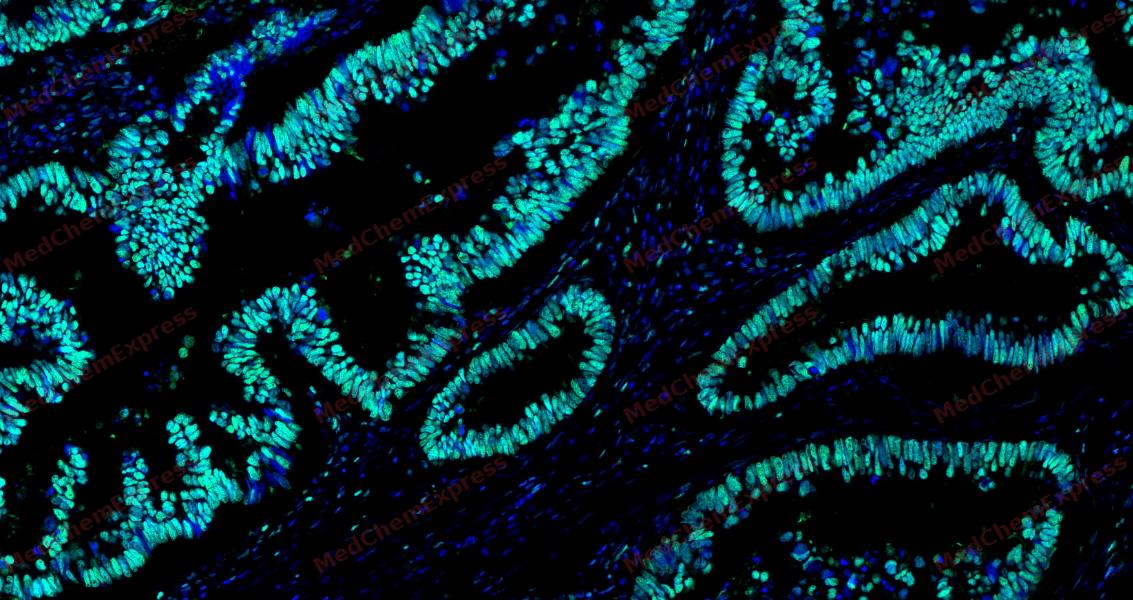 Tyramide signaling amplification based immunofluorescence was performed on paraffin-embedded human Colon cancer tissue using Phospho-Chk2 (Thr68) antibody. Antigen retrieval was performed in EDTA buffer pH 9.0 (95 °C, 20 min) followed by cooling to RT. Then incubated with primary antibody (HY-P80799, 1:300 dilution) at room temperature for 60 minutes and HRP conjugated secondary antibody for 10 minutes. Fluorescence was then developed with Vari Fluor 532 TSA (200×)(HY-D1832). The tissues were counterstained with DAPI and mounted with Anti-fade mounting medium.
 -
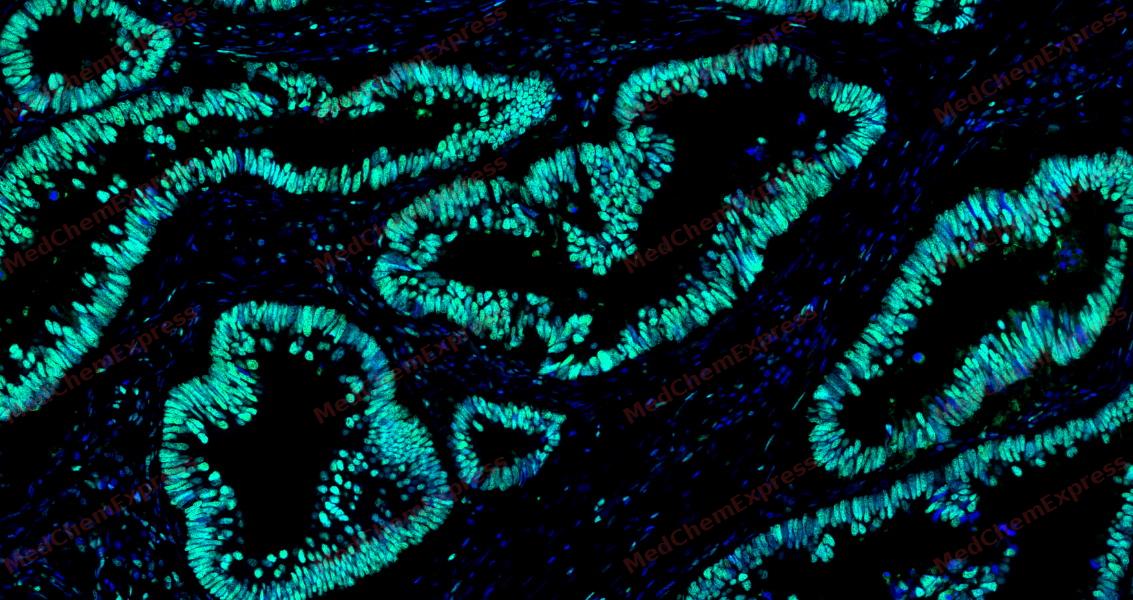 Tyramide signaling amplification based immunofluorescence was performed on paraffin-embedded human Colon cancer tissue using Phospho-Chk2 (Thr68) antibody. Antigen retrieval was performed in EDTA buffer pH 9.0 (95 °C, 20 min) followed by cooling to RT. Then incubated with primary antibody (HY-P80799, 1:300 dilution) at room temperature for 60 minutes and HRP conjugated secondary antibody for 10 minutes. Fluorescence was then developed with Vari Fluor 532 TSA (200×)(HY-D1832). The tissues were counterstained with DAPI and mounted with Anti-fade mounting medium.
 -
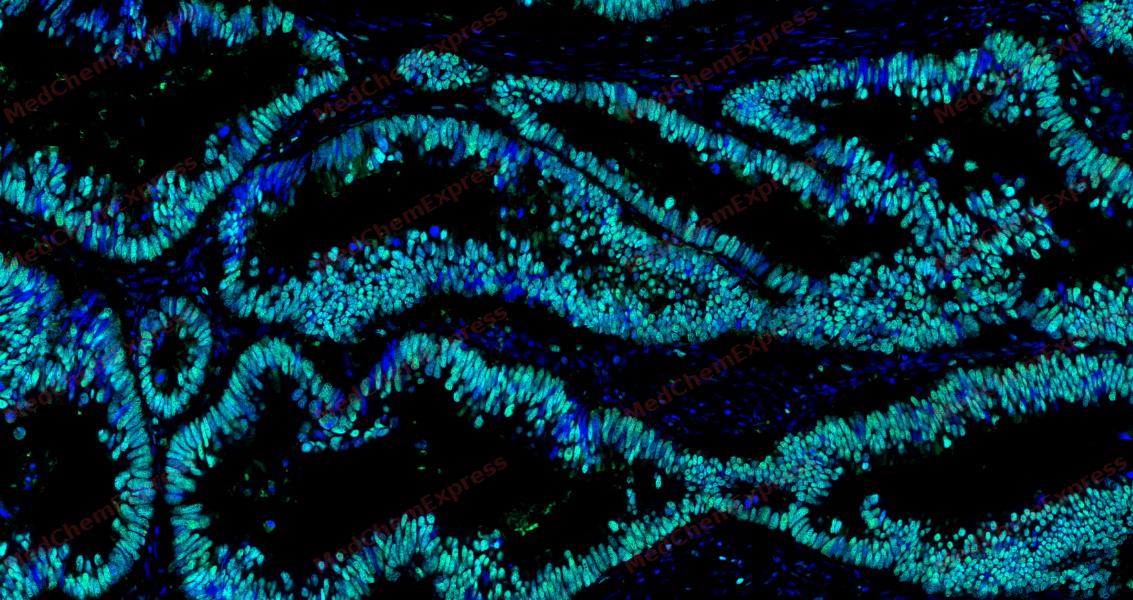 Tyramide signaling amplification based immunofluorescence was performed on paraffin-embedded human Colon cancer tissue using Phospho-Chk2 (Thr68) antibody. Antigen retrieval was performed in EDTA buffer pH 9.0 (95 °C, 20 min) followed by cooling to RT. Then incubated with primary antibody (HY-P80799, 1:300 dilution) at room temperature for 60 minutes and HRP conjugated secondary antibody for 10 minutes. Fluorescence was then developed with Vari Fluor 532 TSA (200×)(HY-D1832). The tissues were counterstained with DAPI and mounted with Anti-fade mounting medium.


Background
-
Function
Checkpoint kinase Chk2 (CHEK2) is a serine/threonine kinase and key DNA damage response component that coordinates checkpoint activation, DNA repair, apoptosis, senescence, or damage tolerance after genotoxic stress[1]. Mechanistically, ATM-mediated Thr68 phosphorylation triggers CHK2 dimerization through phospho-Thr68-FHA interactions, followed by activation-loop autophosphorylation and kinase activation[2]. Activated CHK2 connects DNA damage signaling to p53 stabilization, BRCA1 phosphorylation, and cell-cycle control, therefore supporting genome integrity research in cancer models[3][4]. In disease contexts, CHK2 functions as a tumor-suppressive kinase linked to cancer susceptibility, while experimental data also show context-dependent roles in DNA damage-induced apoptosis and checkpoint arrest[5][6]. Compared with Chk1, CHK2 is structurally distinct and is activated mainly by DNA damage, whereas Chk1 has a broader role in S-phase and G2 checkpoint control[6]. For experimental applications, the selective CHK2 inhibitor CCT241533 blocks CHK2 activity in tumor cell lines after DNA damage and potentiates cytotoxicity of PARP inhibitors, supporting pathway-dissection studies rather than unsupported monotherapy claims[7].- CHK2 links ATM-driven DNA damage signaling to p53, BRCA1, apoptosis, and checkpoint control. - CHK2 differs from Chk1 in activation pattern, checkpoint dependence, and experimental inhibitor utility.
-
Subcellular Localization
Nucleus; Nucleus; Nucleus; Nucleus; Nucleus; Nucleus, PML body; Nucleus, nucleoplasm
-
Expression
Tissue_specificity:This gene is highly expressed in the testes, spleen, colon, and peripheral blood leukocytes, but lowly expressed in other tissues. -
Isoforms & Post-Translational Modification
O96017 has 13 isomers: O96017-1: 60915 Da (predicted); O96017-2: 26084 Da (predicted); O96017-3: 17370 Da (predicted); O96017-4: 50203 Da (predicted); O96017-5: 22594 Da (predicted); O96017-6: 18706 Da (predicted); O96017-7: 38125 Da (predicted); O96017-8: 32142 Da (predicted); O96017-9: 65419 Da (predicted); O96017-10: 15420 Da (predicted); O96017-11: 24396 Da (predicted); O96017-12: 57526 Da (predicted); O96017-13: 36157 Da (predicted).
Phosphorylated. Phosphorylated at Ser-73 by PLK3 in response to DNA damage, promoting phosphorylation at Thr-68 by ATM and the G2/M transition checkpoint. Phosphorylation at Thr-68 induces homodimerization. Autophosphorylates at Thr-383 and Thr-387 in the T-loop/activation segment upon dimerization to become fully active and phosphorylate its substrates like for instance CDC25C. DNA damage-induced autophosphorylation at Ser-379 induces CUL1-mediated ubiquitination and regulates the pro-apoptotic function. Phosphorylation at Ser-456 also regulates ubiquitination. Phosphorylated by PLK4;Ubiquitinated. CUL1-mediated ubiquitination regulates the pro-apoptotic function. Ubiquitination may also regulate protein stability. Ubiquitinated by RNF8 via 'Lys-48'-linked ubiquitination -
Subunit
Homodimer. Homodimerization is part of the activation process but the dimer may dissociate following activation. Interacts with PML. Interacts with TP53. Interacts with RB1; phosphorylates RB1. Interacts with BRCA1. Interacts (phosphorylated at Thr-68) with MDC1; requires ATM-mediated phosphorylation of CHEK2. Interacts with TP53BP1; modulates CHEK2 phosphorylation at Thr-68 in response to ionizing radiation. Interacts with CDC25A; phosphorylates CDC25A and mediates its degradation in response to ionizing radiation. Interacts with CUL1; mediates CHEK2 ubiquitination and regulation. Interacts with CDKN2AIP. Interacts (via protein kinase domain) with CCAR2 (via N-terminus). Interacts with SIRT1
-
SwissProt ID
-
Synonyms
CHEK2; CDS1; CHK2; RAD53; Serine/threonine-protein kinase Chk2; CHK2 checkpoint homolog; Cds1 homolog; Hucds1; hCds1; Checkpoint kinase 2
-
Research Field
Epigenetics and Nuclear Signaling
Documentation
-
Data Sheet (262 KB)
-
SDS (252 KB)
- English - EN (252 KB)
- Français - FR (252 KB)
- Deutsch - DE (252 KB)
- Norwegian - NO (252 KB)
- Español - ES (252 KB)
- Swedish - SV (252 KB)
- Italian - IT (252 KB)
- Korean - KR (252 KB)
- Portuguese - PT (252 KB)
-
User Guide for Antibodies (1077 KB)
References
[1]. Zannini L, et al. CHK2 kinase in the DNA damage response and beyond. J Mol Cell Biol. 2014 Dec;6(6):442-57. [Content Brief]
[2]. Cai Z, et al. Structure and activation mechanism of the CHK2 DNA damage checkpoint kinase. Mol Cell. 2009 Sep 24;35(6):818-29. [Content Brief]
[3]. Hirao A, et al. DNA damage-induced activation of p53 by the checkpoint kinase Chk2. Science. 2000 Mar 10;287(5459):1824-7. [Content Brief]
[4]. Lee JS, et al. hCds1-mediated phosphorylation of BRCA1 regulates the DNA damage response. Nature. 2000 Mar 9;404(6774):201-4. [Content Brief]
[5]. Antoni L, et al. CHK2 kinase: cancer susceptibility and cancer therapy - two sides of the same coin? Nat Rev Cancer. 2007 Dec;7(12):925-36. [Content Brief]
[6]. Bucher N, et al. G2 checkpoint abrogation and checkpoint kinase-1 targeting in the treatment of cancer. Br J Cancer. 2008 Feb 12;98(3):523-8. [Content Brief]
[7]. Anderson VE, et al. CCT241533 is a potent and selective inhibitor of CHK2 that potentiates the cytotoxicity of PARP inhibitors. Cancer Res. 2011 Jan 15;71(2):463-72. [Content Brief]

 Powered by Bioz
