



Phospho-Rad17 (Ser656) Antibody (YA2640)
(Synonyms: RAD17; R24L; Cell cycle checkpoint protein RAD17; hRad17; RF-C/activator 1 homolog)
Based on 1 Customer Validation
Phospho-Rad17 (Ser656) Antibody (YA2640) is a Rabbit-derived and non-conjugated IgG monoclonal antibody, targeting to Phospho-Rad17 (Ser656).
-
Host:
Rabbit
-
Isotype:
IgG
-
Application:
WB, IHC-F, IHC-P, ICC/IF
-
Reactivity :
Human
-
Formulation:
Supplied in 50mM Tris-Glycine(pH 7.4), 0.15M NaCl, 40% Glycerol, 0.01% Sodium azide and 0.05% BSA
-
Conjugation:
Non-conjugated


To place orders, for customer services and technical support, please contact: MedChemExpress USA
Tel: 609-228-6898 E-mail: [email protected] [email protected]





Applications
| Application |
WB

WB: Western Blot
|
IHC-P
IHC-P: Immunohistochemistry-Paraffin
|
IHC-F
IHC-F: Immunohistochemistry-Frozen
|
ICC/IF
ICC/IF: Immunocytochemistry/
Immunofluorescence |
|---|---|---|---|---|
| Dilution Ratio | 1:500-1:1000 | 1:50-1:100 | 1:50-1:100 | 1:50-1:200 |


Product Details
Phospho-Rad17 (Ser656) Antibody (YA2640) is a Rabbit-derived and non-conjugated IgG monoclonal antibody, targeting to Phospho-Rad17 (Ser656).
-
Host Rabbit

-
Clonality Recombinant,Monoclonal

-
Species ReactivityHuman
-
Observed Molecular WeightObserved band size: 80 kDa
Note: Due to possible protein modifications or aggregation, the molecular weight should be confirmed by actual measurement, and the predicted value is for reference only.

-
Calculated Molecular Weight Predicted band size: 77 kDa

A synthetic phosphopeptide corresponding to residues surrounding Ser656 of human Rad17
Endogenous
Affinity Purified
Non-conjugated
Phosphorylated
IgG


Product Properties
-
Appearance
Solution
-
Formulation
Supplied in 50mM Tris-Glycine(pH 7.4), 0.15M NaCl, 40% Glycerol, 0.01% Sodium azide and 0.05% BSA
-
Concentration
Batch-dependent, Please check the COA for the concentration of each lot. Check Lot Concentration
-
Storage & Stability
Stored at -20°C for 1 year. Avoid repeated freeze / thaw cycles.
-
Shipping
Shipping with blue ice.


Verification Images
-
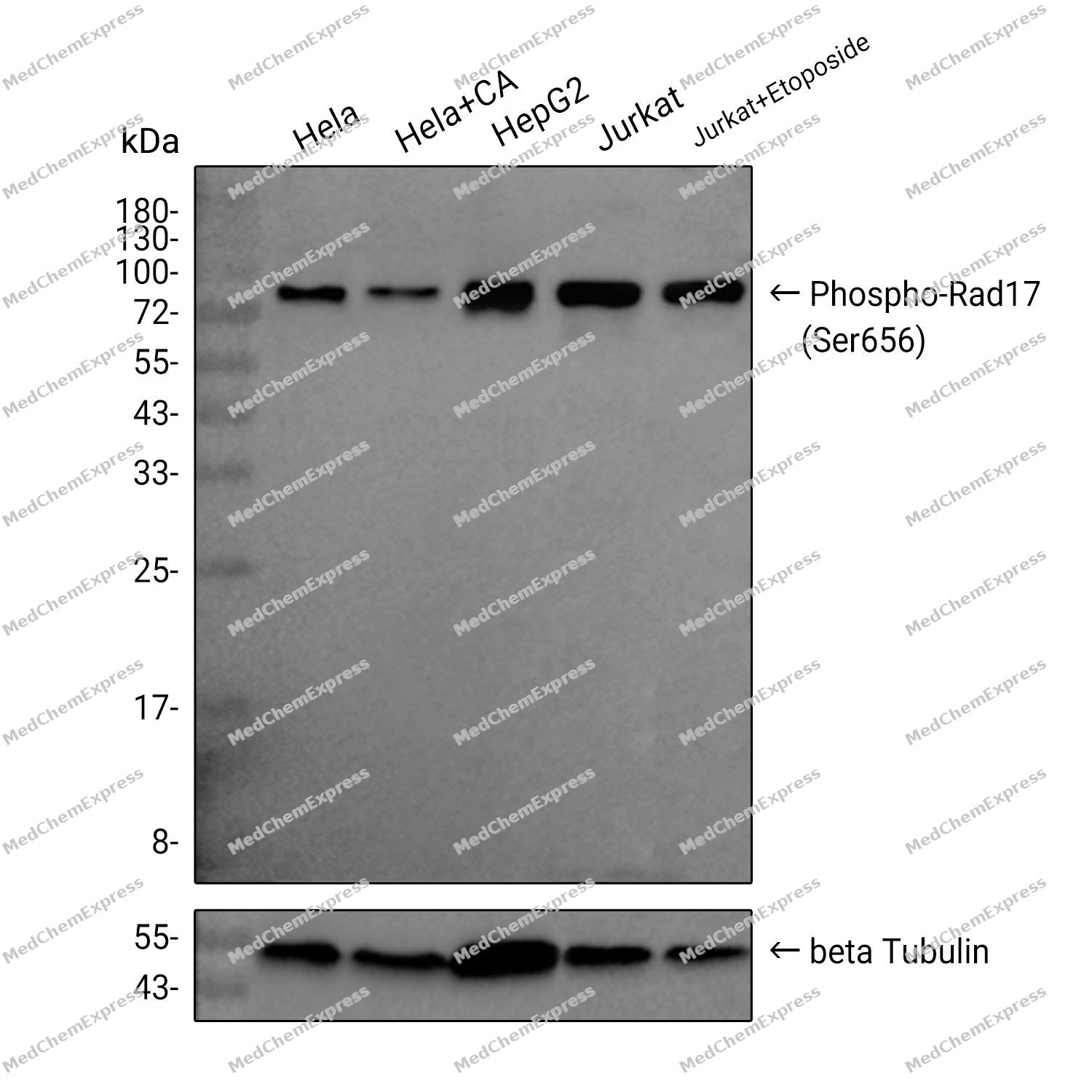
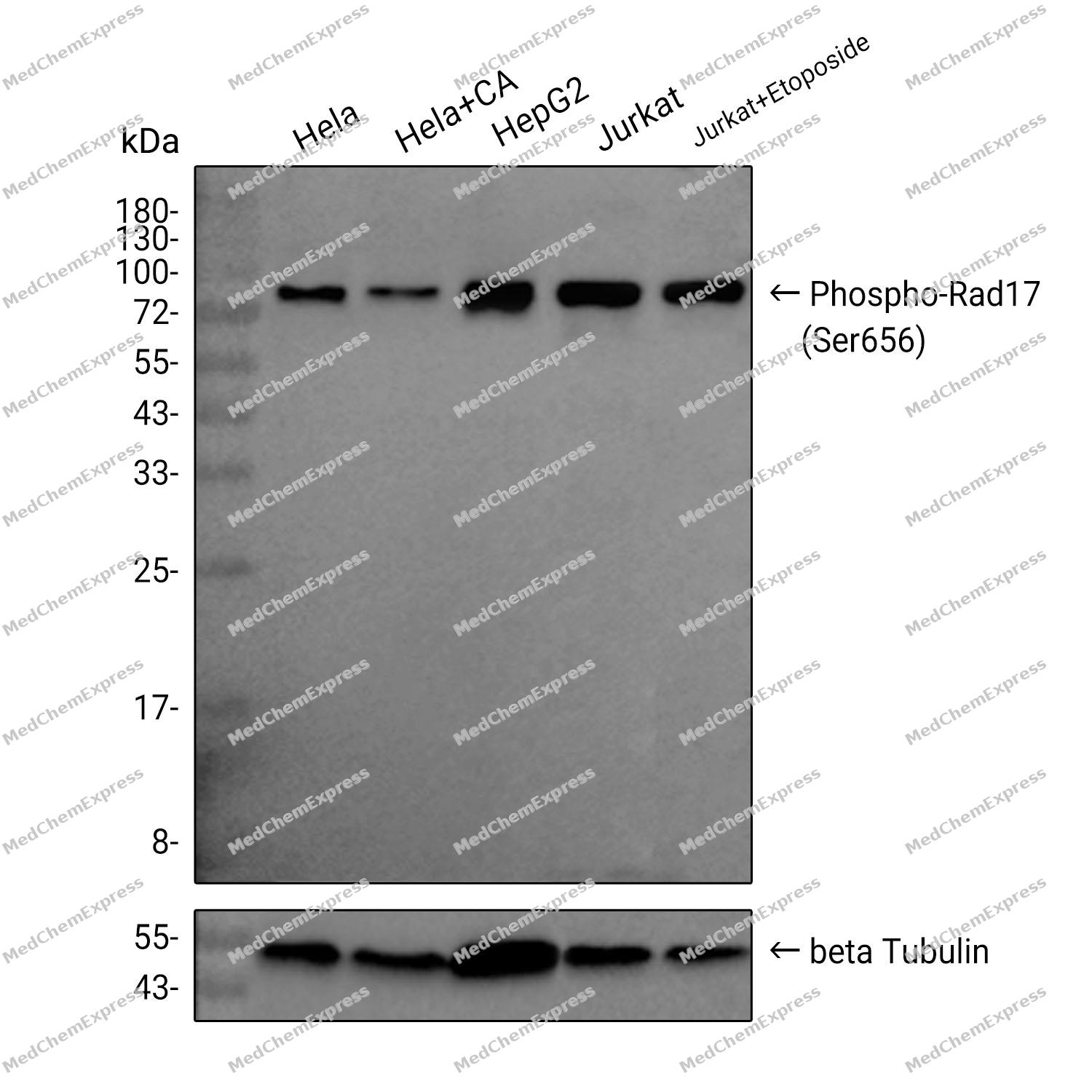 Western blot analysis was performed on extracts from Hela (lane 1, 15 μg), Hela+CA (lane 2, 15 μg), HepG2 (lane 3, 15 μg), Jurkat (lane 4, 15 μg), and Jurkat+Etoposide (lane 5, 15 μg) using Phospho-Rad17 (Ser656) Rabbit mAb.Proteins were transferred to a PVDF membrane and blocked with 5% non-fat milk in TBST at 4°C overnight.The primary antibody (1:1000 dilution) and the loading control antibody (beta-Tubulin, HY-P80955, 1:5000 dilution) was incubated in 5% non-fat milk in TBST for 1 hour at 37°C.Goat Anti-Rabbit IgG-HRP Secondary Antibody (1:20000 dilution) was then applied for 40 minutes at 37°C.
 -
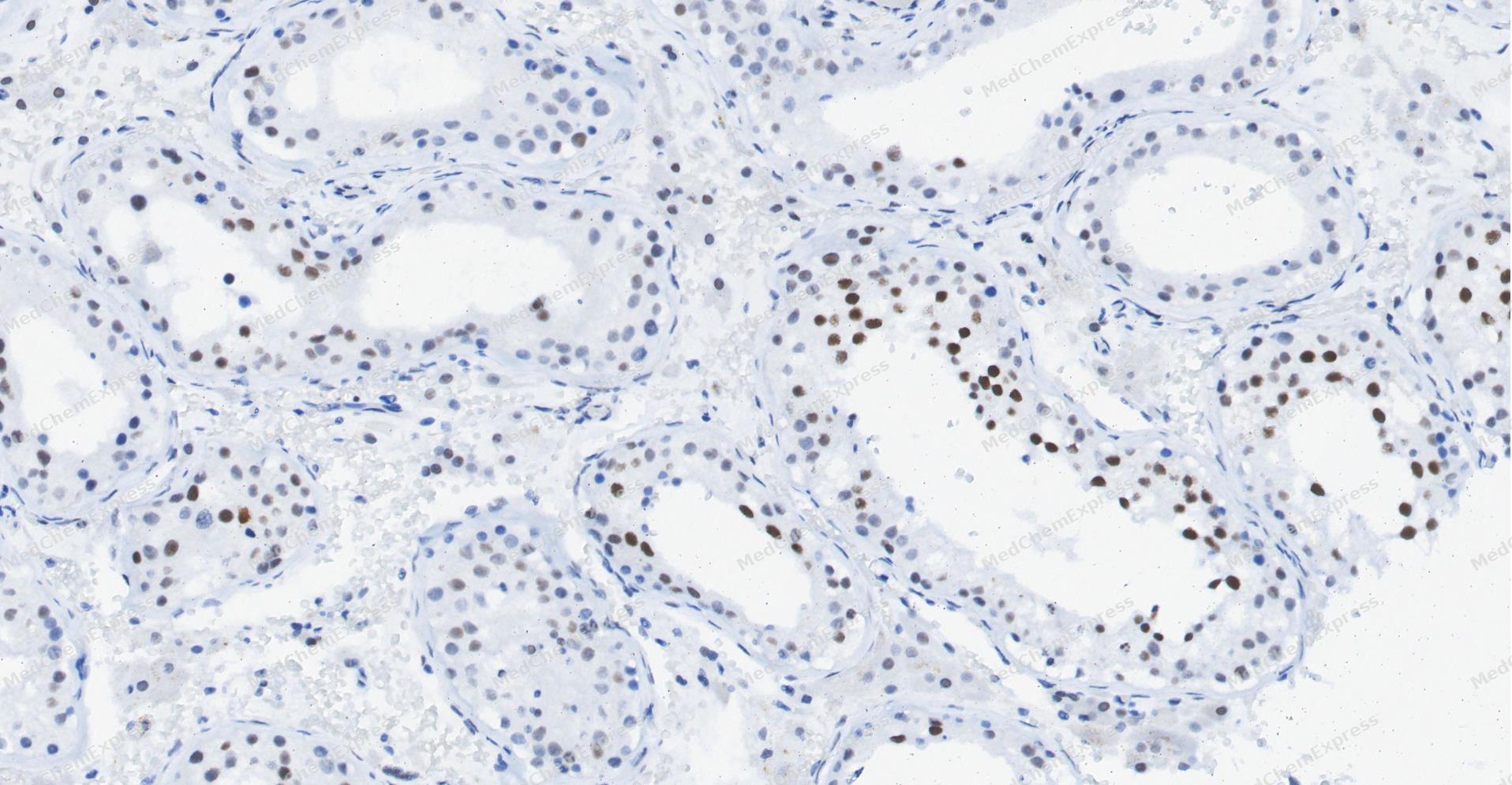 Immunohistochemical analysis of paraffin-embedded human Testis tissue using Phospho-Rad17 (Ser656) antibody was performed. The section was pretreated using high-temperature and high-pressure mediated EDTA antigen retrieval buffer (pH 9.0), for 5 minutes. The tissues were incubated with primary antibody (HY-P82895, 1:50 dilution) at room temperature for 60 minutes. Detection was performed using an HRP conjugated compact polymer system. DAB was used as the chromogen. The tissues were counterstained with hematoxylin and mounted with neutral balsam mounting medium.
 -
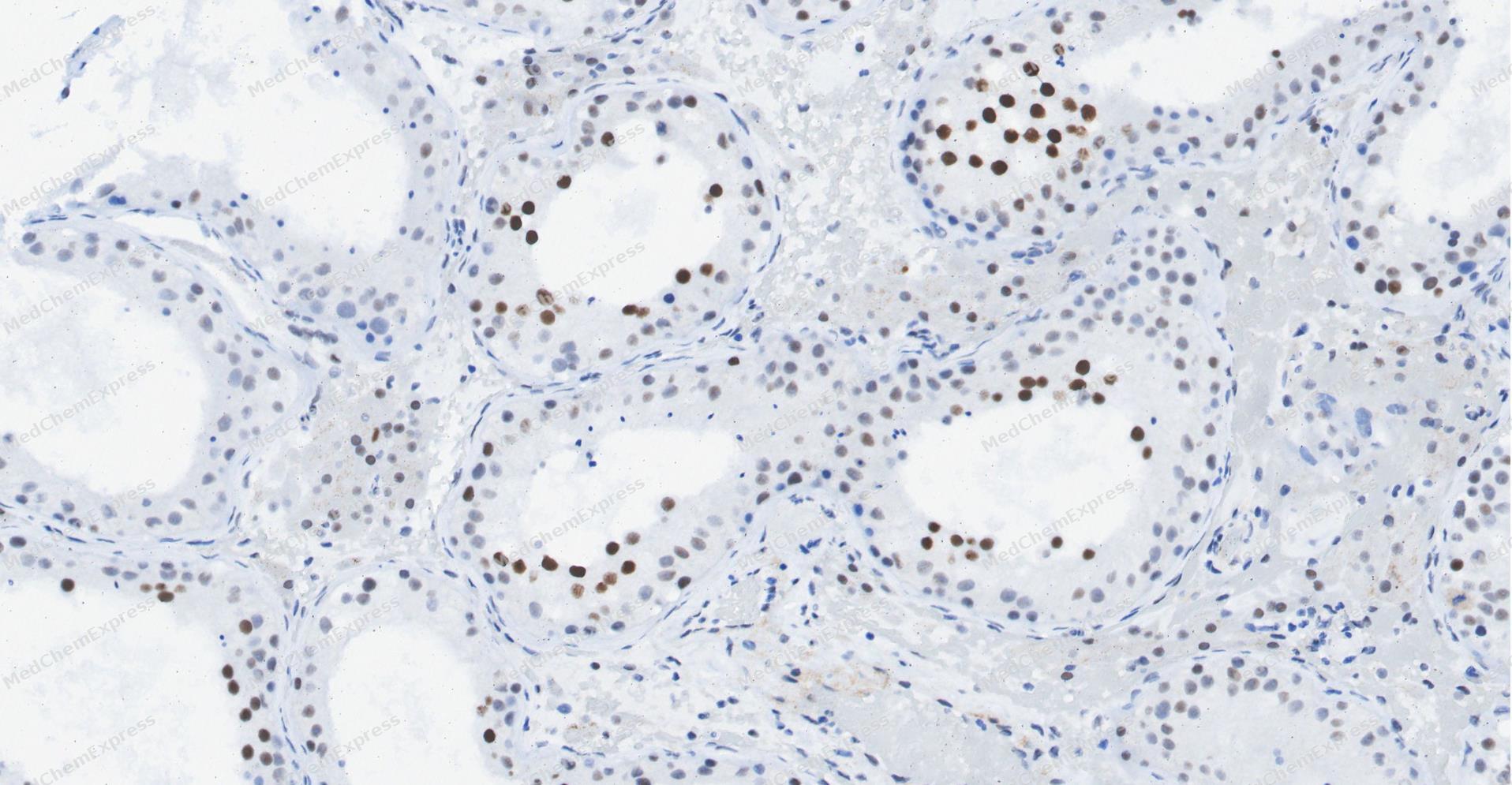 Immunohistochemical analysis of paraffin-embedded human Testis tissue using Phospho-Rad17 (Ser656) antibody was performed. The section was pretreated using high-temperature and high-pressure mediated EDTA antigen retrieval buffer (pH 9.0), for 5 minutes. The tissues were incubated with primary antibody (HY-P82895, 1:50 dilution) at room temperature for 60 minutes. Detection was performed using an HRP conjugated compact polymer system. DAB was used as the chromogen. The tissues were counterstained with hematoxylin and mounted with neutral balsam mounting medium.
 -
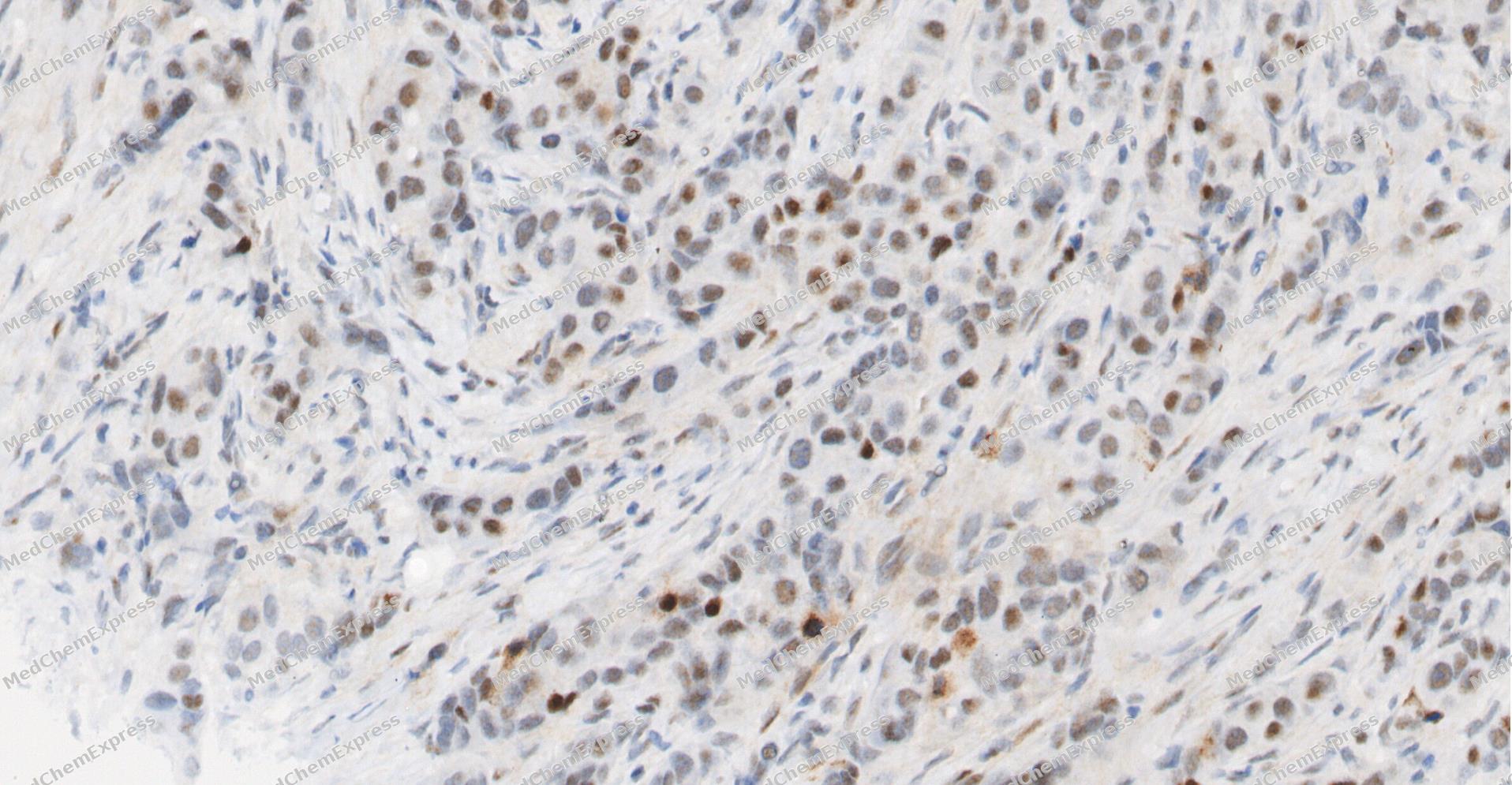 Immunohistochemical analysis of paraffin-embedded human Breast Cancer tissue using Phospho-Rad17 (Ser656) antibody was performed. The section was pretreated using high-temperature and high-pressure mediated EDTA antigen retrieval buffer (pH 9.0), for 5 minutes. The tissues were incubated with primary antibody (HY-P82895, 1:50 dilution) at room temperature for 120 minutes. Detection was performed using an HRP conjugated compact polymer system. DAB was used as the chromogen. The tissues were counterstained with hematoxylin and mounted with neutral balsam mounting medium.
 -
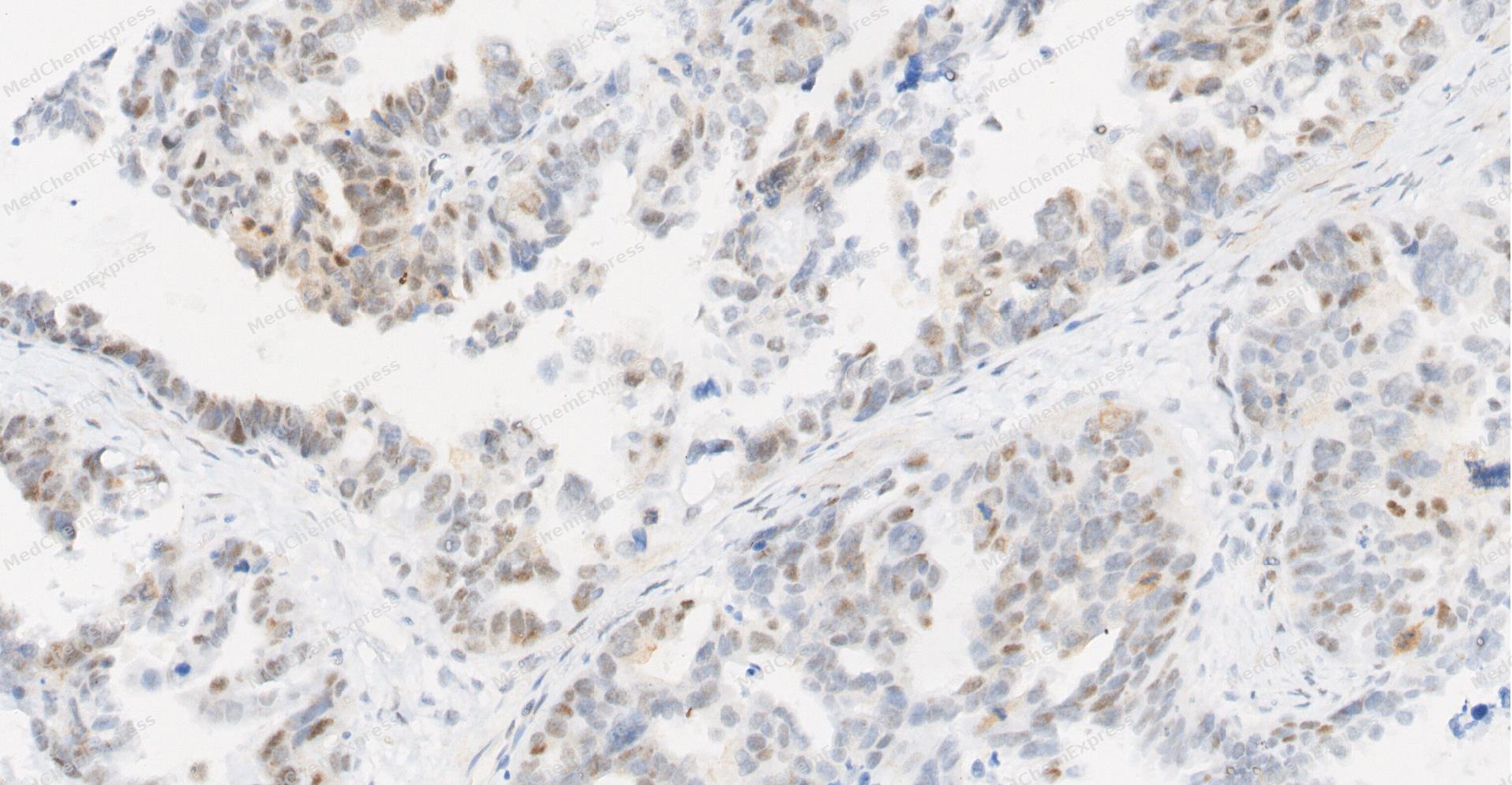 Immunohistochemical analysis of paraffin-embedded human ovarian carcinoma tissue using Phospho-Rad17 (Ser656) antibody was performed. The section was pretreated using high-temperature and high-pressure mediated EDTA antigen retrieval buffer (pH 9.0), for 5 minutes. The tissues were incubated with primary antibody (HY-P82895, 1:50 dilution) at room temperature for 120 minutes. Detection was performed using an HRP conjugated compact polymer system. DAB was used as the chromogen. The tissues were counterstained with hematoxylin and mounted with neutral balsam mounting medium.
 -
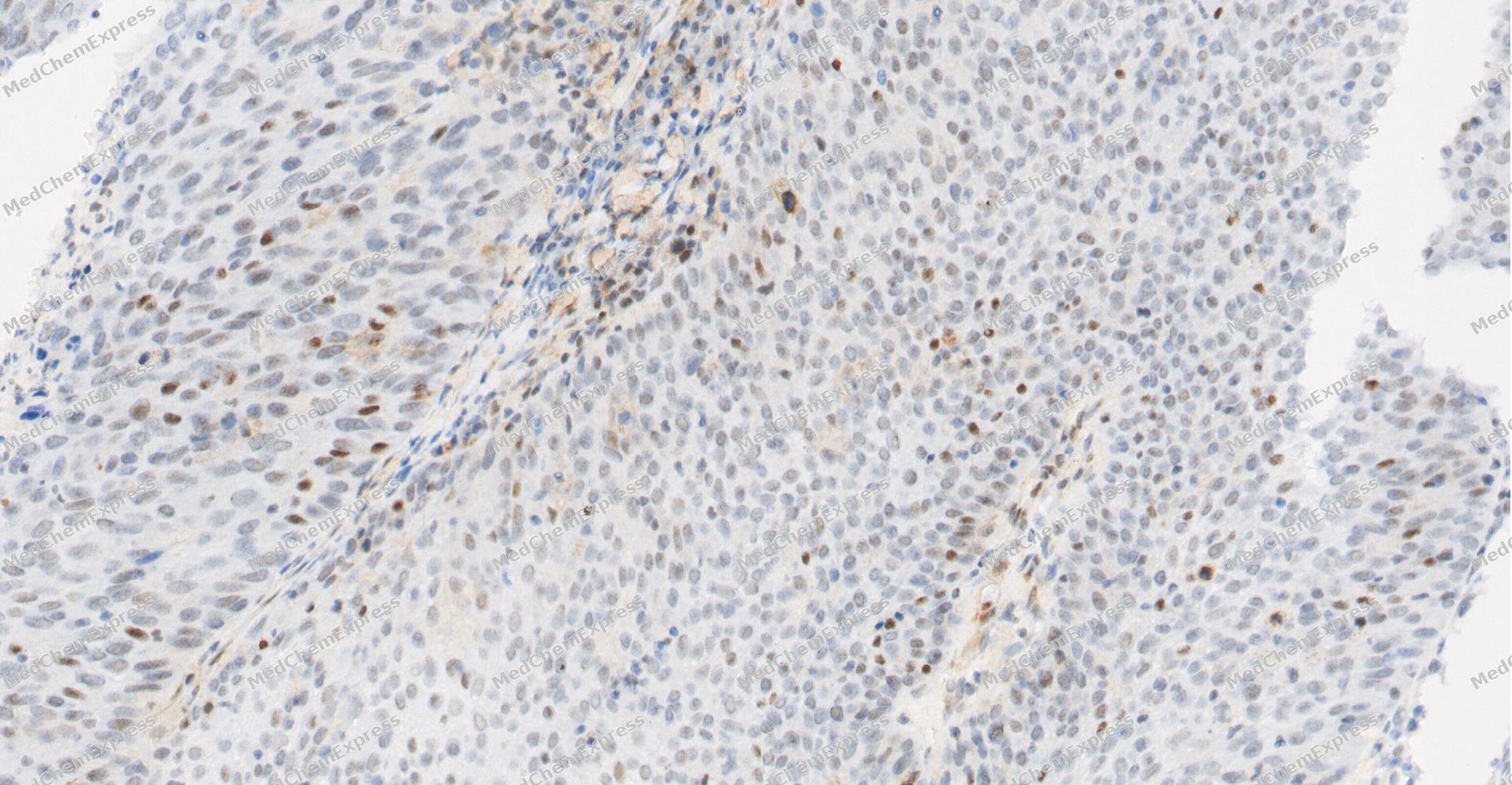 Immunohistochemical analysis of paraffin-embedded human Cervical cancer tissue using Phospho-Rad17 (Ser656) antibody was performed. The section was pretreated using high-temperature and high-pressure mediated EDTA antigen retrieval buffer (pH 9.0), for 5 minutes. The tissues were incubated with primary antibody (HY-P82895, 1:50 dilution) at room temperature for 120 minutes. Detection was performed using an HRP conjugated compact polymer system. DAB was used as the chromogen. The tissues were counterstained with hematoxylin and mounted with neutral balsam mounting medium.
 -
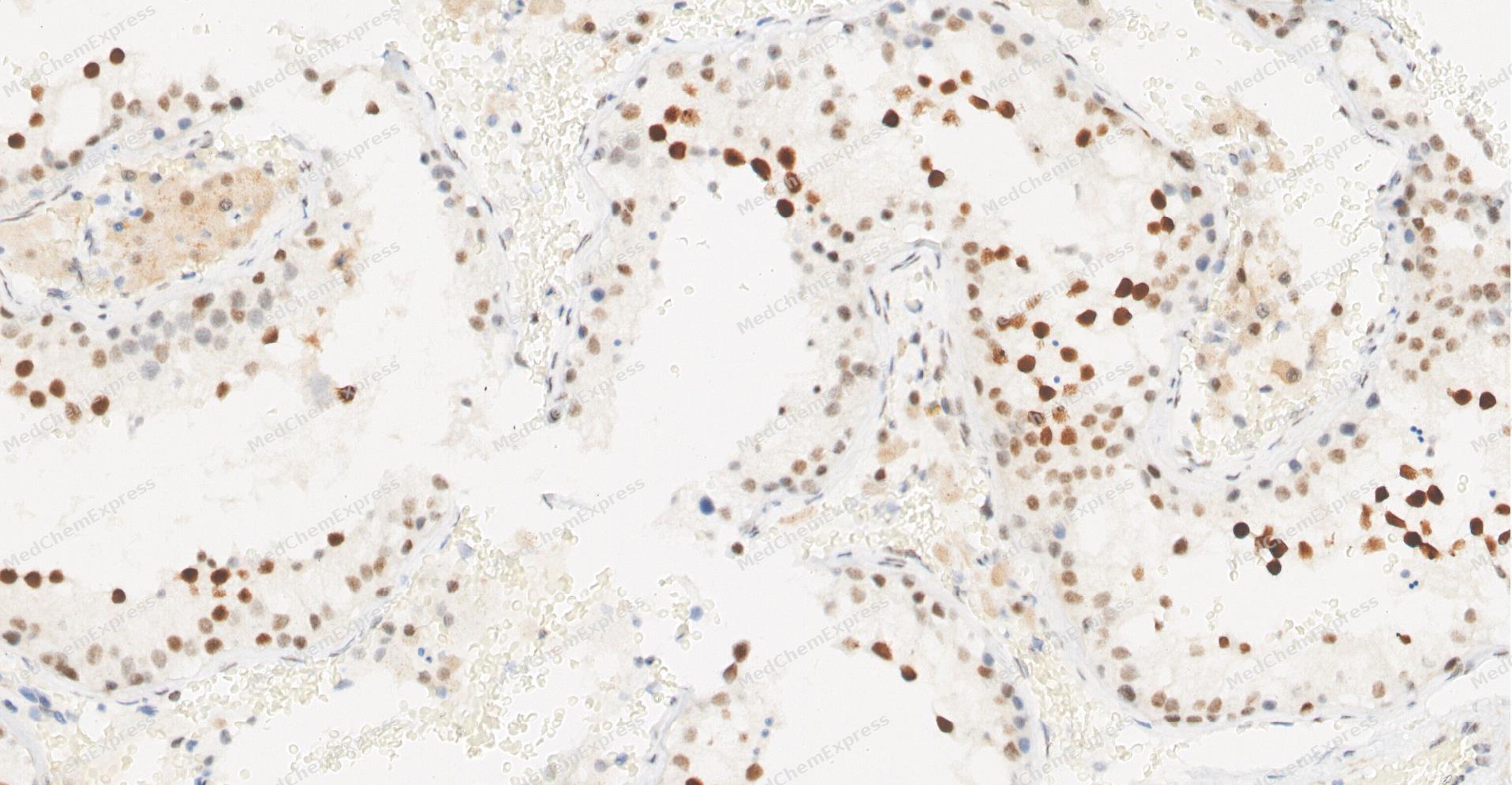 Immunohistochemical analysis of paraffin-embedded human Testis tissue using Phospho-Rad17 (Ser656) antibody was performed. The section was pretreated using high-temperature and high-pressure mediated EDTA antigen retrieval buffer (pH 9.0), for 5 minutes. The tissues were incubated with primary antibody (HY-P82895, 1:50 dilution) at room temperature for 120 minutes. Detection was performed using an HRP conjugated compact polymer system. DAB was used as the chromogen. The tissues were counterstained with hematoxylin and mounted with neutral balsam mounting medium.
 -
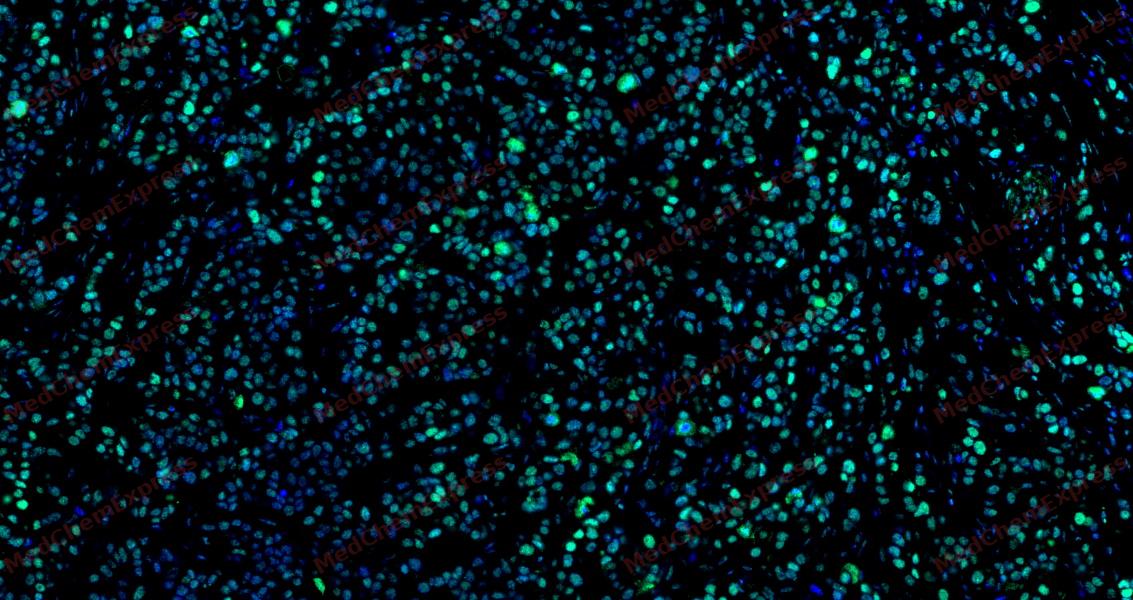 Tyramide signaling amplification based immunofluorescence was performed on paraffin-embedded human Breast Cancer tissue using Phospho-Rad17 (Ser656) antibody. Antigen retrieval was performed in EDTA buffer pH 9.0 (95 °C, 20 min) followed by cooling to RT. Then incubated with primary antibody (HY-P82895, 1:50 dilution) at room temperature for 60 minutes and HRP conjugated secondary antibody for 10 minutes. Fluorescence was then developed with Vari Fluor 532 TSA (200×)(HY-D1832). The tissues were counterstained with DAPI and mounted with Anti-fade mounting medium.
 -
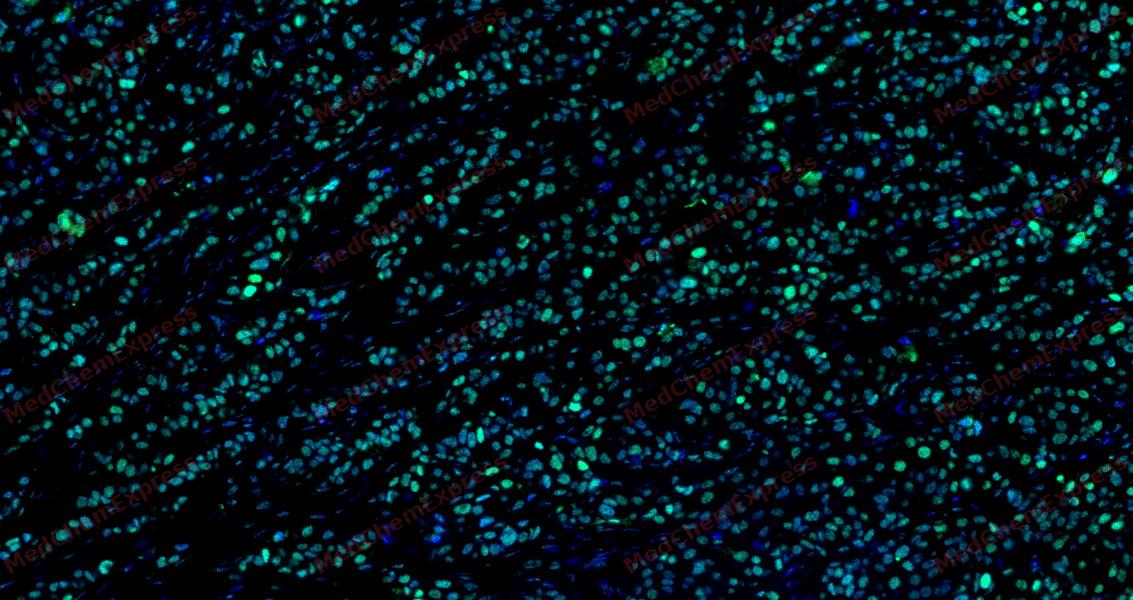 Tyramide signaling amplification based immunofluorescence was performed on paraffin-embedded human Breast Cancer tissue using Phospho-Rad17 (Ser656) antibody. Antigen retrieval was performed in EDTA buffer pH 9.0 (95 °C, 20 min) followed by cooling to RT. Then incubated with primary antibody (HY-P82895, 1:50 dilution) at room temperature for 60 minutes and HRP conjugated secondary antibody for 10 minutes. Fluorescence was then developed with Vari Fluor 532 TSA (200×)(HY-D1832). The tissues were counterstained with DAPI and mounted with Anti-fade mounting medium.
 -
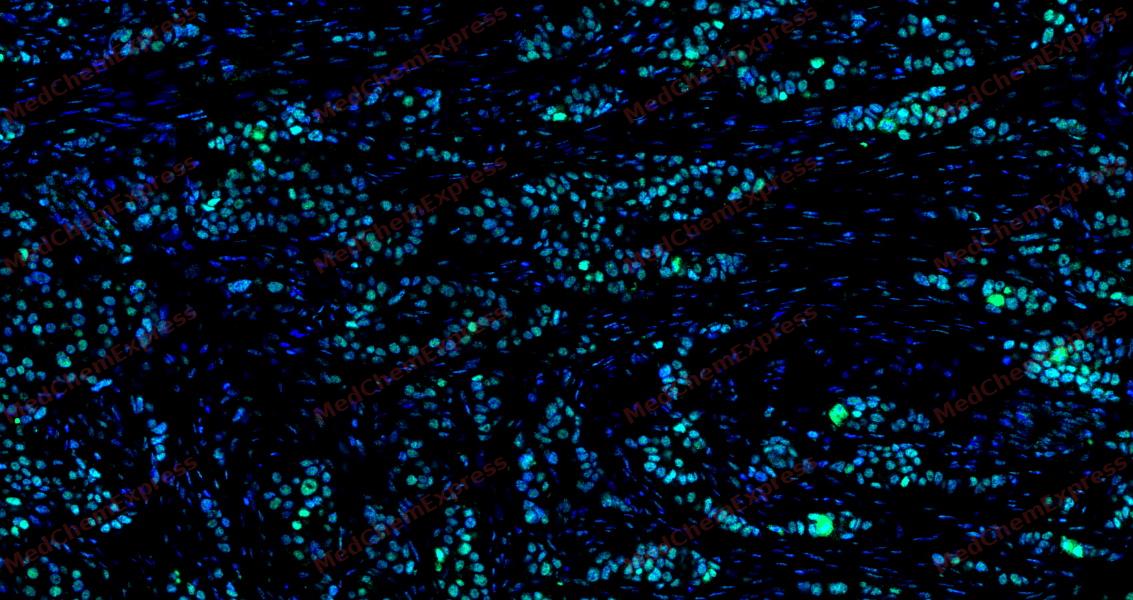 Tyramide signaling amplification based immunofluorescence was performed on paraffin-embedded human Breast Cancer tissue using Phospho-Rad17 (Ser656) antibody. Antigen retrieval was performed in EDTA buffer pH 9.0 (95 °C, 20 min) followed by cooling to RT. Then incubated with primary antibody (HY-P82895, 1:50 dilution) at room temperature for 60 minutes and HRP conjugated secondary antibody for 10 minutes. Fluorescence was then developed with Vari Fluor 532 TSA (200×)(HY-D1832). The tissues were counterstained with DAPI and mounted with Anti-fade mounting medium.
 -
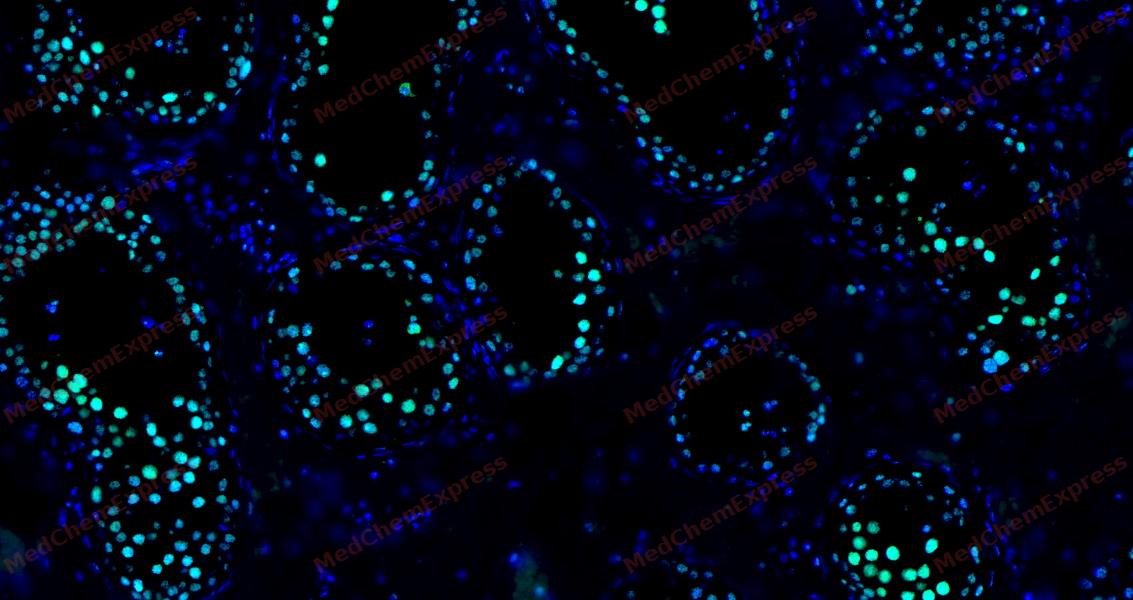 Tyramide signaling amplification based immunofluorescence was performed on paraffin-embedded human Testis tissue using Phospho-Rad17 (Ser656) antibody. Antigen retrieval was performed in EDTA buffer pH 9.0 (95 °C, 20 min) followed by cooling to RT. Then incubated with primary antibody (HY-P82895, 1:50 dilution) at room temperature for 60 minutes and HRP conjugated secondary antibody for 10 minutes. Fluorescence was then developed with Vari Fluor 532 TSA (200×)(HY-D1832). The tissues were counterstained with DAPI and mounted with Anti-fade mounting medium.
 -
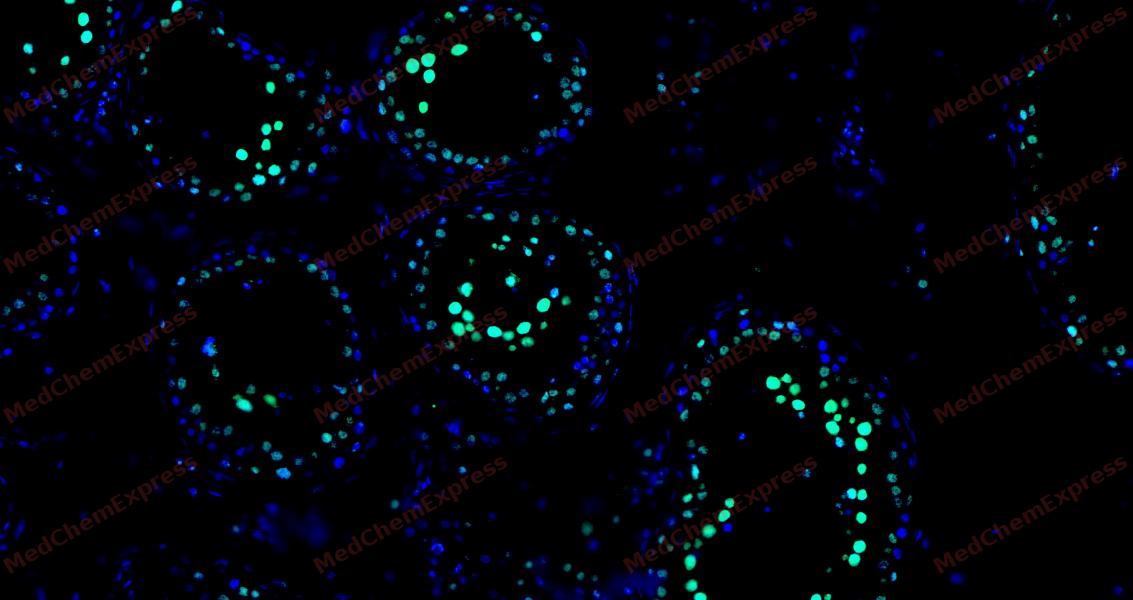 Tyramide signaling amplification based immunofluorescence was performed on paraffin-embedded human Testis tissue using Phospho-Rad17 (Ser656) antibody. Antigen retrieval was performed in EDTA buffer pH 9.0 (95 °C, 20 min) followed by cooling to RT. Then incubated with primary antibody (HY-P82895, 1:50 dilution) at room temperature for 60 minutes and HRP conjugated secondary antibody for 10 minutes. Fluorescence was then developed with Vari Fluor 532 TSA (200×)(HY-D1832). The tissues were counterstained with DAPI and mounted with Anti-fade mounting medium.
 -
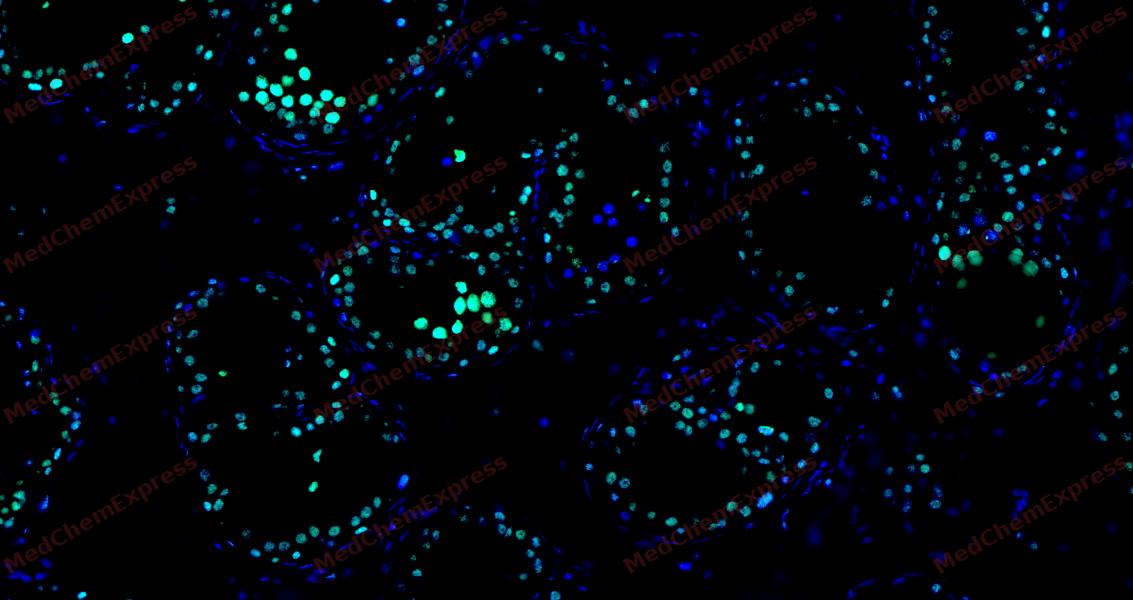 Tyramide signaling amplification based immunofluorescence was performed on paraffin-embedded human Testis tissue using Phospho-Rad17 (Ser656) antibody. Antigen retrieval was performed in EDTA buffer pH 9.0 (95 °C, 20 min) followed by cooling to RT. Then incubated with primary antibody (HY-P82895, 1:50 dilution) at room temperature for 60 minutes and HRP conjugated secondary antibody for 10 minutes. Fluorescence was then developed with Vari Fluor 532 TSA (200×)(HY-D1832). The tissues were counterstained with DAPI and mounted with Anti-fade mounting medium.


Background
-
Function
Rad17 is essential for sustained cell growth, maintenance of chromosomal stability, and ATR-dependent checkpoint activation upon DNA damage. Has a weak ATPase activity required for binding to chromatin. Participates in the recruitment of the 9-1-1 (RAD1-RAD9-HUS1) complex and RHNO1 onto chromatin, and in CHEK1 activation. Involved in homologous recombination by mediating recruitment of the MRN complex to DNA damage sites. May also serve as a sensor of DNA replication progression[1][2][3][4][5][6][7][8][9][10][11][12].
-
Subcellular Localization
Nucleus; Chromosome
-
Expression
Tissue_specificity:Overexpressed in various cancer cell lines and in colon carcinoma (at protein level) . Isoform 2 and isoform 3 are the most abundant isoforms in non irradiated cells (at protein level) . Ubiquitous at low levels. Highly expressed in testis, where it is expressed within the germinal epithelium of the seminiferous tubuli. Weakly expressed in seminomas (testicular tumors)
Induction:Induced by X-ray irradiation; Induced by X-ray irradiation; Induced by X-ray irradiation -
Isoforms & Post-Translational Modification
O75943 has 4 isomers: O75943-1: 77055 Da (predicted); O75943-2: 75836 Da (predicted); O75943-3: 57244 Da (predicted); O75943-4: 66156 Da (predicted).
Phosphorylation on Ser-646 and Ser-656 is cell cycle-regulated, enhanced by genotoxic stress, and required for activation of checkpoint signaling (PubMed:11418864, PubMed:14500819, PubMed:14871926). Phosphorylation is mediated by ATR upon UV or replication arrest, whereas it may be mediated both by ATR and ATM upon ionizing radiation (PubMed:11418864, PubMed:11799063). Phosphorylation on both sites is required for interaction with RAD1 but dispensable for interaction with RFC3 or RFC4 (PubMed:11687627). Phosphorylation at Thr-633 by ATM in response to DNA damage promotes interaction with NBN and recruitment of the MRN complex to DNA damage sites (PubMed:24534091) -
Subunit
Part of a DNA-binding complex containing RFC2, RFC3, RFC4 and RFC5 (PubMed:10884395, PubMed:11572977, PubMed:11687627, PubMed:12400013, PubMed:14624239). Interacts with RAD1 and RAD9 within the 9-1-1 (RAD1-RAD9-HUS1) complex (PubMed:10884395, PubMed:11418864, PubMed:12578958, PubMed:36841485, PubMed:9660800). Interacts with RAD9B, POLE, SNU13 and MCM7 (PubMed:10593953, PubMed:14500819, PubMed:14611806, PubMed:15538388). DNA damage promotes interaction with ATR or ATM and disrupts interaction with the 9-1-1 (RAD1-RAD9-HUS1) complex (PubMed:10884395, PubMed:11418864, PubMed:12578958). Interacts (when phosphorylated) with NBN; promoting recruitment of the MRN complex to DNA damage sites (PubMed:24534091)
-
SwissProt ID
-
Synonyms
RAD17; R24L; Cell cycle checkpoint protein RAD17; hRad17; RF-C/activator 1 homolog
-
Research Field
Cell Biology


Documentation
-
Data Sheet (263 KB)
-
SDS (252 KB)
- English - EN (252 KB)
- Français - FR (252 KB)
- Deutsch - DE (252 KB)
- Norwegian - NO (252 KB)
- Español - ES (252 KB)
- Swedish - SV (252 KB)
- Italian - IT (252 KB)
- Korean - KR (252 KB)
- Portuguese - PT (252 KB)
-
User Guide for Antibodies (1077 KB)
References
[1]. Li L, et al. hRAD17, a structural homolog of the Schizosaccharomyces pombe RAD17 cell cycle checkpoint gene, stimulates p53 accumulation. Oncogene. 1999 Mar 4;18(9):1689-99. [Content Brief]
[2]. Bao S, et al. ATR/ATM-mediated phosphorylation of human Rad17 is required for genotoxic stress responses. Nature. 2001 Jun 21;411(6840):969-74. [Content Brief]
[3]. Post S, et al. Phosphorylation of serines 635 and 645 of human Rad17 is cell cycle regulated and is required for G(1)/S checkpoint activation in response to DNA damage. Proc Natl Acad Sci U S A. 2001 Nov 6;98(23):13102-7. [Content Brief]
[4]. Zou L, et al. Regulation of ATR substrate selection by Rad17-dependent loading of Rad9 complexes onto chromatin. Genes Dev. 2002 Jan 15;16(2):198-208. [Content Brief]
[5]. Wang X, et al. Genomic instability and endoreduplication triggered by RAD17 deletion. Genes Dev. 2003 Apr 15;17(8):965-70. [Content Brief]
[6]. Ellison V, et al. Biochemical characterization of DNA damage checkpoint complexes: clamp loader and clamp complexes with specificity for 5' recessed DNA. PLoS Biol. 2003 Nov;1(2):E33. [Content Brief]
[7]. Garg R, et al. Chromatin association of rad17 is required for an ataxia telangiectasia and rad-related kinase-mediated S-phase checkpoint in response to low-dose ultraviolet radiation. Mol Cancer Res. 2004 Jun;2(6):362-9. [Content Brief]
[8]. Cotta-Ramusino C, et al. A DNA damage response screen identifies RHINO, a 9-1-1 and TopBP1 interacting protein required for ATR signaling. Science. 2011 Jun 10;332(6035):1313-7. [Content Brief]
[9]. Wang Q, et al. Rad17 recruits the MRE11-RAD50-NBS1 complex to regulate the cellular response to DNA double-strand breaks. EMBO J. 2014 Apr 16;33(8):862-77. [Content Brief]
[10]. Bermudez VP, et al. Loading of the human 9-1-1 checkpoint complex onto DNA by the checkpoint clamp loader hRad17-replication factor C complex in vitro. Proc Natl Acad Sci U S A. 2003 Feb 18;100(4):1633-8. [Content Brief]
[11]. Post SM, et al. The human checkpoint Rad protein Rad17 is chromatin-associated throughout the cell cycle, localizes to DNA replication sites, and interacts with DNA polymerase epsilon. Nucleic Acids Res. 2003 Oct 1;31(19):5568-75. [Content Brief]
[12]. Tsao CC, et al. Interaction between human MCM7 and Rad17 proteins is required for replication checkpoint signaling. EMBO J. 2004 Nov 24;23(23):4660-9. [Content Brief]

 Powered by Bioz
