



SMN1 Antibody (YA2194)
(Synonyms: SMN1; SMN; SMNT; SMN2; SMNC; Survival motor neuron protein; Component of gems 1; Gemin-1)
Based on 1 Customer Validation
SMN1 Antibody (YA2194) is a Rabbit-derived and non-conjugated IgG monoclonal antibody, targeting to SMN1.
-
Host:
Rabbit
-
Isotype:
IgG
-
Application:
WB, IHC-P, IP
-
Reactivity :
Human, Mouse, Rat
-
Formulation:
Supplied in rabbit IgG in 50mM Tris-Glycine(pH 7.4), 0.15M NaCl, 40%Glycerol, 0.01% sodium azide and 0.05% BSA.
-
Conjugation:
Non-conjugated


To place orders, for customer services and technical support, please contact: MedChemExpress USA
Tel: 609-228-6898 E-mail: [email protected] [email protected]





Applications
| Application |
WB

WB: Western Blot
|
IHC-P
IHC-P: Immunohistochemistry-Paraffin
|
IP
IP: Immunoprecipitation
|
|---|---|---|---|
| Dilution Ratio | 1:500-1:1000 | 1:50-1:100 | 1:50 |


Product Details
SMN1 Antibody (YA2194) is a Rabbit-derived and non-conjugated IgG monoclonal antibody, targeting to SMN1.
-
Host Rabbit

-
Clonality Recombinant,Monoclonal

-
Species ReactivityHuman, Mouse, Rat
-
Observed Molecular WeightObserved band size: 36 kDa
Note: Due to possible protein modifications or aggregation, the molecular weight should be confirmed by actual measurement, and the predicted value is for reference only.

-
Calculated Molecular Weight Predicted band size: 32 kDa

Entrez Gene: 6606 Human ; 20595 Mouse ; 64301 Rat
SwissProt: Q16637 Human ; P97801 Mouse ; O35876 Rat
OMIM: 253300 Human
A synthesized peptide derived from human SMN1 aa150-200.
Endogenous
Affinity Chromatography
Non-conjugated
Unmodified
IgG


Product Properties
-
Appearance
Solution
-
Formulation
Supplied in rabbit IgG in 50mM Tris-Glycine(pH 7.4), 0.15M NaCl, 40%Glycerol, 0.01% sodium azide and 0.05% BSA.
-
Concentration
Batch-dependent, Please check the COA for the concentration of each lot. Check Lot Concentration
-
Storage & Stability
Stored at -20°C for 1 year. Avoid repeated freeze / thaw cycles.
-
Shipping
Shipping with blue ice.


Verification Images
-
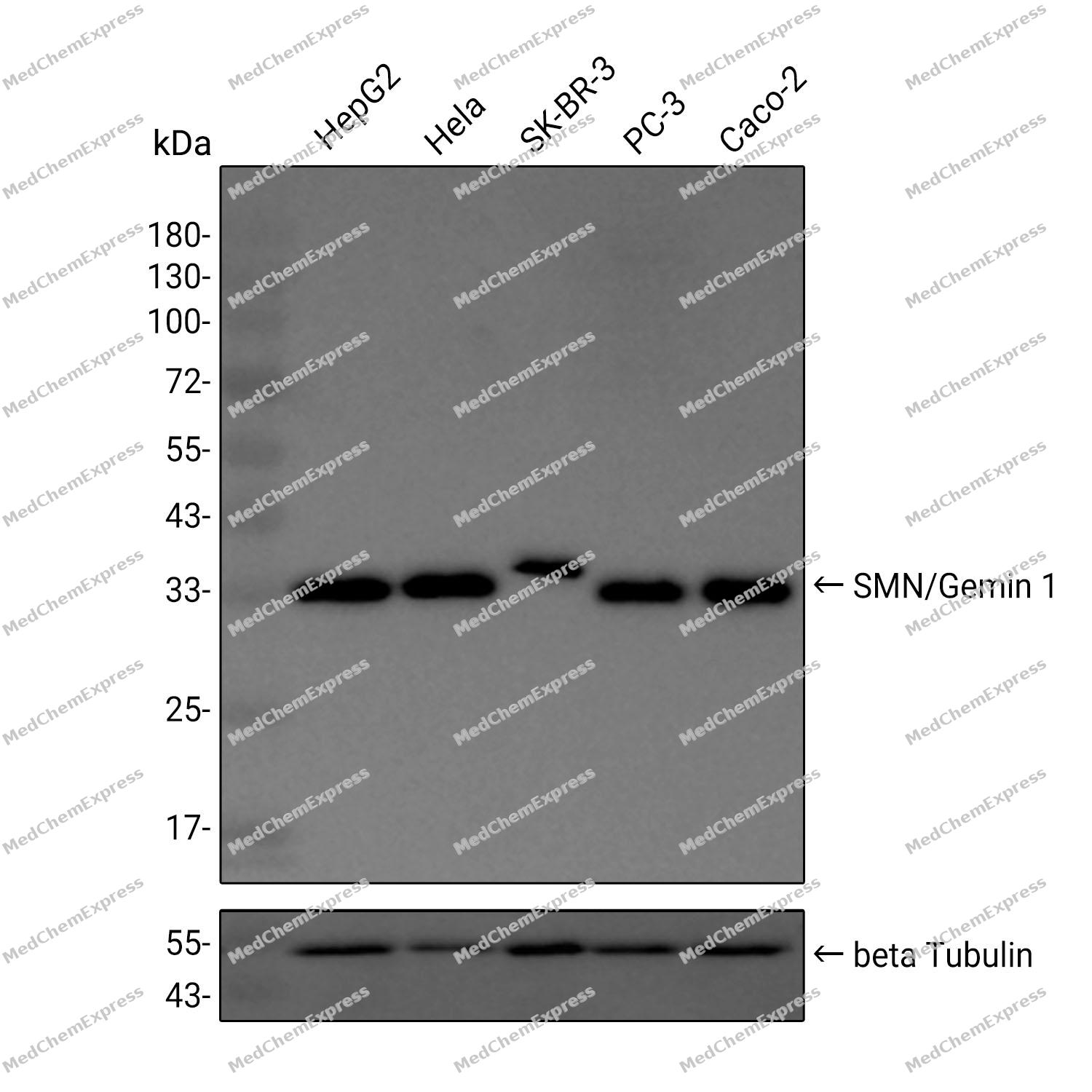 Western blot analysis was performed on extracts from HepG2 (lane 1, 15 μg), Hela (lane 2, 15 μg), SK-BR-3 (lane 3, 15 μg), PC-3 (lane 4, 15 μg), and Caco-2 (lane 5, 15 μg) using SMN/Gemin 1 Rabbit mAb. Proteins were transferred to a PVDF membrane and blocked with 5% non - fat milk in TBST at 4°C overnight. The primary antibody (1:1000 dilution) and the loading control antibody (beta-Tubulin(HRP), HY-P80955A, 1:5000 dilution) was incubated in 5% non-fat milk in TBST for 1 hour at 37°C. Goat Anti - Rabbit IgG - HRP Secondary Antibody (1:20000 dilution) was then applied for 40 minutes at 37°C.
 -
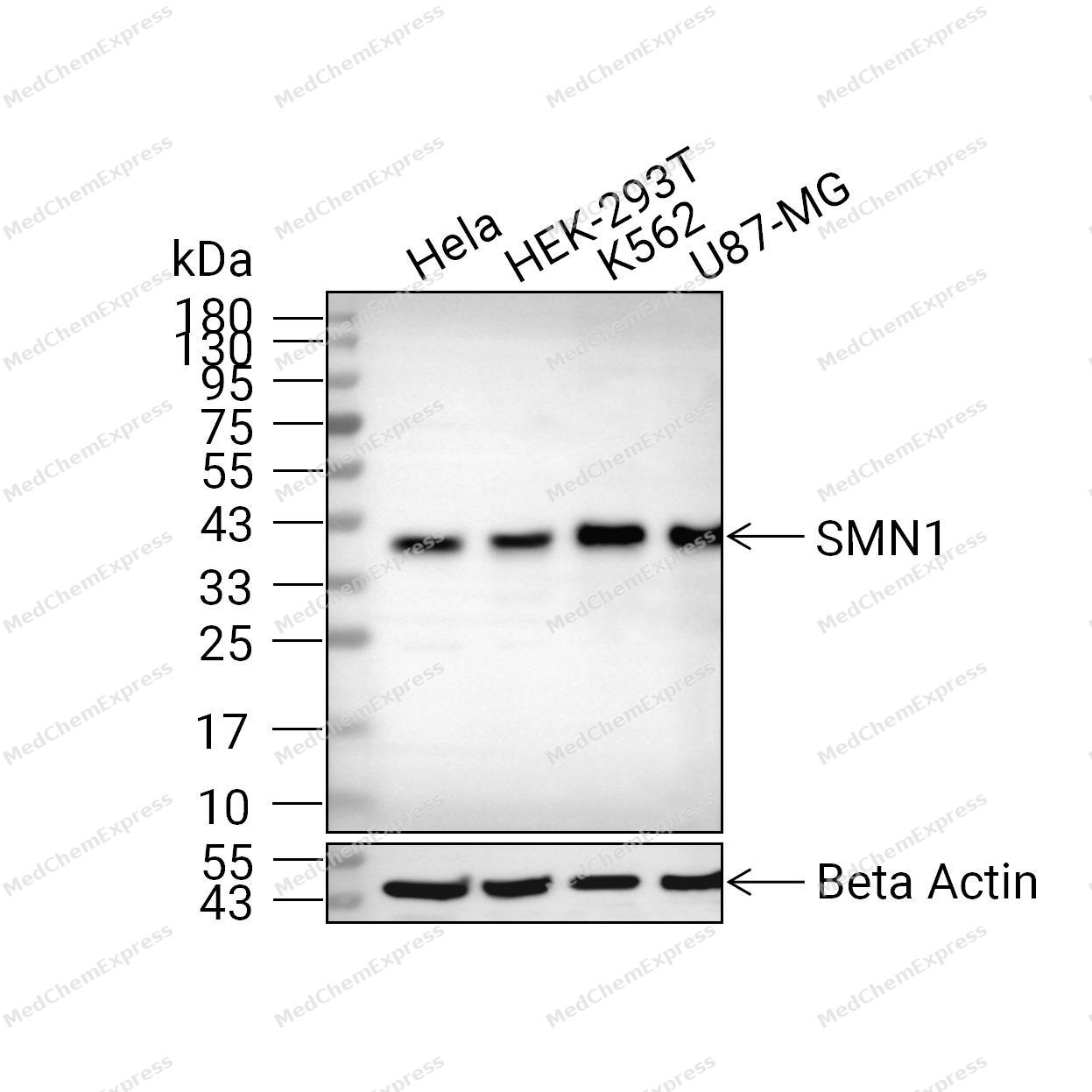 Western blot analysis of extracts from Hela(lane2(20μg), HEK293T(20μg), K562(lane4(20μg) and U87-MG(lane5(20μg) using SMN1 Antibody (HY-P82449). Proteins were transferred to a PVDF membrane and blocked with 5% non-fat milk in TBST at 4°C overnight. The primary antibody (1/1000) and Loading control antibody (Beta Actin, HY-P80993, 1/10,000) was used in 5% non-fat milk in TBST for 2 hour at room temperature. Goat Anti-Rabbit IgG-HRP Secondary Antibody (HY-P8001, 1/10,000) was used for 1 hour at room temperature.
 -
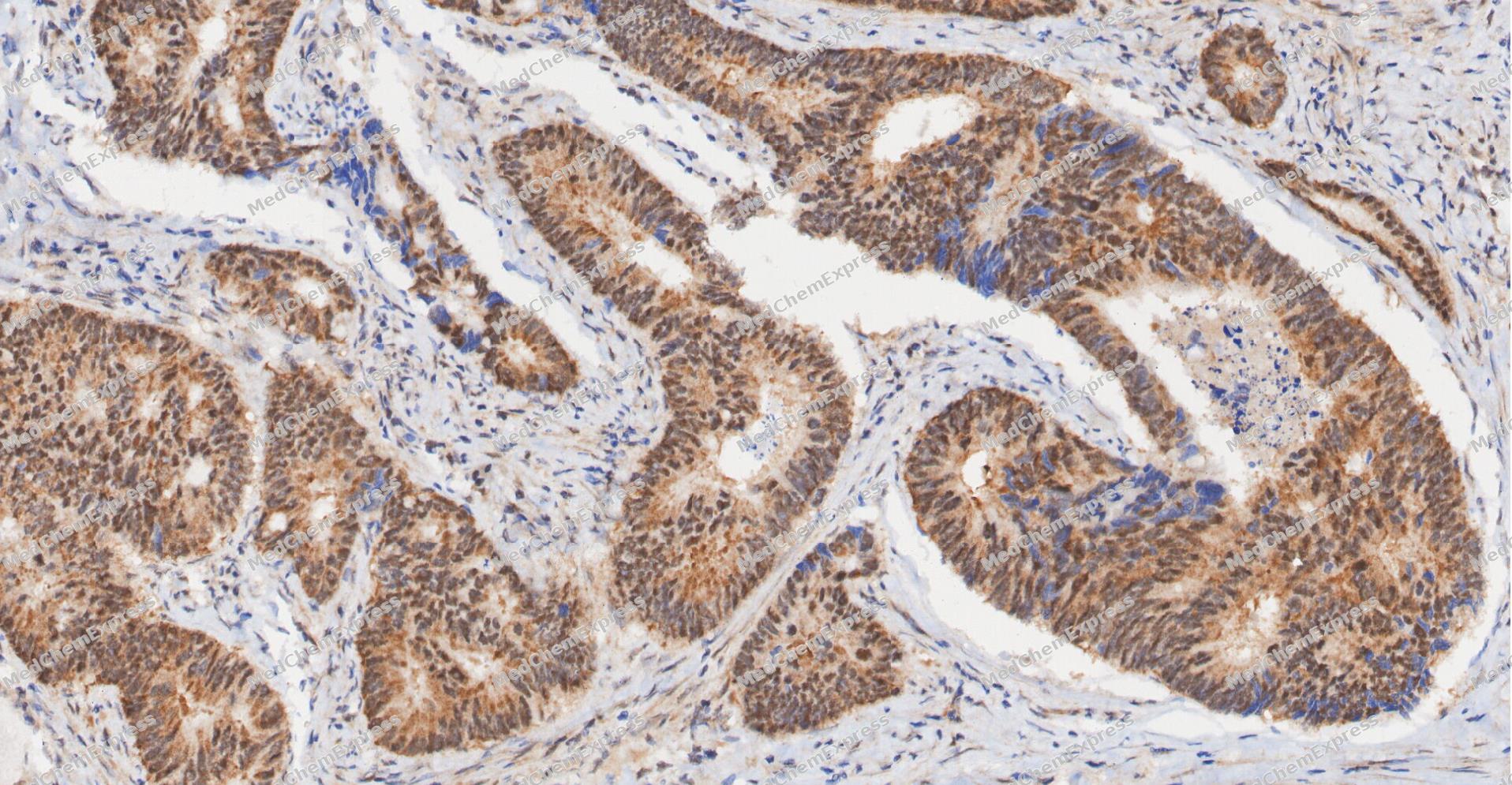 Immunohistochemical analysis of paraffin-embedded human Colon cancer tissue using SMN1 antibody was performed. The section was pretreated using high-temperature and high-pressure mediated EDTA antigen retrieval buffer (pH 9.0), for 5 minutes. The tissues were incubated with primary antibody (HY-P82449, 1:50 dilution) at room temperature for 60 minutes. Detection was performed using an HRP conjugated compact polymer system. DAB was used as the chromogen. The tissues were counterstained with hematoxylin and mounted with neutral balsam mounting medium.
 -
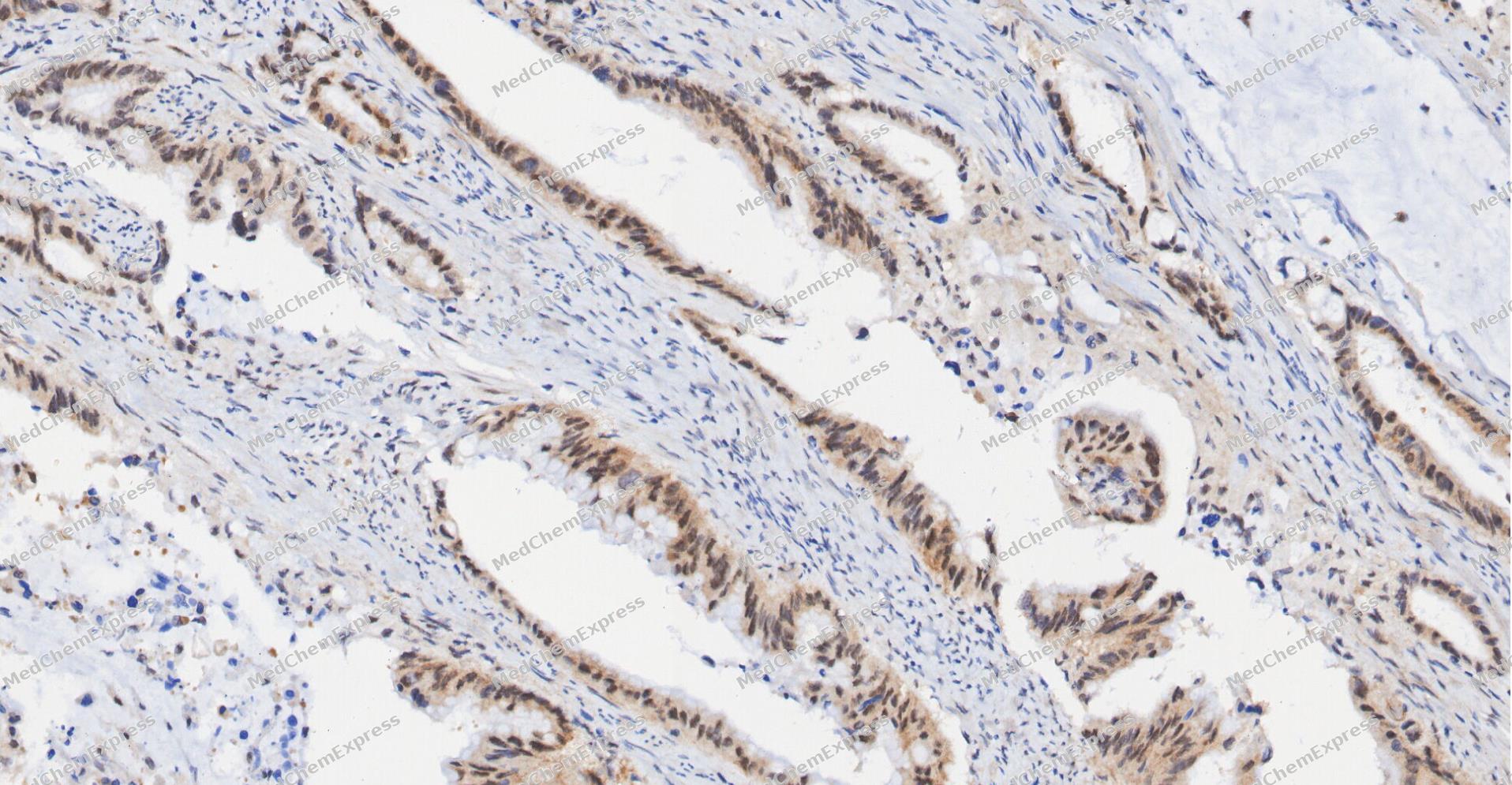 Immunohistochemical analysis of paraffin-embedded human Gastric Cancer tissue using SMN1 antibody was performed. The section was pretreated using high-temperature and high-pressure mediated EDTA antigen retrieval buffer (pH 9.0), for 5 minutes. The tissues were incubated with primary antibody (HY-P82449, 1:50 dilution) at room temperature for 60 minutes. Detection was performed using an HRP conjugated compact polymer system. DAB was used as the chromogen. The tissues were counterstained with hematoxylin and mounted with neutral balsam mounting medium.
 -
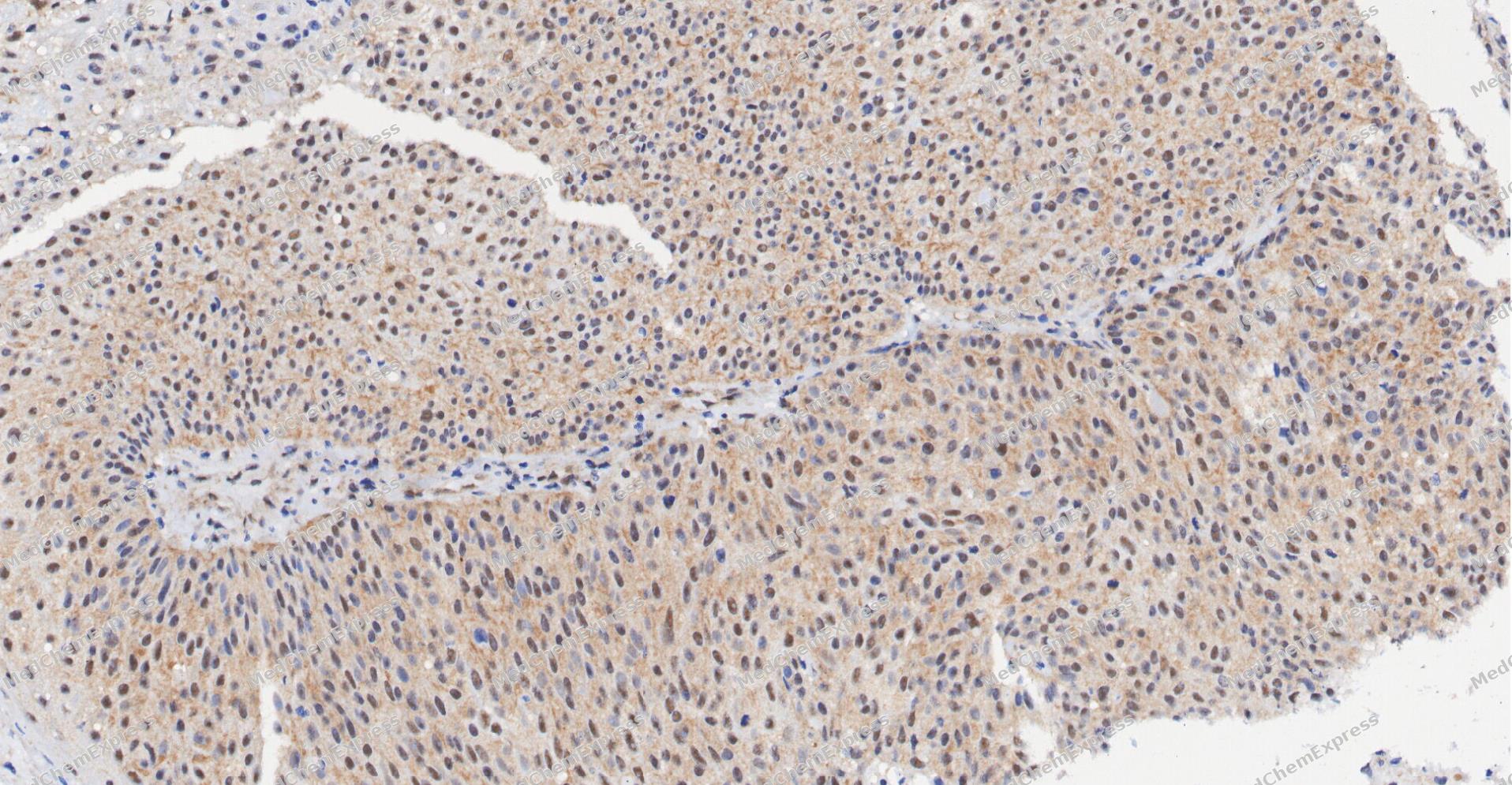 Immunohistochemical analysis of paraffin-embedded human Cervical cancer tissue using SMN1 antibody was performed. The section was pretreated using high-temperature and high-pressure mediated EDTA antigen retrieval buffer (pH 9.0), for 5 minutes. The tissues were incubated with primary antibody (HY-P82449, 1:50 dilution) at room temperature for 60 minutes. Detection was performed using an HRP conjugated compact polymer system. DAB was used as the chromogen. The tissues were counterstained with hematoxylin and mounted with neutral balsam mounting medium.
 -
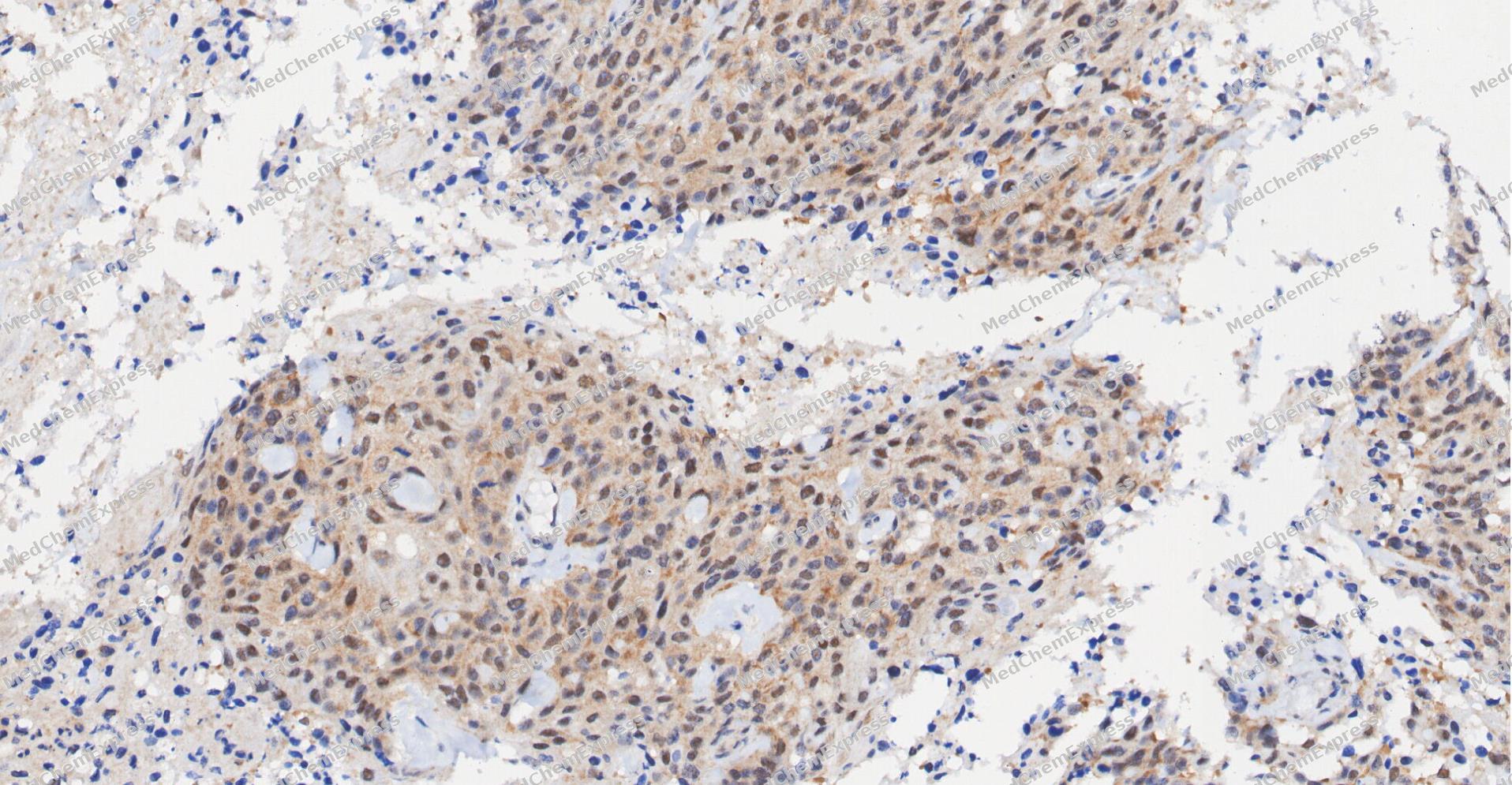 Immunohistochemical analysis of paraffin-embedded human Cervical cancer tissue using SMN1 antibody was performed. The section was pretreated using high-temperature and high-pressure mediated EDTA antigen retrieval buffer (pH 9.0), for 5 minutes. The tissues were incubated with primary antibody (HY-P82449, 1:50 dilution) at room temperature for 60 minutes. Detection was performed using an HRP conjugated compact polymer system. DAB was used as the chromogen. The tissues were counterstained with hematoxylin and mounted with neutral balsam mounting medium.
 -
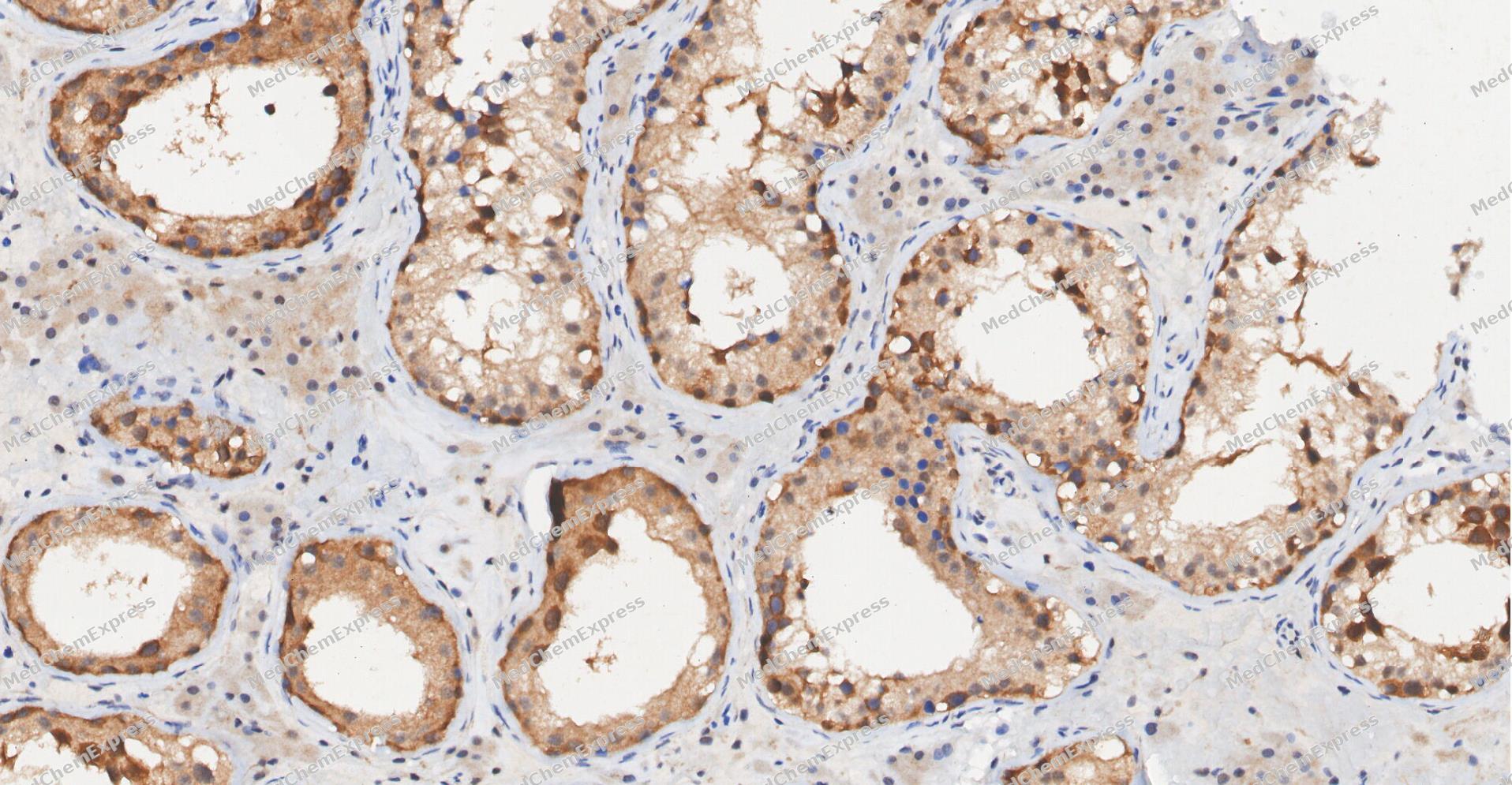 Immunohistochemical analysis of paraffin-embedded human Testis tissue using SMN1 antibody was performed. The section was pretreated using high-temperature and high-pressure mediated EDTA antigen retrieval buffer (pH 9.0), for 5 minutes. The tissues were incubated with primary antibody (HY-P82449, 1:50 dilution) at room temperature for 60 minutes. Detection was performed using an HRP conjugated compact polymer system. DAB was used as the chromogen. The tissues were counterstained with hematoxylin and mounted with neutral balsam mounting medium.


Background
-
Function
SMN1 is a The SMN complex catalyzes the assembly of small nuclear ribonucleoproteins (snRNPs), the building blocks of the spliceosome, and thereby plays an important role in the splicing of cellular pre-mRNAs. Most spliceosomal snRNPs contain a common set of Sm proteins SNRPB, SNRPD1, SNRPD2, SNRPD3, SNRPE, SNRPF and SNRPG that assemble in a heptameric protein ring on the Sm site of the small nuclear RNA to form the core snRNP (Sm core). In the cytosol, the Sm proteins SNRPD1, SNRPD2, SNRPE, SNRPF and SNRPG are trapped in an inactive 6S pICln-Sm complex by the chaperone CLNS1A that controls the assembly of the core snRNP. To assemble core snRNPs, the SMN complex accepts the trapped 5Sm proteins from CLNS1A forming an intermediate. Within the SMN complex, SMN1 acts as a structural backbone and together with GEMIN2 it gathers the Sm complex subunits. Binding of snRNA inside 5Sm ultimately triggers eviction of the SMN complex, thereby allowing binding of SNRPD3 and SNRPB to complete assembly of the core snRNP. Ensures the correct splicing of U12 intron-containing genes that may be important for normal motor and proprioceptive neurons development. Also required for resolving RNA-DNA hybrids created by RNA polymerase II, that form R-loop in transcription terminal regions, an important step in proper transcription termination. May also play a role in the metabolism of small nucleolar ribonucleoprotein (snoRNPs)[1][2][3][4][5][6][7][8].
-
Subcellular Localization
Nucleus, gem; Nucleus, Cajal body; Cytoplasm; Cytoplasmic granule; Perikaryon; Cell projection, neuron projection; Cell projection, axon; Cytoplasm, myofibril, sarcomere, Z line
-
Expression
Tissue_specificity:It is expressed in a variety of tissues. High expression is observed in the brain, kidneys, and liver; moderate expression in skeletal muscle and cardiac muscle; and low expression in fibroblasts and lymphocytes. High expression is also observed in the spinal cord. Expression is also found in osteoclasts and monocytes (protein level) . -
Isoforms & Post-Translational Modification
SMN1 has 4 isomers: Q16637-1: 31849 Da (predicted); Q16637-2: 28534 Da (predicted); Q16637-3: 30450 Da (predicted); Q16637-4: 27135 Da (predicted).
-
Subunit
Homooligomer; may form higher order homooligomers in the dimer to octamer range. Part of the core SMN complex that contains SMN1, GEMIN2/SIP1, DDX20/GEMIN3, GEMIN4, GEMIN5, GEMIN6, GEMIN7, GEMIN8 and STRAP/UNRIP. Part of the SMN-Sm complex that contains SMN1, GEMIN2/SIP1, DDX20/GEMIN3, GEMIN4, GEMIN5, GEMIN6, GEMIN7, GEMIN8, STRAP/UNRIP and the Sm proteins SNRPB, SNRPD1, SNRPD2, SNRPD3, SNRPE, SNRPF and SNRPG. Component of an import snRNP complex composed of KPNB1, RNUT1, SMN1 and ZNF259. Interacts with DDX20, FBL, NOLA1, RNUT1, SYNCRIP and with several spliceosomal snRNP core Sm proteins, including SNRPB, SNRPD1, SNRPD2, SNRPD3, SNRPE and ILF3. Interacts with GEMIN2; the interaction is direct. Interacts with GEMIN3; the interaction is direct. Interacts with GEMIN8; the interaction is direct. Interacts with SNRPB; the interaction is direct. Interacts (via Tudor domain) with SNRPD1 (via C-terminus); the interaction is direct. Interacts with SNRPD2; the interaction is direct. Interacts (via Tudor domain) with SNRPD3 (via C-terminus); the interaction is direct.
-
SwissProt ID
-
Synonyms
SMN1; SMN; SMNT; SMN2; SMNC; Survival motor neuron protein; Component of gems 1; Gemin-1
-
Research Field
Neuroscience


Documentation
-
Data Sheet (262 KB)
-
SDS (251 KB)
- English - EN (251 KB)
- Français - FR (251 KB)
- Deutsch - DE (251 KB)
- Norwegian - NO (251 KB)
- Español - ES (251 KB)
- Swedish - SV (251 KB)
- Italian - IT (251 KB)
- Korean - KR (251 KB)
- Portuguese - PT (251 KB)
-
User Guide for Antibodies (1077 KB)
References
[1]. Chari A, et al. An assembly chaperone collaborates with the SMN complex to generate spliceosomal SnRNPs. Cell. 2008 Oct 31;135(3):497-509. [Content Brief]
[2]. Pellizzoni L, et al. A novel function for SMN, the spinal muscular atrophy disease gene product, in pre-mRNA splicing. Cell. 1998 Nov 25;95(5):615-24. [Content Brief]
[3]. Otter S, et al. A comprehensive interaction map of the human survival of motor neuron (SMN) complex. J Biol Chem. 2007 Feb 23;282(8):5825-33. [Content Brief]
[4]. Zhang R, et al. Structure of a key intermediate of the SMN complex reveals Gemin2's crucial function in snRNP assembly. Cell. 2011 Aug 5;146(3):384-95. [Content Brief]
[5]. Tripsianes K, et al. Structural basis for dimethylarginine recognition by the Tudor domains of human SMN and SPF30 proteins. Nat Struct Mol Biol. 2011 Nov 20;18(12):1414-20. [Content Brief]
[6]. Yi H, et al. Negative cooperativity between Gemin2 and RNA provides insights into RNA selection and the SMN complex's release in snRNP assembly. Nucleic Acids Res. 2020 Jan 24;48(2):895-911. [Content Brief]
[7]. Lotti F, et al. An SMN-dependent U12 splicing event essential for motor circuit function. Cell. 2012 Oct 12;151(2):440-54. [Content Brief]
[8]. Zhao DY, et al. SMN and symmetric arginine dimethylation of RNA polymerase II C-terminal domain control termination. Nature. 2016 Jan 7;529(7584):48-53. [Content Brief]

 Powered by Bioz
