



Benazepril
Based on 3 publication(s) in Google Scholar
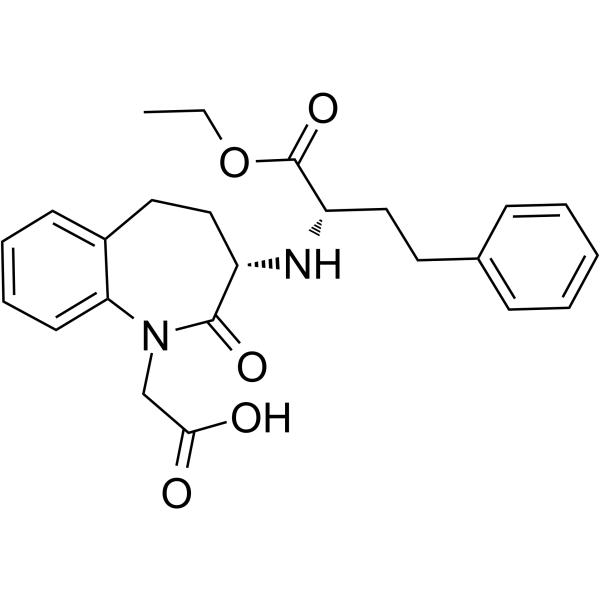
Benazepril (CGS14824A free base) is an orally active angiotensin-converting enzyme (ACE) inhibitor to reduce angiotensin-II production. Benazepril inhibits oxidative stress and inhibits apoptosis by the PI3K/Akt signaling pathway. Benazepril improves diabetic nephropathy and decreases proteinuria. Benazepril can be used in the study of hypertension, heart failure and diabetic nephropathy.
For research use only. We do not sell to patients.
- Purity : 99.85%
- CAS No.: 86541-75-5
- Formula: C24H28N2O5
- Molecular Weight:424.49
-
Storage:Powder -20°C, 3 years , 4°C, 2 years ; In solvent -80°C, 6 months , -20°C, 1 month

To place orders, for customer services and technical support, please contact: MedChemExpress USA
Tel: 609-228-6898 E-mail: [email protected] [email protected]


-
 Biological Activity
-
Chemical Information
-
Solvent & Solubility
- Protocols
- Purity & Documentation
- References
-
 Help & FAQs


-
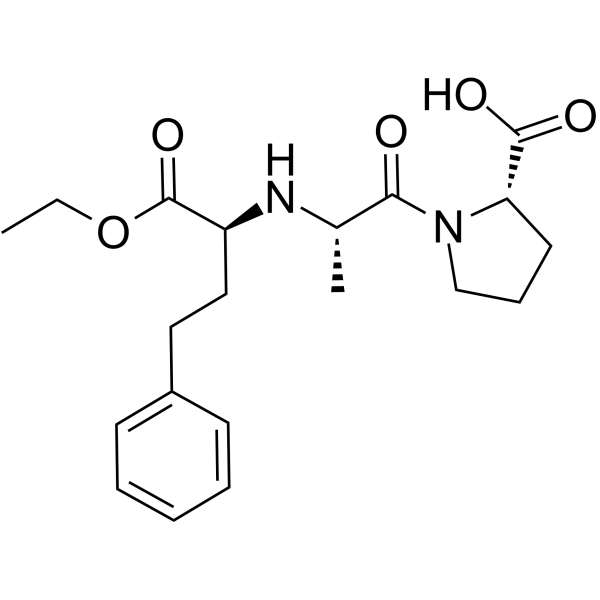
HY-B0331
EnalaprilAngiotensin-Converting Enzyme Inhibitor -
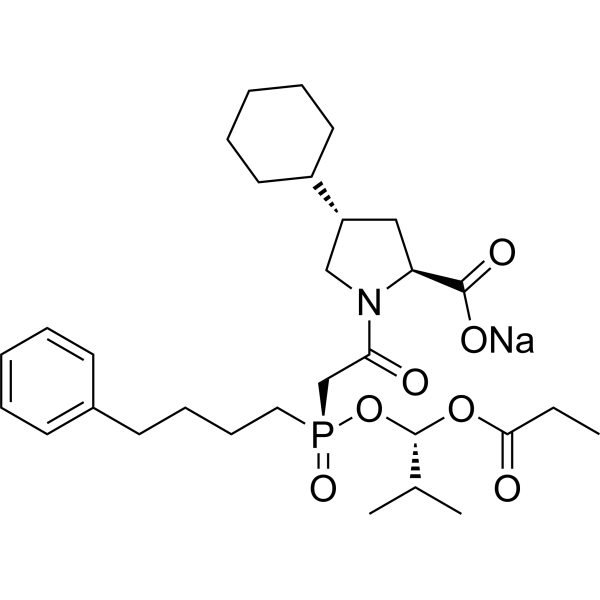
HY-B0382
Fosinopril sodiumACE Inhibitor -
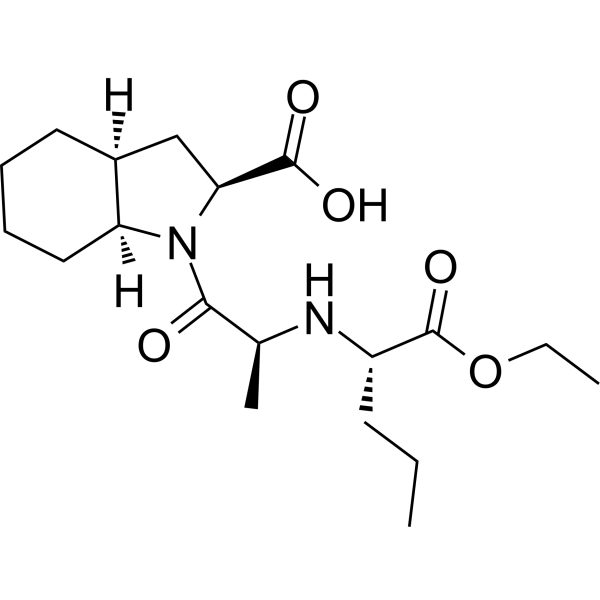
HY-B0130
PerindoprilAngiotensin-converting enzyme Inhibitor -
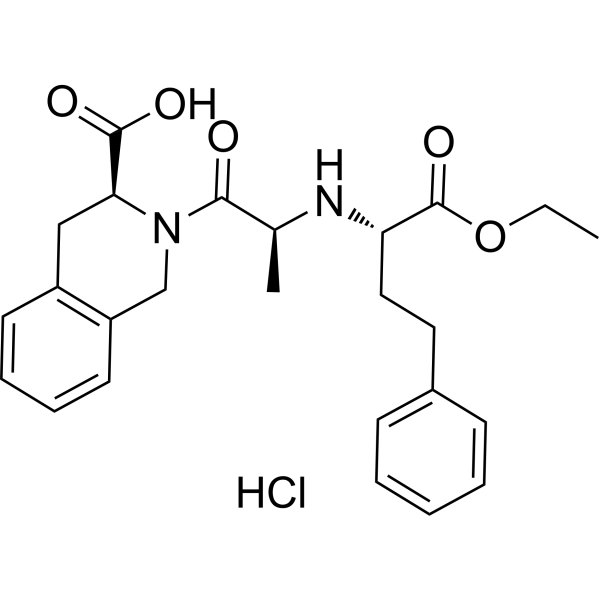
HY-B0477
Quinapril hydrochlorideACE Inhibitor -
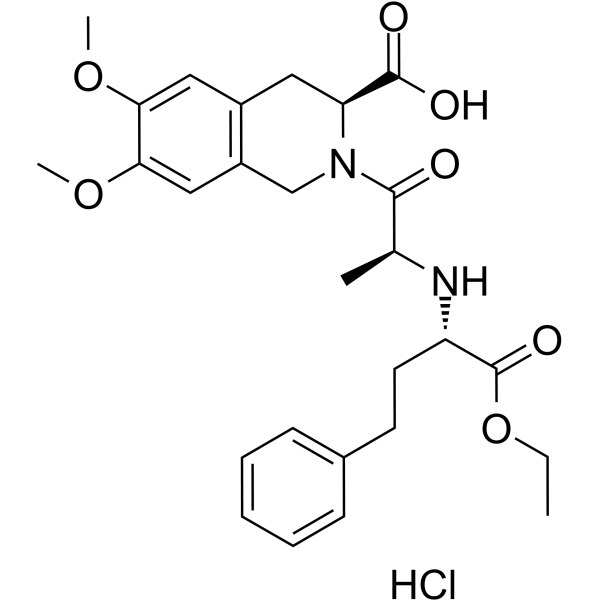
HY-B0378A
Moexipril hydrochlorideACE Inhibitor -
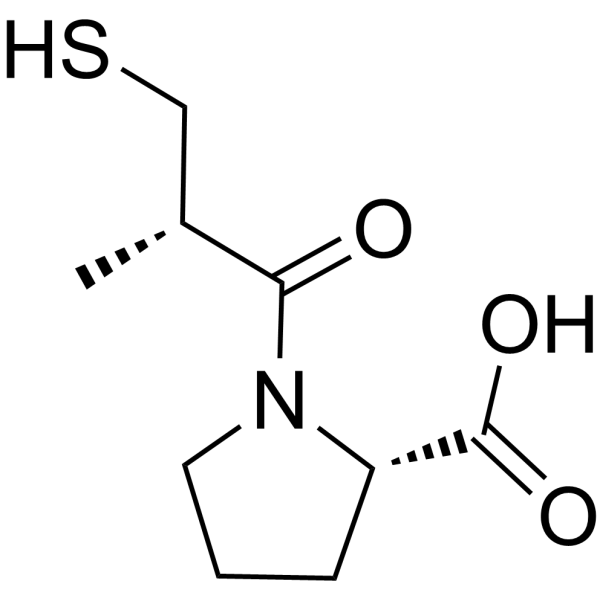
HY-B0368
CaptoprilACE Inhibitor -
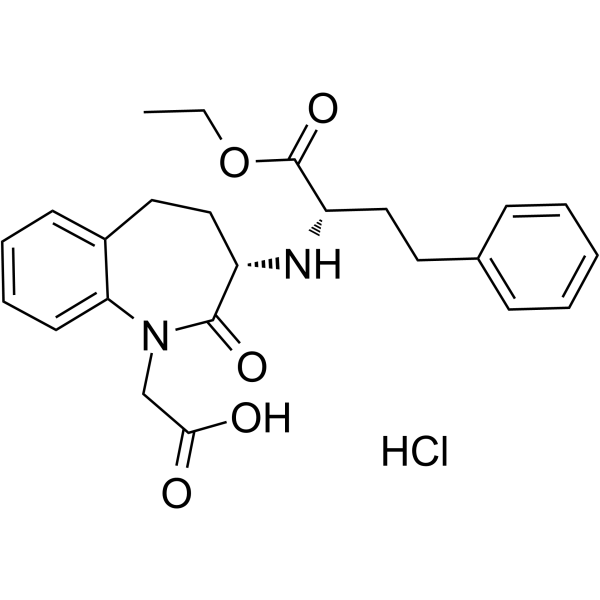
HY-B0093A
Benazepril hydrochlorideACE Inhibitor -
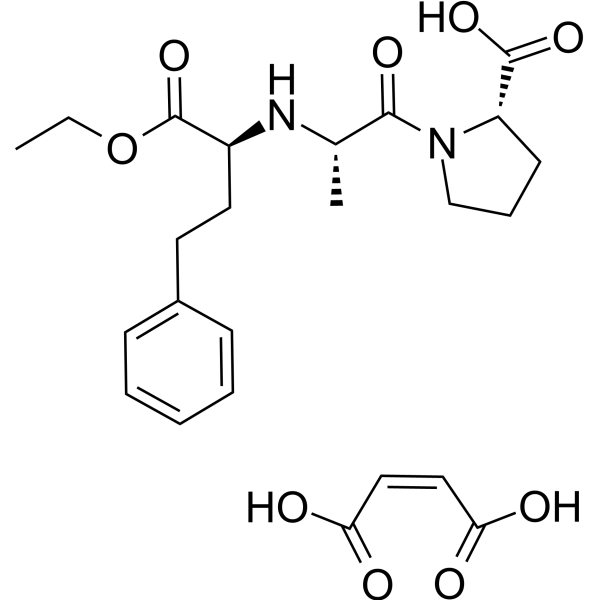
HY-B0331A
Enalapril maleateAngiotensin-Converting Enzyme Inhibitor -
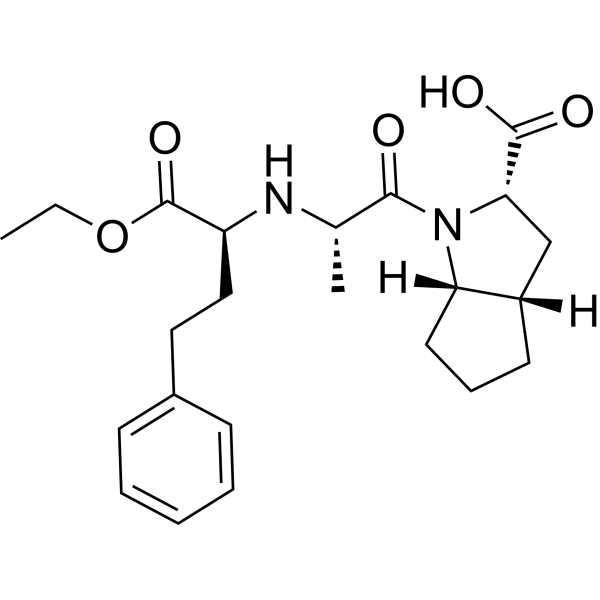
HY-B0279
RamiprilACE Inhibitor -
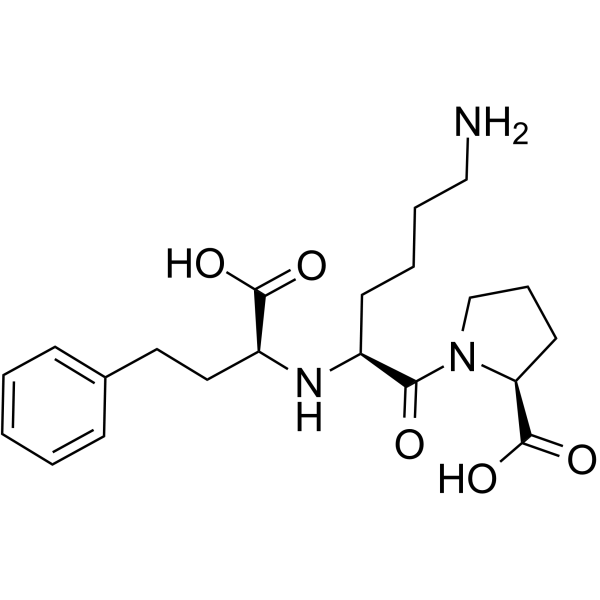
HY-18206
LisinoprilACE Inhibitor -
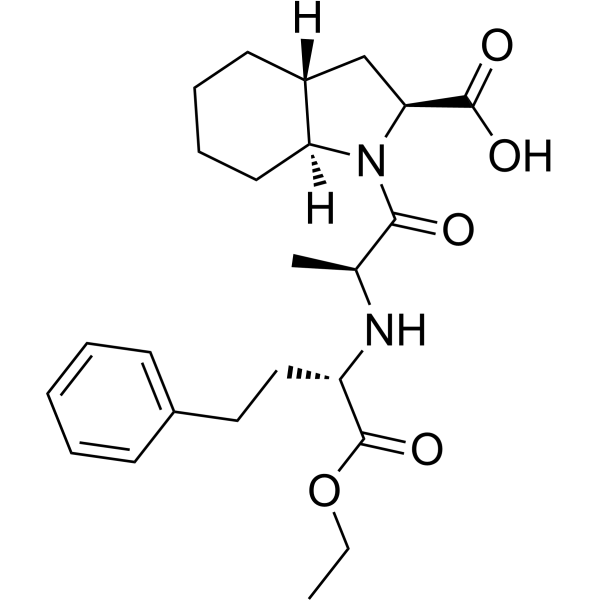
HY-B0592
TrandolaprilACE Inhibitor -
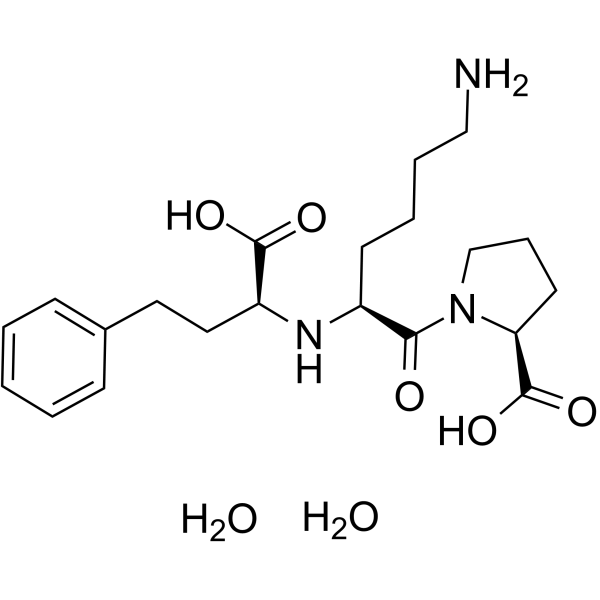
HY-18206A
Lisinopril dihydrateACE Inhibitor
Publications Citing Use of MedChemExpress (MCE) Benazepril
More

Biological Activity
Description
Cellular Effect
|
Cell Line

|
Type | Value | Description | References |
|---|---|---|---|---|
| A549 | IC50 |
358 μM
Compound: Benazepril
|
Cytotoxicity against human A549 cells assessed as cell survival after 24 hrs by MTT assay
Cytotoxicity against human A549 cells assessed as cell survival after 24 hrs by MTT assay
|
[PMID: 23777825] |
| HEK293 | IC50 |
301 μM
Compound: Benazepril
|
Cytotoxicity against HEK293 cells assessed as cell survival after 24 hrs by MTT assay
Cytotoxicity against HEK293 cells assessed as cell survival after 24 hrs by MTT assay
|
[PMID: 23777825] |
In Vitro
Benazepril (1 μM; 1 h) alleviates oxidative stress and inhibits cell apoptosis through PI3K/Akt signaling pathway in Adriamycin (HY-15142A) treated H9c2 cells[1].
MedChemExpress (MCE) has not independently confirmed the accuracy of these methods. They are for reference only.
-
Cell Line:Adriamycin (HY-15142A) treated H9c2 cells.
-
Concentration:1 μM
-
Incubation Time:1 h
-
Result:Increased the phosphorylation level of Akt.
In Vivo
MedChemExpress (MCE) has not independently confirmed the accuracy of these methods. They are for reference only.
-
Animal Model:Streptozotocin (HY-13753) treated Wistar male rats aged 6-8 weeks old (170-200 g)[2].
-
Dosage:10 mg/kg
-
Administration:Oral gavage (i.g.); 16 weeks
-
Result:Decreased proteinuria, urea, creatinine, triglycerides and total cholesterol levels.
Increased the albumin level.
Diminished kidney volume and ameliorated the pathological changes associated with diabetic nephropathy.
Significantly decreased ANGPTL-4 expression.


Chemical Information
-
CAS No. 86541-75-5
-
Appearance Solid
-
Molecular Weight 424.49
-
Formula C24H28N2O5
-
Color White to off-white
-
SMILES
O=C1N(CC(O)=O)C2=CC=CC=C2CC[C@@H]1N[C@@H](CCC3=CC=CC=C3)C(OCC)=O
-
Synonyms
CGS14824A free base
-
Shipping
Room temperature in continental US; may vary elsewhere.
-
Storage
Powder -20°C 3 years 4°C 2 years In solvent -80°C 6 months -20°C 1 month


Publications (3)
-
Journal Impact Factor
-
Most Recent
-
Mol Divers
Repurposed drugs as PCSK9-LDLR disruptors for lipid lowering and cardiovascular disease therapeutics. [Abstract]2024 Dec 8. PMID: 39645639 -
Front Biosci (Landmark Ed)
2026 May 22;31(5):49658. PMID: 42216530 -


Solvent & Solubility
In Vitro:
DMSO : 100 mg/mL (235.58 mM; Need ultrasonic; Hygroscopic DMSO has a significant impact on the solubility of product, please use newly opened DMSO)
Please refer to the solubility information to select the appropriate solvent. Once prepared, please aliquot and store the solution to prevent product inactivation from repeated freeze-thaw cycles.
Storage method and period of stock solution: -80°C, 6 months; -20°C, 1 month. When stored at -80°C, please use it within 6 months. When stored at -20°C, please use it within 1 month.
Please refer to the solubility information to select the appropriate solvent. Once prepared, please aliquot and store the solution to prevent product inactivation from repeated freeze-thaw cycles.
Storage method and period of stock solution: -80°C, 6 months; -20°C, 1 month. When stored at -80°C, please use it within 6 months. When stored at -20°C, please use it within 1 month.
Concentration (start) × Volume (start) = Concentration (final) × Volume (final)
In Vivo:
Select the appropriate dissolution method based on your experimental animal and administration route.
- For the following dissolution methods, please ensure to first prepare a clear stock solution using an In Vitro approach and then sequentially add co-solvents:
- To ensure reliable experimental results, the clarified stock solution can be appropriately stored based on storage conditions. As for the working solution for In Vivo experiments, it is recommended to prepare freshly and use it on the same day.
- The percentages shown for the solvents indicate their volumetric ratio in the final prepared solution. If precipitation or phase separation occurs during preparation, heat and/or sonication can be used to aid dissolution.
Add each solvent one by one: 10% DMSO 40% PEG300 5% Tween-80 45% Saline
Solubility: 2.5 mg/mL (5.89 mM); Clear solution; Need ultrasonic
This protocol yields a clear solution of 2.5 mg/mL.
Taking 1 mL working solution as an example, add 100 μL DMSO stock solution (25.0 mg/mL) to 400 μL PEG300, and mix evenly; then add 50 μL Tween-80 and mix evenly; then add 450 μL Saline to adjust the volume to 1 mL.
Preparation of Saline: Dissolve 0.9 g sodium chloride in ddH₂O and dilute to 100 mL to obtain a clear Saline solution.
Add each solvent one by one: 10% DMSO 90% (20% SBE-β-CD in Saline)
Solubility: 2.5 mg/mL (5.89 mM); Clear solution; Need ultrasonic
This protocol yields a clear solution of 2.5 mg/mL.
Taking 1 mL working solution as an example, add 100 μL DMSO stock solution (25.0 mg/mL) to 900 μL 20% SBE-β-CD in Saline, and mix evenly.
Preparation of 20% SBE-β-CD in Saline (4°C, storage for one week): 2 g SBE-β-CD powder is dissolved in 10 mL Saline, completely dissolve until clear.
In Vivo Dissolution Calculator
Please enter the basic information of animal experiments:
-
-
-
-
Recommended: Prepare an additional quantity of animals to account for potential losses during experiments.
Please enter your animal formula composition:
-
%DMSO +
Recommended: Keep the proportion of DMSO in working solution below 2% if your animal is weak.
-
%+
-
+%Tween-80 + +
-
%Saline +
The co-solvents required include: DMSO, . All of co-solvents are available by MedChemExpress (MCE). , Tween 80. All of co-solvents are available by MedChemExpress (MCE).
Working solution concentration: 0.22 mg/mL
Method for preparing stock solution: mg drug dissolved in μL DMSO. Stock solution concentration: mg/mL.
1. Take μL DMSO stock solution;
2. Add μL .
μL , mix evenly;
3. Then add μL Tween 80, mix evenly;
4. Then add μL
Please ensure that the stock solution in the first step is dissolved to a clear state, and add co-solvents in sequence. You can use ultrasonic heating (ultrasonic cleaner, recommended frequency 20-40 kHz), vortexing, etc. to assist dissolution.


Purity & Documentation
-
Data Sheet (279 KB)
-
SDS (393 KB)
- English - EN (393 KB)
- Français - FR (393 KB)
- Deutsch - DE (393 KB)
- Norwegian - NO (393 KB)
- Español - ES (393 KB)
- Swedish - SV (393 KB)
- Italian - IT (393 KB)
- Korean - KR (393 KB)
- Portuguese - PT (393 KB)
-
Handling Instructions (2659 KB)
References
[1]. Hou FF, et al. Efficacy and safety of benazepril for advanced chronic renal insufficiency. N Engl J Med. 2006 Jan 12;354(2):131-40. [Content Brief]
[2]. Huang XM, et al. Effects of chronotherapy of benazepril on the diurnal profile of RAAS and clock genes in the kidney of 5/6 nephrectomy rats. J Huazhong Univ Sci Technolog Med Sci. 2013 Jun;33(3):368-74. [Content Brief]


Complete Stock Solution Preparation Table
Please refer to the solubility information to select the appropriate solvent. Once prepared, please aliquot and store the solution to prevent product inactivation from repeated freeze-thaw cycles.
Storage method and period of stock solution: -80°C, 6 months; -20°C, 1 month. When stored at -80°C, please use it within 6 months. When stored at -20°C, please use it within 1 month.
| Optional Solvent | Concentration Solvent Mass | 1 mg | 5 mg | 10 mg | 25 mg |
|---|---|---|---|---|---|
| DMSO | 1 mM | 2.3558 mL | 11.7788 mL | 23.5577 mL | 58.8942 mL |
| 5 mM | 0.4712 mL | 2.3558 mL | 4.7115 mL | 11.7788 mL | |
| 10 mM | 0.2356 mL | 1.1779 mL | 2.3558 mL | 5.8894 mL | |
| 15 mM | 0.1571 mL | 0.7853 mL | 1.5705 mL | 3.9263 mL | |
| 20 mM | 0.1178 mL | 0.5889 mL | 1.1779 mL | 2.9447 mL | |
| 25 mM | 0.0942 mL | 0.4712 mL | 0.9423 mL | 2.3558 mL | |
| 30 mM | 0.0785 mL | 0.3926 mL | 0.7853 mL | 1.9631 mL | |
| 40 mM | 0.0589 mL | 0.2945 mL | 0.5889 mL | 1.4724 mL | |
| 50 mM | 0.0471 mL | 0.2356 mL | 0.4712 mL | 1.1779 mL | |
| 60 mM | 0.0393 mL | 0.1963 mL | 0.3926 mL | 0.9816 mL | |
| 80 mM | 0.0294 mL | 0.1472 mL | 0.2945 mL | 0.7362 mL | |
| 100 mM | 0.0236 mL | 0.1178 mL | 0.2356 mL | 0.5889 mL |


Benazepril Related Classifications
HY-B0093 Related Classifications
 Powered by Bioz