



Ankylosing Spondylitis
-
Ankylosing Spondylitis (7)

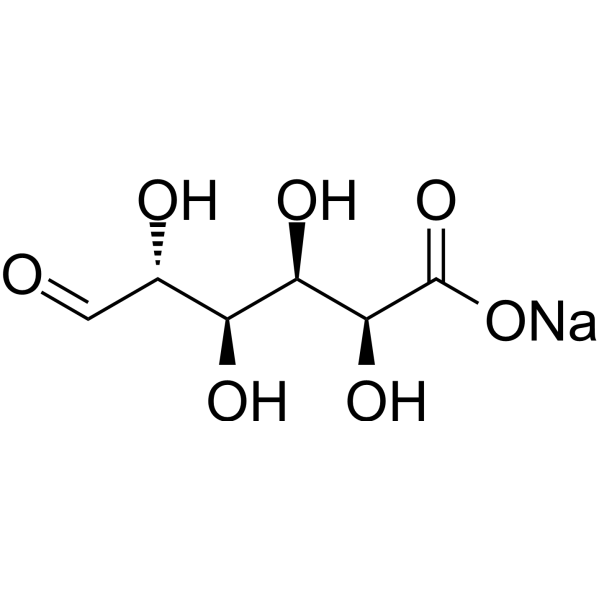
- Formula: C6H9NaO7
- Molecular Weight: 216.12
Guluronic acid (G2013) sodium is an orally active oxidative stress regulator and anti-inflammatory agent that exerts pharmacological effects by down-regulating various pro-inflammatory and oxidative stress-related genes (such as TLR4, NF-κB, iNOS, etc.) and inhibiting the activities of COX-2, MMPs and VEGF. Low-dose Guluronic acid sodium up-regulates the expression of immunoregulatory genes SHIP1 and SOCS1, thereby effectively inhibiting cancer-related inflammation, tumor angiogenesis, cell adhesion and metastasis, while reducing the accumulation of immunosuppressive cells. Guluronic acid sodium significantly prolongs the survival time of tumor-bearing hosts within a concentration range without direct cytotoxicity, demonstrating favorable safety. Guluronic acid sodium has involved in the research of multiple sclerosis, ankylosing spondylitis, breast cancer and other inflammatory diseases.
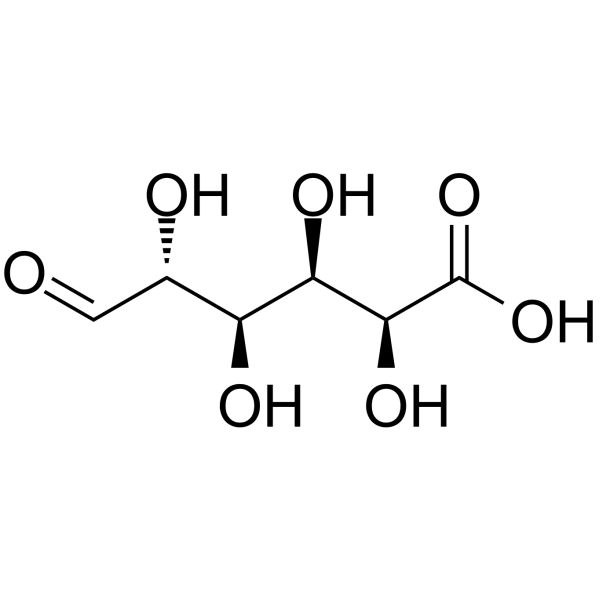
- Formula: C6H10O7
- Molecular Weight: 194.14
Guluronic acid (G2013) is an orally active oxidative stress regulator and anti-inflammatory agent that exerts pharmacological effects by down-regulating various pro-inflammatory and oxidative stress-related genes (such as TLR4, NF-κB, iNOS, etc.) and inhibiting the activities of COX-2, MMPs and VEGF. Low-dose Guluronic acid up-regulates the expression of immunoregulatory genes SHIP1 and SOCS1, thereby effectively inhibiting cancer-related inflammation, tumor angiogenesis, cell adhesion and metastasis, while reducing the accumulation of immunosuppressive cells. Guluronic acid significantly prolongs the survival time of tumor-bearing hosts within a concentration range without direct cytotoxicity, demonstrating favorable safety. Guluronic acid has involved in the research of multiple sclerosis, ankylosing spondylitis, breast cancer and other inflammatory diseases.
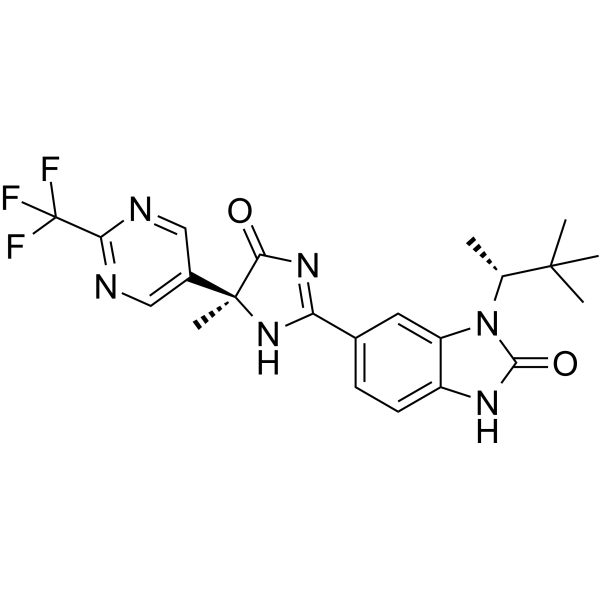
- Formula: C22H23F3N6O2
- Molecular Weight: 460.45
B3GNT2-IN-1 is a β-1,3-N-acetylglucosaminyltransferase 2 (B3GNT2) inhibitor with an IC50 of 0.009 μM. B3GNT2-IN-1 is applicable to research related to rheumatoid arthritis, ankylosing spondylitis and psoriasis.

- Molecular Weight: 146.38 kDa
Vunakizumab (Anti-Human IL17A Recombinant Antibody) is a recombinant human IgGκ monoclonal antibody and an Interleukin-17A (IL-17A) inhibitor. Vunakizumab binds to IL-17A to inhibit downstream cytokines and block inflammatory signaling. Vunakizumab can be used for the research of chronic plaque psoriasis and ankylosing spondylitis.

- Molecular Weight: 146.514 kDa
Lecankitug (LZM-012) is a humanized IgG1κ monoclonal antibody targeting IL-17A/F. Lecankitug exerts immunosuppressive and anti-inflammatory activities. Lecankitug can be used in the research of autoimmune and inflammatory diseases, such as psoriasis, ankylosing spondylitis, and rheumatoid arthritis.

- Molecular Weight: 145.74 kDa
Netakimab (BCD-085) is a humanized IgG1κ monoclonal anti-IL-17 antibody that binds to and blocks IL-17 and IL-17A activity, including reduction of downstream IL-6 production. Netakimab can be used for the research of moderate-to-severe plaque psoriasis, ankylosing spondylitis, and COVID-19 with cytokine release syndrome. Recommend Isotype Controls: Human IgG1 kappa, Isotype Control (HY-P99001).

- Formula: C20H18ClNO4
- Molecular Weight: 371.81
Anti-inflammatory agent 120 is an orally active non-steroidal anti-inflammatory agent. Anti-inflammatory agent 120 can be used in the research of rheumatoid arthritis, osteoarthritis, dysmenorrhea, acute gouty arthritis, ankylosing spondylitis and dementia.



