



PPTN
Based on 4 publication(s) in Google Scholar
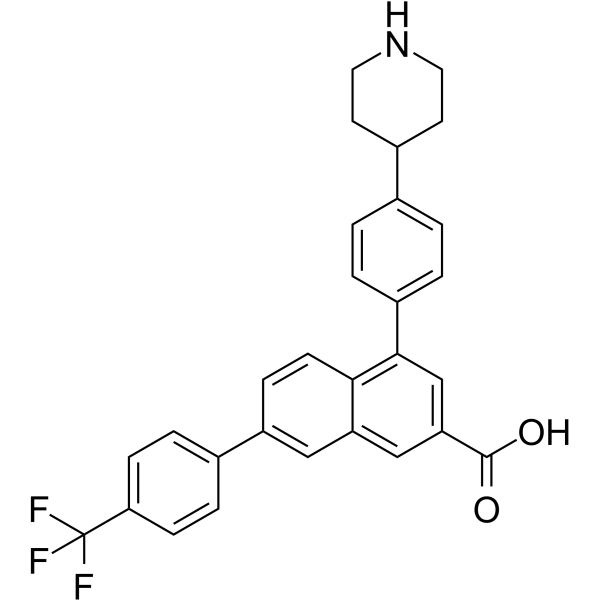
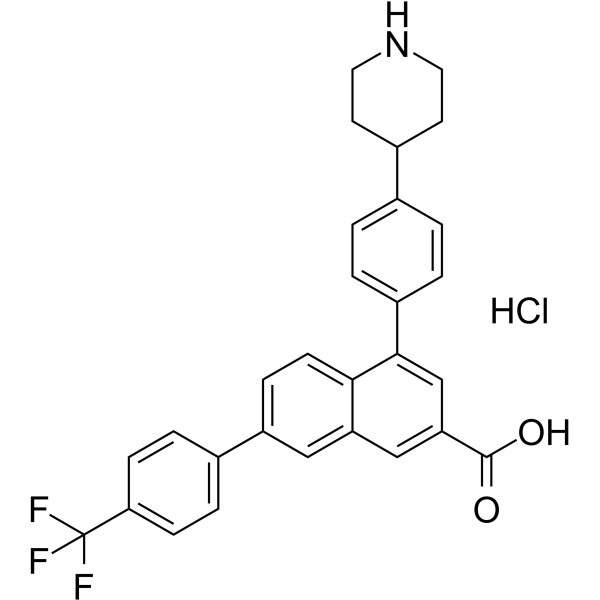
PPTN, a chemical probe, is a potent, high-affinity, competitive and highly selective P2Y14 receptor antagonist with a KB value of 434 pM. PPTN exhibits no agonist or antagonist effect at the P2Y1, P2Y2, P2Y4, P2Y6, P2Y11, P2Y12, or P2Y13 receptors. Anti-inflammatory and immune activity.
For research use only. We do not sell to patients.
- Purity: 99.63%
- CAS No.: 1160271-30-6
- Formula: C29H24F3NO2
- Molecular Weight:475.50
-
Storage:Powder -20°C, 3 years , 4°C, 2 years ; In solvent -80°C, 6 months , -20°C, 1 month

To place orders, for customer services and technical support, please contact: MedChemExpress USA
Tel: 609-228-6898 E-mail: [email protected] [email protected]


-
 Biological Activity
-
Chemical Information
-
Solvent & Solubility
- Purity & Documentation
- References
-
 Help & FAQs


-
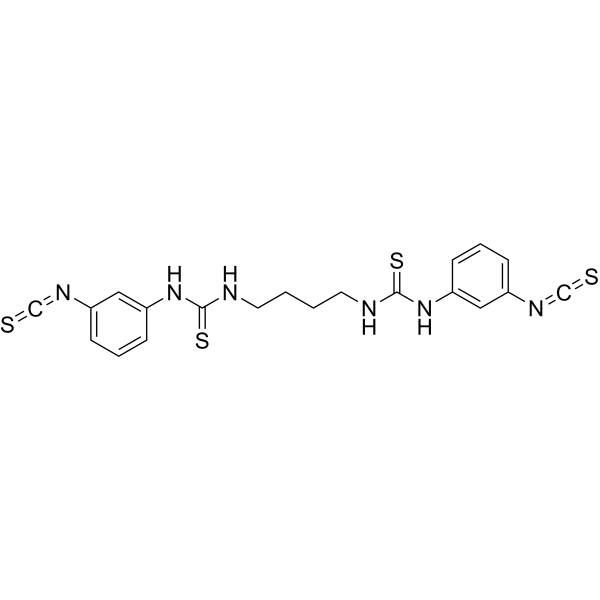
HY-13104
MRS 2578 -
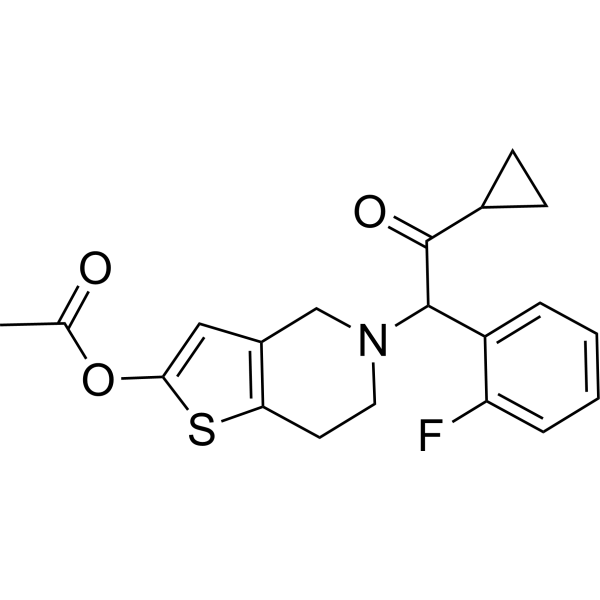
HY-15284
Prasugrel -
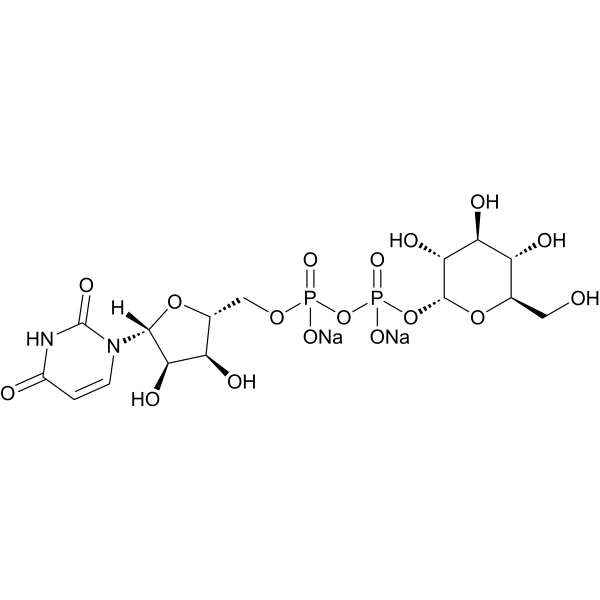
HY-N7032
Uridine 5′-diphosphoglucose disodium -
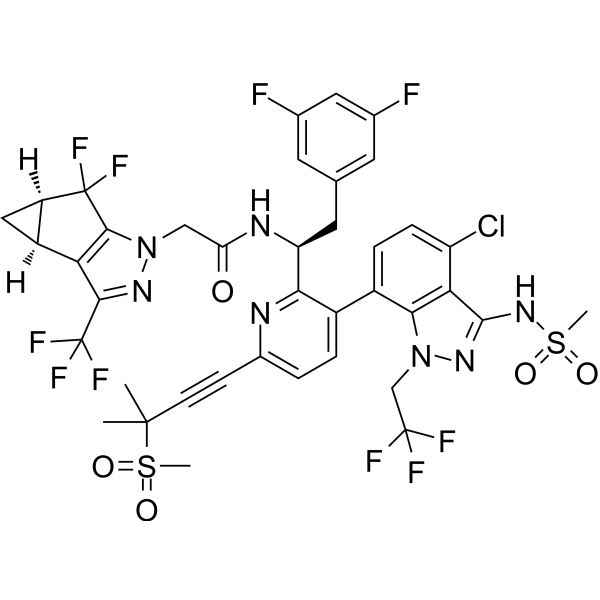
HY-111964
Lenacapavir -
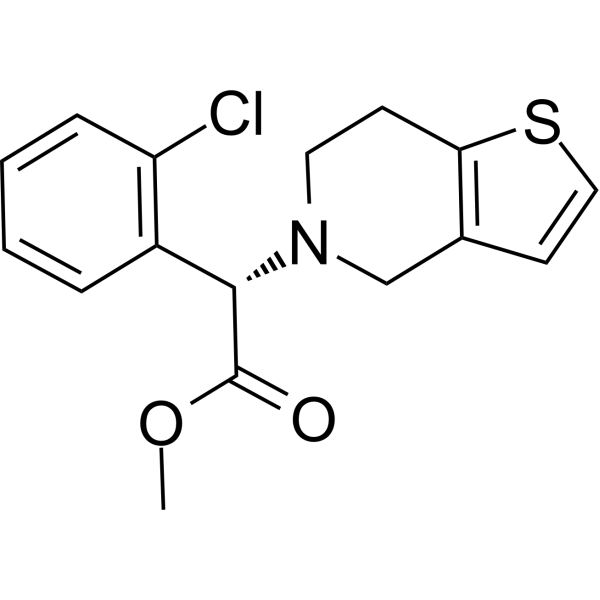
HY-15283
Clopidogrel -
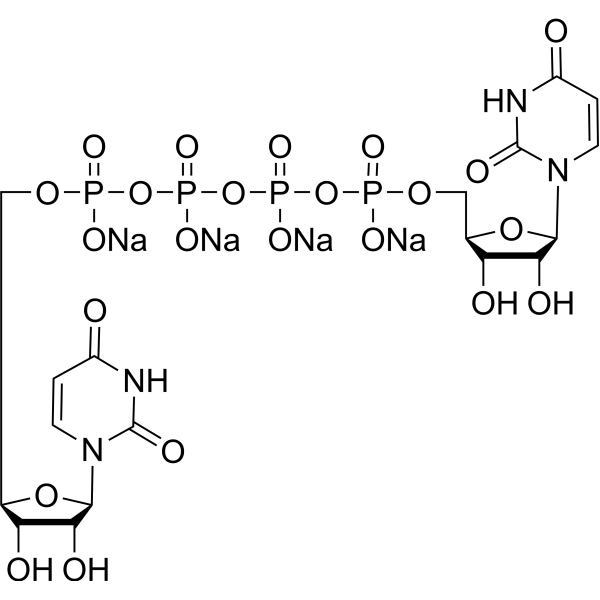
HY-B0606
Diquafosol tetrasodium -
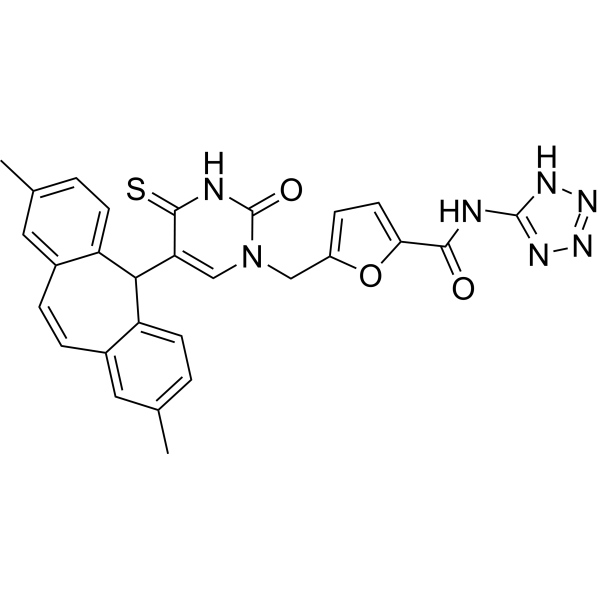
HY-110126
AR-C118925XX -
HY-110322
PPTN hydrochloride -
HY-108660
PSB-0739 -
HY-13831
BPTU -
HY-15284A
Prasugrel hydrochloride -
HY-18775
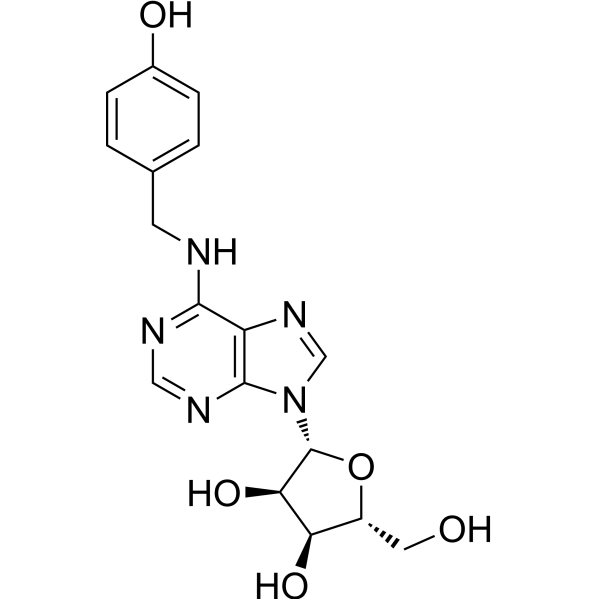
N6-(4-Hydroxybenzyl)adenosine
Publications Citing Use of MedChemExpress (MCE) PPTN
More Customer Validation & Images

-
WB
-
IF
All P2Y Receptor Isoforms
More

Biological Activity
Description
IC50 & Target
|
P2Y14 Receptor |
Cellular Effect
|
Cell Line

|
Type | Value | Description | References |
|---|---|---|---|---|
| CHO | IC50 |
14.5 nM
Compound: 1
|
Inhibition of MRS4174 binding to human P2Y14R expressed in CHO cells pre-incubated for 30 mins before MRS4174 addition and further incubated for 30 mins at pH 6.5 by flow cytomtery based competitive fluorescence assay
Inhibition of MRS4174 binding to human P2Y14R expressed in CHO cells pre-incubated for 30 mins before MRS4174 addition and further incubated for 30 mins at pH 6.5 by flow cytomtery based competitive fluorescence assay
|
[PMID: 32787142] |
| CHO | IC50 |
19 nM
Compound: 1
|
Inhibition of MRS4174 binding to human P2Y14R expressed in CHO cells pre-incubated for 30 mins before MRS4174 addition and further incubated for 30 mins at pH 6 by flow cytomtery based competitive fluorescence assay
Inhibition of MRS4174 binding to human P2Y14R expressed in CHO cells pre-incubated for 30 mins before MRS4174 addition and further incubated for 30 mins at pH 6 by flow cytomtery based competitive fluorescence assay
|
[PMID: 32787142] |
| CHO | IC50 |
6 nM
Compound: 1
|
Displacement of Alexafluor488 labeled 4-(4-(1-(4-(1-(6-(4-(6-amino-3-imino-4,5-disulfo-3H-xanthen-9-yl)-3-carboxybenzamido)hexyl)-1H-1,2,3-triazol-4-yl)butyl)piperidin-4-yl)phenyl)-7-(4-(trifluoromethyl)phenyl)-2-naphthoic acid from human P2Y14 expressed
Displacement of Alexafluor488 labeled 4-(4-(1-(4-(1-(6-(4-(6-amino-3-imino-4,5-disulfo-3H-xanthen-9-yl)-3-carboxybenzamido)hexyl)-1H-1,2,3-triazol-4-yl)butyl)piperidin-4-yl)phenyl)-7-(4-(trifluoromethyl)phenyl)-2-naphthoic acid from human P2Y14 expressed
|
[PMID: 32551012] |
| CHO | IC50 |
6 nM
Compound: 3; PPTN
|
Displacement of 6-Amino-9-(2-carboxy-4-((6-(4-(4-(4-(4-(3-carboxy-6-(4-(trifluoromethyl)phenyl)-naphthalen-1-yl)phenyl)piperidin-1-yl)-butyl)-1H-1,2,3-triazol-1-yl)hexyl)carbamoyl)-phenyl)-3-iminio-5-sulfo-3H-xanthene-4-sulfonate from human P2Y14R express
Displacement of 6-Amino-9-(2-carboxy-4-((6-(4-(4-(4-(4-(3-carboxy-6-(4-(trifluoromethyl)phenyl)-naphthalen-1-yl)phenyl)piperidin-1-yl)-butyl)-1H-1,2,3-triazol-1-yl)hexyl)carbamoyl)-phenyl)-3-iminio-5-sulfo-3H-xanthene-4-sulfonate from human P2Y14R express
|
[PMID: 27331270] |
| CHO | IC50 |
9.75 nM
Compound: 1
|
Inhibition of MRS4174 binding to human P2Y14R expressed in CHO cells pre-incubated for 30 mins before MRS4174 addition and further incubated for 30 mins at pH 7 by flow cytomtery based competitive fluorescence assay
Inhibition of MRS4174 binding to human P2Y14R expressed in CHO cells pre-incubated for 30 mins before MRS4174 addition and further incubated for 30 mins at pH 7 by flow cytomtery based competitive fluorescence assay
|
[PMID: 32787142] |
| HEK293 | IC50 |
21.6 nM
Compound: 1
|
Displacement of Alexafluor488 labeled 4-(4-(1-(4-(1-(6-(4-(6-amino-3-imino-4,5-disulfo-3H-xanthen-9-yl)-3-carboxybenzamido)hexyl)-1H-1,2,3-triazol-4-yl)butyl)piperidin-4-yl)phenyl)-7-(4-(trifluoromethyl)phenyl)-2-naphthoic acid from HA-tagged mouse P2Y14
Displacement of Alexafluor488 labeled 4-(4-(1-(4-(1-(6-(4-(6-amino-3-imino-4,5-disulfo-3H-xanthen-9-yl)-3-carboxybenzamido)hexyl)-1H-1,2,3-triazol-4-yl)butyl)piperidin-4-yl)phenyl)-7-(4-(trifluoromethyl)phenyl)-2-naphthoic acid from HA-tagged mouse P2Y14
|
[PMID: 32551012] |
| HEK293 | IC50 |
21.6 nM
Compound: 1
|
Inhibition of MRS4174 binding to mouse P2Y14R expressed in HEK293 cells pre-incubated for 30 mins before MRS4174 addition and further incubated for 30 mins by flow cytomtery based competitive fluorescence assay
Inhibition of MRS4174 binding to mouse P2Y14R expressed in HEK293 cells pre-incubated for 30 mins before MRS4174 addition and further incubated for 30 mins by flow cytomtery based competitive fluorescence assay
|
[PMID: 32787142] |
In Vitro
PPTN exhibits strong selectivity for the P2Y14-R over the other seven nucleotide-activated P2Y receptors. 1 μM PPTN exhibits no agonist or antagonist effect at the P2Y1, P2Y2, P2Y4, P2Y6, P2Y11, P2Y12, or P2Y13 receptors[1].
PPTN inhibits UDP-glucose-promoted chemotaxis in differentiated HL-60 human promyelocytic leukemia cells with IC50s of ~1 nM in the presence of 10 μM UDP-glucose and ~4 nM in the presence of 100 μM[1].
PPTN (10 μM) significantly decreases the ratios of p-ERK1/2 to ERK1/2 and p-p38 to p38[2].
MedChemExpress (MCE) has not independently confirmed the accuracy of these methods. They are for reference only.


Chemical Information
-
CAS No. 1160271-30-6
-
Appearance Solid
-
Molecular Weight 475.50
-
Formula C29H24F3NO2
-
Color White to off-white
-
SMILES
O=C(O)C1=CC(C2=CC=C(C3CCNCC3)C=C2)=C4C=CC(C5=CC=C(C(F)(F)F)C=C5)=CC4=C1
-
Shipping
Room temperature in continental US; may vary elsewhere.
-
Storage
Powder -20°C 3 years 4°C 2 years In solvent -80°C 6 months -20°C 1 month


Publications (4)
-
Journal Impact Factor
-
Most Recent
-
Cell Rep
Blocking glycogen synthase 1 in white adipose tissue alleviates hypermetabolism following severe burn injury through inhibition of JAK2 by UDPG. [Abstract]2025 Nov 18;44(12):116577. PMID: 41259203 -
Int Immunopharmacol
HQL6 serves as a novel P2Y14 receptor antagonist to ameliorate acute gouty arthritis through inhibiting macrophage pyroptosis. [Abstract]2023 Jan:114:109507. PMID: 36462336
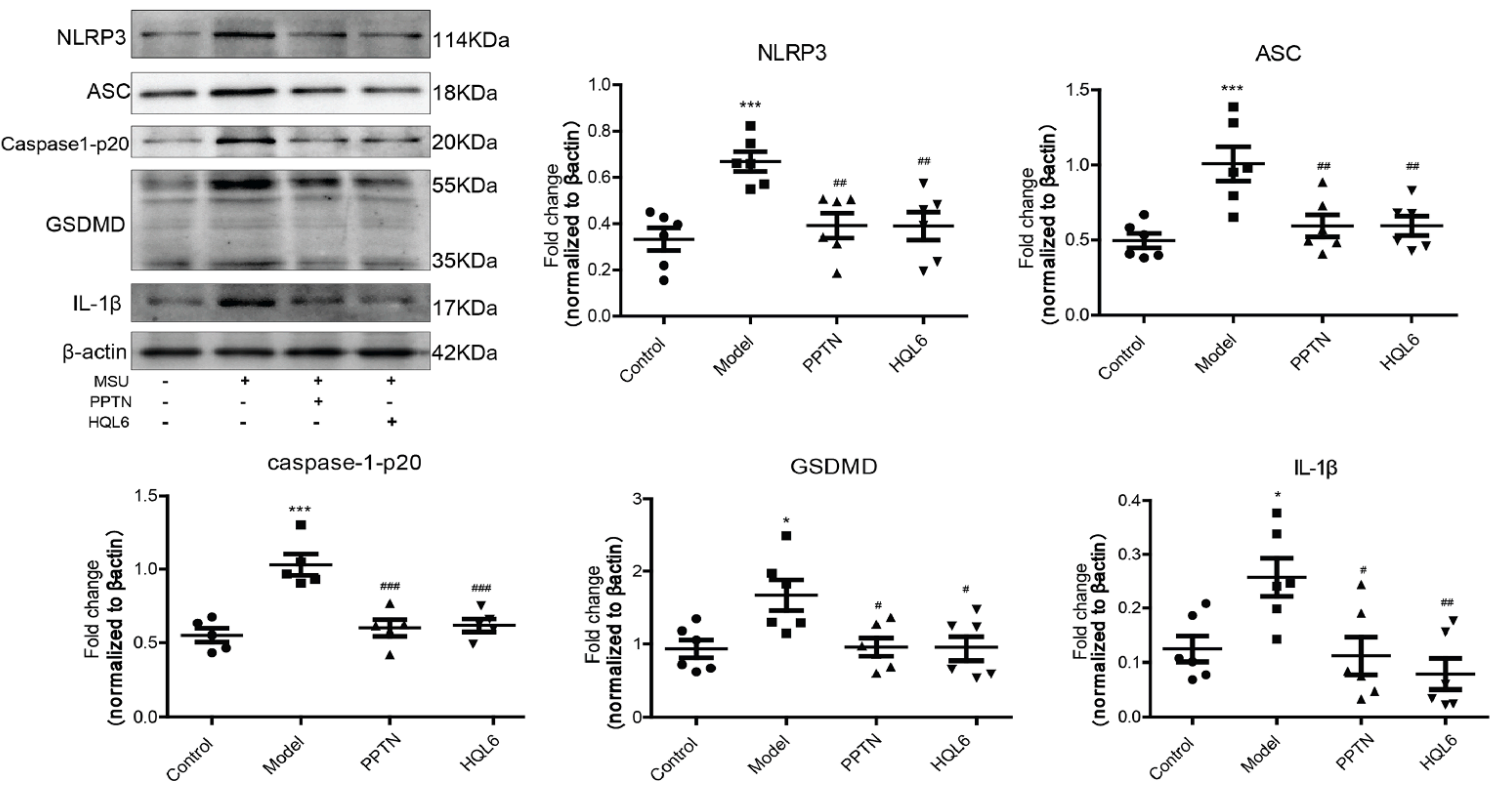
PPTN purchased from MedChemExpress. Usage Cited in: Int Immunopharmacol. 2023 Jan:114:109507. [Abstract]
HQL6 or PPTN significantly decreases the expressions of NLRP3, ASC and caspase-1 p20 in synovial tissue of rats.
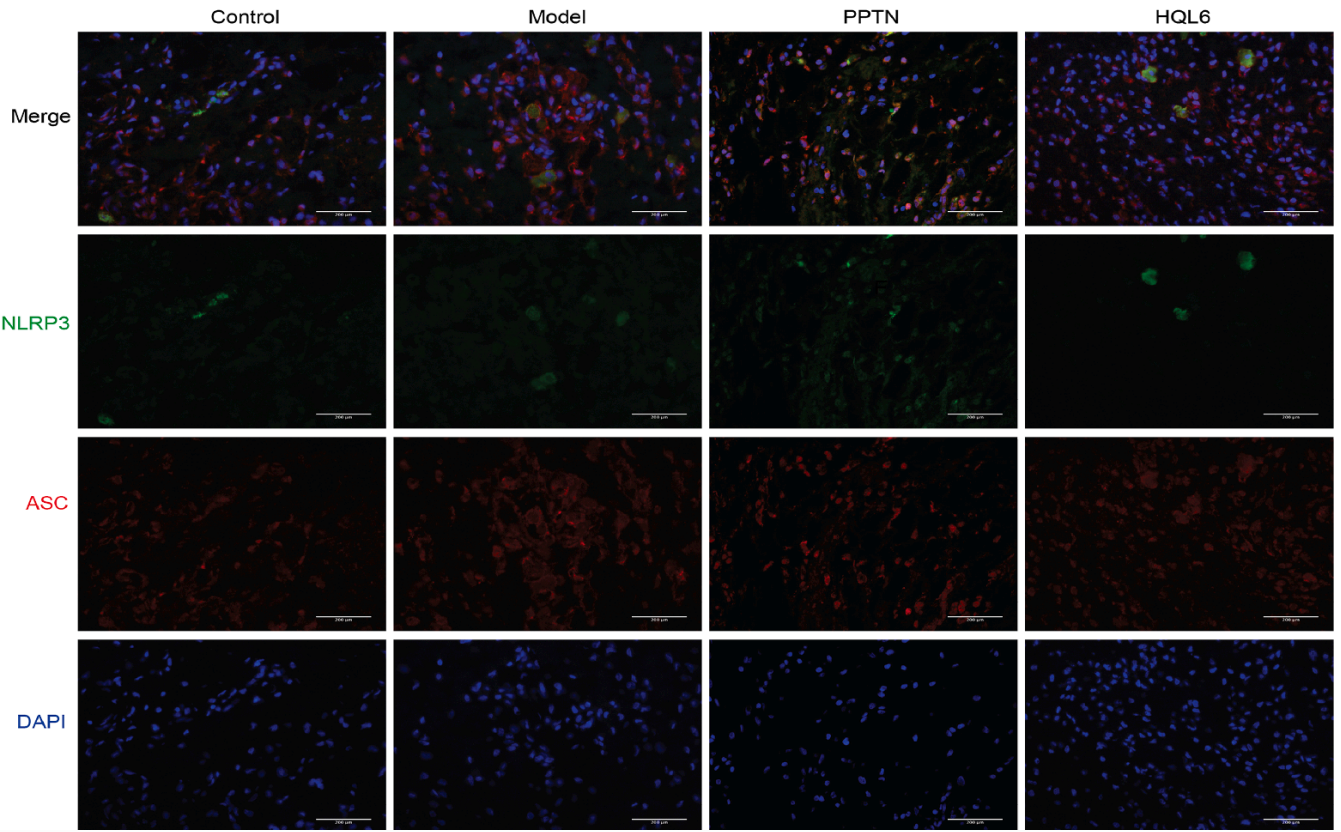
PPTN purchased from MedChemExpress. Usage Cited in: Int Immunopharmacol. 2023 Jan:114:109507. [Abstract]
HQL6 or PPTN significantly decreases the colocalization of NLRP3 and ASC in synovial tissues of rats. NLRP3 protein, ASC protein and nucleus are marked with Alexa Fluor 488 (Green), Alexa Fluor 647 (Red) and DAPI (Blue), respectively.
-
Neuropharmacology
2025 Oct 14:110723. PMID: 41101520 -
Clin Immunol
Abnormal metabolism in melanocytes participates in the activation of dendritic cell in halo nevus. [Abstract]2024 Aug:265:110300. PMID: 38950722


Solvent & Solubility
In Vitro:
DMSO : 12.5 mg/mL (26.29 mM; ultrasonic and adjust pH to 7 with 1 M HCl; Hygroscopic DMSO has a significant impact on the solubility of product, please use newly opened DMSO)
Please refer to the solubility information to select the appropriate solvent. Once prepared, please aliquot and store the solution to prevent product inactivation from repeated freeze-thaw cycles.
Storage method and period of stock solution: -80°C, 6 months; -20°C, 1 month. When stored at -80°C, please use it within 6 months. When stored at -20°C, please use it within 1 month.
Please refer to the solubility information to select the appropriate solvent. Once prepared, please aliquot and store the solution to prevent product inactivation from repeated freeze-thaw cycles.
Storage method and period of stock solution: -80°C, 6 months; -20°C, 1 month. When stored at -80°C, please use it within 6 months. When stored at -20°C, please use it within 1 month.
Concentration (start) × Volume (start) = Concentration (final) × Volume (final)
In Vivo:
Select the appropriate dissolution method based on your experimental animal and administration route.
- For the following dissolution methods, please ensure to first prepare a clear stock solution using an In Vitro approach and then sequentially add co-solvents:
- To ensure reliable experimental results, the clarified stock solution can be appropriately stored based on storage conditions. As for the working solution for In Vivo experiments, it is recommended to prepare freshly and use it on the same day.
- The percentages shown for the solvents indicate their volumetric ratio in the final prepared solution. If precipitation or phase separation occurs during preparation, heat and/or sonication can be used to aid dissolution.
Add each solvent one by one: 10% DMSO 40% PEG300 5% Tween-80 45% Saline
Solubility: ≥ 1.25 mg/mL (2.63 mM); Clear solution
This protocol yields a clear solution of ≥ 1.25 mg/mL (saturation unknown).
Taking 1 mL working solution as an example, add 100 μL DMSO stock solution (12.5 mg/mL) to 400 μL PEG300, and mix evenly; then add 50 μL Tween-80 and mix evenly; then add 450 μL Saline to adjust the volume to 1 mL.
Preparation of Saline: Dissolve 0.9 g sodium chloride in ddH₂O and dilute to 100 mL to obtain a clear Saline solution.
Add each solvent one by one: 10% DMSO 90% (20% SBE-β-CD in Saline)
Solubility: ≥ 1.25 mg/mL (2.63 mM); Clear solution
This protocol yields a clear solution of ≥ 1.25 mg/mL (saturation unknown).
Taking 1 mL working solution as an example, add 100 μL DMSO stock solution (12.5 mg/mL) to 900 μL 20% SBE-β-CD in Saline, and mix evenly.
Preparation of 20% SBE-β-CD in Saline (4°C, storage for one week): 2 g SBE-β-CD powder is dissolved in 10 mL Saline, completely dissolve until clear.
In Vivo Dissolution Calculator
Please enter the basic information of animal experiments:
-
-
-
-
Recommended: Prepare an additional quantity of animals to account for potential losses during experiments.
Please enter your animal formula composition:
-
%DMSO +
Recommended: Keep the proportion of DMSO in working solution below 2% if your animal is weak.
-
%+
-
+%Tween-80 + +
-
%Saline +
The co-solvents required include: DMSO, . All of co-solvents are available by MedChemExpress (MCE). , Tween 80. All of co-solvents are available by MedChemExpress (MCE).
Working solution concentration: 0.22 mg/mL
Method for preparing stock solution: mg drug dissolved in μL DMSO. Stock solution concentration: mg/mL.
1. Take μL DMSO stock solution;
2. Add μL .
μL , mix evenly;
3. Then add μL Tween 80, mix evenly;
4. Then add μL
Please ensure that the stock solution in the first step is dissolved to a clear state, and add co-solvents in sequence. You can use ultrasonic heating (ultrasonic cleaner, recommended frequency 20-40 kHz), vortexing, etc. to assist dissolution.


Purity & Documentation
-
Data Sheet (275 KB)
-
SDS (251 KB)
- English - EN (251 KB)
- Français - FR (251 KB)
- Deutsch - DE (251 KB)
- Norwegian - NO (251 KB)
- Español - ES (251 KB)
- Swedish - SV (251 KB)
- Italian - IT (251 KB)
- Korean - KR (251 KB)
- Portuguese - PT (251 KB)
-
Handling Instructions (2659 KB)
References
[1]. Barrett MO, et al. A selective high-affinity antagonist of the P2Y14 receptor inhibits UDP-glucose-stimulated chemotaxis of human neutrophils. Mol Pharmacol. 2013 Jul;84(1):41-9. [Content Brief]
[2]. Lin J, et al. The P2Y14 receptor in the trigeminal ganglion contributes to the maintenance of inflammatory pain. Neurochem Int. 2019 Dec;131:104567. [Content Brief]


Complete Stock Solution Preparation Table
Please refer to the solubility information to select the appropriate solvent. Once prepared, please aliquot and store the solution to prevent product inactivation from repeated freeze-thaw cycles.
Storage method and period of stock solution: -80°C, 6 months; -20°C, 1 month. When stored at -80°C, please use it within 6 months. When stored at -20°C, please use it within 1 month.
| Optional Solvent | Concentration Solvent Mass | 1 mg | 5 mg | 10 mg | 25 mg |
|---|---|---|---|---|---|
| DMSO | 1 mM | 2.1030 mL | 10.5152 mL | 21.0305 mL | 52.5762 mL |
| 5 mM | 0.4206 mL | 2.1030 mL | 4.2061 mL | 10.5152 mL | |
| 10 mM | 0.2103 mL | 1.0515 mL | 2.1030 mL | 5.2576 mL | |
| 15 mM | 0.1402 mL | 0.7010 mL | 1.4020 mL | 3.5051 mL | |
| 20 mM | 0.1052 mL | 0.5258 mL | 1.0515 mL | 2.6288 mL | |
| 25 mM | 0.0841 mL | 0.4206 mL | 0.8412 mL | 2.1030 mL |


PPTN Related Classifications
HY-110322A Related Classifications
 Powered by Bioz