

1. Search Result
Search Result
Results for "

Aerosol

" in MedChemExpress (MCE) Product Catalog:

11

Inhibitors & Agonists

2

Biochemical Assay Reagents

1

Natural
Products

Cat. No. Nombre del producto Target Áreas de investigación Chemical Structure
  • HY-112624J

    Dextran 4; Dextran D4; Dextran T4(MW 3200-4800)

    Bacterial Others
    Dextran 4,000 is a mucus rheology modifier. The dextran molecules in Dextran 4,000 can reduce the cross-link density of mucus through osmotic effects and hydrogen bond substitution, and reduce viscoelasticity and improve the mucociliary/cough clearance index by destroying the DNA-mucin network structure in mucus. Dextran 4,000 has the ability to improve the rheological properties and clearance ability of cystic fibrosis (CF) sputum, and can be used in the study of inhalation therapy or aerosol delivery of mucostatic respiratory diseases. The Dextran series of compounds are also natural polysaccharide drug carriers that can be connected to drugs through covalent bonding methods such as ester bonds, amide bonds or click chemistry, or self-assembled to form carriers such as nanoparticles and hydrogels. Dextran is biodegradable and biocompatible, and can achieve targeted delivery and controlled release of drugs. Dextran derivatives can prolong the half-life of drugs, increase local concentrations, and reduce the activity of immune clearance .
    Dextran T4 (MW 4,000)
  • HY-108858
    Dornase alfa
    1 Publications Verification

    rhDNase

    DNA/RNA Synthesis Endonuclease Inflammation/Immunology
    Dornase alfa (rhDNase) is a recombinant human deoxyribonuclease I (rhDNase) that can specifically degrade extracellular DNA. Dornase alfa catalyzes the cleavage of DNA released by neutrophils in respiratory mucus, reduces sputum viscosity, thereby improving mucus clearance efficiency, reducing airway obstruction and alleviating inflammatory responses. Dornase alfa can be used to improve lung function (such as FEV_1) in cystic fibrosis (CF), reduce the risk of acute pulmonary exacerbations, and has good in vivo tolerability. Dornase alfa acts locally on the respiratory tract through aerosol inhalation, specifically improving the high viscosity of mucus caused by DNA accumulation and related respiratory symptoms .
    Dornase alfa
  • HY-W034344

    Biochemical Assay Reagents Others
    Sodium methanesulfonate is a hygroscopic atmospheric aerosol, which typically forms from the reaction of methanesulfonic acid with sodium chloride or sea salt particles. Sodium methanesulfonate can serve as a substrate for oxidation reactions, undergoing heterogeneous oxidation by hydroxyl radicals at the air-aerosol interface, thereby initiating subsequent aerosol-phase chain reactions. Sodium methanesulfonate exhibits significant temperature-dependent deliquescence and efflorescence properties; particularly at lower temperatures relevant to the troposphere, its deliquescence and efflorescence relative humidity increase accordingly .
    Sodium methanesulfonate
  • HY-D0077

    Oregon green 488

    Fluorescent Dye Others
    2',7'-Difluorofluorescein (Oregon green 488) is a fluorescein derivative and a pH-sensitive fluorescent probe (pKa ~4.7). Upon excitation at 488 nm, 2',7'-Difluorofluorescein exhibits pH-sensitive fluorescence intensity through the formation of dianions, while its pH sensitivity decreases under excitation at 450 nm, allowing its use in ratiometric pH analysis. 2',7'-Difluorofluorescein can be used for the quantitative analysis of pH values in the range of 2-7 in submicron aerosol particles. 2',7'-Difluorofluorescein undergoes buffer-mediated and buffer-free excited-state proton transfer between different protonated forms, and its cationic form undergoes rapid excited-state deprotonation. 2',7'-Difluorofluorescein is resistant to photodegradation, maintains stable absorption and fluorescence properties within the physiological pH range, and serves as a fluorescent protein label, a component of Ca 2+ indicators, a fluorescent imaging agent, and an anisotropy probe .
    2',7'-Difluorofluorescein
  • HY-Y1366

    Mitochondrial Metabolism Reactive Oxygen Species (ROS) Arp2/3 Complex Apoptosis Inflammation/Immunology
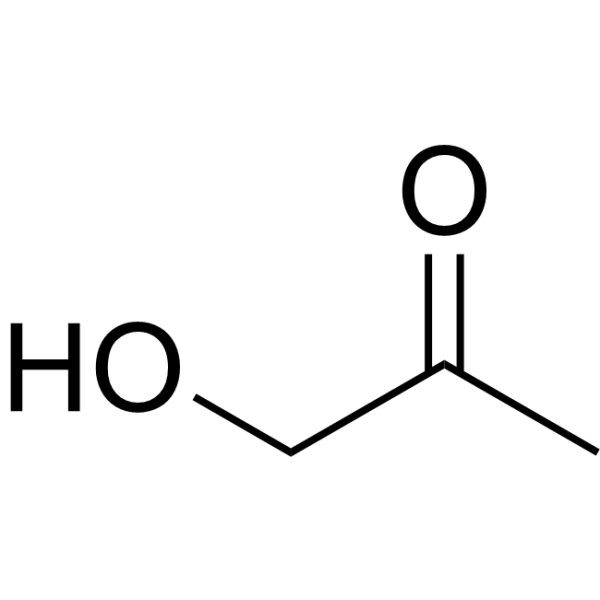
    Hydroxyacetone is a toxic compound. Hydroxyacetone can be isolated from e-cigarette aerosols. Hydroxyacetone reduces the activity of cellular Mitochondrial reductase (with an IC50 of 5.53 mg/mL for mitochondrial reductase in BEAS-2B cells) and increases ROS levels. Hydroxyacetone induces mitochondrial stress and oxidative damage. Hydroxyacetone induces destabilization of F-actin. At high concentrations, Hydroxyacetone promotes cell rounding and Apoptotic body formation. Hydroxyacetone exerts toxic effects on cells including airway epithelial cells and possesses respiratory toxicity potential .\n


    Hydroxyacetone
  • HY-156978

    Wy-48252

    Leukotriene Receptor Others
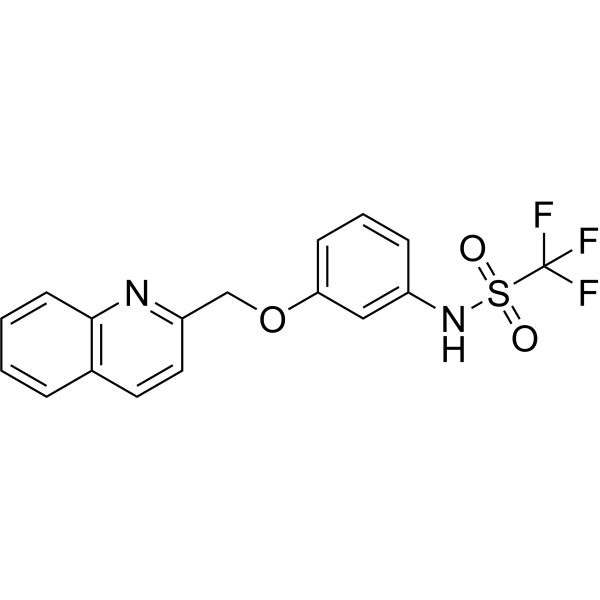
    Ritolukast (Wy-48252) is an orally active aerosol leukotriene (LTD4/E4) receptor antagonist. Ritolukast can be used to inhibit the bronchoconstriction caused by aerosol LTD4 in guinea pigs, with an ID50 of 0.5mg/kg .
    Ritolukast
  • HY-105030

    F 1865

    Biochemical Assay Reagents Inflammation/Immunology
    Tioxamast is an anti-allergic agent. Tioxamast can inhibit the synthesis and release of allergy mediators. Tioxamast blocks passive pulmonary anaphylactic shock induced by antigen aerosol in guinea-pig model .
    Tioxamast
  • HY-11098

    R170591

    RSV Infection
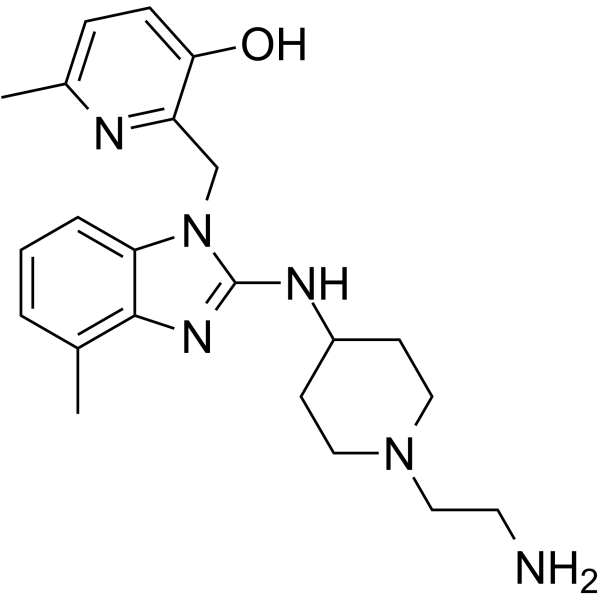
    JNJ 2408068 is a potent RSV (respiratory syncytial virus) inhibitor. JNJ 2408068 significantly inhibits replication of RSV A and B subtypes in the lungs of cotton rats without any evidence of toxicity. The minimum protective dose of JNJ 2408068 appears to be approximately 0.39 mg/kg .
    JNJ 2408068
  • HY-W093433

    Environmental Pollutants Bacterial Infection
    2,2-Dibromo-2-cyanoacetamide is a non-oxidizing bactericide. 2,2-Dibromo-2-cyanoacetamide enhances bactericidal activity by reacting with sulfhydryl groups on the cell walls of microorganisms in aquatic environments to release bromide ions. 2,2-Dibromo-2-cyanoacetamide effectively inactivates Legionella pneumophila, rendering it non-culturable, and exhibits significantly higher killing efficacy against this bacterium in reservoir biofilms than in aerosol biofilms. 2,2-Dibromo-2-cyanoacetamide is suitable for legionellosis prevention and control as well as related research .
    2,2-Dibromo-2-cyanoacetamide
  • HY-129785

    Phosphodiesterase (PDE) Neurological Disease Inflammation/Immunology
    CP-220629 is a potent inhibitor of PDE4, with the IC50 of 0.44 μM. CP-220629 is efficacious in the guinea pig aerosolized antigen induced airway obstruction assay (ED50 2.0 mg/kg) .
    CP-220629
  • HY-115314

    LG 30435

    Histamine Receptor Inflammation/Immunology
    Mequitamium iodide (LG 30435) is an antihistamine drug with antiallergic and bronchodilatory activity. Mequitamium iodide can effectively antagonize airway contraction and inflammatory responses induced by histamine and antigens. Mequitamium iodide has nanomolar affinity for the H1 and smooth muscle receptors of histamine and mequitin. Mequitamium iodide, when administered in aerosol form, significantly inhibits histamine- and antigen-induced increases in airway pressure in allergic mice. Mequitamium iodide reduces antigen-induced eosinophil accumulation in the airways. Mequitamium iodide also exhibits inhibitory effects on PAF-induced platelet aggregation and bronchoconstriction, and can be used in the study of allergic diseases such as rhinitis and asthma .
    Mequitamium iodide

Consulta en línea

Your information is safe with us. * Required Fields.

Saludo


Country or Region *

Nombre del solicitante *


Nombre de la Organizaciòn *

Department *


Direcciòn del E-mail *


Nombre del producto *

Cat. No.


Requested quantity *

Número de teléfono *


Observaciones

Consulta en línea

Inquiry Information

Nombre del producto:
Cat. No.:
Cantidad:
MCE Japan Authorized Agent:

