



Endonuclease
Endonuclease
Endonucleases are a class of enzymes that can cleave phosphodiester bonds within nucleic acid molecules. According to the substrates they act on, endonucleases can be classified into DNA endonucleases and RNA endonucleases. According to their structural and functional characteristics, endonucleases can be divided into restriction endonucleases, non-specific endonucleases, and site-specific endonucleases. Endonucleases play an important role in the fields of DNA repair, RNA processing, and genetic engineering. Mutations in the genes encoding endonucleases can lead to genetic diseases, such as xeroderma pigmentosum. Abnormal expression or altered activity of endonucleases may promote tumorigenesis, be involved in the pathological processes of neurodegenerative diseases, and at the same time, endonucleases are also potential targets for the treatment of diseases such as tumors[1][2].
References:
All Product Categories
-
Endonuclease Related Products (46)
Related Products (46)

-
Antibodies (1)
-
RNase A, Bovine pancreas
 0 ImagesRNase A (Bovine pancreatic RNase) is a widely used Endonuclease in DNA purification by specifically hydrolyzing cytosine or uracil residues of RNA. RNase A degrades the RNA in the RNA/DNA duplex. RNase A catalyses the breakdown of 3',5'-phosphodiester linkages of single stranded RNA. RNase A family members in organisms are tightly involved in various physiological and pathological processes including cell growth and development, proliferation, differentiation and migration. Dysregulation of RNase A activity or expression level is closely related to pancreatic, ovarian, bladder and thyroid cancer. RNase A has tumor cell-killing ability.
-
Recombinant DNase I (RNase-free)
 0 ImagesCat. No.: HY-108882ACAS No.: 9003-98-9Recombinant DNase I (RNase-free) is a recombinant deoxyribonuclease that degrades DNA. Recombinant DNase I is essential for limiting inflammatory responses and maintaining homeostasis.
-
Endo H, Streptomyces picatus
 0 ImagesCat. No.: HY-E70131CAS No.: 37278-88-9Synonyms: Endo-β-N-acetylglucosaminidase HEndo H, Streptomyces picatus (Endo-β-N-acetylglucosaminidase H), isolated from Streptomyces plicatus, hydrolyzes the central glycosidic bond of the β1, 4-di-N-acetylchitobiose core in asparagine-linked oligosaccharides.
-
PFM01
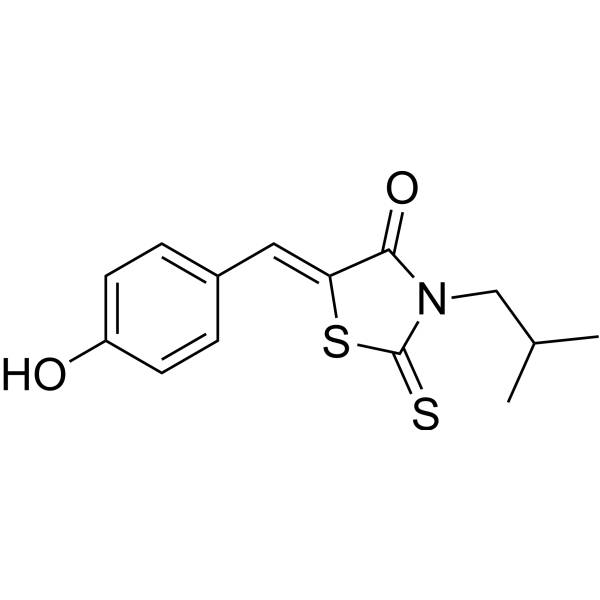 0 ImagesPFM01, N-alkylated Mirin derivative, is a MRE11 endonuclease inhibitor. PFM01 can regulate double-strand break repair (DSBR) by nonhomologous end-joining (NHEJ) versus homologous recombination (HR).
-
RNase B, Bovine Pancreas
 0 ImagesCat. No.: HY-129046CSynonyms: Ribonuclease B, Bovine PancreasRNase A (Bovine pancreatic RNase) is a widely used Endonuclease in DNA purification by specifically hydrolyzing cytosine or uracil residues of RNA. RNase A degrades the RNA in the RNA/DNA duplex. RNase A catalyses the breakdown of 3',5'-phosphodiester linkages of single stranded RNA. RNase A family members in organisms are tightly involved in various physiological and pathological processes including cell growth and development, proliferation, differentiation and migration. Dysregulation of RNase A activity or expression level is closely related to pancreatic, ovarian, bladder and thyroid cancer. RNase A has tumor cell-killing ability. RNase B, Bovine Pancreas (Ribonuclease B, Bovine Pancreas) is the N-glycosylated form of RNase A. RNase B, Bovine Pancreas can promote the folding of polypeptide chains and play a role similar to molecular chaperones.
-
MU147
 0 ImagesMU147 is an MRE11 nuclease inhibitor and chemical probe with anticancer activity, exhibiting IC50 values of 3.7 μM and 0.8 μM against the nuclease activity of human MRE11 and the MRN complex, respectively. MU147 inhibits MRE11 exonuclease and endonuclease activities, preventing MRN-dependent DNA end resection and nascent DNA degradation at stalled replication forks in BRCA2-deficient cells. MU147 delays the DNA damage repair process, inhibits homologous recombination and alternative non-homologous end joining, downregulates ionizing radiation- or camptothecin-induced RPA/RPA32 phosphorylation, and reduces survival of BRCA2-deficient cells. MU147 directly binds MRE11 in cells and impairs its recruitment to damage foci. MU147 can be used in cancer-related research.
-
Pixavir marboxil
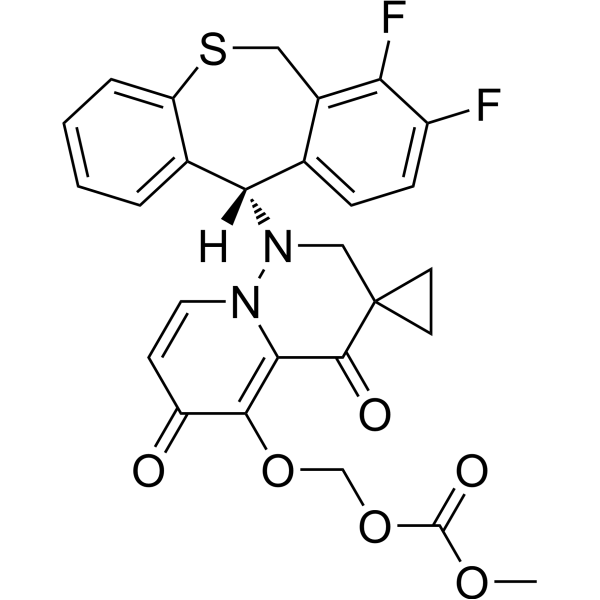 0 ImagesSynonyms: TG-1000Pixavir marboxilo (TG-1000) is an orally active prodrug of TG-0527 and an analog of Baloxavir marboxil (HY-109025). Pixavir marboxilo undergoes conversion to its active metabolite and inhibits the cap‑dependent endonuclease of Influenza Virus, reduces pulmonary viral titers, and suppresses the proliferation of influenza A, influenza B, H7N9 avian influenza, and neuraminidase‑resistant strains. Pixavir marboxilo can be used in influenza-related research.
-
NSC 45576
 0 ImagesCat. No.: HY-121492CAS No.: 1414586-62-1NSC 45576 is a selective inhibitor of XendoU endoribonuclease and an inhibitor of CREB-CRE interaction, with an IC50 value of 29 μM against Xenopus laevis XendoU. NSC 45576 binds to the active sites of XendoU and PP11, and inhibits CREB-CRE interaction. NSC 45576 can be used in cancer-related research such as breast cancer and gastric cancer.
-
FEN1-IN-SC13
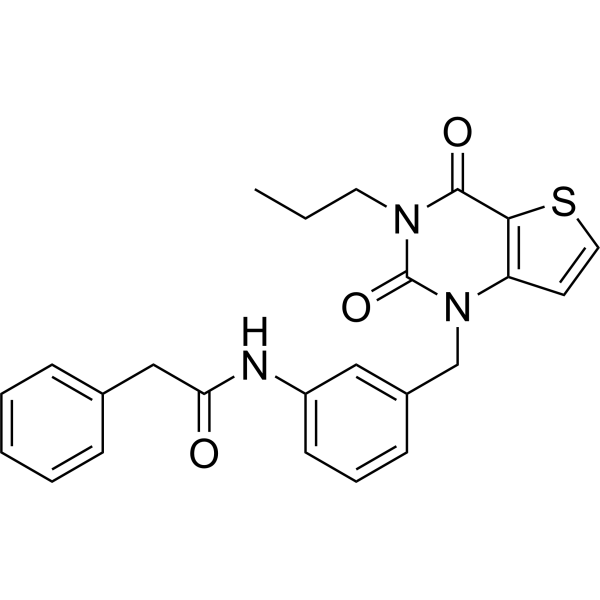 0 ImagesFEN1-IN-SC13 is a potent DNA fragmentation endonuclease 1 (FEN1) inhibitor with antitumor activity. FEN1-IN-SC13 interferes with DNA replication and repair in vitro and in cells.
-
Deoxyribonuclease II
 0 ImagesDeoxyribonuclease II (DNase II) is an endonuclease that hydrolyzes the phosphodiester bonds of deoxyribonucleotides in native and denatured DNA, producing 3' phosphate and 5'-hydroxyl termini. Deoxyribonuclease II works best at acidic pH and is commonly used in biochemical research.
-
PFM39
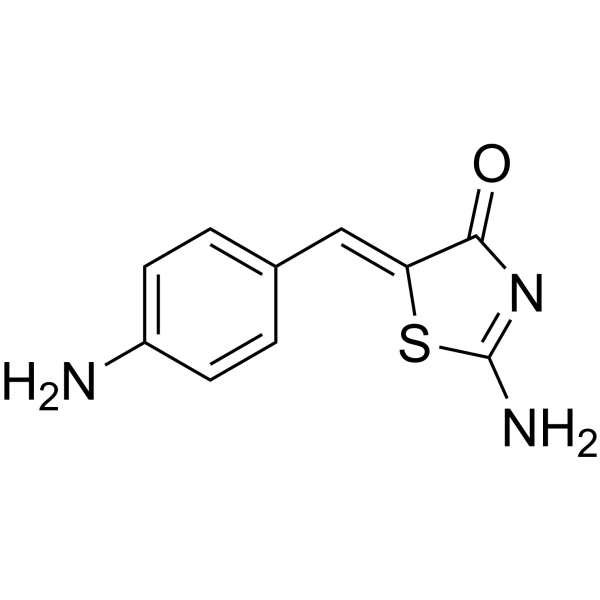 0 ImagesPFM39, a Mirin analog, is a potent and selective MRE11 exonuclease inhibitor. PFM39 inhibits phosphate rotation for dsDNA exonuclease activity. PFM39 does not inhibit TmMre11 or human MRE11/MRN endonuclease activity.
-
Micrococcal nuclease
 0 ImagesMicrococcal nuclease is a secreted nuclease from Staphylococcus aureus. It digests single-stranded and double-stranded DNA (ssDNA and dsDNA) as well as RNA, cleaves oligonucleotide linkers with T-T sites, and cuts neutrophil extracellular traps and biofilm extracellular DNA into mononucleotides and dinucleotides. Micrococcal nuclease stimulates the formation of Staphylococcus aureus biofilms and mediates immune evasion. It triggers on-demand release of antibiotics from hydrogel coatings, prolongs the formation of neutrophil extracellular traps, and promotes the dissemination and survival of MRSA during infection. Micrococcal nuclease is applicable to research and characterization related to Staphylococcus aureus infection.
-
Nuclease P1
 0 ImagesCat. No.: HY-P2963CAS No.: 54576-84-0Nuclease P1 is a single-stranded specific endonuclease, it hydrolyzes nucleic acids into 5'-mononucleotides and cleaves the single-stranded region of a double-stranded nucleic acid. Nuclease P1 is one of the most well-known single stranded specific nucleases in the field of molecular biology, it is widely used in the pharmaceutical and food industries. Nuclease P1 can be obtained by fermentation of Penicillium citrinum: through extraction process, ultrafiltration concentration, drying and purification, etc.
-
PFM03
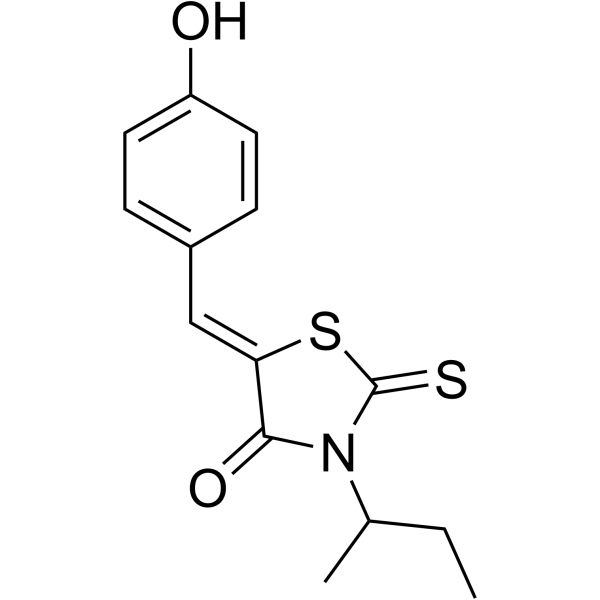 0 ImagesPFM03 is a MRE11 Endonuclease inhibitor. PFM03 regulates DNA double-strand break repair (DSBR) by nonhomologous end-joining (NHEJ).
-
RNase A, Recombinant (animal free)
 0 ImagesCat. No.: HY-129046ICAS No.: 9001-99-4RNase A (Bovine pancreatic RNase) is a widely used Endonuclease in DNA purification by specifically hydrolyzing cytosine or uracil residues of RNA. RNase A degrades the RNA in the RNA/DNA duplex. RNase A catalyses the breakdown of 3',5'-phosphodiester linkages of single stranded RNA. RNase A family members in organisms are tightly involved in various physiological and pathological processes including cell growth and development, proliferation, differentiation and migration. Dysregulation of RNase A activity or expression level is closely related to pancreatic, ovarian, bladder and thyroid cancer. RNase A has tumor cell-killing ability. RNase A, Recombinant (animal free) is recombinant RNase A with no animal-derived components.

-
RNase A, Recombinant
 0 ImagesCat. No.: HY-129046DCAS No.: 9001-99-4Synonyms: Ribonuclease A, RecombinantRNase A (Bovine pancreatic RNase) is a widely used Endonuclease in DNA purification by specifically hydrolyzing cytosine or uracil residues of RNA. RNase A degrades the RNA in the RNA/DNA duplex. RNase A catalyses the breakdown of 3',5'-phosphodiester linkages of single stranded RNA. RNase A family members in organisms are tightly involved in various physiological and pathological processes including cell growth and development, proliferation, differentiation and migration. Dysregulation of RNase A activity or expression level is closely related to pancreatic, ovarian, bladder and thyroid cancer. RNase A has tumor cell-killing ability. RNase A, Recombinant (Ribonuclease A, Recombinant) is a recombinant form of RNase A.
-
Dornase alfa
 0 ImagesCat. No.: HY-108858CAS No.: 143831-71-4Synonyms: rhDNaseDornase alfa (rhDNase) is a recombinant human deoxyribonuclease I (rhDNase) that can specifically degrade extracellular DNA. Dornase alfa catalyzes the cleavage of DNA released by neutrophils in respiratory mucus, reduces sputum viscosity, thereby improving mucus clearance efficiency, reducing airway obstruction and alleviating inflammatory responses. Dornase alfa can be used to improve lung function (such as FEV_1) in cystic fibrosis (CF), reduce the risk of acute pulmonary exacerbations, and has good in vivo tolerability. Dornase alfa acts locally on the respiratory tract through aerosol inhalation, specifically improving the high viscosity of mucus caused by DNA accumulation and related respiratory symptoms.
-
Endo-β-N-acetylglucosaminidase F1
 0 ImagesCat. No.: HY-E70135CAS No.: 37278-88-9Synonyms: Endo F1Endo-β-N-acetylglucosaminidase F1 (Endo F1) cleaves Asparagine-linked high mannose and some hybrid oligosaccharides.
-
Endo-β-N-acetylglucosaminidase F3
 0 ImagesCat. No.: HY-E70134CAS No.: 37278-88-9Synonyms: Endo F3Endo-β-N-acetylglucosaminidase D (Endo F3) cleaves free or Asparagine-linked triantennary oligosaccharides or α1-6 fucosylated biantennary oligosaccharides, as well as triamnnosyl chitobiose core structures.




