Search Result
Results for "
Arabinose-d
" in MedChemExpress (MCE) Product Catalog:
4
Biochemical Assay Reagents
12
Isotope-Labeled Compounds
| Cat. No. |
Product Name |
Target |
Research Areas |
Chemical Structure |
-
- HY-W015611
-
|
|
Endogenous Metabolite
|
Metabolic Disease
|
|
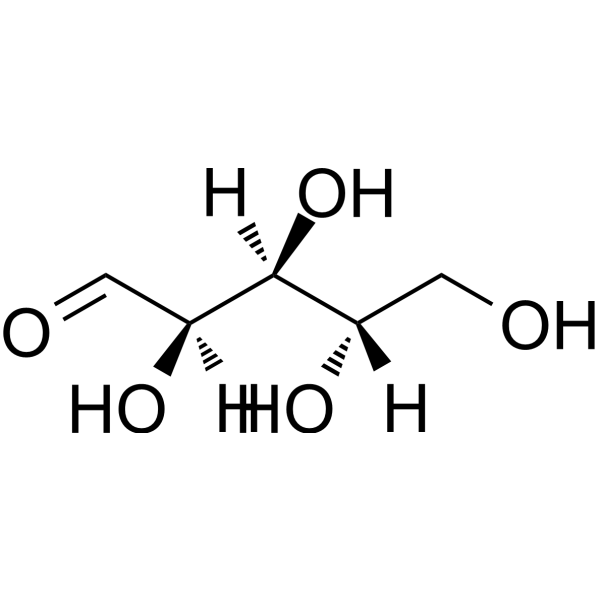
L-(+)-Arabinose selectively inhibits intestinal sucrase activity in a noncompetitive manner and suppresses the plasma glucose increase due to sucrose ingestion.
|
-
-
- HY-N0059
-
|
|
Parasite
Bacterial
AMPK
PPAR
|
Infection
Neurological Disease
Metabolic Disease
|
|
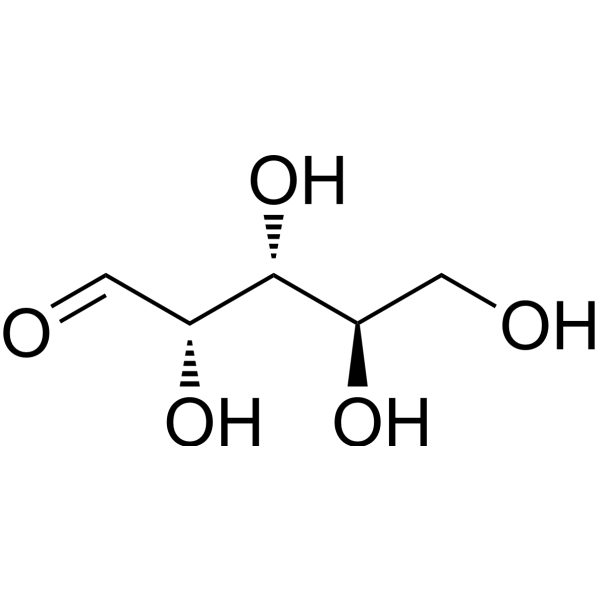
D-Arabinose is is an orally active antidepressant and a growth inhibitor of C. elegans (IC50 is 7.5 mM). D-Arabinose can penetrate the blood-brain barrier, selectively interfere with the metabolism of D-ribose and D-fructose, and inhibit the growth of nematodes. D-Arabinose can also inhibit the synthesis of cell biofilm and exert antibacterial activity. D-Arabinose activates the ACSS2-PPARγ/TFEB-CRTC1 axis through the lysosomal AXIN-LKB1-AMPK pathway, inducing CRTC1 transcription, exerts antidepressant-like activity. D-Arabinose is the ring-opened form of the aldopentose D-?Arabinose (HY-N7082) .
|
-
-
- HY-N2353
-
|
(±)-Arabinose; DL-Arabinose; dl-Arabinose
|
Environmental Pollutants
Endogenous Metabolite
|
Neurological Disease
Inflammation/Immunology
Cancer
|
|
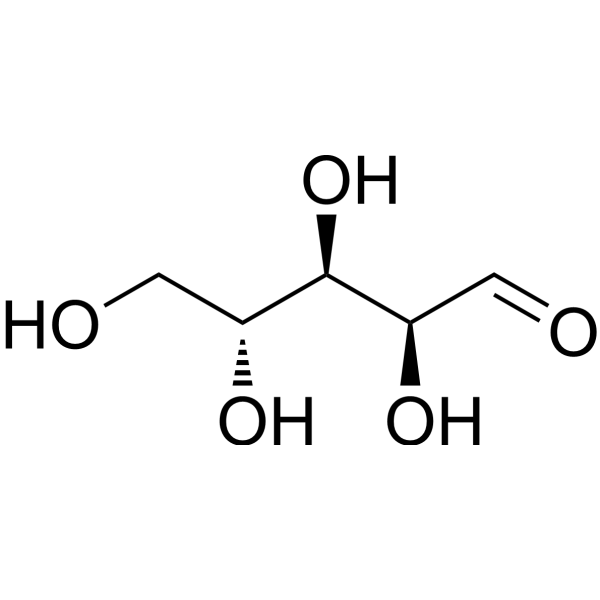
Arabinose is a pentose sugar commonly found in plants. Arabinose alleviates immune dysregulation and inflammation by promoting balanced immune responses and reducing inflammation. Arabinose induces cytotoxicity, autophagy (Autophagy), and cell cycle arrest in breast cancer cells through the p38-MAPK signaling pathway. Arabinose activates the ACSS2-PPARγ/TFEB-AMPK axis in neuroblastoma cells, thereby exerting neuromodulatory/antidepressant effects. Arabinose can also be used as an intermediate in compound synthesis. Arabinose may be applied in research related to immune inflammation, depression, breast cancer, and other diseases .
|
-
-
- HY-N5102
-
|
|
Others
|
Others
|
|
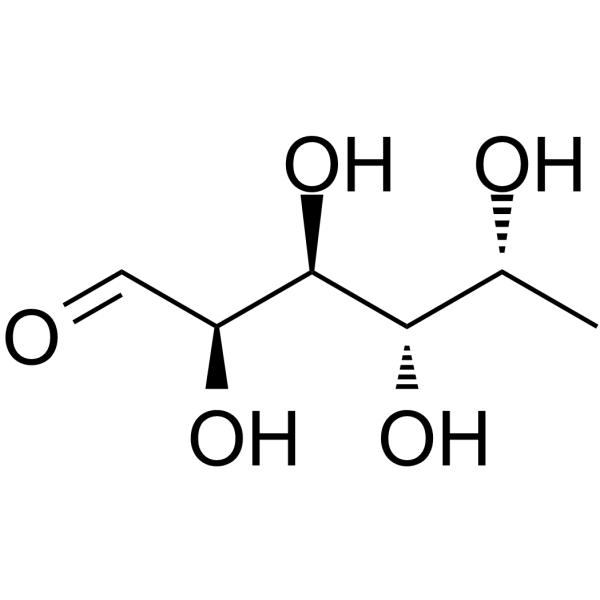
D-(+)-Fucose is a nonmetabolizable analogue of l-arabinose. D-(+)-Fucose prevents growth of Escherichia coli B/r on a mineral salts medium plus l-arabinose by inhibiting induction of the l-arabinose operon. D-fucose is a potent inducer of beta-methylgalactoside permease (MGP) .
|
-
-
- HY-N7082
-
|
|
Parasite
Bacterial
AMPK
PPAR
|
Infection
Neurological Disease
Metabolic Disease
|
|
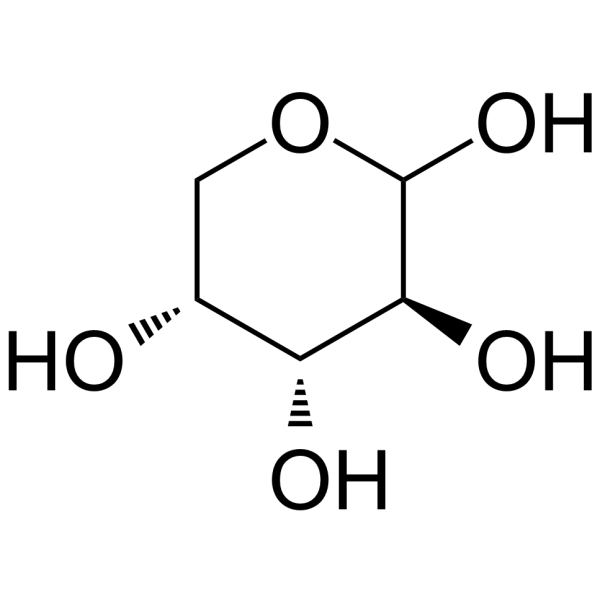
D-Arabinopyranose is a rare aldehyde pentose, and its ring-opened form is D-arabinose (HY-N0059). D-arabinose is is an orally active antidepressant and a growth inhibitor of C. elegans (IC50 is 7.5 mM). D-arabinose can penetrate the blood-brain barrier, selectively interfere with the metabolism of D-ribose and D-fructose, and inhibit the growth of nematodes. D-arabinose can also inhibit the synthesis of cell biofilm and exert antibacterial activity. D-arabinose activates the ACSS2-PPARγ/TFEB-CRTC1 axis through the lysosomal AXIN-LKB1-AMPK pathway, inducing CRTC1 transcription, exerts antidepressant-like activity. D-arabinose is the ring-opened form of the aldopentose D-?Arabinose (HY-N7082) .
|
-
-
- HY-19750
-
|
|
Bacterial
|
Infection
|
|
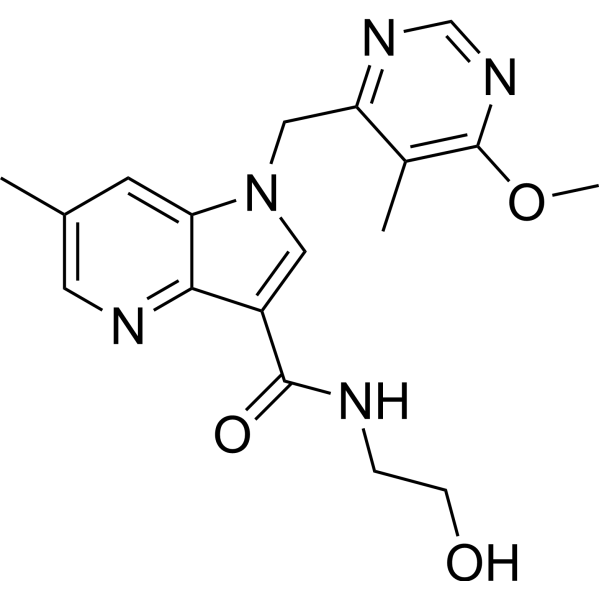
TBA-7371 is an orally active and non-covalent inhibitor of Decaprenylphosphoryl-β-D-ribose oxidase (DprE1) of Mycobacterium tuberculosis (MIC=0.64 μg/mL). TBA-7371 can block the synthesis of arabinose in the bacterial cell wall, resulting in cell wall structural defects, thereby exerting an anti-tuberculosis effect. TBA-7371 can be used in the research of anti-tuberculosis drugs and has a synergistic bactericidal effect with Bedaquiline (HY-14881) and other drugs .
|
-
-
- HY-N2353S1
-
-
-
- HY-N2353R
-
|
(±)-Arabinose (Standard); DL-Arabinose (Standard); dl-Arabinose (Standard)
|
Reference Standards
Endogenous Metabolite
|
Metabolic Disease
|
|
Arabinose (Standard) is the analytical standard of Arabinose. This product is intended for research and analytical applications. Arabinose is an endogenous metabolite.
|
-

-
- HY-W015611R
-
|
|
Reference Standards
Endogenous Metabolite
|
Metabolic Disease
|
|
L-(+)-Arabinose (Standard) is the analytical standard of L-(+)-Arabinose. This product is intended for research and analytical applications. L-(+)-Arabinose selectively inhibits intestinal sucrase activity in a noncompetitive manner and suppresses the plasma glucose increase due to sucrose ingestion.
|
-

-
- HY-N2353S
-
-
-
- HY-167291
-
|
|
Biochemical Assay Reagents
|
Others
|
|
D-Arabinose 5-phosphate (sodium) is a class of biochemical reagents used in glycobiology research. Glycobiology studies the structure, synthesis, biology, and evolution of sugars. It involves carbohydrate chemistry, enzymology of glycan formation and degradation, protein-glycan recognition, and the role of glycans in biological systems. This field is closely related to basic research, biomedicine, and biotechnology .
|
-

-
- HY-N2353S2
-
-
-
- HY-N0059S4
-
|
|
Isotope-Labeled Compounds
Parasite
Bacterial
AMPK
PPAR
|
Infection
Neurological Disease
Metabolic Disease
|
|
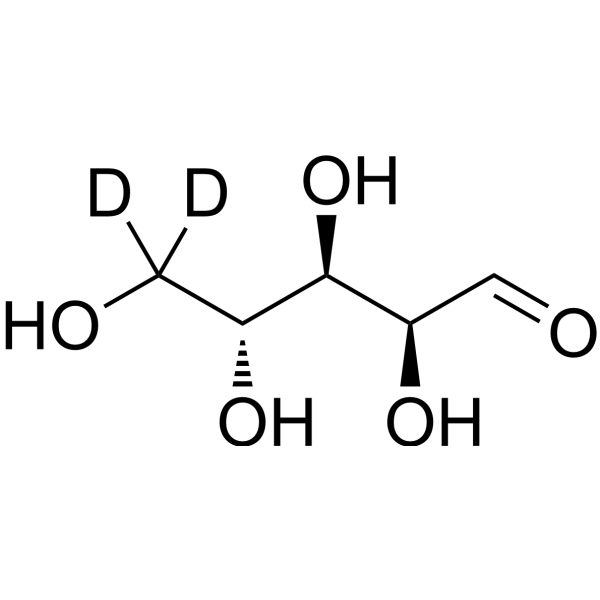
D-Arabinose-d2 is the deuterium labeled D-Arabinose (HY-N0059). D-Arabinose is is an orally active antidepressant and a growth inhibitor of C. elegans (IC50 is 7.5 mM). D-Arabinose can penetrate the blood-brain barrier, selectively interfere with the metabolism of D-ribose and D-fructose, and inhibit the growth of nematodes. D-Arabinose can also inhibit the synthesis of cell biofilm and exert antibacterial activity. D-Arabinose activates the ACSS2-PPARγ/TFEB-CRTC1 axis through the lysosomal AXIN-LKB1-AMPK pathway, inducing CRTC1 transcription, exerts antidepressant-like activity. D-Arabinose is the ring-opened form of the aldopentose D-?Arabinose (HY-N7082) .
|
-
-
- HY-N0059S6
-
|
|
Isotope-Labeled Compounds
Parasite
Bacterial
AMPK
PPAR
|
Infection
Neurological Disease
Metabolic Disease
|
|
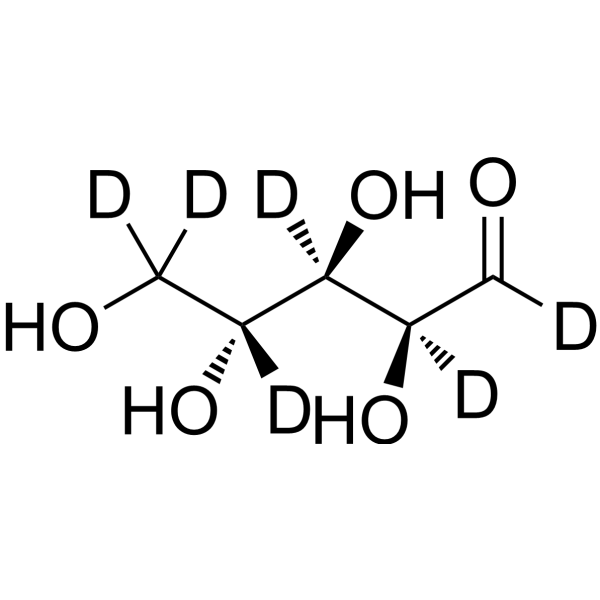
D-Arabinose-d6 is the deuterium labeled D-Arabinose (HY-N0059). D-Arabinose is is an orally active antidepressant and a growth inhibitor of C. elegans (IC50 is 7.5 mM). D-Arabinose can penetrate the blood-brain barrier, selectively interfere with the metabolism of D-ribose and D-fructose, and inhibit the growth of nematodes. D-Arabinose can also inhibit the synthesis of cell biofilm and exert antibacterial activity. D-Arabinose activates the ACSS2-PPARγ/TFEB-CRTC1 axis through the lysosomal AXIN-LKB1-AMPK pathway, inducing CRTC1 transcription, exerts antidepressant-like activity. D-Arabinose is the ring-opened form of the aldopentose D-?Arabinose (HY-N7082) .
|
-
-
- HY-N0059S5
-
|
|
Isotope-Labeled Compounds
Parasite
Bacterial
AMPK
PPAR
|
Infection
Neurological Disease
Metabolic Disease
|
|
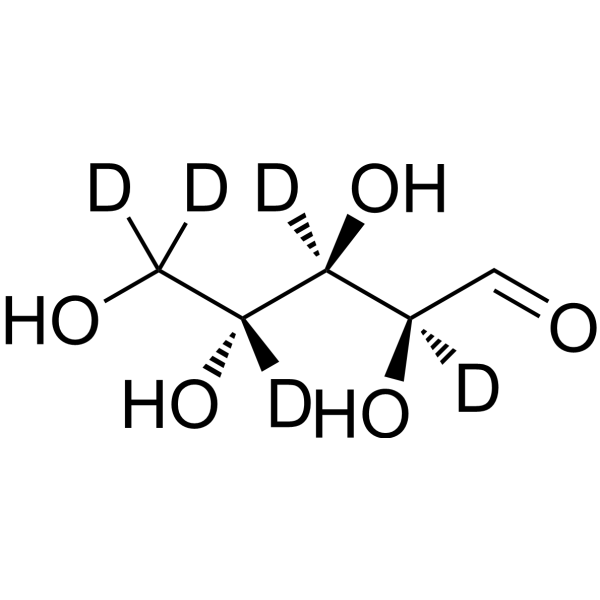
D-Arabinose-d5 is the deuterium labeled D-Arabinose (HY-N0059). D-Arabinose is is an orally active antidepressant and a growth inhibitor of C. elegans (IC50 is 7.5 mM). D-Arabinose can penetrate the blood-brain barrier, selectively interfere with the metabolism of D-ribose and D-fructose, and inhibit the growth of nematodes. D-Arabinose can also inhibit the synthesis of cell biofilm and exert antibacterial activity. D-Arabinose activates the ACSS2-PPARγ/TFEB-CRTC1 axis through the lysosomal AXIN-LKB1-AMPK pathway, inducing CRTC1 transcription, exerts antidepressant-like activity. D-Arabinose is the ring-opened form of the aldopentose D-?Arabinose (HY-N7082) .
|
-
-
- HY-N0059R
-
|
|
Reference Standards
Parasite
Bacterial
AMPK
PPAR
|
Infection
Neurological Disease
Metabolic Disease
|
|
D-Arabinose (Standard) is the analytical standard of D-Arabinose. This product is intended for research and analytical applications. D-Arabinose is is an orally active antidepressant and a growth inhibitor of C. elegans (IC50 is 7.5 mM). D-Arabinose can penetrate the blood-brain barrier, selectively interfere with the metabolism of D-ribose and D-fructose, and inhibit the growth of nematodes. D-Arabinose can also inhibit the synthesis of cell biofilm and exert antibacterial activity. D-Arabinose activates the ACSS2-PPARγ/TFEB-CRTC1 axis through the lysosomal AXIN-LKB1-AMPK pathway, inducing CRTC1 transcription, exerts antidepressant-like activity. D-Arabinose is the ring-opened form of the aldopentose D-?Arabinose (HY-N7082) .
|
-

-
- HY-N0059S1
-
|
|
Isotope-Labeled Compounds
Parasite
Bacterial
AMPK
PPAR
|
Infection
Neurological Disease
Metabolic Disease
|
|
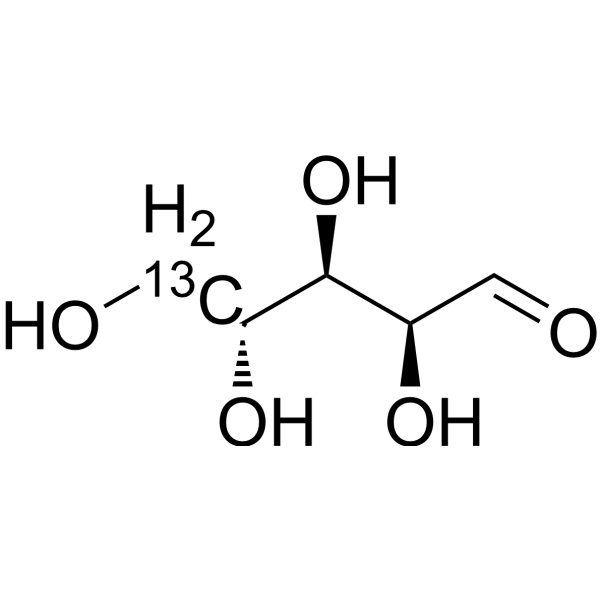
D-Arabinose- 13C-1 is the 13C labeled D-Arabinose (HY-N0059). D-Arabinose is is an orally active antidepressant and a growth inhibitor of C. elegans (IC50 is 7.5 mM). D-Arabinose can penetrate the blood-brain barrier, selectively interfere with the metabolism of D-ribose and D-fructose, and inhibit the growth of nematodes. D-Arabinose can also inhibit the synthesis of cell biofilm and exert antibacterial activity. D-Arabinose activates the ACSS2-PPARγ/TFEB-CRTC1 axis through the lysosomal AXIN-LKB1-AMPK pathway, inducing CRTC1 transcription, exerts antidepressant-like activity. D-Arabinose is the ring-opened form of the aldopentose D-?Arabinose (HY-N7082) .
|
-
-
- HY-N0059S3
-
|
|
Isotope-Labeled Compounds
Parasite
Bacterial
AMPK
PPAR
|
Infection
Neurological Disease
Metabolic Disease
|
|
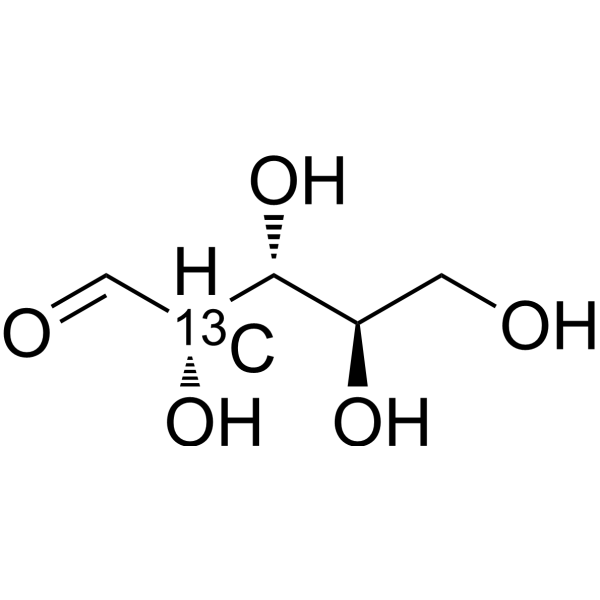
D-Arabinose- 13C-3 is the 13C labeled D-Arabinose (HY-N0059). D-Arabinose is is an orally active antidepressant and a growth inhibitor of C. elegans (IC50 is 7.5 mM). D-Arabinose can penetrate the blood-brain barrier, selectively interfere with the metabolism of D-ribose and D-fructose, and inhibit the growth of nematodes. D-Arabinose can also inhibit the synthesis of cell biofilm and exert antibacterial activity. D-Arabinose activates the ACSS2-PPARγ/TFEB-CRTC1 axis through the lysosomal AXIN-LKB1-AMPK pathway, inducing CRTC1 transcription, exerts antidepressant-like activity. D-Arabinose is the ring-opened form of the aldopentose D-?Arabinose (HY-N7082) .
|
-
-
- HY-42792
-
-

-
- HY-N5102R
-
|
|
Reference Standards
Others
|
Others
|
|
D-(+)-Fucose (Standard) is the analytical standard of D-(+)-Fucose. This product is intended for research and analytical applications. D-(+)-Fucose is a nonmetabolizable analogue of l-arabinose. D-(+)-Fucose prevents growth of Escherichia coli B/r on a mineral salts medium plus l-arabinose by inhibiting induction of the l-arabinose operon . D-fucose is a potent inducer of beta-methylgalactoside permease (MGP) .
|
-

-
- HY-W746880
-
-

-
- HY-N0059S
-
|
|
Isotope-Labeled Compounds
Parasite
Bacterial
AMPK
PPAR
|
Infection
Neurological Disease
Metabolic Disease
|
|
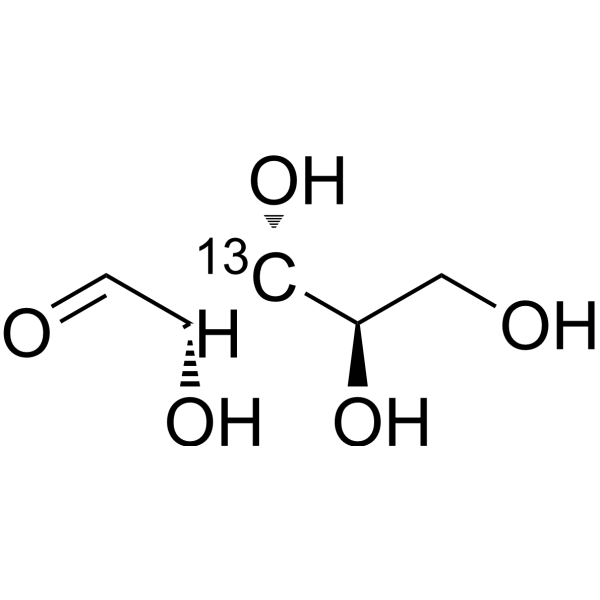
D-Arabinose- 13C is the 13C labeled D-Arabinose (HY-N0059). D-Arabinose is is an orally active antidepressant and a growth inhibitor of C. elegans (IC50 is 7.5 mM). D-Arabinose can penetrate the blood-brain barrier, selectively interfere with the metabolism of D-ribose and D-fructose, and inhibit the growth of nematodes. D-Arabinose can also inhibit the synthesis of cell biofilm and exert antibacterial activity. D-Arabinose activates the ACSS2-PPARγ/TFEB-CRTC1 axis through the lysosomal AXIN-LKB1-AMPK pathway, inducing CRTC1 transcription, exerts antidepressant-like activity. D-Arabinose is the ring-opened form of the aldopentose D-?Arabinose (HY-N7082) .
|
-
-
- HY-N0059S2
-
|
|
Isotope-Labeled Compounds
Parasite
Bacterial
AMPK
PPAR
|
Infection
Neurological Disease
Metabolic Disease
|
|
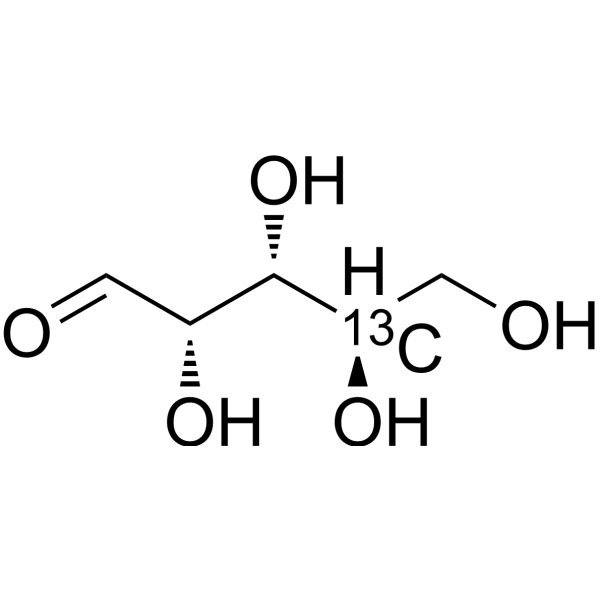
D-Arabinose- 13C-2 is the 13C labeled D-Arabinose (HY-N0059). D-Arabinose is is an orally active antidepressant and a growth inhibitor of C. elegans (IC50 is 7.5 mM). D-Arabinose can penetrate the blood-brain barrier, selectively interfere with the metabolism of D-ribose and D-fructose, and inhibit the growth of nematodes. D-Arabinose can also inhibit the synthesis of cell biofilm and exert antibacterial activity. D-Arabinose activates the ACSS2-PPARγ/TFEB-CRTC1 axis through the lysosomal AXIN-LKB1-AMPK pathway, inducing CRTC1 transcription, exerts antidepressant-like activity. D-Arabinose is the ring-opened form of the aldopentose D-?Arabinose (HY-N7082) .
|
-
-
- HY-N7082S
-
|
|
Isotope-Labeled Compounds
Parasite
Bacterial
AMPK
PPAR
|
Infection
Neurological Disease
Metabolic Disease
|
|
D-Arabinopyranos- 13C5 is 13C labeled D-Arabinopyranos (HY-N7082). D-Arabinopyranose is a rare aldehyde pentose, and its ring-opened form is D-arabinose (HY-N0059). D-arabinose is is an orally active antidepressant and a growth inhibitor of C. elegans (IC50 is 7.5 mM). D-arabinose can penetrate the blood-brain barrier, selectively interfere with the metabolism of D-ribose and D-fructose, and inhibit the growth of nematodes. D-arabinose can also inhibit the synthesis of cell biofilm and exert antibacterial activity. D-arabinose activates the ACSS2-PPARγ/TFEB-CRTC1 axis through the lysosomal AXIN-LKB1-AMPK pathway, inducing CRTC1 transcription, exerts antidepressant-like activity. D-arabinose is the ring-opened form of the aldopentose D-?Arabinose (HY-N7082) .
|
-

-
- HY-N8116
-
|
|
Others
|
Others
|
|
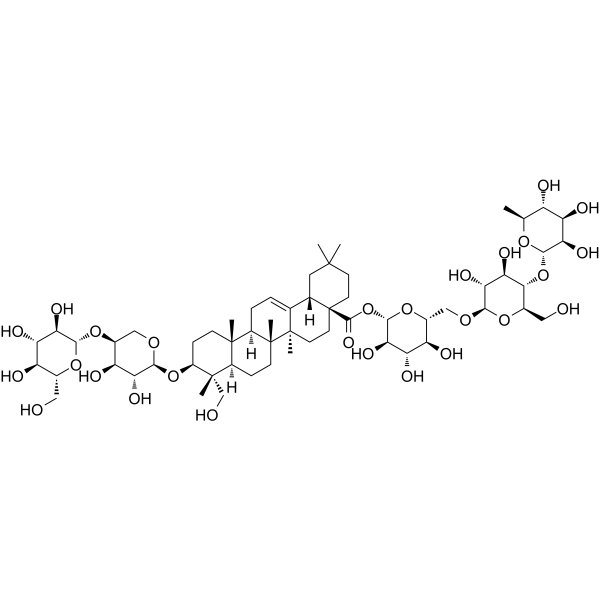
Leonloside D is a Hederagenin-derived saponin, composed of a molecule of Hederagenin and 1-3 molecules of rhamnose, glucose, or arabinose .
|
-
-
- HY-134163
-
|
4-Methylumbelliferyl alpha-L-arabinopyranoside
|
Biochemical Assay Reagents
|
Others
|
|
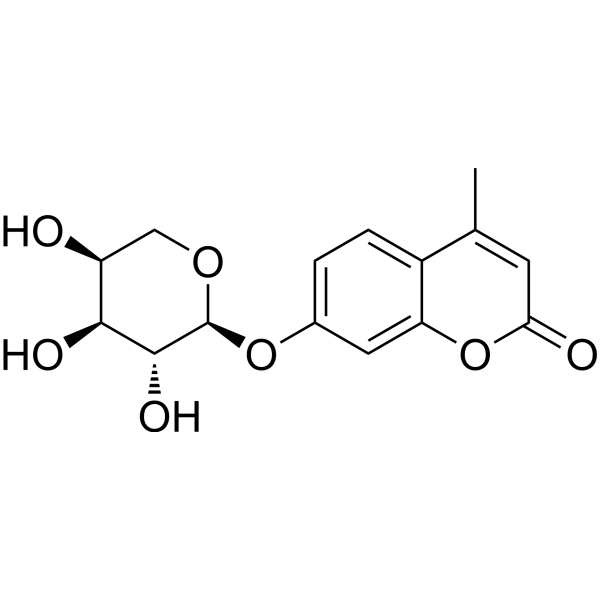
4-Methylumbelliferyl α-L-arabinopyranoside (4-Methylumbelliferyl alpha-L-arabinopyranoside) is a substrate for enzymes that hydrolyze arabinose-containing substrates, such as α-L-arabinopyranoside .
|
-
-
- HY-E70440
-
|
|
Biochemical Assay Reagents
|
Others
|
|
L-Arabinose isomerase is a transglutaminase. Enzymes have high catalytic efficiency, high specificity, and mild operating conditions. It can be applied in industries such as pharmaceuticals, industrial production, food manufacturing, and aquaculture .
|
-

-
- HY-E70412
-
|
|
Endogenous Metabolite
|
Metabolic Disease
|
Galactose 1-dehydrogenase, E.coli is a dehydrogenase expressed in E. coli. Galactose 1-dehydrogenase, E.coli catalyzes the oxidation of L-arabinose and D-galactose using NADP +/NAD + as cofactors. Galactose 1-dehydrogenase, E.coli can be used in diagnostic tests to determine total galactose content and can also serve as a biocatalyst for producing galacturonate .
|
-

-
- HY-125072
-
|
|
Phosphatase
|
Others
|
|
Arabinose 1,5-diphosphate serves as an inhibitor of bisphosphatase activity.
|
-

-
- HY-W416196
-
-

-
- HY-113272A
-
|
D-Ru5P
|
Biochemical Assay Reagents
|
Metabolic Disease
|
|
D-Ribulose 5-phosphate is an important sugar phosphate that participates in multiple metabolic pathways. D-Ribulose 5-phosphate serves as an intermediate in the pentose phosphate pathway and also acts as a substrate for D-Arabinose 5-phosphate isomerase (GutQ/KdsD) .
|
-

-
- HY-E70111
-
|
Endo-1,5-arabinanase
|
Glycosidase
|
Others
|
|
Endo-1,5-α-arabinanase (Endo-1,5-arabinanase) belongs to CAZy family 43 of the glycoside hydrolase (GH). Endo-1,5-α-arabinanase mainly shorts arabinooligosaccharides and arabinose from debranched arabinan .
|
-

-
- HY-E70975
-
-

-
- HY-E70412A
-
|
|
Endogenous Metabolite
|
Metabolic Disease
|
Galactose 1-dehydrogenase, pseudomonas fluorescens is a dehydrogenase expressed in Pseudomonas fluorescens. Galactose 1-dehydrogenase, pseudomonas fluorescens catalyzes the oxidation of L-arabinose and D-galactose using NADP +/NAD + as a cofactor. Galactose 1-dehydrogenase, pseudomonas fluorescens can be used in diagnostic tests to measure total galactose content and can also act as a biocatalyst for producing galacturonic acid salts .
|
-

| Cat. No. |
Product Name |
Type |
-
- HY-167291
-
|
|
Biochemical Assay Reagents
|
|
D-Arabinose 5-phosphate (sodium) is a class of biochemical reagents used in glycobiology research. Glycobiology studies the structure, synthesis, biology, and evolution of sugars. It involves carbohydrate chemistry, enzymology of glycan formation and degradation, protein-glycan recognition, and the role of glycans in biological systems. This field is closely related to basic research, biomedicine, and biotechnology .
|
-
- HY-42792
-
-
- HY-134163
-
|
4-Methylumbelliferyl alpha-L-arabinopyranoside
|
Biochemical Assay Reagents
|
|
4-Methylumbelliferyl α-L-arabinopyranoside (4-Methylumbelliferyl alpha-L-arabinopyranoside) is a substrate for enzymes that hydrolyze arabinose-containing substrates, such as α-L-arabinopyranoside .
|
-
- HY-W416196
-
| Cat. No. |
Product Name |
Category |
Target |
Chemical Structure |
| Cat. No. |
Product Name |
Chemical Structure |
-
- HY-N2353S1
-
|
|
|
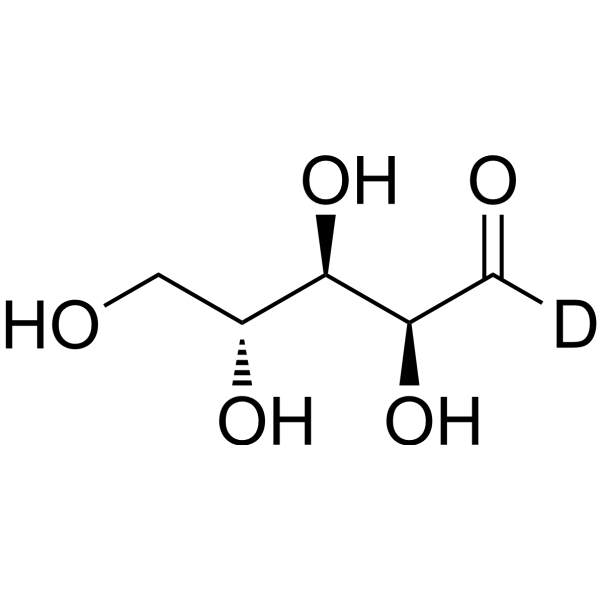
Arabinose-d is the deuterium labeled Arabinose. Arabinose is an endogenous metabolite .
|
-
-
- HY-N2353S
-
|
|
|
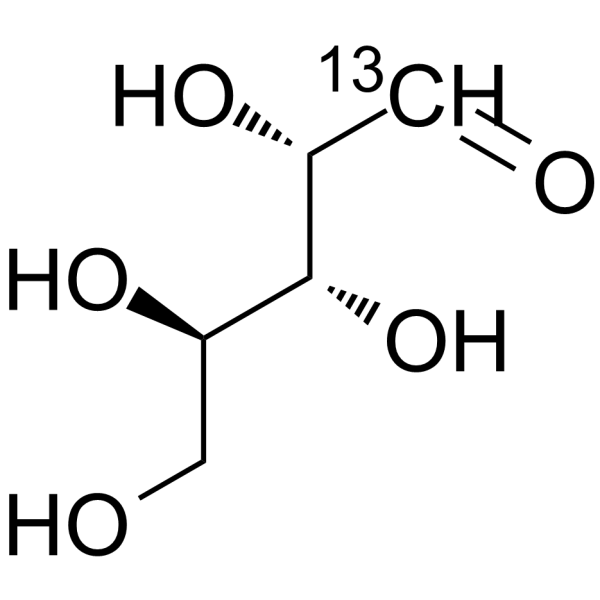
Arabinose-1- 13C is the 13C labeled Arabinose. Arabinose is an endogenous metabolite .
|
-
-
- HY-N2353S2
-
|
|
|
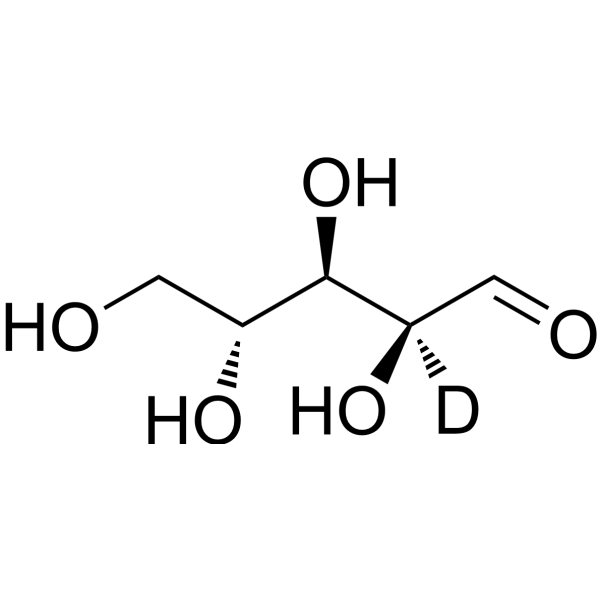
Arabinose-d-1 is the deuterium labeled Arabinose. Arabinose is an endogenous metabolite .
|
-
-
- HY-N0059S4
-
|
|
|
D-Arabinose-d2 is the deuterium labeled D-Arabinose (HY-N0059). D-Arabinose is is an orally active antidepressant and a growth inhibitor of C. elegans (IC50 is 7.5 mM). D-Arabinose can penetrate the blood-brain barrier, selectively interfere with the metabolism of D-ribose and D-fructose, and inhibit the growth of nematodes. D-Arabinose can also inhibit the synthesis of cell biofilm and exert antibacterial activity. D-Arabinose activates the ACSS2-PPARγ/TFEB-CRTC1 axis through the lysosomal AXIN-LKB1-AMPK pathway, inducing CRTC1 transcription, exerts antidepressant-like activity. D-Arabinose is the ring-opened form of the aldopentose D-?Arabinose (HY-N7082) .
|
-
-
- HY-N0059S6
-
|
|
|
D-Arabinose-d6 is the deuterium labeled D-Arabinose (HY-N0059). D-Arabinose is is an orally active antidepressant and a growth inhibitor of C. elegans (IC50 is 7.5 mM). D-Arabinose can penetrate the blood-brain barrier, selectively interfere with the metabolism of D-ribose and D-fructose, and inhibit the growth of nematodes. D-Arabinose can also inhibit the synthesis of cell biofilm and exert antibacterial activity. D-Arabinose activates the ACSS2-PPARγ/TFEB-CRTC1 axis through the lysosomal AXIN-LKB1-AMPK pathway, inducing CRTC1 transcription, exerts antidepressant-like activity. D-Arabinose is the ring-opened form of the aldopentose D-?Arabinose (HY-N7082) .
|
-
-
- HY-N0059S5
-
|
|
|
D-Arabinose-d5 is the deuterium labeled D-Arabinose (HY-N0059). D-Arabinose is is an orally active antidepressant and a growth inhibitor of C. elegans (IC50 is 7.5 mM). D-Arabinose can penetrate the blood-brain barrier, selectively interfere with the metabolism of D-ribose and D-fructose, and inhibit the growth of nematodes. D-Arabinose can also inhibit the synthesis of cell biofilm and exert antibacterial activity. D-Arabinose activates the ACSS2-PPARγ/TFEB-CRTC1 axis through the lysosomal AXIN-LKB1-AMPK pathway, inducing CRTC1 transcription, exerts antidepressant-like activity. D-Arabinose is the ring-opened form of the aldopentose D-?Arabinose (HY-N7082) .
|
-
-
- HY-N0059S1
-
|
|
|
D-Arabinose- 13C-1 is the 13C labeled D-Arabinose (HY-N0059). D-Arabinose is is an orally active antidepressant and a growth inhibitor of C. elegans (IC50 is 7.5 mM). D-Arabinose can penetrate the blood-brain barrier, selectively interfere with the metabolism of D-ribose and D-fructose, and inhibit the growth of nematodes. D-Arabinose can also inhibit the synthesis of cell biofilm and exert antibacterial activity. D-Arabinose activates the ACSS2-PPARγ/TFEB-CRTC1 axis through the lysosomal AXIN-LKB1-AMPK pathway, inducing CRTC1 transcription, exerts antidepressant-like activity. D-Arabinose is the ring-opened form of the aldopentose D-?Arabinose (HY-N7082) .
|
-
-
- HY-N0059S3
-
|
|
|
D-Arabinose- 13C-3 is the 13C labeled D-Arabinose (HY-N0059). D-Arabinose is is an orally active antidepressant and a growth inhibitor of C. elegans (IC50 is 7.5 mM). D-Arabinose can penetrate the blood-brain barrier, selectively interfere with the metabolism of D-ribose and D-fructose, and inhibit the growth of nematodes. D-Arabinose can also inhibit the synthesis of cell biofilm and exert antibacterial activity. D-Arabinose activates the ACSS2-PPARγ/TFEB-CRTC1 axis through the lysosomal AXIN-LKB1-AMPK pathway, inducing CRTC1 transcription, exerts antidepressant-like activity. D-Arabinose is the ring-opened form of the aldopentose D-?Arabinose (HY-N7082) .
|
-
-
- HY-W746880
-
|
|
|
D-Arabinose Phenylhydrazone- 13C5 is the 13C-labeled D-Arabinose Phenylhydrazone.
|
-
-
- HY-N0059S
-
|
|
|
D-Arabinose- 13C is the 13C labeled D-Arabinose (HY-N0059). D-Arabinose is is an orally active antidepressant and a growth inhibitor of C. elegans (IC50 is 7.5 mM). D-Arabinose can penetrate the blood-brain barrier, selectively interfere with the metabolism of D-ribose and D-fructose, and inhibit the growth of nematodes. D-Arabinose can also inhibit the synthesis of cell biofilm and exert antibacterial activity. D-Arabinose activates the ACSS2-PPARγ/TFEB-CRTC1 axis through the lysosomal AXIN-LKB1-AMPK pathway, inducing CRTC1 transcription, exerts antidepressant-like activity. D-Arabinose is the ring-opened form of the aldopentose D-?Arabinose (HY-N7082) .
|
-
-
- HY-N0059S2
-
|
|
|
D-Arabinose- 13C-2 is the 13C labeled D-Arabinose (HY-N0059). D-Arabinose is is an orally active antidepressant and a growth inhibitor of C. elegans (IC50 is 7.5 mM). D-Arabinose can penetrate the blood-brain barrier, selectively interfere with the metabolism of D-ribose and D-fructose, and inhibit the growth of nematodes. D-Arabinose can also inhibit the synthesis of cell biofilm and exert antibacterial activity. D-Arabinose activates the ACSS2-PPARγ/TFEB-CRTC1 axis through the lysosomal AXIN-LKB1-AMPK pathway, inducing CRTC1 transcription, exerts antidepressant-like activity. D-Arabinose is the ring-opened form of the aldopentose D-?Arabinose (HY-N7082) .
|
-
-
- HY-N7082S
-
|
|
|
D-Arabinopyranos- 13C5 is 13C labeled D-Arabinopyranos (HY-N7082). D-Arabinopyranose is a rare aldehyde pentose, and its ring-opened form is D-arabinose (HY-N0059). D-arabinose is is an orally active antidepressant and a growth inhibitor of C. elegans (IC50 is 7.5 mM). D-arabinose can penetrate the blood-brain barrier, selectively interfere with the metabolism of D-ribose and D-fructose, and inhibit the growth of nematodes. D-arabinose can also inhibit the synthesis of cell biofilm and exert antibacterial activity. D-arabinose activates the ACSS2-PPARγ/TFEB-CRTC1 axis through the lysosomal AXIN-LKB1-AMPK pathway, inducing CRTC1 transcription, exerts antidepressant-like activity. D-arabinose is the ring-opened form of the aldopentose D-?Arabinose (HY-N7082) .
|
-
Your information is safe with us. * Required Fields.
Inquiry Information
- Product Name:
- Cat. No.:
- Quantity:
- MCE Japan Authorized Agent:








