20 Results for "

BMP I receptor

" in MedChemExpress (MCE) Product Catalog:
Products (20)

20 Results for "BMP I receptor" in MCE Product Catalog:

806
806 Publications Verification
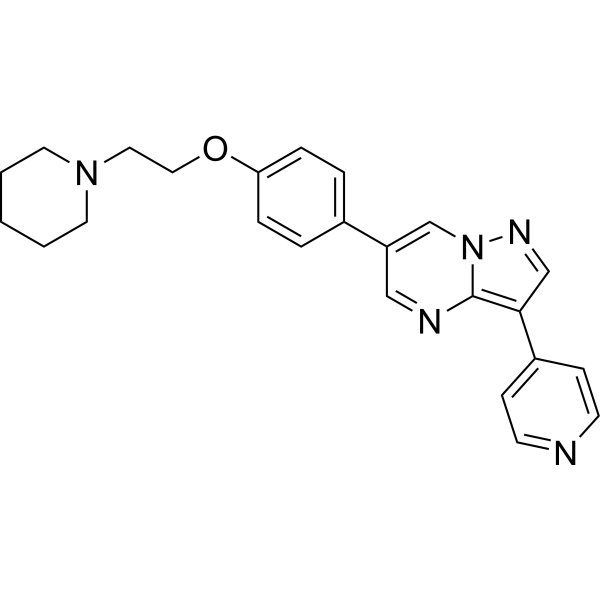
Cat. No.: HY-13418A
CAS No.: 866405-64-3
Purity:  99.10%
Synonyms: BML-275
Research Areas:  

Cancer

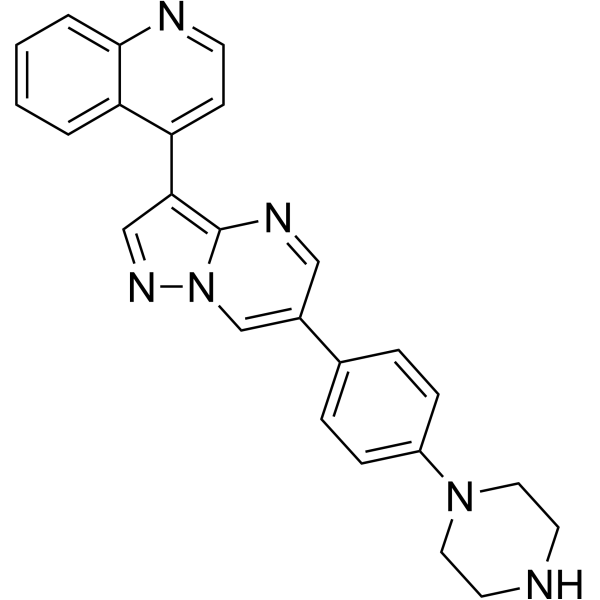
Dorsomorphin (BML-275) is a selective and ATP-competitive AMPK inhibitor (Ki=109 nM in the absence of AMP). Dorsomorphin (BML-275) selectively inhibits BMP type I receptors ALK2, ALK3, and ALK6. Dorsomorphin can reverse autophagy activation and anti-inflammatory effect of Urolithin A (HY-100599) .
loading...
    loading...
806
806 Publications Verification
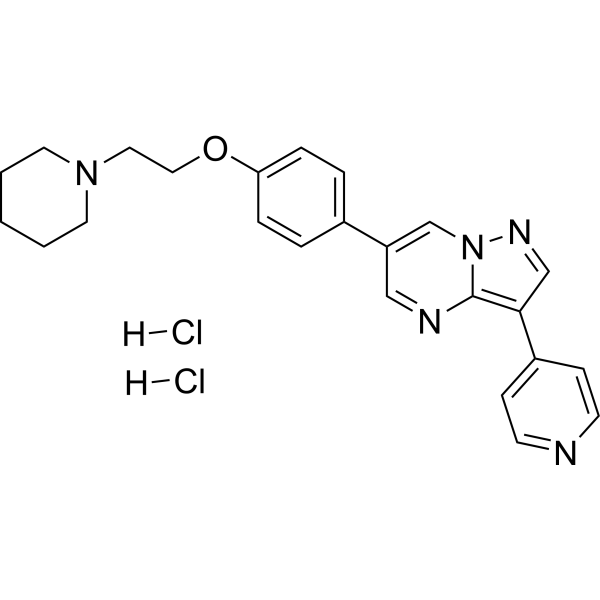
Cat. No.: HY-13418
CAS No.: 1219168-18-9
Purity:  99.7%
Synonyms: Compound C dihydrochloride; BML-275 dihydrochloride
Research Areas:  

Cancer

Dorsomorphin (Compound C) dihydrochloride is a potent, selective and ATP-competitive AMPK inhibitor, with a Ki of 109 nM. Dorsomorphin dihydrochloride inhibits BMP pathway by targeting the type I receptors ALK2, ALK3, and ALK6. Dorsomorphin dihydrochloride can reverse autophagy activation and anti-inflammatory effect of Urolithin A (HY-100599).
loading...
    loading...
93
93 Cited Publications
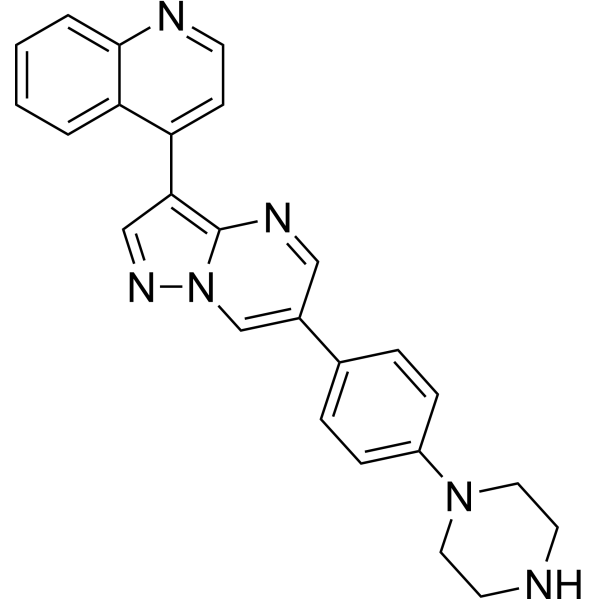
Cat. No.: HY-12071
CAS No.: 1062368-24-4
Purity:  99.41%
Synonyms: DM-3189
Research Areas:  

Cancer

LDN193189 (DM-3189) is a potent selective BMP type I receptor (BMP I) inhibitor. LDN193189 efficiently inhibits transcriptional activity of the BMP type I receptors ALK2 and ALK3 with IC50 values of 5 nM and 30 nM, respectively. LDN193189 can be used for the research of bone morphogenetic protein signalling, such as fibrodysplasia ossificans progressiva .
loading...
    loading...
93
93 Cited Publications
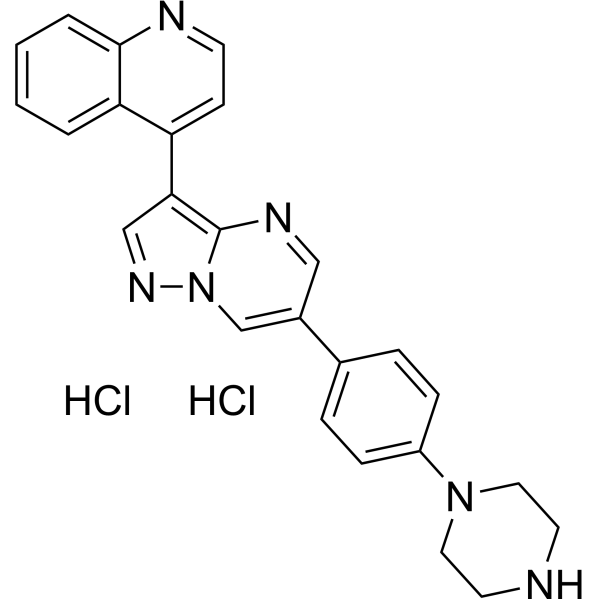
Cat. No.: HY-12071B
CAS No.: 1435934-00-1
Purity:  99.75%
Synonyms: DM-3189 dihydrochloride
Research Areas:  

Cancer

LDN193189 (DM-3189) dihydrochloride is a potent selective BMP type I receptor (BMP I) inhibitor. LDN193189 efficiently inhibits transcriptional activity of the BMP type I receptors ALK2 and ALK3 with IC50 values of 5 nM and 30 nM, respectively. LDN193189 can be used for the research of bone morphogenetic protein signalling, such as fibrodysplasia ossificans progressiva .
loading...
    loading...
93
93 Cited Publications
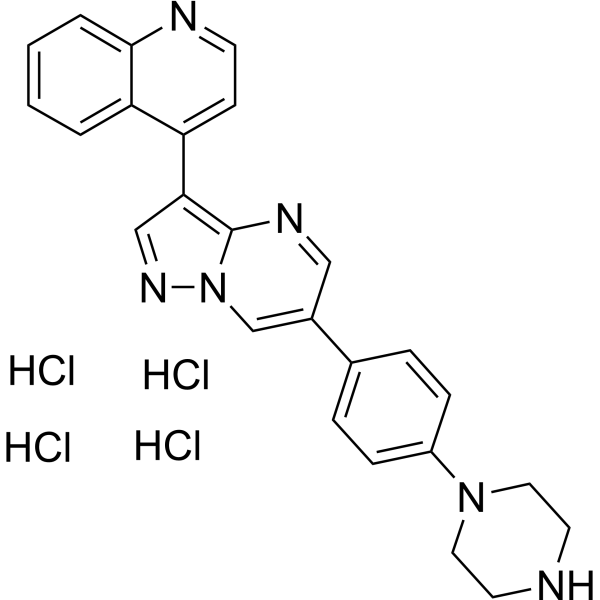
Cat. No.: HY-12071A
CAS No.: 2310134-98-4
Purity:  99.79%
Synonyms: DM-3189 Tetrahydrochloride
Research Areas:  

Cancer

LDN193189 (DM-3189) Tetrahydrochloride is a potent selective BMP type I receptor (BMP I) inhibitor. LDN193189 efficiently inhibits transcriptional activity of the BMP type I receptors ALK2 and ALK3 with IC50 values of 5 nM and 30 nM, respectively. LDN193189 can be used for the research of bone morphogenetic protein signalling, such as fibrodysplasia ossificans progressiva .
loading...
    loading...
81
81 Cited Publications
Cat. No.: HY-12071C
CAS No.: 1062368-62-0
Synonyms: DM-3189 hydrochloride
LDN193189 (DM-3189) hydrochloride is a potent selective BMP type I receptor (BMP I) inhibitor. LDN193189 efficiently inhibits transcriptional activity of the BMP type I receptors ALK2 and ALK3 with IC50 values of 5 nM and 30 nM, respectively. LDN193189 can be used for the research of bone morphogenetic protein signalling, such as fibrodysplasia ossificans progressiva .
loading...
    loading...
6
6 Cited Publications
Cat. No.: HY-126675A
CAS No.: 2241300-51-4
Purity:  99.94%
Research Areas:  

Inflammation/Immunology

AS2863619 is an orally active CDK8/19 inhibitor that also inhibits BMP2, MDA5 and RIG-I receptors. AS2863619 targets Stat5a-CDK8/19 to promote the differentiation of CD4 + T cells into regulatory T cells and induce FOXP3 expression, thereby restoring immune homeostasis and establishing transplant immune tolerance. AS2863619 also enhances the BMP2/SMAD signaling pathway to promote osteogenic differentiation and inhibit adipogenic differentiation. AS2863619 exerts osteoprotective effects by alleviating inflammation-induced impairment of osteogenic function and inducing neutrophil apoptosis (apoptosis). AS2863619 can be applied to research in related fields such as periodontitis-induced bone defects .
loading...
    loading...
6
6 Cited Publications
Cat. No.: HY-126675
CAS No.: 2241300-50-3
Purity:  99.68%
Research Areas:  

Inflammation/Immunology

AS2863619 free base is an orally active CDK8/19 inhibitor that also inhibits BMP2, MDA5 and RIG-I receptors. AS2863619 free base targets Stat5a-CDK8/19 to promote the differentiation of CD4 + T cells into regulatory T cells and induce FOXP3 expression, thereby restoring immune homeostasis and establishing transplant immune tolerance. AS2863619 free base also enhances the BMP2/SMAD signaling pathway to promote osteogenic differentiation and inhibit adipogenic differentiation. AS2863619 free base exerts osteoprotective effects by alleviating inflammation-induced impairment of osteogenic function and inducing neutrophil apoptosis (apoptosis). AS2863619 free base can be applied to research in related fields such as periodontitis-induced bone defects .
loading...
    loading...
4
4 Cited Publications
Cat. No.: HY-12278
CAS No.: 1431985-92-0
Purity:  99.65%
Target:  

TGF-β Receptor

Research Areas:  

Others

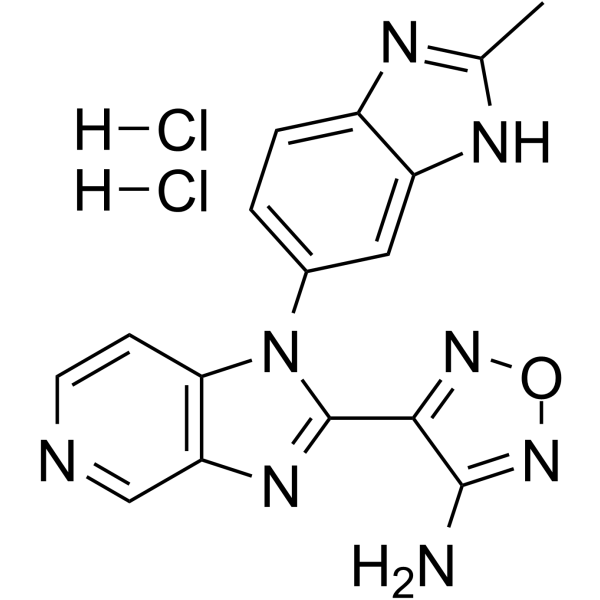
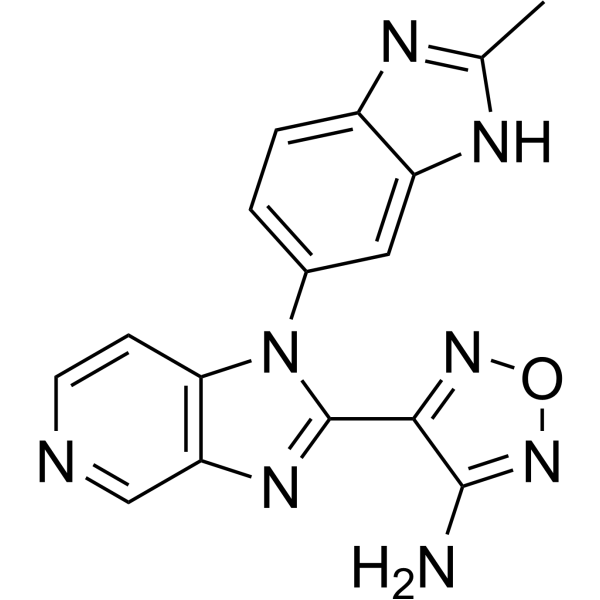
K02288 is a potent bone morphogenetic protein (BMP) type I receptor inhibitor with IC50s of 1.8, 1.1, 6.4 nM for ALK1, ALK2 and ALK6, respectively. K02288 shows slightly weaker inhibition against ALK3 and ALK6 with IC50s of of 5-34 nM.
loading...
    loading...
Cat. No.: HY-12071G
CAS No.: 1062368-24-4
Synonyms: DM-3189 (GMP)
LDN193189 GMP is LDN193189 (HY-12071) produced by using GMP guidelines. GMP small molecules works appropriately as an auxiliary reagent for cell therapy manufacture. LDN193189 (DM-3189) is a potent selective BMP type I receptor (BMP I) inhibitor. LDN193189 efficiently inhibits transcriptional activity of the BMP type I receptors ALK2 and ALK3 with IC50 values of 5 nM and 30 nM, respectively. LDN193189 can be used for the research of bone morphogenetic protein signalling, such as fibrodysplasia ossificans progressiva .
loading...
    loading...
Cat. No.: HY-P5832
CAS No.: 836606-84-9
Target:  

TGF-beta/Smad RUNX

Research Areas:  

Metabolic Disease

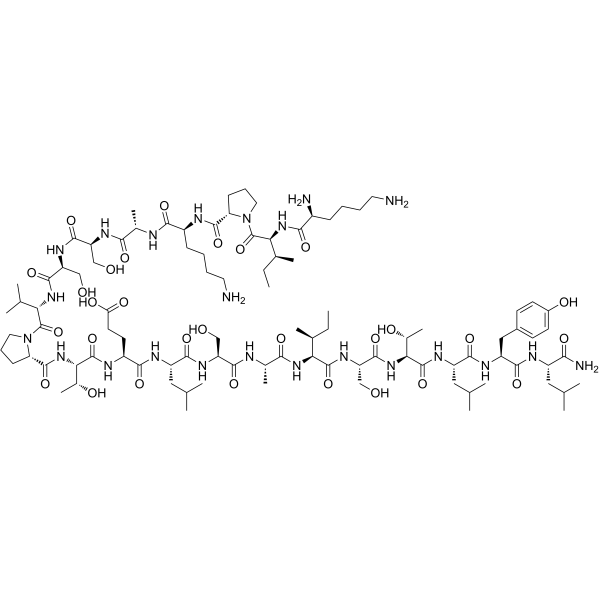
BMP2-derived peptide is an osteogenic inducer and BMP receptor ligand. BMP2-derived peptide binds to BMP receptors on the cell surface to form a complex, activates the downstream Smad signaling pathway, and regulates the expression of osteogenic transcription factors. BMP2-derived peptide effectively promotes the adhesion, proliferation, osteogenic differentiation and mineralization of bone marrow mesenchymal stem cells, significantly up-regulates the mRNA levels of OCN, Runx2 and type I collagen, and increases alkaline phosphatase activity and calcium deposition. BMP2-derived peptide induces osteoblast differentiation and ectopic bone regeneration, and improves cranial bone defect repair. Meanwhile, BMP2-derived peptide enhances the cytocompatibility of mesoporous silica nanoparticles, synergistically increases osteogenic activity with Dexamethasone (HY-14648), serving as an important tool for bone defect repair research .
loading...
    loading...
Cat. No.: HY-12071BR
CAS No.: 1435934-00-1
Synonyms: DM-3189 dihydrochloride (Standard)
Research Areas:  

Cancer

LDN193189 (DM-3189) dihydrochloride (Standard) is the analytical standard of LDN193189 dihydrochloride (HY-12071B). This product is intended for research and analytical applications. LDN193189 (DM-3189) dihydrochloride is a potent selective BMP type I receptor (BMP I) inhibitor. LDN193189 efficiently inhibits transcriptional activity of the BMP type I receptors ALK2 and ALK3 with IC50 values of 5 nM and 30 nM, respectively. LDN193189 can be used for the research of bone morphogenetic protein signalling, such as fibrodysplasia ossificans progressiva .
loading...
    loading...
Cat. No.: HY-13418R
CAS No.: 1219168-18-9
Synonyms: Compound C dihydrochloride (Standard); BML-275 dihydrochloride (Standard)
Dorsomorphin (dihydrochloride) (Standard) is the analytical standard of Dorsomorphin (dihydrochloride). This product is intended for research and analytical applications. Dorsomorphin (Compound C) dihydrochloride is a potent, selective and ATP-competitive AMPK inhibitor, with a Ki of 109 nM. Dorsomorphin dihydrochloride inhibits BMP pathway by targeting the type I receptors ALK2, ALK3, and ALK6. Dorsomorphin dihydrochloride can reverse autophagy activation and anti-inflammatory effect of Urolithin A (HY-100599).
loading...
    loading...
Cat. No.: HY-17661
CAS No.: 1062368-55-1
Synonyms: Depiperazine-LDN-193189
Research Areas:  

Cancer

Depiperazine-DM3189 is a derivative of LDN193189 (HY-12071). LDN193189 is a potent selective BMP type I receptor (BMP I) inhibitor. LDN-193189 efficiently inhibits transcriptional activity of the BMP type I receptors ALK2 and ALK3 with IC50 values of 5 nM and 30 nM, respectively. LDN-193189 can be used for the research of bone morphogenetic protein signalling, such as fibrodysplasia ossificans progressiva .
loading...
    loading...
Cat. No.: HY-174781
Target:  

mRNA

Research Areas:  

Cancer

Human ACVRL1 mRNA encodes the human activin A receptor like type 1 (ACVRL1) protein. ACVRL1 is a type I cell-surface receptor for the TGF-beta superfamily ligands BMP9/GDF2 and BMP10 and important regulator of normal blood vessel development.
loading...
    loading...
Cat. No.: HY-12071AR
CAS No.: 2310134-98-4
Synonyms: DM-3189 Tetrahydrochloride (Standard)
Research Areas:  

Cancer

LDN193189 (DM-3189) Tetrahydrochloride (Standard) is the analytical standard of LDN193189 Tetrahydrochloride (HY-12071A). This product is intended for research and analytical applications. LDN193189 (DM-3189) Tetrahydrochloride is a potent selective BMP type I receptor (BMP I) inhibitor. LDN193189 efficiently inhibits transcriptional activity of the BMP type I receptors ALK2 and ALK3 with IC50 values of 5 nM and 30 nM, respectively. LDN193189 can be used for the research of bone morphogenetic protein signalling, such as fibrodysplasia ossificans progressiva .
loading...
    loading...
Cat. No.: HY-179400
CAS No.: 1062368-51-7
Research Areas:  

Others

LDN-193688 (Compound 26) is a ALK2 inhibitor, with IC₅₀ values of 104, 18, 235, 1530, and 1080 nM against ALK1, ALK2, ALK3, ALK4, and ALK5, respectively. LDN-193688 inhibits bone morphogenetic protein 4 (BMP4)-induced phosphorylation of SMAD1/5/8, with an IC₅₀ of 2.6 μM .
loading...
    loading...
Cat. No.: HY-126675G
CAS No.: 2241300-51-4
AS2863619 GMP is AS2863619 (HY-126675) produced by using GMP guidelines. GMP small molecules works appropriately as an auxiliary reagent for cell therapy manufacture. AS2863619 is an orally active CDK8/19 inhibitor that also inhibits BMP2, MDA5 and RIG-I receptors. AS2863619 targets Stat5a-CDK8/19 to promote the differentiation of CD4 + T cells into regulatory T cells and induce FOXP3 expression, thereby restoring immune homeostasis and establishing transplant immune tolerance. AS2863619 also enhances the BMP2/SMAD signaling pathway to promote osteogenic differentiation and inhibit adipogenic differentiation. AS2863619 exerts osteoprotective effects by alleviating inflammation-induced impairment of osteogenic function and inducing neutrophil apoptosis (apoptosis). AS2863619 can be applied to research in related fields such as periodontitis-induced bone defects .
loading...
    loading...
Cat. No.: HY-12278G
CAS No.: 1431985-92-0
K02288 (GMP) is K02288 (HY-12278) produced by using GMP guidelines. GMP small molecules works appropriately as an auxiliary reagent for cell therapy manufacture. K02288 is a potent bone morphogenetic protein (BMP) type I receptor inhibitor with IC50s of 1.8, 1.1, 6.4 nM for ALK1, ALK2 and ALK6, respectively. K02288 shows slightly weaker inhibition against ALK3 and ALK6 with IC50s of of 5-34 nM.
loading...
    loading...
Cat. No.: HY-L018
449 compounds

The transforming growth factor beta (TGF-β) signaling pathway is involved in many cellular processes in both the adult organism and the developing embryo including cell growth, cell differentiation, apoptosis, cellular homeostasis and other cellular functions. The TGF-β superfamily comprises TGF-βs, bone morphogenetic proteins (BMPs), activins and related proteins. Signaling begins with the binding of a TGF beta superfamily ligand to a TGF beta type II receptor. The type II receptor is a serine/threonine receptor kinase, which catalyzes the phosphorylation of the Type I receptor. The type I receptor then phosphorylates receptor-regulated SMADs (R-SMADs) which can now bind the coSMAD (e.g. SMAD4). R-SMAD/coSMAD complexes accumulate in the nucleus where they act as transcription factors and participate in the regulation of target gene expression. Deregulation of TGF-β signaling contributes to developmental defects and human diseases, including cancers, some bone diseases, chronic kidney disease, etc.

MCE designs a unique collection of 449 TGF-beta/Smad signaling pathway compounds. TGF-beta/Smad Compound Library acts as a useful tool for TGF-beta/Smad-related drug screening and disease research.

  • 1

