21 Results for "

Candida glabrata

" in MedChemExpress (MCE) Product Catalog:
Products (21)

21 Results for "Candida glabrata" in MCE Product Catalog:

Cat. No.: HY-126396
CAS No.: 463356-00-5
Purity:  ≥99.0%
Target:  

Antibiotic CaMK Fungal

Research Areas:  

Infection

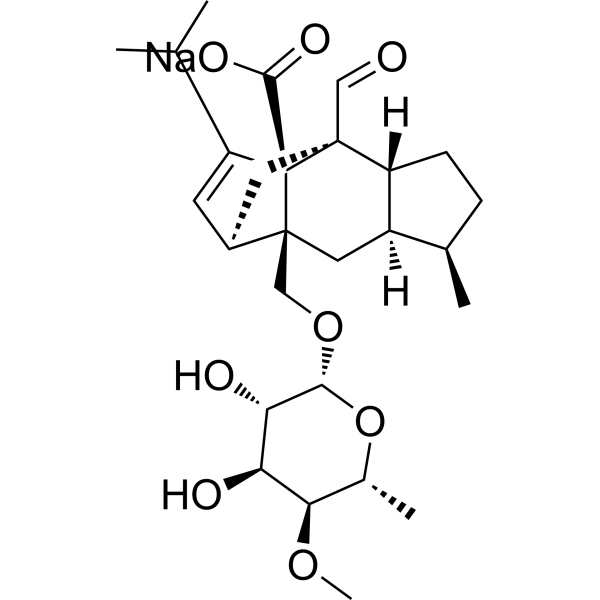
Sordarin sodium is an eEF2 inhibitor and antibiotic. Sordarin sodium's function is dependent on the diphthamide modification on eEF2. Sordarin sodium inhibits protein synthesis by preventing the binding of eEF2 to the ribosome complex. Sordarin sodium has antifungal activity .
loading...
    loading...
Cat. No.: HY-B1316
CAS No.: 635-41-6
Target:  

Fungal

Research Areas:  

Infection Neurological Disease

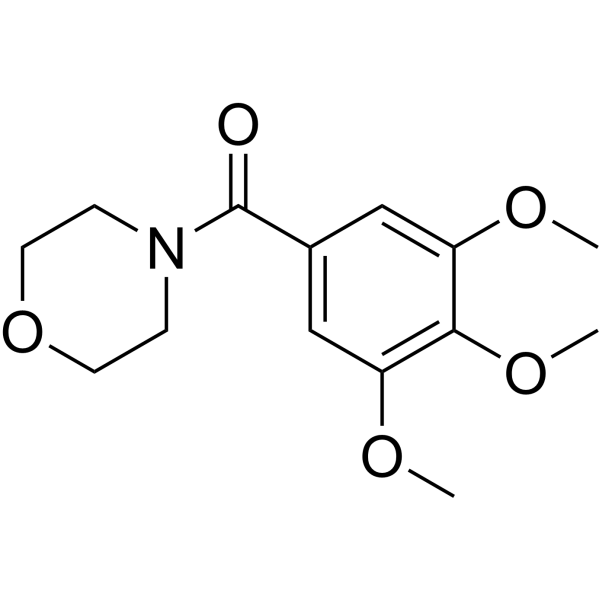
Trimetozine is an Antifungal agent and sedative. Trimetozine exhibits antibacterial activity against Candida albicans, Candida glabrata, and Miconazole (HY-B0454)-resistant Candida glabrata cultures. Trimetozine exerts a sedative effect. Trimetozine can be used in research related to candidiasis and anxiety disorders .
loading...
    loading...
Cat. No.: HY-141632
CAS No.: 32164-02-6
Synonyms: Heptadecasphinganine
Target:  

Bacterial

Research Areas:  

Infection Neurological Disease

Sphinganine-C17 (Heptadecasphinganine) is a synthetic bioactive sphingolipid and an isomer of sphinganine. Sphinganine-C17 inhibits the growth of Candida glabrata and Candida albicans with a minimum bactericidal concentration (MBC) of 0.5 μg/mL for both. Sphinganine-C17 can be used as an internal standard for the chromatographic analysis of sphingosine compounds .
loading...
    loading...
Cat. No.: HY-146067
CAS No.: 52436-88-1
Research Areas:  

Infection

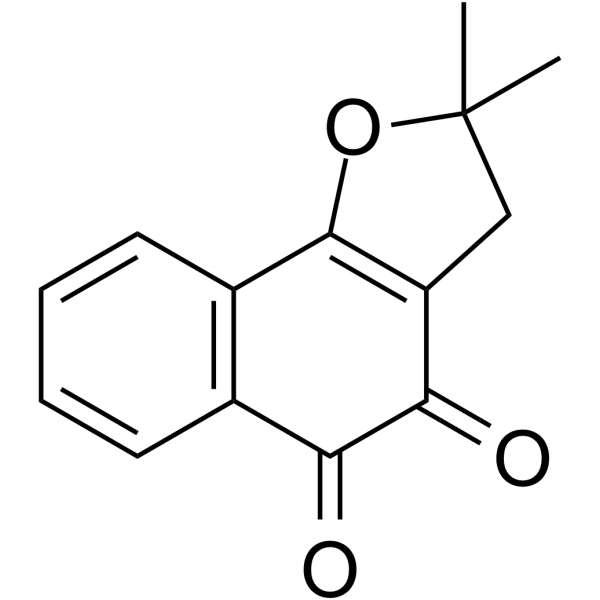
β-Nor-lapachone is a Candida glabrata antibiofilm agent. β-Nor-lapachone can stimulate ROS production, inhibits efflux activity, adhesion, biofilm formation and the metabolism of mature biofilms of Candida glabrata. β-Nor-lapachone has antifungal activity .
loading...
    loading...
Cat. No.: HY-177849
Synonyms: Amphotericin B liposome
Research Areas:  

Infection

Liposomal Amphotericin B (Amphotericin B liposome) is a liposomal formulation of Amphotericin B (HY-B0221) that can cross the blood-brain barrier. Liposomal Amphotericin B binds to fungal cell walls and releases Amphotericin B to bind Ergosterol (HY-N0181), inducing pore formation, ion leakage, and fungal cell death. Liposomal Amphotericin B exhibits fungicidal activity against a broad spectrum of fungal pathogens, also shows activity against Leishmania, and the liposomal formulation has lower acute and chronic toxicity as well as a lower risk of fungal resistance .
loading...
    loading...
Cat. No.: HY-117092
CAS No.: 158054-02-5
Target:  

Antibiotic Fungal

Research Areas:  

Infection

BE-31405 is an antifungal antibiotic. BE-31405 can be isolated from the culture broth of the fungal strains such as Penicillium minioluteum F31405, Talaromyces siamensis FKA-61, and Phomopsis sp. FKA-62. BE-31405 exhibits potent growth inhibitory activity against pathogenic fungal strains including Candida albicans, Candida glabrata, and Cryptococcus neoformans. BE-31405 shows no cytotoxicity against mammalian cells .
loading...
    loading...
Cat. No.: HY-19377
CAS No.: 229153-17-7
Target:  

Fungal Cytochrome P450

Research Areas:  

Infection

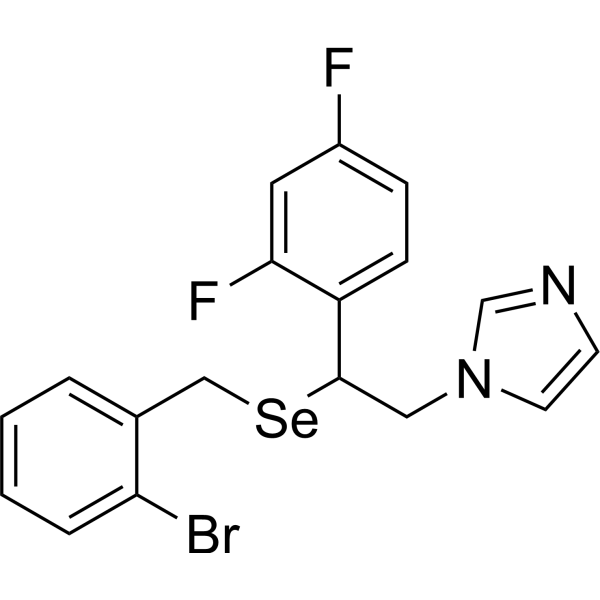
SS-750 is an orally active Triazole derivative and antifungal agent. SS-750 binds to fungal cytochrome P450. SS-750 shows antifungal activities against Candida species and C. neoformans strains tested. SS750 shows MIC90 values of 0.25, 1, and 2 μg/mL against Candida parapsilosis, C. krusei, and C. glabrata, respectively. SS-750 improves systemic and pulmonary candidiasis caused by C. albicans .
loading...
    loading...
Cat. No.: HY-138074
CAS No.: 93074-04-5
Synonyms: 5-Ketomilbemycin A4 oxime; 5-Oxomilbemycin A4 5-oxime
Target:  

Parasite

Research Areas:  

Infection

Milbemycin A4 oxime (5-Ketomilbemycin A4 oxime; 5-Oxomilbemycin A4 5-oxime) is a derivative of Milbemycin A4 (HY-126906) and a component of Milbemycin oxime (HY-B0778), both of which have insecticidal and nematicidal activities. Milbemycin A4 oxime (0.05 mg/kg) reduces the number of microfilariae in naturally infected dogs with D. immitis and inhibits the growth of clinical isolates of Candida glabrata (MIC80=16-32 μg/mL). Milbemycin A4 oxime (2.5 μg/mL) blocks the efflux of Fluconazole (HY-B0101) from clinical isolates of Candida glabrata. Milbemycin A4 oxime enhances doxorubicin-induced cell growth inhibition and increases the intracellular accumulation of doxorubicin and P-glycoprotein substrate Rhodamine 123 (HY-D0816) in doxorubicin-resistant but not sensitive MCF-7 breast cancer cells in a concentration-dependent manner.
loading...
    loading...
Cat. No.: HY-173428
Target:  

Fungal

Research Areas:  

Infection

Antifungal agent 130 (Compound A7) is an orally active antifungal agent. Antifungal agent 130 has good antifungal activity against Candida albicans (MIC = 0.12 ng/mL) and Cryptococcus neoformans (MIC = 0.12 ng/mL) and has excellent antivirulence effect. Antifungal agent 130 exerts its antifungal effect by disrupting the iron homeostasis of fungal cells and inducing oxidative stress damage. Antifungal agent 130 can inhibit the formation of fungal virulence factors (such as biofilm, capsule, urease and melanin). Antifungal agent 130 has good antifungal effect and can be used in the study of drug-resistant fungal infections .
loading...
    loading...
Cat. No.: HY-153624
CAS No.: 2422019-96-1
Target:  

Fungal

Research Areas:  

Infection

Antifungal agent 59 is an antifungal agent, with MIC values of 0.01-1 μg/mL. Antifungal agent 59 prevents the formation of fungi biofilms, but also has safety .
loading...
    loading...
Cat. No.: HY-183308
Target:  

Fungal

Research Areas:  

Infection

Antifungal agent-161 (Compound 7) is an Antifungal agent. Antifungal agent-161 potently inhibits Candida albicans ATCC 36082 (with a MIC of 1.32 μM) and Candida glabrata ATCC 2001 (with a MIC of 1.66 μM). Antifungal agent-161 reduces fungal loads in infected mice and eliminates Candida albicans and Candida glabrata infections. Antifungal agent-161 can be used for the research of candidiasis .
loading...
    loading...
Cat. No.: HY-184735
CAS No.: 2924270-62-0
Target:  

Fungal Cytochrome P450

Research Areas:  

Infection

Antifungal agent-170 is an Antifungal agent. Antifungal agent-170 potently inhibits the growth of recombinant Saccharomyces cerevisiae strains expressing wild-type and mutant fungal CYP51 enzymes. Antifungal agent-170 potently inhibits the growth of Candida albicans, Candida glabrata, Candida krusei, Cryptococcus neoformans and Cryptococcus gattii. Antifungal agent-170 provides survival benefits in the Galleria mellonella (greater wax moth) infection model. Antifungal agent-170 can be used for the research of invasive fungal infections .
loading...
    loading...
Cat. No.: HY-187518
CAS No.: 3134912-65-2
Research Areas:  

Infection

NMT-IN-9 is an arylpyrrolidone-based NMT inhibitor with an IC50 of 93.20 nM and a KD of 5.57 × 10 -9 M against NMT. NMT-IN-9 exhibits broad-spectrum antifungal activity against Candida albicans, Candida glabrata, Candida tropicalis, Cryptococcus neoformans and Aspergillus fumigatus, with an MIC of 2-16 μg/mL, and retains activity against fluconazole-resistant Candida isolates, with an MIC of 8-16 μg/mL. NMT-IN-9 induces intracellular ROS accumulation, mitochondrial membrane depolarization, DNA damage, apoptosis and necrotic cell death in fungal cells, and disrupts fungal cell integrity. NMT-IN-9 can be used for studies on NMT-targeted antifungal mechanisms and fluconazole-resistant Candida infections .
loading...
    loading...
Cat. No.: HY-184314
CAS No.: 3122934-62-4
Target:  

Fungal

Research Areas:  

Infection

Antifungal agent-166 is an antifungal agent. The combination of Antifungal agent-166 and Fluconazole exerts synergistic bacteriostatic effects against fluconazole-resistant Candida albicans. Antifungal agent-166 exhibits bacteriostatic activity against both Candida glabrata and Cryptococcus neoformans. Antifungal agent-166 reverses the fluconazole resistance of strains by downregulating ergosterol synthesis-related genes, drug resistance-related genes and virulence-related genes. Antifungal agent-166 can enhance the efficacy of Fluconazole in Galleria mellonella and mouse candidiasis models, reduce fungal load and improve survival rate. Antifungal agent-166 can be used in the research of fungal infections .
loading...
    loading...
Cat. No.: HY-125459
CAS No.: 150220-81-8
Target:  

Fungal

Research Areas:  

Infection

L-705589 is a semi-synthetic penicillin-type antifungal agent. L-705589 exerts its antifungal effect by inhibiting the 1,3-β-D-glucan synthase in the fungal cell wall. L-705589 exhibits potent bactericidal activity against various Candida species (such as Candida albicans, Candida glabrata, Candida krusei, etc.) (MFC: 0.06 - 8 μg/mL), but has relatively weak activity against Cryptococcus neoformans (MFC: 32 - 64 μg/mL). L-705589 remains active against drug-resistant Candida strains and is not prone to inducing drug resistance. L-705589 significantly improves survival rates in the model of minor invasive aspergillosis .
loading...
    loading...
Cat. No.: HY-187376
Target:  

Fungal Cytochrome P450

Research Areas:  

Infection

CZx-243 is an orally active broad-spectrum antifungal agent. CZx-243 binds to the active site of fungal CYP51 and interferes with ergosterol biosynthesis by depleting ergosterol and causing the accumulation of upstream sterol intermediates. CZx-243 blocks yeast-to-hypha transition; it inhibits the membrane integrity of fungi such as Candida glabrata and Cryptococcus neoformans. CZx-243 significantly reduces renal fungal burden in a systemic mouse model of invasive fungal infection resistant to Fluconazole (HY-B0101). CZx-243 can be used in the research of fungal infections .
loading...
    loading...
Cat. No.: HY-N19506
CAS No.: 38199-35-8
Vincadifformine N (4)-oxide is a monoterpenoid indole alkaloid. Vincadifformine N (4)-oxide can be isolated from Rhazya stricta. Vincadifformine N (4)-oxide shows a MIC > 50 μg/mL against tested Candida strains and exhibits no antifungal activity .
loading...
    loading...
Cat. No.: HY-N18269
CAS No.: 639515-41-6
3-O-α-L-Arabinopyranosyl hederagenin 28-O-α-L-rhamnopyranosyl ester is an anti-fungal triterpene saponin. 3-O-α-L-Arabinopyranosyl hederagenin 28-O-α-L-rhamnopyranosyl ester can be isolated from the aerial parts of Clematis tangutica. 3-O-α-L-Arabinopyranosyl hederagenin 28-O-α-L-rhamnopyranosyl ester exhibits antifungal activity against fungal strains (P. avellaneum, C. glabrata, S. cerevisiae, T. beigelii), with the strongest activity against S. cerevisiae .
loading...
    loading...
Cat. No.: HY-W747508
CAS No.: 58814-86-1
Target:  

Fungal Antibiotic

Research Areas:  

Infection

Aculeacin A is a β-1,3-glucan synthase inhibitor. Aculeacin A is an antifungal antibiotic. Aculeacin A inhibits cell wall glucan synthesis in growing yeast cells, induces cell lysis, osmotic fragility, cell aggregation and abnormal cell morphology, without affecting the synthesis of proteins, nucleic acids or mannan. Aculeacin A acts only on growing yeast cells and has a narrow antifungal spectrum, mainly targeting Candida and Torulopsis species. Aculeacin A shows reduced activity in human serum and exhibits a paradoxical dose-response pattern. Aculeacin A has an inoculum effect against some Candida albicans strains, and its activity is pH-stable. Aculeacin A can be used in studies of fungal infections, such as those caused by Candida, Torulopsis and other species .
loading...
    loading...
Cat. No.: HY-W102893
CAS No.: 99910-50-6
4,6-Dibromo indole is a natural product found in the adipose tissue of bottlenose dolphins, algae, and invertebrates including species of the genus Tubastrea, with multiple activities such as nematicidal and antifungal properties. 4,6-Dibromo indole inhibits the motility of Caenorhabditis elegans and induces a multi-stage nematicidal effect. 4,6-Dibromo indole inhibits the growth, biofilm formation, and yeast-hypha transition of Candida, induces ROS accumulation, disrupts hyphal networks, and reduces biofilm biomass. 4,6-Dibromo indole can be used in studies on crop damage related to nematode infestation and Candida infection .
loading...
    loading...

