15 Results for "

Formyl peptide receptor 1

" in MedChemExpress (MCE) Product Catalog:
Products (15)

15 Results for "Formyl peptide receptor 1" in MCE Product Catalog:

6
6 Publications Verification
Cat. No.: HY-101283
CAS No.: 1435265-06-7
Purity:  99.16%
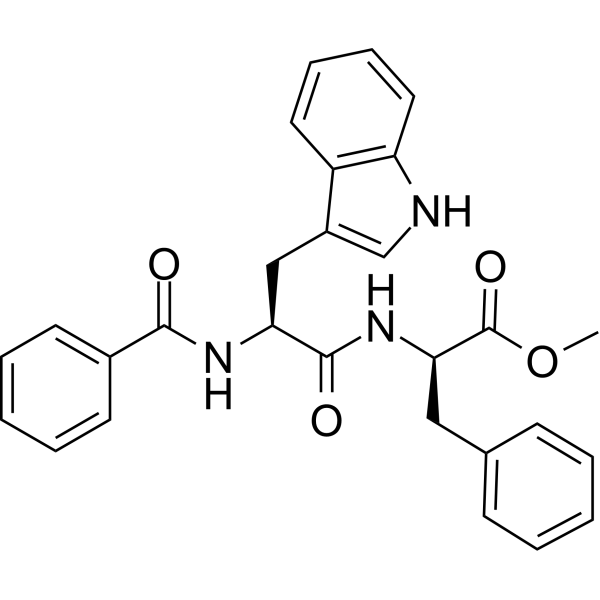
HCH6-1 is a potent and competitive dipeptide antagonist of Formyl peptide receptor 1 (FPR1). HCH6-1 inhibits chemotaxis, superoxide anion generation, and elastase release in human neutrophils specifically activated by fMLF (an FPR1 agonist). HCH6-1 has protective effects against acute lung injury (ALI) in vivo and can be used for the research of FPR1-involved inflammatory lung diseases .
loading...
    loading...
5
5 Cited Publications
Cat. No.: HY-P1122
CAS No.: 83602-39-5
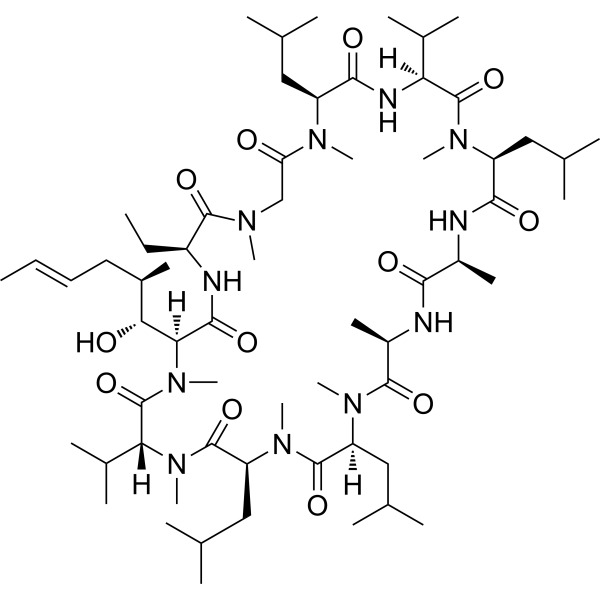
Cyclosporin H is a selective and potent inhibitor of FPR-1 (formyl peptide receptor 1). Cyclosporin H, a viral transduction enhancer, increases lentiviral transduction up to 10-fold in human cord blood-derived hematopoietic stem and progenitor cells (HSPCs). Cyclosporin H displays an additive effect when combined with Rapamycin (HY-10219) or Prostaglandin E2 (HY-101952). Cyclosporin H lacks immunosuppressant activity of Cyclosporin A.
loading...
    loading...
2
2 Cited Publications
Cat. No.: HY-103286
CAS No.: 204067-01-6
Purity:  99.38%
Target:  

Bombesin Receptor

Research Areas:  

Cancer

PD176252 is a potent antagonist of neuromedin-B preferring (BB1) and gastrin-releasing peptide-preferring (BB2) receptor with Kis of 0.17 nM and 1 nM for human BB1 and BB2 receptors, and 0.66 nM, 16 nM for Rat BB1 and BB2 receptors, respectively; PD176252 is also an agonist of N-Formyl peptide receptor1/2 (FPR1/FPR2), with EC50s of 0.31 and 0.66 μM in HL-60 cells.
loading...
    loading...
2
2 Cited Publications
Cat. No.: HY-19574
CAS No.: 903895-98-7
Research Areas:  

Inflammation/Immunology

FPR Agonist 43 (compound 43) is a dual formyl peptide receptor 1 (FPR1) and formyl peptide receptor 2 (FPR2)/ALX agonist .
loading...
    loading...
2
2 Cited Publications
Cat. No.: HY-P1795
CAS No.: 148182-34-7
Research Areas:  

Inflammation/Immunology

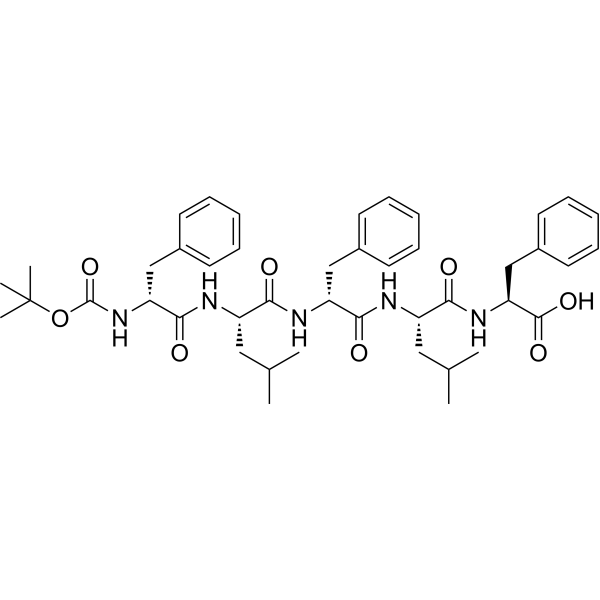
Boc-dPhe-Leu-dPhe-Leu-Phe (Boc-fLfLF) is a selective N-formyl peptide receptor1 (FPR1) antagonist. Boc-dPhe-Leu-dPhe-Leu-Phe inhibits fMIFL(HY-P0224)-induced NADPH oxidase activity. Boc-dPhe-Leu-dPhe-Leu-Phe can be used for the study of inflammation .
loading...
    loading...
Cat. No.: HY-P10724
CAS No.: 112275-26-0
Research Areas:  

Infection

fMIFL is a formyl tetrapeptide derived from Staphylococcus aureus, and also an agonist of mouse formyl peptide receptor 1 (mFPR1). It exhibits nanomolar activity against mFPR1 and micromolar activity against mFPR2. fMIFL is applicable to studies related to bacterial infections .
loading...
    loading...
Cat. No.: HY-128113
CAS No.: 356776-32-4
Purity:  99.48%
Research Areas:  

Inflammation/Immunology

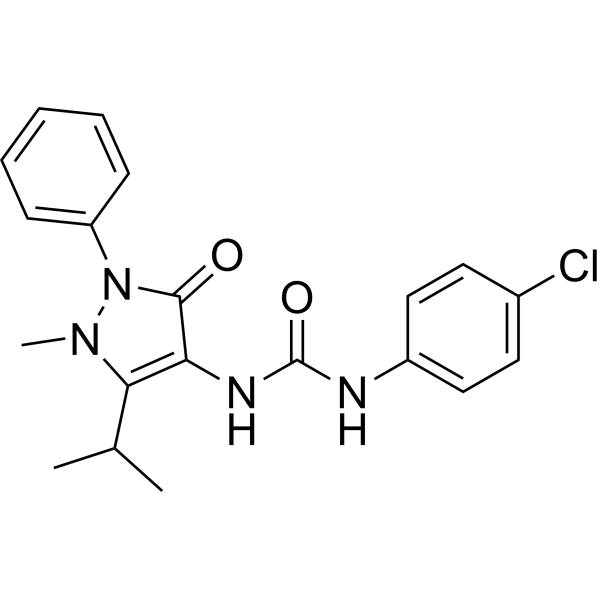
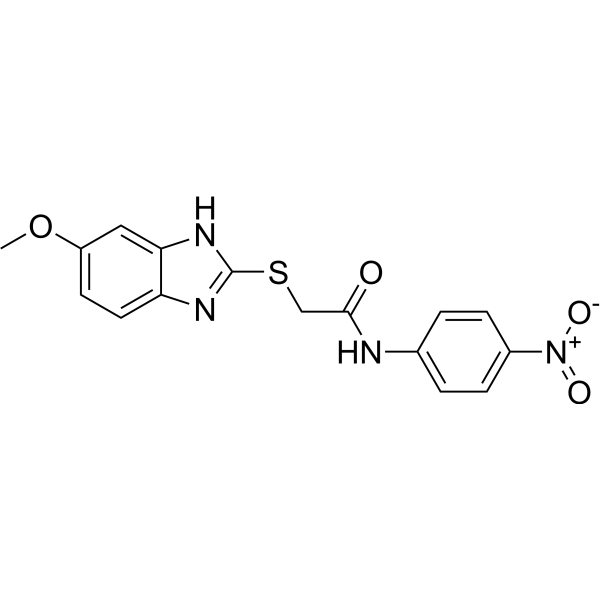
AG-09/1 is a specific formyl peptide receptor 1 (FPR1) agonist. N-formyl peptide receptors (FPR) are important in host defense .
loading...
    loading...
Cat. No.: HY-156293
CAS No.: 3053980-28-9
Purity:  ≥95.0%
Research Areas:  

Cancer

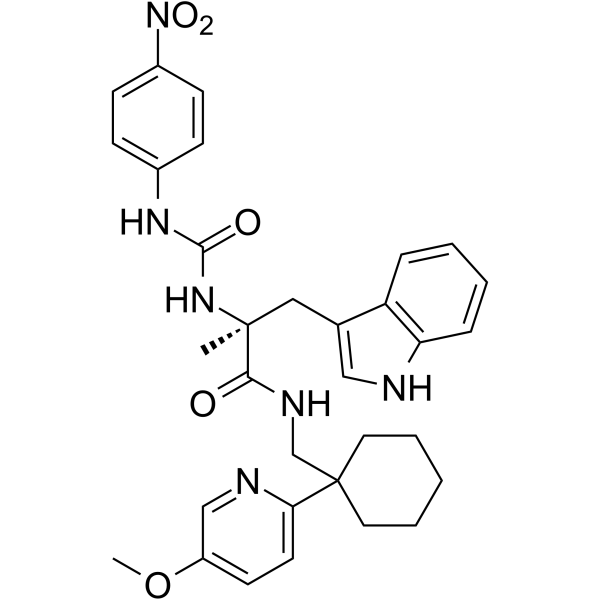
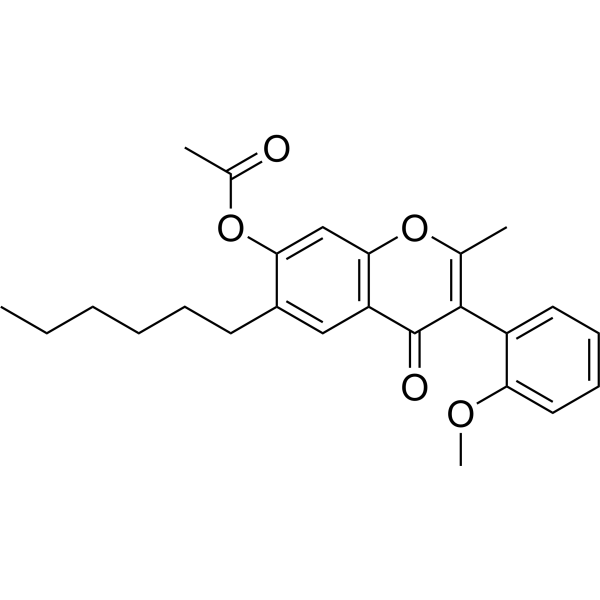
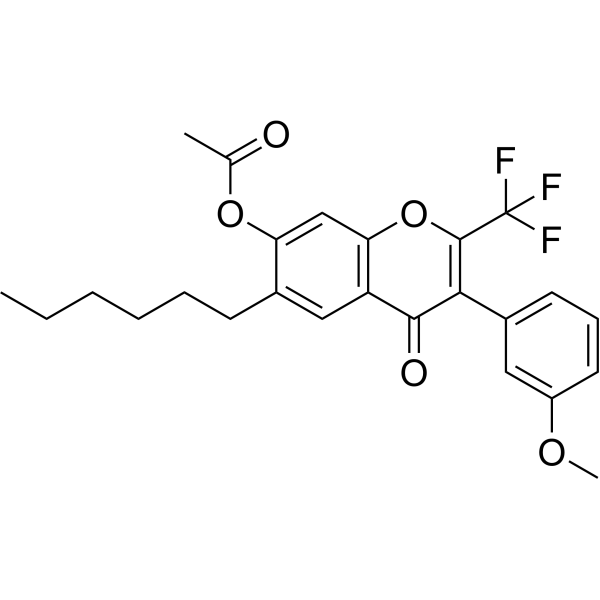
FPR1 antagonist 1 (compound 24a) is a formyl peptide receptor 1 (FPR1) antagonist with an IC50 of 25 nM. FPR1 antagonist 1 inhibits cell growth through a combined effect on cell proliferation and apoptosis and reduces cell migration, while inducing an increase in angiogenesis .
loading...
    loading...
Cat. No.: HY-N8152
CAS No.: 14021-14-8
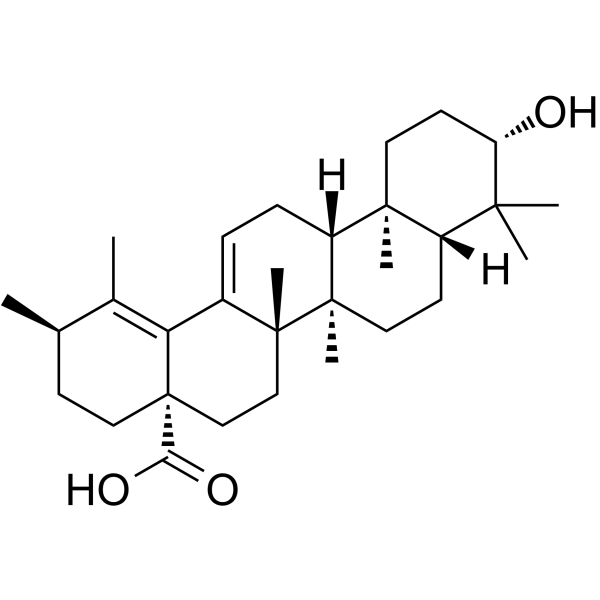
Randialic acid B, a triterpenoid compound, is a formyl peptide receptor 1 (FPR1) antagonist. Randialic acid B blocks FPR1 in human neutrophils and attenuates psoriasis-like inflammation in vivo .
loading...
    loading...
Cat. No.: HY-156294
Research Areas:  

Cancer

FPR1 antagonist 2 (compound 25b) is a formyl peptide receptor 1 (FPR1) antagonist with an IC50 of 70 nM. FPR1 antagonist 2 inhibits cell growth through a combined effect on cell proliferation and apoptosis and reduces cell migration, while inducing an increase in angiogenesis .
loading...
    loading...
Cat. No.: HY-P810875
Synonyms: N-Formyl peptide receptor 1, N-Formylpeptide chemoattractant receptor, fMet-Leu-Phe receptor, fMLP receptor, FPR1

Host:  

Rabbit

Application:  

WB, IHC-P, ICC/IF

Reactivity:  

Human, Mouse, Rat

loading...
    loading...
Cat. No.: HY-103286R
CAS No.: 204067-01-6
Research Areas:  

Cancer

PD176252 (Standard) is the analytical standard of PD176252 (HY-103286). This product is intended for research and analytical applications. PD176252 is a potent antagonist of neuromedin-B preferring (BB1) and gastrin-releasing peptide-preferring (BB2) receptor with Kis of 0.17 nM and 1 nM for human BB1 and BB2 receptors, and 0.66 nM, 16 nM for Rat BB1 and BB2 receptors, respectively; PD176252 is also an agonist of N-Formyl peptide receptor1/2 (FPR1/FPR2), with EC50s of 0.31 and 0.66 μM in HL-60 cells.
loading...
    loading...
Cat. No.: HY-P810874
Synonyms: N-Formyl peptide receptor 1, N-Formylpeptide chemoattractant receptor, fMet-Leu-Phe receptor, fMLP receptor, FPR1

Host:  

Rabbit

Application:  

WB, IHC-P, ICC/IF

Reactivity:  

Human, Mouse, Rat

loading...
    loading...
Cat. No.: HY-P991864
Synonyms: MDX-124
Research Areas:  

Cancer

Annexuzlimab is a humanised IgG1 monoclonal antibody which specifically binds to ANXA1 disrupting its interaction with formyl peptide receptors 1 and 2 (FPR1/2). Annexuzlimab arrests cell cycle progression with cancer cells accumulating in the G1 phase. Annexuzlimab targets secreted ANXA1, preventing FPR1/2 activation and reducing cancer progression. Annexuzlimab can be used for the research of triple negative breast cancer, pancreatic cancer and osteosarcoma .
loading...
    loading...
Cat. No.: HY-101283R
CAS No.: 1435265-06-7
HCH6-1 (Standard) is the analytical standard of HCH6-1 (HY-101283). This product is intended for research and analytical applications. HCH6-1 is a potent and competitive dipeptide antagonist of Formyl peptide receptor 1 (FPR1). HCH6-1 inhibits chemotaxis, superoxide anion generation, and elastase release in human neutrophils specifically activated by fMLF (an FPR1 agonist). HCH6-1 has protective effects against acute lung injury (ALI) in vivo and can be used for the research of FPR1-involved inflammatory lung diseases .
loading...
    loading...
  • 1

