



HCH6-1
Based on 6 publication(s) in Google Scholar
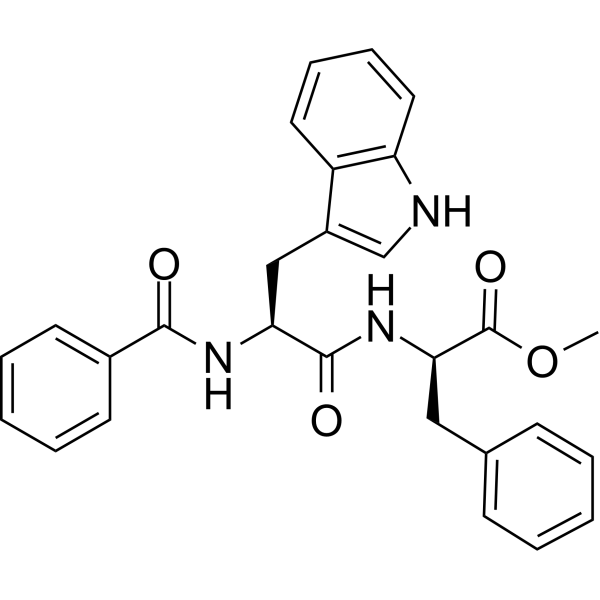
HCH6-1 is a potent and competitive dipeptide antagonist of Formyl peptide receptor 1 (FPR1). HCH6-1 inhibits chemotaxis, superoxide anion generation, and elastase release in human neutrophils specifically activated by fMLF (an FPR1 agonist). HCH6-1 has protective effects against acute lung injury (ALI) in vivo and can be used for the research of FPR1-involved inflammatory lung diseases.
Nos produits utilisent uniquement pour la recherche. Nous ne vendons pas aux patients.
- Pureté : 99.16%
- CAS No.: 1435265-06-7
- Formule: C28H27N3O4
- Masse moléculaire:469.53
-
Stockage:Powder -20°C, 3 years , 4°C, 2 years ; In solvent -80°C, 2 years , -20°C, 1 year

To place orders, for customer services and technical support, please contact: MedChemExpress USA
Tel: 609-228-6898 E-mail: [email protected] [email protected]


-
 Activité biologique
-
Chemical Information
-
Solvant et solubilité
- Protocole
- Pureté et documentation
- Références
-
 Help & FAQs


-
HY-P1119
WRW4FPRL1 Antagonist -
HY-P1122
Cyclosporin HFPR-1 Inhibitor -
HY-P2355
BOC-FlFlFFPR Antagonist -
HY-P0224
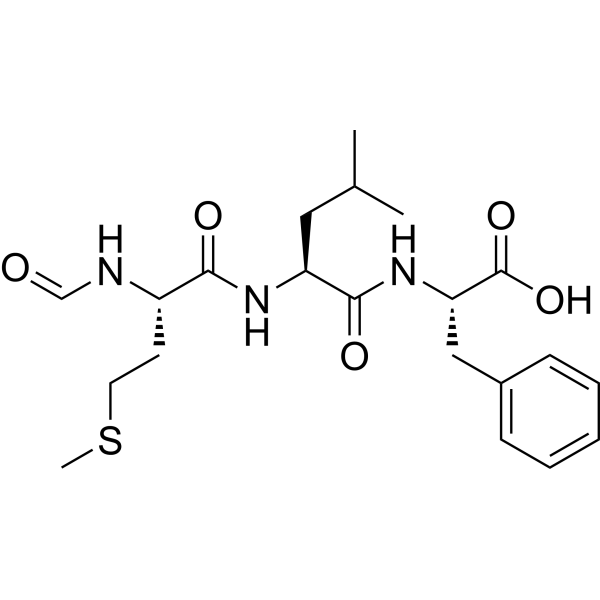
N-Formyl-Met-Leu-PheTNF Receptor Inhibitor -
HY-P1795
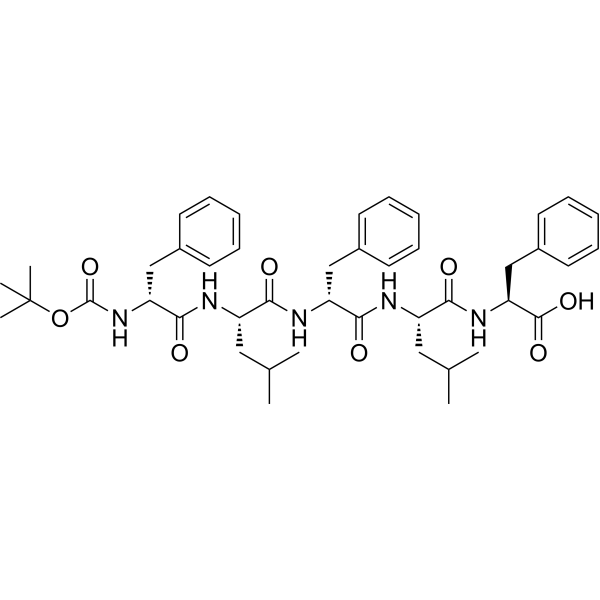
Boc-dPhe-Leu-dPhe-Leu-PheFPR1 Antagonist -
HY-P1121A
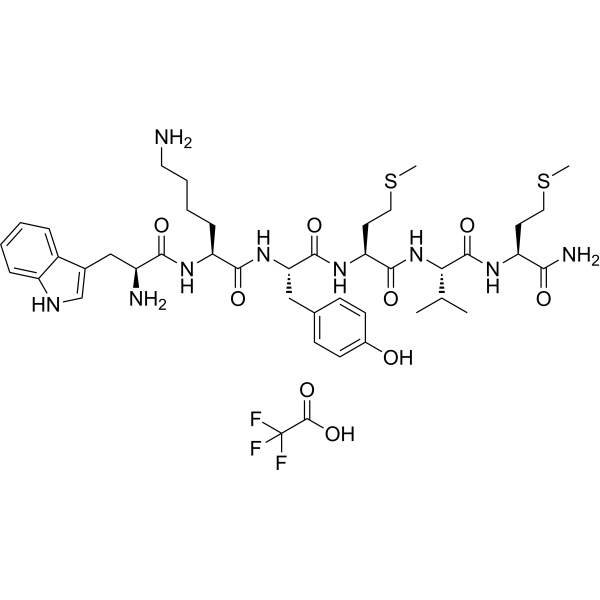
WKYMVM-NH2 TFAFPR Agonist -
HY-18739
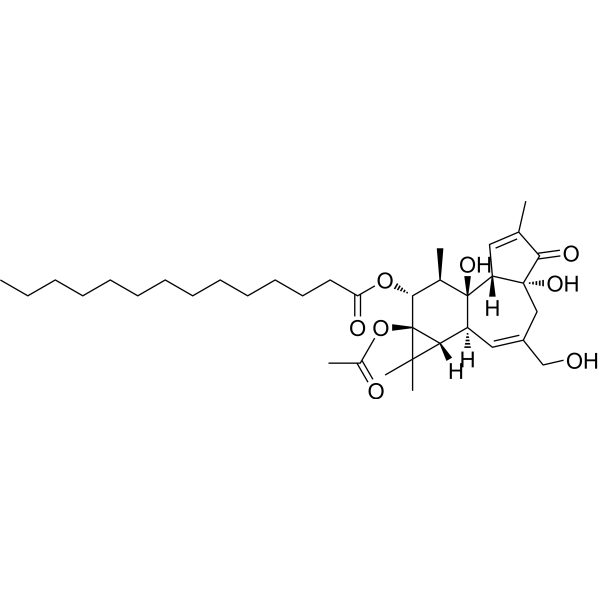
Phorbol 12-myristate 13-acetatePKC Activator -
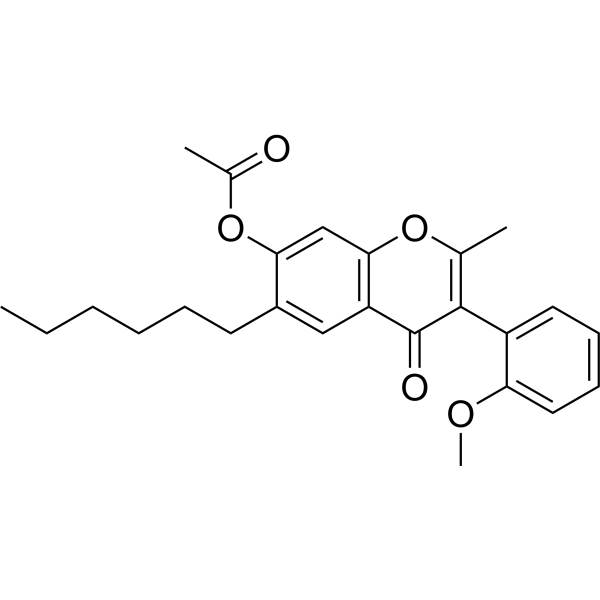
HY-156293
FPR1 antagonist 1FPR1 Antagonist -
HY-K0010
Protease Inhibitor Cocktail (EDTA-Free, 100× in DMSO) -
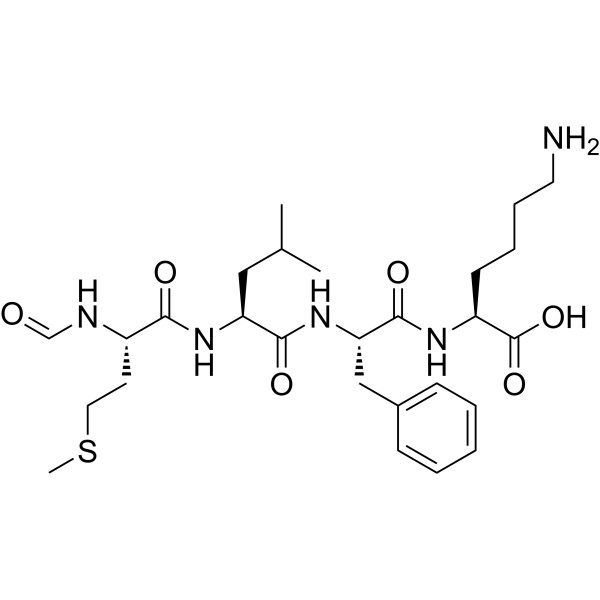
HY-P1744
N-Formyl-Met-Leu-Phe-LysFPR1 Agonist -
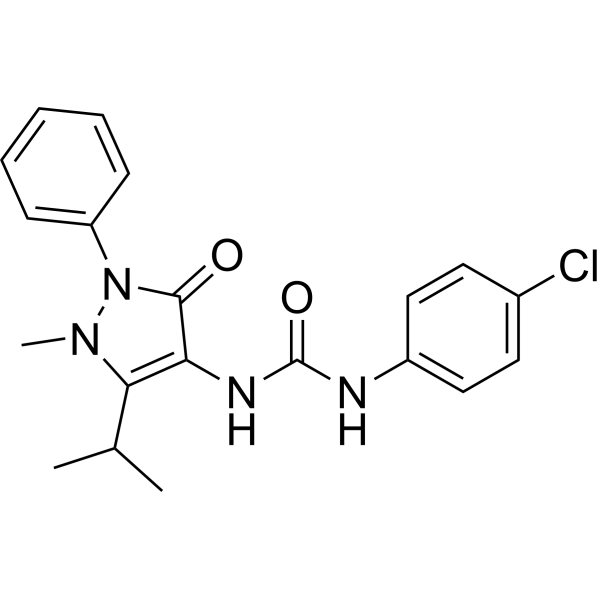
HY-19574
FPR Agonist 43FPR1/2 Agonist -
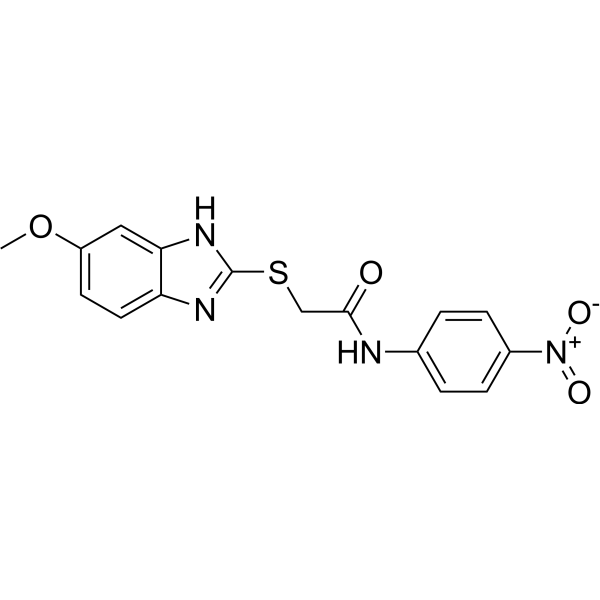
HY-128113
AG-09/1FPR1 Agonist
Publications Citing Use of MedChemExpress (MCE) HCH6-1
More- Cell Res. 2023 Aug;33(8):585-603. [Abstract]
- Cancer Res. 2022 Aug 16;82(16):2887-2903. [Abstract]
- J Control Release. 2026 Jul 18:397:115192.
- Br J Dermatol. 2024 Mar 15;190(4):536-548. [Abstract]
- Biochem Pharmacol. 2025 Oct 23:117451. [Abstract]
- Int Immunopharmacol. 2025 Sep 26:166:115602. [Abstract]


Activité biologique
Description
IC50 & Target
IC50: Formyl peptide receptor 1 (FPR1)[1]
Cellular Effect
|
Cell Line

|
Type | Value | Description | References |
|---|---|---|---|---|
| Neutrophil | IC50 |
0.48 μM
Compound: (2R,2'S)-6
|
Inhibition of fMLF-induced migration of human neutrophil preincubated for 30 mins followed by fMLF stimulation and measured after 60 mins by luminescence based assay
Inhibition of fMLF-induced migration of human neutrophil preincubated for 30 mins followed by fMLF stimulation and measured after 60 mins by luminescence based assay
|
[PMID: 32206242] |
In Vitro
In a cell-impermeable cytochrome c reduction assay, HCH6-1 significantly inhibits superoxide anion generation in fMLF (FPR1 agonist)-activated neutrophils with an IC50 of 0.32 μM. HCH6-1 has fewer inhibitory effects in WKYMVm (dual FPR1/FPR2 agonist)- and MMK1 (FPR2 agonist)-activated neutrophils, with IC50s of 4.98±0.27 μM and 17.68±2.77 μM, respectively[1].HCH6-1 does not induce LDH release even at 30 μM, so it does not have cytotoxic effects in human neutrophils. HCH6-1 does not alter the level of xanthine/xanthine oxidase superoxide anion and DPPH radical in cell-free systems[1].HCH6-1 significantly inhibits elastase release in fMLF-activated neutrophils, with an IC50 of 0.57 μM. However, in neutrophils triggered by WKYMVm or MMK1, HCH6-1 inhibits elastase release at higher concentrations, with IC50s of 5.22±0.69 μM and 10.00±0.65 μM, respectively[1].
MedChemExpress (MCE) has not independently confirmed the accuracy of these methods. They are for reference only.
In Vivo
MedChemExpress (MCE) has not independently confirmed the accuracy of these methods. They are for reference only.
-
Animal Model:C57BL/6 mice (20-25 g, 7-8 weeks old)[1]
-
Dosage:50 mg/kg
-
Administration:Intraperitoneal injection; 50 mg/kg; 1 h before LPS spray or 30 min after LPS spray
-
Result:Ameliorated ALI in LPS-induced mice.HCH6-1-mediated decreasing of neutrophil recruitment serves as a protective mechanism in ALI mice.


Chemical Information
-
CAS No. 1435265-06-7
-
Appearance Solid
-
Masse moléculaire 469.53
-
Formule C28H27N3O4
-
Color White to off-white
-
SMILES
O=C(N[C@H](C(N[C@@H](C(OC)=O)CC1=CC=CC=C1)=O)CC2=CNC3=C2C=CC=C3)C4=CC=CC=C4
-
Livraison
Room temperature in continental US; may vary elsewhere.
-
Stockage
Powder -20°C 3 years 4°C 2 years In solvent -80°C 2 years -20°C 1 year


Publications (6)
-
Journal Impact Factor
-
Most Recent
-
Cell Res
An invasive zone in human liver cancer identified by Stereo-seq promotes hepatocyte-tumor cell crosstalk, local immunosuppression and tumor progression. [Abstract]2023 Aug;33(8):585-603. PMID: 37337030 -
Cancer Res
DLGAP1-AS2-Mediated Phosphatidic Acid Synthesis Activates YAP Signaling and Confers Chemoresistance in Squamous Cell Carcinoma. [Abstract]2022 Aug 16;82(16):2887-2903. PMID: 35731019 -
-
Br J Dermatol
FPR1 contributes to epidermal barrier dysfunction-induced skin inflammation through NLRC4-dependent keratinocyte activation. [Abstract]2024 Mar 15;190(4):536-548. PMID: 37979162 -
Biochem Pharmacol
2025 Oct 23:117451. PMID: 41138926 -
Int Immunopharmacol
N-formyl methionine mediates NETosis of neutrophil to promote sepsis-induced cardiomyopathy via the FPR1 pathway. [Abstract]2025 Sep 26:166:115602. PMID: 41014772


Solvant et solubilité
In Vitro:
DMSO : 250 mg/mL (532.45 mM; Need ultrasonic; Hygroscopic DMSO has a significant impact on the solubility of product, please use newly opened DMSO)
Please refer to the solubility information to select the appropriate solvent. Once prepared, please aliquot and store the solution to prevent product inactivation from repeated freeze-thaw cycles.
Storage method and period of stock solution: -80°C, 2 years; -20°C, 1 year. When stored at -80°C, please use it within 2 years. When stored at -20°C, please use it within 1 year.
Please refer to the solubility information to select the appropriate solvent. Once prepared, please aliquot and store the solution to prevent product inactivation from repeated freeze-thaw cycles.
Storage method and period of stock solution: -80°C, 2 years; -20°C, 1 year. When stored at -80°C, please use it within 2 years. When stored at -20°C, please use it within 1 year.
Concentration (start) × Volume (start) = Concentration (final) × Volume (final)
In Vivo:
Select the appropriate dissolution method based on your experimental animal and administration route.
- For the following dissolution methods, please ensure to first prepare a clear stock solution using an In Vitro approach and then sequentially add co-solvents:
- To ensure reliable experimental results, the clarified stock solution can be appropriately stored based on storage conditions. As for the working solution for In Vivo experiments, it is recommended to prepare freshly and use it on the same day.
- The percentages shown for the solvents indicate their volumetric ratio in the final prepared solution. If precipitation or phase separation occurs during preparation, heat and/or sonication can be used to aid dissolution.
Add each solvent one by one: 10% DMSO 40% PEG300 5% Tween-80 45% Saline
Solubility: ≥ 2.08 mg/mL (4.43 mM); Clear solution
This protocol yields a clear solution of ≥ 2.08 mg/mL (saturation unknown).
Taking 1 mL working solution as an example, add 100 μL DMSO stock solution (20.8 mg/mL) to 400 μL PEG300, and mix evenly; then add 50 μL Tween-80 and mix evenly; then add 450 μL Saline to adjust the volume to 1 mL.
Preparation of Saline: Dissolve 0.9 g sodium chloride in ddH₂O and dilute to 100 mL to obtain a clear Saline solution.
In Vivo Dissolution Calculator
Please enter the basic information of animal experiments:
-
-
-
-
Recommended: Prepare an additional quantity of animals to account for potential losses during experiments.
Please enter your animal formula composition:
-
%DMSO +
Recommended: Keep the proportion of DMSO in working solution below 2% if your animal is weak.
-
%+
-
+%Tween-80 + +
-
%Saline +
The co-solvents required include: DMSO, . All of co-solvents are available by MedChemExpress (MCE). , Tween 80. All of co-solvents are available by MedChemExpress (MCE).
Working solution concentration: 0.22 mg/mL
Method for preparing stock solution: mg drug dissolved in μL DMSO. Stock solution concentration: mg/mL.
1. Take μL DMSO stock solution;
2. Add μL .
μL , mix evenly;
3. Then add μL Tween 80, mix evenly;
4. Then add μL
Please ensure that the stock solution in the first step is dissolved to a clear state, and add co-solvents in sequence. You can use ultrasonic heating (ultrasonic cleaner, recommended frequency 20-40 kHz), vortexing, etc. to assist dissolution.


Pureté et documentation
-
Fiche technique (282 KB)
-
SDS (396 KB)
- English - EN (396 KB)
- Français - FR (396 KB)
- Deutsch - DE (396 KB)
- Norwegian - NO (396 KB)
- Español - ES (396 KB)
- Swedish - SV (396 KB)
- Italian - IT (396 KB)
- Korean - KR (396 KB)
- Portuguese - PT (396 KB)
-
Instruction de manipulation (2659 KB)
Références


Complete Stock Solution Preparation Table
Please refer to the solubility information to select the appropriate solvent. Once prepared, please aliquot and store the solution to prevent product inactivation from repeated freeze-thaw cycles.
Storage method and period of stock solution: -80°C, 2 years; -20°C, 1 year. When stored at -80°C, please use it within 2 years. When stored at -20°C, please use it within 1 year.
| Optional Solvent | Concentration Solvent Mass | 1 mg | 5 mg | 10 mg | 25 mg |
|---|---|---|---|---|---|
| DMSO | 1 mM | 2.1298 mL | 10.6489 mL | 21.2979 mL | 53.2447 mL |
| 5 mM | 0.4260 mL | 2.1298 mL | 4.2596 mL | 10.6489 mL | |
| 10 mM | 0.2130 mL | 1.0649 mL | 2.1298 mL | 5.3245 mL | |
| 15 mM | 0.1420 mL | 0.7099 mL | 1.4199 mL | 3.5496 mL | |
| 20 mM | 0.1065 mL | 0.5324 mL | 1.0649 mL | 2.6622 mL | |
| 25 mM | 0.0852 mL | 0.4260 mL | 0.8519 mL | 2.1298 mL | |
| 30 mM | 0.0710 mL | 0.3550 mL | 0.7099 mL | 1.7748 mL | |
| 40 mM | 0.0532 mL | 0.2662 mL | 0.5324 mL | 1.3311 mL | |
| 50 mM | 0.0426 mL | 0.2130 mL | 0.4260 mL | 1.0649 mL | |
| 60 mM | 0.0355 mL | 0.1775 mL | 0.3550 mL | 0.8874 mL | |
| 80 mM | 0.0266 mL | 0.1331 mL | 0.2662 mL | 0.6656 mL | |
| 100 mM | 0.0213 mL | 0.1065 mL | 0.2130 mL | 0.5324 mL |


HCH6-1 Related Classifications
HY-101283 Related Classifications
 Powered by Bioz