1. Search Result
Search Result
Pathways Recommended: NF-κB
Results for "

NF-κB-inducing

" in MedChemExpress (MCE) Product Catalog:

13

Inhibitors & Agonists

1

Fluorescent Dyes

Cat. No. Product Name Target Research Areas Chemical Structure
  • HY-112433
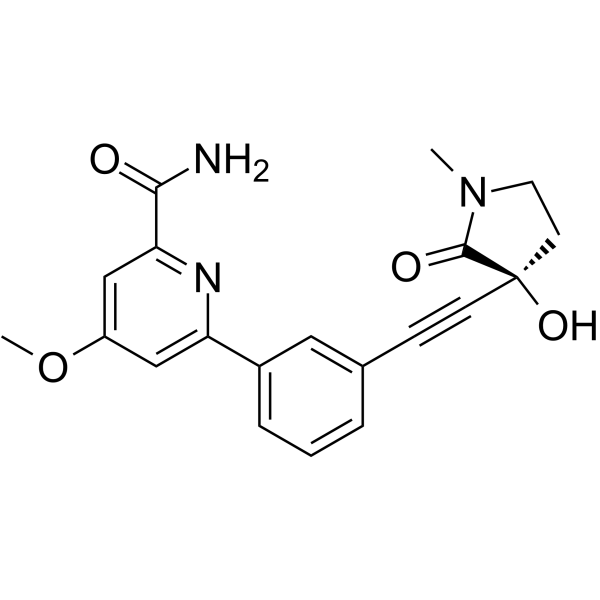
    NIK SMI1
    15+ Cited Publications

    NF-κB Inflammation/Immunology
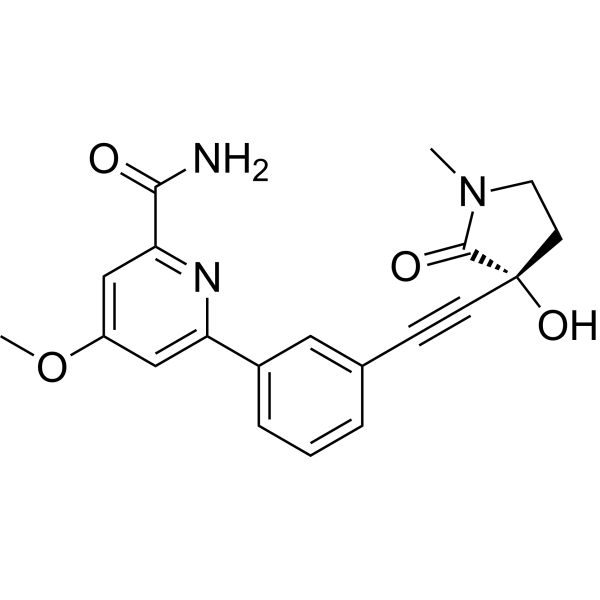
    NIK SMI1 is a potent, selective NF-κB inducing kinase (NIK) inhibitor, which inhibits NIK-catalyzed hydrolysis of ATP to ADP with IC50 of 0.23±0.17 nM. NIK SMI1 is a click chemistry reagent, it contains an Alkyne group and can undergo copper-catalyzed azide-alkyne cycloaddition (CuAAc) with molecules containing Azide groups.
    NIK SMI1
  • HY-120501
    B022
    Maximum Cited Publications
    17 Publications Verification

    NF-κB Inflammation/Immunology
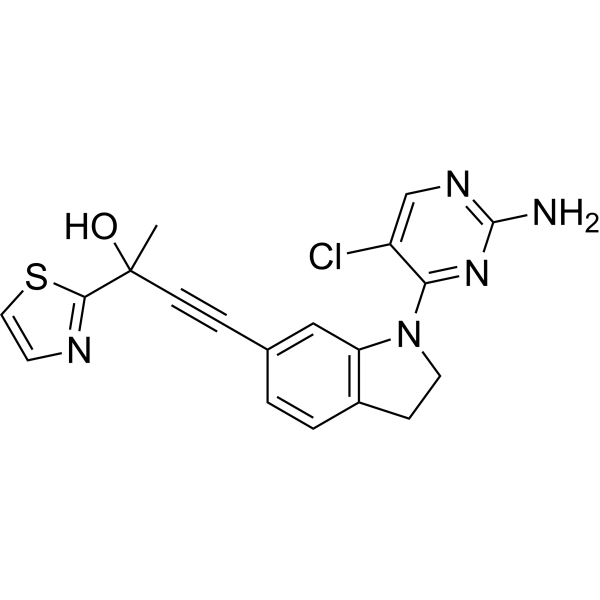
    B022 is a potent and selective NF-κB-inducing kinase (NIK) inhibitor (Ki of 4.2 nM; IC50=15.1 nM). B022 protects liver from toxin-induced inflammation, oxidative stress, and injury . B022 is a click chemistry reagent, it contains an Alkyne group and can undergo copper-catalyzed azide-alkyne cycloaddition (CuAAc) with molecules containing Azide groups.
    B022
  • HY-145801
    XT2
    2 Publications Verification

    NF-κB Inflammation/Immunology
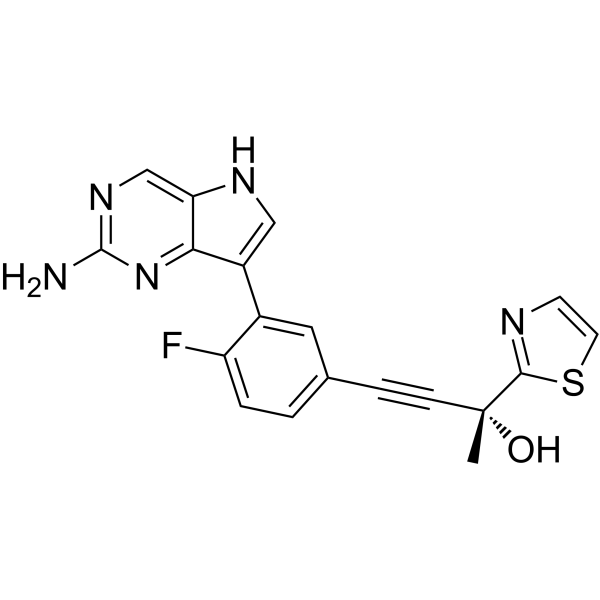
    XT2 is a potent, orally active, and selective inhibitor of NF-κB-inducing kinase (NIK) with an IC50 of 9.1 nM. XT2 suppresses CCl4-induced upregulation of ALT, a key biomarker of acute liver injury. XT2 also decreases immune cell infiltration into the injured liver tissue. XT2 has the potential for the research of liver inflammatory diseases . XT2 is a click chemistry reagent, it contains an Alkyne group and can undergo copper-catalyzed azide-alkyne cycloaddition (CuAAc) with molecules containing Azide groups.
    XT2
  • HY-160222

    HSV STING IFNAR NF-κB Infection
    HSV-60mer sodium is a 60 bp double-stranded DNA oligonucleotide derived from the HSV-1 genome, and also an IFNβ inducer. HSV-60mer sodium colocalizes with endogenous cytoplasmic IFI16 in immune cells. HSV-60mer sodium activates the transcription factors IRF3 and NF-κB, induces the production of proinflammatory cytokines, and inhibits HSV-1 replication in immune cells. HSV-60mer sodium can be used in studies related to herpes simplex virus type 1 infection .
    HSV-60mer sodium
  • HY-153516

    NF-κB Cancer
    NIK-IN-2 (compound 1) is a potent inhibitor of NF-κB-inducing kinase (NIK), with the pIC50 of 7.4. NIK-IN-2 plays an important role in cancer research .
    NIK-IN-2
  • HY-112433A

    NF-κB Drug Isomer Inflammation/Immunology
    (S)-NIK SMI1 is the isomer of NIK SMI1 (HY-112433), and can be used as an experimental control. NIK SMI1 is a potent, selective NF-κB inducing kinase (NIK) inhibitor, which inhibits NIK-catalyzed hydrolysis of ATP to ADP with IC50 of 0.23±0.17 nM.
    (S)-NIK SMI1
  • HY-160431

    PPAR NF-κB COX Drug Metabolite Metabolic Disease
    8(9)-EET is one of the main metabolites produced by the metabolism of arachidonic acid (HY-109590) through the cytochrome P450 epoxide pathway. 8(9)-EET is an effective substrate for COX-1 and COX-2. 8(9)-EET activates PPARα in HEK293 cells and inhibits the activity of NF-κB induced by IL-1β in a PPARα-dependent and -independent manner. The (8S,9R)-isomer of 8(9)-EET ([(8S,9R)-EET]) causes vasoconstriction, thereby reducing renal plasma flow and glomerular filtration rate .
    8(9)-EET
  • HY-176061

    NF-κB Cancer
    NIK ligand 1 (compound 2) is a NF-κB inducing kinase (NIK) ligand .
    NIK ligand 1
  • HY-149696

    NF-κB Cancer
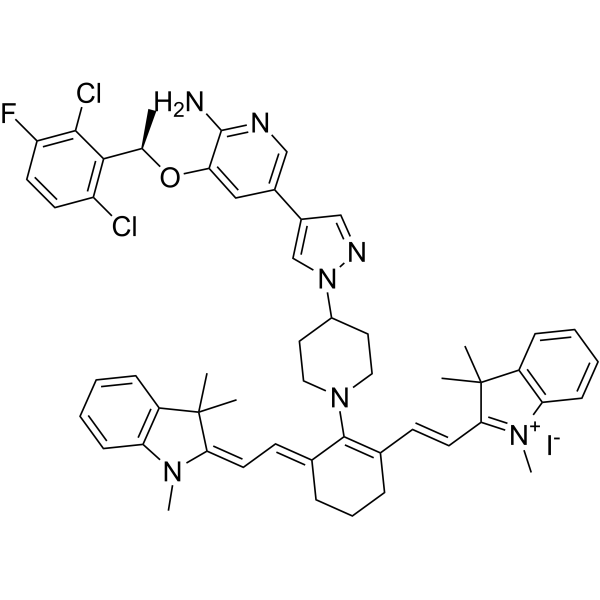
    IR-Crizotinib is a NF-κB-inducing kinase (NIK) inhibitor that crosses the blood-brain barrier and fluorescently localizes intracranial glioblastoma (GBM) in mice (IC50=3.381 μM). IR-Crizotinib is conjugated from the near-infrared dye IR-786 and the NF-κB-inducing kinase (NIK) inhibitor Crizotinib. IR-Crizotinib can effectively inhibit the growth and invasion of glioma in vitro and in vivo and can be used in cancer research .
    IR-Crizotinib
  • HY-117222

    NF-κB Inflammation/Immunology Cancer
    AM-0216 is a highly selective NF-κB-inducing kinase (NIK) inhibitor with a Ki value of 2 nM. AM-0216 is promising for research of NF-κB-dependent hematologic malignancies (e.g., multiple myeloma) and autoimmune diseases .
    AM-0216
  • HY-149043

    NF-κB Metabolic Disease
    NIK-IN-1 (Compound 2) is an inhibitor of NF-κB-inducing kinase (NIK). NIK-IN-1 is used for research on hepatic inflammatory diseases and acute liver injury .
    NIK-IN-1
  • HY-179701

    NF-κB TNF Receptor Interleukin Related CXCR Inflammation/Immunology
    NIK-IN-3 is a potent and orally active NF-κB-inducing kinase (NIK) inhibitor with an IC50 of 5.2 nM. NIK-IN-3 suppresses non-canonical NF-κB pathway activation and inhibits the secretion of pro-inflammatory cytokines, such as TNF-α, IL-6, IL-1β and chemokine CXCL12. NIK-IN-3 shows significant anti-inflammatory effects in LPS (HY-D1056)-induced sepsis mice model and DSS (HY-116282)-induced colitis model. NIK-IN-3 can be used for the research of inflammation, such as colitis .
    NIK-IN-3
  • HY-179488

    PPAR NF-κB COX Drug Metabolite Metabolic Disease
    (±)8(9)-EET is one of the main metabolites produced by the metabolism of arachidonic acid (HY-109590) through the cytochrome P450 epoxide pathway. (±)8(9)-EET is an effective substrate for COX-1 and COX-2. (±)8(9)-EET activates PPARα in HEK293 cells and inhibits the activity of NF-κB induced by IL-1β in a PPARα-dependent and -independent manner. The (8S,9R)-isomer of (±)8(9)-EET ([(8S,9R)-EET]) causes vasoconstriction, thereby reducing renal plasma flow and glomerular filtration rate .
    (±)8(9)-EET

Inquiry Online

Your information is safe with us. * Required Fields.

Salutation


Country or Region *

Applicant Name *


Organization Name *

Department *


Email Address *


Product Name *

Cat. No.


Requested quantity *

Phone Number *


Remarks

Inquiry Online

Inquiry Information

Product Name:
Cat. No.:
Quantity:
MCE Japan Authorized Agent:

