1. Search Result
Search Result
Results for "

Na+channels

" in MedChemExpress (MCE) Product Catalog:

31

Inhibitors & Agonists

3

Screening Libraries

2

Natural
Products

11

Isotope-Labeled Compounds

Cat. No. Product Name Target Research Areas Chemical Structure
  • HY-12545
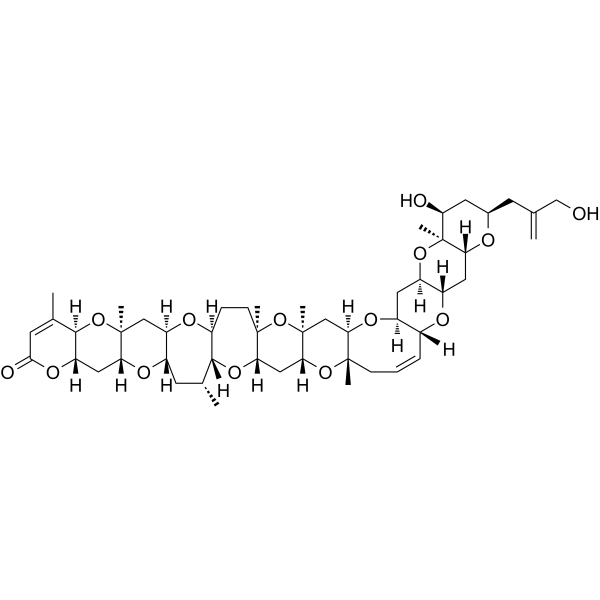
    Brevetoxin-3
    1 Publications Verification

    PbTx-3

    Sodium Channel Inflammation/Immunology
    Brevetoxin-3 (PbTx-3) is a potent allosteric voltage-gated Na + channel activator and has multiple active centers (A-ring lactone, C-42 of R side chain) . Brevetoxin-3 (PbTx-3) has a high affinity to site 5 of the voltage-sensitive Na + channels, inhibits the inactivation of Na + channels and prolongs the mean open time of these channels. Brevetoxin-3 (PbTx-3) repeated exposures can lead to prolonged airway hyperresponsiveness (AHR) and lung inflammation .
    Brevetoxin-3
  • HY-B0448S

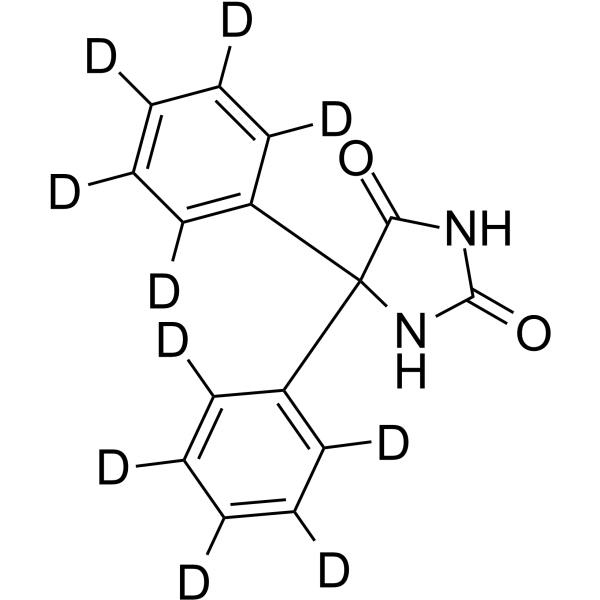
    5,5-Diphenylhydantoin-d10

    Isotope-Labeled Compounds Sodium Channel Virus Protease Neurological Disease Cancer
    Phenytoin-d10 is the deuterium labeled Phenytoin. Phenytoin (5,5-Diphenylhydantoin) is a potent Voltage-gated Na+ channels (VGSCs) blocker. Phenytoin has antiepileptic activity and reduces breast tumour growth and metastasis in mice .
    Phenytoin-d10
  • HY-W027553

    NIK-247 free base; Amiridine free base

    Cholinesterase (ChE) Potassium Channel Sodium Channel Neurological Disease Metabolic Disease
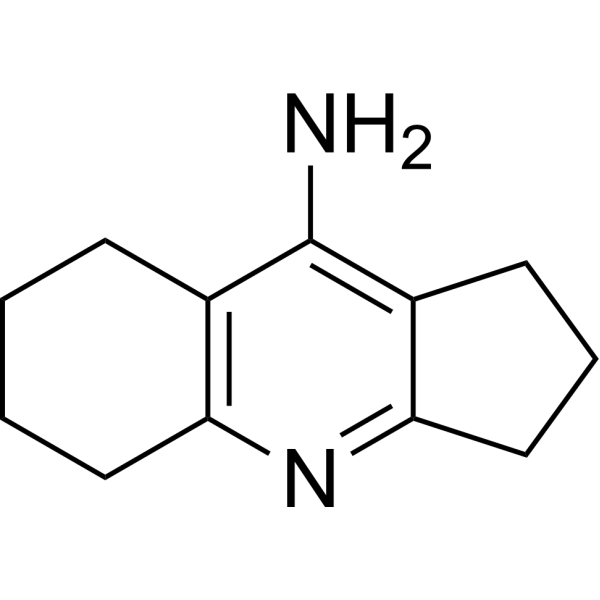
    Ipidacrine is orally active and brain-penetrant AChE and BuChE inhibitors with IC50 values of 1 μM and 1.9 μM, respectively, which is also a partial agonist of M2-cholinergic receptors and a reversible cholinesterase inhibitor. Ipidacrine has a stimulating effect on neuromuscular transmission and excitation along the nerve fibres with a moderately anti-pain effect. Ipidacrine is an aminopyridines and is structurally similar to Tacrine (HY-111338). Ipidacrine is effective in various amnesia models, improves erectile function and inhibits K + and Na +-channels in the neuronal membrane in diabetic rats. Ipidacrine is promising for research of Alzheimer’s disease, ischaemic stroke, idiopathic neuropathy of the facial nerve, diabetes mellitus-induced erectile dysfunction and other deficits in central or peripheral cholinergic deseases .
    Ipidacrine
  • HY-B0448AR

    5,5-Diphenylhydantoin sodium salt (Standard)

    Reference Standards Sodium Channel Virus Protease Neurological Disease Cancer
    Phenytoin (sodium) (Standard) is the analytical standard of Phenytoin (sodium). This product is intended for research and analytical applications. Phenytoin sodium (5,5-Diphenylhydantoin sodium salt) is a potent Voltage-gated Na+ channels (VGSCs) blocker. Phenytoin has antiepileptic activity and reduces breast tumour growth and metastasis in mice .
    Phenytoin sodium (Standard)
  • HY-B0575R
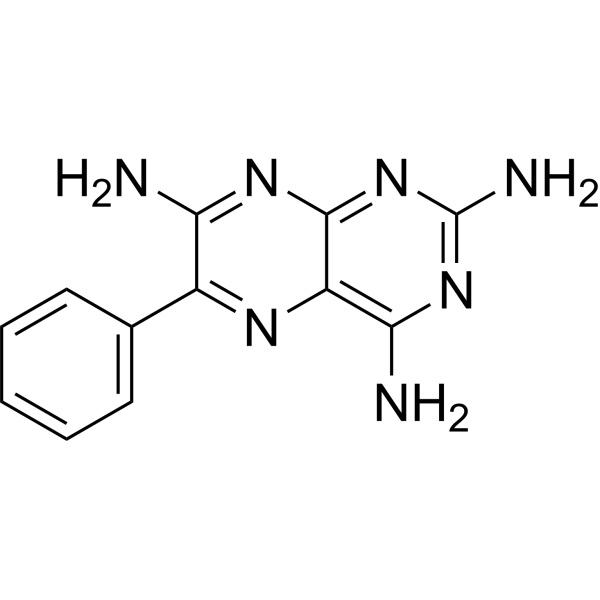
    Triamterene (Standard)
    5+ Cited Publications

    Reference Standards Sodium Channel G protein-coupled Bile Acid Receptor 1 Metabolic Disease
    Triamterene (Standard) is the analytical standard of Triamterene. This product is intended for research and analytical applications. Triamterene blocks epithelial Na+ channel (ENaC) in a voltage-dependent manner, which used as a mild diuretic. Triamterene as an inhibitor of the TGR5 receptor.
    Triamterene (Standard)
  • HY-B0495S4

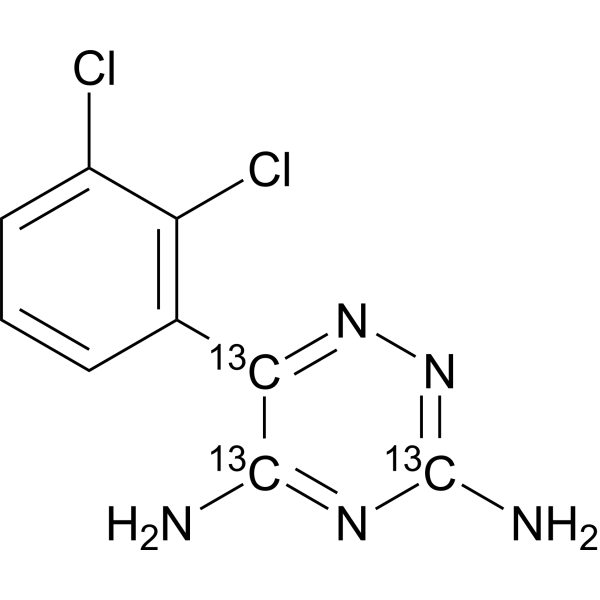
    LTG-13C3; BW430C-13C3

    Sodium Channel Autophagy Neurological Disease
    Lamotrigine- 13C3 is the 13C-labeled Lamotrigine. Lamotrigine (BW430C) is a potent and orally active anticonvulsant or antiepileptic agent. Lamotrigine selectively blocks voltage-gated Na+ channels, stabilizing presynaptic neuronal membranes and inhibiting glutamate release. Lamotrigine can be used for the research of epilepsy, focal seizure, et al .
    Lamotrigine-13C3
  • HY-B0495S5

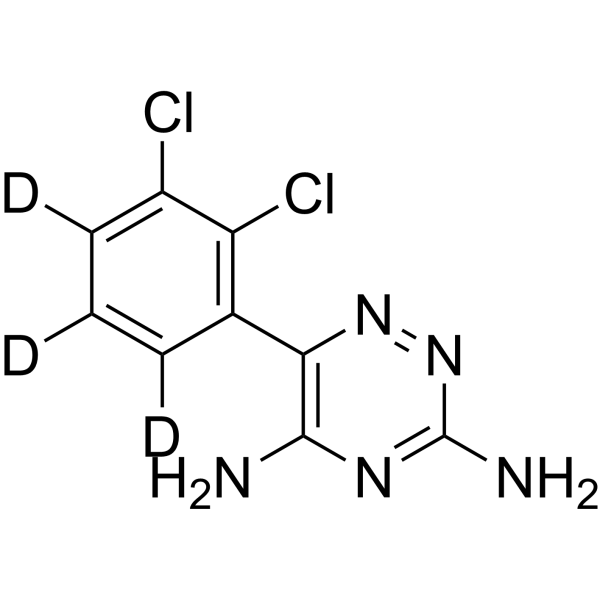
    LTG-d3; BW430C-d3

    Autophagy Sodium Channel Neurological Disease
    Lamotrigine-d3 is the deuterium labeled Lamotrigine . Lamotrigine (BW430C) is a potent and orally active anticonvulsant or antiepileptic agent. Lamotrigine selectively blocks voltage-gated Na+ channels, stabilizing presynaptic neuronal membranes and inhibiting glutamate release. Lamotrigine can be used for the research of epilepsy, focal seizure, et al .
    Lamotrigine-d3
  • HY-B0495S3

    Autophagy Sodium Channel Neurological Disease
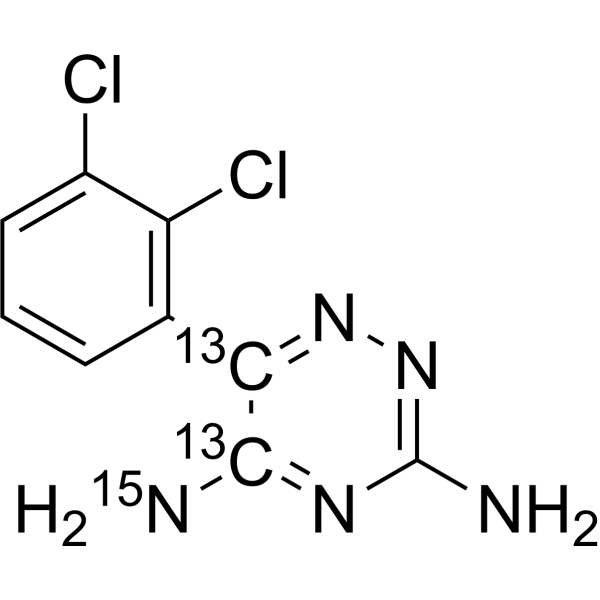
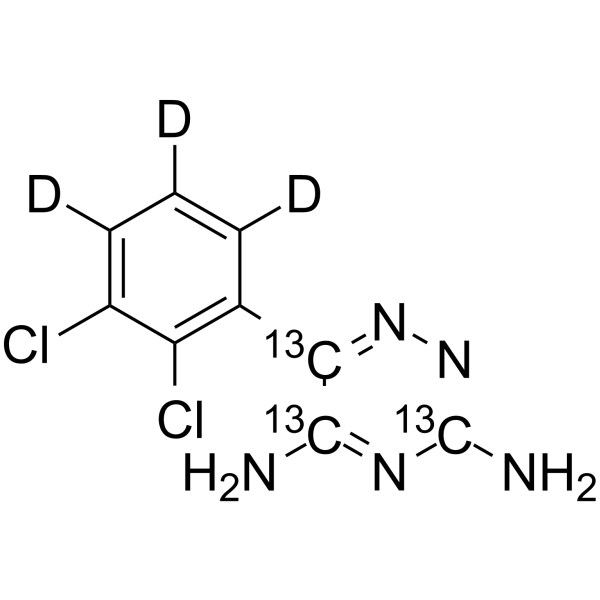
    Lamotrigine- 13C2, 15N is the 13C and 15N labeled Lamotrigine . Lamotrigine (BW430C) is a potent and orally active anticonvulsant or antiepileptic agent. Lamotrigine selectively blocks voltage-gated Na+ channels, stabilizing presynaptic neuronal membranes and inhibiting glutamate release. Lamotrigine can be used for the research of epilepsy, focal seizure, et al .
    Lamotrigine-13C2,15N
  • HY-16928R

    Phomin (Standard)

    Reference Standards Arp2/3 Complex Cancer
    (R)-Duloxetine (Standard) is the analytical standard of (R)-Duloxetine. This product is intended for research and analytical applications. (R)-Duloxetine is a form of Duloxetine (HY-B0161) that causes tonic and usage-dependent impairment of neuronal Na+ channels. (R)-Duloxetine can be used in pain research .
    Cytochalasin B (Standard)
  • HY-B0495S1

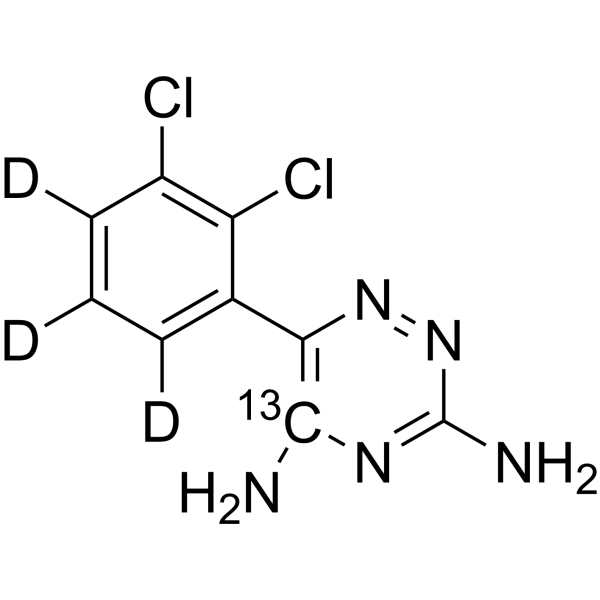
    LTG-13C,d3; BW430C-13C,d3

    Isotope-Labeled Compounds Sodium Channel Autophagy Neurological Disease
    Lamotrigine- 13C,d3 is the 13C- and deuterium labeled Lamotrigine. Lamotrigine (BW430C) is a potent and orally active anticonvulsant or antiepileptic agent. Lamotrigine selectively blocks voltage-gated Na+ channels, stabilizing presynaptic neuronal membranes and inhibiting glutamate release. Lamotrigine can be used for the research of epilepsy,?focal seizure, et al .
    Lamotrigine-13C,d3
  • HY-W027553R

    NIK-247 free base (Standard); Amiridine free base (Standard)

    Reference Standards Cholinesterase (ChE) Potassium Channel Sodium Channel Neurological Disease Metabolic Disease
    Ipidacrine (Standard) is the analytical reference standard of Ipidacrine. This product is used for research and analytical applications. Ipidacrine is orally active and blood-brain-barrier-penetrant AChE and BuChE inhibitors with IC50 values of 1 μM and 1.9 μM, respectively, which is also a partial agonist of M2-cholinergic receptors and a reversible cholinesterase inhibitor. Ipidacrine has a stimulating effect on neuromuscular transmission and excitation along the nerve fibres with a moderately anti-pain effect. Ipidacrine is an aminopyridines and is structurally similar to Tacrine (HY-111338). Ipidacrine is effective in various amnesia models, improves erectile function and inhibits K + and Na +-channels in the neuronal membrane in diabetic rats. Ipidacrine is promising for research of Alzheimer’s disease, ischaemic stroke, idiopathic neuropathy of the facial nerve, diabetes mellitus-induced erectile dysfunction and other deficits in central or peripheral cholinergic deseases .
    Ipidacrine (Standard)
  • HY-121535

    Sodium Channel Calcium Channel Others
    Levosemotiadil, an S-isomer of semotiadil, exhibits stronger binding affinity to human serum albumin (HSA) compared to its R-isomer counterpart. This study utilized high-performance frontal analysis (HPFA) to demonstrate that levosemotiadil binds approximately three times more strongly to HSA than semotiadil. The binding parameters were evaluated using Scatchard analysis, revealing specific interactions with the diazepam binding site on HSA. The presence of diazepam decreased the binding affinity of both enantiomers, while warfarin did not alter their binding characteristics. These findings highlight levosemotiadil's potential as a Ca- and Na-channel blocker with significant binding preferences for HSA, crucial for understanding its pharmacokinetics and therapeutic effects .
    Levosemotiadil
  • HY-135628

    Sodium Channel Neurological Disease
    PD-85639 is a voltage-gated sodium (Na+) channel blocker that has neuroprotective effects .
    PD-85639
  • HY-16259

    Ricainide hydrochloride; LY 135837

    Sodium Channel Cardiovascular Disease
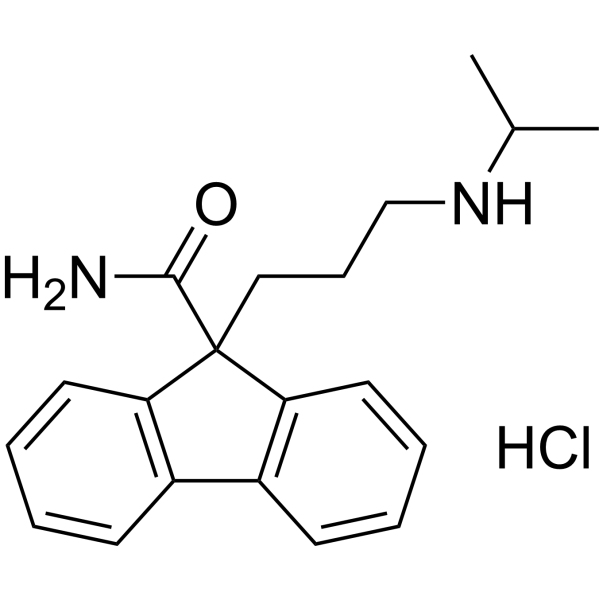
    Indecainide hydrochloride is a potent and orally active class I local anesthetic antiarrhythmic agent. Indecainide hydrochloride has Na +-channel-blocking activity .
    Indecainide hydrochloride
  • HY-124925

    (-)-Isoeburnamine; (-)-epi-Eburnamine

    Sodium Channel Neurological Disease
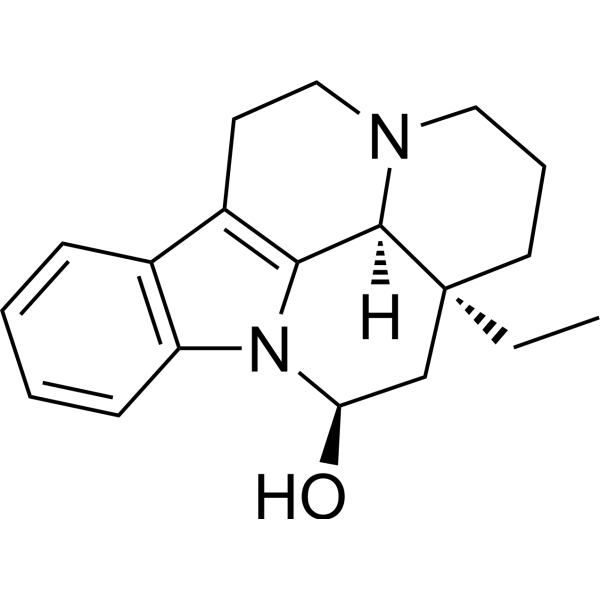
    Vincanol ((-)-Isoeburnamine) is a blocker of voltage-gated Na+ channels. Vincanol blocks Na + currents with an IC50 value of 40 μM. Vincanol has neuroprotective effect .
    Vincanol
  • HY-121306

    Ricainide; LY 135837 free base

    Sodium Channel Neurological Disease
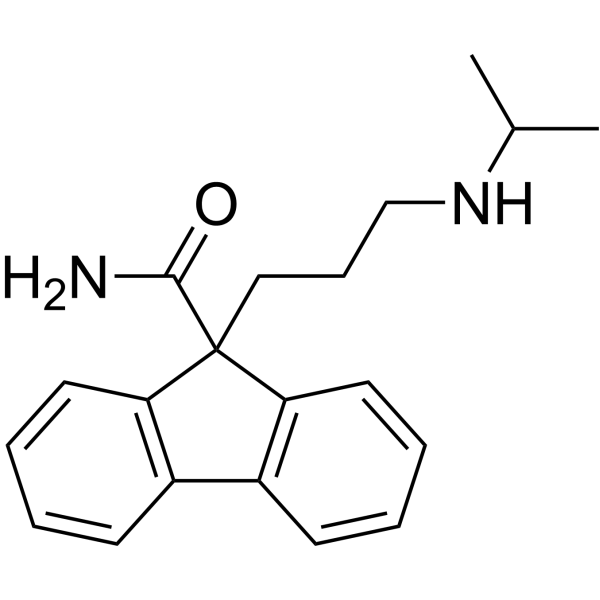
    Indecainide (Ricainide) is an orally active antiarrhythmic agent. Indecainide can be used in the research of ventricular dysfunction. Indecainide has Na +-channel-blocking activity .
    Indecainide
  • HY-W027553S1

    NIK-247-d9 free base

    Isotope-Labeled Compounds Cholinesterase (ChE) Potassium Channel Sodium Channel Metabolic Disease
    Ipidacrine-d9 (NIK-247-d9 (free base)) is the deuterium labeled Ipidacrine (HY-W027553). Ipidacrine is orally active and brain-penetrant AChE and BuChE inhibitors with IC50 values of 1 μM and 1.9 μM, respectively, which is also a partial agonist of M2-cholinergic receptors and a reversible cholinesterase inhibitor. Ipidacrine has a stimulating effect on neuromuscular transmission and excitation along the nerve fibres with a moderately anti-pain effect. Ipidacrine is an aminopyridines and is structurally similar to Tacrine (HY-111338). Ipidacrine is effective in various amnesia models, improves erectile function and inhibits K+ and Na+-channels in the neuronal membrane in diabetic rats. Ipidacrine is promising for research of Alzheimer’s disease, ischaemic stroke, idiopathic neuropathy of the facial nerve, diabetes mellitus-induced erectile dysfunction and other deficits in central or peripheral cholinergic deseases .
    Ipidacrine-d9
  • HY-B0211S

    PK 26124-13C,15N2

    GABA Receptor Sodium Channel Neurological Disease
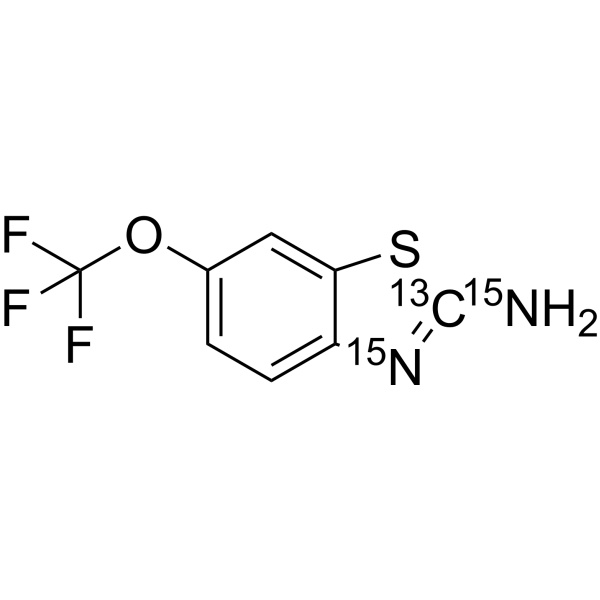
    Riluzole- 13C, 15N2 is the 13C and 15N labeled Riluzole . Riluzole is an anticonvulsant agent and belongs to the family of use-dependent Na+ channel blocker which can also inhibit GABA uptake with an IC50 of 43 μM .
    Riluzole-13C,15N2
  • HY-B0161CR

    (R)-LY248686 (Standard)

    Reference Standards Sodium Channel Neurological Disease
    (R)-Duloxetine (Standard) is the analytical standard of (R)-Duloxetine. This product is intended for research and analytical applications. (R)-Duloxetine is a form of Duloxetine (HY-B0161) that causes tonic and usage-dependent impairment of neuronal Na+ channels. (R)-Duloxetine can be used in pain research .
    (R)-Duloxetine (Standard)
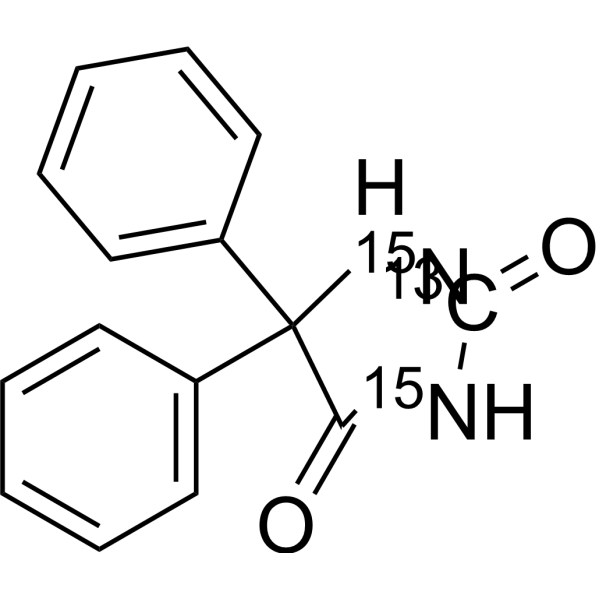
  • HY-B0448S1

    Sodium Channel Virus Protease Neurological Disease
    Phenytoin- 15N2, 13C is the 13C and 15N labeled Phenytoin . Phenytoin (5,5-Diphenylhydantoin) is a potent Voltage-gated Na+ channels (VGSCs) blocker. Phenytoin has antiepileptic activity and reduces breast tumour growth and metastasis in mice .
    Phenytoin-15N2,13C
  • HY-106017

    Potassium Channel Sodium Channel Neurological Disease
    Nerispirdine is an ion channel inhibitor with IC50s of 3.6, 3.7 and 11.9 μM against K(v)1.1, K(v)1.2 and voltage-dependent Na(+) channel, respectively. Nerispirdine is a 4-aminopyridine (4-AP, HY-B0604) derivative and can be utilized in research on neurological disorders .
    Nerispirdine
  • HY-17385R

    Tomoxetine hydrochloride (Standard); (R)-Tomoxetine hydrochloride (Standard); LY 139603 (Standard)

    Reference Standards Adrenergic Receptor Serotonin Transporter Sodium Channel Neurological Disease Cancer
    Atomoxetine (hydrochloride) (Standard) is the analytical standard of Atomoxetine (hydrochloride). This product is intended for research and analytical applications. Atomoxetine (Tomoxetine) hydrochloride is a selective noradrenaline reuptake inhibitor with Ki values of 5 nM, 77 nM and 1451 nM for norepinephrine (NE), serotonin (5-HT) and dopamine (DA) transporters, respectively. Atomoxetine hydrochloride is a potent Na+ channels (VGSCs) blocker. Atomoxetine hydrochloride can be used for attention-deficit hyperactivity disorder (ADHD) research .
    Atomoxetine hydrochloride (Standard)
  • HY-B0495S

    LTG-13C3,d3; BW430C-13C3,d3

    Isotope-Labeled Compounds Sodium Channel Autophagy Neurological Disease
    Lamotrigine- 13C3,d3 is the 13C-labeled Lamotrigine. Lamotrigine (BW430C) is a potent and orally active anticonvulsant or antiepileptic agent. Lamotrigine selectively blocks voltage-gated Na+ channels, stabilizing presynaptic neuronal membranes and inhibiting glutamate release. Lamotrigine can be used for the research of epilepsy,?focal seizure, et al .
    Lamotrigine-13C3,d3
  • HY-13295S

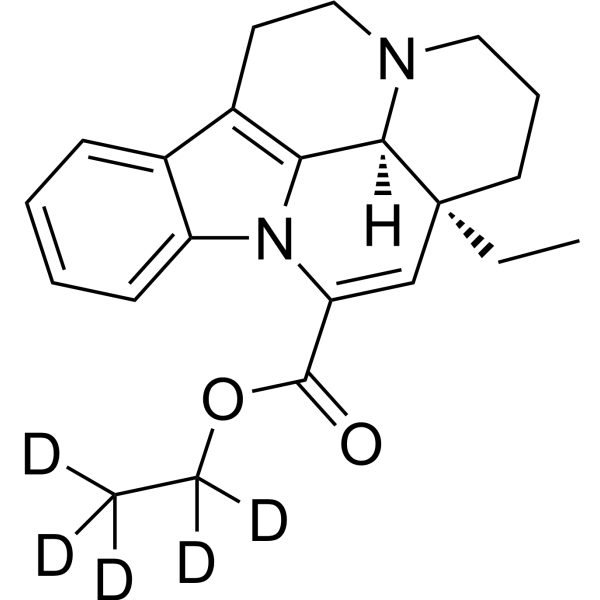
    Isotope-Labeled Compounds Sodium Channel IKK Phosphodiesterase (PDE) Cardiovascular Disease Neurological Disease Inflammation/Immunology Cancer
    Vinpocetine-d5 is the deuterium labeled Vinpocetine. Vinpocetine (Ethyl apovincaminate) is a derivative of the alkaloid Vincamine that blocks voltage-gated Na+ channels. The IC50 value of Vinpocetine on direct IKK inhibition in the cell-free system is 17.17 μM. Vinpocetine is a phosphodiesterase (PDE) inhibitor and inhibits NF-κB-dependent inflammatory responses by directly targeting IκB kinase complex (IKK), and has been widely used for the treatment of cerebrovascular disorders .
    Vinpocetine-d5
  • HY-B1033R

    5-HT Receptor Dopamine Receptor Sodium Channel Reference Standards Neurological Disease
    Metergoline (Standard) is the analytical standard of Metergoline. This product is intended for research and analytical applications. Metergoline is a serotonin (5-HT) receptor and dopamine receptors antagonist, with pKis of 8.64, 8.75 and 8.75 for 5-HT2A, 5-HT2B and 5-HT2C, respectively. Metergoline is a high-affinity ligand for the h5-HT7 receptor, with a Ki of 16 nM. Metergoline is also a reversible neural Na+ channels inhibitor. Metergoline is commonly used for the research of seasonal affective disorder, prolactin hormone regulation .
    Metergoline (Standard)
  • HY-115839

    Tachmalcor free base

    Sodium Channel Others
    Detajmium (Tachmalcor free base) is a Na?-channel blocker with activity to inhibit ventricular conduction and refractoriness. Detajmium (0.3μM) prolongs intraventricular conduction time comparable to propafenone (0.3μM) during sinus rhythm, but the time constant for reaching steady state during rapid ventricular pacing is significantly longer for Detajmium, indicating a unique temporal profile for its heart rate-dependent effects.
    Detajmium
  • HY-B0211AR

    PK 26124 hydrochloride (Standard)

    Sodium Channel GABA Receptor Reference Standards Neurological Disease Cancer
    Riluzole hydrochloride (Standard) is the analytical standard of Riluzole hydrochloride. This product is intended for research and analytical applications. Riluzole hydrochloride is an anticonvulsant agent and belongs to the family of use-dependent Na+ channel blocker which can also inhibit GABA uptake with an IC50 of 43 μM.
    Riluzole hydrochloride (Standard)
  • HY-101362R

    Sodium Channel Reference Standards Neurological Disease
    QX-222 (chloride) (Standard) is the analytical standard of QX-222 (chloride) (HY-101362). This product is intended for research and analytical applications. QX-222 chloride, a trimethyl analogue of Lignocaine (HY-B0185), is a potent Na+ channel blocker .
    QX-222 chloride (Standard)
  • HY-108504R

    V 102862 (Standard)

    Reference Standards Sodium Channel Neurological Disease
    Co 102862 (Standard) is the analytical standard of Co 102862 (HY-108504). This product is intended for research and analytical applications. Co 102862 (V 102862) is a potent, broad-spectrum, state-dependent Na+ channel blocker. Co 102862 is also an orally active anticonvulsant .
    Co 102862 (Standard)
  • HY-17385S1

    Tomoxetine-d7 hydrochloride; (R)-Tomoxetine-d7 hydrochloride

    Isotope-Labeled Compounds Serotonin Transporter Adrenergic Receptor Sodium Channel Neurological Disease Cancer
    Atomoxetine-d7 hydrochloride (Tomoxetine-d7 hydrochloride) is the deuterium labeled Atomoxetine hydrochloride (HY-17385). Atomoxetine (Tomoxetine) hydrochloride is a selective noradrenaline reuptake inhibitor with Ki values of 5 nM, 77 nM and 1451 nM for norepinephrine (NE), serotonin (5-HT) and dopamine (DA) transporters, respectively. Atomoxetine hydrochloride is a potent Na+ channels (VGSCs) blocker. Atomoxetine hydrochloride can be used for attention-deficit hyperactivity disorder (ADHD) research .
    Atomoxetine-d7 hydrochloride
  • HY-19689

    NIK-247; Amiridine

    Cholinesterase (ChE) Potassium Channel Sodium Channel Cardiovascular Disease Neurological Disease Endocrinology
    Ipidacrine (NIK-247; Amiridine) hydrochloride is orally active and blood-brain-barrier-penetrant AChE and BuChE inhibitors with IC50 values of 1 μM and 1.9 μM, respectively, which is also a partial agonist of M2-cholinergic receptors and a reversible cholinesterase inhibitor. Ipidacrine hydrochloride has a stimulating effect on neuromuscular transmission and excitation along the nerve fibres with a moderately anti-pain effect. Ipidacrine hydrochloride is an aminopyridines and is structurally similar to Tacrine (HY-111338). Ipidacrine hydrochloride is effective in various amnesia models, improves erectile function and inhibits K + and Na +-channels in the neuronal membrane in diabetic rats. Ipidacrine hydrochloride is promising for research of Alzheimer’s disease, ischaemic stroke, idiopathic neuropathy of the facial nerve, diabetes mellitus-induced erectile dysfunction and other deficits in central or peripheral cholinergic deseases .
    Ipidacrine hydrochloride

Inquiry Online

Your information is safe with us. * Required Fields.

Salutation


Country or Region *

Applicant Name *


Organization Name *

Department *


Email Address *


Product Name *

Cat. No.


Requested quantity *

Phone Number *


Remarks

Inquiry Online

Inquiry Information

Product Name:
Cat. No.:
Quantity:
MCE Japan Authorized Agent: