



Atomoxetine hydrochloride (Standard)
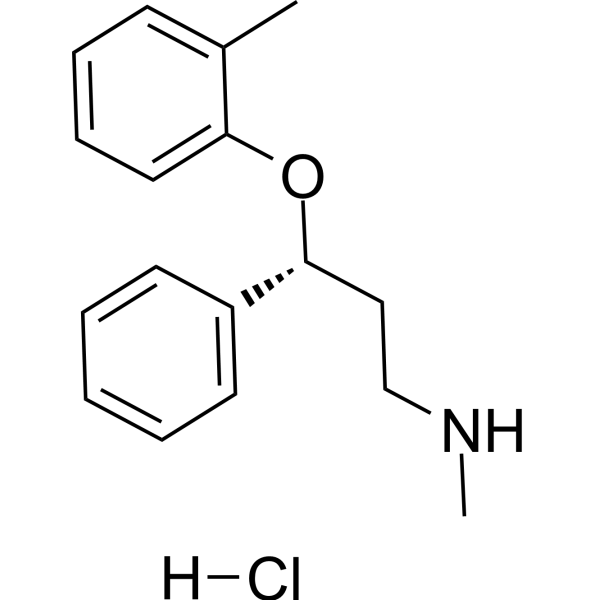
Atomoxetine (hydrochloride) (Standard) is the analytical standard of Atomoxetine (hydrochloride). This product is intended for research and analytical applications. Atomoxetine (Tomoxetine) hydrochloride is a selective noradrenaline reuptake inhibitor with Ki values of 5 nM, 77 nM and 1451 nM for norepinephrine (NE), serotonin (5-HT) and dopamine (DA) transporters, respectively. Atomoxetine hydrochloride is a potent Na+ channels (VGSCs) blocker. Atomoxetine hydrochloride can be used for attention-deficit hyperactivity disorder (ADHD) research.
For research use only. We do not sell to patients.
- Purity : 98%
- CAS No.: 82248-59-7
- Formula: C₁₇H₂₂ClNO
- Molecular Weight:291.82
-
Storage:
Please store the product under the recommended conditions in the Certificate of Analysis.


To place orders, for customer services and technical support, please contact: MedChemExpress USA
Tel: 609-228-6898 E-mail: [email protected] [email protected]


-
 Product Information
-
Chemical Information
- Purity & Documentation
-
 Help & FAQs


-
HY-17385
Atomoxetine hydrochloride -
HY-B0102A
Fluoxetine hydrochloride -
HY-122272
Paroxetine -
HY-B0122
Topiramate -
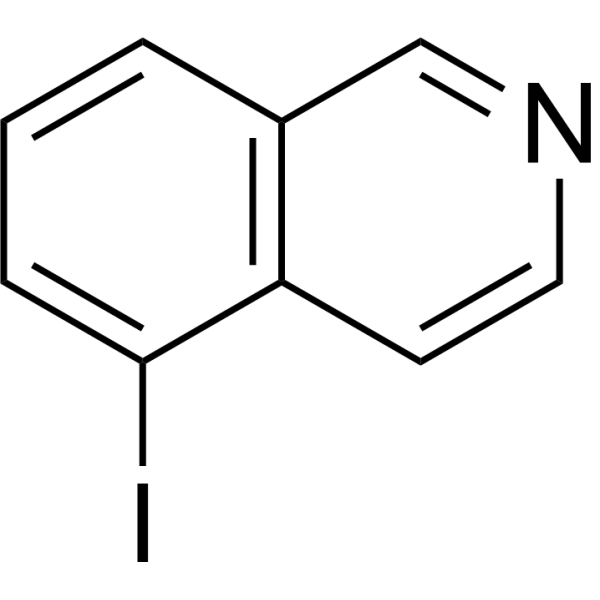
HY-W021879
DSRM-3716 -

HY-B0102AR
Fluoxetine hydrochloride (Standard) -
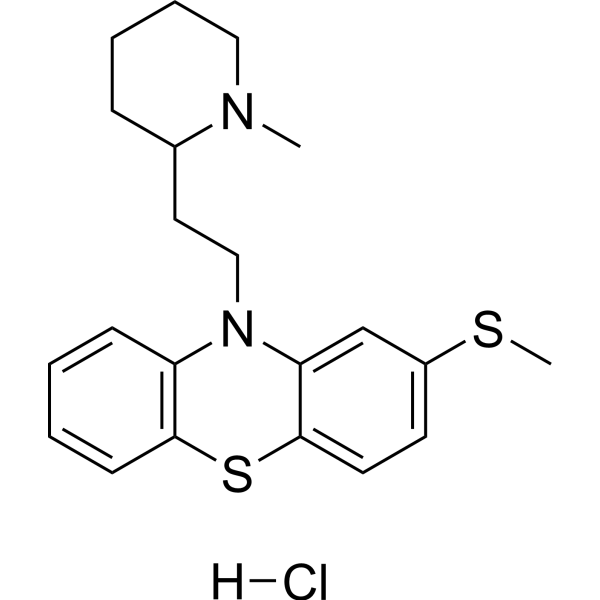
HY-B0965
Thioridazine hydrochloride -
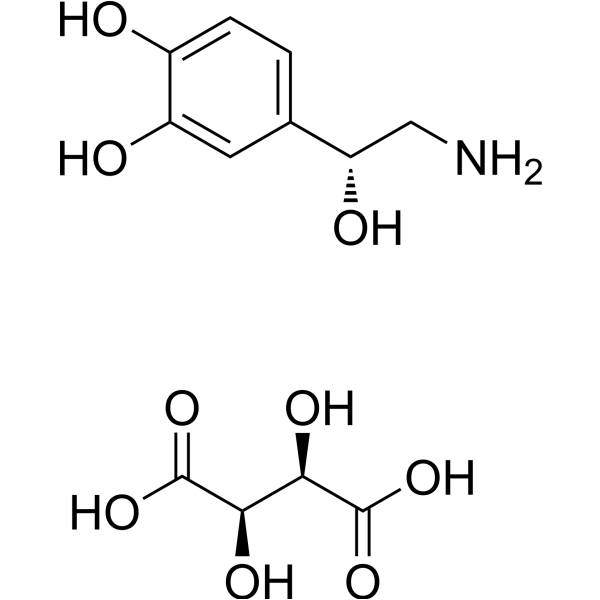
HY-13715C
Norepinephrine tartrate -
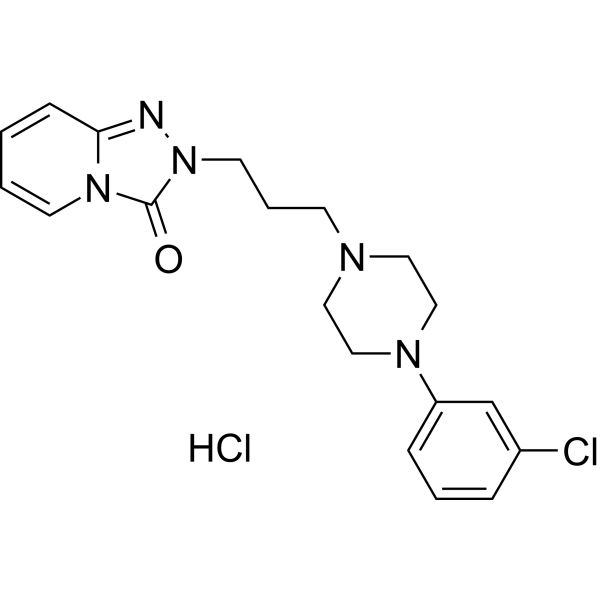
HY-B0478
Trazodone hydrochloride -
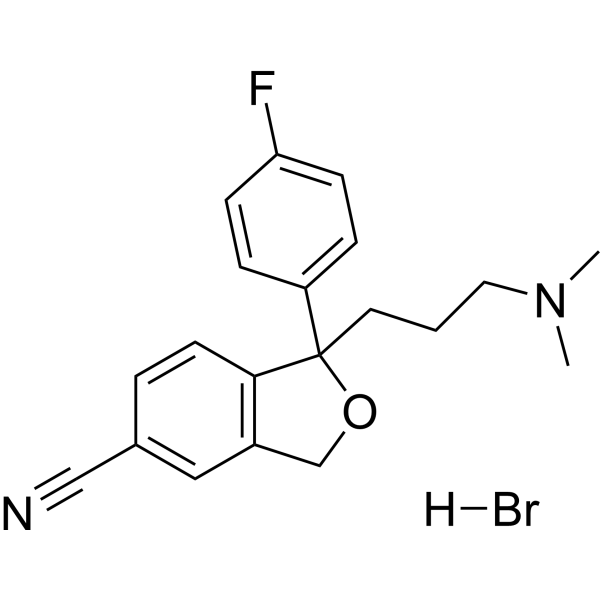
HY-B1287
Citalopram hydrobromide -

HY-122272R
Paroxetine (Standard) -
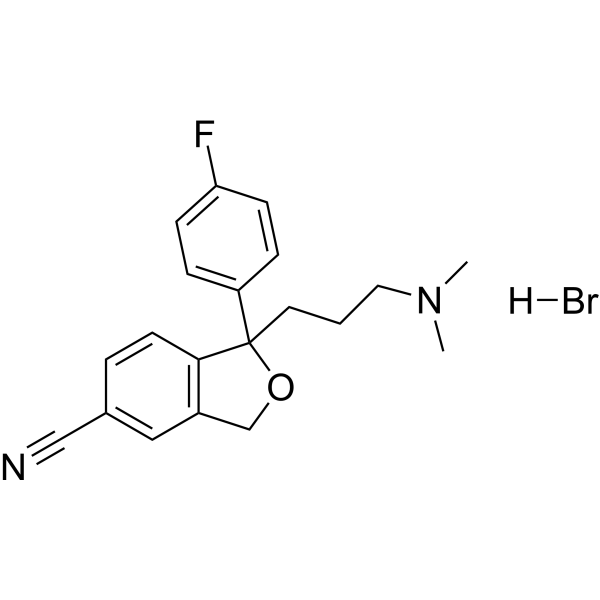
HY-B1287R
Citalopram hydrobromide (Standard)


Product Information
Information
Application
The compound is the grade of analytical standard, which is the reference standard supplied assay. It is commonly used in qualitative, quantitative and methodological research experiments in HPLC, GC and MS.


Chemical Information
-
CAS No. 82248-59-7
-
Molecular Weight 291.82
-
Formula C₁₇H₂₂ClNO
-
SMILES
CC1=CC=CC=C1O[C@@H](C2=CC=CC=C2)CCNC.[H]Cl
-
Synonyms
Tomoxetine hydrochloride (Standard); (R)-Tomoxetine hydrochloride (Standard); LY 139603 (Standard)
-
Shipping
Room temperature in continental US; may vary elsewhere.
-
Storage
Please store the product under the recommended conditions in the Certificate of Analysis.


Purity & Documentation
References
[1]. Turner M, et, al. Effects of atomoxetine on locomotor activity and impulsivity in the spontaneously hypertensive rat. Behav Brain Res. 2013 Apr 15;243:28-37. [Content Brief]
[2]. Föhr KJ, et, al. Block of Voltage-Gated Sodium Channels by Atomoxetine in a State- and Use-dependent Manner. Front Pharmacol. 2021 Feb 25;12:622489. [Content Brief]
[3]. Bymaster FP, et, al. Atomoxetine increases extracellular levels of norepinephrine and dopamine in prefrontal cortex of rat: a potential mechanism for efficacy in attention deficit/hyperactivity disorder. Neuropsychopharmacology. 2002 Nov;27(5):699-711. [Content Brief]

Calculators
Concentration (start) × Volume (start) = Concentration (final) × Volume (final)


Atomoxetine hydrochloride (Standard) Related Classifications
HY-17385R Related Classifications
 Powered by Bioz