



Trazodone hydrochloride
Based on 6 publication(s) in Google Scholar
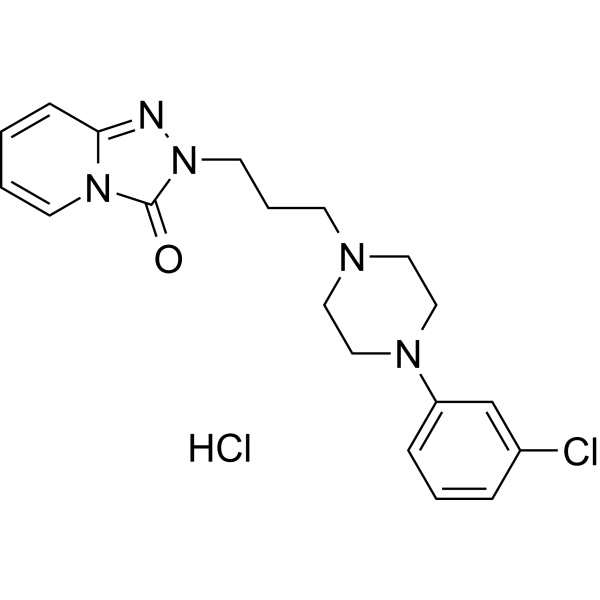
Trazodone hydrochloride (AF-1161) is a triazolopyridine derivative that belongs to the class of serotonin receptor antagonists and reuptake inhibitors (SARIs). Trazodone hydrochloride has anti-depressant and anti-insomnious activity. Trazodone hydrochloride exerts antagonistic properties against a1- and a2-adrenergic receptors and histamine H1 receptors, with minimal anticholinergic effects.
For research use only. We do not sell to patients.
- Purity : 99.60%
- CAS No.: 25332-39-2
- Formula: C19H23Cl2N5O
- Molecular Weight:408.32
-
Storage:
4°C, sealed storage, away from moisture
* In solvent : -80°C, 6 months; -20°C, 1 month (sealed storage, away from moisture)

To place orders, for customer services and technical support, please contact: MedChemExpress USA
Tel: 609-228-6898 E-mail: [email protected] [email protected]


-
 Biological Activity
-
Chemical Information
-
Solvent & Solubility
- Purity & Documentation
- References
-
 Help & FAQs


-
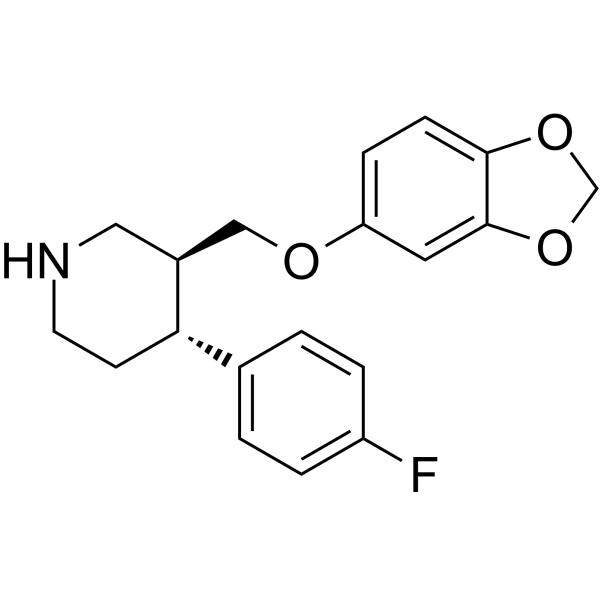
HY-122272
Paroxetine5-HT Inhibitor -
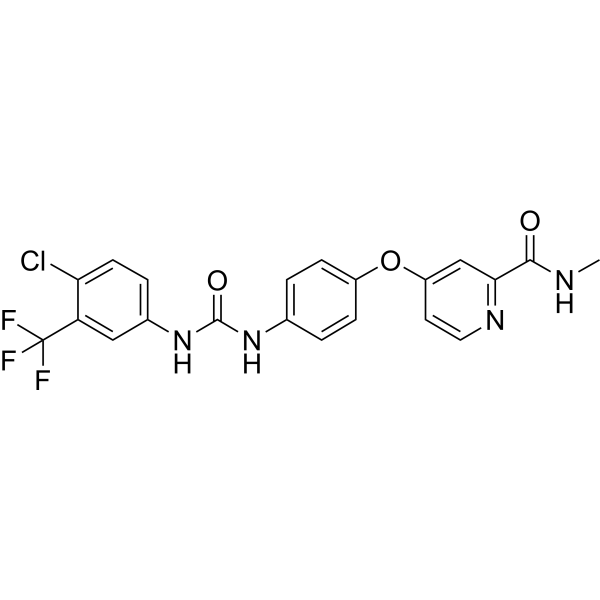
HY-10201
SorafenibMultikinase Inhibitor -
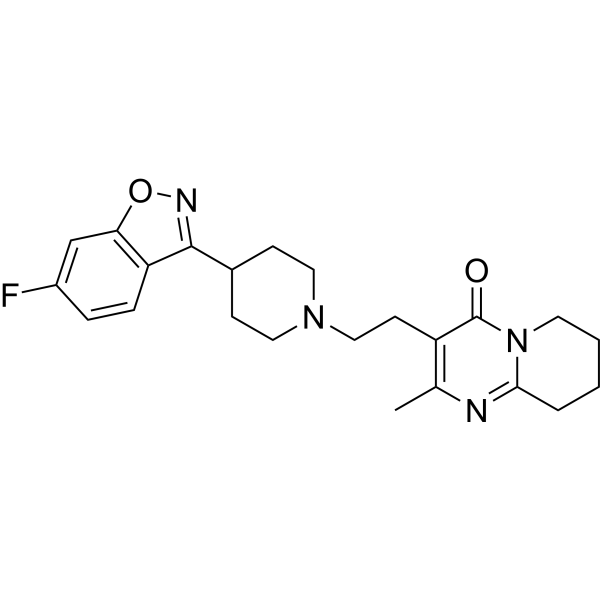
HY-11018
Risperidone5-HT2 Receptor Blocker -
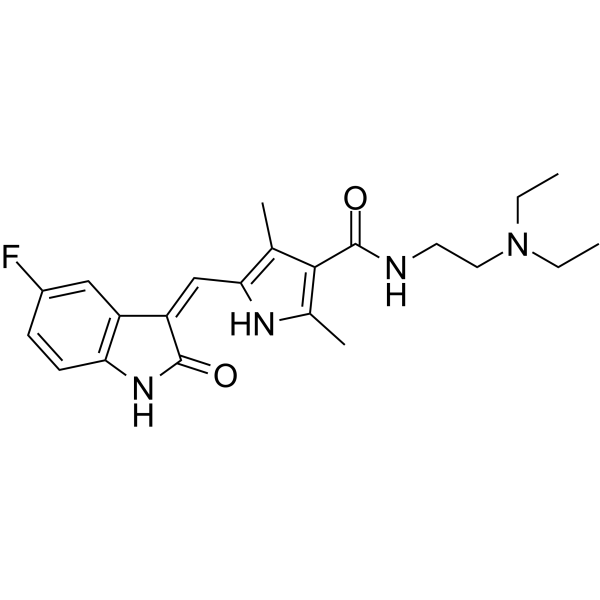
HY-10255A
SunitinibMulti-targeted RTK Inhibitor -
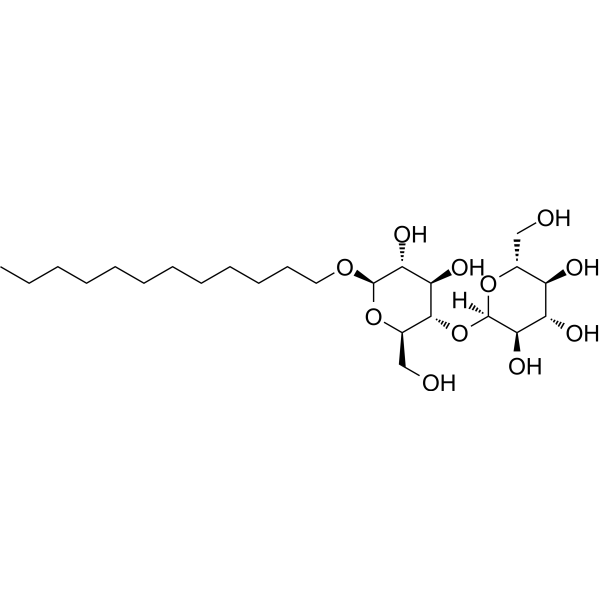
HY-128974
N-Dodecyl-β-D-maltosideNonionic Detergent -
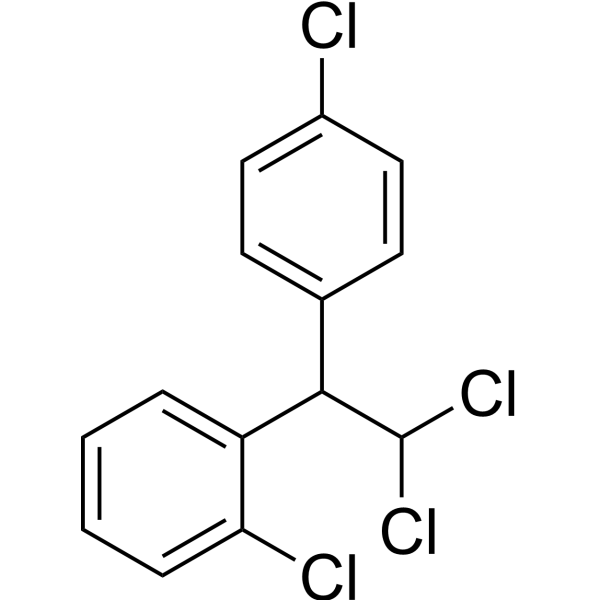
HY-13690
MitotaneAntineoplastic Agent -
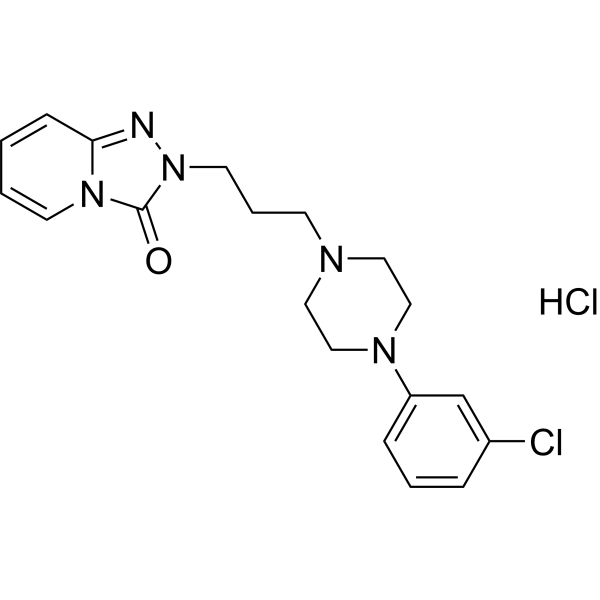
HY-B0478R
Trazodone hydrochloride (Standard) -
HY-B0781
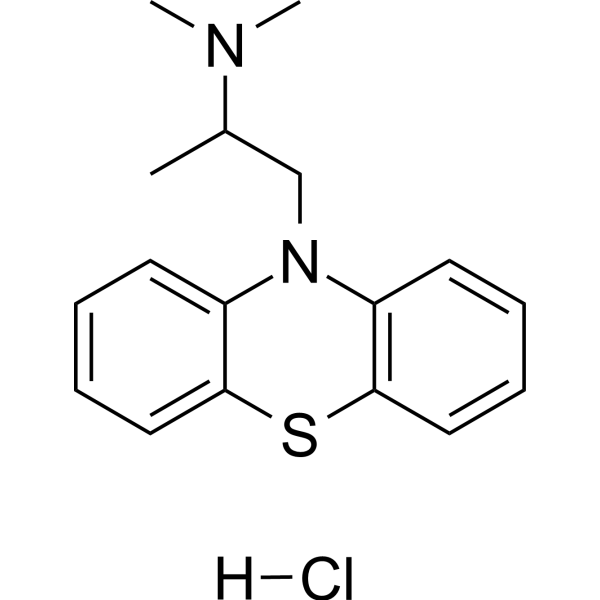
Promethazine hydrochlorideHistamine Receptor Antagonist -
HY-B0444
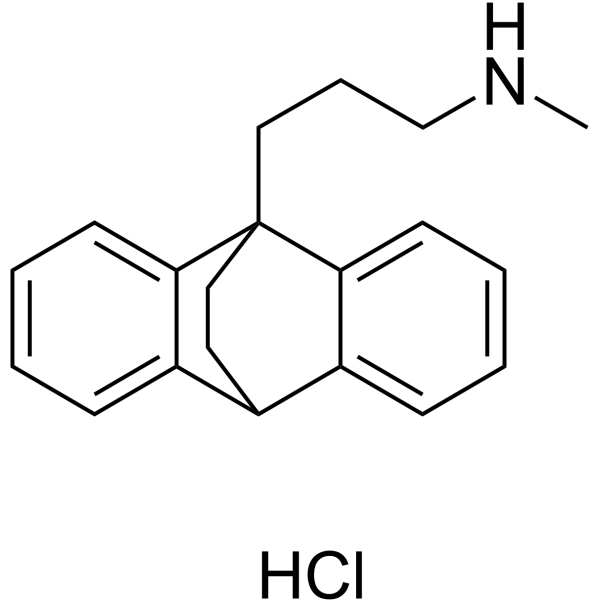
Maprotiline hydrochlorideAutophagy Inducer -
HY-B1019
SulpirideD2/D3 Receptor Antagonist -
HY-B0102
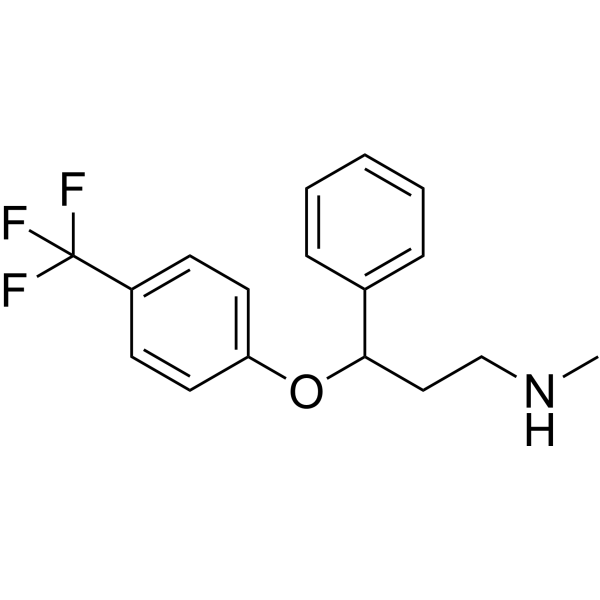
Fluoxetine -
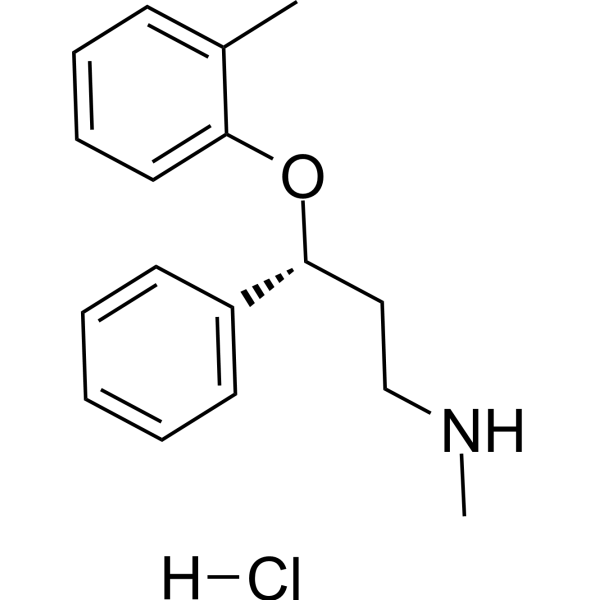
HY-17385
Atomoxetine hydrochlorideNoradrenalin Reuptake Inhibitor
Publications Citing Use of MedChemExpress (MCE) Trazodone hydrochloride
MoreAll 5-HT Receptor Isoforms
MoreAll Histamine Receptor Isoforms
MoreAll Adrenergic Receptor Isoforms
More

Biological Activity
Description
IC50 & Target
5-HT Receptor[1].
In Vitro
Trazodone binds to 5-HT1A receptor with a Ki of 23.6 nM[3].
Trazodone (1 nM–10 μM, 24 h or 72 h) reduces the expression of neuroinflammatory markers by inhibiting key signaling pathways such as NF-κB, p38 MAPK, and JNK, exhibiting neuroprotective effects[5]
MedChemExpress (MCE) has not independently confirmed the accuracy of these methods. They are for reference only. .
-
Cell Line:Neuronal-like cells differentiated from H9-derived NSCs
-
Concentration:1 nM–10 μM
-
Incubation Time:24 h or 72 h
-
Result:Increased mRNA expression of BDNF and CREB, reduced IFN-γ release.
-
Cell Line:Neuronal-like cells differentiated from H9-derived NSCs
-
Concentration:1 nM–10 μM
-
Incubation Time:24 h or 72 h
-
Result:Showed increased levels of phosphorylated ERK1/2 and decreased phosphorylated p38 levels.
In Vivo
Trazodone (100 mg/kg, i.p., single dose) reduces hyperactivity, prostration and clonic convulsions in cats and dogs[2].
Trazodone (12.5-25 mg/kg, i.p., single dose) inhibits nicotine- and Oxotremorine (HY-170032)-induced tremor[2].
Trazodone (5-20 mg/kg/day, s.c., 2-14 d) significantly decreases the spontaneous firing rate of DR 5-HT neurons by 40% and 37% with 10 and 20 mg/kg dose in SD rats[4].
MedChemExpress (MCE) has not independently confirmed the accuracy of these methods. They are for reference only.
-
Animal Model:Male Sprague-Dawley rats (250-350 g)[4]
-
Dosage:5, 10, 20 mg/kg/day
-
Administration:5, 10, 20 mg/kg/day
-
Result:Induced a marked physiological action on 5-HT neurons.
Significantly decreased the spontaneous firing rate of DR 5-HT neurons by 40% and 37% with 10 and 20 mg/kg dose, respectively.
Blocked 5-HT reuptake process.


Chemical Information
-
CAS No. 25332-39-2
-
Appearance Solid
-
Molecular Weight 408.32
-
Formula C19H23Cl2N5O
-
Color White to off-white
-
SMILES
O=C1N(CCCN2CCN(C3=CC=CC(Cl)=C3)CC2)N=C4C=CC=CN41.Cl
-
Synonyms
AF-1161
-
Shipping
Room temperature in continental US; may vary elsewhere.
-
Storage
4°C, sealed storage, away from moisture
* In solvent : -80°C, 6 months; -20°C, 1 month (sealed storage, away from moisture)


Publications (6)
-
Journal Impact Factor
-
Most Recent
-
Clin Chem
Discovering Cross-Reactivity in Urine Drug Screening Immunoassays through Large-Scale Analysis of Electronic Health Records. [Abstract]2019 Dec;65(12):1522-1531. PMID: 31578215 -
Int Immunopharmacol
Innovative role of the antidepressant imipramine in esophageal squamous cell carcinoma treatment: Promoting apoptosis and protective autophagy. [Abstract]2025 Feb 6:147:113969. PMID: 39764996 -
ACS Omega
2025 Oct 17;10(42):50208-50217. PMID: 41179162 -
Anal Bioanal Chem
Dispersive solid-phase extraction as sample pretreatment for determination of chemotherapeutic agents revumenib and venetoclax by HPLC-DAD. [Abstract]2025 Jul;417(16):3703-3714. PMID: 40323377 -
-


Solvent & Solubility
In Vitro:
DMSO : 16.67 mg/mL (40.83 mM; Need ultrasonic; Hygroscopic DMSO has a significant impact on the solubility of product, please use newly opened DMSO)
H2O : 16.67 mg/mL (40.83 mM; Need ultrasonic)
Please refer to the solubility information to select the appropriate solvent. Once prepared, please aliquot and store the solution to prevent product inactivation from repeated freeze-thaw cycles.
Storage method and period of stock solution: -80°C, 6 months; -20°C, 1 month (sealed storage, away from moisture). When stored at -80°C, please use it within 6 months. When stored at -20°C, please use it within 1 month.
* Note: If you choose water as the stock solution, please dilute it to the working solution, then filter and sterilize it with a 0.22 μm filter before use.
Please refer to the solubility information to select the appropriate solvent. Once prepared, please aliquot and store the solution to prevent product inactivation from repeated freeze-thaw cycles.
Storage method and period of stock solution: -80°C, 6 months; -20°C, 1 month (sealed storage, away from moisture). When stored at -80°C, please use it within 6 months. When stored at -20°C, please use it within 1 month.
* Note: If you choose water as the stock solution, please dilute it to the working solution, then filter and sterilize it with a 0.22 μm filter before use.
Concentration (start) × Volume (start) = Concentration (final) × Volume (final)
In Vivo:
Select the appropriate dissolution method based on your experimental animal and administration route.
- For the following dissolution methods, please ensure to first prepare a clear stock solution using an In Vitro approach and then sequentially add co-solvents:
- To ensure reliable experimental results, the clarified stock solution can be appropriately stored based on storage conditions. As for the working solution for In Vivo experiments, it is recommended to prepare freshly and use it on the same day.
- The percentages shown for the solvents indicate their volumetric ratio in the final prepared solution. If precipitation or phase separation occurs during preparation, heat and/or sonication can be used to aid dissolution.
Add each solvent one by one: 10% DMSO 40% PEG300 5% Tween-80 45% Saline
Solubility: ≥ 1.67 mg/mL (4.09 mM); Clear solution
This protocol yields a clear solution of ≥ 1.67 mg/mL (saturation unknown).
Taking 1 mL working solution as an example, add 100 μL DMSO stock solution (16.7 mg/mL) to 400 μL PEG300, and mix evenly; then add 50 μL Tween-80 and mix evenly; then add 450 μL Saline to adjust the volume to 1 mL.
Preparation of Saline: Dissolve 0.9 g sodium chloride in ddH₂O and dilute to 100 mL to obtain a clear Saline solution.
Add each solvent one by one: 10% DMSO 90% (20% SBE-β-CD in Saline)
Solubility: ≥ 1.67 mg/mL (4.09 mM); Clear solution
This protocol yields a clear solution of ≥ 1.67 mg/mL (saturation unknown).
Taking 1 mL working solution as an example, add 100 μL DMSO stock solution (16.7 mg/mL) to 900 μL 20% SBE-β-CD in Saline, and mix evenly.
Preparation of 20% SBE-β-CD in Saline (4°C, storage for one week): 2 g SBE-β-CD powder is dissolved in 10 mL Saline, completely dissolve until clear.
In Vivo Dissolution Calculator
Please enter the basic information of animal experiments:
-
-
-
-
Recommended: Prepare an additional quantity of animals to account for potential losses during experiments.
Working solution concentration: 0.22 mg/mL
This product has good water solubility, please refer to the measured solubility data in water/PBS/Saline for details.


Purity & Documentation
-
Data Sheet (280 KB)
-
SDS (418 KB)
- English - EN (418 KB)
- Français - FR (418 KB)
- Deutsch - DE (418 KB)
- Norwegian - NO (418 KB)
- Español - ES (418 KB)
- Swedish - SV (418 KB)
- Italian - IT (418 KB)
- Korean - KR (418 KB)
- Portuguese - PT (418 KB)
-
Handling Instructions (2659 KB)
References
[1]. Fagiolini A, et, al. Rediscovering trazodone for the treatment of major depressive disorder. CNS Drugs. 2012 Dec;26(12):1033-49. [Content Brief]
[2]. Brogden, R. N., et al., (1981). Trazodone: a review of its pharmacological properties and therapeutic use in depression and anxiety. Drugs, 21(6), 401–429. [Content Brief]
[3]. Raffa, R. B., et al., (1992). Etoperidone, trazodone and MCPP: in vitro and in vivo identification of serotonin 5-HT1A (antagonistic) activity. Psychopharmacology, 108(3), 320–326. [Content Brief]
[4]. Ghanbari, R., et al., (2010). Sustained administration of trazodone enhances serotonergic neurotransmission: in vivo electrophysiological study in the rat brain. The Journal of pharmacology and experimental therapeutics, 335(1), 197–206. [Content Brief]
[5]. Jay AR, Krotscheck U, Parsley E, Benson L, Kravitz A, Mulligan A, Silva J, Mohammed H, Schwark WS. Pharmacokinetics, bioavailability, and hemodynamic effects of trazodone after intravenous and oral administration of a single dose to dogs. Am J Vet Res. 2013 Nov;74(11):1450-6. [Content Brief]
[6]. Daniele S, et al. Trazodone treatment protects neuronal-like cells from inflammatory insult by inhibiting NF-κB, p38 and JNK. Cell Signal. 2015 Aug;27(8):1609-29. [Content Brief]


Complete Stock Solution Preparation Table
Please refer to the solubility information to select the appropriate solvent. Once prepared, please aliquot and store the solution to prevent product inactivation from repeated freeze-thaw cycles.
Storage method and period of stock solution: -80°C, 6 months; -20°C, 1 month (sealed storage, away from moisture). When stored at -80°C, please use it within 6 months. When stored at -20°C, please use it within 1 month.
| Optional Solvent | Concentration Solvent Mass | 1 mg | 5 mg | 10 mg | 25 mg |
|---|---|---|---|---|---|
| DMSO / H2O | 1 mM | 2.4491 mL | 12.2453 mL | 24.4906 mL | 61.2265 mL |
| 5 mM | 0.4898 mL | 2.4491 mL | 4.8981 mL | 12.2453 mL | |
| 10 mM | 0.2449 mL | 1.2245 mL | 2.4491 mL | 6.1226 mL | |
| 15 mM | 0.1633 mL | 0.8164 mL | 1.6327 mL | 4.0818 mL | |
| 20 mM | 0.1225 mL | 0.6123 mL | 1.2245 mL | 3.0613 mL | |
| 25 mM | 0.0980 mL | 0.4898 mL | 0.9796 mL | 2.4491 mL | |
| 30 mM | 0.0816 mL | 0.4082 mL | 0.8164 mL | 2.0409 mL | |
| 40 mM | 0.0612 mL | 0.3061 mL | 0.6123 mL | 1.5307 mL |
* Note: If you choose water as the stock solution, please dilute it to the working solution, then filter and sterilize it with a 0.22 μm filter before use.


Trazodone hydrochloride Related Classifications
HY-B0478 Related Classifications
 Powered by Bioz