



Paroxetine (Standard)

Based on 1 Customer Validation
Paroxetine (BRL29060) (Standard) is the analytical standard of Paroxetine (HY-122272). This product is intended for research and analytical applications. Paroxetine (BRL29060) is an orally active and selective serotonin reuptake inhibitor (SSRI) and apoptosis inducer with blood-brain barrier permeability. Paroxetine inhibits nitric oxide synthase and CYP2D6, induces desensitization of 5-HT1A/1B/1D autoreceptors, downregulates 5-HT2 receptors, and promotes the production of inflammatory cytokines. Paroxetine is a weak norepinephrine (NE) uptake inhibitor and possesses antitumor activity. Paroxetine is widely used in research concerning depression, obsessive-compulsive disorder, panic disorder, social phobia, generalized anxiety disorder, post-traumatic stress disorder, premenstrual dysphoric disorder, hot flashes, and related conditions.
For research use only. We do not sell to patients.
- Purity : 99.79%
- CAS No.: 61869-08-7
- Formula: C19H20FNO3
- Molecular Weight:329.37
-
Storage:
Please store the product under the recommended conditions in the Certificate of Analysis.


To place orders, for customer services and technical support, please contact: MedChemExpress USA
Tel: 609-228-6898 E-mail: [email protected] [email protected]


-
 Product Information
-
Chemical Information
- Purity & Documentation
-
 Help & FAQs


-
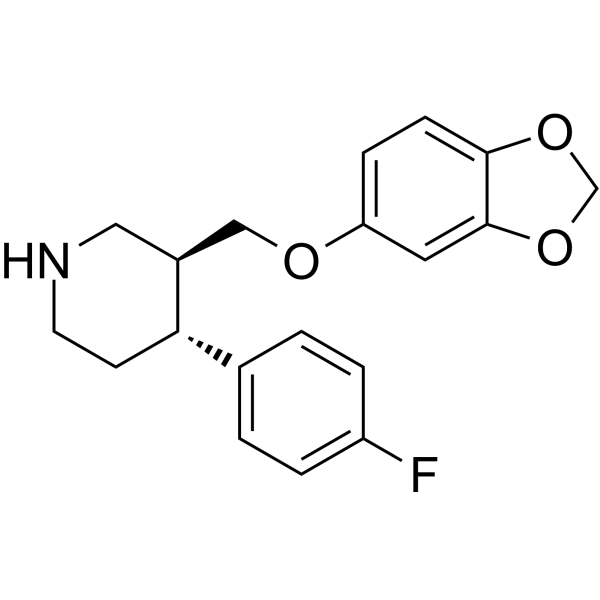
HY-122272
Paroxetine5-HT Inhibitor -
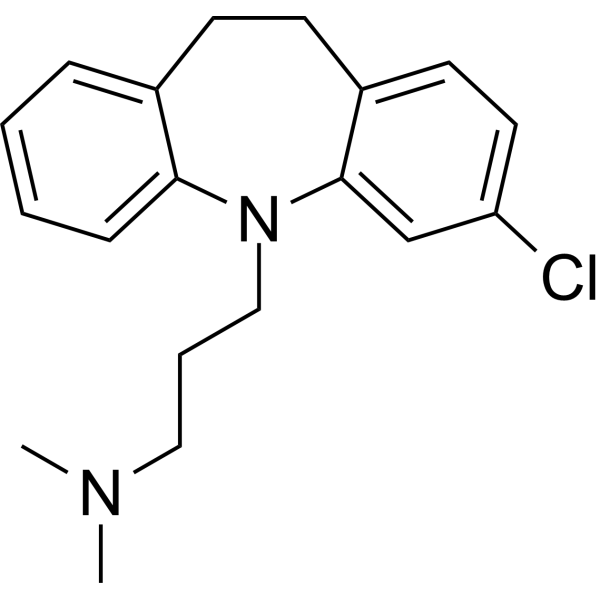
HY-B0457A
Clomipramine5-HT Reuptake Inhibitor -
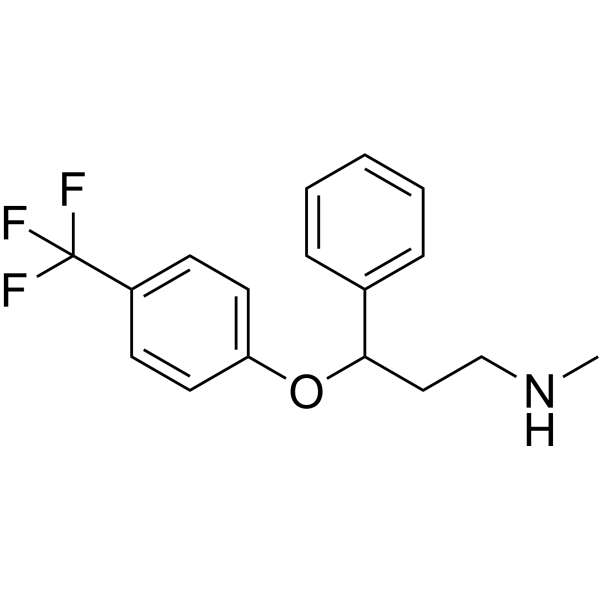
HY-B0102
Fluoxetine -
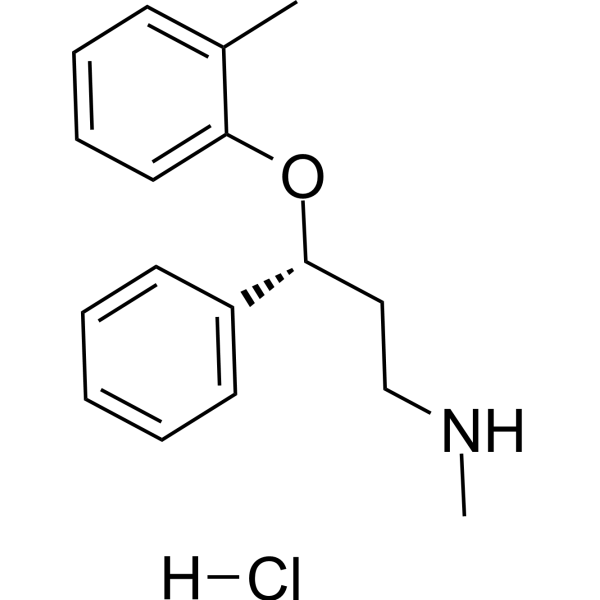
HY-17385
Atomoxetine hydrochlorideNoradrenalin Reuptake Inhibitor -
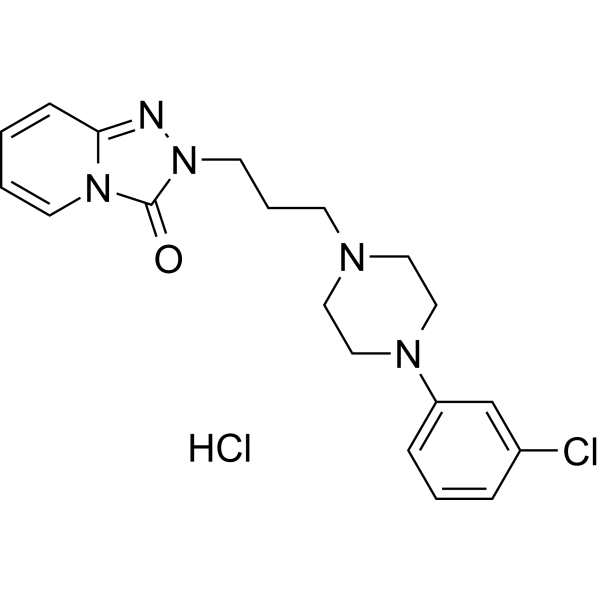
HY-B0478
Trazodone hydrochloride5-HT Receptor Antagonist -
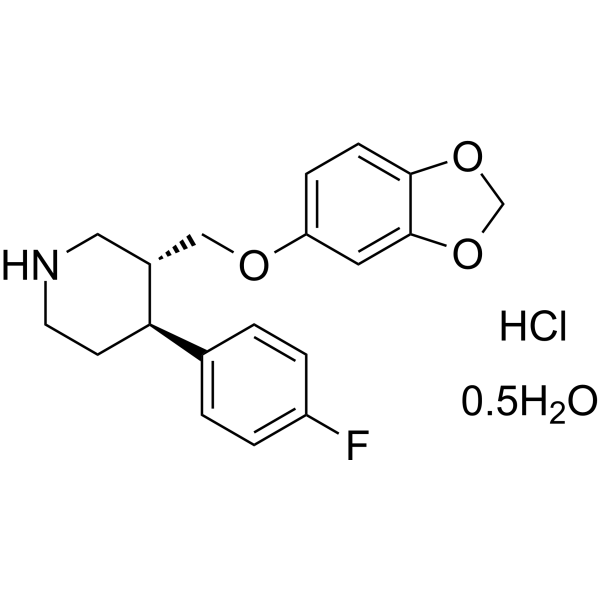
HY-B0492A
Paroxetine hydrochloride hemihydrate5-HT Inhibitor -
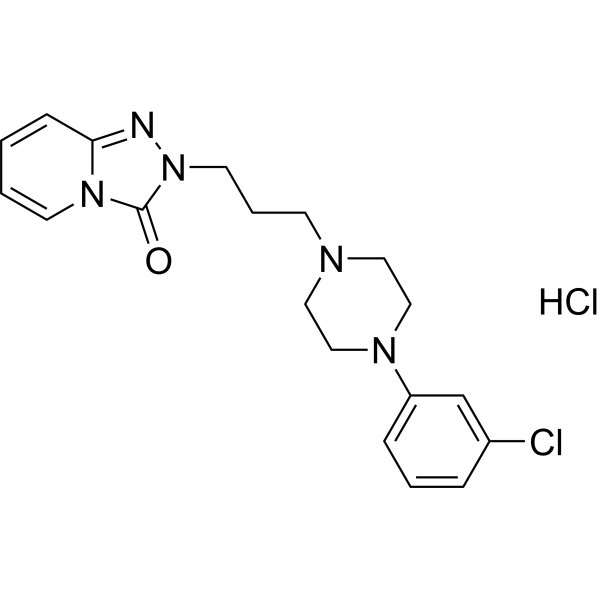
HY-B0478R
Trazodone hydrochloride (Standard) -

HY-B0457AR
Clomipramine (Standard)5-HT Reuptake Inhibitor -

HY-17385R
Atomoxetine hydrochloride (Standard)Noradrenalin Reuptake Inhibitor -

HY-B0492AR
Paroxetine hydrochloride hemihydrate (Standard)Autophagy Inducer


Product Information
Information
Application
The compound is the grade of analytical standard, which is the reference standard supplied assay. It is commonly used in qualitative, quantitative and methodological research experiments in HPLC, GC and MS.


Chemical Information
-
CAS No. 61869-08-7
-
Appearance Oil
-
Molecular Weight 329.37
-
Formula C19H20FNO3
-
Color Colorless to light yellow
-
SMILES
FC1=CC=C(C=C1)[C@H]2[C@@H](CNCC2)COC3=CC=C4OCOC4=C3
-
Synonyms
BRL29060 (Standard)
-
Shipping
Room temperature in continental US; may vary elsewhere.
-
Storage
Please store the product under the recommended conditions in the Certificate of Analysis.


Purity & Documentation
References
[1]. Bourin M, et al. Paroxetine: a review[J]. CNS drug reviews, 2001, 7(1): 25-47.
[2]. Nevels RM, et al. Paroxetine-The Antidepressant from Hell? Probably Not, But Caution Required. Psychopharmacology bulletin. 2016 Mar 01;46(1):77-104. [Content Brief]
[3]. Durairaj H, et al. Paroxetine differentially modulates LPS-induced TNFα and IL-6 production in mouse macrophages. International immunopharmacology. 2015 Apr;25(2):485-92. [Content Brief]
[4]. Young-Woo Cho, et al. Paroxetine Induces Apoptosis of Human Breast Cancer MCF-7 Cells through Ca2+-and p38 MAP Kinase-Dependent ROS Generation. Cancers (Basel). 2019 Jan 9;11(1):64. [Content Brief]
[5]. Malek Zarei, et al. Paroxetine attenuates the development and existing pain in a rat model of neurophatic pain. Iran Biomed J. 2014;18(2):94-100. [Content Brief]
[6]. S Lightowler, et al. Anxiolytic-like effect of paroxetine in a rat social interaction test. Pharmacol Biochem Behav. 1994 Oct;49(2):281-5. [Content Brief]

Calculators
Concentration (start) × Volume (start) = Concentration (final) × Volume (final)


Paroxetine (Standard) Related Classifications
HY-122272R Related Classifications
 Powered by Bioz
Keywords
- Paroxetine (Standard)
- 61869-08-7
- BRL29060 (Standard)
- Reference Standards
- Cytochrome P450
- 5-HT Receptor
- NO Synthase
- Apoptosis
- Serotonin Transporter
- Estrogen Receptor/ERR
- 5-HT2 receptors
- Raw264.7 mouse macrophages
- nitric oxide synthase
- 5-HT1B/1D autoreceptors
- serotonin reuptake transporter
- cytochrome P450 3A4
- 5-HT1A autoreceptor
- norepinephrine reuptake transporter
- cytochrome P450 2D6
- muscarinic cholinergic receptor
- Inhibitor
- inhibitor
- inhibit