1. Search Result
Search Result
Results for "

UCMS

" in MedChemExpress (MCE) Product Catalog:

21

Inhibitors & Agonists

1

Isotope-Labeled Compounds

Cat. No. Product Name Target Research Areas Chemical Structure
  • HY-110354
    UCM05
    2 Publications Verification

    G28UCM

    Fatty Acid Synthase (FASN) Bacterial Infection
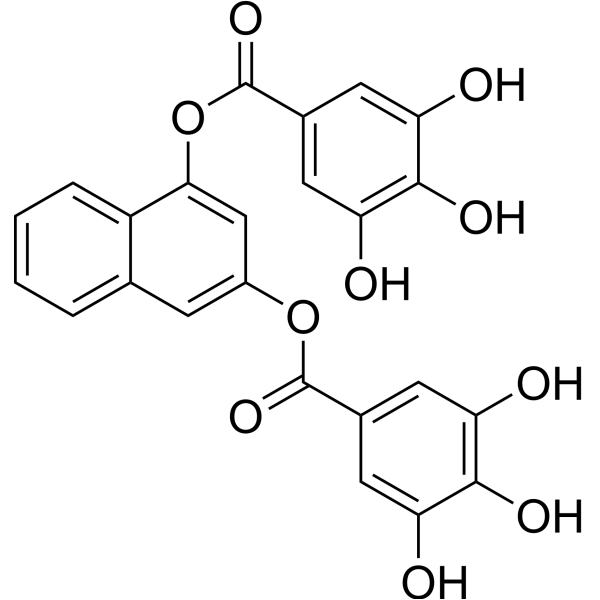
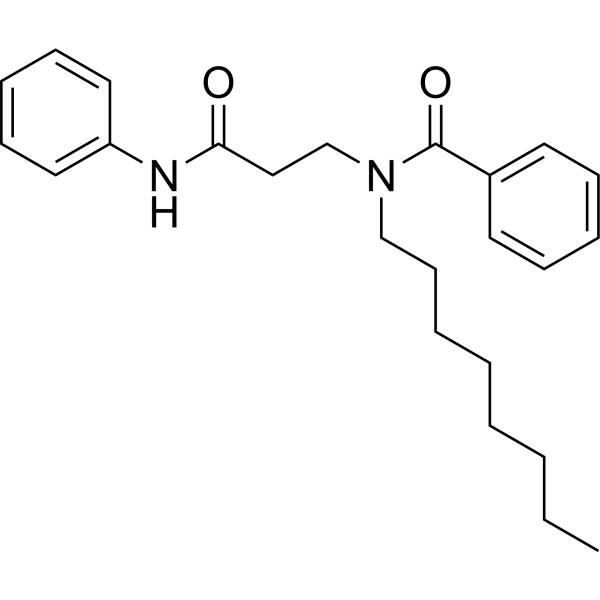
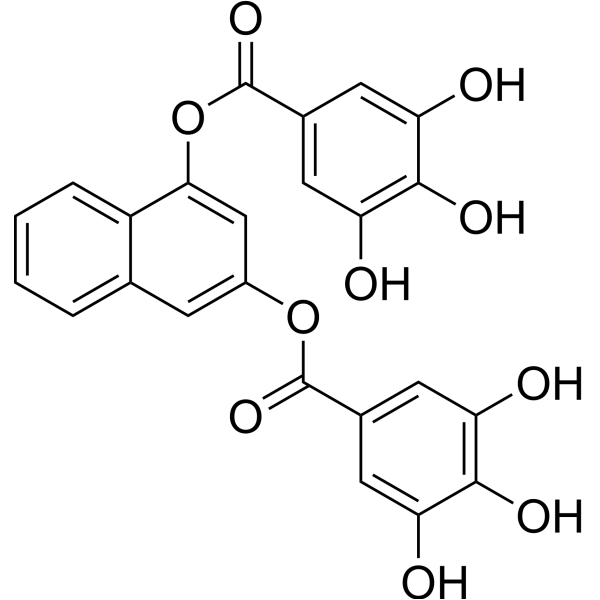
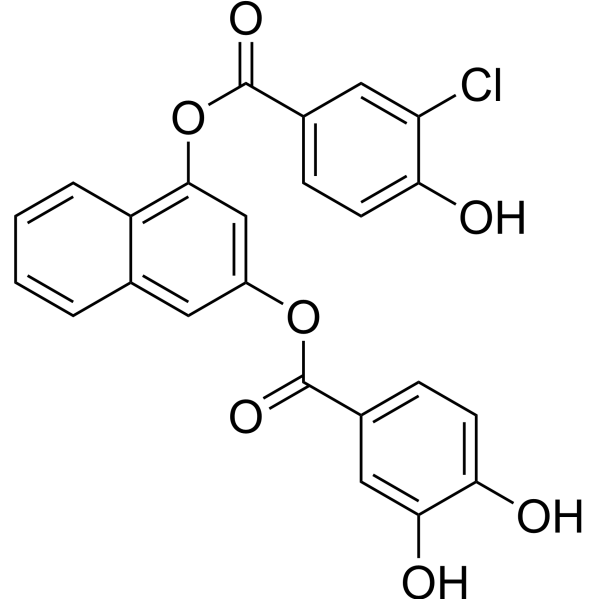
    UCM05 (G28UCM) is a fatty acid synthase (FASN) and filamentous temperature-sensitive protein Z (Ftsz) inhibitor. UCM05 inhibits fatty acid synthesis, viral replication, and Gram-positive bacterial growth. UCM05 binds to FtsZ GTP-binding sites, inhibits GTPase activity, and disrupts Z-ring localization. UCM05 can be used for the research of HSV-1/2 infection, HIV-1 infection, and Gram-positive bacterial infections[1][2][3].
    UCM05
  • HY-155954

    Apoptosis Autophagy Cancer
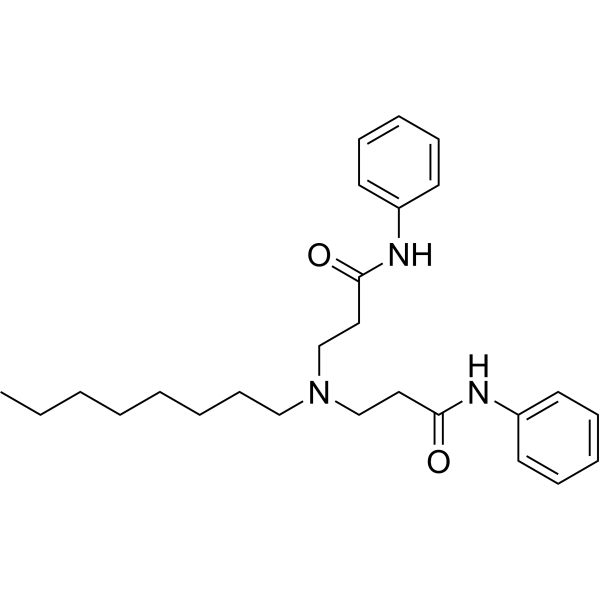
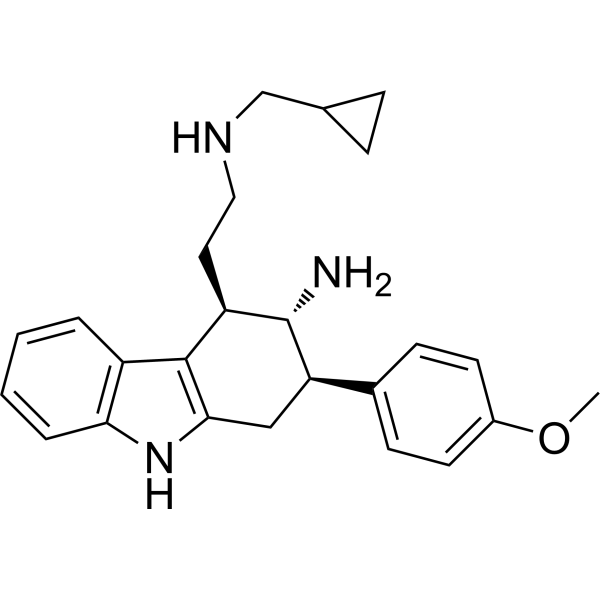
    UCM-1336 is a potent ICMT inhibitor, with an IC50 of 2 μM. UCM-1336 induces mislocalization of endogenous Ras, decreases Ras activation and induces cell death by autophagy and apoptosis .
    UCM-1336
  • HY-148867

    Dopamine Receptor Neurological Disease
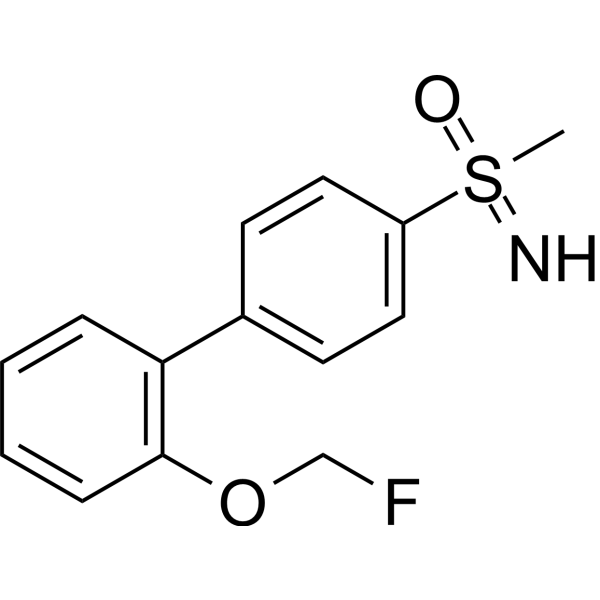
    UCM-1306 is a potent and orally active human dopamine D1 receptor allosteric modulator (PAM). UCM-1306 increases the endogenous dopamine (DA) maximal effect both in human and mouse D1 receptors. UCM-1306 is not only for improving motor symptoms but also for addressing the key comorbid cognitive impairment associated with long-term Parkinson’s disease (PD) .
    UCM-1306
  • HY-162265A

    Apoptosis Cancer
    UCM-13369 (Compound 4b) is a NPM1 inhibitor. UCM-13369 downregulates the pathway associated with mutant NPM1 C+, and specifically recognizes the C-end DNA-binding domain of NPM1 C+. UCM-13369 induces apoptosis in AML cell lines and primary cells. UCM-13369 can be used for leukemia research .
    UCM-13369 dihydrochloride
  • HY-167862A

    LPL Receptor Neurological Disease
    UCM-05194 (ammonium) is a lysophosphatidic acid receptor 1 (LPA1) agonist. UCM-05194 (ammonium) induces calcium mobilization in LPA1-expressing RH7777 cells (EC50 = 0.24 µM). UCM-05194 (ammonium) induces neurite retraction and migration in LPA1-overexpressing B103 rat neuroblastoma cells. UCM-05194 (ammonium) attenuates acetic acid-induced writhing and hind paw mechanical hypersensitivity in mice .
    UCM-05194 ammonium
  • HY-167862

    Endogenous Metabolite Neurological Disease
    UCM-05194 is a selective LPA1 receptor agonist with activity to improve neuropathic pain. UCM-05194 is a LPA1 agonist that exhibits potent and selective properties in its pharmacologically similar properties. UCM-05194 triggers LPA1-mediated cellular effects and leads to internalization of the receptor, resulting in functional inactivation in primary sensory neurons. UCM-05194 effectively reduces pain perception in in vivo models. UCM-05194 can be used to conduct research on progressive systemic diseases .
    UCM-05194
  • HY-101074

    2-Phenylmelatonin

    Melatonin Receptor Neurological Disease Inflammation/Immunology Cancer
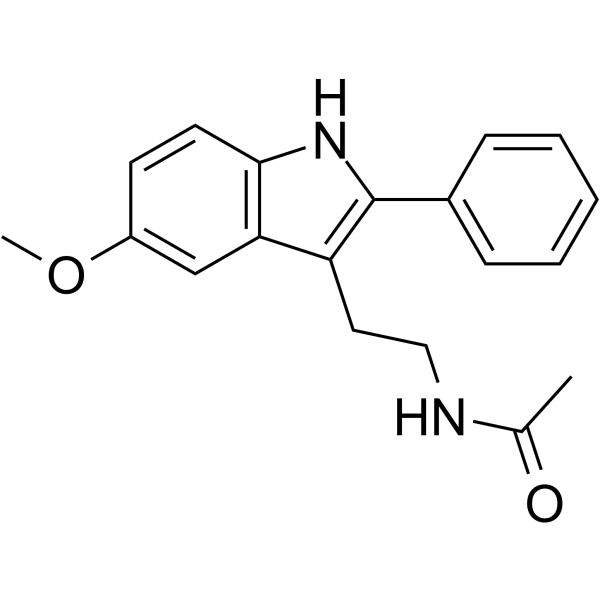
    UCM 608 is a high affinity melatonin (MT) membrane receptor agonist. The pKi values for MT1 and MT2 are 10.7 and 10.4 .
    UCM 608
  • HY-162265

    Apoptosis Cancer
    UCM-13369 (Compound 4b) is a NPM1 inhibitor. UCM-13369 downregulates the pathway associated with mutant NPM1 C+, and specifically recognizes the C-end DNA-binding domain of NPM1 C+. UCM-13369 induces apoptosis in AML cell lines and primary cells, that can be used for the research of AML .
    UCM-13369
  • HY-149708

    ICMT Others
    UCM-13207 is a selective isoprenylcysteine carboxylmethyltransferase (ICMT) inhibitor with a human IC50 of 1.4 μM and human Ka of 7.2 μM. UCM-13207 modulates progerin localization, stability, and levels, reduces DNA damage, increases cellular viability, and decreases tissue senescence. UCM-13207 can be used for the research of Hutchinson−Gilford progeria syndrome .
    UCM-13207
  • HY-W742952

    Glycidyl palmitoleate-d5

    Isotope-Labeled Compounds Others
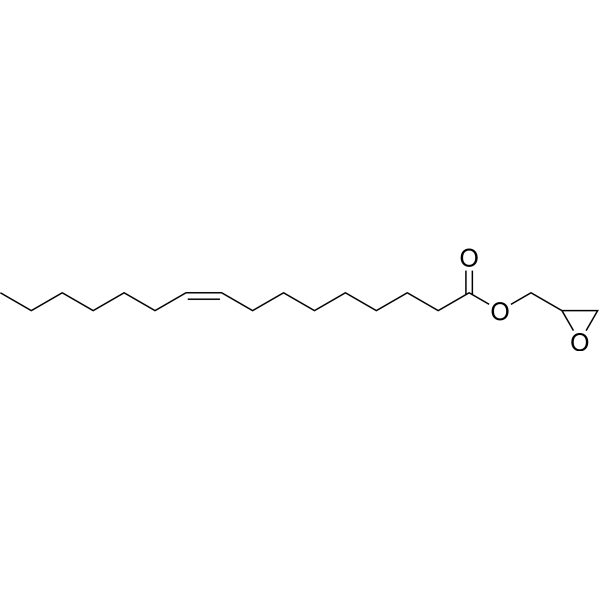
    UCM710-d5 (Glycidyl palmitoleate-d5) is the deuterium labeled UCM710.
    UCM710-d5
  • HY-110354R

    G28UCM (Standard)

    Reference Standards Fatty Acid Synthase (FASN) Bacterial Infection
    UCM05 (Standard) is the analytical standard of Lysipressin. This product is intended for research and analytical applications. UCM05 (G28UCM) is a fatty acid synthase (FASN) and filamentous temperature-sensitive protein Z (Ftsz) inhibitor. UCM05 inhibits fatty acid synthesis, viral replication, and Gram-positive bacterial growth. UCM05 binds to FtsZ GTP-binding sites, inhibits GTPase activity, and disrupts Z-ring localization. UCM05 can be used for the research of HSV-1/2 infection, HIV-1 infection, and Gram-positive bacterial infections [1][2][3].
    UCM05 (Standard)
  • HY-129166

    Bacterial Infection
    UCM53, a FtsZ inhibitor, is an antibacterial agent. UCM53 can inhibit the growth of clinical isolates of antibiotic-resistant Staphylococcus aureus and Enterococcus faecalis
    UCM53
  • HY-115861

    Endogenous Metabolite Neurological Disease
    UCM765 is a selective MT2-type melatonin receptor ligand with hypnotic, analgesic and anxiolytic activities. The partial agonist effect of UCM765 has attracted attention in pharmacological studies. By structurally modifying UCM765, its water solubility and metabolic stability can be improved, thereby increasing its bioavailability. The biological activity of UCM765 has been verified in a rat model, supporting its potential for further pharmacological studies .
    UCM765
  • HY-120300

    Cannabinoid Receptor Metabolic Disease
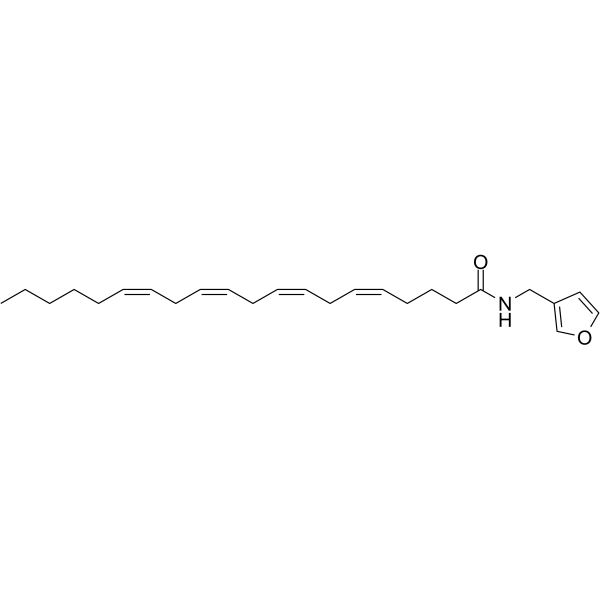
    UCM710 is an endocannabinoid (eCB) hydrolysis inhibitor that increases the levels of N-arachidonoyl ethanolamine and 2-arachidonoylglycerol in neurons. UCM710 inhibits fatty acid amide hydrolase and α/β-hydrolase domain 6, but not monoacylglycerol lipase .
    UCM710
  • HY-119010

    Melatonin Receptor Neurological Disease
    UCM 549 is a melatonin MT2 receptor inverse agonist and a MT1 receptor antagonist .
    UCM 549
  • HY-103341

    Cannabinoid Receptor Neurological Disease
    UCM707, a potent and selective inhibitor of endocannabinoid uptake, potentiates hypokinetic and antinociceptive effects of Anandamide .
    UCM707
  • HY-180198

    Melatonin Receptor Cancer
    UCM1400 is a melatonin receptor (MT) subtype-selective modulator. UCM1400 shows agonistic effect for MT1 and antagonistic effect for MT2 with pKi values of 7.94 and 8.11. UCM1400 can inhibit the decrease in cAMP mediated by the MT2 receptor with a pIC50 of 7.87. UCM1400 exhibits anti-proliferative activity against human glioma cells and inhibit tumor growth. UCM1400 can be used for the research of cancer, such as glioma .
    UCM1400
  • HY-101074R

    2-Phenylmelatonin (Standard)

    Melatonin Receptor Reference Standards Neurological Disease Inflammation/Immunology Cancer
    UCM 608 (Standard) is the analytical standard of UCM 608 (HY-101074). This product is intended for research and analytical applications. UCM 608 is a high affinity melatonin (MT) membrane receptor agonist. The pKi values for MT1 and MT2 are 10.7 and 10.4 .
    UCM 608 (Standard)
  • HY-115304

    Melatonin Receptor Neurological Disease
    UCM 793 is a non-selective MT1/MT2 receptor agonist (pKis: 9.09 (MT1 receptor); 9.19 (MT2 receptor)). UCM793 increases the number of episodes and decreases the length of the episodes of wakefulness. UCM 793 influences quality of the vigilance states. UCM 793 decreases sleep onset without having an effect on NREM sleep maintenance .
    UCM 793
  • HY-179573

    iGluR Neurological Disease
    UCM-A86 is a selective positive allosteric modulator of GluN1/GluN3 NMDA receptors with EC50 values of 21 µM and 19 µM at GluN1/GluN3A and GluN1/GluN3B receptors, respectively. UCM-A86 selectively potentiates responses from GluN1/GluN3A/B over GluN1/GluN2A-D receptors. UCM-A86 can be used in the research of central nervous system diseases .
    UCM-A86
  • HY-184108

    iGluR GABA Receptor NO Synthase Neurological Disease
    ZL006-05 is an orally active, brain-penetrant nNOS–PSD-95 and α2-containing GABAA dual-target inhibitor. ZL006-05 blocks the nNOS–PSD-95 protein-protein interaction and selectively potentiatesα2-containing GABAA receptors. ZL006-05 attenuates central sensitization and strengthens inhibitory GABAergic synaptic transmission. ZL006-05 can be used for the study of neuropathic pain, cancer pain, chemotherapy-induced peripheral neuropathic pain, ischemic stroke, poststroke depression and anxiety .
    ZL006-05

Inquiry Online

Your information is safe with us. * Required Fields.

Salutation


Country or Region *

Applicant Name *


Organization Name *

Department *


Email Address *


Product Name *

Cat. No.


Requested quantity *

Phone Number *


Remarks

Inquiry Online

Inquiry Information

Product Name:
Cat. No.:
Quantity:
MCE Japan Authorized Agent:

