



UCM05
Based on 2 publication(s) in Google Scholar
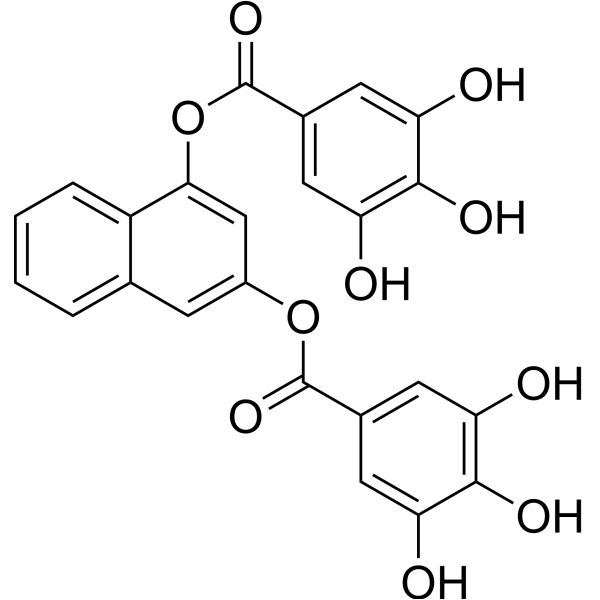
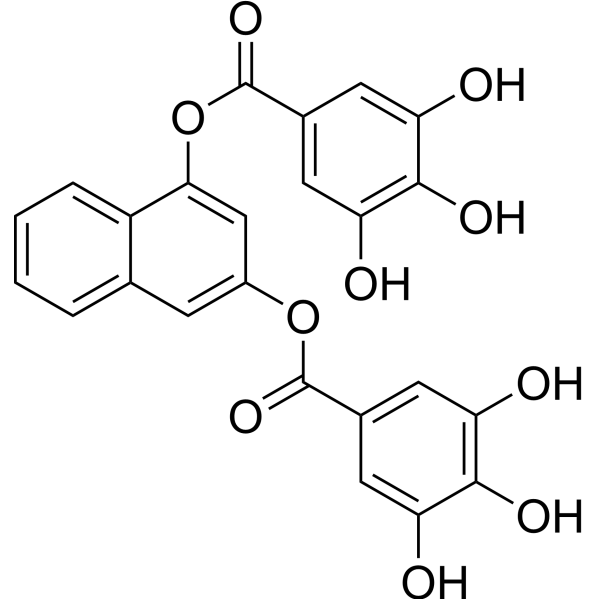
UCM05 (G28UCM) is a fatty acid synthase (FASN) and filamentous temperature-sensitive protein Z (Ftsz) inhibitor. UCM05 inhibits fatty acid synthesis, viral replication, and Gram-positive bacterial growth. UCM05 binds to FtsZ GTP-binding sites, inhibits GTPase activity, and disrupts Z-ring localization. UCM05 can be used for the research of HSV-1/2 infection, HIV-1 infection, and Gram-positive bacterial infections[1][2][3].
For research use only. We do not sell to patients.
- Purity : 99.22%
- CAS No.: 1094451-90-7
- Formula: C24H16O10
- Molecular Weight:464.38
-
Storage:
4°C, protect from light
* In solvent : -80°C, 6 months; -20°C, 1 month (protect from light)

To place orders, for customer services and technical support, please contact: MedChemExpress USA
Tel: 609-228-6898 E-mail: [email protected] [email protected]


-
 Biological Activity
-
Chemical Information
-
Solvent & Solubility
- Protocols
- Purity & Documentation
- References
-
 Help & FAQs


-
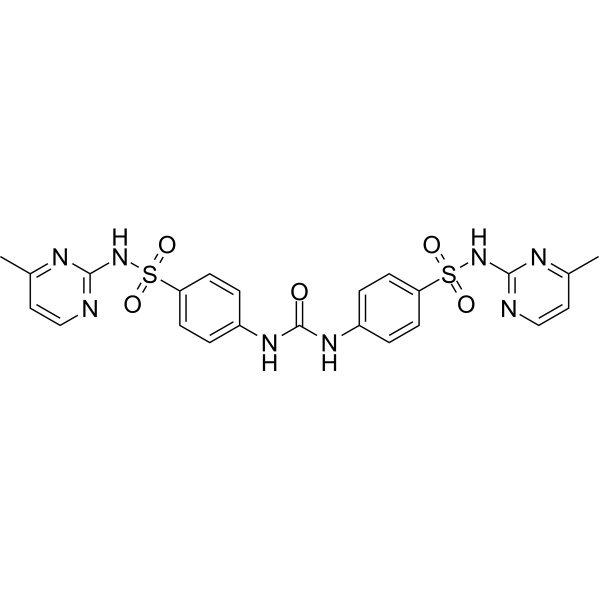
HY-117769
GSK837149AFASN Inhibitor -
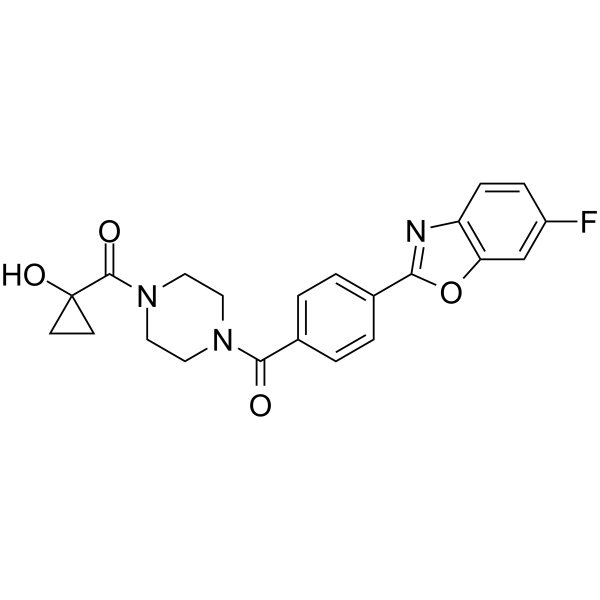
HY-111551
FT113FASN Inhibitor -
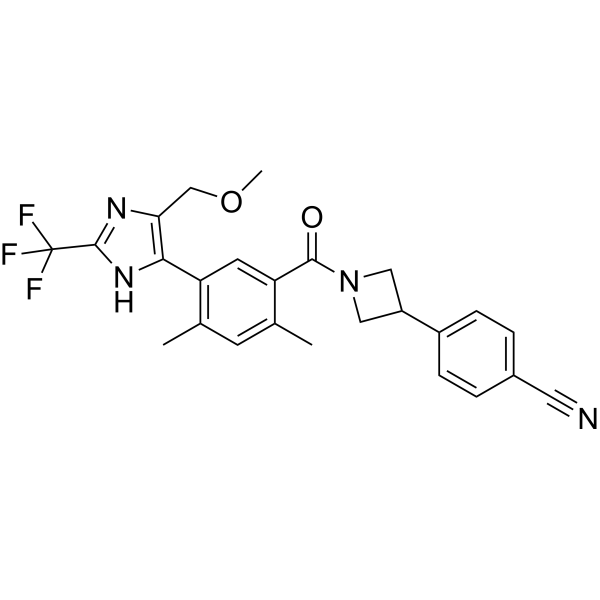
HY-120062
TVB-3664FASN Inhibitor -
HY-120394
TVB-3166FASN Inhibitor -
HY-121250
FasnallFASN Inhibitor -
HY-111777
FASN-IN-1Fatty Acid Synthase Inhibitor -
HY-A0210
CeruleninFASN Inhibitor -
HY-110354R
UCM05 (Standard)Reference Standard -
HY-12364
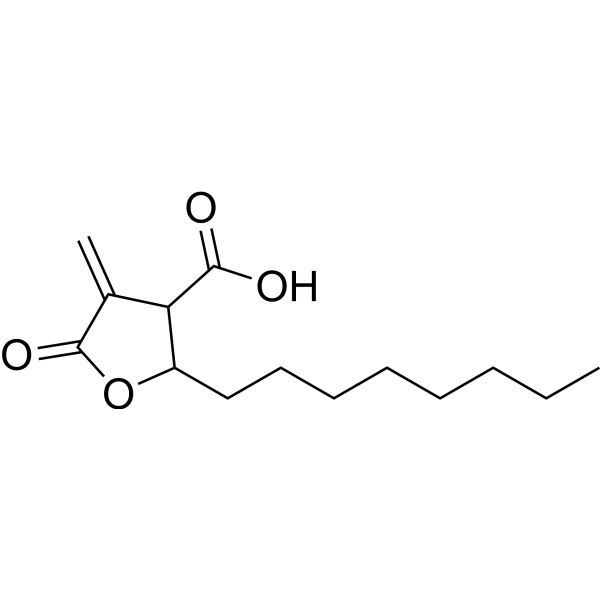
C75Fatty Acid Synthase Inhibitor -
HY-14452
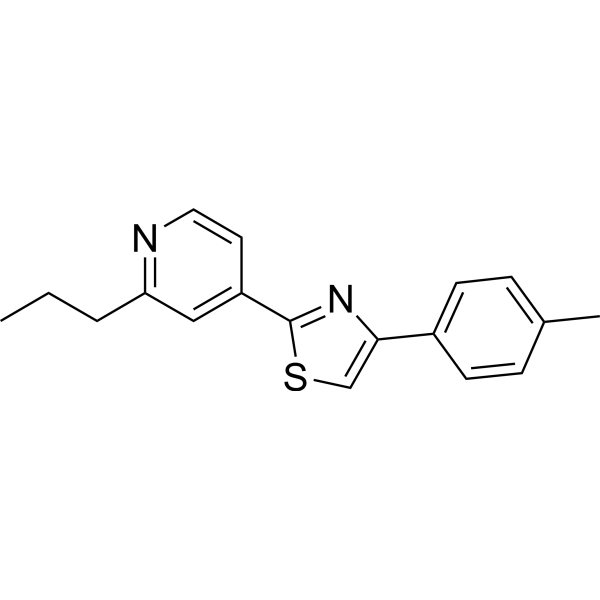
FatostatinSREBP Activation Inhibitor -
HY-16046
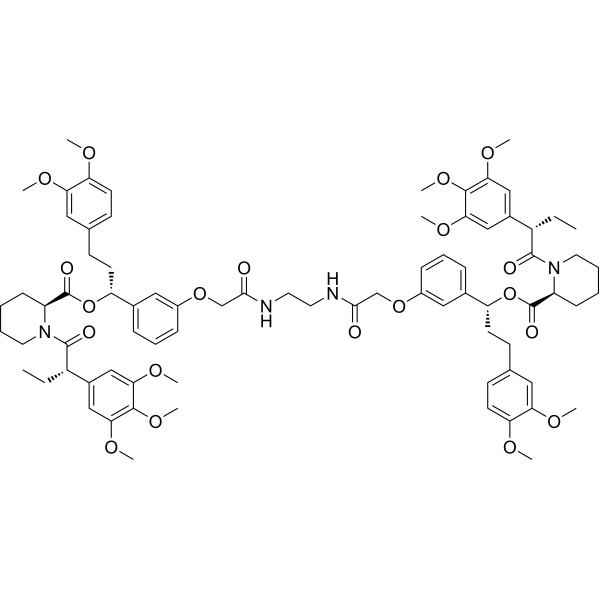
RimiducidDimerization Inducer -
HY-112829
DenifanstatFASN Inhibitor
Publications Citing Use of MedChemExpress (MCE) UCM05
More

Biological Activity
Description
Cellular Effect
|
Cell Line

|
Type | Value | Description | References |
|---|---|---|---|---|
| MDA-MB-231 | IC50 |
77 μM
Compound: 14
|
Cytotoxicity against human MDA-MB-231 cells assessed as cell growth inhibition incubated for 48 hrs by SRB assay
Cytotoxicity against human MDA-MB-231 cells assessed as cell growth inhibition incubated for 48 hrs by SRB assay
|
[PMID: 37776575] |
| SK-BR-3 | IC50 |
21 μM
Compound: 20
|
Cytotoxicity against human SKBR3 cells after 48 hrs by MTT assay
Cytotoxicity against human SKBR3 cells after 48 hrs by MTT assay
|
[PMID: 22559865] |
| SK-BR-3 | IC50 |
21 μM
Compound: 41
|
Cytotoxicity against human SKBR3 cells after 48 hrs by MTT assay
Cytotoxicity against human SKBR3 cells after 48 hrs by MTT assay
|
[PMID: 21726077] |
In Vitro
UCM05 (5 μM; 24 h) reduces HSV-2 replication in D407 cells by targeting host fatty acid synthesis[1].
UCM05 binds to Bacillus subtilis FtsZ monomers with micromolar affinity, disrupts normal FtsZ assembly, and weakly inhibits FtsZ GTPase activity by 20%[3].
UCM05 inhibits cell division in Bacillus subtilis by inducing filamentation and disrupting normal FtsZ-GFP ring formation into punctuate foci and distorted structures[3].
MedChemExpress (MCE) has not independently confirmed the accuracy of these methods. They are for reference only. Further protocols information, click here.
-
Cell Line:D407 cells infected with wild-type HSV-2 (333 strain)
-
Concentration:5 μM
-
Incubation Time:24 h
-
Result:Significantly reduced HSV-2 gD protein levels and virus yield.
In Vivo
MedChemExpress (MCE) has not independently confirmed the accuracy of these methods. They are for reference only.
-
Animal Model:BALB/c (4-5 week-old female, HSV-2 infected)[1]
-
Dosage:15 mg/kg/d; 30 mg/kg/d
-
Administration:i.p.; daily; 6 days
-
Result:Modestly extended survival but did not significantly improve survival rates at 15 mg/kg/d.
Provided full survival protection (100% survival by 12 dpi) at 30 mg/kg/d, compared to complete mortality in the untreated HSV-2-infected group by 8 dpi.
Significantly reduced clinical scores of acute vaginal injuries at both doses.
Notably alleviated vulvar erosion and hindlimb paralysis at 30 mg/kg/d compared to the infected control group.
Reduced necrotic areas, neutrophils, inflammatory debris, and viral inclusion bodies in vaginal tissues at 6 dpi at both doses.
Reduced viral titers in vaginal lavage at 4 dpi in a concentration-dependent manner.
Significantly reduced HSV-2 VP16 viral DNA copy numbers in vaginal tissues (P < 0.001) at 6 dpi at both doses compared to the infected control group.
Significantly reduced serum levels of Tnf-α and Il-6 at 6 dpi at both doses.


Chemical Information
-
CAS No. 1094451-90-7
-
Appearance Solid
-
Molecular Weight 464.38
-
Formula C24H16O10
-
Color Off-white to light brown
-
SMILES
O=C(OC1=CC(OC(C2=CC(O)=C(C(O)=C2)O)=O)=CC3=CC=CC=C31)C4=CC(O)=C(C(O)=C4)O
-
Synonyms
G28UCM
-
Shipping
Room temperature in continental US; may vary elsewhere.
-
Storage
4°C, protect from light
* In solvent : -80°C, 6 months; -20°C, 1 month (protect from light)


Publications (2)
-
Journal Impact Factor
-
Most Recent
-
Cell Death Dis
A targetable antioxidant defense mechanism to EZH2 inhibitors enhances tumor cell vulnerability to ferroptosis. [Abstract]2025 Apr 14;16(1):291. PMID: 40229247 -
Virol J
Small molecule UCM05 inhibits HSV-2 infection via targeting viral glycoproteins and fatty acid synthase with potentiating antiviral immunity. [Abstract]2025 Jul 19;22(1):249. PMID: 40684179


Solvent & Solubility
In Vitro:
DMSO : 100 mg/mL (215.34 mM; Need ultrasonic; Hygroscopic DMSO has a significant impact on the solubility of product, please use newly opened DMSO)
Please refer to the solubility information to select the appropriate solvent. Once prepared, please aliquot and store the solution to prevent product inactivation from repeated freeze-thaw cycles.
Storage method and period of stock solution: -80°C, 6 months; -20°C, 1 month (protect from light). When stored at -80°C, please use it within 6 months. When stored at -20°C, please use it within 1 month.
Please refer to the solubility information to select the appropriate solvent. Once prepared, please aliquot and store the solution to prevent product inactivation from repeated freeze-thaw cycles.
Storage method and period of stock solution: -80°C, 6 months; -20°C, 1 month (protect from light). When stored at -80°C, please use it within 6 months. When stored at -20°C, please use it within 1 month.
Concentration (start) × Volume (start) = Concentration (final) × Volume (final)
In Vivo:
Select the appropriate dissolution method based on your experimental animal and administration route.
- For the following dissolution methods, please ensure to first prepare a clear stock solution using an In Vitro approach and then sequentially add co-solvents:
- To ensure reliable experimental results, the clarified stock solution can be appropriately stored based on storage conditions. As for the working solution for In Vivo experiments, it is recommended to prepare freshly and use it on the same day.
- The percentages shown for the solvents indicate their volumetric ratio in the final prepared solution. If precipitation or phase separation occurs during preparation, heat and/or sonication can be used to aid dissolution.
Add each solvent one by one: 10% DMSO 40% PEG300 5% Tween-80 45% Saline
Solubility: ≥ 2.5 mg/mL (5.38 mM); Clear solution
This protocol yields a clear solution of ≥ 2.5 mg/mL (saturation unknown).
Taking 1 mL working solution as an example, add 100 μL DMSO stock solution (25.0 mg/mL) to 400 μL PEG300, and mix evenly; then add 50 μL Tween-80 and mix evenly; then add 450 μL Saline to adjust the volume to 1 mL.
Preparation of Saline: Dissolve 0.9 g sodium chloride in ddH₂O and dilute to 100 mL to obtain a clear Saline solution.
Add each solvent one by one: 10% DMSO 90% (20% SBE-β-CD in Saline)
Solubility: ≥ 2.5 mg/mL (5.38 mM); Clear solution
This protocol yields a clear solution of ≥ 2.5 mg/mL (saturation unknown).
Taking 1 mL working solution as an example, add 100 μL DMSO stock solution (25.0 mg/mL) to 900 μL 20% SBE-β-CD in Saline, and mix evenly.
Preparation of 20% SBE-β-CD in Saline (4°C, storage for one week): 2 g SBE-β-CD powder is dissolved in 10 mL Saline, completely dissolve until clear.
In Vivo Dissolution Calculator
Please enter the basic information of animal experiments:
-
-
-
-
Recommended: Prepare an additional quantity of animals to account for potential losses during experiments.
Please enter your animal formula composition:
-
%DMSO +
Recommended: Keep the proportion of DMSO in working solution below 2% if your animal is weak.
-
%+
-
+%Tween-80 + +
-
%Saline +
The co-solvents required include: DMSO, . All of co-solvents are available by MedChemExpress (MCE). , Tween 80. All of co-solvents are available by MedChemExpress (MCE).
Working solution concentration: 0.22 mg/mL
Method for preparing stock solution: mg drug dissolved in μL DMSO. Stock solution concentration: mg/mL. * In solvent : -80°C, 6 months; -20°C, 1 month (protect from light)
1. Take μL DMSO stock solution;
2. Add μL .
μL , mix evenly;
3. Then add μL Tween 80, mix evenly;
4. Then add μL
Please ensure that the stock solution in the first step is dissolved to a clear state, and add co-solvents in sequence. You can use ultrasonic heating (ultrasonic cleaner, recommended frequency 20-40 kHz), vortexing, etc. to assist dissolution.

Protocols
-
Research Protocol for Infectious Diseases
Infectious-disease experiments test how pathogens interact with host barriers, innate immune receptors, inflammatory signaling, pathogen replication, and tissue injury; pattern-recognition receptors such as TLRs, RIG-I-like receptors, NOD-like receptors, and inflammasomes detect microbial molecules and activate NF-κB, interferon, and cytokine responses. The central hypothesis is that infection severity reflects the balance between pathogen burden and host response: protective inflammation restricts pathogen growth, whereas excessive or mislocalized inflammation contributes to tissue damage and disease phenotype. Unresolved questions include which host pathways are protective versus pathogenic, why some infection models fail to translate to human disease, and which combined readouts best predict clinically relevant infection outcomes.
-
Aerobic Bacterial Batch Culture on Broth/Agar
Aerobic bacterial batch culture grows a closed inoculated population in broth or on agar without continuous medium replacement; growth readouts include turbidity/OD for total suspended biomass and colony-forming units for viable cells able to form colonies on agar. OD-based growth curves reflect light scattering by cells, but OD is instrument-, pathlength-, species-, cell-size-, and density-dependent, so OD should be calibrated or interpreted alongside viable counts when quantitative cell density is required.
-
Gram Staining of Tissue Sections
Gram staining of tissue sections is a histochemical technique used to differentiate Gram-positive and Gram-negative bacteria within histological specimens based on differences in bacterial cell wall structure and dye retention, adapted from classical bacteriological Gram staining into tissue-compatible “histological Gram stain” variants. In tissue applications, modifications of the Brown-Hopps and Brown-Brenn methods are commonly used to improve differentiation of microorganisms embedded within host connective tissue and to reduce overstaining or loss of Gram-negative signal, which are known limitations of earlier approaches. The principle relies on crystal violet-iodine complex retention in Gram-positive organisms and subsequent decolorization and counterstaining steps that allow contrast visualization of Gram-negative organisms against tissue background.


Purity & Documentation
-
Data Sheet (286 KB)
-
SDS (393 KB)
- English - EN (393 KB)
- Français - FR (393 KB)
- Deutsch - DE (393 KB)
- Norwegian - NO (393 KB)
- Español - ES (393 KB)
- Swedish - SV (393 KB)
- Italian - IT (393 KB)
- Korean - KR (393 KB)
- Portuguese - PT (393 KB)
-
Handling Instructions (2659 KB)
References
[1]. Li S, et al. Small molecule UCM05 inhibits HSV-2 infection via targeting viral glycoproteins and fatty acid synthase with potentiating antiviral immunity. Virol J. 2025;22(1):249. Published 2025 Jul 19. [Content Brief]
[2]. Ruiz-Avila LB, et al. Synthetic inhibitors of bacterial cell division targeting the GTP-binding site of FtsZ. ACS Chem Biol. 2013 Sep 20;8(9):2072-83. [Content Brief]
[3]. Tripathy S, et al. FtsZ inhibitors as a new genera of antibacterial agents. Bioorg Chem. 2019 Oct;91:103169. [Content Brief]


Complete Stock Solution Preparation Table
Please refer to the solubility information to select the appropriate solvent. Once prepared, please aliquot and store the solution to prevent product inactivation from repeated freeze-thaw cycles.
Storage method and period of stock solution: -80°C, 6 months; -20°C, 1 month (protect from light). When stored at -80°C, please use it within 6 months. When stored at -20°C, please use it within 1 month.
| Optional Solvent | Concentration Solvent Mass | 1 mg | 5 mg | 10 mg | 25 mg |
|---|---|---|---|---|---|
| DMSO | 1 mM | 2.1534 mL | 10.7670 mL | 21.5341 mL | 53.8352 mL |
| 5 mM | 0.4307 mL | 2.1534 mL | 4.3068 mL | 10.7670 mL | |
| 10 mM | 0.2153 mL | 1.0767 mL | 2.1534 mL | 5.3835 mL | |
| 15 mM | 0.1436 mL | 0.7178 mL | 1.4356 mL | 3.5890 mL | |
| 20 mM | 0.1077 mL | 0.5384 mL | 1.0767 mL | 2.6918 mL | |
| 25 mM | 0.0861 mL | 0.4307 mL | 0.8614 mL | 2.1534 mL | |
| 30 mM | 0.0718 mL | 0.3589 mL | 0.7178 mL | 1.7945 mL | |
| 40 mM | 0.0538 mL | 0.2692 mL | 0.5384 mL | 1.3459 mL | |
| 50 mM | 0.0431 mL | 0.2153 mL | 0.4307 mL | 1.0767 mL | |
| 60 mM | 0.0359 mL | 0.1795 mL | 0.3589 mL | 0.8973 mL | |
| 80 mM | 0.0269 mL | 0.1346 mL | 0.2692 mL | 0.6729 mL | |
| 100 mM | 0.0215 mL | 0.1077 mL | 0.2153 mL | 0.5384 mL |


UCM05 Related Classifications
HY-110354 Related Classifications
 Powered by Bioz