



Bacillus Subtilis Infection
-
Bacillus Subtilis Infection (35)

- 1
- 2

Subtilisin (EC 3.4.21.14) is a bacterial serine protease. Subtilisin induces Apoptosis. Subtilisin stimulates the expression of pro-allergic cytokines (IL-1α, IL-33). Subtilisin induces prototypic allergic lung inflammation. Subtilisin exhibits anticancer activity against breast and colon cancer. Subtilisin shows antifouling activity. Subtilisin can be used as a detergent additive.
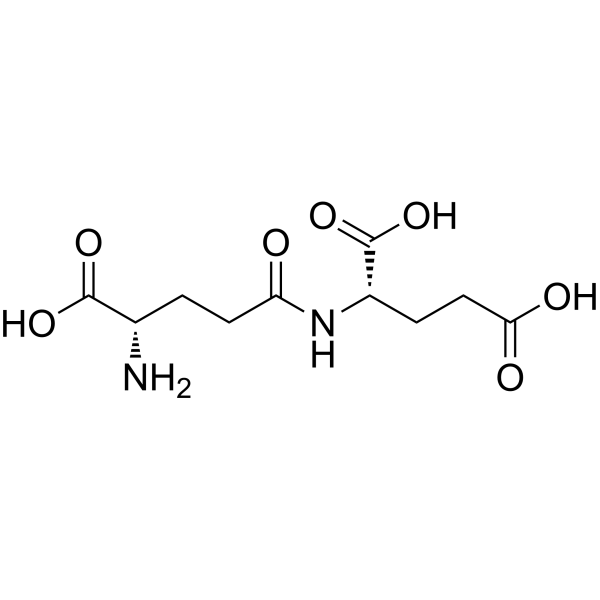
- Formula: C10H16N2O7
- Molecular Weight: 276.24
L-γ-Glutamyl-L-glutamic acid (D-γ-Glu-Glu) is a γ-glutamyl dipeptide. L-γ-Glutamyl-L-glutamic acid exists in the acid hydrolysate of poly-γ-glutamic acid produced by Bacillus subtilis F-2-01.
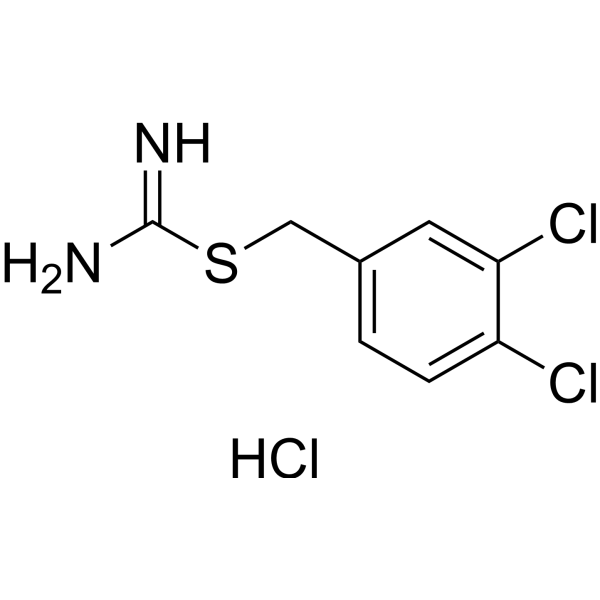
- Formula: C8H9Cl3N2S
- Molecular Weight: 271.59
MreB Perturbing Compound A22 hydrochloride (A22 hydrochloride) is a reversible MreB inhibitor and antimicrobial agent that exhibits bacteriostatic activity against Escherichia coli, with low activity against Gram-positive bacteria. MreB Perturbing Compound A22 hydrochloride rapidly and reversally delocalizes MreB from the helical/circular structures in cells, impairs MreB function, and reduces the binding of MreB to the chromosomal region proximal to the replication origin. MreB Perturbing Compound A22 hydrochloride alters the cell morphology of caulobacters to round/lemon-shaped, slows caulobacter growth, blocks their cell division, and induces the formation of spherical morphology, asymmetric division, and anucleate cells in Escherichia coli. MreB Perturbing Compound A22 hydrochloride is used for studies related to bacterial rod-shaped morphology determination, chromosome segregation, and cell division mechanisms.

- Formula: C6H6O6
- Molecular Weight: 174.11
Aconitic acid (NSC 7616) is an Antibacterial agent. Aconitic acid exerts dose-dependent inhibitory effects on Escherichia coli, Pseudomonas aeruginosa, Bacillus subtilis, and Staphylococcus aureus in vitro. Aconitic acid can be used in studies related to bacterial infections.
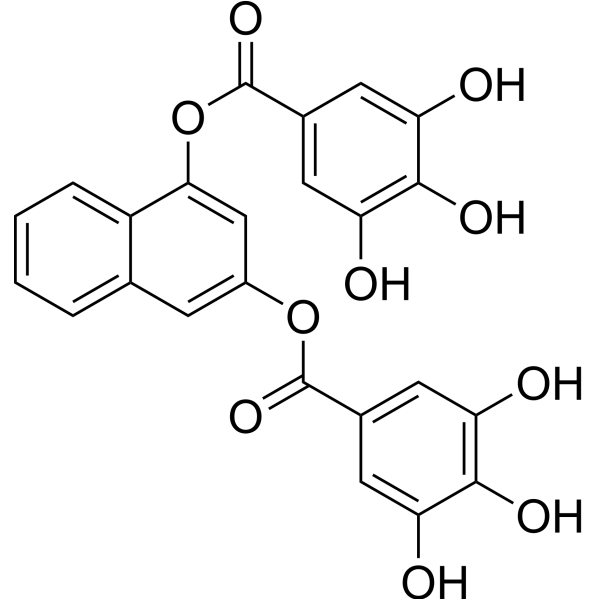
- Formula: C24H16O10
- Molecular Weight: 464.38
UCM05 (G28UCM) is a fatty acid synthase (FASN) and filamentous temperature-sensitive protein Z (Ftsz) inhibitor. UCM05 inhibits fatty acid synthesis, viral replication, and Gram-positive bacterial growth. UCM05 binds to FtsZ GTP-binding sites, inhibits GTPase activity, and disrupts Z-ring localization. UCM05 can be used for the research of HSV-1/2 infection, HIV-1 infection, and Gram-positive bacterial infections[1][2][3].
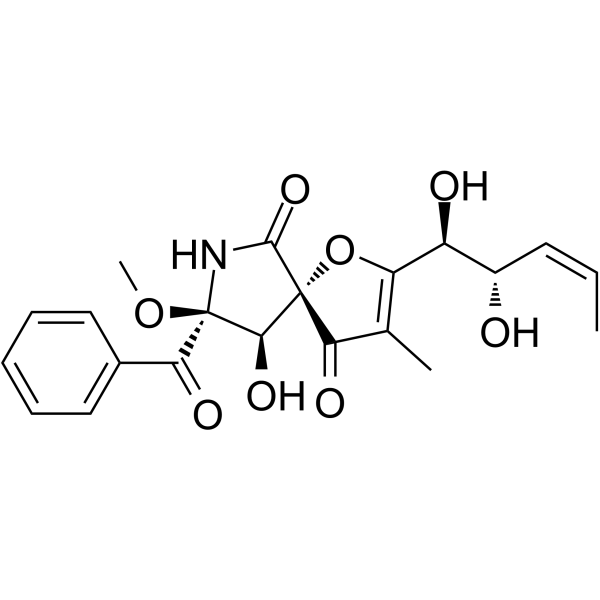
- Formula: C21H23NO8
- Molecular Weight: 417.41
14-Norpseurotin A (14-Norpseurotin) is an Antibacterial, antimalarial, and anticancer agent. 14-Norpseurotin A is isolated from various fungi of the Aspergillus genus. 14-Norpseurotin A induces neurite outgrowth. 14-Norpseurotin A inhibits the growth of Escherichia coli, Bacillus subtilis, and Micrococcus lysoleikticus. 14-Norpseurotin A exhibits antileishmanial activity against L. donovani, antiplasmodial activity against P. falciparum, and shows no activity against T. cruzi. 14-Norpseurotin A exerts anticancer activity against breast cancer. 14-Norpseurotin A is used in research related to leishmaniasis, malaria, and breast cancer.

- Formula: C32H40O4
- Molecular Weight: 488.66
Hypatulin A is a terpenoid compound found in the leaves of Hypericum patulum. Hypatulin A exhibits antibacterial activity against Bacillus subtilis. Hypatulin A can be used in research related to bacterial infections.

- Formula: C70H94N22O8
- Molecular Weight: 1371.64
Antimicrobial peptide 6b is a cationic macrocyclic antimicrobial peptide. It exhibits broad-spectrum antibacterial and antifungal activities, with a MIC of 1.5-6.2 μg/mL against drug-resistant Gram-positive bacteria, a MIC of 4-25 μg/mL against Gram-negative bacteria, and also shows activity against pathogenic fungi. It acts through a membrane disruption mechanism, has a unique "sandwich" conformation, low hemolytic activity, and can rapidly kill bacteria and eliminate bacterial and fungal biofilms. Antimicrobial peptide 6b can be used in studies of drug-resistant bacterial infections and fungal infections.

- Formula: C6H5N3O6S
- Molecular Weight: 247.18
2,4-Dinitrobenzenesulfonamide (Compound 2d) is an antibacterial and antifungal agent. 2,4-Dinitrobenzenesulfonamide interacts with dihydrofolate synthetase. 2,4-Dinitrobenzenesulfonamide shows inhibitory effect against A. niger, C. albicans, B. subtilis, and S. aureus.

- Formula: C26H38O4
- Molecular Weight: 414.59
Adlupulone (Phloroglucinol impurity X) is an antibacterial agent with an MIC of 0.98 μg/mL and an MBC of 3.91 μg/mL against Bacillus subtilis. Adlupulone is found in auxin-induced root cultures of Hypericum perforatum and in female flowers of hops (Humulus lupulus L.). Adlupulone can be used in research related to Bacillus subtilis infection.

- Formula: C18H26O2
- Molecular Weight: 274.40
Dicranin is a 15-lipoxygenase (15-LOX) inhibitor and bacterial agent. Dicranin inhibits the dioxygenation reaction of polyenoic fatty acids by irreversibly binding to lipoxygenase. Dicranin can be isolated from the phospholipids of Philonotis fontana, Leptodontium paradoxum, and Dicranum scoparium. Dicranin can be used in studies related to Gram-positive bacterial infections.

- Formula: C12H17N5O4
- Molecular Weight: 295.29
Nifurpipone is an orally active broad-spectrum antimicrobial agent. Nifurpipone acts against Gram-positive and Gram-negative bacteria, and reduces bacterial loads in systemic, intramuscular and urinary tract infections in mouse models. Nifurpipone can be used in studies related to bacterial infections.

- Formula: C38H52O12
- Molecular Weight: 700.81
Geministatin A is a depsipeptide antibiotic. Geministatin A exhibits activity against Gram-positive bacteria. Geministatin A can be used to study bacterial infections.

- Formula: C36H50O12
- Molecular Weight: 674.78
Capricostatin A is a glycosylated heteromeric depsipeptide and Antibacterial agent. Capricostatin A is present in the fungus Austroacremonium gemini MST-FP2131. Capricostatin A inhibits the growth of Gram-positive bacteria, including Bacillus subtilis, Staphylococcus aureus, and MRSA. Capricostatin A exhibits no antifungal activity against Saccharomyces cerevisiae and no cytotoxicity against mammalian cells. Capricostatin A can be used in the research of bacterial infections caused by Bacillus subtilis and Staphylococcus aureus.

- Formula: C17H17ClF3N5OS
- Molecular Weight: 431.86
ML267 free base is a blood-brain barrier permeable Antibacterial agent and bacterial phosphopantetheinyl transferase (PPTase) inhibitor, with an IC50 of 0.29 μM against Bacillus subtilis Sfp-PPTase and an IC50 of 8.1 μM against bacterial AcpS-PPTase. ML267 free base attenuates bacterial secondary metabolism, activity, and the production of Sfp-PPTase-dependent metabolites. ML267 free base inhibits the growth of Gram-positive bacteria, including Methicillin (HY-121544)-resistant Staphylococcus aureus. ML267 free base is applicable to research related to bacterial infections, including methicillin-resistant Staphylococcus aureus infections.

- Formula: C23H15ClN6OS
- Molecular Weight: 458.92
Antibiofilm-IN-1 (Compound 10) is a biofilm inhibitor and Antibacterial agent. Antibiofilm-IN-1 potently inhibits biofilm formation by Staphylococcus aureus, Bacillus subtilis, Escherichia coli and Pseudomonas aeruginosa.

- Formula: C26H30O4
- Molecular Weight: 406.52
Xanthoangelol F is a prenylated (geranylated) chalcone and Antibacterial agent. Xanthoangelol F can be isolated from Angelica keiskei. Xanthoangelol F inhibits the growth of Gram-positive bacteria Bacillus subtilis, Staphylococcus epidermidis, and Micrococcus luteus, with an MIC of 64 μg/mL.

- Formula: C126H182N36O21S
- Molecular Weight: 2569.09
ZM-804 is a cationic α-helix antimicrobial peptide. ZM-804 targets bacterial cell membranes. ZM-804 demonstrates antimicrobial activity and prevents the infection of tomato plants by Pst DC3000. ZM-804 inhibits the growth of B. subtilis and E. coli (the same MICs of 41.10 μg/mL). ZM-804 exhibits low hemolytic activity.

- Formula: C19H22O6
- Molecular Weight: 346.37
2-Deethoxy-2-hydroxyphantomolin, Germacranolide, is an Antifungal and Antibacterial agent. 2-Deethoxy-2-hydroxyphantomolin can be isolated from Elephantopus tomentosus Linn and E. mollis. 2-Deethoxy-2-hydroxyphantomolin is moderately active against Candida albicans (14 mm clearing zone) and slightly active against Escherichia coli (12 mm), Pseudomonas aeruginosa (12 mm), Bacillus subtilis (14 mm), and Trichophyton mentagrophytes (13 mm).

- Formula: C16H18FN3O
- Molecular Weight: 287.34
Decarboxy ciprofloxacin (Decarboxylated ciprofloxacin) is an antibacterial agent. Decarboxy ciprofloxacin displays antibacterial activities against Staphylococcus aureus, Staphylococcus epidermidis, Enterococcus faecalis, Bacillus subtilis, Enterobacter cloacae, Serratia marcescens and especially potent activity against Escherichia coli.
- 1
- 2



