
1. Search Result
Search Result
Pathways Recommended: Membrane Transporter/Ion Channel
Results for "

acid-sensing ion channel

" in MedChemExpress (MCE) Product Catalog:

19

Inhibitors & Agonists

4

Fluorescent Dyes

6

Peptides

1

Isotope-Labeled Compounds

Cat. No. Product Name Target Research Areas Chemical Structure
  • HY-D0814
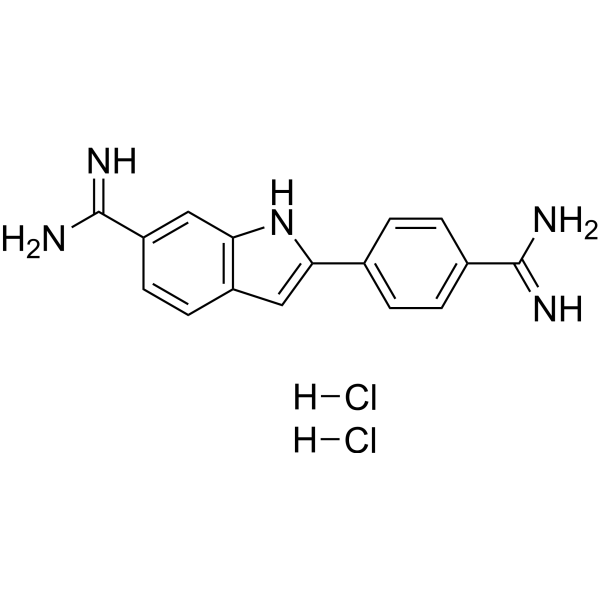
    DAPI dihydrochloride
    Maximum Cited Publications
    146 Publications Verification

    4',6-Diamidino-2-phenylindole dihydrochloride

    DNA Stain Sodium Channel Neurological Disease
    DAPI (4',6-Diamidino-2-phenylindole) dihydrochloride is a DAPI dye. DAPI is a fluorescent dye that binds strongly to DNA. It binds to the AT base pair of the double-stranded DNA minor groove, and one DAPI molecule can occupy three base pair positions. The fluorescence intensity of DAPI molecules bound to double-stranded DNA is increased by about 20 times, and it is commonly observed with fluorescence microscopy, and the amount of DNA can be determined based on the intensity of fluorescence. In addition, because DAPI can pass through intact cell membranes, it can be used to stain both live and fixed cells . DAPI (Compound 3) is an acid-sensing ion channel 3 (ASIC3) inhibitor. DAPI binds to ASIC3 and blocks the channel function. DAPI can be used in the study of chronic pain treatment (Ex/Em = 356/451 nm).
    DAPI dihydrochloride
  • HY-D1738
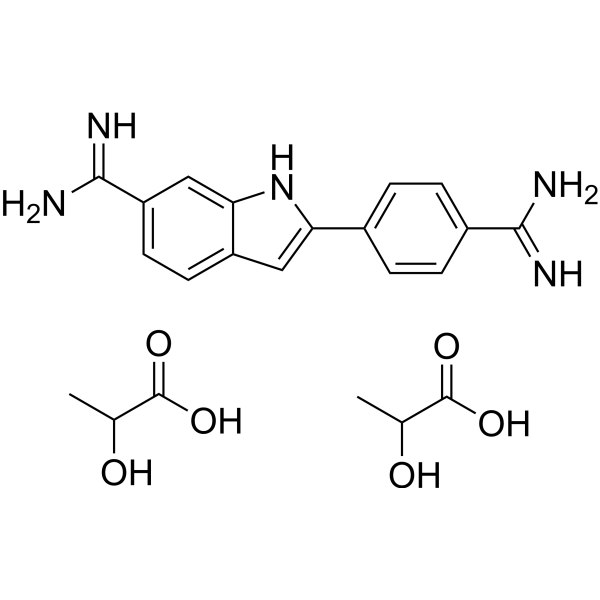
    DAPI dilactate
    110+ Cited Publications

    4',6-Diamidino-2-phenylindole dilactate

    Fluorescent Dye Others
    DAPI (4',6-Diamidino-2-phenylindole) dilactate is a DAPI dye. DAPI is a fluorescent dye that binds strongly to DNA. It binds to the AT base pair of the double-stranded DNA minor groove, and one DAPI molecule can occupy three base pair positions. The fluorescence intensity of DAPI molecules bound to double-stranded DNA is increased by about 20 times, and it is commonly observed with fluorescence microscopy, and the amount of DNA can be determined based on the intensity of fluorescence. DAPI cannot penetrate intact cell membranes and is commonly used for staining both live and fixed cells . DAPI (Compound 3) is an acid-sensing ion channel 3 (ASIC3) inhibitor. DAPI binds to ASIC3 and blocks the channel function. DAPI can be used in the study of chronic pain treatment (Ex/Em = 356/451 nm) .
    DAPI dilactate
  • HY-122135

    Sodium Channel Neurological Disease
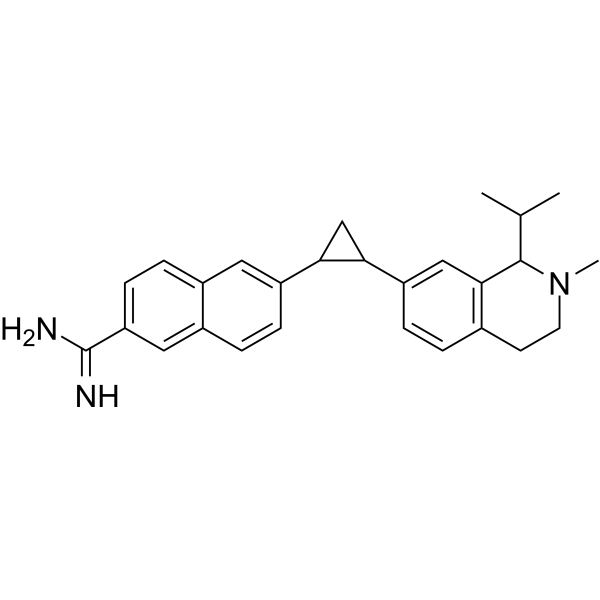
    A-317567 is a potent acid-sensing ion channel 3 (ASIC-3) inhibitor with an IC50 of 1.025 μM. A-317567 has antidepressant and antinociception effects .
    A-317567
  • HY-107757

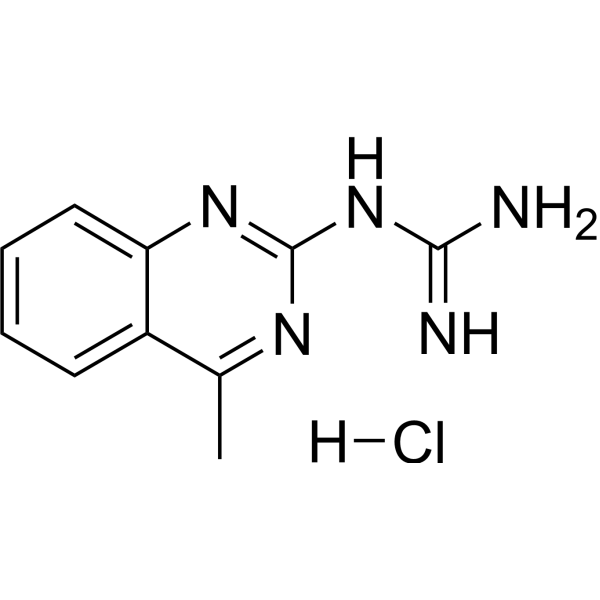
    2-Guanidine-4-methylquinazoline hydrochloride

    Sodium Channel Neurological Disease
    GMQ (hydrochloride) is a ASIC (acid-sensing ion) channel activator with an EC50 value of 1.83 mM for ASIC3 at pH 7.4. GMQ (hydrochloride) opens only ASIC3 but no other ASICs at pH 7.4. GMQ (hydrochloride) can be used for neurological disease research .
    GMQ hydrochloride
  • HY-D2868
    DAPI
    130+ Cited Publications

    4',6-Diamidino-2-phenylindole

    DNA Stain Sodium Channel Neurological Disease
    DAPI (4',6-Diamidino-2-phenylindole) is a DAPI dye. DAPI is a fluorescent dye that binds strongly to DNA. It binds to the AT base pair of the double-stranded DNA minor groove, and one DAPI molecule can occupy three base pair positions. The fluorescence intensity of DAPI molecules bound to double-stranded DNA is increased by about 20 times, and it is commonly observed with fluorescence microscopy, and the amount of DNA can be determined based on the intensity of fluorescence. In addition, because DAPI can pass through intact cell membranes, it can be used to stain both live and fixed cells . DAPI (Compound 3) is an acid-sensing ion channel 3 (ASIC3) inhibitor. DAPI binds to ASIC3 and blocks the channel function. DAPI can be used in the study of chronic pain treatment (Ex/Em = 356/451 nm).
    DAPI
  • HY-P1411
    Psalmotoxin 1
    5+ Cited Publications

    PcTx1; Psalmopoeus cambridgei toxin-1

    Sodium Channel Apoptosis Neurological Disease Cancer
    Psalmotoxin 1 (PcTx1) is a protein toxin that can bind at subunit-subunit interfaces of acid-sensing ion channel 1a (ASIC1a). Psalmotoxin 1 is a potent and slective ASIC1a inhibitor (IC50: 0.9 nM) by increasing the apparent affinity for H + of ASIC1a. Psalmotoxin 1 can induce cell apoptosis, also inhibits cell migration, proferliration and invasion of cancer cells. Psalmotoxin 1 can be used in the research of cancers, or neurological disease .
    Psalmotoxin 1
  • HY-P2707

    α-DTX

    Sodium Channel Potassium Channel Neurological Disease
    α-Dendrotoxin (α-DTX) is a voltage-gated K + channel blocker and an acid-sensing ion channel (ASIC) inhibitor. α-Dendrotoxin blocks Kv1.1, Kv1.2, Kv1.6 and D-type (ID) voltage-gated K + channels, and reversibly inhibits slowly inactivating potassium currents. α-Dendrotoxin induces epilepsy-related behaviors in mice. α-Dendrotoxin can be used in studies related to tonic-clonic seizures .
    α-Dendrotoxin
  • HY-100939

    Sodium Channel Neurological Disease
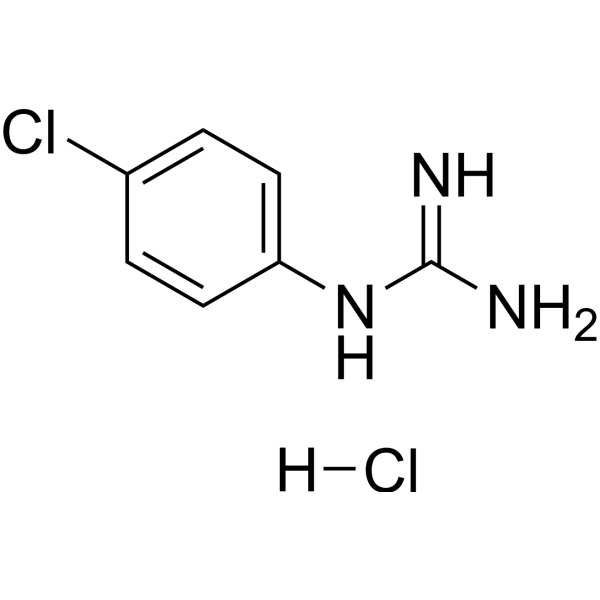
    4-Chlorophenylguanidine hydrochloride is an urokinase-type plasminogen activator inhibitor. 4-Chlorophenylguanidine hydrochloride is a potent ASIC3 positive allosteric modulator and reverses the effects of ASIC3 desensitization. 4-Chlorophenylguanidine hydrochloride influences ASIC3 activity through directly activating the channel and increasing proton sensitivity. 4-Chlorophenylguanidine hydrochloride offers a chemical backbone for the design of new ASIC3 ligands to study ASIC3 in vivo .
    4-Chlorophenylguanidine hydrochloride
  • HY-P1411A
    Psalmotoxin 1 TFA
    5+ Cited Publications

    PcTx1 TFA; Psalmopoeus cambridgei toxin-1 TFA

    Sodium Channel Apoptosis Neurological Disease Cancer
    Psalmotoxin 1 (PcTx1) TFA is a protein toxin that can bind at subunit-subunit interfaces of acid-sensing ion channel 1a (ASIC1a). Psalmotoxin 1 TFA is a potent and slective ASIC1a inhibitor (IC50: 0.9 nM) by increasing the apparent affinity for H + of ASIC1a. Psalmotoxin 1 TFA can induce cell apoptosis, also inhibits cell migration, proferliration and invasion of cancer cells. Psalmotoxin 1 TFA can be used in the research of cancers, or neurological disease .
    Psalmotoxin 1 TFA
  • HY-P1441

    Sodium Channel Others
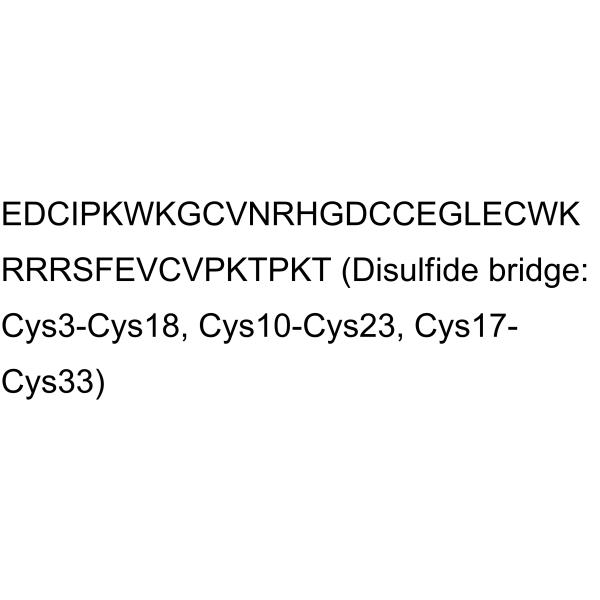
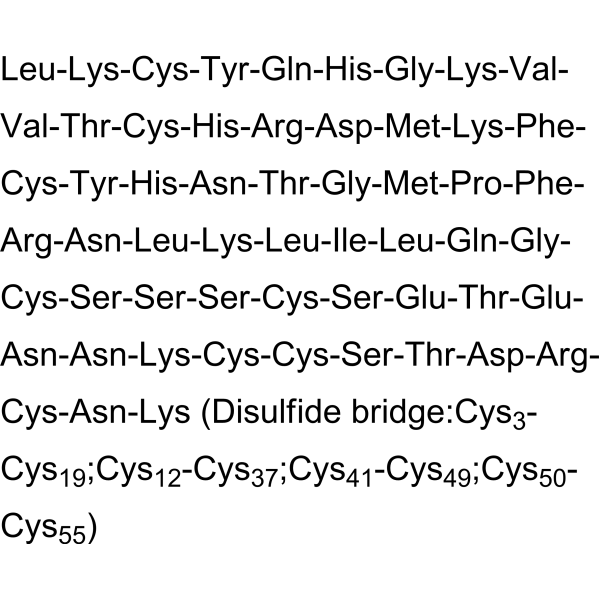
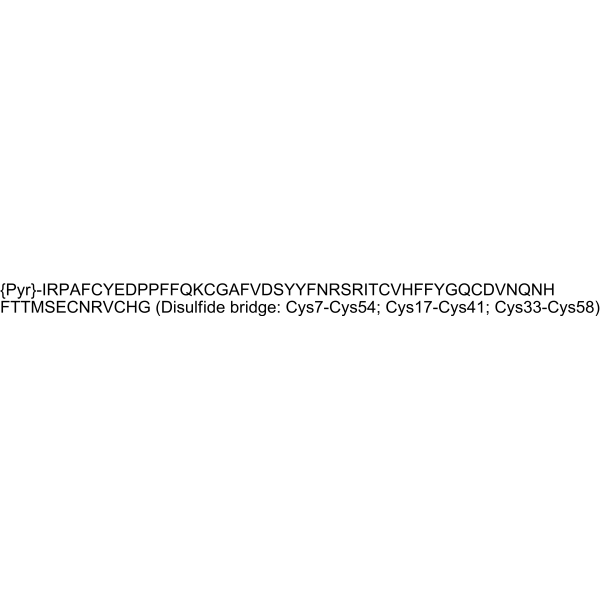
    Mambalgin-1 is a toxin isolated from black mamba venom. Mambalgin-1 is a disulfide-rich polypeptide consisting of 57 amino acids and belongs to the family of three-finger toxins. Mambalgin-1 can bind to and stabilize ASICs (acid-sensing ion channels) in a physiologically relevant closed-channel conformation .
    Mambalgin 1
  • HY-131261

    Drug Metabolite Inflammation/Immunology
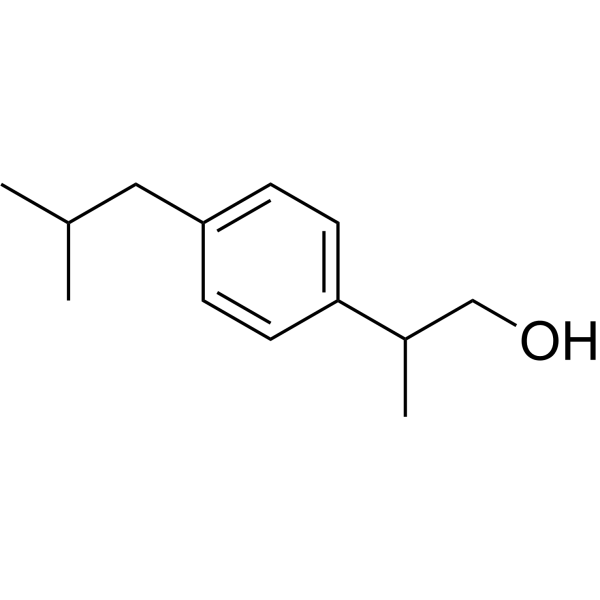
    Ibuprofen alcohol, a nonsteroidal antiinflammatory agent (NSAID), exhibits very little activity for acid-sensing ion channels (ASICs) .
    Ibuprofen alcohol
  • HY-P5172

    Sodium Channel Neurological Disease
    MitTx-alpha is a subunit of MitTx. MitTx is a potent, persistent, and selective agonist for acid-sensing ion channels (ASICs). MitTx is highly selective for the ASIC1 subtype at neutral pH; under more acidic conditions (pH<6.5), MitTx massively potentiates (>100-fold) proton-evoked activation of ASIC2a channels .
    MitTx-alpha
  • HY-139226

    2-Guanidine-4-methylquinazoline

    GABA Receptor Inflammation/Immunology
    GMQ is an acid-sensing ion channel modulator, competitive GABAAR antagonist. GMQ preferentially, potently, competitively inhibits GABAARs. GMQ inhibits α1β2, α1β2γ2, α4β2γ2 and α5β2γ2 GABAARs. GMQ enhances neuronal excitation through inhibition of GABAergic transmission. GMQ has anti-histamine effects in the enteric system, inhibiting gastric acid secretion .
    GMQ
  • HY-131261R

    Drug Metabolite Reference Standards Inflammation/Immunology
    Ibuprofen alcohol (Standard) is the analytical standard of Ibuprofen alcohol. This product is intended for research and analytical applications. Ibuprofen alcohol, a nonsteroidal antiinflammatory agent (NSAID), exhibits very little activity for acid-sensing ion channels (ASICs) .
    Ibuprofen alcohol (Standard)
  • HY-155017

    Sodium Channel Neurological Disease Cancer
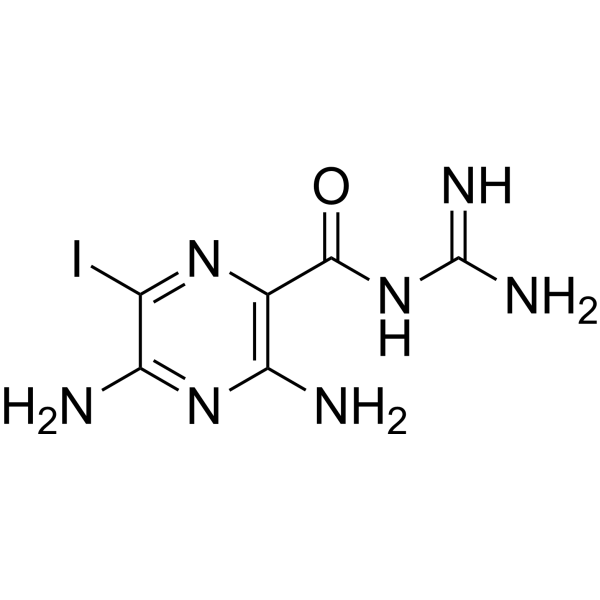
    6-Iodoamiloride is a potent acid-sensing ion channel 1 (ASIC1) inhibitor with an IC50 of 88 nM. 6-Iodoamiloride inhibits ASIC3-mediated currents from rat dorsal root ganglion neurons with an IC50 of 230 nM .
    6-Iodoamiloride
  • HY-P5780

    Sodium Channel Neurological Disease
    π-TRTX-Hm3a is a 37-amino acid peptide isolated from Togo starburst tarantula (Heteroscodra maculata) venom. π-TRTX-Hm3a pH-dependently inhibits acid-sensing ion channel 1a (ASIC1a) with an IC50 of 1-2 nM and potentiates ASIC1b with an EC50 of 46.5 nM .
    π-TRTX-Hm3a
  • HY-W703632

    Isotope-Labeled Compounds Drug Metabolite Inflammation/Immunology
    2-(4-Isobutylphenyl)propan-3,3,3-d3-1-ol is the deuterium labeled Ibuprofen alcohol (HY-131261). Ibuprofen alcohol, a nonsteroidal antiinflammatory agent (NSAID), exhibits very little activity for acid-sensing ion channels (ASICs) .
    2-(4-Isobutylphenyl)propan-3,3,3-d3-1-ol
  • HY-107757R

    2-Guanidine-4-methylquinazoline hydrochloride (Standard)

    Reference Standards Sodium Channel Neurological Disease
    GMQ hydrochloride (Standard) is the analytical standard of GMQ (hydrochloride) (HY-107757). This product is intended for research and analytical applications. GMQ (hydrochloride) is a ASIC (acid-sensing ion) channel activator with an EC50 value of 1.83 mM for ASIC3 at pH 7.4. GMQ (hydrochloride) opens only ASIC3 but no other ASICs at pH 7.4. GMQ (hydrochloride) can be used for neurological disease research .
    GMQ hydrochloride (Standard)
  • HY-DY1081

    4',6-Diamidino-2-phenylindole dihydrochloride (solution)

    Sodium Channel DNA Stain Neurological Disease
    DAPI (4',6-Diamidino-2-phenylindole) dihydrochloride (solution) is a DAPI dye. DAPI is a fluorescent dye that binds strongly to DNA. It binds to the AT base pair of the double-stranded DNA minor groove, and one DAPI molecule can occupy three base pair positions. The fluorescence intensity of DAPI molecules bound to double-stranded DNA is increased by about 20 times, and it is commonly observed with fluorescence microscopy, and the amount of DNA can be determined based on the intensity of fluorescence. In addition, because DAPI can pass through intact cell membranes, it can be used to stain both live and fixed cells . DAPI (Compound 3) is an acid-sensing ion channel 3 (ASIC3) inhibitor. DAPI binds to ASIC3 and blocks the channel function. DAPI can be used in the study of chronic pain treatment (Ex/Em = 356/451 nm).
    Solvent and concentration: ddH2O: 5 mg/mL
    DAPI dihydrochloride (solution)

Inquiry Online

Your information is safe with us. * Required Fields.

Salutation


Country or Region *

Applicant Name *


Organization Name *

Department *


Email Address *


Product Name *

Cat. No.


Requested quantity *

Phone Number *


Remarks

Inquiry Online

Inquiry Information

Product Name:
Cat. No.:
Quantity:
MCE Japan Authorized Agent:

