1. Search Result
Search Result
Results for "

analgesic tolerance

" in MedChemExpress (MCE) Product Catalog:

15

Inhibitors & Agonists

4

Peptides

1

Isotope-Labeled Compounds

Cat. No. Product Name Target Research Areas Chemical Structure
  • HY-P1291
    PKI 14-22 amide,myristoylated
    3 Publications Verification

    PKA Epigenetic Reader Domain Flavivirus Infection Neurological Disease
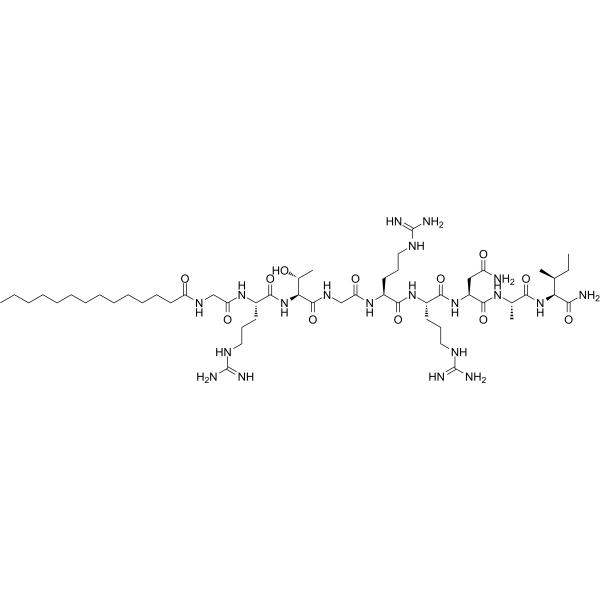
    PKI 14-22 amide, myristoylated is a selective, cAMP-dependent, competitive PKA inhibitor with Ki=~36 nM. The myristoylation modification of PKI 14-22 amide, myristoylated makes it more permeable to cell membranes and blood-brain barriers than the precursor molecule. PKI 14-22 amide, myristoylated can block the phosphorylation of cAMP-dependent downstream targets (such as CREB). PKI 14-22 amide, myristoylated can prevent the development of morphine analgesic tolerance in mice, and also inhibits protein translation and negative-strand RNA synthesis of Zika virus. PKI 14-22 amide, myristoylated can be used in research fields such as opioid tolerance mechanisms and antiviral drugs .
    PKI 14-22 amide,myristoylated
  • HY-P1248

    NPFF

    Neuropeptide FF Receptor Cardiovascular Disease Neurological Disease
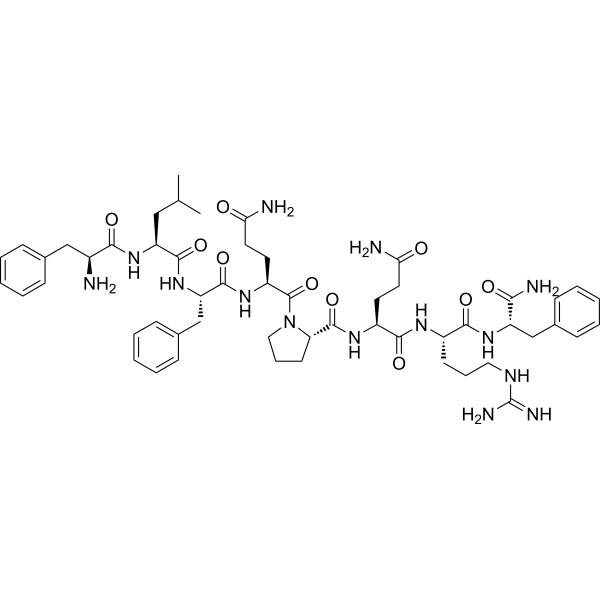
    Neuropeptide FF (NPFF), an octapeptide belonging to the RF-amide family of peptides, is a NPFF1 and NPFF2 receptors agonist with Ki values of 2.82 nM and 0.21 nM, respectively. Neuropeptide FF induces abstinence syndrome, exerts antiopioid and analgesic effects, releases via calcium-dependent mechanisms from rat spinal cord, regulates memory, autonomic function, and neuroendocrine function, modulates pain and opioid antinociception, reduces food intake, stimulates water intake, alters cardiovascular parameters, and shows differential activity in hypothalamic paraventricular nucleus neurons. Neuropeptide FF is present in mammalian central nervous system and periphery, with NPFF-immunoreactivity increases in rat cerebrospinal fluid during opiate tolerance, and its NPFF gene and NPFF-R2 gene are up-regulated in rat spinal cord and dorsal root ganglia during peripheral inflammation. Neuropeptide FF can be used for the research of opioid tolerance, morphine-induced analgesia, abstinence syndrome, pain, hypertension, nociception, inflammatory pain, and neuropathic pain .
    Neuropeptide FF
  • HY-P1290
    PKA Inhibitor Fragment (6-22) amide
    5 Publications Verification

    PKI-(6-22)-amide

    PKA Neurological Disease
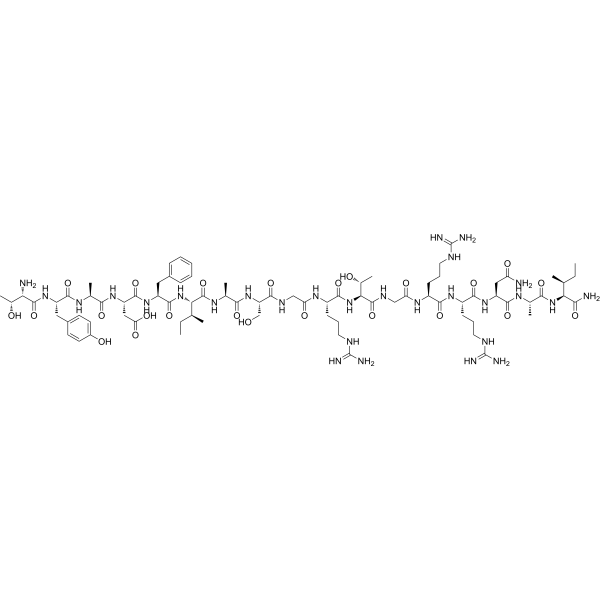
    PKA Inhibitor Fragment (6-22) amide is a highly potent and specific competitive inhibitor of PKA, with Ki values of 1.7 nM and 1.6 nM against human and bovine PKA catalytic subunits, respectively. The IC50 of PKA Inhibitor Fragment (6-22) amide targeting bovine PKA is 8.6 nM. PKA Inhibitor Fragment (6-22) amide effectively abolishes PKA activity in mouse brain and spinal cord, and exerts in vivo efficacy via intracerebroventricular administration. PKA Inhibitor Fragment (6-22) amide significantly reverses low-dose morphine analgesic tolerance in mice and blocks photoaffinity labeling of cAMP-dependent protein kinase. PKA Inhibitor Fragment (6-22) amide can be applied to research in fields related to the mechanism of morphine analgesic tolerance and skin wound healing .
    PKA Inhibitor Fragment (6-22) amide
  • HY-P1291A
    PKI 14-22 amide,myristoylated TFA
    3 Publications Verification

    PKA Epigenetic Reader Domain Flavivirus Infection Neurological Disease
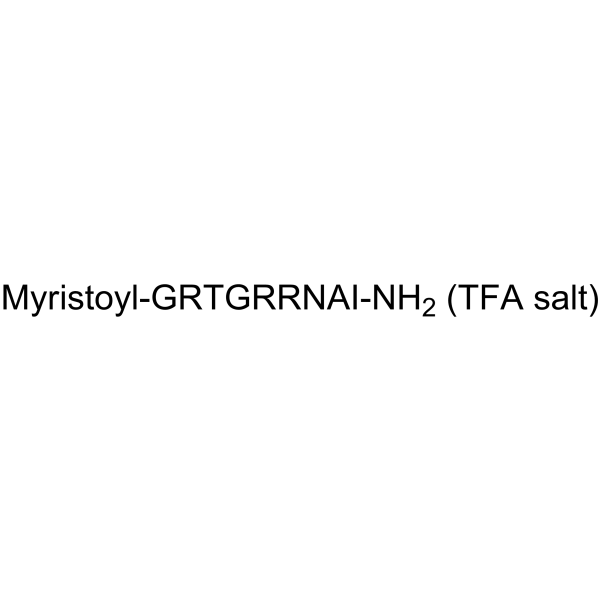
    PKI 14-22 amide, myristoylated TFA is a selective, cAMP-dependent, competitive PKA inhibitor with Ki=~36 nM. The myristoylation modification of PKI 14-22 amide, myristoylated TFA makes it more permeable to cell membranes and blood-brain barriers than the precursor molecule. PKI 14-22 amide, myristoylated TFA can block the phosphorylation of cAMP-dependent downstream targets (such as CREB). PKI 14-22 amide, myristoylated TFA can prevent the development of analgesic tolerance in mice, and also inhibits protein translation and negative-strand RNA synthesis of Zika virus. PKI 14-22 amide, myristoylated TFA can be used in research fields such as opioid tolerance mechanisms and antiviral drugs .
    PKI 14-22 amide,myristoylated TFA
  • HY-110023

    Serotonin Transporter Neurological Disease
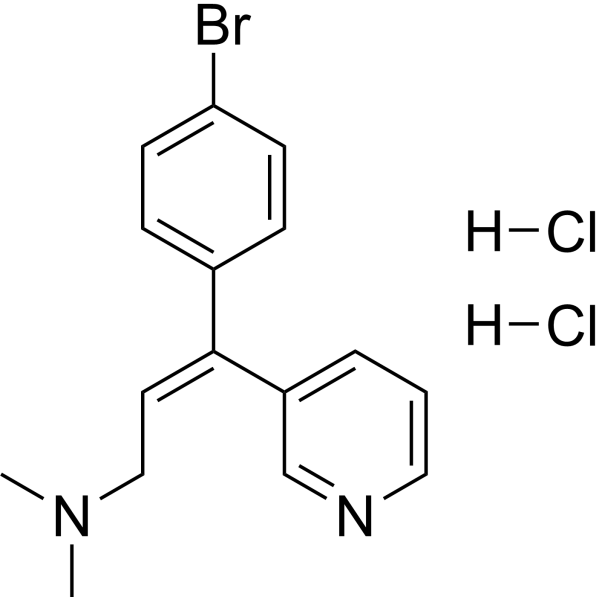
    Zimelidine dihydrochloride is an orally active selective serotonin reuptake inhibitor. Zimelidine dihydrochloride competitively inhibits central 5-HT uptake and desensitizes 5-HT autoreceptors in dorsal raphe nucleus. Zimelidine dihydrochloride time-dependently modulates 5-HT neuronal firing and hippocampal CA3 responses. Zimelidine dihydrochloride strengthens central serotonergic neurotransmission and produces related behavioral changes. Zimelidine dihydrochloride exerts anxiolytic, analgesic, feeding-suppressive and tolerance-attenuating effects. Zimelidine dihydrochloride is used for the study of depressive disorders and analgesic tolerance .
    Zimelidine dihydrochloride
  • HY-178235

    Opioid Receptor Neurological Disease
    MDAN-21 is a bivalent opioid ligand that contains both μ-opioid receptor agonists and δ-opioid receptor antagonists. MDAN-21 has a strong analgesic effect and does not produce tolerance in mouse studies. MDAN-21 can effectively inhibit the withdrawal of morphine dependent monkeys and alleviate abnormal pain in the study of rhesus monkeys. MDAN-21 can be used for the study of allodynia .
    MDAN-21
  • HY-118835

    Serotonin Transporter Neurological Disease
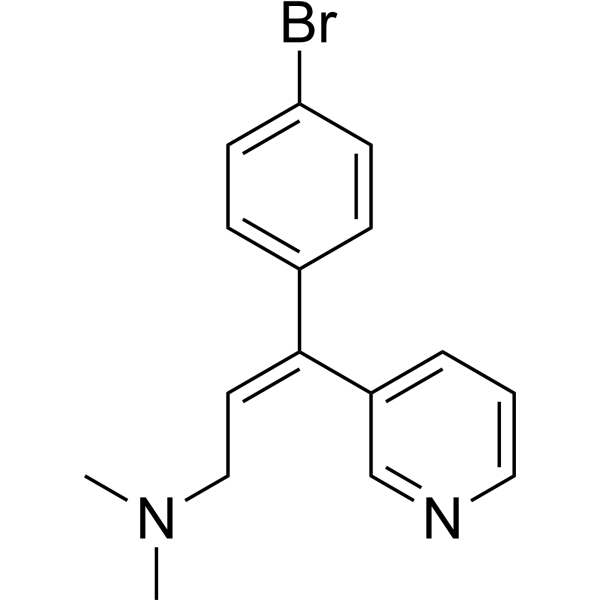
    Zimelidine is an orally active selective serotonin reuptake inhibitor. Zimelidine competitively inhibits central 5-HT uptake and desensitizes 5-HT autoreceptors in dorsal raphe nucleus. Zimelidine time-dependently modulates 5-HT neuronal firing and hippocampal CA3 responses. Zimelidine strengthens central serotonergic neurotransmission and produces related behavioral changes. Zimelidine exerts anxiolytic, analgesic, feeding-suppressive and tolerance-attenuating effects. Zimelidine is used for the study of depressive disorders and analgesic tolerance .
    Zimelidine
  • HY-173016

    Opioid Receptor Neurological Disease
    HINT1-IN-1 (Compound 8) is the inhibitor for histidine triad nucleotide-binding protein 1 (HINT1) with a Ki of 1.14 μM. HINT1-IN-1 affects the cross-regulation between μ-opioid receptor (MOR) and NMDA receptor (NMDAR). HINT1-IN-1 enhances the analgesic effect of morphine without causing opioid tolerance and has independent analgesic effects in mouse model .
    HINT1-IN-1
  • HY-149274

    Sigma Receptor Neurological Disease
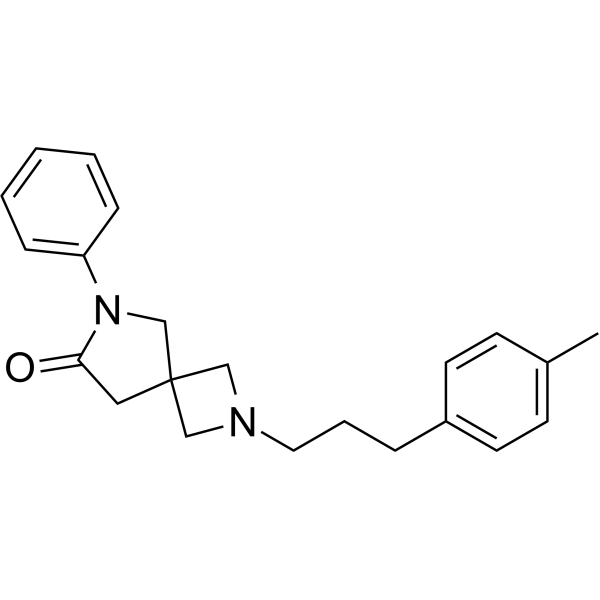
    Sigma-1 receptor antagonist 4 (Compound 32) is a potent σ1R antagonist that significantly enhances the analgesic effect of morphine and rescues morphine-induced analgesic tolerance, with potential to prevent morphine tolerance .
    Sigma-1 receptor antagonist 4
  • HY-110023R

    Reference Standards Serotonin Transporter Neurological Disease
    Zimelidine dihydrochloride (Standard) is the analytical standard of Zimelidine dihydrochloride (HY-110023). This product is intended for research and analytical applications. Zimelidine dihydrochloride is an orally active selective serotonin reuptake inhibitor. Zimelidine dihydrochloride competitively inhibits central 5-HT uptake and desensitizes 5-HT autoreceptors in dorsal raphe nucleus. Zimelidine dihydrochloride time-dependently modulates 5-HT neuronal firing and hippocampal CA3 responses. Zimelidine dihydrochloride strengthens central serotonergic neurotransmission and produces related behavioral changes. Zimelidine dihydrochloride exerts anxiolytic, analgesic, feeding-suppressive and tolerance-attenuating effects. Zimelidine dihydrochloride is used for the study of depressive disorders and analgesic tolerance .
    Zimelidine dihydrochloride (Standard)
  • HY-118835S

    Isotope-Labeled Compounds Serotonin Transporter Neurological Disease
    Zimeldine-d6 is the deuterium labeled Zimeldine (HY-118835) . Zimelidine is an orally active selective serotonin reuptake inhibitor. Zimelidine competitively inhibits central 5-HT uptake and desensitizes 5-HT autoreceptors in dorsal raphe nucleus. Zimelidine time-dependently modulates 5-HT neuronal firing and hippocampal CA3 responses. Zimelidine strengthens central serotonergic neurotransmission and produces related behavioral changes. Zimelidine exerts anxiolytic, analgesic, feeding-suppressive and tolerance-attenuating effects. Zimelidine is used for the study of depressive disorders and analgesic tolerance .
    Zimeldine-d6
  • HY-117881

    Opioid Receptor Neurological Disease
    CJ-15208 is a potent and selective κ-opioid receptor antagonist with significant opioid activity. CJ-15208 exhibited strong analgesic effects in the warm water tail withdrawal test in mice and was mediated through multiple opioid receptors. The stereoisomers of CJ-15208 exhibited different opioid activity characteristics, for example, one stereoisomer exhibited κ-opioid receptor antagonism, while the other exhibited δ-opioid receptor antagonism. All stereoisomers of CJ-15208 had no significant effects on respiration. The stereoisomers of CJ-15208 did not lead to the development of drug tolerance, which makes it potential in the further development of safe opioid analgesics .
    CJ-15208
  • HY-159923

    Opioid Receptor Neurological Disease
    BPRMU191 is a μ-opioid receptor (MOR) modulator that converts small-molecule morphinan antagonists into G protein-biased MOR agonists, thereby inducing MOR-dependent activation and analgesic effects. Co-administration of BPRMU191 with morphinan antagonists provides analgesia while reducing side effects such as gastrointestinal dysfunction, antinociceptive tolerance, and dependency-related adverse effects. BPRMU191, in combination with morphinan antagonists, offers a potential strategy for studying severe pain management and G protein-coupled receptor modulation .
    BPRMU191
  • HY-111011

    JNJ 38488502 acetate; FE 200665 acetate

    Opioid Receptor Neurological Disease
    CR 665 (JNJ 38488502) acetate is a kappa-opioid agonist that may effectively treat visceral pain by activating receptors on afferent nerves within the gut. CR 665 acetate exhibits peripheral selectivity, differentiating its pharmacokinetic profile from that of non-selective opioids like oxycodone. CR 665 acetate has demonstrated a beneficial effect on visceral pain tolerance thresholds without the delayed analgesic response characteristic of opioids that penetrate the brain. CR 665 acetate is proposed for use in managing postoperative pain due to its pain-relieving properties.
    CR 665 acetate
  • HY-184108

    iGluR GABA Receptor NO Synthase Neurological Disease
    ZL006-05 is an orally active, brain-penetrant nNOS–PSD-95 and α2-containing GABAA dual-target inhibitor. ZL006-05 blocks the nNOS–PSD-95 protein-protein interaction and selectively potentiatesα2-containing GABAA receptors. ZL006-05 attenuates central sensitization and strengthens inhibitory GABAergic synaptic transmission. ZL006-05 can be used for the study of neuropathic pain, cancer pain, chemotherapy-induced peripheral neuropathic pain, ischemic stroke, poststroke depression and anxiety .
    ZL006-05

Inquiry Online

Your information is safe with us. * Required Fields.

Salutation


Country or Region *

Applicant Name *


Organization Name *

Department *


Email Address *


Product Name *

Cat. No.


Requested quantity *

Phone Number *


Remarks

Inquiry Online

Inquiry Information

Product Name:
Cat. No.:
Quantity:
MCE Japan Authorized Agent:

