



Zimelidine
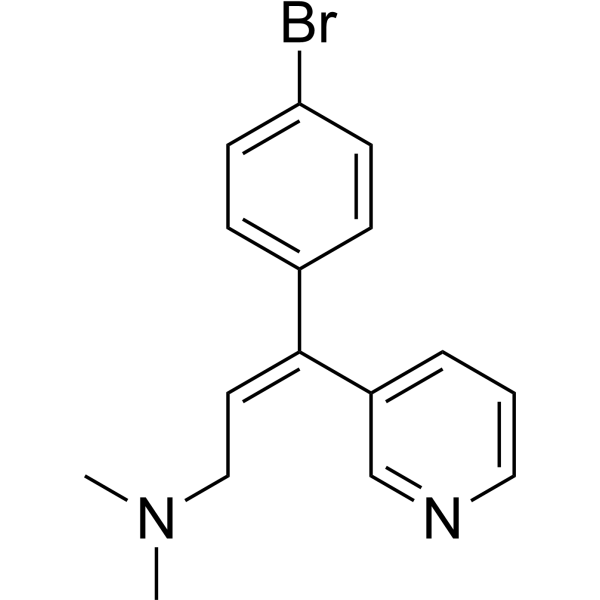
Zimelidine is an orally active selective serotonin reuptake inhibitor. Zimelidine competitively inhibits central 5-HT uptake and desensitizes 5-HT autoreceptors in dorsal raphe nucleus. Zimelidine time-dependently modulates 5-HT neuronal firing and hippocampal CA3 responses. Zimelidine strengthens central serotonergic neurotransmission and produces related behavioral changes. Zimelidine exerts anxiolytic, analgesic, feeding-suppressive and tolerance-attenuating effects. Zimelidine is used for the study of depressive disorders and analgesic tolerance.
For research use only. We do not sell to patients.
- CAS No.: 56775-88-3
- Formula: C16H17BrN2
- Molecular Weight:317.22
-
Storage:
Please store the product under the recommended conditions in the Certificate of Analysis.

To place orders, for customer services and technical support, please contact: MedChemExpress USA
Tel: 609-228-6898 E-mail: [email protected] [email protected]


-
 Biological Activity
-
Chemical Information
- Purity & Documentation
- References
-
 Help & FAQs


-
HY-B1490
Imipramine hydrochlorideAntidepressant Agent -
HY-B1287
Citalopram hydrobromideSelective Serotonin Reuptake Inhibitor -
HY-B1490R
Imipramine hydrochloride (Standard)Antidepressant Agent -
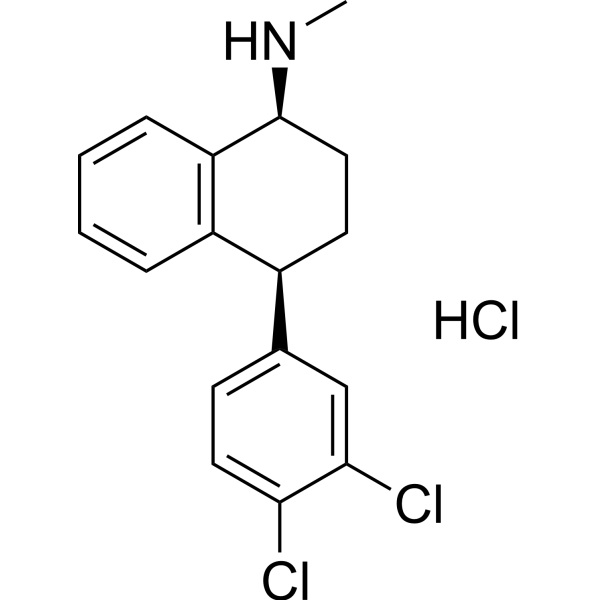
HY-B0176A
Sertraline hydrochlorideSSRI -
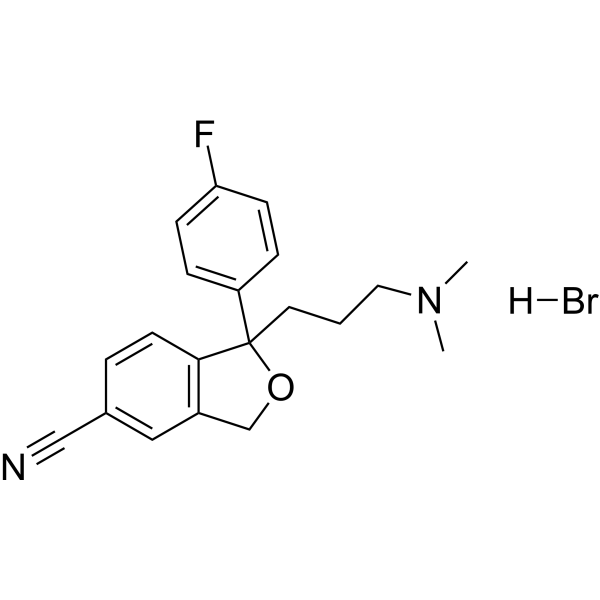
HY-B1287R
Citalopram hydrobromide (Standard) -
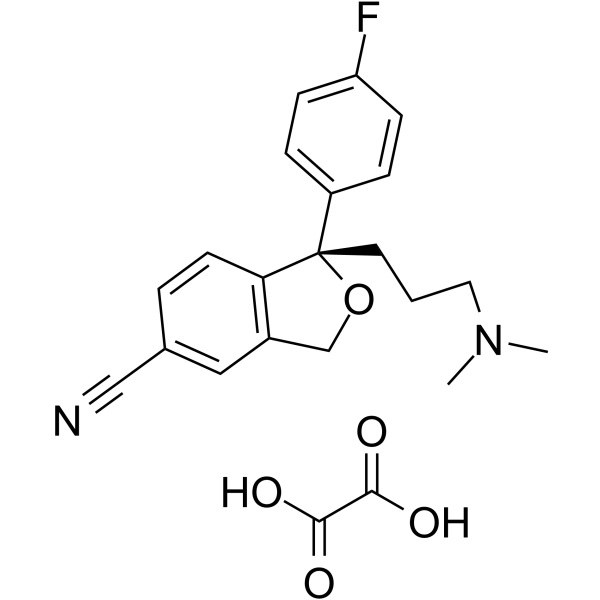
HY-14258A
Escitalopram oxalateSerotonin Reuptake Inhibitor -
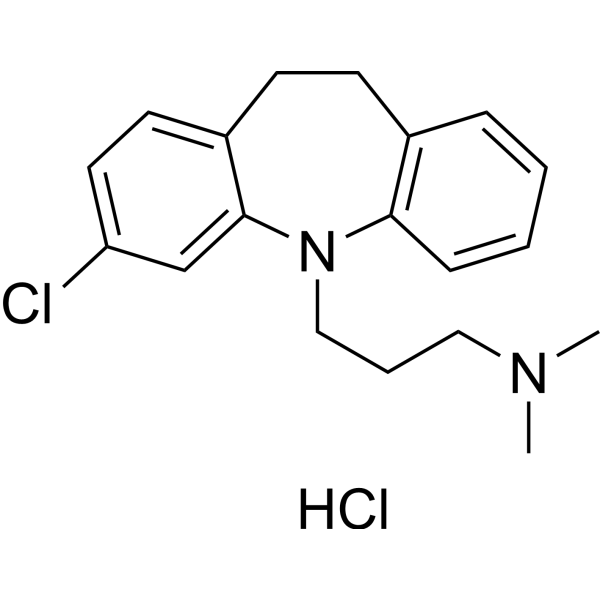
HY-B0457
Clomipramine hydrochloride5-HT Reuptake Inhibitor -
HY-B0103A
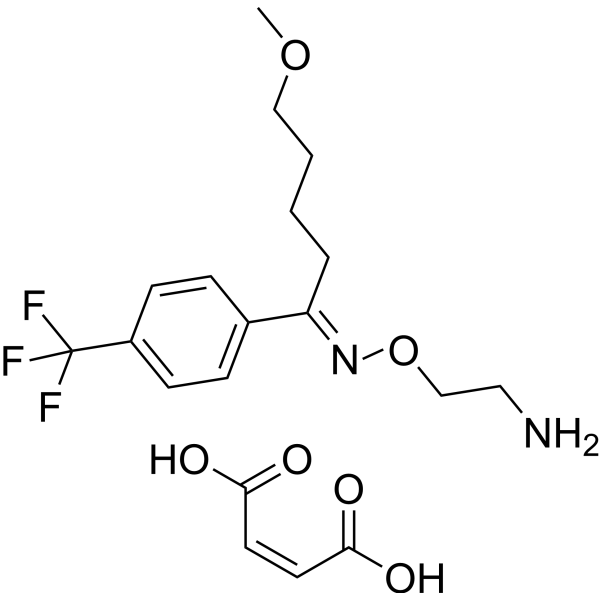
Fluvoxamine maleateSerotonin Transporter Inhibitor -

HY-B0176AR
Sertraline hydrochloride (Standard)SSRI -
HY-14258AR
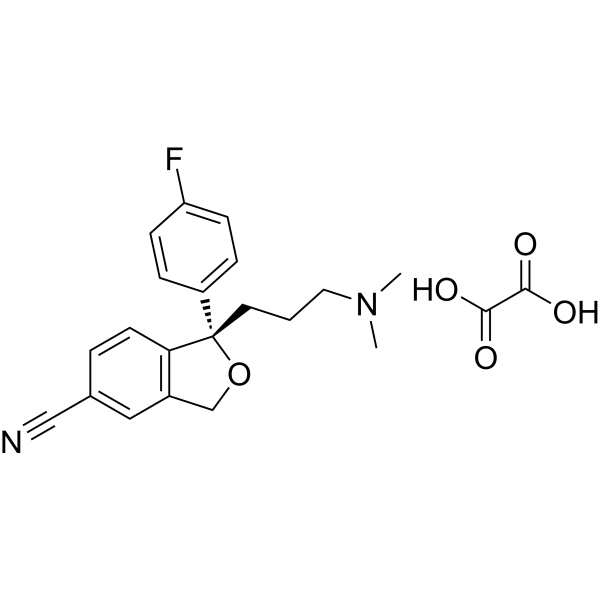
Escitalopram oxalate (Standard)Serotonin Reuptake Inhibitor -

HY-B0457R
Clomipramine hydrochloride (Standard)5-HT Reuptake Inhibitor -

HY-B0103AR
Fluvoxamine maleate (Standard)Serotonin Transporter Inhibitor


Biological Activity
Description
In Vitro
Zimelidine potently and selectively inhibits serotonin uptake in rat hypothalamic synaptosomes, mouse cerebral cortical slices, and mouse striatal slices, with IC50 values of 0.33 μmol/L, 3.3 μmol/L, and 9.1 μmol/L respectively, and shows far weaker inhibition of noradrenaline and dopamine uptake[2].
Zimelidine inhibits serotonin uptake into human platelets in vitro with an IC50 of 2.6 μmol/L[2].
Zimelidine has low affinity for postsynaptic serotonin, α-noradrenergic, β-noradrenergic, and dopamine receptors in vitro[2].
MedChemExpress (MCE) has not independently confirmed the accuracy of these methods. They are for reference only.
In Vivo
Zimelidine (5 mg/kg; i.p.; daily; 2-14 days) causes an initial reduction in 5-HT neuron activity followed by gradual restoration of normal activity and desensitization of 5-HT autoreceptors after 14 days of treatment[1].
Zimelidine (i.p.) inhibits H75/12- and PCA-induced 5-HT depletion in rat brain with ED50 values of 4 mg/kg (H75/12) and 1.5 mg/kg (PCA)[1].
Zimelidine (i.p.; p.o.) potentiates 5-HTP-induced head twitches in mice, with an ED50 of 3.2 μmol/kg (p.o.) and 8.6 μmol/kg (i.p.)[2].
Zimelidine reduces serotonin's inhibitory effects on visual cortex responses in rabbits following chronic treatment[2].
Zimelidine (15 mg/kg; i.p.; single dose) significantly attenuates the development of induced antinociceptive tolerance in rats[3].
Zimelidine (0.2-20 nmol/100 nL; bilateral medial amygdaloid nucleus microinjection; single dose) administered via bilateral MeA microinjection produces a dose-dependent hypophagic effect in fasted male Wistar rats[4].
Zimelidine (2 nmol/100 nL; bilateral medial amygdaloid nucleus microinjection; single dose; administered 15 minutes after SB-242084 (HY-13409) or vehicle pretreatment) (2 nmol via bilateral MeA microinjection) in fasted male Wistar rats is mediated by MeA 5-HT2C receptors[4].
Zimelidine (20 mg/kg; intraperitoneal injection; single dose; administered 15 minutes after SB-242084 or vehicle pretreatment) in fasted male Wistar rats is mediated by MeA 5-HT2C receptors[4].
Zimelidine (2 nmol/100 nL; bilateral medial amygdaloid nucleus microinjection; single dose; administered 15 minutes after WAY-100635 (HY-10349) or vehicle pretreatment) (2 nmol via bilateral MeA microinjection) in fasted male Wistar rats is not mediated by MeA 5-HT1A receptors[4].
Zimelidine (2 nmol/100 nL; bilateral medial amygdaloid nucleus microinjection; single dose; administered 15 minutes after SB-216641 or vehicle pretreatment) (2 nmol via bilateral MeA microinjection) in fasted male Wistar rats is not mediated by MeA 5-HT1B receptors[4].
MedChemExpress (MCE) has not independently confirmed the accuracy of these methods. They are for reference only.
-
Animal Model:Male Wistar albino rats (160-180 g, n=72)[3]
-
Dosage:15 mg/kg
-
Administration:IP, once
-
Result:Significantly attenuated the development and expression of morphine tolerance. The maximal antinociceptive effect of Zimelidine was obtained at the 60 minutes measurements in the zimelidine group and at the 30 minutes measurements in the morphine tolerant group by the tail-flick and hot-plate tests. Administration of zimelidine with morphine showed additive analgesic effect.
-
Animal Model:Sprague-Dawley rats (150 to 250 g, Ten, male)[2]
-
Dosage:5 mg/kg
-
Administration:IP, daily for 14 days
-
Result:Did not modify the responsiveness of CA3 hippocampal pyramidal neurons to microiontophoreticahy applied 5-HT.


Chemical Information
-
CAS No. 56775-88-3
-
Molecular Weight 317.22
-
Formula C16H17BrN2
-
SMILES
CN(C/C=C(C1=CC=CN=C1)/C2=CC=C(C=C2)Br)C
-
Shipping
Room temperature in continental US; may vary elsewhere.
-
Storage
Please store the product under the recommended conditions in the Certificate of Analysis.


Purity & Documentation
References
[1]. Blier P, et al. Electrophysiological investigations on the effect of repeated zimelidine administration on serotonergic neurotransmission in the rat. J Neurosci. 1983 Jun;3(6):1270-8. [Content Brief]
[2]. Heel RC, et al. Zimelidine: a review of its pharmacological properties and therapeutic efficacy in depressive illness. Drugs. 1982 Sep;24(3):169-206. [Content Brief]
[3]. Ozdemir E, et al. Zimelidine attenuates the development of tolerance to morphine-induced antinociception. Indian J Pharmacol. 2012 Mar;44(2):215-8. [Content Brief]
[4]. Scopinho AA, et al. Medial amygdaloid nucleus 5-HT₂c receptors are involved in the hypophagic effect caused by zimelidine in rats. Neuropharmacology. 2012 Aug;63(2):301-9. [Content Brief]

Calculators
Concentration (start) × Volume (start) = Concentration (final) × Volume (final)


Zimelidine Related Classifications
HY-118835 Related Classifications
 Powered by Bioz