1. Search Result
Search Result
Results for "

benzoyl group

" in MedChemExpress (MCE) Product Catalog:

14

Inhibitors & Agonists

1

Peptides

1

Natural
Products

6

Click Chemistry

7

Oligonucleotides

Targets Recommended:
Cat. No. Product Name Target Research Areas Chemical Structure
  • HY-34738

    3-(Boc-amino)-1-propanol

    Amino Acid Derivatives Others
    Boc-β-Ala-ol (3-(Boc-amino)-1-propanol) is an alanine derivative with a Boc protecting group at the N-terminus, which can be used to synthesize bioactive peptide mimics, such as Nα-Benzoyl-α-azaornithine phenyl ester, which has trypsin inhibitory activity .
    Boc-β-Ala-ol
  • HY-134129

    benzoyl CoA

    Endogenous Metabolite Others Metabolic Disease
    Benzoyl coenzyme A (Benzoyl CoA) is A derivative of Coenzyme A (CoA) in which the mercaptan group of CoA binds to the benzoyl group. Benzoyl coenzyme A is involved in the catalytic reaction as a substrate for the acyl transfer reaction. Benzoyl coenzyme A is a versatile metabolic intermediate that can be used to reveal substrate specificity of enzymes, metabolic regulation, and drug metabolism .
    Benzoyl coenzyme A
  • HY-154338

    Nucleoside Antimetabolite/Analog Cancer
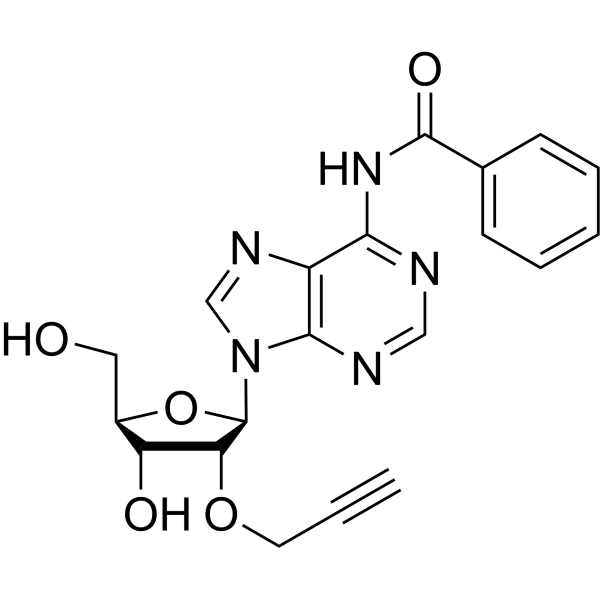
    N-Benzoyl-2′-O-2-propyn-1-yladenosine is an adenosine analog. Adenosine analogs mostly act as smooth muscle vasodilators and have also been shown to inhibit cancer progression. Its popular products are adenosine phosphate, Acadesine (HY-13417), Clofarabine (HY-A0005), Fludarabine phosphate (HY-B0028) and Vidarabine (HY-B0277) . N-Benzoyl-2′-O-2-propyn-1-yladenosine is a click chemistry reagent, it contains an Alkyne group and can undergo copper-catalyzed azide-alkyne cycloaddition (CuAAc) with molecules containing Azide groups.
    N-Benzoyl-2′-O-2-propyn-1-yladenosine
  • HY-154678

    Nucleoside Antimetabolite/Analog Cancer
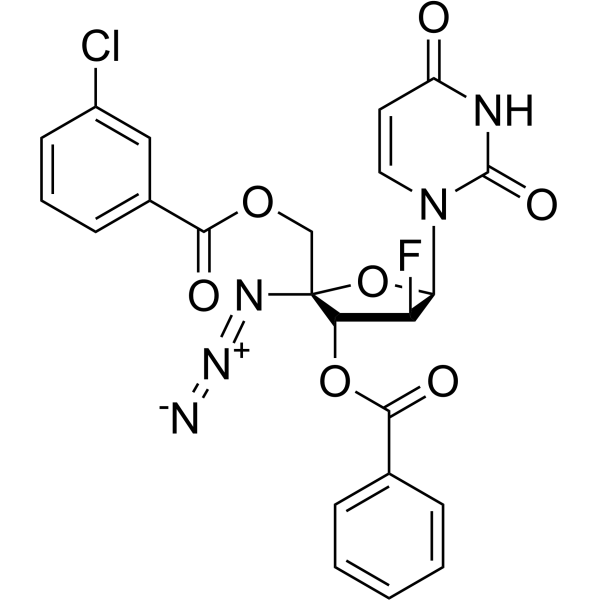
    4’-Azido-3’-O-benzoyl-5’-O-(m-chlorobenzoyl)-2’-deoxy-2’-fluoro-beta-D-arabinouridine is a purine nucleoside analog. Purine nucleoside analogs have broad antitumor activity targeting indolent lymphoid malignancies. Anticancer mechanisms in this process rely on inhibition of DNA synthesis, induction of apoptosis, etc . 4’-Azido-3’-O-benzoyl-5’-O-(m-chlorobenzoyl)-2’-deoxy-2’-fluoro-beta-D-arabinouridine is a click chemistry reagent, it contains an Azide group and can undergo copper-catalyzed azide-alkyne cycloaddition reaction (CuAAc) with molecules containing Alkyne groups. It can also undergo strain-promoted alkyne-azide cycloaddition (SPAAC) reactions with molecules containing DBCO or BCN groups.
    4’-Azido-3’-O-benzoyl-5’-O-(m-chlorobenzoyl)-2’-deoxy-2’-fluoro-beta-D-arabinouridine
  • HY-134129B

    benzoyl CoA sodium

    Endogenous Metabolite Others Metabolic Disease
    Benzoyl coenzyme A (sodium) is the sodium salt form of Benzoyl coenzyme A (HY-134129). Benzoyl coenzyme A (sodium) is A derivative of Coenzyme A (CoA) in which the mercaptan group of CoA binds to the benzoyl group. Benzoyl coenzyme A (sodium) is involved in the catalytic reaction as a substrate for the acyl transfer reaction. Benzoyl coenzyme A (sodium) is a versatile metabolic intermediate that can be used to reveal substrate specificity of enzymes, metabolic regulation, and drug metabolism .
    Benzoyl coenzyme A sodium
  • HY-N10683

    Others Others
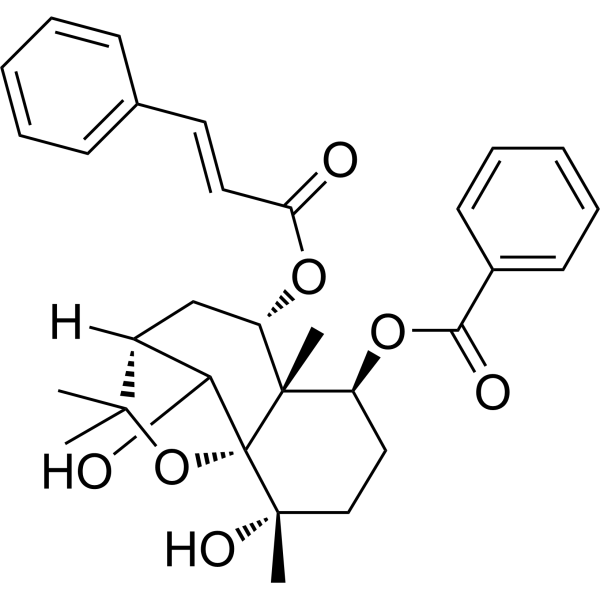
    1b-Benzoyl-8a-cinnamoyl-4a,5a-dihydroxydihydroagarofuran is a sesquiterpenoid isolated from the root bark of Tripterygium hypoglaucum containing a benzoyl and a cinnamoyl group .
    1b-Benzoyl-8a-cinnamoyl-4a,5a-dihydroxydihydroagarofuran
  • HY-154579

    Nucleoside Antimetabolite/Analog Cancer
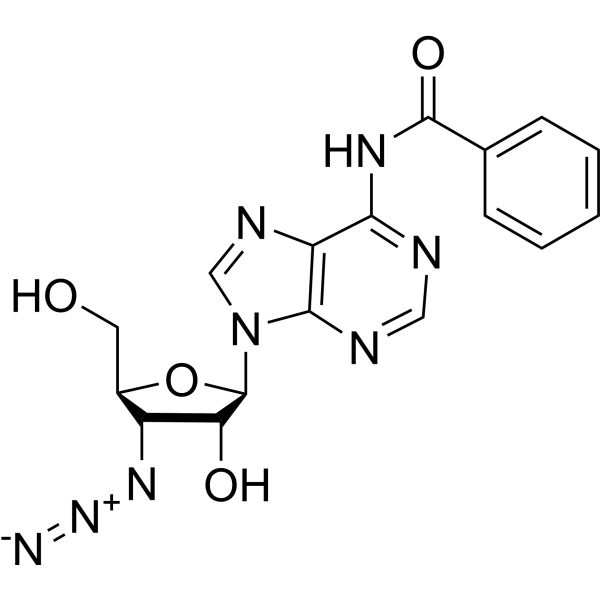
    3’-Azido-N6-benzoyl-3’-deoxyadenosine is a purine nucleoside analog. Purine nucleoside analogs have broad antitumor activity targeting indolent lymphoid malignancies. Anticancer mechanisms in this process rely on inhibition of DNA synthesis, induction of apoptosis, etc . 3’-Azido-N6-benzoyl-3’-deoxyadenosine is a click chemistry reagent, it contains an Azide group and can undergo copper-catalyzed azide-alkyne cycloaddition reaction (CuAAc) with molecules containing Alkyne groups. It can also undergo strain-promoted alkyne-azide cycloaddition (SPAAC) reactions with molecules containing DBCO or BCN groups.
    3’-Azido-N6-benzoyl-3’-deoxyadenosine
  • HY-W048494

    N4-benzoyl-5-methyl-5'-O-(4,4'-dimethoxytrityl)-2'-O-methoxyethyl-cytidine

    Phosphoramidites Nucleoside Antimetabolite/Analog Others
    N4-Bz-5-Me-DMT-2'-O-MOE-Cr (N4-Benzoyl-5-methyl-5'-O-(4,4'-dimethoxytrityl)-2'-O-methoxyethyl-cytidine) is a nucleoside analog containing a dimethoxytrityl (DMT) group, commonly used in the synthesis of nucleic acids.
    N4-Bz-5-Me-DMT-2'-O-MOE-Cr
  • HY-154461

    Nucleoside Antimetabolite/Analog Cancer
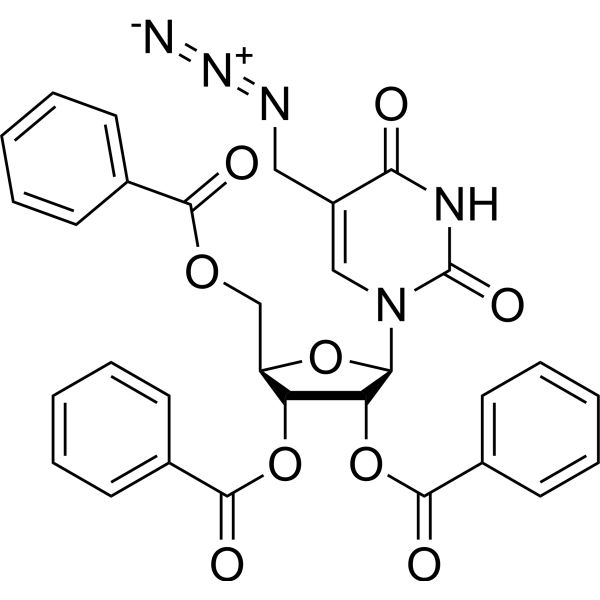
    5-Azidomethyl-2’,3’,5’-tri-O-benzoyl uridine is a thymidine analog. Analogs of this series have insertional activity towards replicated DNA. They can be used to label cells and track DNA synthesis . 5-Azidomethyl-2’,3’,5’-tri-O-benzoyl uridine is a click chemistry reagent, it contains an Azide group and can undergo copper-catalyzed azide-alkyne cycloaddition reaction (CuAAc) with molecules containing Alkyne groups. It can also undergo strain-promoted alkyne-azide cycloaddition (SPAAC) reactions with molecules containing DBCO or BCN groups.
    5-Azidomethyl-2’,3’,5’-tri-O-benzoyl uridine
  • HY-114735

    Antibiotic Infection
    Mandelonitrile benzoate is a defensive secretion of millipedes that releases other chemicals during the cyanidation process in addition to hydrocyanic acid (HCN) and benzaldehyde. Several families of millipedes, including Polydesmidae, Paradoxosomatidae, and Euryuridae, have been shown to secrete phenols and guaiaeol, with one Paradoxosomatid also producing ethylbenzoic acid and benzoic acid. In addition, members of the Xystodesmidae family commonly produce three compounds: benzoic acid, mandelonitrile benzoate, and benzoyl cyanide. Benzoyl cyanide has not been previously discovered as a natural product. These additional natural products are discussed as defensive antipredator and antibiotic agents. Benzoyl cyanide appears to have anesthetic properties for some predators. The study provides a preliminary chemotaxonomic basis for distinguishing various taxonomic groups of millipedes.
    Mandelonitrile benzoate
  • HY-154310

    Nucleoside Antimetabolite/Analog Cancer
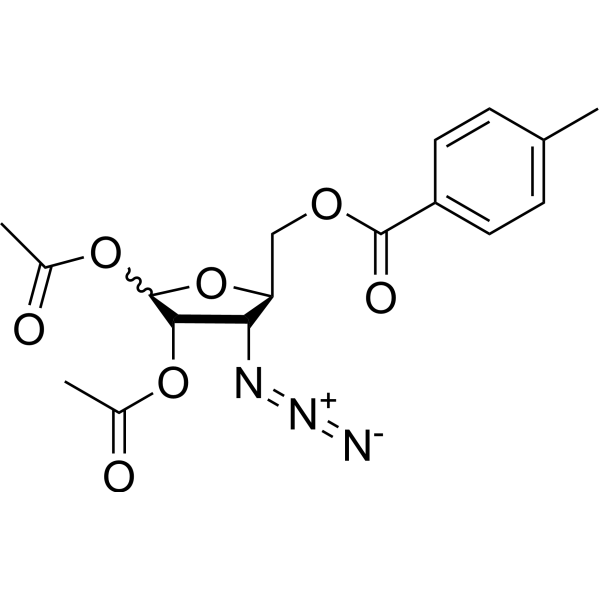
    1,2-Di-O-acetyl-3-azido-3-deoxy-5-O-(4-methyl) benzoyl-L-ribofuranose is a purine nucleoside analog. Purine nucleoside analogs have broad antitumor activity targeting indolent lymphoid malignancies. Anticancer mechanisms in this process rely on inhibition of DNA synthesis, induction of apoptosis, etc . 1,2-Di-O-acetyl-3-azido-3-deoxy-5-O-(4-methyl) benzoyl-L-ribofuranose is a click chemistry reagent, it contains an Azide group and can undergo copper-catalyzed azide-alkyne cycloaddition reaction (CuAAc) with molecules containing Alkyne groups. It can also undergo strain-promoted alkyne-azide cycloaddition (SPAAC) reactions with molecules containing DBCO or BCN groups.
    1,2-Di-O-acetyl-3-azido-3-deoxy-5-O-(4-methyl) benzoyl-L-ribofuranose
  • HY-154318

    Nucleoside Antimetabolite/Analog Cancer
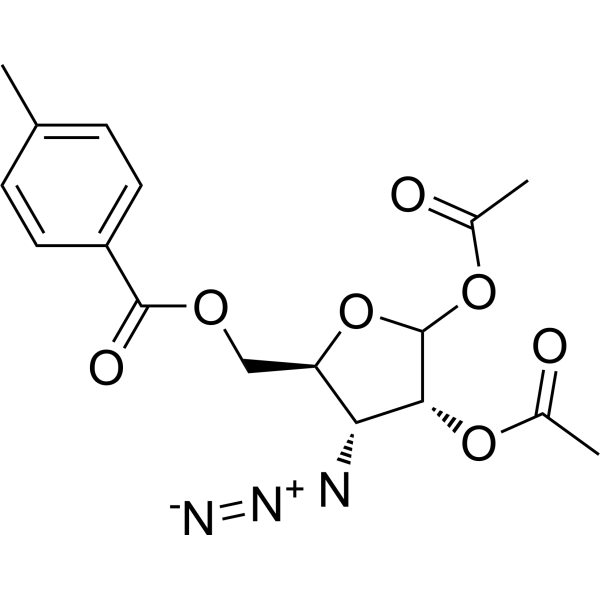
    1,2-Di-O-acetyl-3-azido-3-deoxy-5-O-(4-methyl)benzoyl-D-ribofuranose is a purine nucleoside analog. Purine nucleoside analogs have broad antitumor activity targeting indolent lymphoid malignancies. Anticancer mechanisms in this process rely on inhibition of DNA synthesis, induction of apoptosis, etc . 1,2-Di-O-acetyl-3-azido-3-deoxy-5-O-(4-methyl)benzoyl-D-ribofuranose is a click chemistry reagent, it contains an Azide group and can undergo copper-catalyzed azide-alkyne cycloaddition reaction (CuAAc) with molecules containing Alkyne groups. It can also undergo strain-promoted alkyne-azide cycloaddition (SPAAC) reactions with molecules containing DBCO or BCN groups.
    1,2-Di-O-acetyl-3-azido-3-deoxy-5-O-(4-methyl)benzoyl-D-ribofuranose
  • HY-119781

    PF1191

    iGluR Neurological Disease
    Kaitocephalin (PF1191) is an ionotropic glutamate receptor (NMDAR) antagonist with Ki values of 7.8, 590, and 14000 nM for NMDAR, AMPAR, and KAR, respectively. Kaitocephalin protects neurons by inhibiting excitotoxicity, exhibiting neuroprotective effects. Kaitocephalin can be used in research on neurological diseases such as Alzheimer's disease .
    Kaitocephalin
  • HY-79587

    Biochemical Assay Reagents Others
    Benzil is a 1,2-diketone compound with multiple functions including photo-peroxidation initiator, crosslinking initiator and pattern-forming agent, and is commonly used as a precursor for photodegradable network crosslinkers. In oxygen-purged polymer films or glassy matrices, Benzil reacts with molecular oxygen under illumination at wavelengths greater than 370 nm or 400 nm, and converts to benzoyl peroxide in nearly quantitative yield. Subsequently, the generated benzoyl peroxide groups produce free radicals via thermal or photochemical decomposition, thereby enabling crosslinking of polymer chains, grafting of new monomers, and preparation of patterned polymers on solid surfaces using mask irradiation. Benzil also induces crosslinking of photodegradable poly (phenyl vinyl ketone) to form a stable photodegradable polymer network .
    Benzil

Inquiry Online

Your information is safe with us. * Required Fields.

Salutation


Country or Region *

Applicant Name *


Organization Name *

Department *


Email Address *


Product Name *

Cat. No.


Requested quantity *

Phone Number *


Remarks

Inquiry Online

Inquiry Information

Product Name:
Cat. No.:
Quantity:
MCE Japan Authorized Agent:

