1. Search Result
Search Result
Results for "

catalytic zinc

" in MedChemExpress (MCE) Product Catalog:

13

Inhibitors & Agonists

3

Isotope-Labeled Compounds

Cat. No. Product Name Target Research Areas Chemical Structure
  • HY-139979
    USP5-IN-1
    3 Publications Verification

    Deubiquitinase Cancer
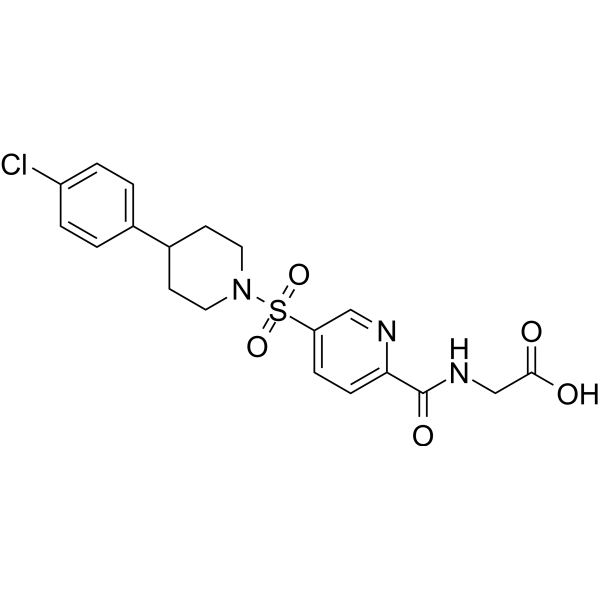
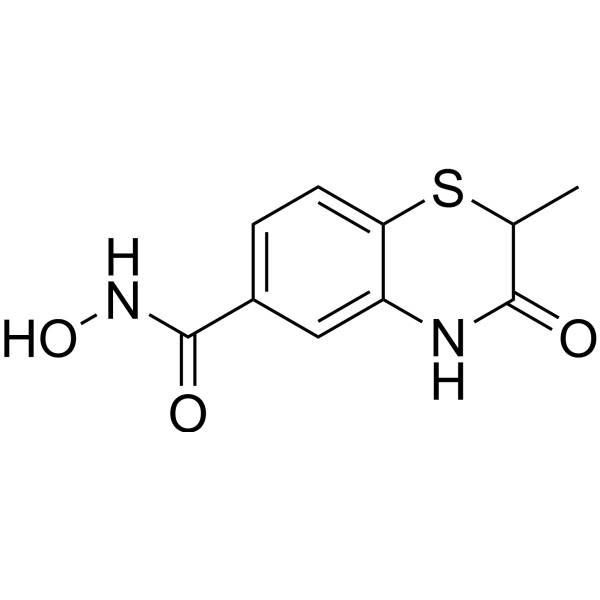
    USP5-IN-1 (compound 64) is a selective competitive inhibitor of USP5 zinc finger ubiquitin binding domain (ZnF-UBD) (KD=2.8 μM). USP5-IN-1 competitively blocks the binding of ubiquitin to ZnF-UBD, inhibits the catalytic activity of USP5, and thus hinders the hydrolysis of ubiquitin chains. USP5-IN-1 can inhibit USP5 cleavage of Lys48-linked diubiquitin substrates in vitro and is a potential USP5 chemical probe and potential inhibitor of USP5-related cancers.
    USP5-IN-1
  • HY-16138

    CG-200745

    HDAC MDM-2/p53 Apoptosis Cancer
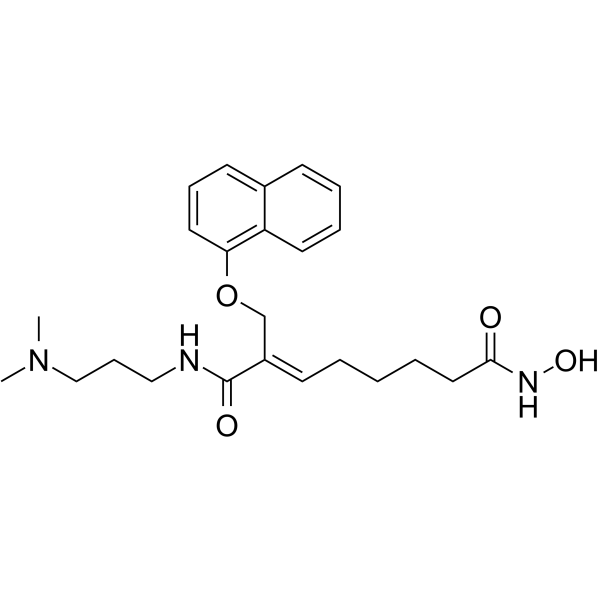
    Ivaltinostat (CG-200745) is an orally active, potent pan-HDAC inhibitor which has the hydroxamic acid moiety to bind zinc at the bottom of catalytic pocket. Ivaltinostat inhibits deacetylation of histone H3 and tubulin. Ivaltinostat induces the accumulation of p53, promotes p53-dependent transactivation, and enhances the expression of MDM2 and p21 (Waf1/Cip1) proteins. Ivaltinostat enhances the sensitivity of Gemcitabine-resistant cells to Gemcitabine (HY-16138) and 5-Fluorouracil (5-FU; HY-90006). Ivaltinostat induces apoptosis and has anti-tumour effects .
    Ivaltinostat
  • HY-16138A

    CG-200745 formic

    HDAC MDM-2/p53 Apoptosis Inflammation/Immunology Endocrinology Cancer
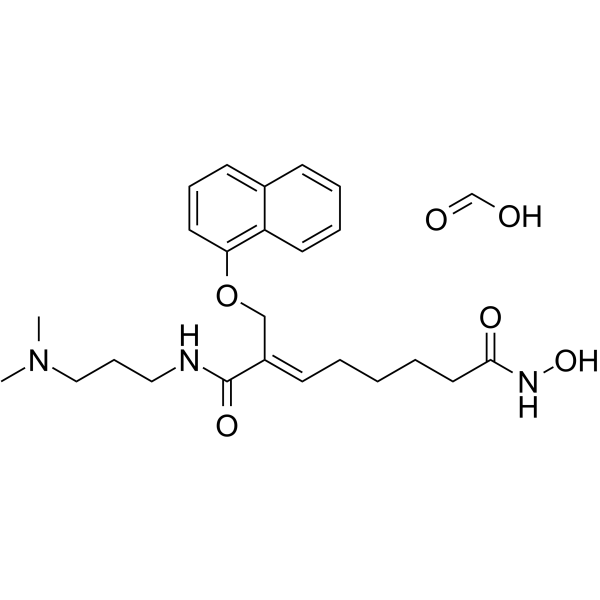
    Ivaltinostat (CG-200745) formic is an orally active, potent pan-HDAC inhibitor which has the hydroxamic acid moiety to bind zinc at the bottom of catalytic pocket. Ivaltinostat formic inhibits deacetylation of histone H3 and tubulin. Ivaltinostat formic induces the accumulation of p53, promotes p53-dependent transactivation, and enhances the expression of MDM2 and p21 (Waf1/Cip1) proteins. Ivaltinostat formic enhances the sensitivity of Gemcitabine-resistant cells to Gemcitabine (HY-16138) and 5-Fluorouracil (5-FU; HY-90006). Ivaltinostat formic induces apoptosis and has anti-tumour effects .
    Ivaltinostat formic
  • HY-W088065S

    Sodium [13C]formate; Sodium formate-13C

    Isotope-Labeled Compounds Others
    Formate- 13C (sodium) is the 13C labeled Sodium formate.Sodium formate is a biochemical assay reagent. Sodium formate can react with zinc sources (such as ZnCl2) on the surface of alpha alumina support to form a zinc oxide layer. Sodium formate acts as a deprotonating agent, promoting the deprotonation of ligands (such as 2-methylimidazole) at high temperatures. Sodium formate provides the required reducing force in the catalytic oxidation of methane to methanol by methane monooxygenase (sMMO) and inhibits further oxidation of methanol .
    Formate-13C sodium
  • HY-W088065S1

    Isotope-Labeled Compounds Others
    Sodium formate- 13C,d1 is the deuterium and 13C labeled Sodium formate.Sodium formate is a biochemical assay reagent. Sodium formate can react with zinc sources (such as ZnCl2) on the surface of alpha alumina support to form a zinc oxide layer. Sodium formate acts as a deprotonating agent, promoting the deprotonation of ligands (such as 2-methylimidazole) at high temperatures. Sodium formate provides the required reducing force in the catalytic oxidation of methane to methanol by methane monooxygenase (sMMO) and inhibits further oxidation of methanol .
    Sodium formate-13C,d1
  • HY-W088065S2

    Isotope-Labeled Compounds Others
    Sodium formate-d is the deuterium labeled Sodium formate.Sodium formate is a biochemical assay reagent. Sodium formate can react with zinc sources (such as ZnCl2) on the surface of alpha alumina support to form a zinc oxide layer. Sodium formate acts as a deprotonating agent, promoting the deprotonation of ligands (such as 2-methylimidazole) at high temperatures. Sodium formate provides the required reducing force in the catalytic oxidation of methane to methanol by methane monooxygenase (sMMO) and inhibits further oxidation of methanol .
    Sodium formate-d
  • HY-179421

    PROTACs HDAC NF-κB NOD-like Receptor (NLR) Interleukin Related TNF Receptor Inflammation/Immunology
    PROTAC HDAC6 degrader 7 is an orally active, highly efficient, and selective PROTAC degrader targeting histone deacetylase 6 (HDAC6) (IC50 = 118 nM). PROTAC HDAC6 degrader 7 can eliminate both the catalytic and zinc-finger ubiquitin-binding domain. PROTAC HDAC6 degrader 7 inhibits NLRP3 inflammasome assembly and activation, as well as blocks NF-κB signaling, thereby reducing the transcription and release of key inflammatory factors. PROTAC HDAC6 degrader 7 can reduce the mRNA levels of NLRP3, pro-IL-1β, TNF-α, and IL-6. PROTAC HDAC6 degrader 7 can be used for the study of inflammatory bowel disease (IBD) .
    PROTAC HDAC6 degrader 7
  • HY-111028

    T 5979345

    HDAC Infection
    J1038 (T 5979345) is a selective HDAC8 inhibitor. J1038 binds the catalytic zinc ion of Schistosoma mansoni HDAC8 (smHDAC8) .
    J1038
  • HY-126229

    Phosphodiesterase (PDE) Cancer
    PAT-078 is a type II autotaxin (ATX) inhibitor. PAT-078 mainly occupies the hydrophobic pocket of ATX, blocks the bottleneck region between the hydrophobic channel and the catalytic site, and does not interact with the zinc ion at the catalytic site .
    PAT-078
  • HY-115373

    MMP Inflammation/Immunology
    RO314724 is a selective MMP-1 inhibitor. RO314724 chelates to the catalytic zinc ion within the active site of MMP-1 and forms a stable complex with MMP-1. RO314724 can be used for the research of osteoarthritis .
    RO314724
  • HY-E70398A

    Endogenous Metabolite Metabolic Disease
    Sorbitol dehydrogenase, Sheep (EC 1.1.1.14) is an enzyme in carbohydrate metabolism that converts sorbitol, the sugar alcohol form of glucose, into fructose. Sorbitol dehydrogenase works in conjunction with aldose reductase, enabling the body to utilize glucose to produce fructose without ATP consumption. Sorbitol dehydrogenase uses NAD+ as a cofactor, and zinc ions also participate in the catalytic process.
    Sorbitol Dehydrogenase, Sheep
  • HY-181892

    Bacterial Infection
    LpxC-IN-17 (Compound a5) is a non-covalent LpxC inhibitor and Antibacterial agent. LpxC-IN-17 chelates catalytic zinc ions and forms extensive non-covalent interactions within the LpxC active site, thereby functionally inhibiting the enzyme. LpxC-IN-17 exhibits antibacterial activity against Gram-negative pathogens including Escherichia coli, Klebsiella pneumoniae and Pseudomonas aeruginosa. LpxC-IN-17 is applicable to research related to Gram-negative bacterial infections .
    LpxC-IN-17
  • HY-183591

    Carbonic Anhydrase Apoptosis Cancer
    CAIX/XII-IN-18 is a selective human carbonic anhydrase IX/XII (CA IX/XII) inhibitor with Ki values of 28.1 nM (hCA IX) and 11.6 nM (hCA XII). CAIX/XII-IN-18 induces apoptosis in breast cancer cells. CAIX/XII-IN-18 can be used for the research of breast cancer, pancreatic cancer .
    CAIX/XII-IN-18

Inquiry Online

Your information is safe with us. * Required Fields.

Salutation


Country or Region *

Applicant Name *


Organization Name *

Department *


Email Address *


Product Name *

Cat. No.


Requested quantity *

Phone Number *


Remarks

Inquiry Online

Inquiry Information

Product Name:
Cat. No.:
Quantity:
MCE Japan Authorized Agent:

