1. Search Result
Search Result
Pathways Recommended: Antibody-drug Conjugate/ADC Related
Results for "

drug coupling

" in MedChemExpress (MCE) Product Catalog:

44

Inhibitors & Agonists

1

Screening Libraries

25

Biochemical Assay Reagents

1

Peptides

1

Inhibitory Antibodies

3

Click Chemistry

1

Oligonucleotides

Cat. No. Product Name Target Research Areas Chemical Structure
  • HY-W011556

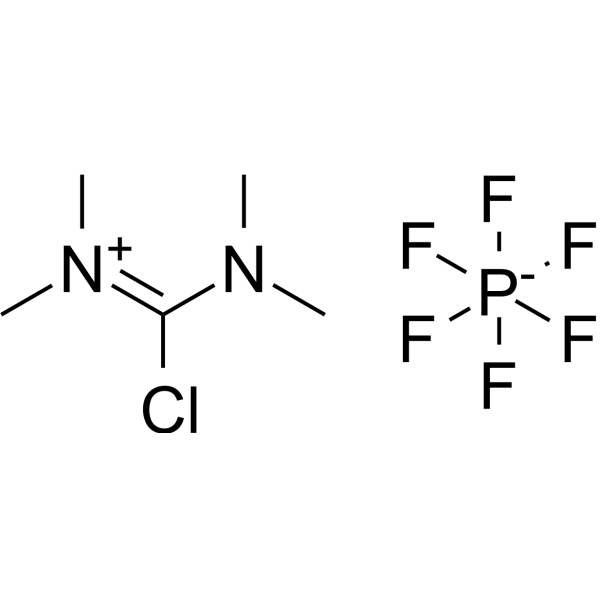
    TCFH

    Drug Isomer Cancer
    N,N,N',N'-Tetramethylchloroformamidinium hexafluorophosphate (TCFH) is a powerful coupling and derivatizing reagent for ester prodrug synthesis. N,N,N',N'-Tetramethylchloroformamidinium hexafluorophosphate can be used for antitumor drugs before medicine research .
    N,N,N',N'-Tetramethylchloroformamidinium hexafluorophosphate
  • HY-114362

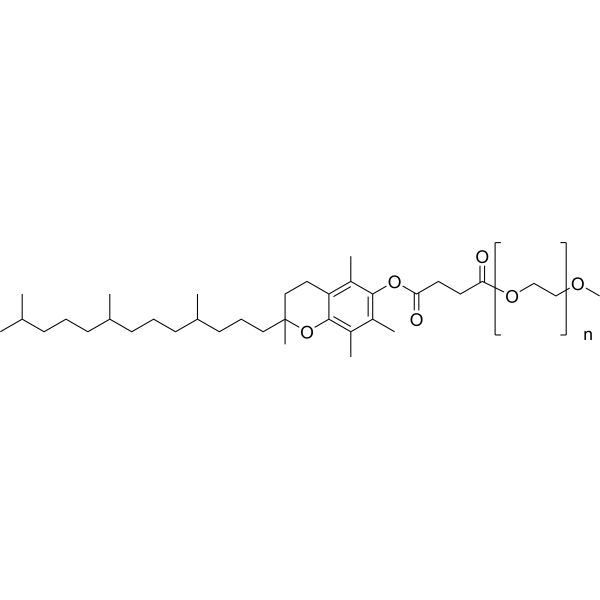
    TPGS-750-M

    Biochemical Assay Reagents Others
    DL-alpha-Tocopherol methoxypolyethylene glycol succinate (TPGS-750-M) is an amphiphile, acts as a surfactant. DL-alpha-Tocopherol methoxypolyethylene glycol succinate has a positive effect on Suzuki-Miyaura cross coupling. DL-alpha-Tocopherol methoxypolyethylene glycol succinate increases the styrene titer. DL-alpha-Tocopherol methoxypolyethylene glycol succinate is used in the stability test of NPYM-modified drugs in biological fluids .
    DL-alpha-Tocopherol methoxypolyethylene glycol succinate
  • HY-147363

    Drug-Linker Conjugates for ADC Others
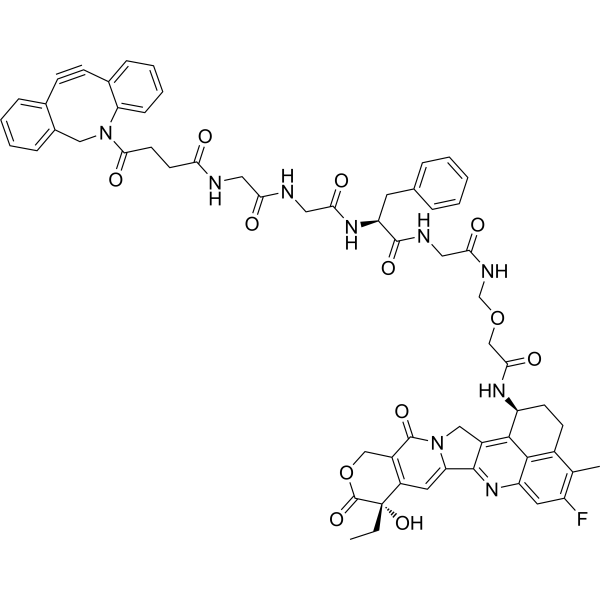
    DIBAC-GGFG-NH2CH2-Dxd (compound LP4), a Camptothecin (HY-16560) derivative, is a linker-payload of protein-agent conjugates . Dxd (HY-13631D) can be used as a payload for the antibody-coupling drug ADC (DS-8201a).DIBAC-GGFG-NH2CH2-Dxd is a click chemistry reagent, it contains a DBCO group that can undergo strain-promoted alkyne-azide cycloaddition (SPAAC) with molecules containing Azide groups .
    DIBAC-GGFG-NH2CH2-Dxd
  • HY-W090940

    ADC Linker Cancer
    H-Gly-Gly-Phe-OH is a tripeptide linker that may be used in the creation of antibody drug conjugates (ADCs). The N-terminal of the glycine tripeptide is free to perform a variety of reactions such as couplings with carboxylic acids or NHS esters.
    H-Gly-Gly-Phe-OH
  • HY-101532

    β-CDN3; 6A-deoxy-6A-azido-β-cyclodextrin

    Biochemical Assay Reagents Others
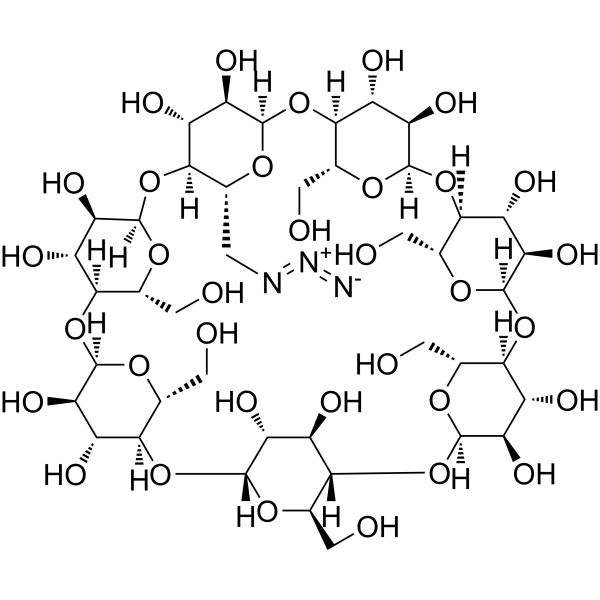
    6A-Azido-6A-deoxy-β-cyclodextrin (β-CDN3) is a site-specifically modified β-cyclodextrin with a single azido group replacing the hydroxyl group at the C6 position. 6A-Azido-6A-deoxy-β-cyclodextrin forms a host-guest inclusion complex with Dexamethasone (HY-14648), localizing the drug within its hydrophobic cavity, which restricts the rotational mobility of the drug and places Dexamethasone in a less polar environment. 6A-Azido-6A-deoxy-β-cyclodextrin acts as a coupling agent to graft β-cyclodextrin onto thermosensitive nanogels via strain-promoted alkyne-azide cycloaddition (SPAAC). 6A-Azido-6A-deoxy-β-cyclodextrin also serves as a click chemistry reagent. It contains an azide group and undergoes copper-catalyzed azide-alkyne cycloaddition (CuAAc) with molecules bearing an alkyne group. It also undergoes strain-driven alkyne-azide cycloaddition (SPAAC) with molecules containing DBCO or BCN groups .
    6A-Azido-6A-deoxy-β-cyclodextrin
  • HY-151721

    Drug Intermediate Others
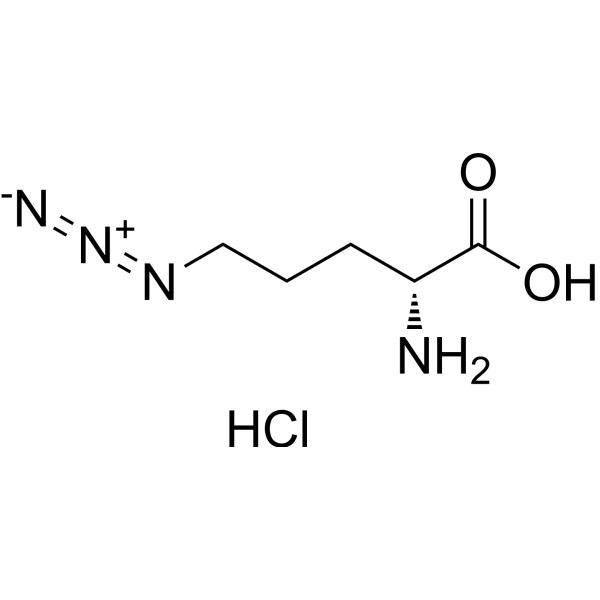
    H-D-Orn(N3)-OH hydrochloride is a drug intermediate that can be introduced at the 5' end of oligonucleotides with a protected C6 amino linker by MMT, facilitating the subsequent deprotection and coupling of functional groups such as dyes and biotin.
    H-D-Orn(N3)-OH hydrochloride
  • HY-W004650A

    Biochemical Assay Reagents Others
    TETA (tetraTFA) is an effective selective chelating agent for copper (II). TETA (tetraTFA) can be used for drug coupling .
    TETA tetraTFA
  • HY-171987

    Drug Derivative Others
    trans-4-Hydroxyprolinol-C10-tri-GalNAc (Formula XXIV) is a Tri-GaINAc derivative that can be used for nucleic acid drug coupling .
    trans-4-Hydroxyprolinol-C10-tri-GalNAc
  • HY-W004698

    Drug Intermediate Others
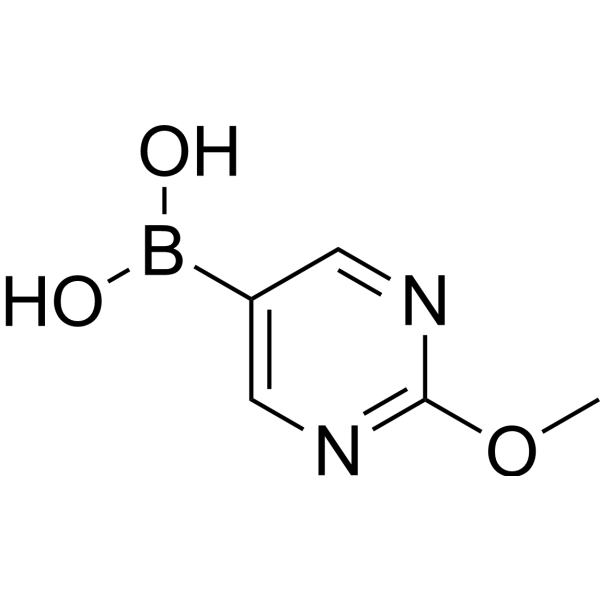
    (2-Methoxypyrimidin-5-yl)boronic acid is a drug intermediate that can serve as a key reactant in the Suzuki-Miyaura coupling reaction, and is used for the synthesis of isoquinoline ketone derivatives with anti-tumor activity .
    (2-Methoxypyrimidin-5-yl)boronic acid
  • HY-P4565

    Cathepsin Others
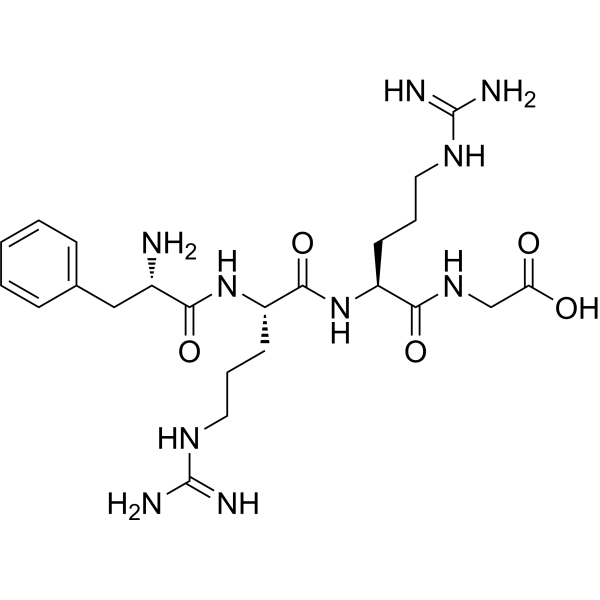
    Phe-Arg-Arg-Gly is a polypeptide that can be used for agent coupling .
    Phe-Arg-Arg-Gly
  • HY-158709

    Biochemical Assay Reagents Liposome Others
    Cho-es-Lys is a cationic lipid synthesized by coupling natural cholesterol and amino acids, which has high gene transfection efficiency. Cho-es-Lys can be used in drug delivery research .
    Cho-es-Lys
  • HY-174896A

    Biochemical Assay Reagents Others
    DSPE-PEG2000-Fmoc is a lipid-containing PEG derivative that can be used to form micelles as nanoparticles for drug delivery . Fmoc is a commonly used amino protecting group that protects the amino group from unwanted reactions until it is removed when a specific coupling reaction is required.
    DSPE-PEG2000-Fmoc
  • HY-W800625

    ADC Linker Cancer
    Boc-PEG4-Val-Cit-PAB-OH is an enzyme-cleavable ADC linker featuring a Boc-protected amine, a hydrophilic PEG spacer, and a Val-Cit-PAB dipeptide. The benzylic alcohol on the PAB can be used to attach with reactive groups such as PNP for conjugation with drug payloads. The Boc protecting group may be removed with acid to reveal a primary amine which may be used in coupling reactions to form amides. The Val-Cit-PAB is cleaved by cellular proteases for efficient release of payloads to the cell.
    Boc-PEG4-Val-Cit-PAB-OH
  • HY-W800621

    ADC Linker Cancer
    Fmoc-PEG2-Val-Cit-PAB-OH is an enzyme-cleavable ADC linker featuring a Boc-protected amine, a hydrophilic PEG spacer, and a Val-Cit-PAB dipeptide. The benzylic alcohol on the PAB can be used to attach with reactive groups such as PNP for conjugation with drug payloads. The Fmoc protecting group may be removed with piperidine to reveal a primary amine for use in coupling reactions to form amides. The Val-Cit-PAB is cleaved by cellular proteases for efficient release of payloads to the cell.
    Fmoc-PEG2-Val-Cit-PAB-OH
  • HY-W800623

    ADC Linker Cancer
    Fmoc-PEG6-Val-Cit-PAB-OH is an enzyme-cleavable ADC linker featuring a Boc-protected amine, a hydrophilic PEG spacer, and a Val-Cit-PAB dipeptide. The benzylic alcohol on the PAB can be used to attach with reactive groups such as PNP for conjugation with drug payloads. The Fmoc protecting group may be removed with piperidine to reveal a primary amine which may be used in coupling reactions to form amides. The Val-Cit-PAB is cleaved by cellular proteases for efficient release of payloads to the cell.
    Fmoc-PEG6-Val-Cit-PAB-OH
  • HY-W800624

    ADC Linker Cancer
    Boc-PEG2-Val-Cit-PAB-OH is an enzyme-cleavable ADC linker featuring a Boc-protected amine, a hydrophilic PEG spacer, and a Val-Cit-PAB dipeptide. The benzylic alcohol on the PAB can be used to attach with reactive groups such as PNP for conjugation with drug payloads. The Boc protecting group may be removed with acid to reveal a primary amine which may be used in coupling reactions to form amides. The Val-Cit-PAB is cleaved by cellular proteases for efficient release of payloads to the cell.
    Boc-PEG2-Val-Cit-PAB-OH
  • HY-W800622

    ADC Linker Cancer
    Fmoc-PEG4-Val-Cit-PAB-OH is an enzyme-cleavable ADC linker featuring a Boc-protected amine, a hydrophilic PEG spacer, and a Val-Cit-PAB dipeptide. The benzylic alcohol on the PAB can be used to attach with reactive groups such as PNP for conjugation with drug payloads. The Fmoc protecting group may be removed with piperidine to reveal a primary amine which may be used in coupling reactions to form amides. The Val-Cit-PAB is cleaved by cellular proteases for efficient release of payloads to the cell.
    Fmoc-PEG4-Val-Cit-PAB-OH
  • HY-W800618

    ADC Linker Others
    NH2-PEG3-Val-Cit-PAB-OH is a cleavable ADC linker featuring a primary amine, a hydrophilic PEG spacer, a Val-Cit dipeptide, and a PAB group. The benzylic alcohol on the PAB can be used to attach with reactive groups such as PNP for conjugation with drug payloads. The primary amine is free to perform a wide variety of reactions such as coupling with carboxylic acids, reductive aminations with ketones or aldehydes, or other more specialized uses such as in SNAr reactions or heterocyclic chemistry. The Val-Cit dipeptide is cleaved by cellular proteases within the cell to allow for efficient payload delivery via an elimination mechanism within the PAB structure.
    NH2-PEG3-Val-Cit-PAB-OH
  • HY-W800617

    ADC Linker Cancer
    NH2-PEG1-Val-Cit-PAB-OH is a cleavable ADC linker intermediate featuring a primary amine, a hydrophilic PEG spacer, a Val-Cit dipeptide, and a PAB group. The benzylic alcohol on the PAB can be used to attach with reactive groups such as PNP for conjugation with drug payloads. The primary amine is free to perform a wide variety of reactions such as coupling with carboxylic acids, reductive aminations with ketones or aldehydes, or other more specialized uses such as in SNAr reactions or heterocyclic chemistry. The Val-Cit dipeptide is cleaved by cellular proteases within the cell to allow for efficient payload delivery via an elimination mechanism within the PAB structure.
    NH2-PEG1-Val-Cit-PAB-OH
  • HY-W800619

    ADC Linker Others
    NH2-PEG4-Val-Cit-PAB-OH is a cleavable ADC linker featuring a primary amine, a hydrophilic PEG spacer, a Val-Cit dipeptide, and a PAB group. The benzylic alcohol on the PAB can be used to attach with reactive groups such as PNP for conjugation with drug payloads. The primary amine is free to perform a wide variety of reactions such as coupling with carboxylic acids, reductive aminations with ketones or aldehydes, or other more specialized uses such as in SNAr reactions or heterocyclic chemistry. The Val-Cit dipeptide is cleaved by cellular proteases within the cell to allow for efficient payload delivery via an elimination mechanism within the PAB structure.
    NH2-PEG4-Val-Cit-PAB-OH
  • HY-W800620

    ADC Linker Others
    NH2-PEG6-Val-Cit-PAB-OH is a cleavable ADC linker featuring a primary amine, a hydrophilic PEG spacer, a Val-Cit dipeptide, and a PAB group. The benzylic alcohol on the PAB can be used to attach with reactive groups such as PNP for conjugation with drug payloads. The primary amine is free to perform a wide variety of reactions such as coupling with carboxylic acids, reductive aminations with ketones or aldehydes, or other more specialized uses such as in SNAr reactions or heterocyclic chemistry. The Val-Cit dipeptide is cleaved by cellular proteases within the cell to allow for efficient payload delivery via an elimination mechanism within the PAB structure.
    NH2-PEG6-Val-Cit-PAB-OH
  • HY-180563

    Drug-Linker Conjugates for ADC Infection
    ADC 38 drug linker is a drug linker coupling agent used for ADCs, consisting of a CD4 mimic and a linker. ADC 38 drug linker can be used to synthesize antibody-drug conjugates (ADCs), such as ADC 38 .
    ADC 38 drug linker
  • HY-174896

    Biochemical Assay Reagents Others
    DSPE-PEG1000-Fmoc is a lipid-containing PEG derivative that can be used to form micelles as nanoparticles for drug delivery . Fmoc is a commonly used amino protecting group that protects the amino group from unwanted reactions until it is removed when a specific coupling reaction is required.
    DSPE-PEG1000-Fmoc
  • HY-174896B

    Biochemical Assay Reagents Others
    DSPE-PEG3400-Fmoc is a lipid-containing PEG derivative that can be used to form micelles as nanoparticles for drug delivery . Fmoc is a commonly used amino protecting group that protects the amino group from unwanted reactions until it is removed when a specific coupling reaction is required.
    DSPE-PEG3400-Fmoc
  • HY-174896C

    Biochemical Assay Reagents Others
    DSPE-PEG5000-Fmoc is a lipid-containing PEG derivative that can be used to form micelles as nanoparticles for drug delivery . Fmoc is a commonly used amino protecting group that protects the amino group from unwanted reactions until it is removed when a specific coupling reaction is required.
    DSPE-PEG5000-Fmoc
  • HY-183159B

    Biochemical Assay Reagents Others
    DSG-PEG3400-Glucose is a conjugate composed of DSG, a PEG chain, and terminal glucose. DSG-PEG3400-Glucose combines the membrane compatibility of phospholipids with glucose as an active site for sugar recognition or subsequent coupling reactions, making it suitable for research in biomaterial construction and drug delivery.
    DSG-PEG3400-Glucose
  • HY-183159C

    Biochemical Assay Reagents Others
    DSG-PEG5000-Glucose is a conjugate composed of DSG, a PEG chain, and terminal glucose. DSG-PEG5000-Glucose combines the membrane compatibility of phospholipids with glucose as an active site for sugar recognition or subsequent coupling reactions, making it suitable for research in biomaterial construction and drug delivery.
    DSG-PEG5000-Glucose
  • HY-183159

    Biochemical Assay Reagents Others
    DSG-PEG1000-Glucose is a conjugate composed of DSG, a PEG chain, and terminal glucose. DSG-PEG1000-Glucose combines the membrane compatibility of phospholipids with glucose as an active site for sugar recognition or subsequent coupling reactions, making it suitable for research in biomaterial construction and drug delivery.
    DSG-PEG1000-Glucose
  • HY-W1052981A

    Biochemical Assay Reagents Others
    DSPE-PEG5000-Glucose is a conjugate composed of DSPE, a PEG chain, and terminal glucose. DSPE-PEG5000-Glucose combines the membrane compatibility of phospholipids with glucose as an active site for sugar recognition or subsequent coupling reactions, making it suitable for research in biomaterial construction and drug delivery.
    DSPE-PEG5000-Glucose
  • HY-W1052981D

    Biochemical Assay Reagents Others
    DSPE-PEG3400-Glucose is a conjugate composed of DSPE, a PEG chain, and terminal glucose. DSPE-PEG3400-Glucose combines the membrane compatibility of phospholipids with glucose as an active site for sugar recognition or subsequent coupling reactions, making it suitable for research in biomaterial construction and drug delivery.
    DSPE-PEG3400-Glucose
  • HY-W1052981B

    Biochemical Assay Reagents Others
    DSPE-PEG10000-Glucose is a conjugate composed of DSPE, a PEG chain, and terminal glucose. DSPE-PEG10000-Glucose combines the membrane compatibility of phospholipids with glucose as an active site for sugar recognition or subsequent coupling reactions, making it suitable for research in biomaterial construction and drug delivery.
    DSPE-PEG10000-Glucose
  • HY-183159D

    Biochemical Assay Reagents Others
    DSG-PEG10000-Glucose is a conjugate composed of DSG, a PEG chain, and terminal glucose. DSG-PEG10000-Glucose combines the membrane compatibility of phospholipids with glucose as an active site for sugar recognition or subsequent coupling reactions, making it suitable for research in biomaterial construction and drug delivery.
    DSG-PEG10000-Glucose
  • HY-W1052981E

    Biochemical Assay Reagents Others
    DSPE-PEG1000-Glucose is a conjugate composed of DSPE, a PEG chain, and terminal glucose. DSPE-PEG1000-Glucose combines the membrane compatibility of phospholipids with glucose as an active site for sugar recognition or subsequent coupling reactions, making it suitable for research in biomaterial construction and drug delivery.
    DSPE-PEG1000-Glucose
  • HY-W1052981

    Biochemical Assay Reagents Others
    DSPE-PEG2000-Glucose is a conjugate composed of DSPE, a PEG chain, and terminal glucose. DSPE-PEG2000-Glucose combines the membrane compatibility of phospholipids with glucose as an active site for sugar recognition or subsequent coupling reactions, making it suitable for research in biomaterial construction and drug delivery.
    DSPE-PEG2000-Glucose
  • HY-183159A

    Biochemical Assay Reagents Others
    DSG-PEG2000-Glucose is a conjugate composed of DSG, a PEG chain, and terminal glucose. DSG-PEG2000-Glucose combines the membrane compatibility of phospholipids with glucose as an active site for sugar recognition or subsequent coupling reactions, making it suitable for research in biomaterial construction and drug delivery.
    DSG-PEG2000-Glucose
  • HY-183156D

    Biochemical Assay Reagents Others
    DMG-PEG10000-Glucose is a conjugate composed of dimyristic glycerol (DMG), a PEG chain, and terminal glucose. DMG-PEG10000-Glucose combines the membrane compatibility of phospholipids with glucose as an active site for sugar recognition or subsequent coupling reactions, making it suitable for research in biomaterial construction and drug delivery.
    DMG-PEG10000-Glucose
  • HY-183156A

    Biochemical Assay Reagents Others
    DMG-PEG2000-Glucose is a conjugate composed of dimyristic glycerol (DMG), a PEG chain, and terminal glucose. DMG-PEG2000-Glucose combines the membrane compatibility of phospholipids with glucose as an active site for sugar recognition or subsequent coupling reactions, making it suitable for research in biomaterial construction and drug delivery.
    DMG-PEG2000-Glucose
  • HY-183156

    Biochemical Assay Reagents Others
    DMG-PEG1000-Glucose is a conjugate composed of dimyristic glycerol (DMG), a PEG chain, and terminal glucose. DMG-PEG1000-Glucose combines the membrane compatibility of phospholipids with glucose as an active site for sugar recognition or subsequent coupling reactions, making it suitable for research in biomaterial construction and drug delivery.
    DMG-PEG1000-Glucose
  • HY-183156B

    Biochemical Assay Reagents Others
    DMG-PEG3400-Glucose is a conjugate composed of dimyristic glycerol (DMG), a PEG chain, and terminal glucose. DMG-PEG3400-Glucose combines the membrane compatibility of phospholipids with glucose as an active site for sugar recognition or subsequent coupling reactions, making it suitable for research in biomaterial construction and drug delivery.
    DMG-PEG3400-Glucose
  • HY-183156C

    Biochemical Assay Reagents Others
    DMG-PEG5000-Glucose is a conjugate composed of dimyristic glycerol (DMG), a PEG chain, and terminal glucose. DMG-PEG5000-Glucose combines the membrane compatibility of phospholipids with glucose as an active site for sugar recognition or subsequent coupling reactions, making it suitable for research in biomaterial construction and drug delivery.
    DMG-PEG5000-Glucose
  • HY-183169B

    Biochemical Assay Reagents Others
    C18-PEG5000-NHS is a conjugate composed of octadecyl (C18 aliphatic chain), PEG chains, and an active ester (NHS). C18-PEG5000-NHS combines the membrane compatibility of lipids with glucose as an active site for sugar recognition or subsequent coupling reactions, making it suitable for research in biomaterial construction and drug delivery.
    C18-PEG5000-NHS
  • HY-183169

    Biochemical Assay Reagents Others
    C18-PEG2000-NHS is a conjugate composed of octadecyl (C18 aliphatic chain), PEG chains, and an active ester (NHS). C18-PEG2000-NHS combines the membrane compatibility of lipids with glucose as an active site for sugar recognition or subsequent coupling reactions, making it suitable for research in biomaterial construction and drug delivery.
    C18-PEG2000-NHS
  • HY-183169A

    Biochemical Assay Reagents Others
    C18-PEG3400-NHS is a conjugate composed of octadecyl (C18 aliphatic chain), PEG chains, and an active ester (NHS). C18-PEG3400-NHS combines the membrane compatibility of lipids with glucose as an active site for sugar recognition or subsequent coupling reactions, making it suitable for research in biomaterial construction and drug delivery.
    C18-PEG3400-NHS
  • HY-P991906

    CD22-4AP Antibody; CAT-02-106 Antibody

    ADC Antibody CD22 Cancer
    TRPH-222 Antibody (CD22-4AP Antibody) is an anti-human CD22 antibody site-specifically modified at one site per heavy chain to express formylglycine (FG), allowing site-specific conjugation of a maytansinoid payload, a protease-insensitive spacer, and a functional group for coupling to an aldehyde on antibody FG residues. TRPH-222 Antibody can generate antibody drug conjugate (ADC) (TRPH-222) with an ADC payload and a linker. TRPH-222 Antibody can be used for the study of NHL (non-Hodgkin's lymphoma) .
    TRPH-222 Antibody

Inquiry Online

Your information is safe with us. * Required Fields.

Salutation


Country or Region *

Applicant Name *


Organization Name *

Department *


Email Address *


Product Name *

Cat. No.


Requested quantity *

Phone Number *


Remarks

Inquiry Online

Inquiry Information

Product Name:
Cat. No.:
Quantity:
MCE Japan Authorized Agent:

