Search Result
Results for "
environmental probe
" in MedChemExpress (MCE) Product Catalog:
2
Biochemical Assay Reagents
| Cat. No. |
Product Name |
Target |
Research Areas |
Chemical Structure |
-
- HY-110210
-
|
BODIPY FL,SE
|
Fluorescent Dye
|
Others
|
|
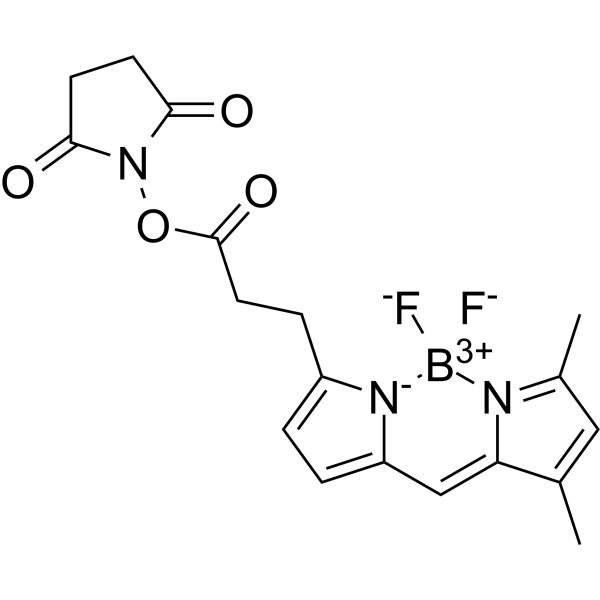
BODIPY FL NHS ester (BODIPY FL, SE) is a cell membranes-penatrable amine-reactive fluorescent probe. The maximum excitation/emission wavelength of the BODIPY-FL NHS ester are 502/511 nm, respectively. BODIPY-FL NHS ester has high stability and is insensitive to the polarity, pH and type of solvent, and can maintain stable fluorescence properties under different environmental conditions. BODIPY-FL NHS ester can be used for the synthesis of protease substrates, live cell imaging, protein labeling and immunoassay .
|
-
-
- HY-D1297
-
|
|
Fluorescent Dye
|
Others
|
|
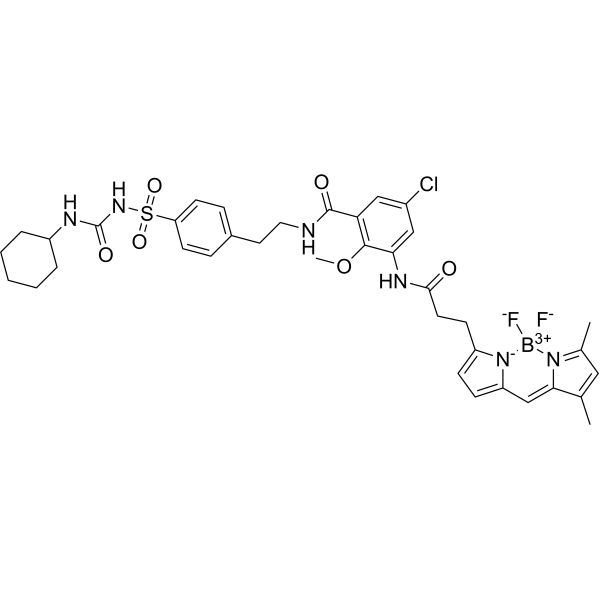
ER-Tracker dye is a derivative of BODIPY series dyes coupled with Glibenclamide (HY-15206), highly selective binding to the endoplasmic reticulum, non-toxic to cells at low concentrations, this type of dye is an environmentally sensitive probe, and formaldehyde treatment can still retain part of the fluorescence, with high fluorescence life, good extinction coefficient and other characteristics. Glibenclamide is an atp-dependent K + channel blocker (Kir6, KATP) and CFTR Cl-channel blocker that binds in the endoplasmic reticulum. ER-Tracker is not suitable for staining cells after fixation .
|
-
-
- HY-D1563
-
|
|
Fluorescent Dye
|
Others
|
|
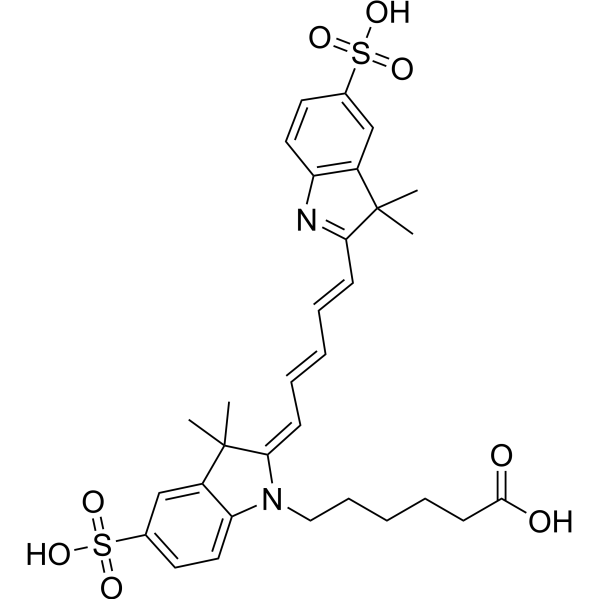
pH Receptor Probe is a pH-sensitive cyanine derivative and a environmental sensitive fluorophore. pH Receptor Probe has a pH-sensitive maximal absorption at 644 nm and emission at 664 nm. pH Receptor Probe has been used as a pH sensor of lysosomal compartments .
|
-
-
- HY-D1431
-
|
|
Fluorescent Dye
|
Cancer
|
|
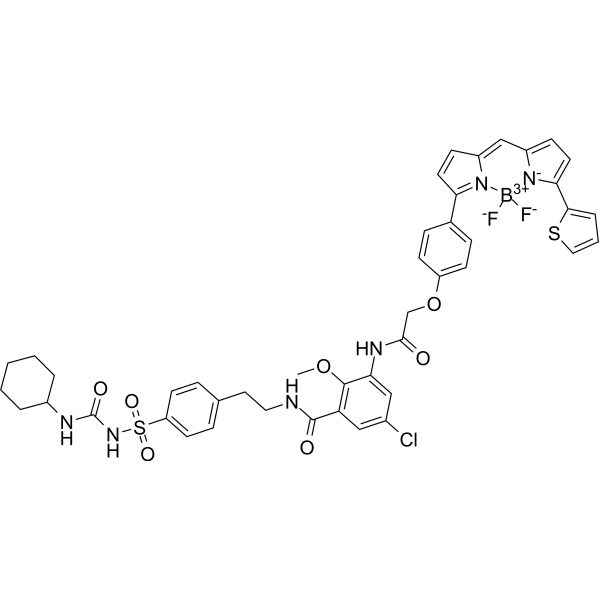
ER-Tracker dye is a derivative of BODIPY series dyes coupled with Glibenclamide (HY-15206), highly selective binding to the endoplasmic reticulum, non-toxic to cells at low concentrations, this type of dye is an environmentally sensitive probe, and formaldehyde treatment can still retain part of the fluorescence, with high fluorescence life, good extinction coefficient and other characteristics. Glibenclamide is an atp-dependent K + channel blocker (Kir6, KATP) and CFTR Cl-channel blocker that binds in the endoplasmic reticulum. ER-Tracker is not suitable for staining cells after fixation. Ex/Em=587/615 nm .
|
-
-
- HY-D1378
-
|
|
Fluorescent Dye
|
Others
|
|
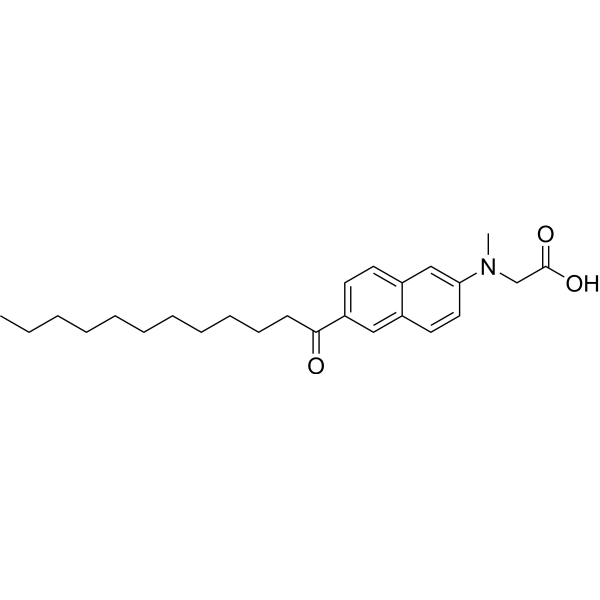
C-Laurdan is a modified Laurdan (HY-D0080) probe that imaging lipid rafts with environmentally sensitive fluorescence. C-Laurdan can be used in research of lipid arrangement and fluidity in biological membranes or artificial lipid membranes .
|
-
-
- HY-D1429
-
|
|
Fluorescent Dye
|
Others
|
|
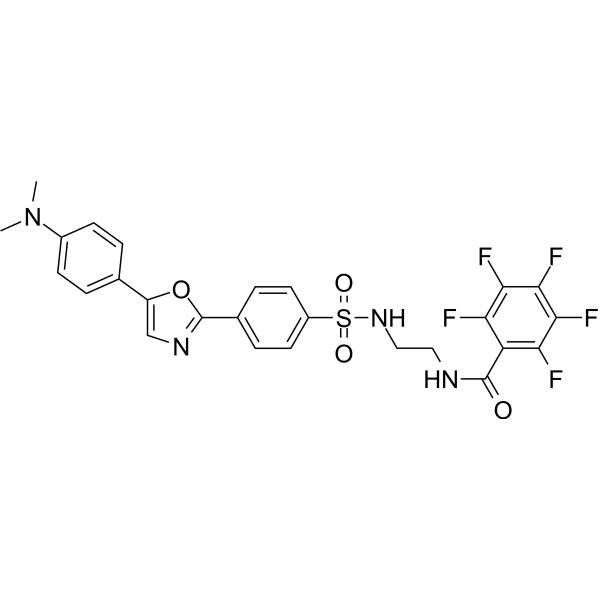
ER-Tracker dye is a derivative of BODIPY series dyes coupled with Glibenclamide (HY-15206), highly selective binding to the endoplasmic reticulum, non-toxic to cells at low concentrations, this type of dye is an environmentally sensitive probe, and formaldehyde treatment can still retain part of the fluorescence, with high fluorescence life, good extinction coefficient and other characteristics. Glibenclamide is an atp-dependent K + channel blocker (Kir6, KATP) and CFTR Cl-channel blocker that binds in the endoplasmic reticulum. ER-Tracker is not suitable for staining fixed cells. Staining followed by fixation is possible, but cells fixed with aldehydes will only retain partial fluorescence (Ex/Em = 374/ 430-640 nm) .
|
-
-
- HY-DY1074
-
|
|
Fluorescent Dye
|
Others
|
ER-Tracker dye is a derivative of BODIPY series dyes coupled with Glibenclamide (HY-15206) , highly selective binding to the endoplasmic reticulum, non-toxic to cells at low concentrations, this type of dye is an environmentally sensitive probe, and formaldehyde treatment can still retain part of the fluorescence, with high fluorescence life, good extinction coefficient and other characteristics. Glibenclamide is an atp-dependent K + channel blocker (Kir6, KATP) and CFTR Cl-channel blocker that binds in the endoplasmic reticulum. ER-Tracker is not suitable for staining fixed cells. Staining followed by fixation is possible, but cells fixed with aldehydes will only retain partial fluorescence .
Solvent and concentration: DMSO: 1 mM
|
-

-
- HY-P11057
-
|
|
Fluorescent Dye
|
Others
|
|
FGGH is a water-soluble peptide-based probe. FGGH performs the sequential detection of Cu 2+ and S 2- by fluorescence and colorimetry with high sensitivity (LOD: 1.42 and 22.2 nM for Cu 2+ and S 2-, respectively) (Ex=488 nm, Em=525 nm), and images both two ions in living cells and zebrafish models with low cytotoxicity. FGGH can be used for in vivo imaging and environmental pollution monitoring research .
|
-

-
- HY-DY1071
-
|
|
Fluorescent Dye
|
Others
|
pH Receptor Probe (solution) is a pH-sensitive cyanine derivative and a environmental sensitive fluorophore. pH Receptor Probe has a pH-sensitive maximal absorption at 644 nm and emission at 664 nm. pH Receptor Probe has been used as a pH sensor of lysosomal compartments .
Solvent and concentration: DMSO: 10 mM
|
-

-
- HY-DY1043
-
|
|
Fluorescent Dye
|
Others
|
ER-Tracker dye is a derivative of BODIPY series dyes coupled with Glibenclamide (HY-15206) , highly selective binding to the endoplasmic reticulum, non-toxic to cells at low concentrations, this type of dye is an environmentally sensitive probe, and formaldehyde treatment can still retain part of the fluorescence, with high fluorescence life, good extinction coefficient and other characteristics. Glibenclamide is an atp-dependent K + channel blocker (Kir6, KATP) and CFTR Cl-channel blocker that binds in the endoplasmic reticulum. ER-Tracker is not suitable for staining cells after fixation .
Solvent and concentration: DMSO: 1 mM
|
-

-
- HY-101937C
-
|
|
Fluorescent Dye
|
Others
|
|
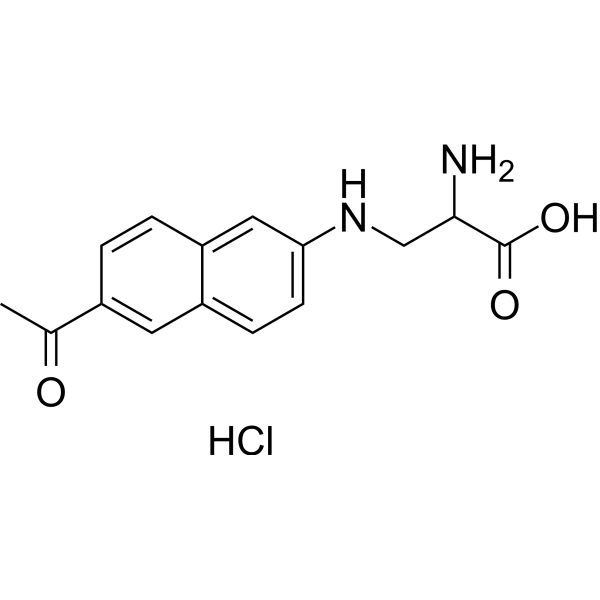
(±)-ANAP hydrochloride is the unnatural amino acid analog of prodan, acts as a fluorescent probes, and enhances environmental sensitivity.
|
-
-
- HY-W090065
-
|
1-Pyrenemethylamine hydrochloride
|
Biochemical Assay Reagents
|
Others
|
|
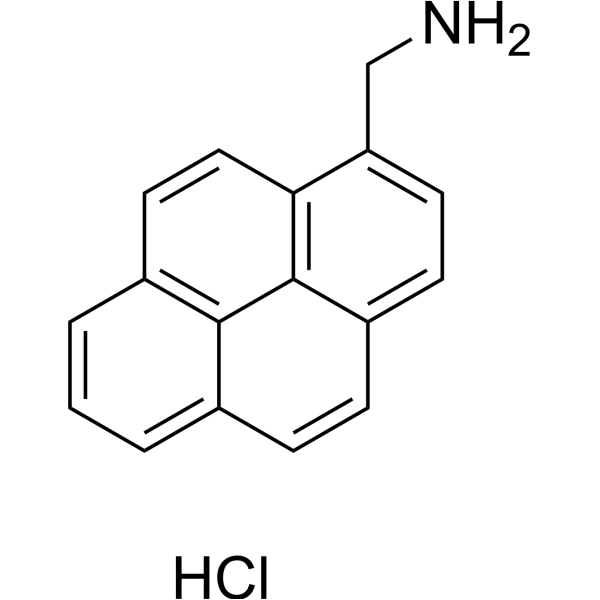
Pyren-1-ylmethanamine hydrochloride, Pyren-1-ylmethanamine hydrochloride is commonly used as a fluorescent probe in biochemistry and molecular biology to detect and study nucleic acids, proteins and other biomolecules, moreover, it has been used in analytical chemistry Among them, for the detection of heavy metals and other pollutants in environmental samples, the pyrene group in the molecule exhibits strong fluorescence properties, which makes it useful as a sensitive and selective detector in various applications.
|
-
-
- HY-DY1026
-
|
|
Fluorescent Dye
|
Cancer
|
ER-Tracker dye is a derivative of BODIPY series dyes coupled with Glibenclamide (HY-15206) , highly selective binding to the endoplasmic reticulum, non-toxic to cells at low concentrations, this type of dye is an environmentally sensitive probe, and formaldehyde treatment can still retain part of the fluorescence, with high fluorescence life, good extinction coefficient and other characteristics. Glibenclamide is an atp-dependent K + channel blocker (Kir6, KATP) and CFTR Cl-channel blocker that binds in the endoplasmic reticulum. ER-Tracker is not suitable for staining cells after fixation. Ex/Em=587/615 nm .
Solvent and concentration: DMSO: 1 mM
|
-

-
- HY-W127832
-
|
|
Fluorescent Dye
|
Others
|
|
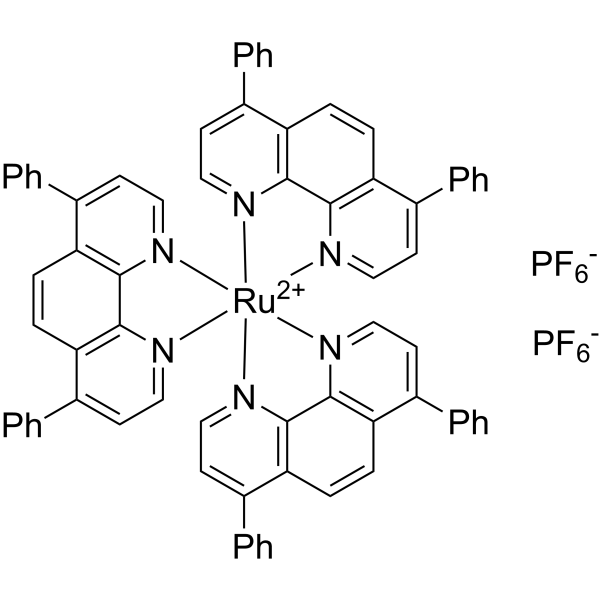
Ru(dpp)3(PF6)2 is a complex containing metallic ruthenium (Ru) and is a chemiluminescent oxygen probe. [Ru(dpp)3] 2+ is a luminescent substance that can undergo metal-to-ligand charge transfer (MLCT), and fluorescence will appear during the transfer of Ru to the ligand. At the same time, the fluorescence of Ru(dpp)3(PF6)2 is effectively quenched by molecular oxygen, so it is widely used in biosensors, environmental monitoring, and materials science. The property of Ru(dpp)3(PF6)2, which oxidizes Ru 2+ to Ru 3+, has also been used to design and construct solid-state light-emitting electrochemical cells .
|
-
-
- HY-101937A
-
|
|
Fluorescent Dye
|
Others
|
|
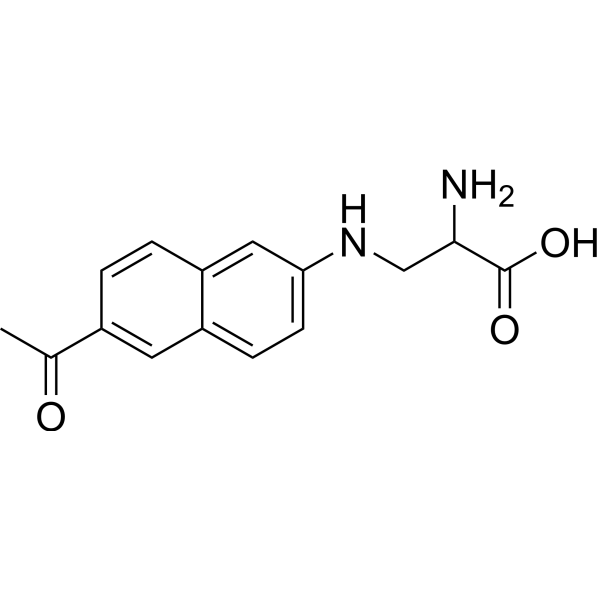
(±)-ANAP is the unnatural amino acid analog of prodan, acts as a fluorescent probes, and enhances environmental sensitivity.
|
-
-
- HY-149028
-
|
|
Fluorescent Dye
|
Others
|
|
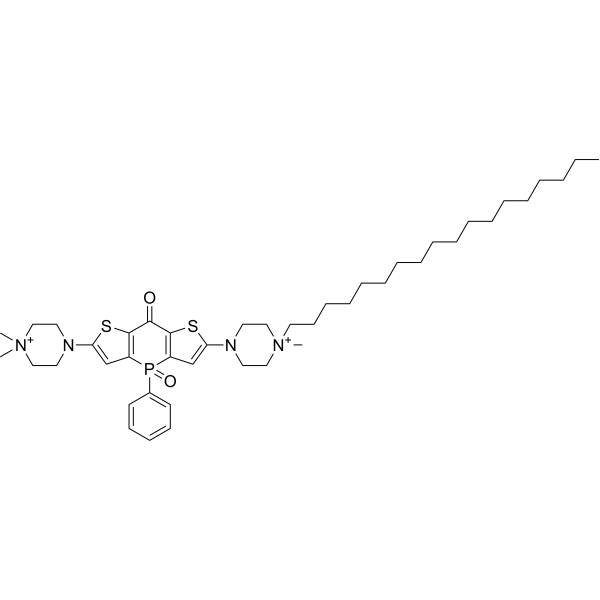
Mem-C1C18 is a polarity-sensitive fluorescent probe with excellent plasma membrane anchoring, high brightness and a sensitive response to environmental polarity by altering the fluorescence lifetime. Mem-C1C18 can be used to quantify changes in the polarity of the plasma membrane during iron death .
|
-
-
- HY-D2987
-
|
|
Fluorescent Dye
Bacterial
|
Others
|
|
BacGO is a highly selective, wash free fluorescent probe for Gram positive bacteria. BacGO binds to the carbohydrate structure in peptidoglycan through boric acid and exhibits depolymerization induced luminescence (DIE) properties. BacGO can be used for imaging complex environmental samples (such as activated sludge) and flat plate bacteria without affecting bacterial activity .
|
-

-
- HY-D2940
-
|
SiR650-BG
|
Fluorescent Dye
|
Others
|
SiR-SNAP (SiR650-BG) is a SiR-labeled SNAP tag near-infrared fluorescent probe (Ex/Em: 645 nm/661 nm). SiR-SNAP combines excellent optical properties, good cell membrane permeability, and environmentally sensitive fluorescence characteristics, providing a powerful tool for the dynamic study of proteins in living cells .
|
-

-
- HY-160240
-
|
|
Fluorescent Dye
|
Others
Cancer
|
|
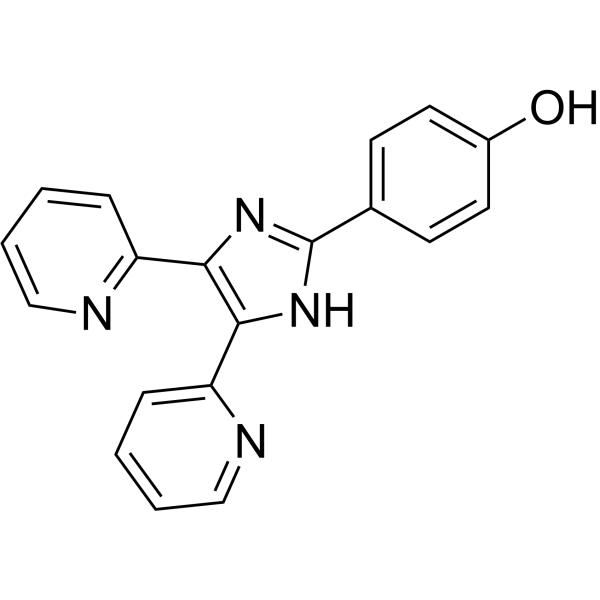
HPI is a HS - fluorescent probe (Ex/Em=280/410 nm). HPI can be used to detect the HS - form of hydrogen sulfide (H2S) gas in environmental water samples .
|
-
-
- HY-D3009
-
|
|
Fluorescent Dye
|
Others
|
|
LCE1 is an azacrown ether-based NIR fluorescence probe. LCT can be used for the detection of Pb 2+ in food, environmental water, plant and animal samples .
|
-

-
- HY-D2939
-
|
|
Fluorescent Dye
|
Others
|
BGSBD is a SNAP-tag-based fluorescent probe (Ex/Em: 435 nm/516 nm) based on the environmentally sensitive fluorescent group SBD, specifically designed for protein labeling of live cells without washing. BGSBD achieves a 280-fold fluorescence enhancement after labeling by ingeniously utilizing the hydrophobic binding pocket of the SNAP-tag protein, providing an ideal tool for real-time monitoring of protein dynamics within cells .
|
-

-
- HY-181453
-
|
2’-O-Benzyl-3’-MANT-GTP sodium
|
Drug Derivative
Fluorescent Dye
|
Others
|
|
2'-O-Benzyl-3'-O-(N'-methylanthraniloyl) guanosine-5'-O-triphosphate sodium (Mant-GTP R=CH3, B=Gua) (2'-O-Benzyl-3'-MANT-GTP sodium) is a methylanthraniloyl derivative of GTP (HY-113225). Methylanthraniloyl-GTP exhibits fluorescent properties (λmax: 442 nm in water; 432 nm in ethanol) .
|
-

| Cat. No. |
Product Name |
Type |
-
- HY-110210
-
|
BODIPY FL,SE
|
Fluorescent Dyes
|
|
BODIPY FL NHS ester (BODIPY FL, SE) is a cell membranes-penatrable amine-reactive fluorescent probe. The maximum excitation/emission wavelength of the BODIPY-FL NHS ester are 502/511 nm, respectively. BODIPY-FL NHS ester has high stability and is insensitive to the polarity, pH and type of solvent, and can maintain stable fluorescence properties under different environmental conditions. BODIPY-FL NHS ester can be used for the synthesis of protease substrates, live cell imaging, protein labeling and immunoassay .
|
-
- HY-D1297
-
|
|
Fluorescent Dyes
|
|
ER-Tracker dye is a derivative of BODIPY series dyes coupled with Glibenclamide (HY-15206), highly selective binding to the endoplasmic reticulum, non-toxic to cells at low concentrations, this type of dye is an environmentally sensitive probe, and formaldehyde treatment can still retain part of the fluorescence, with high fluorescence life, good extinction coefficient and other characteristics. Glibenclamide is an atp-dependent K + channel blocker (Kir6, KATP) and CFTR Cl-channel blocker that binds in the endoplasmic reticulum. ER-Tracker is not suitable for staining cells after fixation .
|
-
- HY-D1563
-
|
|
Fluorescent Dyes
|
|
pH Receptor Probe is a pH-sensitive cyanine derivative and a environmental sensitive fluorophore. pH Receptor Probe has a pH-sensitive maximal absorption at 644 nm and emission at 664 nm. pH Receptor Probe has been used as a pH sensor of lysosomal compartments .
|
-
- HY-D1431
-
|
|
Fluorescent Dyes
|
|
ER-Tracker dye is a derivative of BODIPY series dyes coupled with Glibenclamide (HY-15206), highly selective binding to the endoplasmic reticulum, non-toxic to cells at low concentrations, this type of dye is an environmentally sensitive probe, and formaldehyde treatment can still retain part of the fluorescence, with high fluorescence life, good extinction coefficient and other characteristics. Glibenclamide is an atp-dependent K + channel blocker (Kir6, KATP) and CFTR Cl-channel blocker that binds in the endoplasmic reticulum. ER-Tracker is not suitable for staining cells after fixation. Ex/Em=587/615 nm .
|
-
- HY-D1378
-
|
|
Fluorescent Dyes
|
|
C-Laurdan is a modified Laurdan (HY-D0080) probe that imaging lipid rafts with environmentally sensitive fluorescence. C-Laurdan can be used in research of lipid arrangement and fluidity in biological membranes or artificial lipid membranes .
|
-
- HY-D1429
-
|
|
Fluorescent Dyes
|
|
ER-Tracker dye is a derivative of BODIPY series dyes coupled with Glibenclamide (HY-15206), highly selective binding to the endoplasmic reticulum, non-toxic to cells at low concentrations, this type of dye is an environmentally sensitive probe, and formaldehyde treatment can still retain part of the fluorescence, with high fluorescence life, good extinction coefficient and other characteristics. Glibenclamide is an atp-dependent K + channel blocker (Kir6, KATP) and CFTR Cl-channel blocker that binds in the endoplasmic reticulum. ER-Tracker is not suitable for staining fixed cells. Staining followed by fixation is possible, but cells fixed with aldehydes will only retain partial fluorescence (Ex/Em = 374/ 430-640 nm) .
|
-
- HY-DY1074
-
|
|
Fluorescent Dyes
|
ER-Tracker dye is a derivative of BODIPY series dyes coupled with Glibenclamide (HY-15206) , highly selective binding to the endoplasmic reticulum, non-toxic to cells at low concentrations, this type of dye is an environmentally sensitive probe, and formaldehyde treatment can still retain part of the fluorescence, with high fluorescence life, good extinction coefficient and other characteristics. Glibenclamide is an atp-dependent K + channel blocker (Kir6, KATP) and CFTR Cl-channel blocker that binds in the endoplasmic reticulum. ER-Tracker is not suitable for staining fixed cells. Staining followed by fixation is possible, but cells fixed with aldehydes will only retain partial fluorescence .
Solvent and concentration: DMSO: 1 mM
|
-
- HY-DY1071
-
|
|
Fluorescent Dyes
|
pH Receptor Probe (solution) is a pH-sensitive cyanine derivative and a environmental sensitive fluorophore. pH Receptor Probe has a pH-sensitive maximal absorption at 644 nm and emission at 664 nm. pH Receptor Probe has been used as a pH sensor of lysosomal compartments .
Solvent and concentration: DMSO: 10 mM
|
-
- HY-DY1043
-
|
|
Fluorescent Dyes
|
ER-Tracker dye is a derivative of BODIPY series dyes coupled with Glibenclamide (HY-15206) , highly selective binding to the endoplasmic reticulum, non-toxic to cells at low concentrations, this type of dye is an environmentally sensitive probe, and formaldehyde treatment can still retain part of the fluorescence, with high fluorescence life, good extinction coefficient and other characteristics. Glibenclamide is an atp-dependent K + channel blocker (Kir6, KATP) and CFTR Cl-channel blocker that binds in the endoplasmic reticulum. ER-Tracker is not suitable for staining cells after fixation .
Solvent and concentration: DMSO: 1 mM
|
-
- HY-101937C
-
|
|
Fluorescent Dyes
|
|
(±)-ANAP hydrochloride is the unnatural amino acid analog of prodan, acts as a fluorescent probes, and enhances environmental sensitivity.
|
-
- HY-DY1026
-
|
|
Fluorescent Dyes
|
ER-Tracker dye is a derivative of BODIPY series dyes coupled with Glibenclamide (HY-15206) , highly selective binding to the endoplasmic reticulum, non-toxic to cells at low concentrations, this type of dye is an environmentally sensitive probe, and formaldehyde treatment can still retain part of the fluorescence, with high fluorescence life, good extinction coefficient and other characteristics. Glibenclamide is an atp-dependent K + channel blocker (Kir6, KATP) and CFTR Cl-channel blocker that binds in the endoplasmic reticulum. ER-Tracker is not suitable for staining cells after fixation. Ex/Em=587/615 nm .
Solvent and concentration: DMSO: 1 mM
|
-
- HY-101937A
-
|
|
Fluorescent Dyes
|
|
(±)-ANAP is the unnatural amino acid analog of prodan, acts as a fluorescent probes, and enhances environmental sensitivity.
|
-
- HY-D2987
-
|
|
Fluorescent Dyes
|
|
BacGO is a highly selective, wash free fluorescent probe for Gram positive bacteria. BacGO binds to the carbohydrate structure in peptidoglycan through boric acid and exhibits depolymerization induced luminescence (DIE) properties. BacGO can be used for imaging complex environmental samples (such as activated sludge) and flat plate bacteria without affecting bacterial activity .
|
-
- HY-D2940
-
|
SiR650-BG
|
Fluorescent Dyes
|
SiR-SNAP (SiR650-BG) is a SiR-labeled SNAP tag near-infrared fluorescent probe (Ex/Em: 645 nm/661 nm). SiR-SNAP combines excellent optical properties, good cell membrane permeability, and environmentally sensitive fluorescence characteristics, providing a powerful tool for the dynamic study of proteins in living cells .
|
-
- HY-D3009
-
|
|
Fluorescent Dyes
|
|
LCE1 is an azacrown ether-based NIR fluorescence probe. LCT can be used for the detection of Pb 2+ in food, environmental water, plant and animal samples .
|
-
- HY-D2939
-
|
|
Fluorescent Dyes
|
BGSBD is a SNAP-tag-based fluorescent probe (Ex/Em: 435 nm/516 nm) based on the environmentally sensitive fluorescent group SBD, specifically designed for protein labeling of live cells without washing. BGSBD achieves a 280-fold fluorescence enhancement after labeling by ingeniously utilizing the hydrophobic binding pocket of the SNAP-tag protein, providing an ideal tool for real-time monitoring of protein dynamics within cells .
|
| Cat. No. |
Product Name |
Type |
-
- HY-W090065
-
|
1-Pyrenemethylamine hydrochloride
|
Biochemical Assay Reagents
|
|
Pyren-1-ylmethanamine hydrochloride, Pyren-1-ylmethanamine hydrochloride is commonly used as a fluorescent probe in biochemistry and molecular biology to detect and study nucleic acids, proteins and other biomolecules, moreover, it has been used in analytical chemistry Among them, for the detection of heavy metals and other pollutants in environmental samples, the pyrene group in the molecule exhibits strong fluorescence properties, which makes it useful as a sensitive and selective detector in various applications.
|
-
- HY-W127832
-
|
|
Biochemical Assay Reagents
|
|
Ru(dpp)3(PF6)2 is a complex containing metallic ruthenium (Ru) and is a chemiluminescent oxygen probe. [Ru(dpp)3] 2+ is a luminescent substance that can undergo metal-to-ligand charge transfer (MLCT), and fluorescence will appear during the transfer of Ru to the ligand. At the same time, the fluorescence of Ru(dpp)3(PF6)2 is effectively quenched by molecular oxygen, so it is widely used in biosensors, environmental monitoring, and materials science. The property of Ru(dpp)3(PF6)2, which oxidizes Ru 2+ to Ru 3+, has also been used to design and construct solid-state light-emitting electrochemical cells .
|
| Cat. No. |
Product Name |
Target |
Research Area |
-
- HY-P11057
-
|
|
Fluorescent Dye
|
Others
|
|
FGGH is a water-soluble peptide-based probe. FGGH performs the sequential detection of Cu 2+ and S 2- by fluorescence and colorimetry with high sensitivity (LOD: 1.42 and 22.2 nM for Cu 2+ and S 2-, respectively) (Ex=488 nm, Em=525 nm), and images both two ions in living cells and zebrafish models with low cytotoxicity. FGGH can be used for in vivo imaging and environmental pollution monitoring research .
|
| Cat. No. |
Product Name |
|
Classification |
-
- HY-D1378
-
|
|
|
Fluorescent Lipids
|
|
C-Laurdan is a modified Laurdan (HY-D0080) probe that imaging lipid rafts with environmentally sensitive fluorescence. C-Laurdan can be used in research of lipid arrangement and fluidity in biological membranes or artificial lipid membranes .
|
Your information is safe with us. * Required Fields.
Inquiry Information
- Product Name:
- Cat. No.:
- Quantity:
- MCE Japan Authorized Agent:








