1. Search Result
Search Result
Results for "

intracerebroventricular

" in MedChemExpress (MCE) Product Catalog:

14

Inhibitors & Agonists

5

Peptides

1

Natural
Products

Cat. No. Product Name Target Research Areas Chemical Structure
  • HY-P1290
    PKA Inhibitor Fragment (6-22) amide
    5 Publications Verification

    PKI-(6-22)-amide

    PKA Neurological Disease
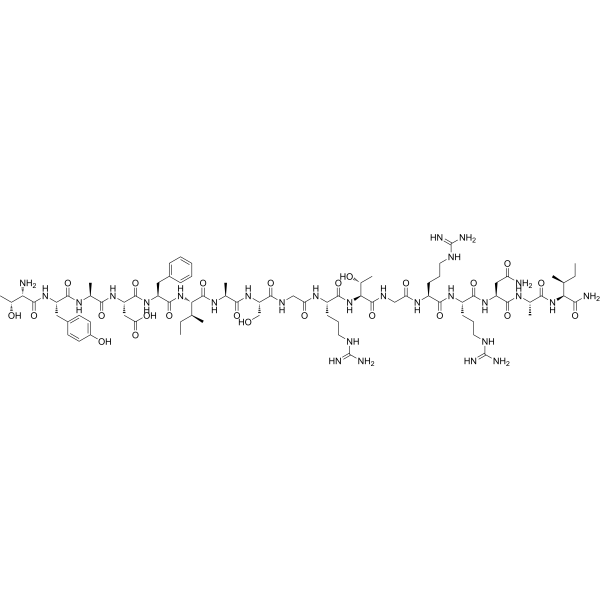
    PKA Inhibitor Fragment (6-22) amide is a highly potent and specific competitive inhibitor of PKA, with Ki values of 1.7 nM and 1.6 nM against human and bovine PKA catalytic subunits, respectively. The IC50 of PKA Inhibitor Fragment (6-22) amide targeting bovine PKA is 8.6 nM. PKA Inhibitor Fragment (6-22) amide effectively abolishes PKA activity in mouse brain and spinal cord, and exerts in vivo efficacy via intracerebroventricular administration. PKA Inhibitor Fragment (6-22) amide significantly reverses low-dose morphine analgesic tolerance in mice and blocks photoaffinity labeling of cAMP-dependent protein kinase. PKA Inhibitor Fragment (6-22) amide can be applied to research in fields related to the mechanism of morphine analgesic tolerance and skin wound healing .
    PKA Inhibitor Fragment (6-22) amide
  • HY-19976
    RN-1747
    5 Publications Verification

    TRP Channel Cardiovascular Disease Metabolic Disease
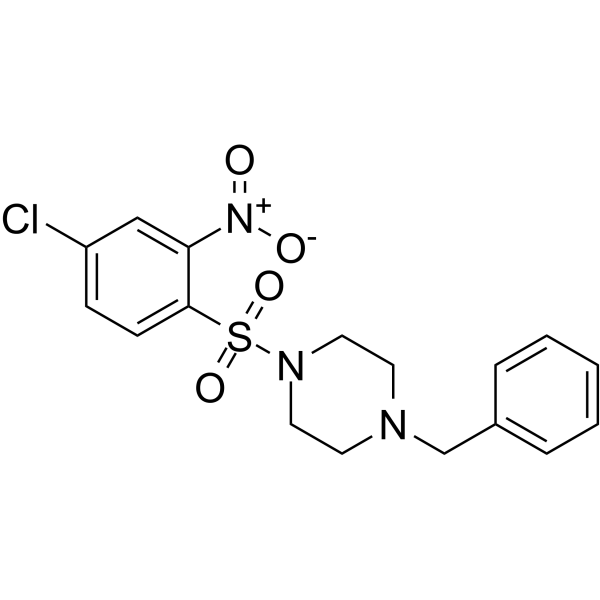
    RN-1747 is a selective TRPV4 channel agonist, with EC50 values of 0.77 μM, 4.0 μM and 4.1 μM for hTRPV4, mTRPV4 and rTRPV4, respectively. RN-1747 acts as an antagonist of TRPM8, with an IC50 of 4 μM. Topical cutaneous administration of RN-1747 induces hypothermia, increases tail heat loss via cutaneous vasodilation, and promotes cold-seeking behavior in rats. Intracerebroventricular administration of RN-1747 does not induce hypothermia in rats .
    RN-1747
  • HY-103101

    5-HT Receptor Others
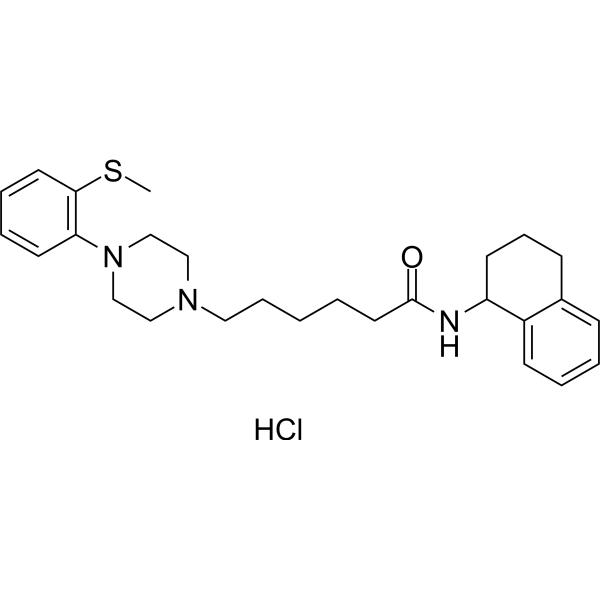
    LP44 (hydrochloride) is a selective 5-HT7 agonist with Ki of 0.22 nM. LP44 (hydrochloride) induces hypothermic effect in a dose-dependent manner by intracerebroventricular injection. LP44 (hydrochloride) not causes considerable hypothermic response by intraperitoneal administration .
    LP44 hydrochloride
  • HY-P11389

    Angiotensin Receptor Neurological Disease
    (Sar1,Gly8)-Angiotensin II is an AT1 angiotensin II receptor subtype selective antagonist (Ki: 52 nM for AT2 receptor in rat adrenal). (Sar1,Gly8)-Angiotensin II potently antagonizes dipsogenic responses to intracerebroventricularly administered Ang II .
    (Sar1,Gly8)-Angiotensin II
  • HY-P1617

    Endogenous Metabolite Neurological Disease
    LY 190388 is a penicillamine-containing enkefa peptide analog with μ receptor agonist activity. LY 190388 showed analgesic effect in inhibiting the writhing response in mice after intracerebroventricular administration. The analgesic effect of LY 190388 is not caused by its δ receptor agonist action, but by its μ receptor agonist activity. When LY 190388 is used together with the δ receptor antagonist ICI 174864, an additive analgesic effect is produced .
    LY 190388
  • HY-P1426

    Potassium Channel Neurological Disease
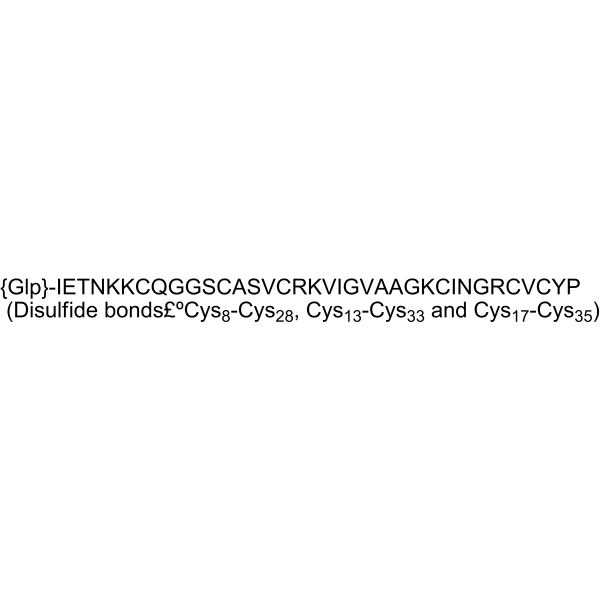
    AmmTX3 is a peptide toxin identified from the venom of the scorpion Androctonus mauretanicus. AmmTX3 is a highly specific blocker of Kv4 channels, which selectively and almost completely blocks transient A-type K + currents with a Ki of 131 nM. AmmTX3 induces epileptiform behaviors and causes death in mice receiving intracerebroventricular injection. AmmTX3 increases the excitability of dentate gyrus granule cells, reduces GABAergic inhibition, enhances and stabilizes the EPSP-spike component of long-term potentiation, and impairs reference memory. AmmTX3 can be used in research related to pain, epilepsy, and autism spectrum disorder .
    AmmTX3
  • HY-155297

    FLA-136

    Histamine Receptor Cardiovascular Disease
    Nebidrazine is a centrally-acting hypotensive agent compared to clonidine, demonstrating weaker cardiovascular effects in rats. It induces dose-dependent hypotension and bradycardia when administered intracerebroventricularly (i.c.v.), with significantly lower sedative potential than clonidine in conscious rats. Yohimbine attenuates the cardiovascular effects of both Nebidrazine and clonidine, suggesting involvement of central alpha-autoreceptors sensitive to yohimbine. Unlike clonidine, Nebidrazine does not affect peripheral alpha-adrenoceptors in pithed rats, indicating a selective central mechanism. Chemical sympathectomy reduces Nebidrazine's cardiovascular effects more than clonidine's, and metiamide diminishes responses to both drugs, implicating central histamine receptors. These findings highlight Nebidrazine's distinct pharmacological profile and potential therapeutic application in managing hypertension through central alpha-autoreceptor stimulation .
    Nebidrazine
  • HY-122323

    Leucylarginine

    Amino Acid Derivatives Others
    L-Leucyl-L-arginine (Leucylarginine) is a compound that inhibits the analgesic effect of systemically administered L-arginine in a carrageenan-induced hyperalgesia model in mice when administered intracerebroventricularly.
    L-Leucyl-L-arginine
  • HY-14533

    K162

    Amyloid-β Neurological Disease
    K 01-162 (K162) inhibits the fibril formation of Aβ peptides and eliminates their neurotoxicity. K 01-162 binds with Aβ42 peptide with an EC50 value of 80 nM. K 01-162 binds directly to AβO with a KD value of 19 μM. K 01-162 is capable of penetrating the brain and can be used for the research of Alzheimer’s disease .
    K 01-162
  • HY-P1426A

    Potassium Channel Neurological Disease
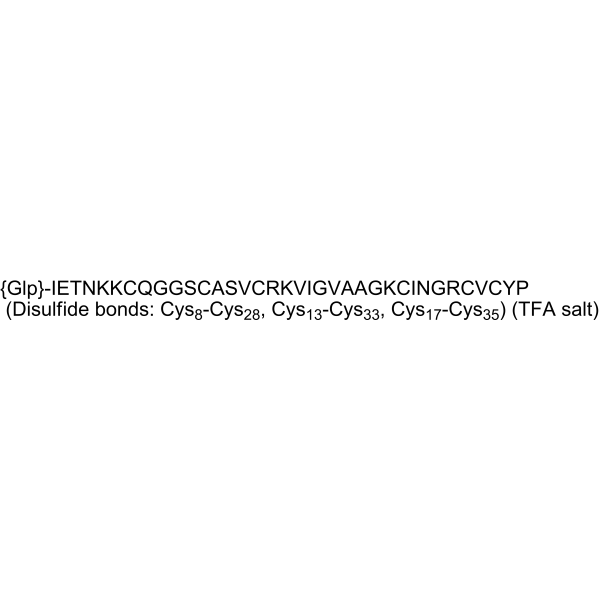
    AmmTX3 TFA is a peptide toxin identified from the venom of the scorpion Androctonus mauretanicus. AmmTX3 TFA is a highly specific blocker of Kv4 channels, which selectively and almost completely blocks transient A-type K + currents with a Ki of 131 nM. AmmTX3 TFA induces epileptiform behaviors and causes death in mice receiving intracerebroventricular injection. AmmTX3 TFA increases the excitability of dentate gyrus granule cells, reduces GABAergic inhibition, enhances and stabilizes the EPSP-spike component of long-term potentiation, and impairs reference memory. AmmTX3 TFA can be used in research related to pain, epilepsy, and autism spectrum disorder .
    AmmTX3 TFA
  • HY-138232

    LTNAM

    Aminopeptidase Neurological Disease
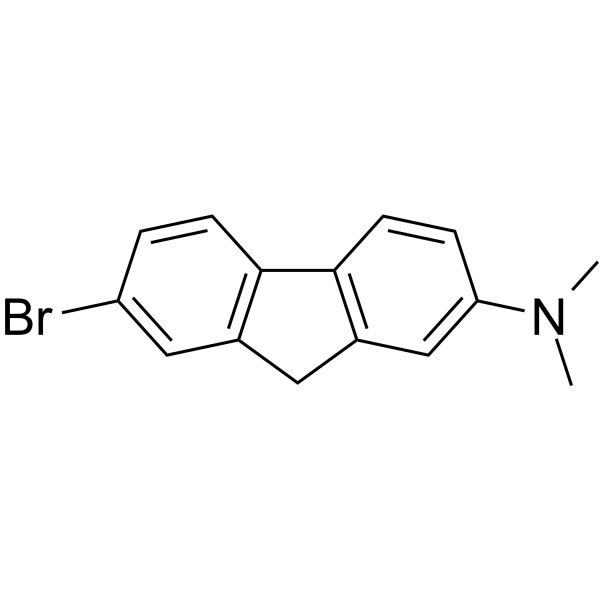
    Lys-psi(CH2NH)-Trp(Nps)-OMe is a lysine-tryptophan (Nps) pseudodipeptide analog. It is obtained by replacing the peptide bond in the Lys-Trp(Nps) molecule with an aminomethylene bond and has analgesic activity. Lys-psi(CH2NH)-Trp(Nps)-OMe induces a dose-dependent and naloxone-reversible analgesia after intracerebroventricular administration in mice, and its analgesic effect lasts longer than that of the original compound. It protects methionine enkephalin from degradation in rat striatal slices and binds to low-dose opioid peptides to produce analgesia. Lys-psi(CH2NH)-Trp(Nps)-OMe effectively inhibits brain aminopeptidase activity both in vitro and in vivo. The enhanced resistance of this pseudodipeptide to proteolysis may explain its prolonged analgesic activity.
    Lys-psi(CH2NH)-Trp(Nps)-OMe
  • HY-103101R

    Reference Standards 5-HT Receptor Others
    LP44 hydrochloride (Standard) is the analytical standard of LP44 hydrochloride (HY-103101). This product is intended for research and analytical applications. LP44 hydrochloride is a selective 5-HT7 agonist with Ki of 0.22 nM. LP44 hydrochloride induces hypothermic effect in a dose-dependent manner by intracerebroventricular injection. LP44 hydrochloride not causes considerable hypothermic response by intraperitoneal administration .
    LP44 hydrochloride (Standard)
  • HY-181956

    Opioid Receptor Neurological Disease
    MPAM-15 is a blood-brain barrier-penetrant pan-orthosteric allosteric modulator (PAM) of opioid receptors, with ≥16-fold selectivity for μOR over δOR and κOR. MPAM-15 acts as an anti-nociceptive potentiator and analgesic, and its activity is observed in mouse models via both intracerebroventricular and intraperitoneal administration. MPAM-15 is applicable for pain-related research .
    MPAM-15
  • HY-N18266

    Others Inflammation/Immunology
    10-Hydroxycroomine is a croomine-type alkaloid. 10-Hydroxycroomine can be isolated from the roots of Stemona tuberosa. 10-Hydroxycroomine produces a non-statistically significant reduction in Citric acid (HY-N1428)-induced coughing. 10-Hydroxycroomine can be used for the research of cough .
    10-Hydroxycroomine

Inquiry Online

Your information is safe with us. * Required Fields.

Salutation


Country or Region *

Applicant Name *


Organization Name *

Department *


Email Address *


Product Name *

Cat. No.


Requested quantity *

Phone Number *


Remarks

Inquiry Online

Inquiry Information

Product Name:
Cat. No.:
Quantity:
MCE Japan Authorized Agent:

