



RN-1747
Based on 6 publication(s) in Google Scholar
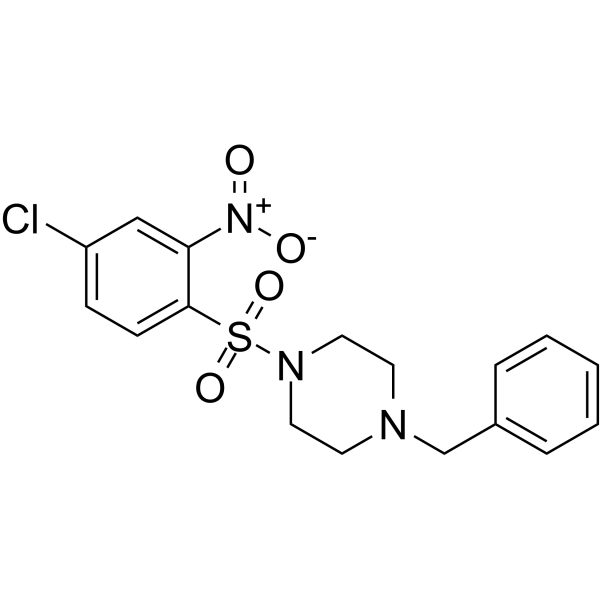
RN-1747 is a selective TRPV4 channel agonist, with EC50 values of 0.77 μM, 4.0 μM and 4.1 μM for hTRPV4, mTRPV4 and rTRPV4, respectively. RN-1747 acts as an antagonist of TRPM8, with an IC50 of 4 μM. Topical cutaneous administration of RN-1747 induces hypothermia, increases tail heat loss via cutaneous vasodilation, and promotes cold-seeking behavior in rats. Intracerebroventricular administration of RN-1747 does not induce hypothermia in rats.
Nur für Forschungszwecke. Wir verkaufen nicht an Patienten.
- Reinheit : 99.27%
- CAS. Nr.: 1024448-59-6
- Formel: C17H18ClN3O4S
- Molecular Weight:395.86
-
Speicherung:Powder -20°C, 3 years , 4°C, 2 years ; In solvent -80°C, 2 years , -20°C, 1 year

To place orders, for customer services and technical support, please contact: MedChemExpress USA
Tel: 609-228-6898 E-mail: [email protected] [email protected]


-
 Biologische Aktivität
-
Chemical Information
-
Lösungsmittel & Löslichkeit
- Reinheit & Dokumentation
- Verweise
-
 Help & FAQs


-
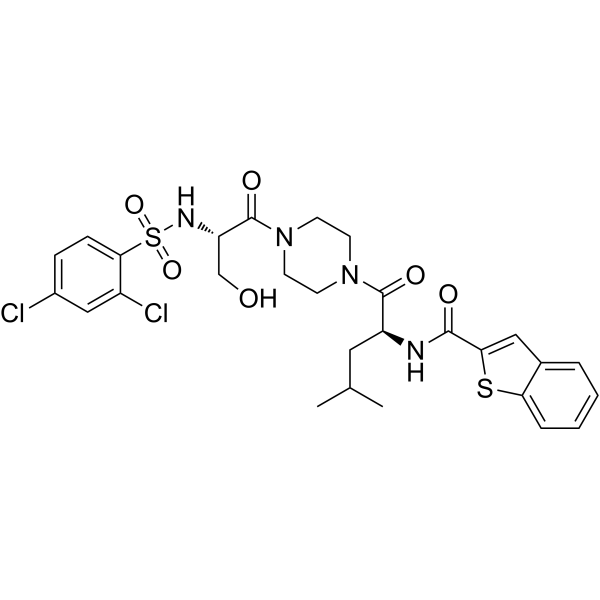
HY-19608
GSK1016790ATRPV4 Channel Agonist -
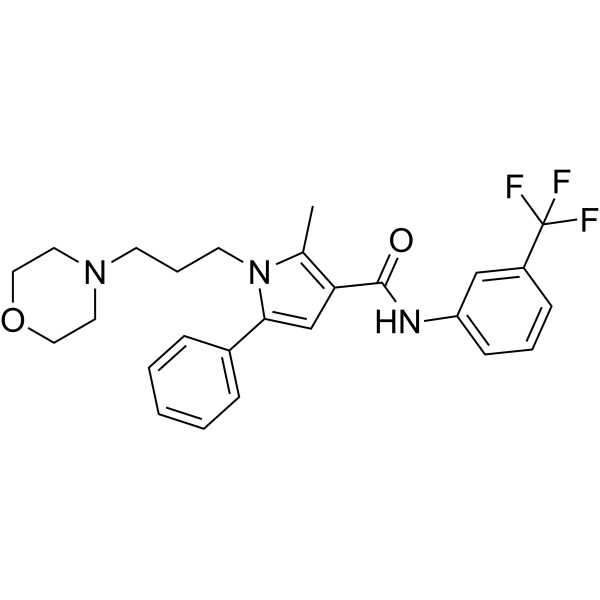
HY-100208
HC-067047TRPV4 Antagonist -
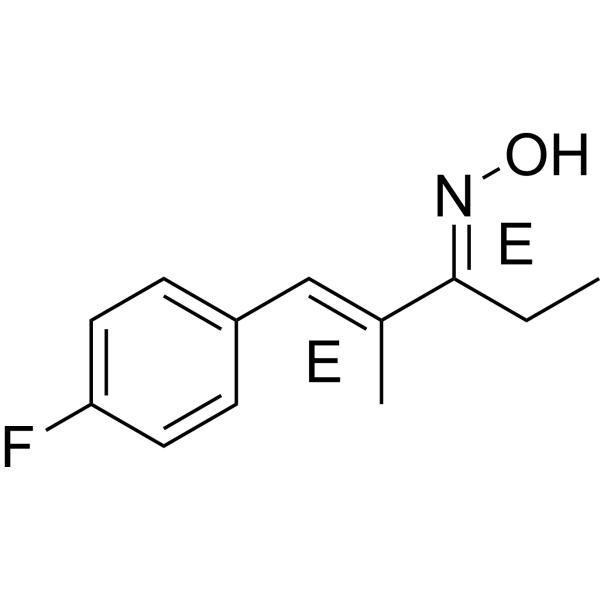
HY-108463
A-967079TRPA1 Receptor Antagonist -
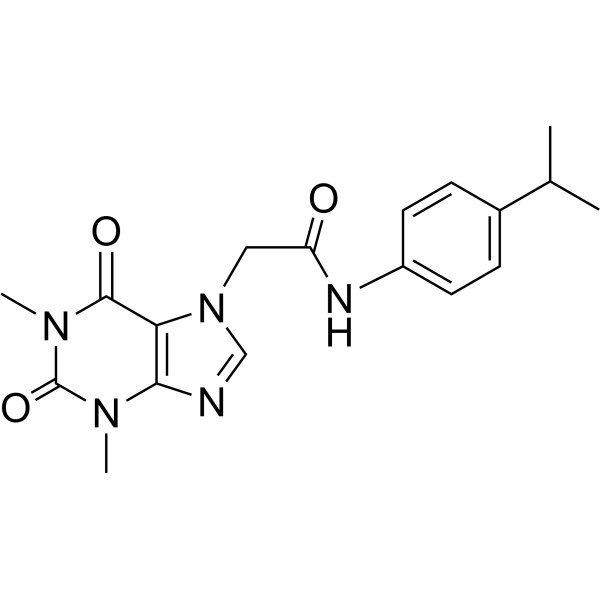
HY-15064
HC-030031TRP Channel Inhibitor -
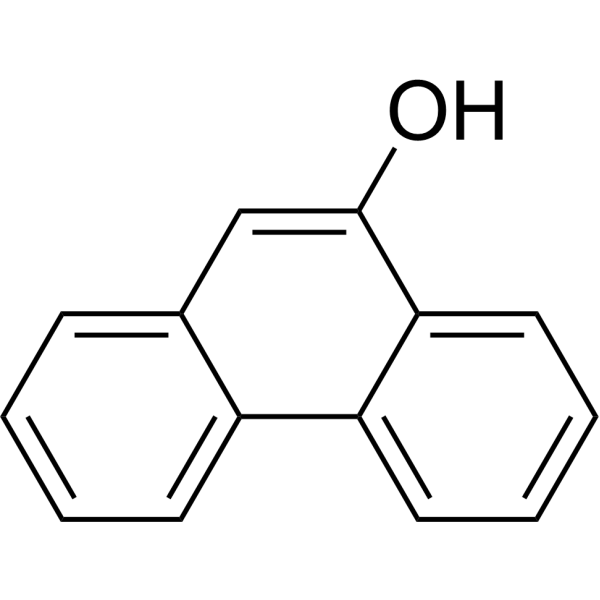
HY-108457
9-PhenanthrolTRPM4 Inhibitor -
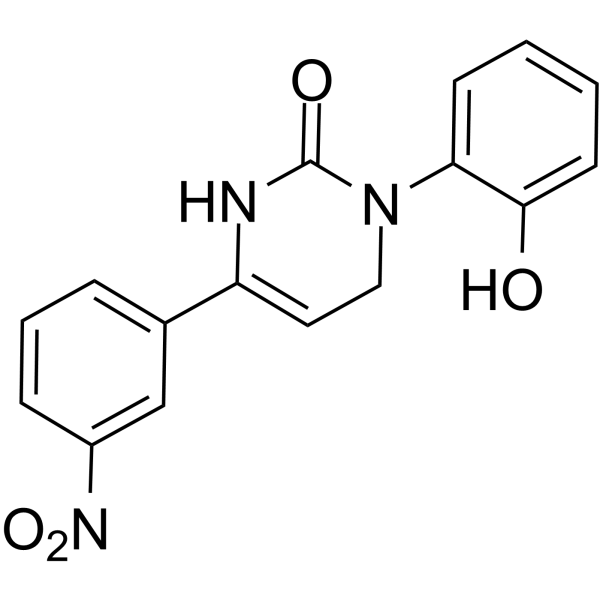
HY-11062
IcilinTRPM8 Agonist -
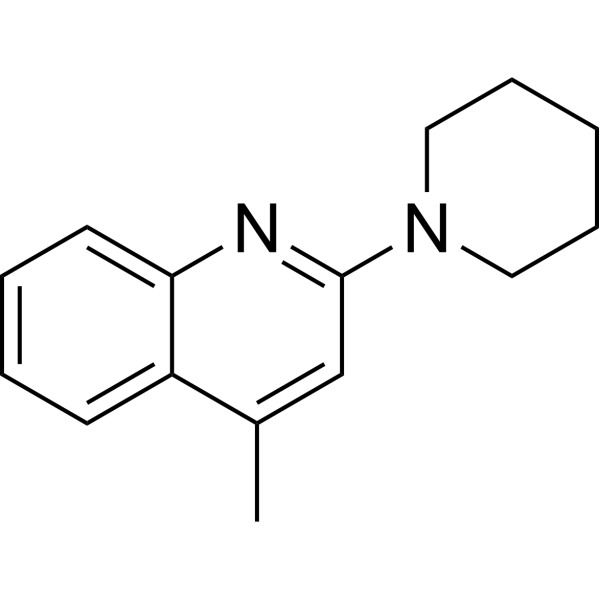
HY-12949
ML204TRPC4/TRPC5 Channel Inhibitor -
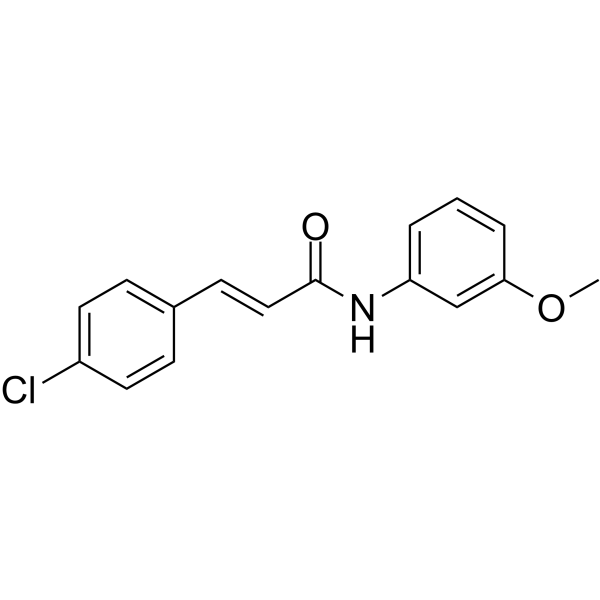
HY-12245
SB-366791VR1/TRPV1 Antagonist -
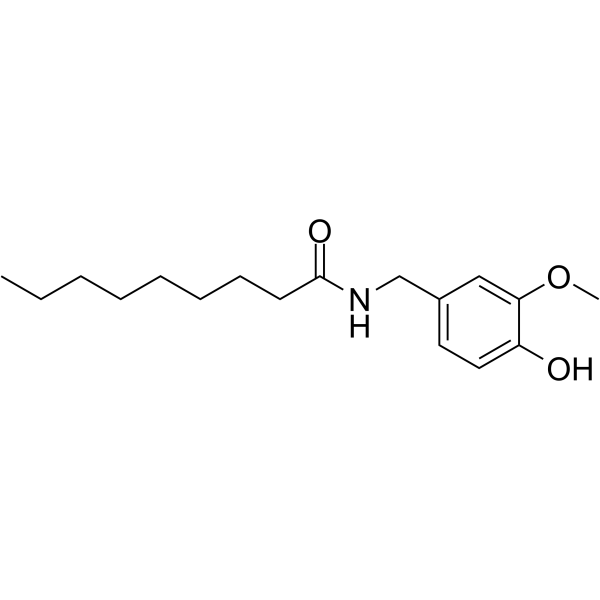
HY-17568
NonivamideTRP Channel Agonist -
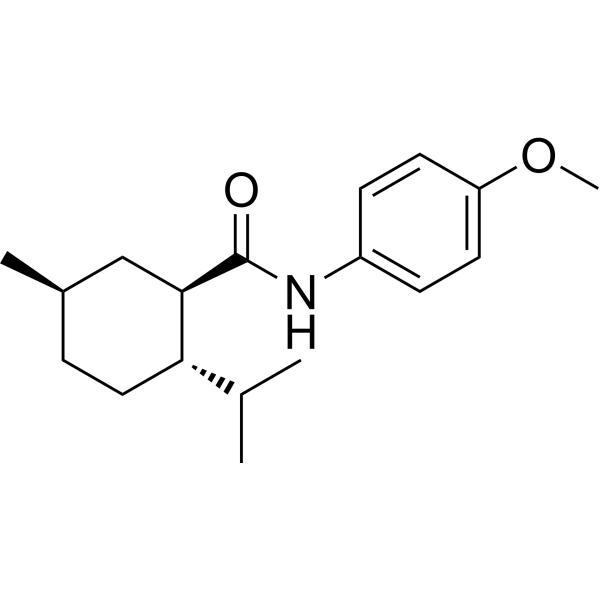
HY-108449
AcoltremonTRPM8 agonist -
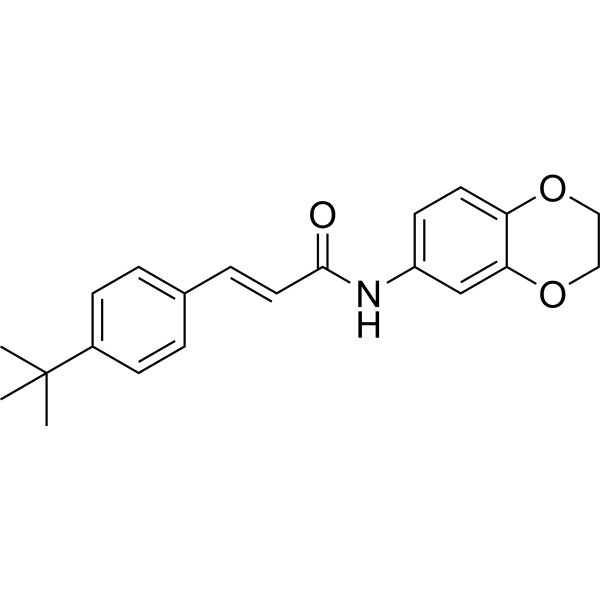
HY-101736
AMG9810TRPV1 Antagonist -
HY-100720
GSK2193874TRPV4 Antagonist
Publications Citing Use of MedChemExpress (MCE) RN-1747
More

Biologische Aktivität
Beschreibung
IC50 & Target
[1]|
hTRPV4 0.77 μM (EC50) |
rTRPV4 4.1 μM (EC50) |
mTRPV4 4.0 μM (EC50) |
TRPM8 4.0 μM (IC50) |
In Vitro
RN-1747 (13 nM-30 μM; 10 min) activates T-REx HEK 293 cells expressing hTRPV4, with an EC50 of 0.77 μM[1].
RN-1747 (13 nM-30 μM; 10 min) activates T-REx HEK 293 cells expressing mouse TRPV4, with an EC50 of 4.0 μM[1].
RN-1747 (13 nM-30 μM; 10 min) activates T-REx HEK 293 cells expressing rat TRPV4, with an EC50 of 4.1 μM[1].
RN-1747 (10 μM) induces robust inward currents in Xenopus oocytes expressing hTRPV4, confirming its rapid-acting agonist activity[1].
RN-1747 acts as an antagonist of TRPM8 with an IC50 of 4 μM, and exhibits weak agonist activity against TRPV1 at an extremely high concentration of 100 μM[1].
MedChemExpress (MCE) has not independently confirmed the accuracy of these methods. They are for reference only.
In Vivo
Topical administration of RN-1747 (500 μg/mL) enhances the vasodilatory function of tail skin, which is manifested by a significant negative correlation between heat dissipation index and core body temperature, thereby inducing hypothermia in male Wistar rats at 26 °C[2].
RN-1747 (500 μg/mL; administered locally) abolishes the preference of male Wistar rats for a warm environment (32 °C) but not a thermoneutral environment (26 °C), indicating impairment of their heat-seeking behavior[2].
Topical administration of RN-1747 (1000 μg/mL) induces cold-seeking behavior in male Wistar rats, characterized by a significant reduction in preferred ambient temperature and a decrease in core body temperature in temperature gradient tests[2].
Topical administration of RN-1747 (1000 μg/mL) induces cold-seeking behavior in male Wistar rats, which is characterized by a significant reduction in preferred ambient temperature and a decrease in core body temperature in temperature gradient tests[2].
MedChemExpress (MCE) has not independently confirmed the accuracy of these methods. They are for reference only.
-
Animal Model:Wistar rats (male, 8-10 weeks old, 290-320 g)[2]
-
Dosage:10 μg/kg (i.c.v.); 100 μg/kg (i.v.); 500 μg/mL (topical)
-
Administration:i.v.; infusion at 0.08 mL/min; 1 mL/kg volume; topical; 1 mL volume; i.c.v.; infusion at 0.8 μL/min; 4 μL/kg volume
-
Result:Did not produce a significant change in core body temperature compared to vehicle (F1,42=0.348; P=1.000).
Caused a significant decrease in core body temperature compared to vehicle (F1,42=1.786; P=0.002).
Had its hypothermic effect significantly inhibited by pre-treatment with RN-1734 (F1,42=1.482; P=0.028).
Caused a significant increase in core body temperature compared to vehicle (F1,42=2.351; P<0.001).
-
Animal Model:Wistar rats (male, 8-10 weeks old, 290-320 g)[2]
-
Dosage:500 μg/mL
-
Administration:topical; 1 mL volume
-
Result:Showed a significant negative relationship between heat loss index and core body temperature (P=0.009, R2=0.221).
Had higher tail temperatures than untreated or vehicle-treated rats, indicating TRPV4 activation stimulated vasodilation.
-
Animal Model:Wistar rats (male, 8-10 weeks old, 290-320 g)[2]
-
Dosage:500 μg/mL
-
Administration:topical; 2 mL volume
-
Result:Did not affect exploratory behaviour (crossings between plates: 26 vs 18 °C: P=0.738; 26 vs 32 °C: P=0.221).
Showed no significant preference between 26 °C and 32 °C (P=0.135), unlike vehicle-treated rats which preferred 32 °C over 26 °C (P=0.020).
Preferred 26 °C over 18 °C (P<0.001), similar to vehicle-treated rats (P=0.002).
-
Animal Model:Wistar rats (male, 8-10 weeks old, 290-320 g)[2]
-
Dosage:1000 μg/mL
-
Administration:topical; 1 mL volume
-
Result:Caused a significant reduction in preferred ambient temperature compared to vehicle (F1,9=4.18; P<0.001).
Caused a reduction in core body temperature of up to 0.7 °C over time, while vehicle-treated rats had only a slight core body temperature change of 0.1 °C (F=1.41; P=0.02).


Chemical Information
-
CAS. Nr. 1024448-59-6
-
Appearance Solid
-
Molecular Weight 395.86
-
Formel C17H18ClN3O4S
-
Color Off-white to light yellow
-
SMILES
O=S(N1CCN(CC2=CC=CC=C2)CC1)(C3=CC=C(Cl)C=C3[N+]([O-])=O)=O
-
Versand
Room temperature in continental US; may vary elsewhere.
-
Speicherung
Powder -20°C 3 years 4°C 2 years In solvent -80°C 2 years -20°C 1 year


Publications (6)
-
Journal Impact Factor
-
Most Recent
-
Biochem Pharmacol
Dysfunction in the SOCE/EDH-mediated vasorelaxation of mesenteric arteries impairs intestinal barrier integrity in irritable bowel syndrome. [Abstract]2026 Jun 18;251(Pt 2):118179. PMID: 42315077 -
Biochem Pharmacol
Ammonium tetrathiomolybdate attenuates acetaminophen-induced acute liver failure by inhibiting the TRPV4/Calcium/NF-κB signaling pathway. [Abstract]2025 Jul:237:116917. PMID: 40220797 -
Life Sci
Regulatory role of Piezo1 channel in endothelium-dependent hyperpolarization-mediated vasorelaxation of small resistance vessels and its anti-inflammatory action. [Abstract]2024 Jan 1:336:122326. PMID: 38056769 -
Commun Biol
Molecular defense strategy of volatile organic compound-emitting plants (order Piperales) against herbivorous mammals. [Abstract]2025 Dec 1;9(1):19. PMID: 41326785 -
Eur J Pharmacol
Novel mechanisms of metformin-induced vasorelaxation of mesenteric arterioles via endothelium-dependent hyperpolarization to treat murine colitis. [Abstract]2025 Sep 15:1003:177900. PMID: 40617384 -
J Biol Chem
Capsaicin inhibits intestinal Cl- secretion and promotes Na+ absorption by blocking TRPV4 channels in healthy and colitic mice. [Abstract]2022 May;298(5):101847. PMID: 35314195


Lösungsmittel & Löslichkeit
In Vitro:
DMSO : 50 mg/mL (126.31 mM; Need ultrasonic; Hygroscopic DMSO has a significant impact on the solubility of product, please use newly opened DMSO)
Please refer to the solubility information to select the appropriate solvent. Once prepared, please aliquot and store the solution to prevent product inactivation from repeated freeze-thaw cycles.
Storage method and period of stock solution: -80°C, 2 years; -20°C, 1 year. When stored at -80°C, please use it within 2 years. When stored at -20°C, please use it within 1 year.
Please refer to the solubility information to select the appropriate solvent. Once prepared, please aliquot and store the solution to prevent product inactivation from repeated freeze-thaw cycles.
Storage method and period of stock solution: -80°C, 2 years; -20°C, 1 year. When stored at -80°C, please use it within 2 years. When stored at -20°C, please use it within 1 year.
Konzentration (Stammlösung) × Volumen (Stammlösung) = Konzentration (Ziellösung) × Volumen (Ziellösung)
In Vivo:
Select the appropriate dissolution method based on your experimental animal and administration route.
- For the following dissolution methods, please ensure to first prepare a clear stock solution using an In Vitro approach and then sequentially add co-solvents:
- To ensure reliable experimental results, the clarified stock solution can be appropriately stored based on storage conditions. As for the working solution for In Vivo experiments, it is recommended to prepare freshly and use it on the same day.
- The percentages shown for the solvents indicate their volumetric ratio in the final prepared solution. If precipitation or phase separation occurs during preparation, heat and/or sonication can be used to aid dissolution.
Add each solvent one by one: 10% DMSO 40% PEG300 5% Tween-80 45% Saline
Solubility: ≥ 2.08 mg/mL (5.25 mM); Clear solution
This protocol yields a clear solution of ≥ 2.08 mg/mL (saturation unknown).
Taking 1 mL working solution as an example, add 100 μL DMSO stock solution (20.8 mg/mL) to 400 μL PEG300, and mix evenly; then add 50 μL Tween-80 and mix evenly; then add 450 μL Saline to adjust the volume to 1 mL.
Preparation of Saline: Dissolve 0.9 g sodium chloride in ddH₂O and dilute to 100 mL to obtain a clear Saline solution.
Add each solvent one by one: 10% DMSO 90% (20% SBE-β-CD in Saline)
Solubility: ≥ 2.08 mg/mL (5.25 mM); Clear solution
This protocol yields a clear solution of ≥ 2.08 mg/mL (saturation unknown).
Taking 1 mL working solution as an example, add 100 μL DMSO stock solution (20.8 mg/mL) to 900 μL 20% SBE-β-CD in Saline, and mix evenly.
Preparation of 20% SBE-β-CD in Saline (4°C, storage for one week): 2 g SBE-β-CD powder is dissolved in 10 mL Saline, completely dissolve until clear.
In Vivo Dissolution Calculator
Please enter the basic information of animal experiments:
-
-
-
-
Recommended: Prepare an additional quantity of animals to account for potential losses during experiments.
Please enter your animal formula composition:
-
%DMSO +
Recommended: Keep the proportion of DMSO in working solution below 2% if your animal is weak.
-
%+
-
+%Tween-80 + +
-
%Saline +
The co-solvents required include: DMSO, . All of co-solvents are available by MedChemExpress (MCE). , Tween 80. All of co-solvents are available by MedChemExpress (MCE).
Working solution concentration: 0.22 mg/mL
Method for preparing stock solution: mg drug dissolved in μL DMSO. Stock solution concentration: mg/mL.
1. Take μL DMSO stock solution;
2. Add μL .
μL , mix evenly;
3. Then add μL Tween 80, mix evenly;
4. Then add μL
Please ensure that the stock solution in the first step is dissolved to a clear state, and add co-solvents in sequence. You can use ultrasonic heating (ultrasonic cleaner, recommended frequency 20-40 kHz), vortexing, etc. to assist dissolution.


Reinheit & Dokumentation
-
Data Sheet (281 KB)
-
SDS (393 KB)
- English - EN (393 KB)
- Français - FR (393 KB)
- Deutsch - DE (393 KB)
- Norwegian - NO (393 KB)
- Español - ES (393 KB)
- Swedish - SV (393 KB)
- Italian - IT (393 KB)
- Korean - KR (393 KB)
- Portuguese - PT (393 KB)
-
Handling Instructions (2659 KB)
Verweise
[1]. Vincent F, et al. Identification and characterization of novel TRPV4 modulators. Biochem Biophys Res Commun. 2009;389(3):490-494. [Content Brief]
[2]. Vizin RC, et al. TRPV4 activates autonomic and behavioural warmth-defence responses in Wistar rats. Acta Physiol (Oxf). 2015;214(2):275-289. [Content Brief]


Complete Stock Solution Preparation Table
Please refer to the solubility information to select the appropriate solvent. Once prepared, please aliquot and store the solution to prevent product inactivation from repeated freeze-thaw cycles.
Storage method and period of stock solution: -80°C, 2 years; -20°C, 1 year. When stored at -80°C, please use it within 2 years. When stored at -20°C, please use it within 1 year.
| Optional Solvent | Concentration Solvent Mass | 1 mg | 5 mg | 10 mg | 25 mg |
|---|---|---|---|---|---|
| DMSO | 1 mM | 2.5261 mL | 12.6307 mL | 25.2615 mL | 63.1536 mL |
| 5 mM | 0.5052 mL | 2.5261 mL | 5.0523 mL | 12.6307 mL | |
| 10 mM | 0.2526 mL | 1.2631 mL | 2.5261 mL | 6.3154 mL | |
| 15 mM | 0.1684 mL | 0.8420 mL | 1.6841 mL | 4.2102 mL | |
| 20 mM | 0.1263 mL | 0.6315 mL | 1.2631 mL | 3.1577 mL | |
| 25 mM | 0.1010 mL | 0.5052 mL | 1.0105 mL | 2.5261 mL | |
| 30 mM | 0.0842 mL | 0.4210 mL | 0.8420 mL | 2.1051 mL | |
| 40 mM | 0.0632 mL | 0.3158 mL | 0.6315 mL | 1.5788 mL | |
| 50 mM | 0.0505 mL | 0.2526 mL | 0.5052 mL | 1.2631 mL | |
| 60 mM | 0.0421 mL | 0.2105 mL | 0.4210 mL | 1.0526 mL | |
| 80 mM | 0.0316 mL | 0.1579 mL | 0.3158 mL | 0.7894 mL | |
| 100 mM | 0.0253 mL | 0.1263 mL | 0.2526 mL | 0.6315 mL |


RN-1747 Related Classifications
HY-19976 Related Classifications
 Powered by Bioz