



TRPV2
TRPV2 (transient receptor potential vanilloid 2) is a non-selective cation channel of the TRPV family that mediates Ca2+ influx and participates in multiple cellular processes across neuronal and non-neuronal tissues[1][2]. Mechanistically, TRPV2 functions as a signaling hub linking extracellular physical or chemical stimuli to intracellular calcium-dependent responses, thereby regulating cell proliferation, survival, migration, differentiation, and immune activity[1][3]. TRPV2 is expressed in immune cells, where its translocation to the plasma membrane contributes to macrophage chemotaxis and phagocytosis, supporting innate immune responses through Ca2+-dependent signaling pathways[4]. In disease contexts, altered TRPV2 expression has been associated with multiple cancers, including urothelial carcinoma, prostate cancer, breast cancer, glioblastoma, and hematological malignancies, where the channel influences survival, proliferation, invasion, and therapeutic resistance pathways[3][5]. Compared with related isoforms, TRPV2 remains one of the least characterized members of the TRPV subfamily and exhibits distinct physiological properties that differentiate it from classical thermosensory TRPV channels, indicating specialized functions beyond canonical temperature sensing[1]. For experimental applications, TRPV2 can be activated by cannabinoids such as cannabidiol (CBD) and Δ9-tetrahydrocannabinol (Δ9-THC), which are widely used as pharmacological tools to investigate TRPV2-mediated Ca2+ signaling[2]. In contrast, tranilast has been reported as a TRPV2 inhibitor and is frequently employed to evaluate channel-specific functions in cellular and disease models[4].
References:
- [1]. Perálvarez-Marín A, et al. What do we know about the transient receptor potential vanilloid 2 (TRPV2) ion channel? FEBS J. 2013 Nov;280(21):5471-87. [Content Brief]
- [2]. Egée S, et al. The Transient Receptor Potential Vanilloid Type 2 (TRPV2) Channel-A New Druggable Ca2+ Pathway in Red Cells, Implications for Red Cell Ion Homeostasis. Front Physiol. 2021 Jun 10;12:677573. [Content Brief]
- [3]. Santoni G, et al. The TRPV2 cation channels: from urothelial cancer invasiveness to glioblastoma multiforme interactome signature. Lab Invest. 2020 Feb;100(2):186-198. [Content Brief]
- [4]. Database: Guide to pharmacology.
- [5]. Siveen KS, et al. TRPV2: A Cancer Biomarker and Potential Therapeutic Target. Dis Markers. 2020 Dec 10;2020:8892312. [Content Brief]
-
TRPV2 Related Products (5)
Related Products (5)

-
SET2
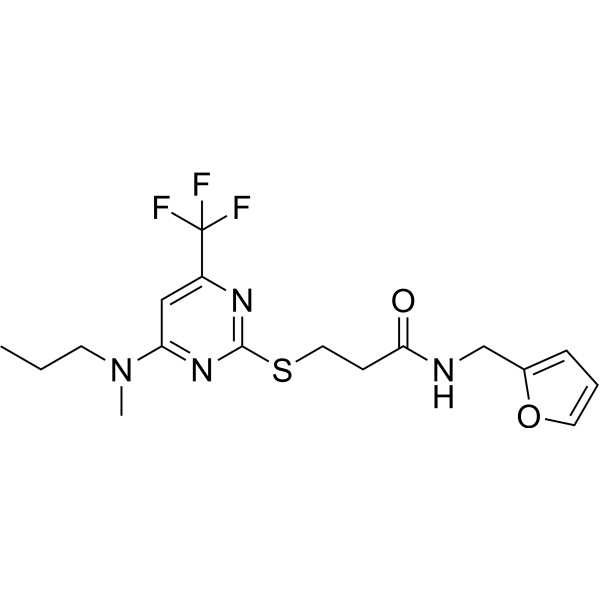 0 ImagesSET2 is a selective TRPV2 antagonist (IC50=0.46 μM). SET2 blocks the TRP channel and suppresses prostate cancer cells migration. SET2 reduces the lysophosphatidic acid (LPA, a TRPV2 activator)-induced cytoplasmic calcium increases.
-
TRPV2-selective blocker 1
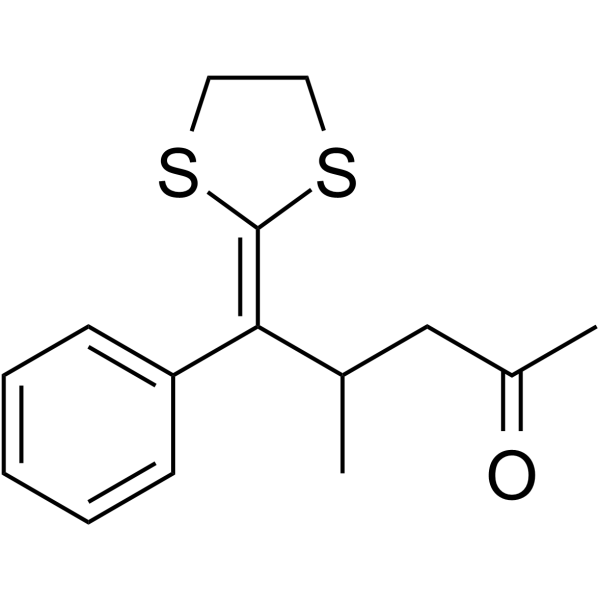 0 ImagesTRPV2-selective blocker 1 is a TRPV2-selective blocker that inhibits calcium influx and ionic currents. TRPV2-selective blocker 1 exhibits an IC50 of 6.3 μM against rat TRPV2, and shows no activity against TRPV1, TRPV3 or TRPV4 channels. TRPV2-selective blocker 1 attenuates macrophage phagocytosis, LPS-induced macrophage migration, and calcium microdomains generated by peripheral TRPV2. TRPV2-selective blocker 1 is non-cytotoxic and can be used to investigate the function of TRPV2 during immune processes.

-
2,2-Diphenyltetrahydrofuran
 0 Images2,2-Diphenyltetrahydrofuran (DPTHF) acts as a TRPV3 channel antagonist and is a structural analog of 2-Aminoethyl diphenylborinate (HY-W009724). 2,2-Diphenyltetrahydrofuran shows weak inhibitory activity against TRPV1 and TRPV2. It reduces hedonic feeding in mice exposed to Olanzapine (HY-14541). 2,2-Diphenyltetrahydrofuran can be used in the research of nervous system-related diseases.



