



TRPV4
TRPV4 is a Ca2+-permeable, nonselective cation channel that confers sensitivity to extracellular osmolarity and functions as a vertebrate osmoreceptor[1][2]. Mechanistically, TRPV4 converts osmotic and mechanical inputs into Ca2+ signaling, including cartilage loading responses that regulate extracellular matrix biosynthesis[3]. In pulmonary fibrosis models, TRPV4 activity supports TGF-β1-dependent myofibroblast differentiation, and TRPV4-deficient mice show protection from fibrosis[4]. Disease genetics further links TRPV4 mutations to Charcot-Marie-Tooth disease type 2C and skeletal dysplasia phenotypes[5][6]. Compared with related TRPV isoforms, TRPV4 is distinguished by repeated experimental use in osmotic, mechanical-loading, endothelial, cartilage, and fibroblast mechanotransduction models[1][3][4]. For experimental applications, GSK1016790A serves as a selective TRPV4 agonist, whereas GSK2193874 is an orally active TRPV4 blocker that prevented and resolved pulmonary edema in heart-failure models[7][8].
References:
- [1]. Strotmann R, et al. OTRPC4, a nonselective cation channel that confers sensitivity to extracellular osmolarity. Nat Cell Biol. 2000 Oct;2(10):695-702. [Content Brief]
- [2]. Liedtke W, et al. Vanilloid receptor-related osmotically activated channel (VR-OAC), a candidate vertebrate osmoreceptor. Cell. 2000 Oct 27;103(3):525-35. [Content Brief]
- [3]. O'Conor CJ, et al. TRPV4-mediated mechanotransduction regulates the metabolic response of chondrocytes to dynamic loading. Proc Natl Acad Sci U S A. 2014 Jan 28;111(4):1316-21. [Content Brief]
- [4]. Rahaman SO, et al. TRPV4 mediates myofibroblast differentiation and pulmonary fibrosis in mice. J Clin Invest. 2014 Dec;124(12):5225-38. [Content Brief]
- [5]. Landouré G, et al. Mutations in TRPV4 cause Charcot-Marie-Tooth disease type 2C. Nat Genet. 2010 Feb;42(2):170-4. [Content Brief]
- [6]. Krakow D, et al. Mutations in the gene encoding the calcium-permeable ion channel TRPV4 produce spondylometaphyseal dysplasia, Kozlowski type and metatropic dysplasia. Am J Hum Genet. 2009 Mar;84(3):307-15. [Content Brief]
- [7]. Baratchi S, et al. The TRPV4 Agonist GSK1016790A Regulates the Membrane Expression of TRPV4 Channels. Front Pharmacol. 2019 Jan 23;10:6. [Content Brief]
- [8]. Thorneloe KS, et al. An orally active TRPV4 channel blocker prevents and resolves pulmonary edema induced by heart failure. Sci Transl Med. 2012 Nov 7;4(159):159ra148. [Content Brief]
-
TRPV4 Related Products (30)
Related Products (30)

- 1
- 2
-
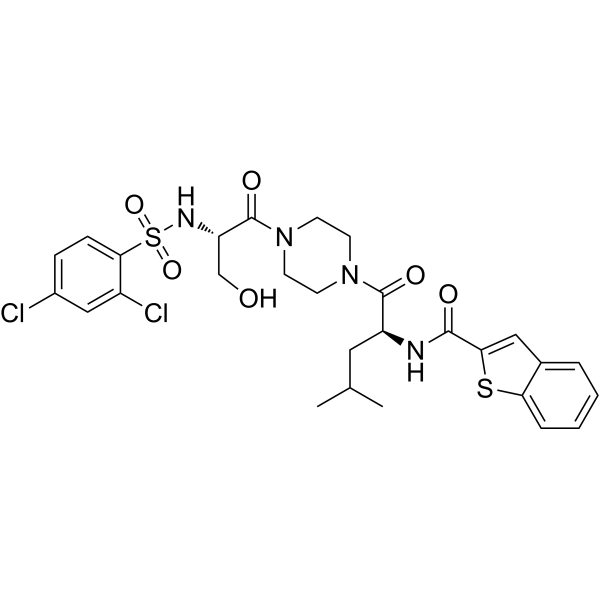
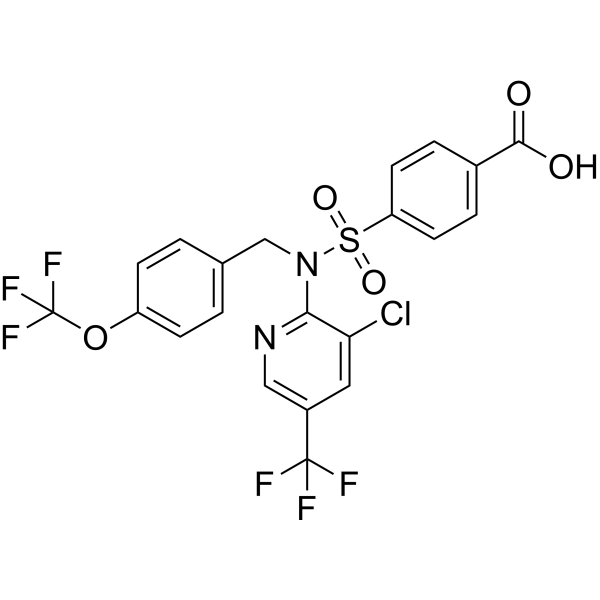
GSK3527497
 0 ImagesCat. No.: HY-182455CAS No.: 2215855-22-2GSK3527497 is an orally active TRPV4 inhibitor. GSK3527497 is applicable for the research of heart failure.
-
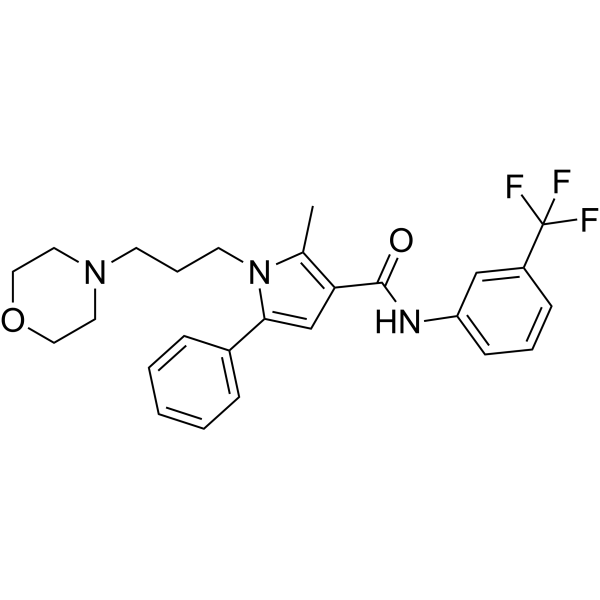
TRPV4 antagonist-7
 0 ImagesCat. No.: HY-187364CAS No.: 3050594-88-9TRPV4 antagonist-7 is a potent and selective TRPV4 antagonist with an IC50 of 0.2 nM against human targets. TRPV4 antagonist-7 binds to the voltage-sensor-like domain cavity of TRPV4 and inhibits channel activity through the formation of salt bridges, hydrogen bonds, and edge-to-face π-stacking interactions. TRPV4 antagonist-7 induces phospholipid accumulation in HepG2 C3A cells in vitro with an IC50 of 3.8 μM, and exhibits moderate inhibitory effects on CYP2D6 with an IC50 of 5.1 μM. TRPV4 antagonist-7 dose-dependently inhibits GSK1016790A (HY-19608)-induced bronchoconstriction in rats and cough in guinea pigs. TRPV4 antagonist-7 can be used in studies related to respiratory system diseases.
-
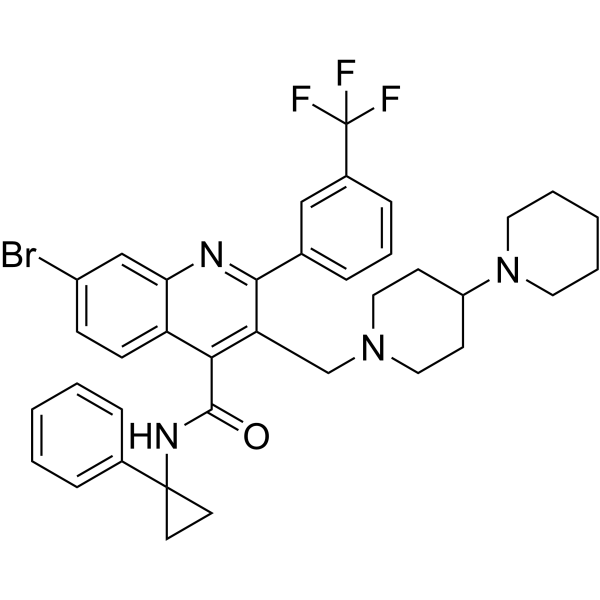
TRP-PK1
 0 ImagesCat. No.: HY-P12352TRP-PK1 is a polypeptide. TRP-PK1 can be derived from the fourth transmembrane segment of TRPV4. TRP-PK1 can insert into the phospholipid bilayer. TRP-PK1 self-assembles to form K+-permeable channels, mediates K+ flux, hyperpolarizes the membrane potential of vascular smooth muscle, relaxes agonist-induced vasoconstriction, and lowers mean arterial pressure. TRP-PK1 enhances the tumor-targeting capability of cell membrane vesicles and displays Angiopep-2 (HY-P2341) on the surface of engineered vesicles. TRP-PK1 can be used for research on glioblastoma multiforme, head and neck cancer, and hypertension.
-
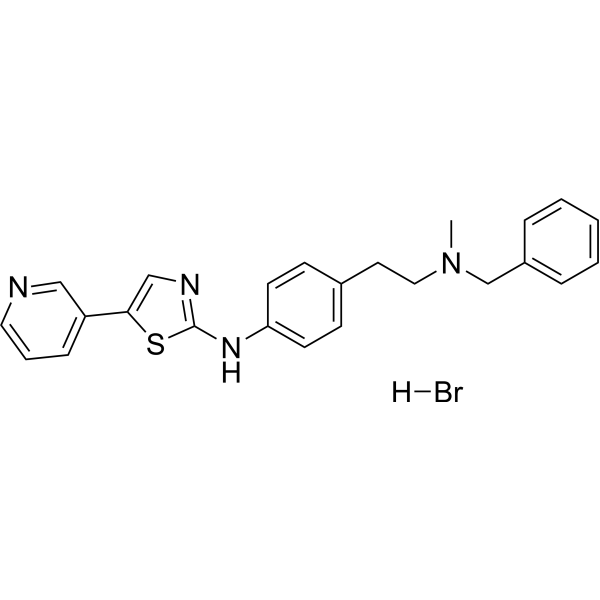
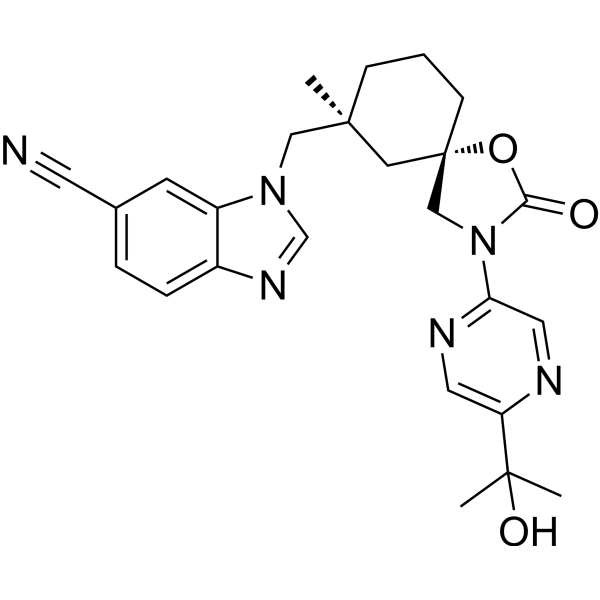
RN-1734
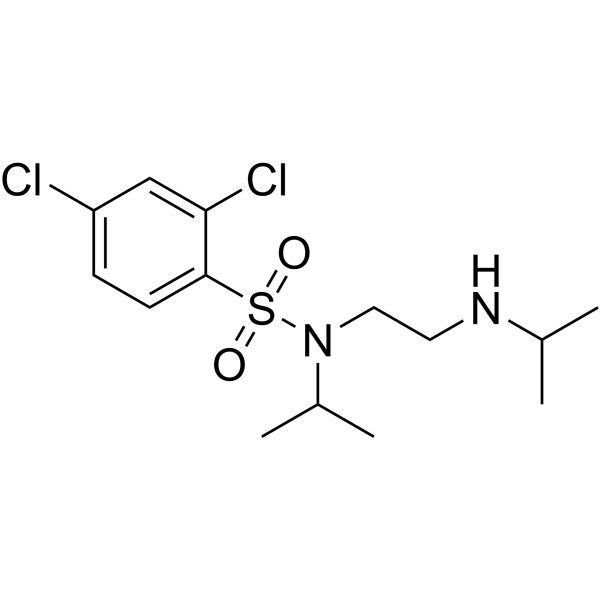 0 ImagesRN-1734 is selective antagonist of the TRPV4 channel, completely antagonizes 4αPDD-mediated activation of TRPV4 with comparable, low micromolar IC50s for all three species (hTRPV4: 2.3 μM, mTRPV4: 5.9 μM, rTRPV4: 3.2 μM). RN-1734 clearly decreases the production of tumor necrosis factor α (TNF-α) and interleukin 1β (IL-1β) without altering the number of olig2-positive cells.
-
Crotamiton
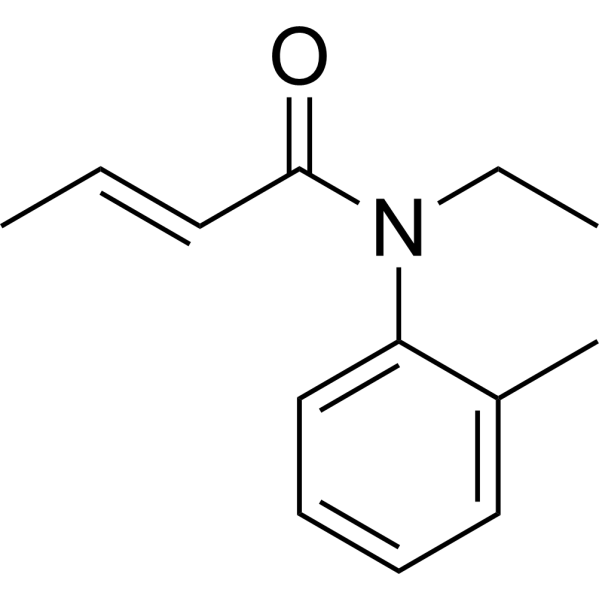 0 ImagesCrotamiton is a TRPV4 inhibitor. Crotamiton inhibits TRPV4 currents. Crotamiton inhibits TRPV4 selective agonist-induced pruritus-related behaviors in mice. Crotamiton inhibits Histamine- and Chloroquine-induced calcium influx via the H1R/TRPV1, MRGPRA3/TRPA1 pathways, and also suppresses calcium influx in primary mouse dorsal root ganglion neurons. Crotamiton is applicable to research related to pruritus, scabies, and non-scabietic pruritus.
-
RN-1747
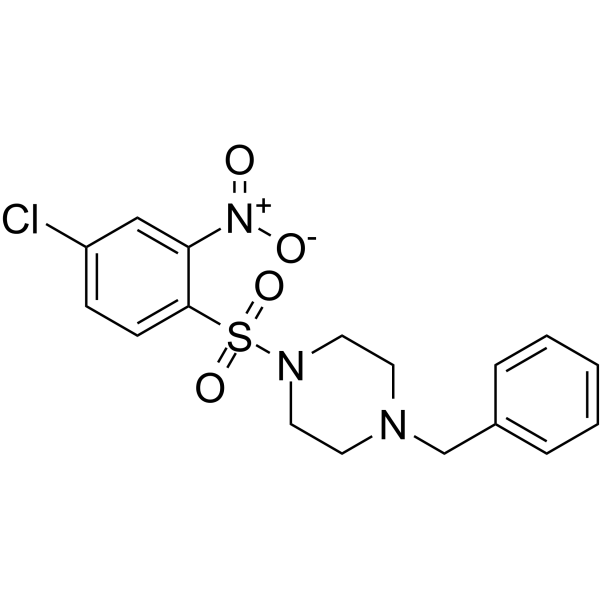 0 ImagesRN-1747 is a selective TRPV4 channel agonist, with EC50 values of 0.77 μM, 4.0 μM and 4.1 μM for hTRPV4, mTRPV4 and rTRPV4, respectively. RN-1747 acts as an antagonist of TRPM8, with an IC50 of 4 μM. Topical cutaneous administration of RN-1747 induces hypothermia, increases tail heat loss via cutaneous vasodilation, and promotes cold-seeking behavior in rats. Intracerebroventricular administration of RN-1747 does not induce hypothermia in rats.
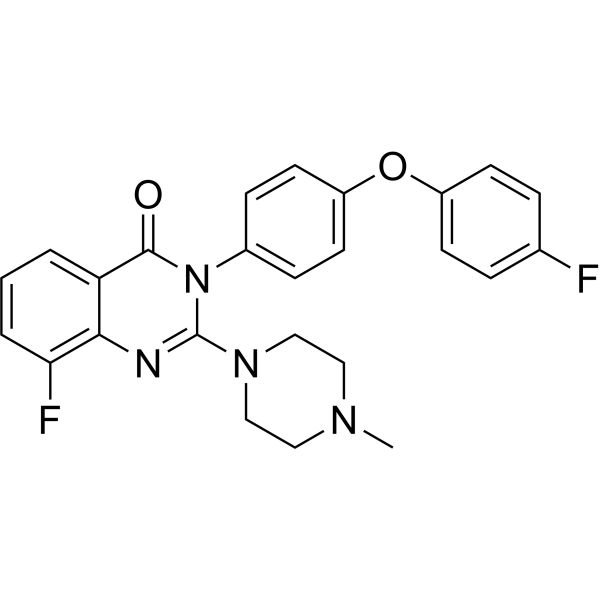
-
4α-Phorbol 12,13-didecanoate
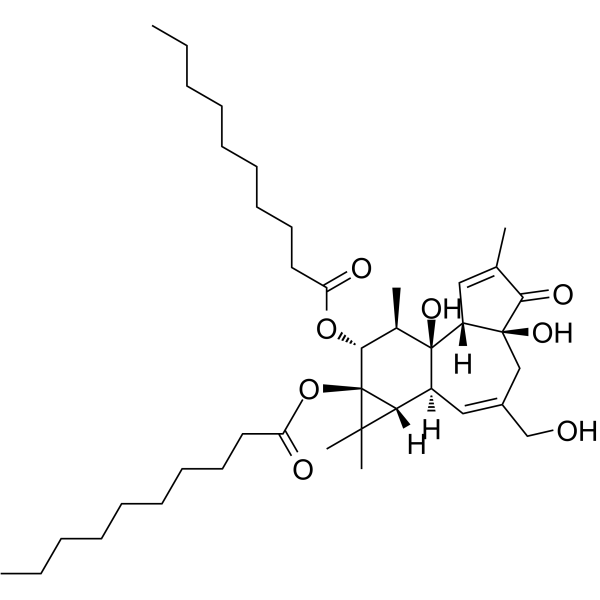 0 ImagesCat. No.: HY-116291CAS No.: 27536-56-7Synonyms: 4αPDD4α-Phorbol 12,13-didecanoate (4αPDD) is a transient receptor potential vanilloid 4 (TRPV4) agonist. 4α-Phorbol 12,13-didecanoate can promote Ca2+ influx, induce ATP release and function as an osmoreceptor. 4α-Phorbol 12,13-didecanoate can inhibit water intake and increase maximal micturition pressure in rats. 4α-Phorbol 12,13-didecanoate can be used for the researches of inflammation and infection, such as chikungunya virus (CHIKV).
-
DMAPP triammonium
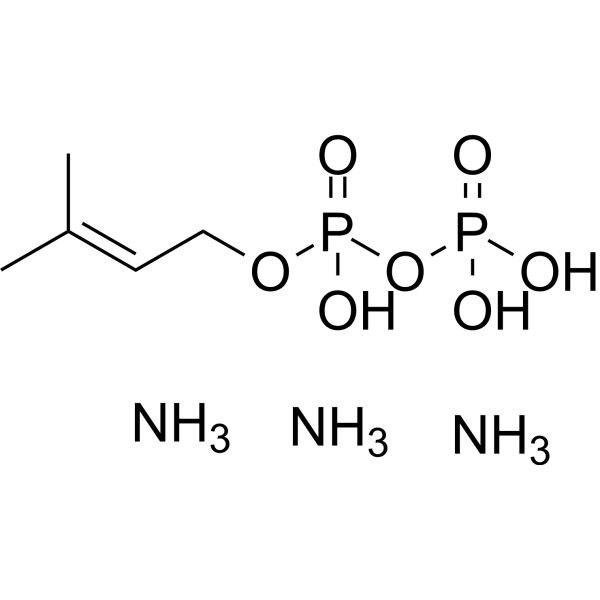 0 ImagesCat. No.: HY-130573ACAS No.: 1186-30-7Synonyms: Dimethylallyl diphosphate triammoniumDMAPP (Dimethylallyl diphosphate) triammonium is an isoprenoid precursor. DMAPP triammonium, as an isomer of isopentenyl pyrophosphate (IPP), exists in virtually all life forms.
-
PF-05214030
 0 ImagesPF-05214030 is a TRPV4 antagonist (IC50: 4 and 27nM for hTRPV4 and rTRPV4 respectively). PF-05214030 reverses the reduction in bladder capacity caused by intravesical infusion of a TRPV4 agonist.


-
TRPV4-IN-5
 0 ImagesTRPV4-IN-5 (Compound 1f) is a potent TRPV4 inhibitor (IC50 = 0.46 μM). TRPV4-IN-5 significantly alleviates the symptoms of acute lung injury induced by lipopolysaccharide (HY-D1056) in mice.
- 1
- 2



