



RQ-00203078
Based on 10 publication(s) in Google Scholar
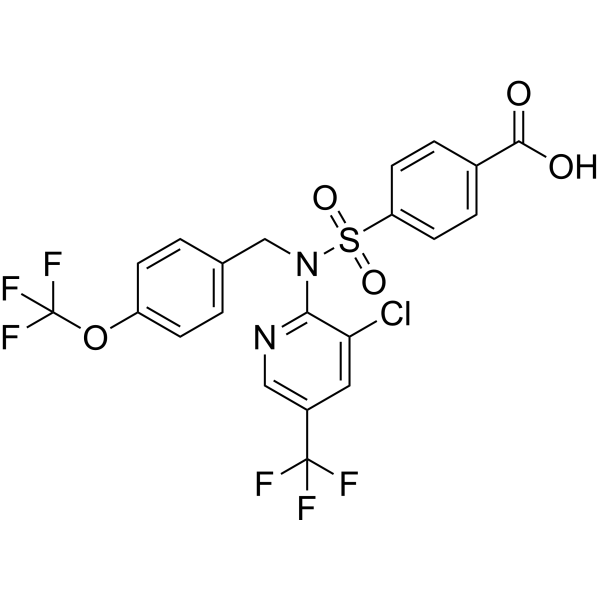
RQ-00203078 is a highly selective, potent and orally active TRPM8 antagonist with IC50s of 5.3 nM and 8.3 nM for rat and human TRPM8 channels, respectively. RQ-00203078 shows little inhibitory action against TRPV1, TRPA1, TRPV4, or TRPM2 channels.
For research use only. We do not sell to patients.
- Purity : 99.62%
- CAS No.: 1254205-52-1
- Formula: C21H13ClF6N2O5S
- Molecular Weight:554.85
-
Storage:Powder -20°C, 3 years , 4°C, 2 years ; In solvent -80°C, 2 years , -20°C, 1 year

To place orders, for customer services and technical support, please contact: MedChemExpress USA
Tel: 609-228-6898 E-mail: [email protected] [email protected]


-
 Biological Activity
-
Chemical Information
-
Solvent & Solubility
- Purity & Documentation
- References
-
 Help & FAQs


-
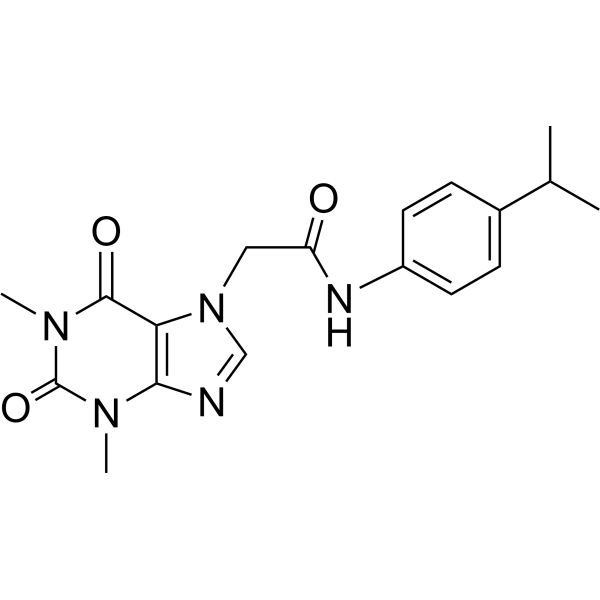
HY-15064
HC-030031TRP Channel Inhibitor -
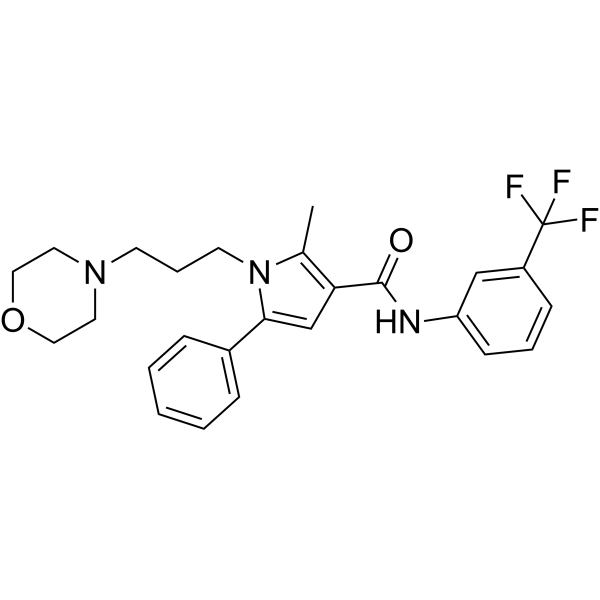
HY-100208
HC-067047TRPV4 Antagonist -
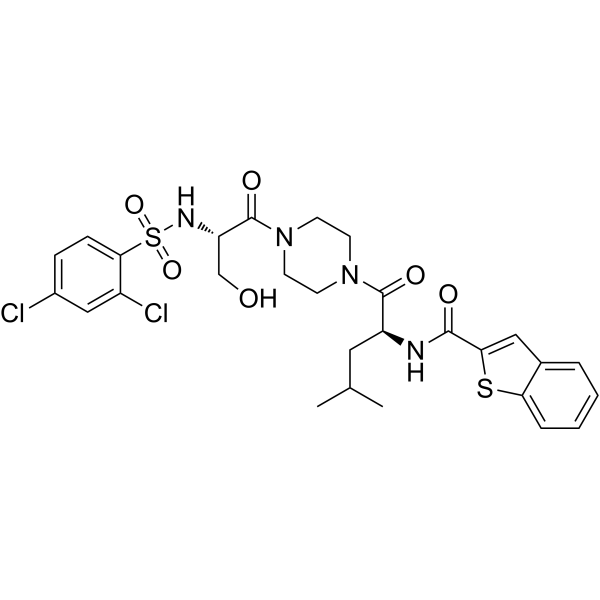
HY-19608
GSK1016790ATRPV4 Channel Agonist -
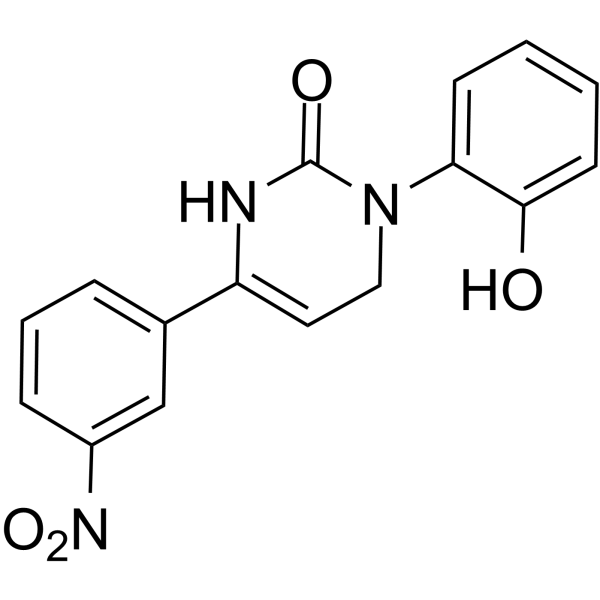
HY-11062
IcilinTRPM8 Agonist -
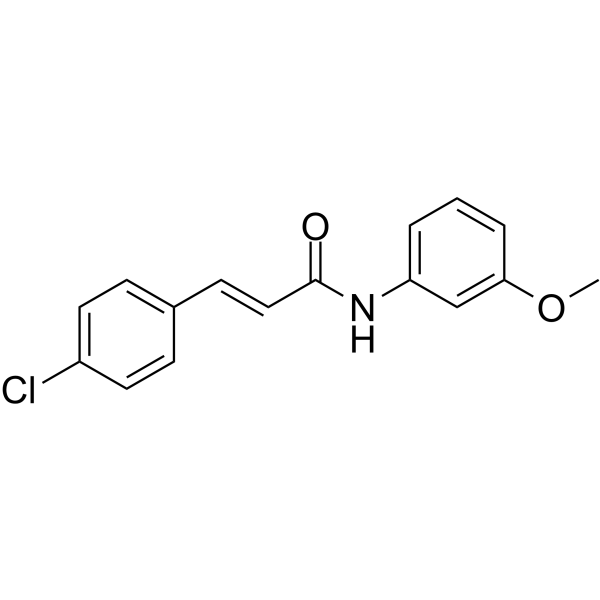
HY-12245
SB-366791VR1/TRPV1 Antagonist -
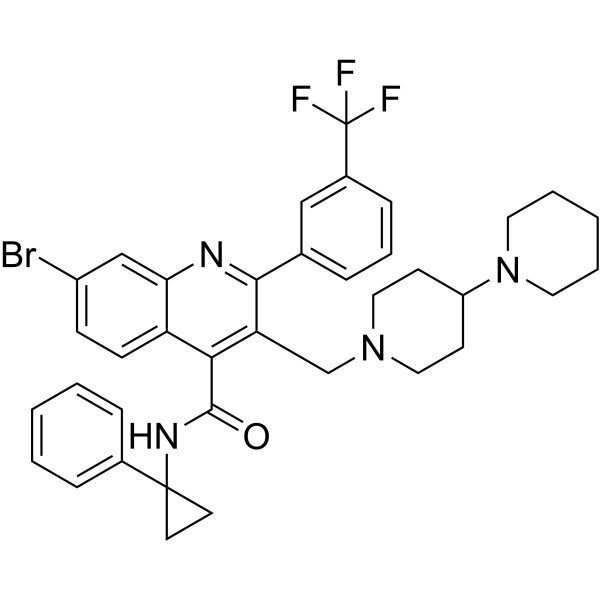
HY-100720
GSK2193874TRPV4 Antagonist -
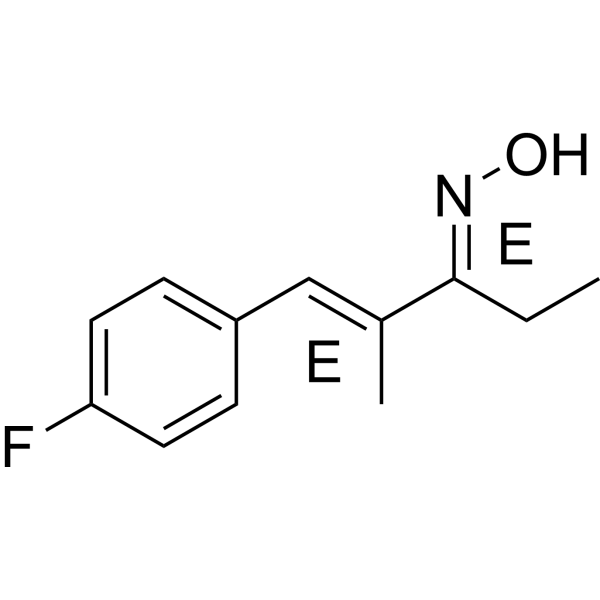
HY-108463
A-967079TRPA1 Receptor Antagonist -
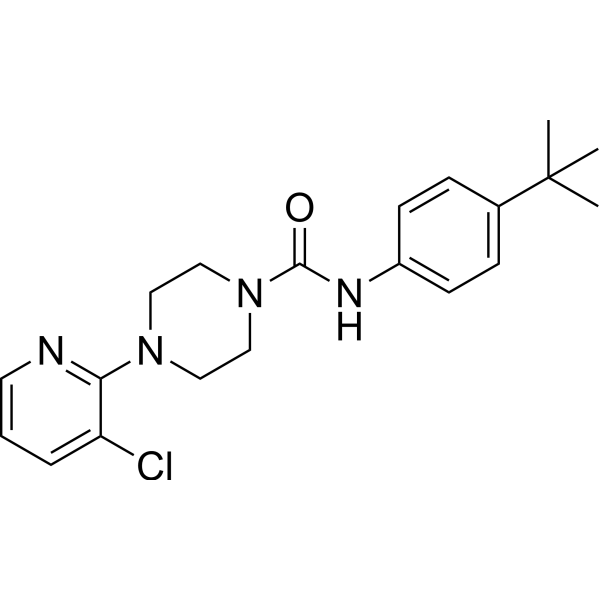
HY-19960
BCTCTRPV1/TRPM8 Antagonist -
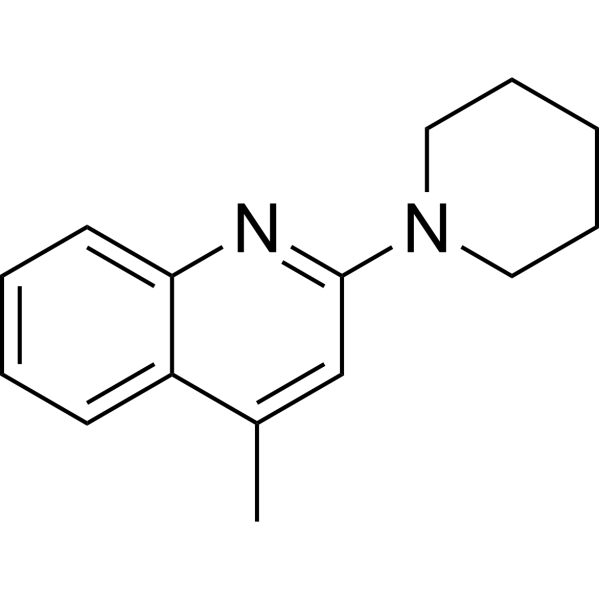
HY-12949
ML204TRPC4/TRPC5 Channel Inhibitor -
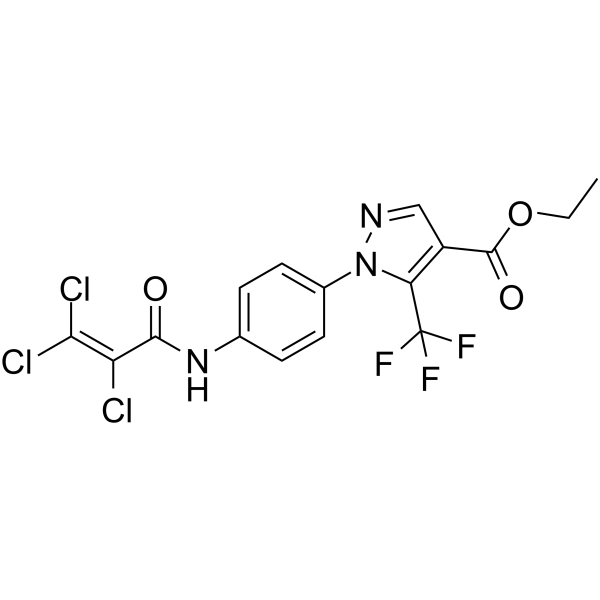
HY-108465
Pyr3TRPC3 Channel Inhibitor -
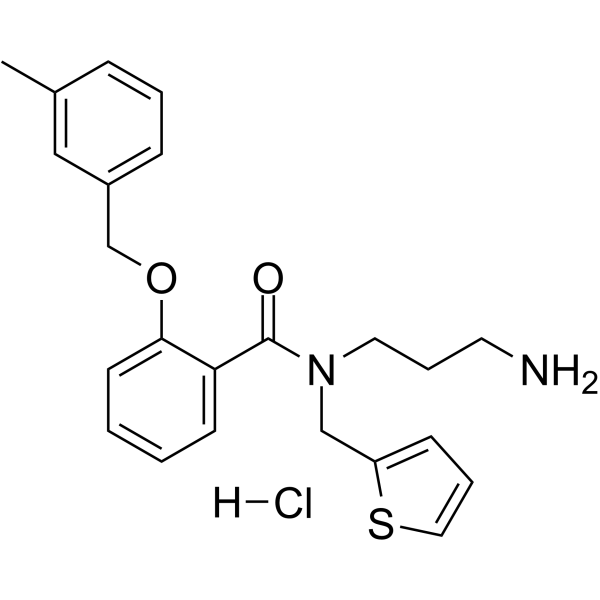
HY-100345
AMTB hydrochlorideTRPM8 Channel Blocker -
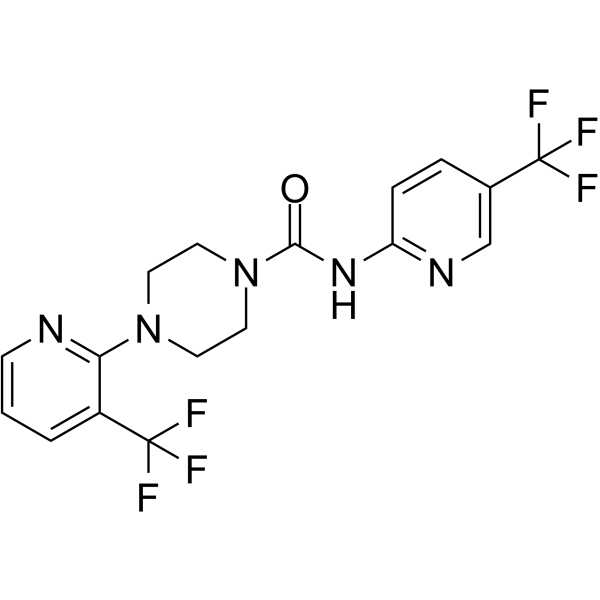
HY-100129
JNJ-17203212TRPV1 Antagonist
Publications Citing Use of MedChemExpress (MCE) RQ-00203078
More- Chem Eng J. 2026 Feb 5.
- Cell Chem Biol. 2026 Jul 29:S2451-9456(26)00242-4.
- Int J Biol Macromol. 2024 Aug;275(Pt 1):133659. [Abstract]
- J Ethnopharmacol. 2024 Mar 25:322:117581. [Abstract]
- Sci Rep. 2026 Apr 10;16(1):16876. [Abstract]
- Cell Calcium. 2026 Mar:134:103117. [Abstract]
- Sci Rep. 2025 Jul 1;15(1):22293. [Abstract]
- Neuropharmacology. 2025 May 15:269:110343. [Abstract]
- Environ Toxicol Pharmacol. 2020 Nov:80:103469. [Abstract]
- bioRxiv. 2026 Jan 22:2026.01.19.700423. [Abstract]


Biological Activity
Description
|
TRPM8 5.3 nM (IC50, Rat TRPM8 channels) |
TRPM8 8.3 nM (IC50, Human TRPM8 channels) |
TRPV4 10 μM (IC50) |
Cellular Effect
|
Cell Line

|
Type | Value | Description | References |
|---|---|---|---|---|
| HEK293 | IC50 |
>10 μM
Compound: 36
|
Antagonist activity at human TRPA1 expressed in HEK293 cells assessed as inhibition of AITC-induced Ca2+ influx
Antagonist activity at human TRPA1 expressed in HEK293 cells assessed as inhibition of AITC-induced Ca2+ influx
|
[PMID: 25455182] |
| HEK293 | IC50 |
>10 μM
Compound: 36
|
Antagonist activity at human TRPV1 expressed in HEK293 cells assessed as inhibition of capsaicin-induced Ca2+ influx
Antagonist activity at human TRPV1 expressed in HEK293 cells assessed as inhibition of capsaicin-induced Ca2+ influx
|
[PMID: 25455182] |
| HEK293 | IC50 |
>10 μM
Compound: 36
|
Antagonist activity at rat TRPA1 expressed in HEK293 cells assessed as inhibition of AITC-induced Ca2+ influx
Antagonist activity at rat TRPA1 expressed in HEK293 cells assessed as inhibition of AITC-induced Ca2+ influx
|
[PMID: 25455182] |
| HEK293 | IC50 |
>3 μM
Compound: 36
|
Antagonist activity at human TRPV4 expressed in HEK293 cells assessed as inhibition of hypotonic solution-induced Ca2+ influx
Antagonist activity at human TRPV4 expressed in HEK293 cells assessed as inhibition of hypotonic solution-induced Ca2+ influx
|
[PMID: 25455182] |
| HEK293 | IC50 |
>3 μM
Compound: 36
|
Antagonist activity at rat TRPV1 expressed in HEK293 cells assessed as inhibition of capsaicin-induced Ca2+ influx
Antagonist activity at rat TRPV1 expressed in HEK293 cells assessed as inhibition of capsaicin-induced Ca2+ influx
|
[PMID: 25455182] |
| HEK293 | IC50 |
8.3 nM
Compound: 36
|
Antagonist activity at human TRPM8 expressed in HEK293 cells assessed as inhibition of menthol induced Ca2+ influx
Antagonist activity at human TRPM8 expressed in HEK293 cells assessed as inhibition of menthol induced Ca2+ influx
|
[PMID: 25455182] |
In Vitro
Intracellular Ca2+ imaging reveals that menthol induced both intracellular Ca2+ release and store-operated Ca2+ entry, with RQ-00203078 inhibiting each effect. RQ-00203078 (1-10 μM) inhibits HSC3 and HSC4 oral squamous carcinoma cell migration and invasion in vitro[2].
MedChemExpress (MCE) has not independently confirmed the accuracy of these methods. They are for reference only. .
In Vivo
Excellent oral exposure of RQ-00203078 (compound 36) is confirmed independently in rat pharmacokinetics studies at 3 mg/kg (p.o.) administration, with a Cmax value of 2300 ng/mL and 86% bioavailability[1].
MedChemExpress (MCE) has not independently confirmed the accuracy of these methods. They are for reference only.


Chemical Information
-
CAS No. 1254205-52-1
-
Appearance Solid
-
Molecular Weight 554.85
-
Formula C21H13ClF6N2O5S
-
Color White to off-white
-
SMILES
O=C(O)C1=CC=C(S(=O)(N(C2=NC=C(C(F)(F)F)C=C2Cl)CC3=CC=C(OC(F)(F)F)C=C3)=O)C=C1
-
Shipping
Room temperature in continental US; may vary elsewhere.
-
Storage
Powder -20°C 3 years 4°C 2 years In solvent -80°C 2 years -20°C 1 year


Publications (10)
-
Journal Impact Factor
-
Most Recent
-
-
-
Int J Biol Macromol
Neuregulin 1 mitigated prolactin deficiency through enhancing TRPM8 signaling under the influence of melatonin in senescent pituitary lactotrophs. [Abstract]2024 Aug;275(Pt 1):133659. PMID: 38969045 -
J Ethnopharmacol
2024 Mar 25:322:117581. PMID: 38103845 -
Sci Rep
2026 Apr 10;16(1):16876. PMID: 41963448 -
Cell Calcium
2026 Mar:134:103117. PMID: 41539212 -
Sci Rep
Control of motor coordination by transient receptor potential melastatin 8 through γ-aminobutyric acidergic circuit modulation in the male mouse cerebellum. [Abstract]2025 Jul 1;15(1):22293. PMID: 40595448 -
Neuropharmacology
Deficiency of KIF15 contributes to oxaliplatin-induced cold hypersensitivity by limiting annexin A2 and enhancing TRPA1 localization in DRG neuronal membrane. [Abstract]2025 May 15:269:110343. PMID: 39914618 -
Environ Toxicol Pharmacol
Exposure to formaldehyde at low temperatures aggravates allergic asthma involved in transient receptor potential ion channel. [Abstract]2020 Nov:80:103469. PMID: 32798733 -
bioRxiv
2026 Jan 22:2026.01.19.700423. PMID: 41648152


Solvent & Solubility
In Vitro:
DMSO : 100 mg/mL (180.23 mM; Need ultrasonic; Hygroscopic DMSO has a significant impact on the solubility of product, please use newly opened DMSO)
Please refer to the solubility information to select the appropriate solvent. Once prepared, please aliquot and store the solution to prevent product inactivation from repeated freeze-thaw cycles.
Storage method and period of stock solution: -80°C, 2 years; -20°C, 1 year. When stored at -80°C, please use it within 2 years. When stored at -20°C, please use it within 1 year.
Please refer to the solubility information to select the appropriate solvent. Once prepared, please aliquot and store the solution to prevent product inactivation from repeated freeze-thaw cycles.
Storage method and period of stock solution: -80°C, 2 years; -20°C, 1 year. When stored at -80°C, please use it within 2 years. When stored at -20°C, please use it within 1 year.
Concentration (start) × Volume (start) = Concentration (final) × Volume (final)
In Vivo:
Select the appropriate dissolution method based on your experimental animal and administration route.
- For the following dissolution methods, please ensure to first prepare a clear stock solution using an In Vitro approach and then sequentially add co-solvents:
- To ensure reliable experimental results, the clarified stock solution can be appropriately stored based on storage conditions. As for the working solution for In Vivo experiments, it is recommended to prepare freshly and use it on the same day.
- The percentages shown for the solvents indicate their volumetric ratio in the final prepared solution. If precipitation or phase separation occurs during preparation, heat and/or sonication can be used to aid dissolution.
Add each solvent one by one: 10% DMSO 40% PEG300 5% Tween-80 45% Saline
Solubility: ≥ 2.5 mg/mL (4.51 mM); Clear solution
This protocol yields a clear solution of ≥ 2.5 mg/mL (saturation unknown).
Taking 1 mL working solution as an example, add 100 μL DMSO stock solution (25.0 mg/mL) to 400 μL PEG300, and mix evenly; then add 50 μL Tween-80 and mix evenly; then add 450 μL Saline to adjust the volume to 1 mL.
Preparation of Saline: Dissolve 0.9 g sodium chloride in ddH₂O and dilute to 100 mL to obtain a clear Saline solution.
In Vivo Dissolution Calculator
Please enter the basic information of animal experiments:
-
-
-
-
Recommended: Prepare an additional quantity of animals to account for potential losses during experiments.
Please enter your animal formula composition:
-
%DMSO +
Recommended: Keep the proportion of DMSO in working solution below 2% if your animal is weak.
-
%+
-
+%Tween-80 + +
-
%Saline +
The co-solvents required include: DMSO, . All of co-solvents are available by MedChemExpress (MCE). , Tween 80. All of co-solvents are available by MedChemExpress (MCE).
Working solution concentration: 0.22 mg/mL
Method for preparing stock solution: mg drug dissolved in μL DMSO. Stock solution concentration: mg/mL.
1. Take μL DMSO stock solution;
2. Add μL .
μL , mix evenly;
3. Then add μL Tween 80, mix evenly;
4. Then add μL
Please ensure that the stock solution in the first step is dissolved to a clear state, and add co-solvents in sequence. You can use ultrasonic heating (ultrasonic cleaner, recommended frequency 20-40 kHz), vortexing, etc. to assist dissolution.


Purity & Documentation
-
Data Sheet (276 KB)
-
SDS (394 KB)
- English - EN (394 KB)
- Français - FR (394 KB)
- Deutsch - DE (394 KB)
- Norwegian - NO (394 KB)
- Español - ES (394 KB)
- Swedish - SV (394 KB)
- Italian - IT (394 KB)
- Korean - KR (394 KB)
- Portuguese - PT (394 KB)
-
Handling Instructions (2659 KB)
References
[1]. Masashi Ohmi, et al. Identification of a novel 2-pyridyl-benzensulfonamide derivative, RQ-00203078, as a selective and orally active TRPM8 antagonist. Bioorg Med Chem Lett. 2014 Dec 1;24(23):5364-8. [Content Brief]
[2]. Yoshihiko Okamoto, et al. Blockade of TRPM8 activity reduces the invasion potential of oral squamous carcinoma cell lines. Int J Oncol. 2012 May;40(5):1431-40. [Content Brief]


Complete Stock Solution Preparation Table
Please refer to the solubility information to select the appropriate solvent. Once prepared, please aliquot and store the solution to prevent product inactivation from repeated freeze-thaw cycles.
Storage method and period of stock solution: -80°C, 2 years; -20°C, 1 year. When stored at -80°C, please use it within 2 years. When stored at -20°C, please use it within 1 year.
| Optional Solvent | Concentration Solvent Mass | 1 mg | 5 mg | 10 mg | 25 mg |
|---|---|---|---|---|---|
| DMSO | 1 mM | 1.8023 mL | 9.0114 mL | 18.0229 mL | 45.0572 mL |
| 5 mM | 0.3605 mL | 1.8023 mL | 3.6046 mL | 9.0114 mL | |
| 10 mM | 0.1802 mL | 0.9011 mL | 1.8023 mL | 4.5057 mL | |
| 15 mM | 0.1202 mL | 0.6008 mL | 1.2015 mL | 3.0038 mL | |
| 20 mM | 0.0901 mL | 0.4506 mL | 0.9011 mL | 2.2529 mL | |
| 25 mM | 0.0721 mL | 0.3605 mL | 0.7209 mL | 1.8023 mL | |
| 30 mM | 0.0601 mL | 0.3004 mL | 0.6008 mL | 1.5019 mL | |
| 40 mM | 0.0451 mL | 0.2253 mL | 0.4506 mL | 1.1264 mL | |
| 50 mM | 0.0360 mL | 0.1802 mL | 0.3605 mL | 0.9011 mL | |
| 60 mM | 0.0300 mL | 0.1502 mL | 0.3004 mL | 0.7510 mL | |
| 80 mM | 0.0225 mL | 0.1126 mL | 0.2253 mL | 0.5632 mL | |
| 100 mM | 0.0180 mL | 0.0901 mL | 0.1802 mL | 0.4506 mL |


RQ-00203078 Related Classifications
HY-18662 Related Classifications
 Powered by Bioz