



TRPM8
TRPM8 is a cold- and menthol-gated, calcium-permeable ion channel that functions as a primary molecular sensor for cold and menthol in humans and supports cold detection in mammalian sensory neurons[1][2]. Mechanistically, ligand-bound TRPM8 structures identify binding sites for cooling agonists and PI(4,5)P2, indicating that lipid-dependent allosteric control contributes to TRPM8 activation[2]. In mouse models, functional TRPM8 channels are required for innocuous cool responses, noxious cold responses, injury-evoked cold hypersensitivity, cooling-mediated analgesia, and thermoregulation[1]. In disease-relevant models, systemic TRPM8 blockade reduced cold hypersensitivity in inflammatory and nerve-injury pain models, whereas TRPM8 activation by menthol or WS-12 attenuated paclitaxel-induced mechanical pain in rat dorsal root ganglion studies[1][3]. Compared with related isoforms, TRPM8 differs from TRPV1, a heat/capsaicin receptor, and TRPA1, whose role as a direct noxious cold sensor remains controversial; TRPA1 can instead act upstream of GFRα3 and TRPM8 during neurogenic inflammation-driven cold hypersensitivity[4]. For experimental applications, selective antagonists such as PBMC and biphenyl amide analogues, and agonists such as menthol and WS-12, provide tools for testing TRPM8 gating, cold allodynia, sensory neuropathy, and analgesic mechanisms[1][3][5].
References:
- [1]. Knowlton WM, et al. Pharmacological blockade of TRPM8 ion channels alters cold and cold pain responses in mice. PLoS One. 2011;6(9):e25894. [Content Brief]
- [2]. Yin Y, et al. Current View of Ligand and Lipid Recognition by the Menthol Receptor TRPM8. Trends Biochem Sci. 2020 Sep;45(9):806-819. [Content Brief]
- [3]. Li WW, et al. Roles of Thermosensitive Transient Receptor Channels TRPV1 and TRPM8 in Paclitaxel-Induced Peripheral Neuropathic Pain. Int J Mol Sci. 2024 May 27;25(11):5813. [Content Brief]
- [4]. Yamaki S, et al. Nociceptive afferent phenotyping reveals that transient receptor potential ankyrin 1 promotes cold pain through neurogenic inflammation upstream of the neurotrophic factor receptor GFRα3 and the menthol receptor transient receptor potential melastatin 8. Pain. 2021 Feb 1;162(2):609-618. [Content Brief]
- [5]. Journigan VB, et al. Structure-Based Design of Novel Biphenyl Amide Antagonists of Human Transient Receptor Potential Cation Channel Subfamily M Member 8 Channels with Potential Implications in the Treatment of Sensory Neuropathies. ACS Chem Neurosci. 2020 Feb 5;11(3):268-290. [Content Brief]
-
TRPM8 Related Products (24)
Related Products (24)

- 1
- 2
-
Acoltremon
 0 ImagesSynonyms: WS-12; AR-15512; AVX-012
-
RN-1747
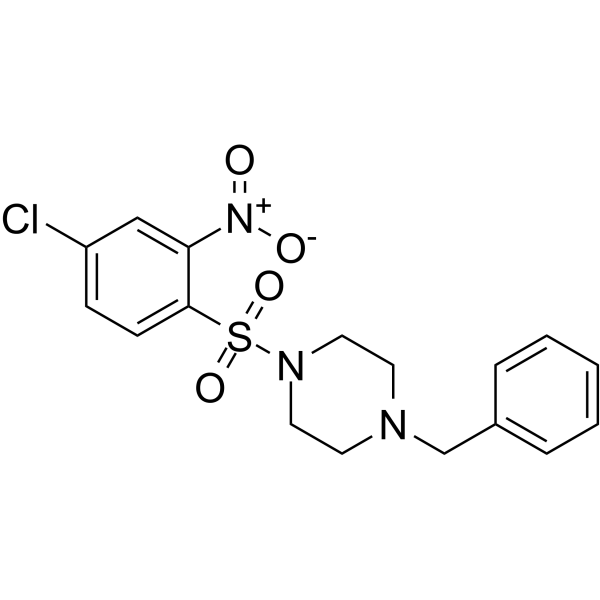 0 ImagesRN-1747 is a selective TRPV4 channel agonist, with EC50 values of 0.77 μM, 4.0 μM and 4.1 μM for hTRPV4, mTRPV4 and rTRPV4, respectively. RN-1747 acts as an antagonist of TRPM8, with an IC50 of 4 μM. Topical cutaneous administration of RN-1747 induces hypothermia, increases tail heat loss via cutaneous vasodilation, and promotes cold-seeking behavior in rats. Intracerebroventricular administration of RN-1747 does not induce hypothermia in rats.
-
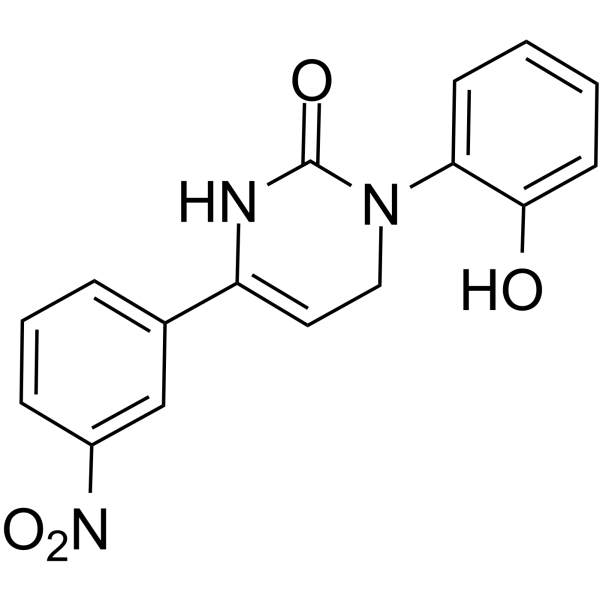
TRPM8 antagonist 5
 0 ImagesCat. No.: HY-189375TRPM8 antagonist 5 is a TRPM8 antagonist. TRPM8 antagonist 5 exhibits anticancer activity against melanoma and prostate cancer. TRPM8 antagonist 5 can be used for research on melanoma and prostate cancer.
-
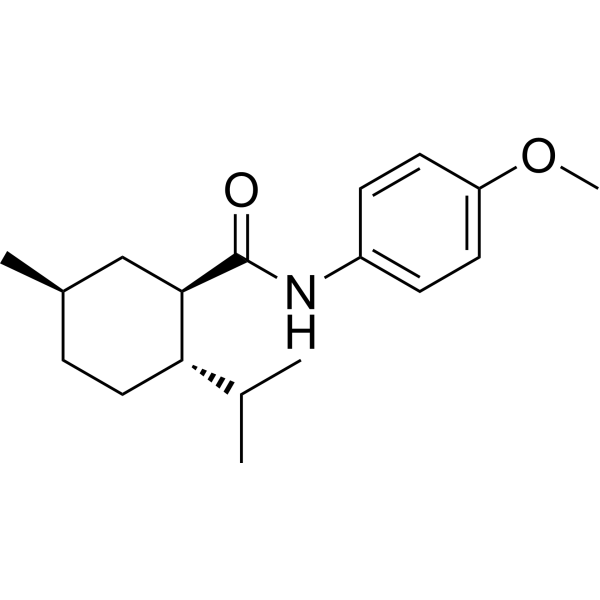
Elismetrep
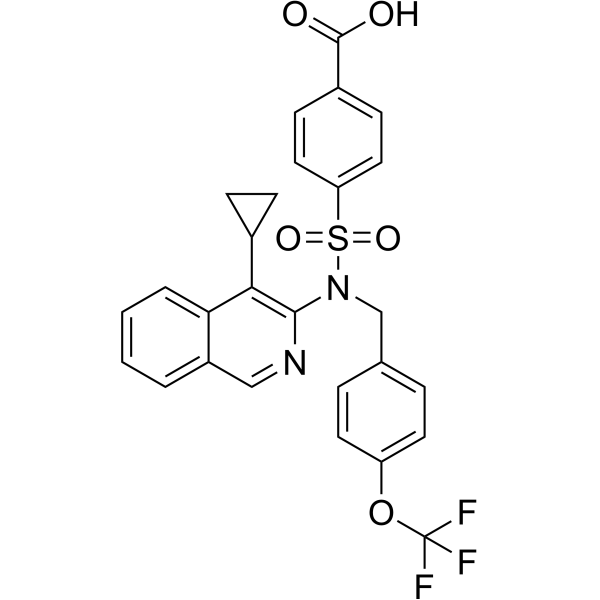 0 ImagesSynonyms: MT-8554
-
TRPV1 antagonist 3
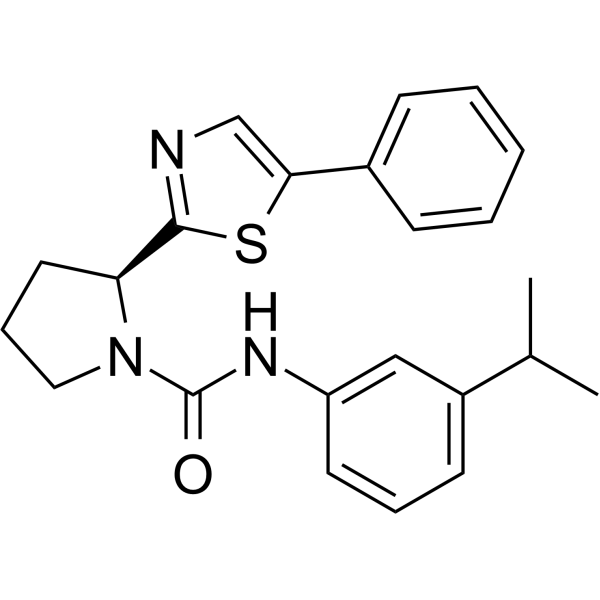 0 ImagesTRPV1 antagonist 3 (Compound 7q) is a potent TRPV1 antagonist with an IC50 of 2.66 nM against capsaicin. TRPV1 antagonist 3 is mode-selective, oral bioavailable (F = 60%) and CNS-penetrant.
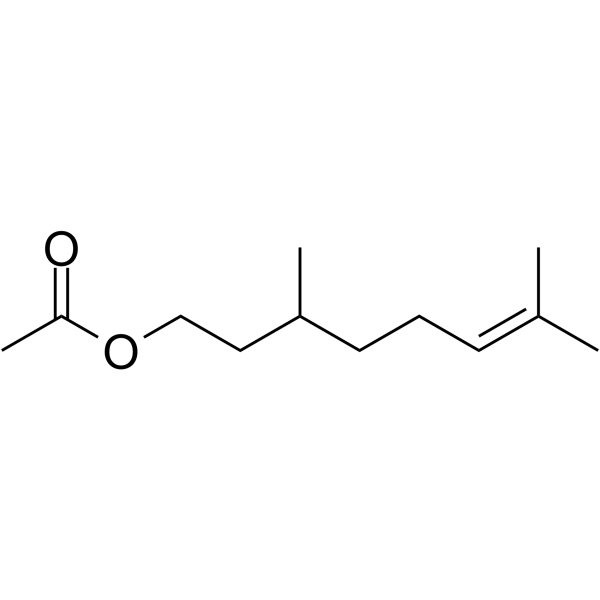
-
1,4-Cineole
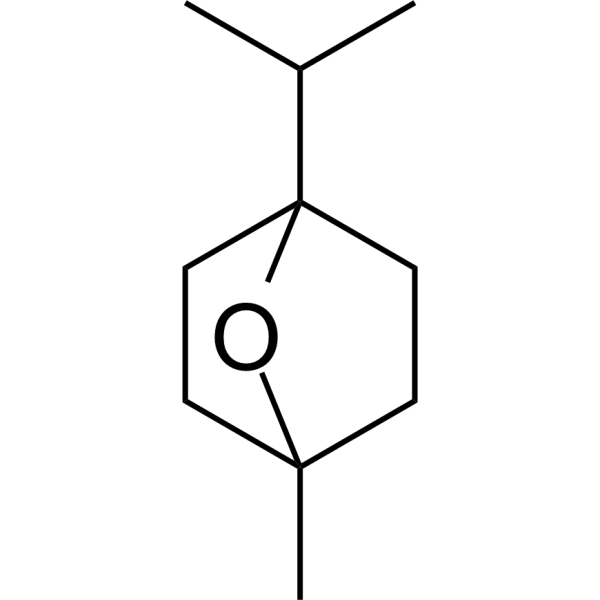 0 Images1,4-Cineole is an oxygenated monoterpene found in eucalyptus oil. 1,4-Cineole is a hTRPM8 and hTRPA1 agonist. 1,4-Cineole can increase intracellular Ca2+ concentration. 1,4-Cineole exhibits anti-anxiety and anti-depression effects. 1,4-Cineole can be used for the research of neurological disease, such as depression .
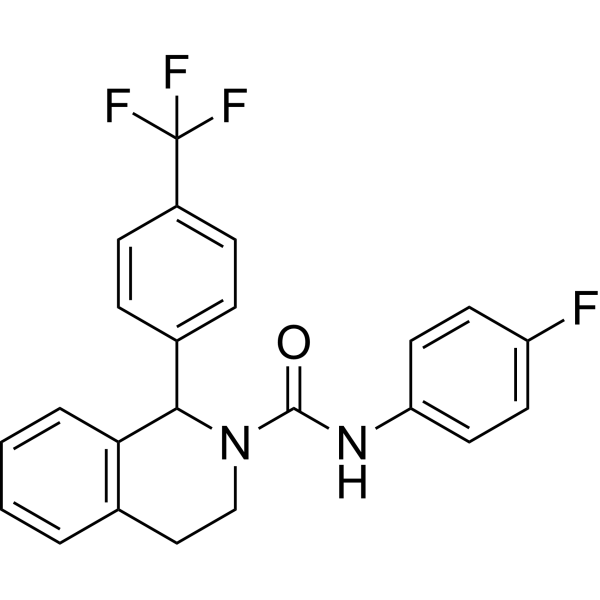
-
1,4-Cineole (Standard)
 0 Images1,4-Cineole (Standard) is the analytical standard of 1,4-Cineole (HY-N7117). 1,4-Cineole is an oxygenated monoterpene found in eucalyptus oil. 1,4-Cineole is a hTRPM8 and hTRPA1 agonist. 1,4-Cineole can increase intracellular Ca2+ concentration. 1,4-Cineole exhibits anti-anxiety and anti-depression effects. 1,4-Cineole can be used for the research of neurological disease, such as depression .

-
TRPV1 antagonist 10
 0 ImagesTRPV1 antagonist 10 is an orally active and potent TRPV1 antagonist (IC50 = 33.06 nM), moderate to weak URAT1 (IC50 = 22.51 μM) and GLUT9 (60.25% at 50 μM) inhibitor. TRPV1 antagonist 10 has analgesic and urate-lowering effect. TRPV1 antagonist 10 can be studied for research in hyperuricemia and inflammatory pain.
-
ZA18
 0 ImagesZA18 is a selective TRPM2 channel inhibitor, with an IC50 value of 6.2 μM. ZA18 can effectively suppress intracellular Ca2+ overload triggered by TRPM2 channel activation. ZA18 significantly reduce the mortality of SH-SY5Y cells induced by H2O2. ZA18 can be used for the study of ischemia-reperfusion injury, inflammation, or other neurodegenerative diseases.
-
Vanillyl butyl ether
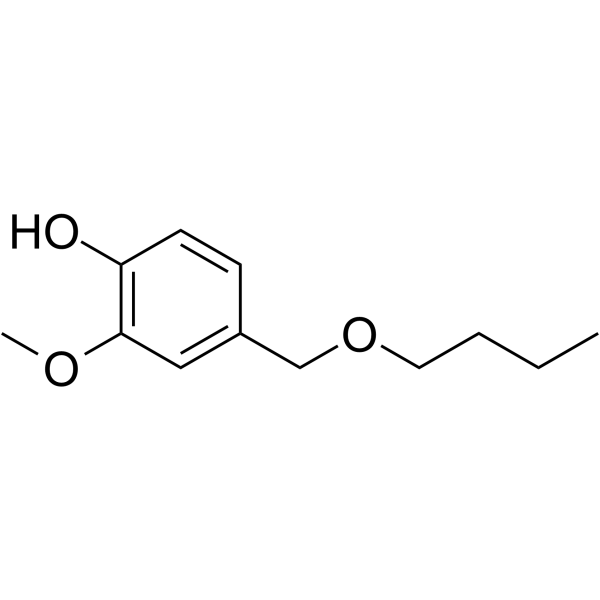 0 ImagesVanillyl butyl ether is a major contributor to the characteristic flavor and fragrance of vanilla. Vanillyl butyl ether is one of the eco-friendly and nontoxic substances. Vanillyl butyl ether exhibits mutually inhibitory effects on mammalian TRPV1 and TRPM8 channels. Vanillyl butyl ether shows repellency activity against Tribolium castaneum, T. confusum and L. bostrychophila. Vanillyl butyl ether acts as a mild warming agent, providing a warming sensation and enhancing blood circulation.
-
AAL-149
 0 ImagesCat. No.: HY-168471CAS No.: 177258-60-5
-
TRPM8 receptor agonist-1
 0 ImagesCat. No.: HY-177763CAS No.: 2791281-99-5TRPM8 receptor agonist-1 (Example 81) is a TRPM8 receptor agonist. TRPM8 receptor agonist-1 can trigger the inward flow of calcium, sodium and other ions within the cell, causing the cell membrane to depolarize and triggering an action potential. TRPM8 receptor agonist-1 can activate signals related to the swallowing reflex and can be used for the research of oropharyngeal dysphagia.
-
TRPM8 antagonist 4
 0 ImagesCat. No.: HY-174825CAS No.: 3107363-68-5TRPM8 antagonist 4 is a CB2R partial agonist (EC50=54.2 nM, Ki=3.2 μM) and TRPM8 antagonists (IC50=42.3 nM) with high functional selectivity and good physicochemical properties. TRPM8 antagonist 4 has significant anti-inflammatory and analgesic effects and good safety, reduces the mRNA expression of TNF-α, IL-6, and IL-1β.
- 1
- 2



