



Hyperuricemia
-
Hyperuricemia (38)

- 1
- 2
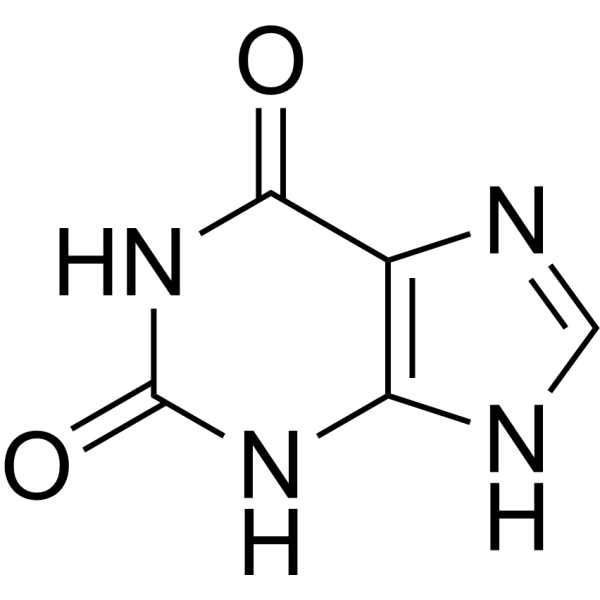
- Formula: C5H4N4O2
- Molecular Weight: 152.11
Xanthine, a plant alkaloid found in tea, coffee, and cocoa, is a mild stimulant of the central nervous system. Xanthine also acts as an intermediate product on the pathway of purine degradation.
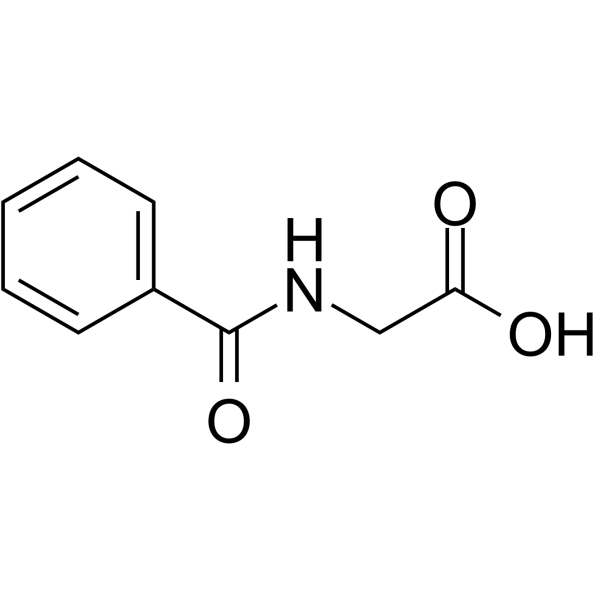
- Formula: C9H9NO3
- Molecular Weight: 179.18
Hippuric Acid is an orally active metabolite. Hippuric Acid can be produced by intestinal microorganisms from the metabolism of polyphenols, benzoic acid. Hippuric Acid decreases NRF2, MMP9 and leads to ROS accumulation. Hippuric Acid activates TGFβ/SMAD signaling. Hippuric Acid improves hyperuricemia and colitis. Hippuric Acid can also be used in cardiovascular disease research. .
- Molecular Weight: 40 kDa
Uricase, Microorganism (Uox, Microorganism) is a uricase (urate oxidase) derived from Microorganism. Uricase, Microorganism converts uric acid into allantoin. The absence of Uricase in mammals causes kidney diseases resulting from uric acid accumulation. Uricase, Microorganism can be used for research on chronic refractory gout and hyperuricemia.
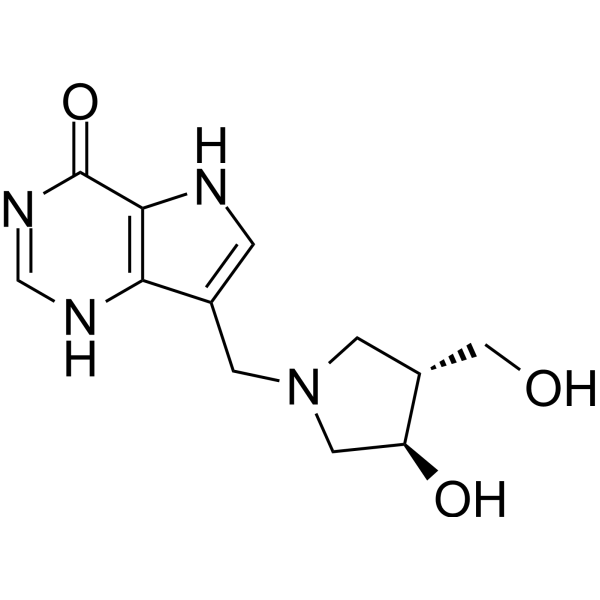
- Formula: C12H16N4O3
- Molecular Weight: 264.28
Ulodesine (BCX4208) is a purine nucleoside phosphorylase (PNP) inhibitor, with an IC50 of 2.293 nM against human PNP, and low nanomolar IC50 values against mouse, rat and monkey PNP. Ulodesine blocks the production of uric acid precursors, reduces serum uric acid levels, clears accumulated uric acid in the blood, and elevates the levels of purine nucleosides including guanosine. Ulodesine reduces the counts of total lymphocytes, T lymphocytes and lymphocyte subsets, inhibits the proliferation of cancer cells and activated lymphocytes, and enhances vaccine immune responses. Ulodesine can be used in research related to hyperuricemia and gout.
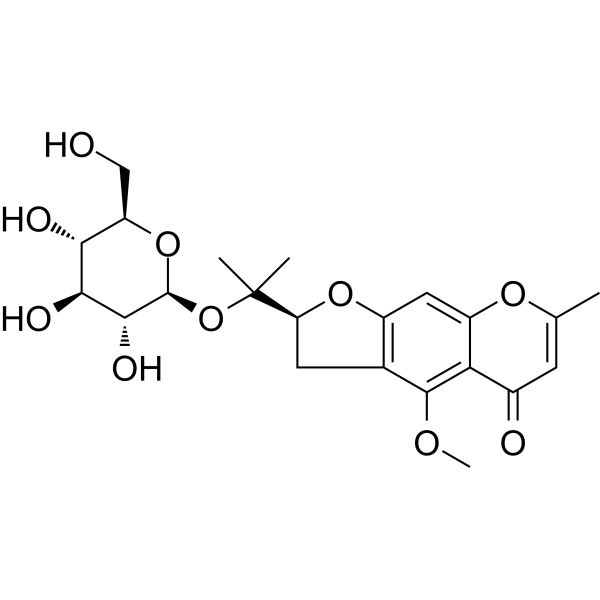
- Formula: C22H28O10
- Molecular Weight: 452.45
5-O-Methylvisammioside (4'-O-β-D-Glucosyl-5-O-methylvisamminol) is an orally active natural chromone glycoside and multiple biological activities. 5-O-Methylvisammioside inhibits ferroptosis by activating the Nrf2/HO-1 signaling axis. 5-O-Methylvisammioside alleviates intestinal barrier damage by inhibiting the ROS/NF-κB/NLRP3 pathway. 5-O-Methylvisammioside exerts a protective effect against acute liver injury by reducing ALT/AST, decreasing inflammatory infiltration, and inhibiting IκB-α phosphorylation and NF-κB nuclear translocation. 5-O-Methylvisammioside blocks the HMGB1/RAGE/MEK/ERK signaling axis to exert anti-tumor and anti-angiogenic effects. 5-O-Methylvisammioside improves depression-like behaviors by inhibiting Src kinase and the NF-κB pathway.
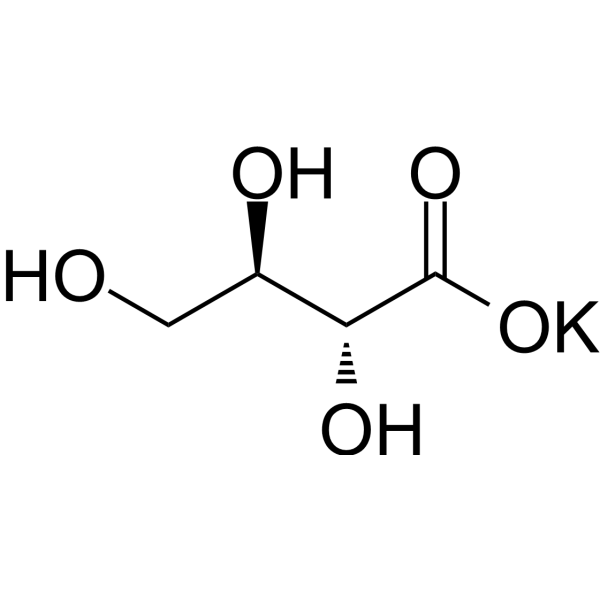
- Formula: C4H7KO5
- Molecular Weight: 174.19
Erythronic acid potassium is a urinary metabolite that serves as a diagnostic marker for transaldolase (TALDO) deficiency. Erythronic acid potassium is a differential urinary metabolite associated with renal injury in hyperuricemic rats. Erythronic acid potassium can be used in studies related to transaldolase deficiency and hyperuricemia.
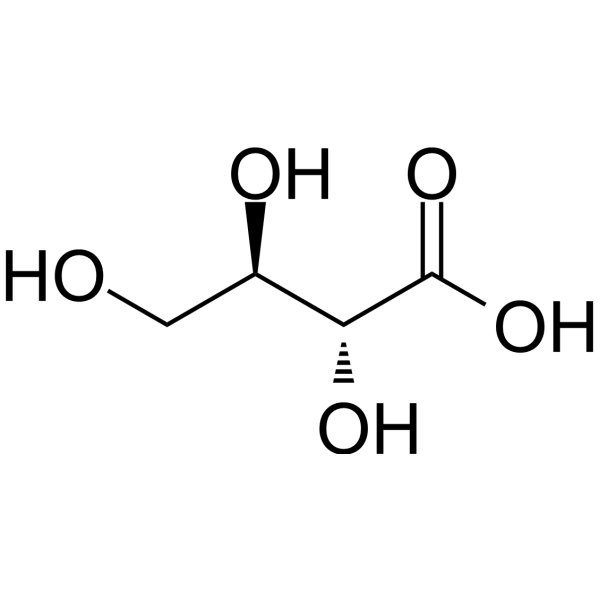
- Formula: C4H8O5
- Molecular Weight: 136.10
Erythronic acid is a urinary metabolite that serves as a diagnostic marker for transaldolase (TALDO) deficiency. Erythronic acid is a differential urinary metabolite associated with renal injury in hyperuricemic rats. Erythronic acid can be used in studies related to transaldolase deficiency and hyperuricemia.
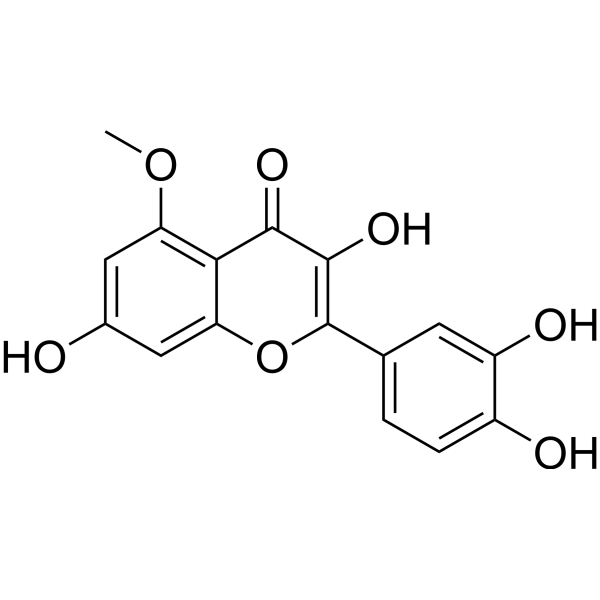
- Formula: C16H12O7
- Molecular Weight: 316.26
Azaleatin is an orally active inhibitor of hQC, NS2B-NS3 protease and E. coli β-glucuronidase, with IC50 values of 1.1 μM, 38.00 μg/mL and 0.57 μM, respectively. Azaleatin inhibits the activities of NF-κB, MyD88, JAK1, TLR4, STAT3, IL-1β, IL-6, COX-2, TNF-α and β-glucuronidase, blocks pro-inflammatory signaling pathways, reduces the levels of ROS, MDA and uric acid, elevates the levels of GPx, GSR, GST, SOD, CAT, HO-1 and GSH, scavenges free radicals and exerts reducing capacity. Azaleatin inhibits the expression of pro-apoptotic proteins Bax, Caspase-9 and Caspase-3, and upregulates the expression of anti-apoptotic protein Bcl-2. Azaleatin reduces the levels of cardiac injury markers, restores cardiac histological structure, inhibits Aβ aggregation, dengue protease activity, hepatic stellate cell proliferation and cancer cell growth, and also exhibits antibacterial activity. Azaleatin can be used in studies related to subchronic cardiotoxicity, Alzheimer's disease, dengue fever, hyperuricemia, liver fibrosis, gastric cancer and bacterial infections.

Uricase (Recombinant) (Uox (Recombinant)) is a uricase (urate oxidase). Uricase (Recombinant) converts uric acid into allantoin. The deficiency of Uricase in mammals causes kidney diseases resulting from uric acid accumulation. Uricase (Recombinant) can be used for research on chronic refractory gout and hyperuricemia.

- Formula: C12H9N5
- Molecular Weight: 223.24
Xanthine oxidoreductase-IN-6 (Compound 4) is an orally active xanthine oxidoreductase (XOR) inhibitor with an IC50 of 170 nM. Xanthine oxidoreductase-IN-6 can block the final step of uric acid biosynthesis and lower serum uric acid levels. Xanthine oxidoreductase-IN-6 also shows Cytochrome P450 3A4 (CYP3A4) inhibitory activity. Xanthine oxidoreductase-IN-6 can be used for the research of hyperuricemia.
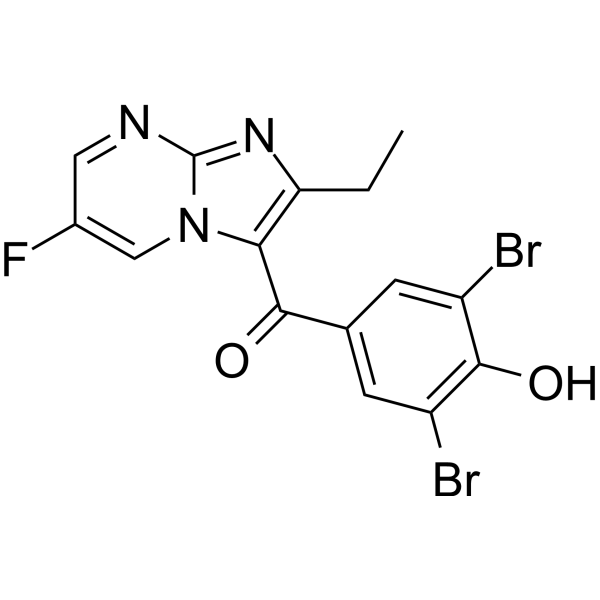
- Formula: C15H10Br2FN3O2
- Molecular Weight: 443.07
Xininurad is a potent orally active URAT1 inhibitor with an IC50 of 7.17 nM. Xininurad inhibits URAT1 activity to reduce serum uric acid levels and increase urinary uric acid excretion. Xininurad can be used for the research of hyperuricemia and gout.

- Formula: C37H30O16
- Molecular Weight: 730.62
Procyanidin B2 3′-O-gallate (B2-3′-G), isolated from Rhodiola crenulata extracts, is a potent xanthine oxidase (XO) inhibitor (IC50 = 24.24 μM, Ki = 6.16 μM). Procyanidin B2 3′-O-gallate has antioxidant activity and reduces the formation of UV-induced α-tocopheroxyl. Procyanidin B2 3′-O-gallate can be used for hyperuricemia and gout research.

Uricase, candida utilis (Uox, candida utilis) is a uricase (urate oxidase) derived from Candida utilis. Uricase, candida utilis converts uric acid into allantoin. The absence of Uricase in mammals causes kidney diseases resulting from uric acid accumulation. Uricase, candida utilis can be used for research on chronic refractory gout and hyperuricemia.

- Formula: C17H12I2O3
- Molecular Weight: 518.08
Benziodarone is a potent inhibitor of S-arylglutathione transferase enzyme system. Benziodarone catalyzes BSP conjugation with GSH. Benziodarone inhibits biliary excretion of synthetic BSP-GSH conjugates.

- Formula: C20H16BrN3O2S
- Molecular Weight: 442.33
URAT1-IN-17 is an orally active URAT1 inhibitor with an IC50 of 5.32 μM in HEK293T cells. URAT1-IN-17 inhibits URAT1-mediated uric acid reabsorption in the renal proximal tubule, thereby reducing serum uric acid levels. URAT1-IN-17 weakly inhibits OAT1-mediated organic anion transport. URAT1-IN-17 can be used for research on hyperuricemia.

- Formula: C26H32N6O3
- Molecular Weight: 476.57
Xanthine oxidase-IN-24 is an orally active mixed-type inhibitor of xanthine oxidase, with an IC50 of 0.051 μM and a Ki of 0.162 μM. Xanthine oxidase-IN-24 interacts with both free xanthine oxidase and the xanthine-xanthine oxidase complex, and reduces uric acid production in vivo. In a rat model of hyperuricemia induced by Potassium oxonate (HY-17511), Xanthine oxidase-IN-24 dose-dependently lowers serum uric acid levels, improves renal function-related biochemical parameters such as creatinine and urea nitrogen, and alleviates histopathological damage to liver and kidney tissues. Xanthine oxidase-IN-24 can be used in the research of hyperuricemia.

- Formula: C16H16N2O4S
- Molecular Weight: 332.37
Febuxostat 67M-1 is an active metabolite of Febuxostat (HY-14268). Febuxostat 67M-1 retains inhibitory activity against Xanthine Oxidase, but its plasma concentration is much lower than that of Febuxostat. Febuxostat 67M-1 can be used in the research of hyperuricemia.

- Formula: C28H23BrN4O3S2
- Molecular Weight: 607.54
URAT1-IN-16 is an orally active URAT1 inhibitor with an IC50 value of 0.19 μM. URAT1-IN-16 also functions as an NLRP3 inflammasome pathway inhibitor by effectively suppressing mature IL-1β secretion (IC50 = 2.52 μM). URAT1-IN-16 exhibits remarkable serum uric acid-lowering and anti-inflammatory activities in vivo, and can be used for hyperuricemia and gout research.

- Formula: C25H21N3O5S
- Molecular Weight: 475.52
URAT1/GLUT9-IN-2 is a selective, orally active URAT1/GLUT9 inhibitor, with an IC50 of 2.81 μM against URAT1 and an IC50 of 12.53 μM against GLUT9. URAT1/GLUT9-IN-2 reduces serum uric acid levels and protects renal function. URAT1/GLUT9-IN-2 can be used in research related to hyperuricemia and hyperuricemic nephropathy.

- Formula: C29H25BrN4O3S3
- Molecular Weight: 653.63
URAT1/GLUT9-IN-3 is an orally active URAT1/GLUT9 dual inhibitor with IC50 values of 4.01 and 1.60 μM. URAT1/GLUT9-IN-3 inhibits URAT1-mediated uric acid uptake and GLUT9-mediated uric acid transport, reducing renal urate reabsorption. URAT1/GLUT9-IN-3 reduces serum uric acid levels in hyperuricemic mice. URAT1/GLUT9-IN-3 can be used for the researches of gout and hyperuricemia.
- 1
- 2



