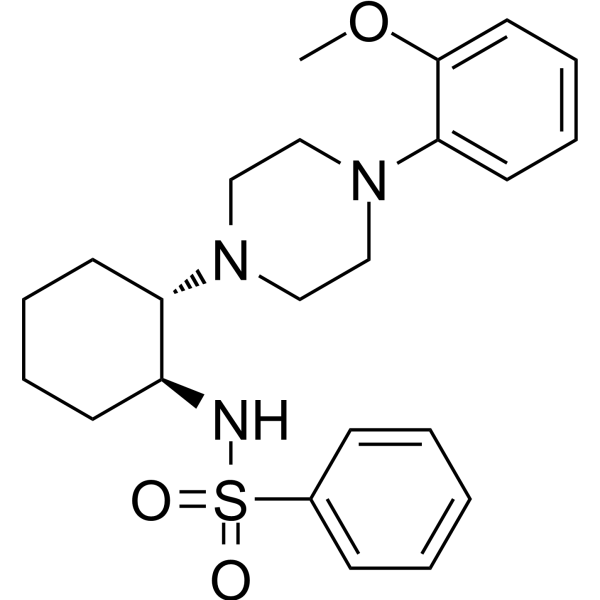
TRPML2
TRPML2 (transient receptor potential mucolipin 2, encoded by MCOLN2) is a member of the endolysosomal TRPML ion channel family and is considered a tissue-restricted mucolipin with prominent expression in immune-related cell populations, supporting a specialized role in intracellular membrane trafficking and endolysosomal function[1]. Mechanistically, TRPML2 functions as a cation channel associated with endosomal, lysosomal, and recycling compartments, where it contributes to trafficking pathways and vesicular transport processes that regulate cellular homeostasis[1][2]. Through its localization within the endolysosomal system, TRPML2 has been linked to pathways controlling membrane dynamics and intracellular cargo movement, making it relevant for studies of immune cell biology and vesicle-dependent signaling[1][2]. In disease-related models, altered TRPML2 expression has been associated with glioblastoma biology, and combined loss of TRPML1 and TRPML2 enhances glioblastoma cell survival, migration, and invasion, indicating functional relevance in tumor progression models[3]. Compared with related isoforms, TRPML2 displays a more restricted expression pattern than the ubiquitously expressed TRPML1 and is closely related to TRPML3, supporting distinct biological functions within the mucolipin family[1]. For experimental applications, TRPML2 activity can be regulated by phosphatidylinositol 3,5-bisphosphate (PI(3,5)P2) and small-molecule agonists, and recent structural studies have revealed a unique activation mechanism that facilitates mechanistic investigation of channel regulation and endolysosomal signaling[4].
References:
- [1]. Zhang X, et al. DCAF11 supports targeted protein degradation by electrophilic proteolysis-targeting chimeras. J Am Chem Soc. 2021;143(13):5141-5149. [Content Brief]
- [2]. Uniprotkb.
- [3]. Santoni G, et al. Coexpression of TRPML1 and TRPML2 Mucolipin Channels Affects the Survival of Glioblastoma Patients. Int J Mol Sci. 2022 Jul 13;23(14):7741. [Content Brief]
- [4]. Schmiege P, et al. TRPML2 in distinct states reveals the activation and modulation principles of the TRPML family. Nat Commun. 2025;16:5325.
All Product Categories
-
TRPML2 Related Products (4)
Related Products (4)

-
ML-SI3
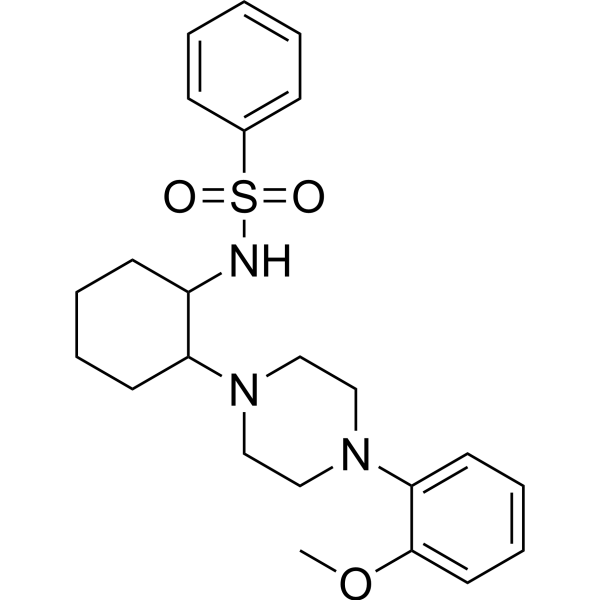 0 ImagesSynonyms: ML-SI3 (cis/trans mix)ML-SI3 is a mixture of cis/trans ML-SI3 (HY-139426A), which is a TRPML1/2 channel inhibitor with IC50s of 4.7 μM and 1.7 μM, respectively. ML-SI3 also inhibits lysosomal calcium efflux and blocks downstream TRPML1-mediated autophagy. The cis/trans ML-SI3 (HY-139426A) components of ML-SI3 are TRPML2 activators with EC50s of 3.3 μM and 9.4 μM, respectively.
-
(1R,2R)-ML-SI3
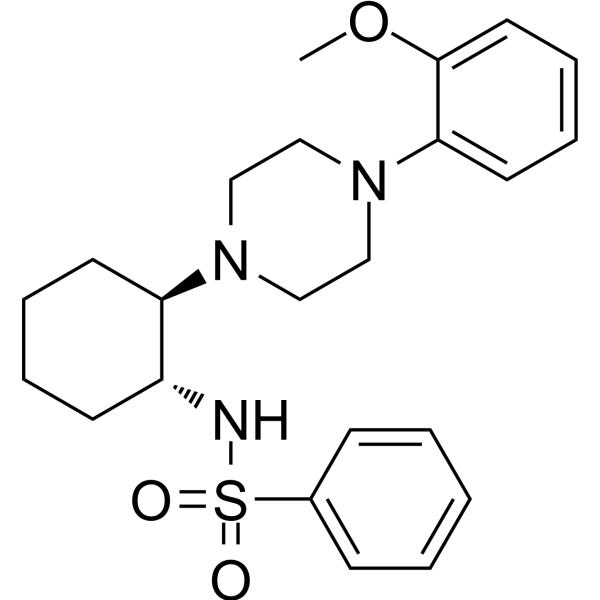 0 ImagesSynonyms: (-)-trans-ML-SI3
-
(rel)-ML-SI3
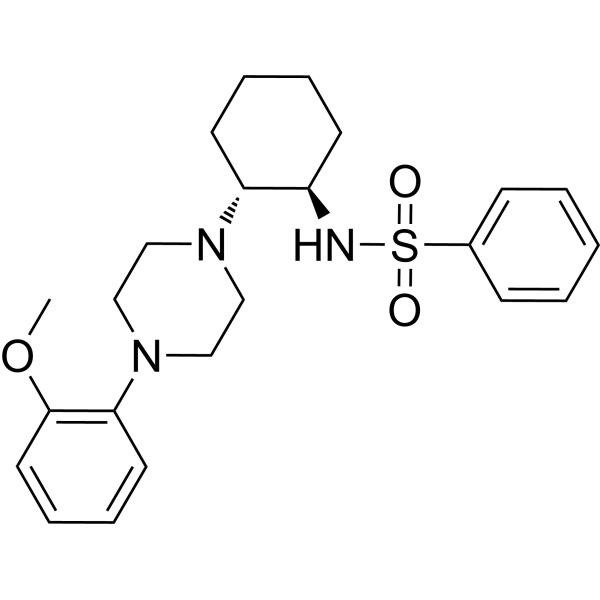 0 ImagesSynonyms: trans-ML-SI3