



TRPC6
TRPC6 (Transient Receptor Potential Canonical 6) is a receptor-activated, nonselective cation channel of the canonical TRPC family that mediates Ca2+ influx following activation by diacylglycerol (DAG), thereby coupling phospholipase C-dependent signaling to sustained intracellular calcium entry and downstream cellular responses[1][2]. Mechanistically, TRPC6 participates in pathways that regulate cytoskeletal organization, cell adhesion, contractility, and calcium-dependent signal transduction, linking extracellular receptor stimulation to functional changes in multiple tissues[2][3]. In the kidney, TRPC6 is highly enriched in podocytes and is associated with the glomerular slit diaphragm, where normal channel activity contributes to renal function and filtration barrier integrity[4]. Disease relevance is strongly supported by genetic and functional studies showing that altered TRPC6 activity and pathogenic variants are associated with focal segmental glomerulosclerosis and other kidney disorders, making the channel a widely used experimental target in renal disease models[1][4]. Compared with the closely related isoform TRPC3, TRPC6 shares DAG responsiveness but displays distinct structural and functional properties, including differences in ion permeation and channel regulation that support nonredundant biological roles[2]. For experimental applications, high-affinity TRPC6 inhibitors such as BTDM have enabled structural and mechanistic studies, revealing inhibitor binding sites and providing tools for investigating TRPC6-dependent signaling pathways and disease mechanisms[2].
Verweise:
- [1]. Zhao L, et al. Protein accumulation and neurodegeneration in the woozy mutant mouse is caused by disruption of SIL1, a cochaperone of BiP. Nat Genet. 2005 Sep;37(9):974-9. [Content Brief]
- [2]. Tang Q, et al. Structure of the receptor-activated human TRPC6 and TRPC3 ion channels. Cell Res. 2018 Jul;28(7):746-755. [Content Brief]
- [3]. TRPC6 gene information from NCBI.
- [4]. Gaskari SA, et al. Role of endocannabinoids in the pathogenesis of cirrhotic cardiomyopathy in bile duct-ligated rats. Br J Pharmacol. 2005 Oct;146(3):315-23. [Content Brief]
-
TRPC6 Verwandte Produkte (4)
Verwandte Produkte (4)

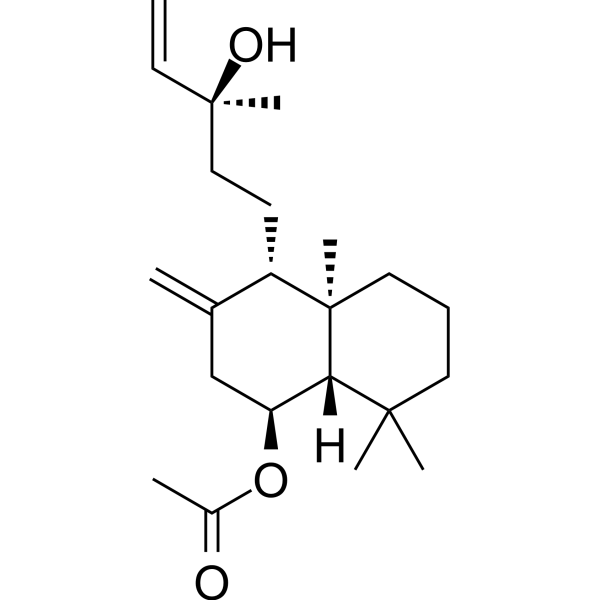
-
L687
 0 ImagesL687 is a potent activator of TRPC3/C6/C7 that can induce cellular uptake of oligonucleotides.

-
TRPC antagonist 1
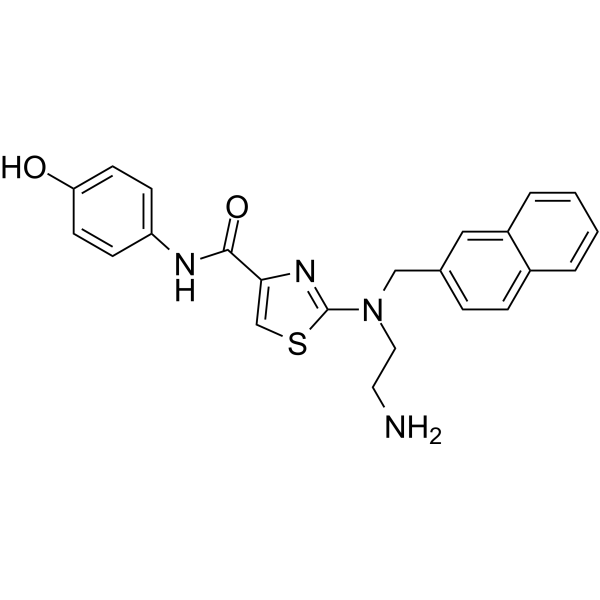 0 ImagesArt. -Nr.: HY-162090CAS. Nr.: 3027139-12-1TRPC antagonist 1 (compound 15g) is a potent TRP channel (TRPC) antagonist with IC50s of 2.4 μM, 12.2 μM, 7.6 μM, 2.9 μM, and 3.4 μM for TRPC3, TRPC4, TRPC5, TPRC6, and TRPC7, respectively. TRPC antagonist 1 displays noteworthy anti-glioblastoma efficacy in vitro against U87 cell lines.



