



TRPV3
TRPV3 (transient receptor potential vanilloid 3) is a non-selective cation channel that is highly expressed in epidermal keratinocytes and functions as an important regulator of skin physiology, particularly in thermosensation, epidermal homeostasis, and sensory signaling[1][2]. Mechanistically, TRPV3 is activated by warm temperatures and mediates calcium influx, thereby coupling thermal stimuli to downstream cellular responses in keratinocytes[2][3]. Activated keratinocytes can transmit temperature-related information to adjacent sensory neurons through ATP-dependent signaling, linking epidermal temperature detection to neural sensory pathways[4][5]. Beyond thermosensation, TRPV3 participates in biological processes associated with itching, heat pain, hair development, skin regeneration, and inflammatory responses, highlighting its broad role in cutaneous biology[1][6]. Disease-associated studies further demonstrate that TRPV3 mutations contribute to dermatological disorders, including atopic dermatitis and Olmsted syndrome, supporting its relevance as a disease-associated ion channel in skin pathology[1]. Compared with related warm-sensitive isoforms such as TRPV4, TRPV3 exhibits distinct activation and sensitization properties and is notable for progressive sensitization following repeated stimulation, a characteristic considered unique among several TRP channels[7][8]. This functional distinction has made TRPV3 a valuable model for investigating ion-channel gating mechanisms and epidermal sensory transduction[7][8]. For experimental applications, both agonists and antagonists have been developed to modulate TRPV3 activity; however, currently available modulators generally show limitations in affinity or selectivity, motivating continued efforts toward pharmacological optimization and target validation[8][9].
References:
- [1]. Guo Y, et al. Novel Insights into the Role of Keratinocytes-Expressed TRPV3 in the Skin. Biomolecules. 2023 Mar 10;13(3):513. [Content Brief]
- [2]. Lei J, et al. Involvement of skin TRPV3 in temperature detection regulated by TMEM79 in mice. Nat Commun. 2023 Jul 20;14(1):4104. [Content Brief]
- [3]. Lei J, et al. TRPV3 in skin thermosensation and temperature responses. J Physiol Sci. 2025 Mar;75(1):100005. [Content Brief]
- [4]. Mandadi S, et al. TRPV3 in keratinocytes transmits temperature information to sensory neurons via ATP. Pflugers Arch. 2009 Oct;458(6):1093-102. [Content Brief]
- [5]. Chung MK, et al. TRPV3 and TRPV4 mediate warmth-evoked currents in primary mouse keratinocytes. J Biol Chem. 2004 May 14;279(20):21569-75. [Content Brief]
- [6]. Ho JC, et al. TRP channels in skin: from physiological implications to clinical significances. Biophysics (Nagoya-shi). 2015 Feb 13;11:17-24. [Content Brief]
- [7]. Zubcevic L, et al. Conformational ensemble of the human TRPV3 ion channel. Nat Commun. 2018 Nov 14;9(1):4773. [Content Brief]
- [8]. Su W, et al. TRPV3: Structure, Diseases and Modulators. Molecules. 2023 Jan 12;28(2):774. [Content Brief]
- [9]. Lei J, et al. Unlocking the therapeutic potential of TRPV3: Insights into thermosensation, channel modulation, and skin homeostasis involving TRPV3. Bioessays. 2024 Jul;46(7):e2400047. [Content Brief]
-
TRPV3 Related Products (15)
Related Products (15)

- 1
-
Camphor
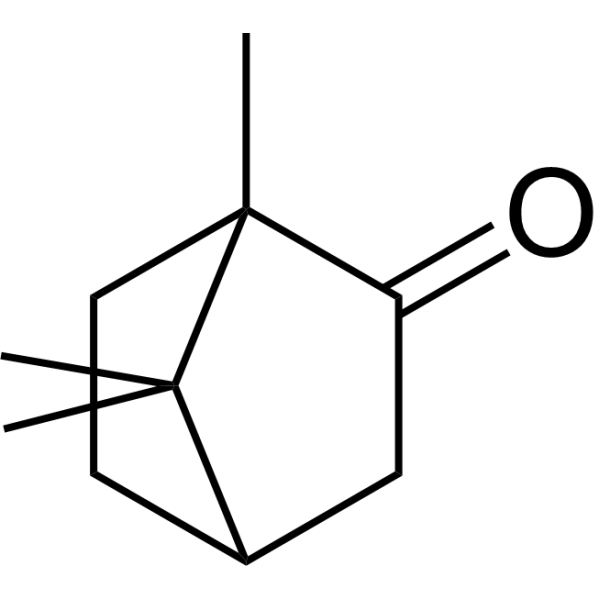 0 ImagesCamphor ((±)-Camphor) is a topical anti-infective and anti-pruritic and internally as a stimulant and carminative. However, Camphor is poisonous when ingested. Antiviral, antitussive, and anticancer activities. Camphor is a TRPV3 agonist.
-
Dyclonine hydrochloride
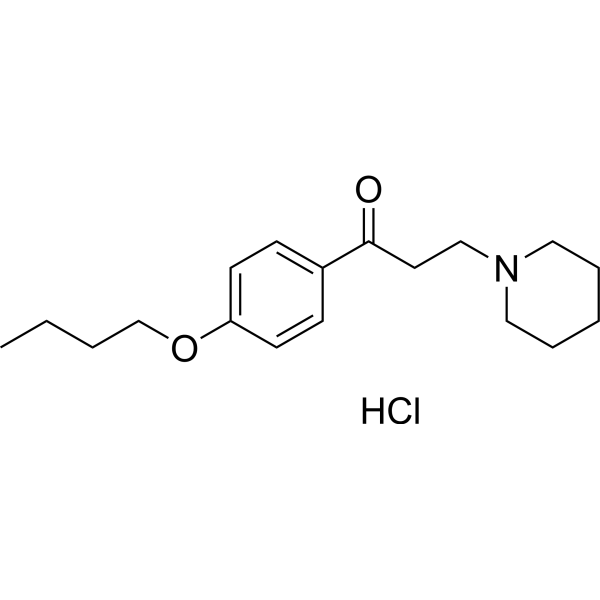 0 ImagesDyclonine hydrochloride (Dyclocaine hydrochloride) is an orally active, blood-brain barrier-permeable piperidine phenylacetone small molecule commonly used as a local anesthetic. Dyclonine hydrochloride acts as a highly selective allosteric antagonist of TRPV3; it also reversibly inhibits G9a, ALDH2 and ALDH3A1, non-competitively blocks AChE. Dyclonine hydrochloride activates the Nrf2/ARE pathway, relieves the epigenetic silencing of FXN, blocks Aβ42 aggregation, and promotes remyelination and reparative polarization of microglia. Dyclonine hydrochloride alleviates pruritus via TRPV3 inhibition; it is used in studies of neurodegenerative disease models based on its AChE inhibitory, antioxidant and remyelinating effects; it sensitizes drug-resistant tumors through ALDH inhibition, and combined use with protease inhibitors induces more tumor cell apoptosis; it inhibits Candida albicans in vitro. Dyclonine hydrochloride can be used for research on multiple diseases including neurodegenerative diseases, cancer and pruritic dermatitis.
-
Trpvicin
 0 ImagesTrpvicin is a potent and subtype-selective TRPV3 inhibitor with IC50s of 0.41 and 0.22 μM for hTRPV3-WT and hTRPV3-G573S mutant, respectively. Trpvicin exhibits minimal effects on other TRP family members (such as TRPV1/2/4/5/6, TRPA1 and TRPM8). Trpvicin inhibits the TRPV3 channel by stabilizing it in a closed state via VSLD-PD binding. Trpvicin accesses additional binding sites inside the central cavity of the G573S mutant to remodel symmetry and block the channel. Trpvicin inhibits itch and hair loss in mouse models. Trpvicin can be used for study of inflammation and immunology.
-
TRPV3 antagonist 74a
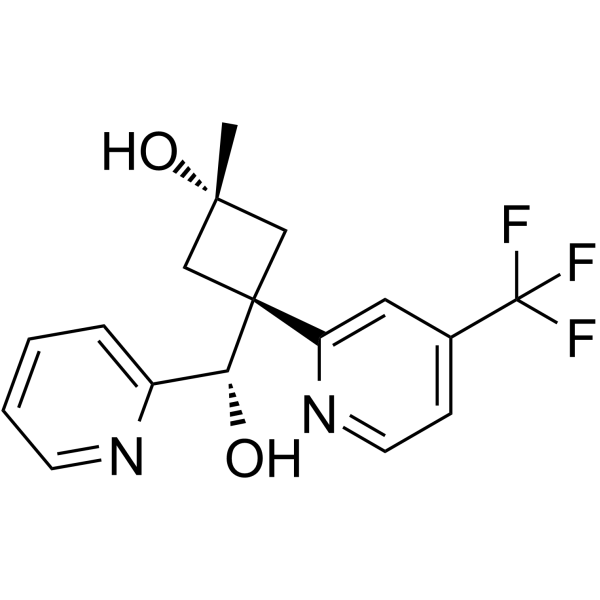 0 ImagesTRPV3 antagonist 74a is a potent and selective TRPV3 antagonist. TRPV3 antagonist 74a displays no significant activity against a panel of other ion channels. TRPV3 antagonist 74a can be used for the research of neuropathic pain.
-
Drofenine hydrochloride
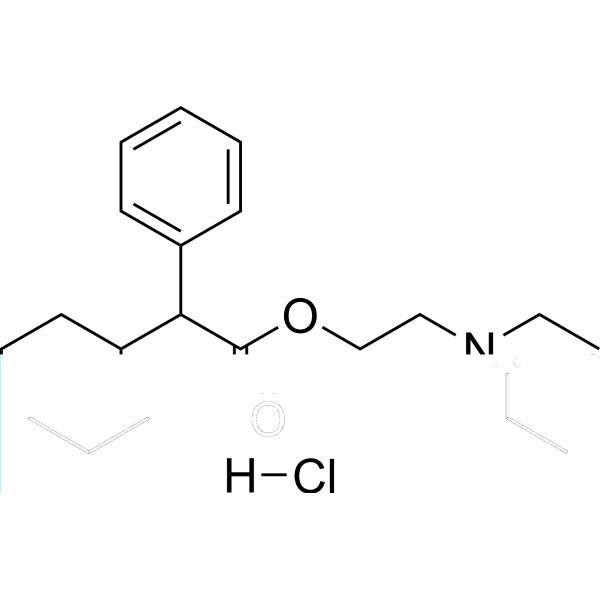 0 ImagesDrofenine (Cycloadiphene; Hexahydroadiphenine) hydrochloride is an brain-penetrant antispasmodic agent. Drofenine hydrochloride is a Kv2.1 channel inhibitor with human IC50 of 9.53 μM. Drofenine hydrochloride is a butyrylcholinesterase (BChE) inhibitor with Ki of 0.003 mM, and is a TRPV3 activator. Drofenine hydrochloride blocks Kv2.1-dependent potassium efflux, inhibits Kv2.1/JNK/NF-κB and IkBa/NF-kB signaling, suppresses Kv2.1 mRNA/protein expression. Drofenine suppresses oligomeric Aβ-induced microglial NLRP3 inflammasome activation and neuronal Tau hyperphosphorylation, improves cognitive impairment, promotes neurite outgrowth. Drofenine hydrochloride induces calcium influx in keratinocytes and exert cytotoxicity against keratinocytes. Drofenine hydrochloride ameliorates diabetic peripheral neuropathy -like pathology. Drofenine hydrochloride can be used for the researches of Alzheimer's disease, diabetic peripheral neuropathy and smooth muscle spasm.
-
KS0365
 0 ImagesCat. No.: HY-186172CAS No.: 1689577-22-7

-
17(R)-Resolvin D1
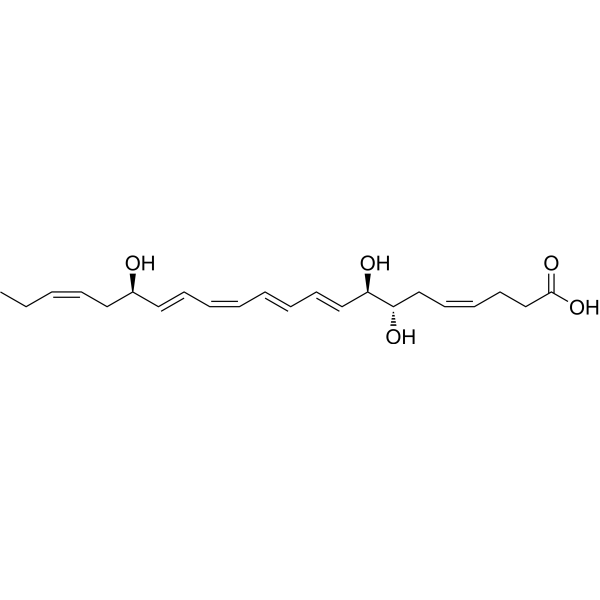 0 ImagesSynonyms: 17(R)-RvD1; AT-RvD117R-Resolvin D1 (17R-RvD1; AT-RvD1) is an aspirin-triggered epimer of Resolvin D1, which exhibits anti-inflammatory activity in mice and human PMNs cells. 17R-Resolvin D1 specificially inhibits TRPV3 with an IC50 of 398 nM and exhibits peripheral anti-nociceptive efficacy.
-
Dyclonine
 0 ImagesDyclonine (Dyclocaine) is an orally active, blood-brain barrier-permeable piperidine phenylacetone small molecule commonly used as a local anesthetic. Dyclonine acts as a highly selective allosteric antagonist of TRPV3; it also reversibly inhibits G9a, ALDH2 and ALDH3A1, non-competitively blocks AChE. Dyclonine activates the Nrf2/ARE pathway, relieves the epigenetic silencing of FXN, blocks Aβ42 aggregation, and promotes remyelination and reparative polarization of microglia. Dyclonine alleviates pruritus via TRPV3 inhibition; it is used in studies of neurodegenerative disease models based on its AChE inhibitory, antioxidant and remyelinating effects; it sensitizes drug-resistant tumors through ALDH inhibition, and combined use with protease inhibitors induces more tumor cell apoptosis; it inhibits Candida albicans in vitro. Dyclonine can be used for research on multiple diseases including neurodegenerative diseases, cancer and pruritic dermatitis.
-
Dyclonine-d9 hydrochloride
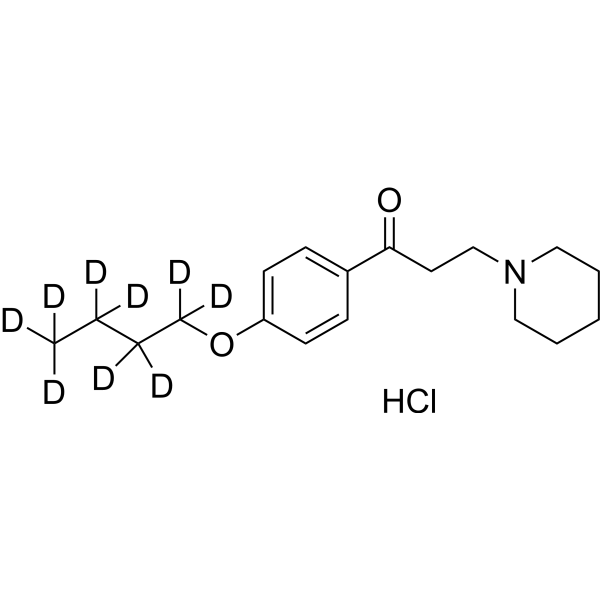 0 ImagesCat. No.: HY-B0364ASSynonyms: Dyclocaine-d9 hydrochlorideDyclonine-d9 hydrochloride (Dyclocaine-d9 hydrochloride) is the deuterated-labeled Dyclonine hydrochloride (HY-B0364A). Dyclonine hydrochloride (Dyclocaine hydrochloride) is an orally active, blood-brain barrier-permeable piperidine phenylacetone small molecule commonly used as a local anesthetic. Dyclonine hydrochloride acts as a highly selective allosteric antagonist of TRPV3; it also reversibly inhibits G9a, ALDH2 and ALDH3A1, non-competitively blocks AChE. Dyclonine hydrochloride activates the Nrf2/ARE pathway, relieves the epigenetic silencing of FXN, blocks Aβ42 aggregation, and promotes remyelination and reparative polarization of microglia. Dyclonine hydrochloride alleviates pruritus via TRPV3 inhibition; it is used in studies of neurodegenerative disease models based on its AChE inhibitory, antioxidant and remyelinating effects; it sensitizes drug-resistant tumors through ALDH inhibition, and combined use with protease inhibitors induces more tumor cell apoptosis; it inhibits Candida albicans in vitro. Dyclonine hydrochloride can be used for research on multiple diseases including neurodegenerative diseases, cancer and pruritic dermatitis.
-
Drofenine
 0 ImagesDrofenine (Cycloadiphene; Hexahydroadiphenine) is an brain-penetrant antispasmodic agent. Drofenine is a Kv2.1 channel inhibitor with human IC50 of 9.53 μM. Drofenine is a butyrylcholinesterase (BChE) inhibitor with Ki of 0.003 mM, and is a TRPV3 activator. Drofenine blocks Kv2.1-dependent potassium efflux, inhibits Kv2.1/JNK/NF-κB and IkBa/NF-kB signaling, suppresses Kv2.1 mRNA/protein expression. Drofenine suppresses oligomeric Aβ-induced microglial NLRP3 inflammasome activation and neuronal Tau hyperphosphorylation, improves cognitive impairment, promotes neurite outgrowth. Drofenine induces calcium influx in keratinocytes and exert cytotoxicity against keratinocytes. Drofenine ameliorates diabetic peripheral neuropathy -like pathology. Drofenine can be used for the researches of Alzheimer's disease, diabetic peripheral neuropathy and smooth muscle spasm.
-
Dyclonine hydrochloride (Standard)
 0 ImagesSynonyms: Dyclocaine hydrochloride (Standard)Dyclonine hydrochloride (Standard) (Dyclocaine hydrochloride (Standard)) is the analytical standard of Dyclonine hydrochloride (HY-B0364A). This product is intended for research and analytical applications. Dyclonine hydrochloride (Dyclocaine hydrochloride) is an orally active, blood-brain barrier-permeable piperidine phenylacetone small molecule commonly used as a local anesthetic. Dyclonine hydrochloride acts as a highly selective allosteric antagonist of TRPV3; it also reversibly inhibits G9a, ALDH2 and ALDH3A1, non-competitively blocks AChE. Dyclonine hydrochloride activates the Nrf2/ARE pathway, relieves the epigenetic silencing of FXN, blocks Aβ42 aggregation, and promotes remyelination and reparative polarization of microglia. Dyclonine hydrochloride alleviates pruritus via TRPV3 inhibition; it is used in studies of neurodegenerative disease models based on its AChE inhibitory, antioxidant and remyelinating effects; it sensitizes drug-resistant tumors through ALDH inhibition, and combined use with protease inhibitors induces more tumor cell apoptosis; it inhibits Candida albicans in vitro. Dyclonine hydrochloride can be used for research on multiple diseases including neurodegenerative diseases, cancer and pruritic dermatitis.
-
2,2-Diphenyltetrahydrofuran
 0 Images2,2-Diphenyltetrahydrofuran (DPTHF) acts as a TRPV3 channel antagonist and is a structural analog of 2-Aminoethyl diphenylborinate (HY-W009724). 2,2-Diphenyltetrahydrofuran shows weak inhibitory activity against TRPV1 and TRPV2. It reduces hedonic feeding in mice exposed to Olanzapine (HY-14541). 2,2-Diphenyltetrahydrofuran can be used in the research of nervous system-related diseases.
-
N-Oleoyl valine
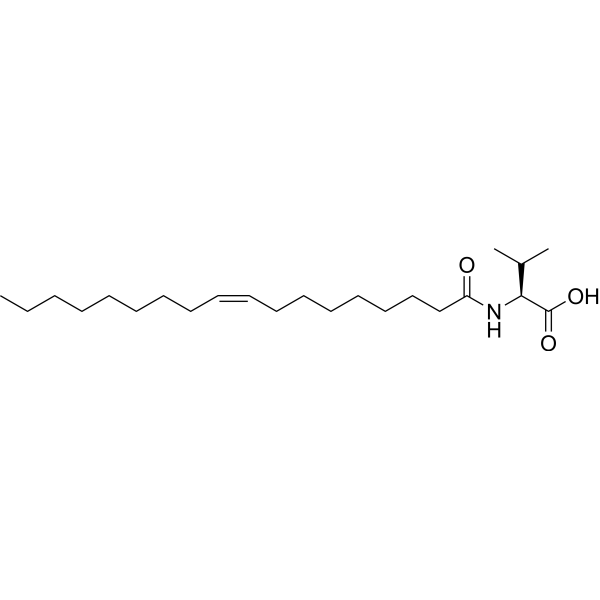 0 ImagesCat. No.: HY-118535CAS No.: 60374-41-6N-Oleoyl valine is a N-acyl valine compound that acts as a TRPV3 receptor antagonist.
-
N-Stearoyl valine
 0 ImagesCat. No.: HY-N22000CAS No.: 14379-32-9N-Stearoyl valine is an N-acyl derivative of valine. N-Stearoyl valine antagonizes intracellular calcium mobilization by binding to the TRPV3 channel as a bioactive endogenous ligand of transient receptor potential (TRP) channels. N-Stearoyl valine participates in physiological processes such as lipid metabolism and cell signal transduction as an endogenous metabolite. N-Stearoyl valine is also a flavor compound. N-Stearoyl valine can be used in research on biomarker detection, animal nutrition and amino acid metabolism, and the development of the food and beverage industry.
- 1



