



Camphor
Based on 3 publication(s) in Google Scholar
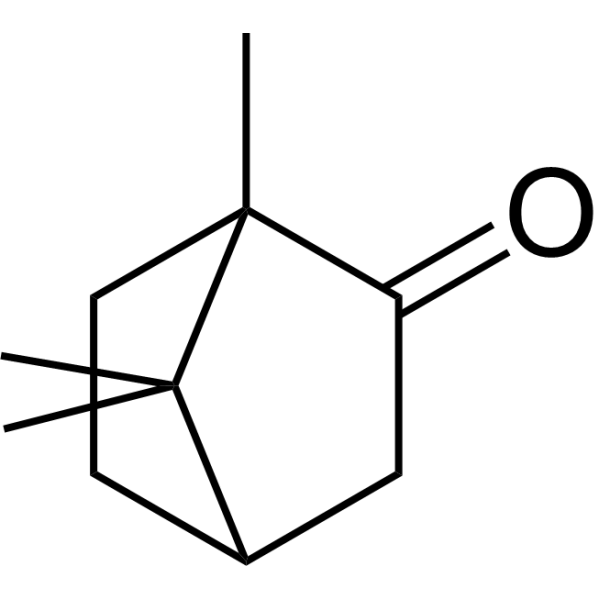
Camphor ((±)-Camphor) is a topical anti-infective and anti-pruritic and internally as a stimulant and carminative. However, Camphor is poisonous when ingested. Antiviral, antitussive, and anticancer activities. Camphor is a TRPV3 agonist.
Nos produits utilisent uniquement pour la recherche. Nous ne vendons pas aux patients.
- Pureté : 98.0%
- CAS No.: 76-22-2
- Formule: C10H16O
- Masse moléculaire:152.24
-
Stockage:Powder -20°C, 3 years , 4°C, 2 years ; In solvent -80°C, 2 years , -20°C, 1 year

To place orders, for customer services and technical support, please contact: MedChemExpress USA
Tel: 609-228-6898 E-mail: [email protected] [email protected]


-
 Activité biologique
-
Chemical Information
-
Solvant et solubilité
- Protocole
- Pureté et documentation
- Références
-
 Help & FAQs


-
HY-19608
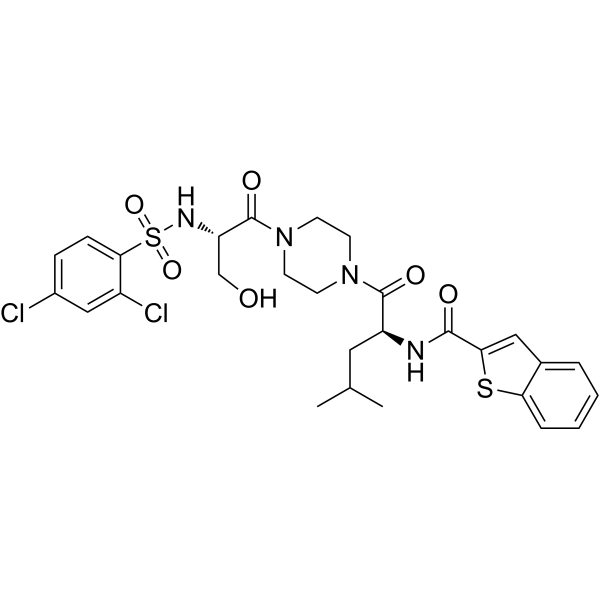
GSK1016790ATRPV4 Channel Agonist -
HY-B0545
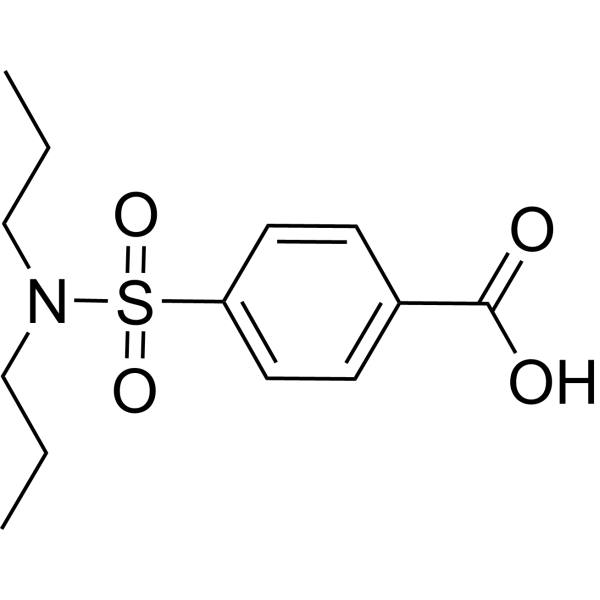
ProbenecidBacterial Inhibitor -
HY-75161
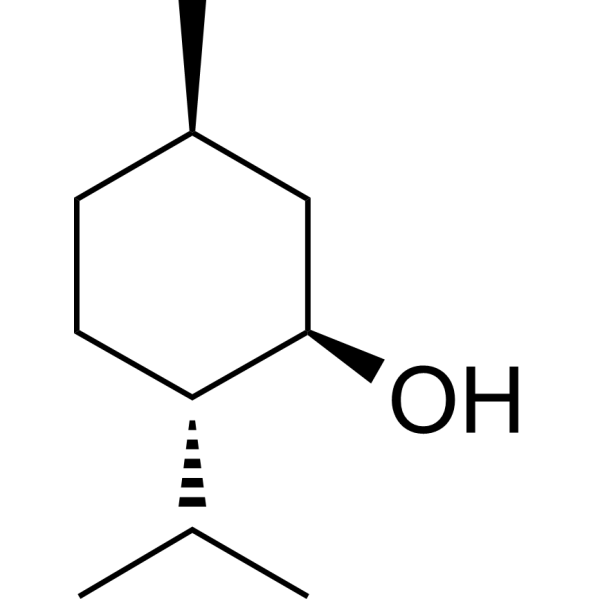
(-)-MentholEndogenous Metabolite -
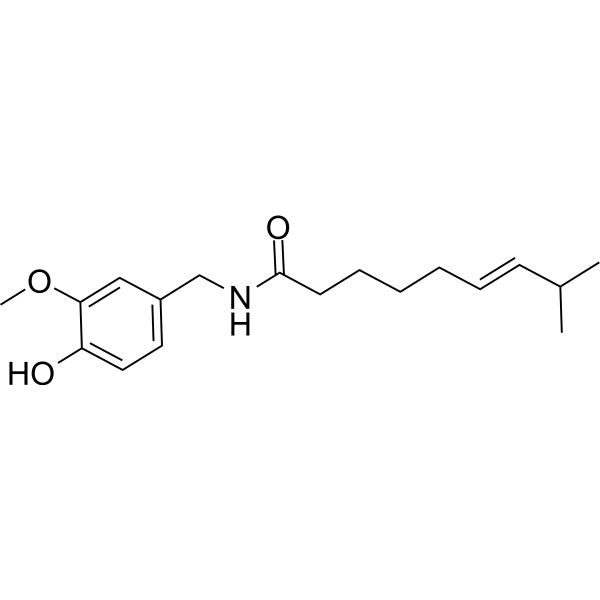
HY-10448
CapsaicinTRPV1 Agonist -
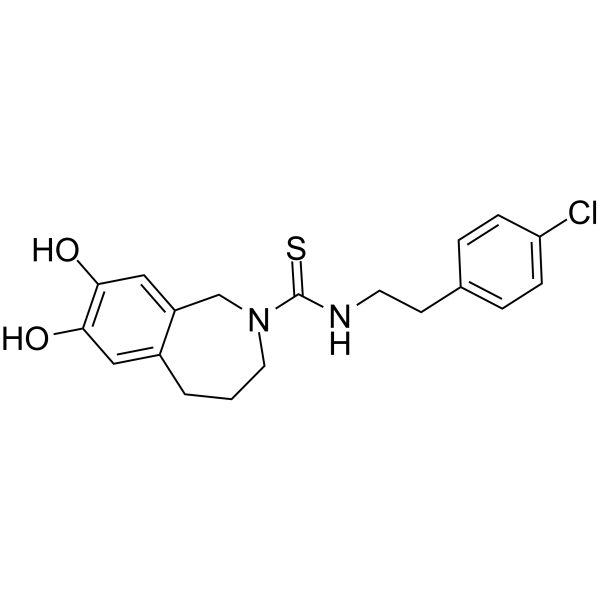
HY-15640
CapsazepineTRPV1 Antagonist -
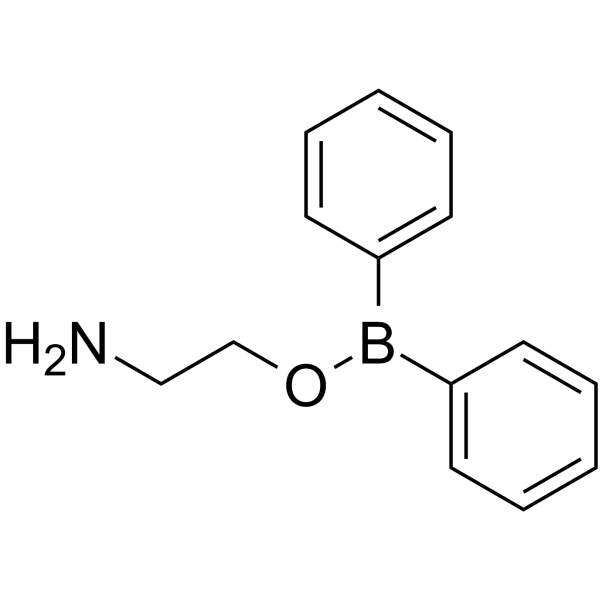
HY-W009724
2-Aminoethyl diphenylborinateIP3R Inhibitor -
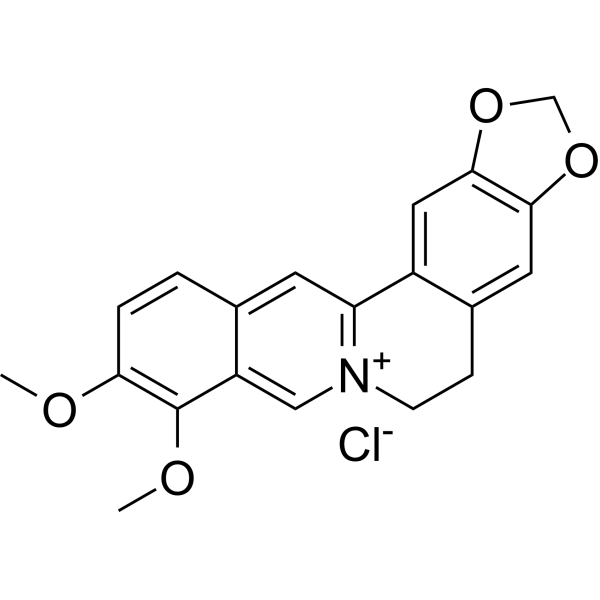
HY-18258
Berberine chlorideAntibiotic -
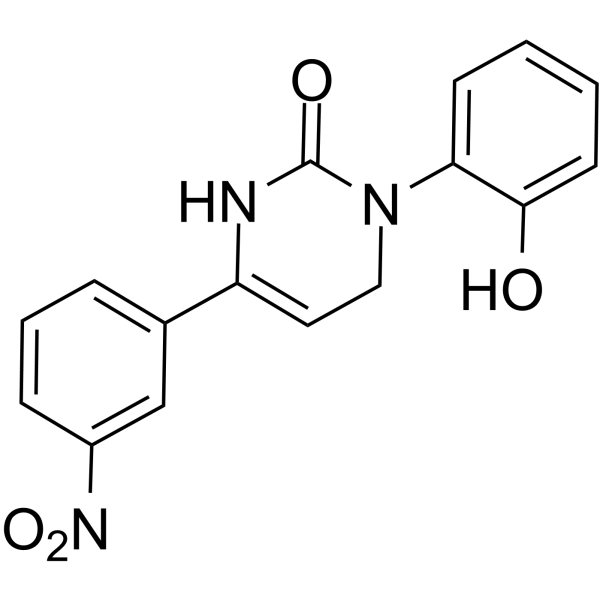
HY-11062
IcilinTRPM8 Agonist -

HY-N0808R
Camphor (Standard)TRP Channel Agonist -
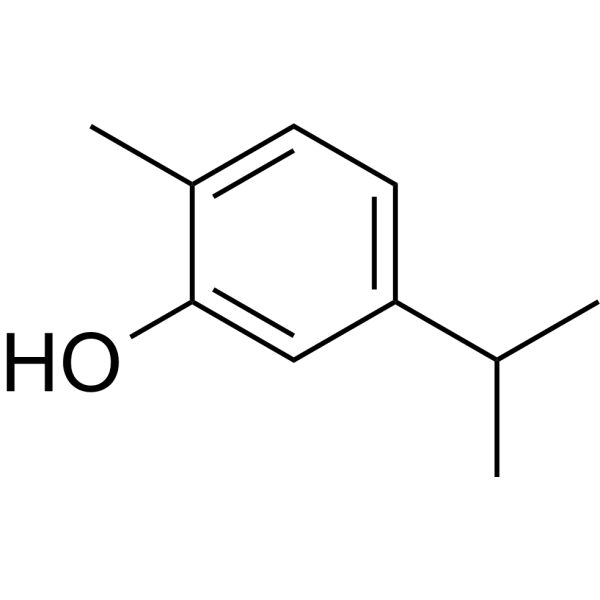
HY-N0711
CarvacrolAntioxidant/Antibacterial/Anticancer Agent -

HY-75161R
(-)-Menthol (Standard)Endogenous Metabolite -
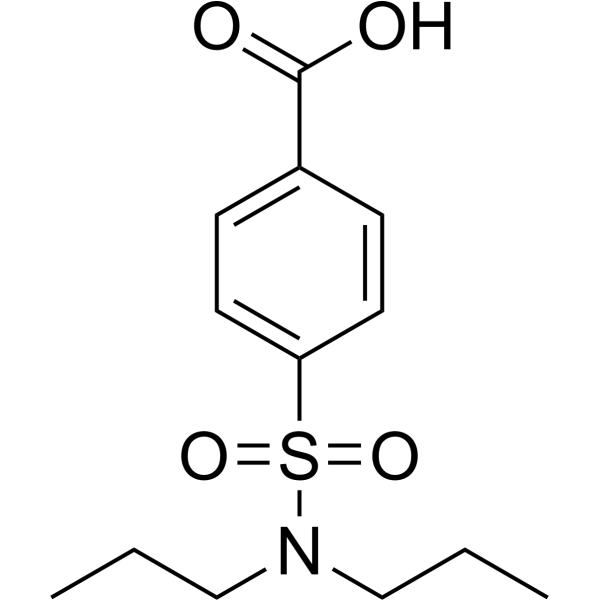
HY-B0545R
Probenecid (Standard)
Publications Citing Use of MedChemExpress (MCE) Camphor
More

Activité biologique
Description
IC50 & Target
|
TRPV3 |
Cellular Effect
|
Cell Line

|
Type | Value | Description | References |
|---|---|---|---|---|
| MDCK | EC50 |
1644.7 μM
Compound: 1
|
Antiviral activity against Influenza virus A/California/07/09 (H1N1)pdm09 infected in MDCK cells assessed as inhibition of viral replication incubated for 1 hr prior to viral infection measured after 48 hrs by hemagglutination reaction
Antiviral activity against Influenza virus A/California/07/09 (H1N1)pdm09 infected in MDCK cells assessed as inhibition of viral replication incubated for 1 hr prior to viral infection measured after 48 hrs by hemagglutination reaction
|
[PMID: 23993669] |
| MDCK | ED50 |
1644.7 μM
Compound: 1
|
Antiviral activity against rimantidine, amantadine-resistant Influenza A virus (A/California/07/09(H1N1)) pdm09 infected in MDCK cells assessed as inhibition of viral replication by hemagglutinin titer assay
Antiviral activity against rimantidine, amantadine-resistant Influenza A virus (A/California/07/09(H1N1)) pdm09 infected in MDCK cells assessed as inhibition of viral replication by hemagglutinin titer assay
|
[PMID: 24631360] |
In Vitro
Camphor induces fibroblast proliferation through the PI3K/AKT and ERK signaling pathways[3].
The MTT assay results show that 32.5, 65, 130, and 260 μM Camphor increase fibroblast viability to 108.9±6.6%, 118.6±2.8%, 127.7±4.2%, and 131.6±7.2%, respectively, compared to 0 μM Camphor treatment[3].
Camphor (0-260 μM) treatment for 24 hours increases the generation of ROS by up to 17.97% compared to 5.04% in the no-treatment control[3]. Camphor (0-260 μM, 24 hours) induces the phosphorylation of PI3K, AKT, ERK, and 4EBP1 in a dose- and time-dependent manner[3].
MedChemExpress (MCE) has not independently confirmed the accuracy of these methods. They are for reference only.
-
Cell Line:Primary dermal fibroblast cells
-
Concentration:0-260 μM
-
Incubation Time:24 hours
-
Result:32.5, 65, 130, and 260 μM increased fibroblast viability to 108.9±6.6%, 118.6±2.8%, 127.7±4.2%, and 131.6±7.2%, respectively, compared to 0 μM treatment.
-
Cell Line:Primary dermal fibroblast cells
-
Concentration:0-260 μM
-
Incubation Time:24 hours
-
Result:Induced the phosphorylation of PI3K, AKT, ERK, and 4EBP1, a repressor of mRNA translation and mTOR substrate, in a dose- and time-dependent manner.
Essai clinique
| NCT Number | Sponsor | Condition | Start Date |
Phase
|
|---|---|---|---|---|
| NCT01329991 | 2011-05 | PHASE1 |


Chemical Information
-
CAS No. 76-22-2
-
Appearance Solid
-
Masse moléculaire 152.24
-
Formule C10H16O
-
Color White to off-white
-
SMILES
O=C1C(C2(C)C)(C)CCC2C1
-
Synonyms
(±)-Camphor
-
Structure Classification
-
Initial Source
-
Livraison
Room temperature in continental US; may vary elsewhere.
-
Stockage
Powder -20°C 3 years 4°C 2 years In solvent -80°C 2 years -20°C 1 year


Publications (3)
-
Journal Impact Factor
-
Most Recent
-
PLoS Biol
2024 Jun 27;22(6):e3002672. PMID: 38935621 -
Vet Microbiol
The Chinese medicine monomer Schisandrin C inhibits PRRSV infection by regulating the OGT-PI3K/AKT/mTOR signaling pathway. [Abstract]2026 May:316:110992. PMID: 41865607 -
bioRxiv
An efficient behavioral screening platform classifies natural products and other chemical cues according to their chemosensory valence in C. elegans. [Abstract]2024 Apr 3:2023.06.02.542933. PMID: 37333363


Solvant et solubilité
In Vitro:
DMSO : 100 mg/mL (656.86 mM; Need ultrasonic; Hygroscopic DMSO has a significant impact on the solubility of product, please use newly opened DMSO)
H2O : 3.33 mg/mL (21.87 mM; ultrasonic and warming and heat to 60°C)
Please refer to the solubility information to select the appropriate solvent. Once prepared, please aliquot and store the solution to prevent product inactivation from repeated freeze-thaw cycles.
Storage method and period of stock solution: -80°C, 2 years; -20°C, 1 year. When stored at -80°C, please use it within 2 years. When stored at -20°C, please use it within 1 year.
* Note: If you choose water as the stock solution, please dilute it to the working solution, then filter and sterilize it with a 0.22 μm filter before use.
Please refer to the solubility information to select the appropriate solvent. Once prepared, please aliquot and store the solution to prevent product inactivation from repeated freeze-thaw cycles.
Storage method and period of stock solution: -80°C, 2 years; -20°C, 1 year. When stored at -80°C, please use it within 2 years. When stored at -20°C, please use it within 1 year.
* Note: If you choose water as the stock solution, please dilute it to the working solution, then filter and sterilize it with a 0.22 μm filter before use.
Concentration (start) × Volume (start) = Concentration (final) × Volume (final)
In Vivo:
Select the appropriate dissolution method based on your experimental animal and administration route.
- For the following dissolution methods, please ensure to first prepare a clear stock solution using an In Vitro approach and then sequentially add co-solvents:
- To ensure reliable experimental results, the clarified stock solution can be appropriately stored based on storage conditions. As for the working solution for In Vivo experiments, it is recommended to prepare freshly and use it on the same day.
- The percentages shown for the solvents indicate their volumetric ratio in the final prepared solution. If precipitation or phase separation occurs during preparation, heat and/or sonication can be used to aid dissolution.
Add each solvent one by one: 10% DMSO 40% PEG300 5% Tween-80 45% Saline
Solubility: ≥ 2.5 mg/mL (16.42 mM); Clear solution
This protocol yields a clear solution of ≥ 2.5 mg/mL (saturation unknown).
Taking 1 mL working solution as an example, add 100 μL DMSO stock solution (25.0 mg/mL) to 400 μL PEG300, and mix evenly; then add 50 μL Tween-80 and mix evenly; then add 450 μL Saline to adjust the volume to 1 mL.
Preparation of Saline: Dissolve 0.9 g sodium chloride in ddH₂O and dilute to 100 mL to obtain a clear Saline solution.
Add each solvent one by one: 10% DMSO 90% (20% SBE-β-CD in Saline)
Solubility: ≥ 2.5 mg/mL (16.42 mM); Clear solution
This protocol yields a clear solution of ≥ 2.5 mg/mL (saturation unknown).
Taking 1 mL working solution as an example, add 100 μL DMSO stock solution (25.0 mg/mL) to 900 μL 20% SBE-β-CD in Saline, and mix evenly.
Preparation of 20% SBE-β-CD in Saline (4°C, storage for one week): 2 g SBE-β-CD powder is dissolved in 10 mL Saline, completely dissolve until clear.
For the following dissolution methods, please prepare the working solution directly:
It is recommended to prepare fresh solutions and use them promptly within a short period of time.
The percentages shown for the solvents indicate their volumetric ratio in the final prepared solution. If precipitation or phase separation occurs during preparation, heat and/or sonication can be used to aid dissolution.
Add each solvent one by one: PBS
Solubility: 3.33 mg/mL (21.87 mM); Clear solution; Need ultrasonic and warming and heat to 60°C
In Vivo Dissolution Calculator
Please enter the basic information of animal experiments:
-
-
-
-
Recommended: Prepare an additional quantity of animals to account for potential losses during experiments.
Please enter your animal formula composition:
-
%DMSO +
Recommended: Keep the proportion of DMSO in working solution below 2% if your animal is weak.
-
%+
-
+%Tween-80 + +
-
%Saline +
The co-solvents required include: DMSO, . All of co-solvents are available by MedChemExpress (MCE). , Tween 80. All of co-solvents are available by MedChemExpress (MCE).
Working solution concentration: 0.22 mg/mL
Method for preparing stock solution: mg drug dissolved in μL DMSO. Stock solution concentration: mg/mL.
1. Take μL DMSO stock solution;
2. Add μL .
μL , mix evenly;
3. Then add μL Tween 80, mix evenly;
4. Then add μL
Please ensure that the stock solution in the first step is dissolved to a clear state, and add co-solvents in sequence. You can use ultrasonic heating (ultrasonic cleaner, recommended frequency 20-40 kHz), vortexing, etc. to assist dissolution.


Pureté et documentation
-
Fiche technique (280 KB)
-
SDS (933 KB)
- English - EN (933 KB)
- Français - FR (933 KB)
- Deutsch - DE (933 KB)
- Norwegian - NO (933 KB)
- Español - ES (933 KB)
- Swedish - SV (933 KB)
- Italian - IT (933 KB)
- Korean - KR (933 KB)
- Portuguese - PT (933 KB)
-
Instruction de manipulation (2659 KB)
Références
[1]. Chen W, et al. Camphor--a fumigant during the Black Death and a coveted fragrant wood in ancient Egypt and Babylon--a review. Molecules. 2013 May 10;18(5):5434-54. [Content Brief]
[2]. Billen B, et al. Different ligands of the TRPV3 cation channel cause distinct conformational changes as revealedby intrinsic tryptophan fluorescence quenching. J Biol Chem. 2015 May 15;290(20):12964-74. [Content Brief]
[3]. Tran TA, et al. Camphor Induces Proliferative and Anti-senescence Activities in Human Primary Dermal Fibroblasts and Inhibits UV-Induced Wrinkle Formation in Mouse Skin. Phytother Res. 2015 Dec;29(12):1917-25. [Content Brief]


Complete Stock Solution Preparation Table
Please refer to the solubility information to select the appropriate solvent. Once prepared, please aliquot and store the solution to prevent product inactivation from repeated freeze-thaw cycles.
Storage method and period of stock solution: -80°C, 2 years; -20°C, 1 year. When stored at -80°C, please use it within 2 years. When stored at -20°C, please use it within 1 year.
| Optional Solvent | Concentration Solvent Mass | 1 mg | 5 mg | 10 mg | 25 mg |
|---|---|---|---|---|---|
| H2O / DMSO | 1 mM | 6.5686 mL | 32.8429 mL | 65.6858 mL | 164.2144 mL |
| 5 mM | 1.3137 mL | 6.5686 mL | 13.1372 mL | 32.8429 mL | |
| 10 mM | 0.6569 mL | 3.2843 mL | 6.5686 mL | 16.4214 mL | |
| 15 mM | 0.4379 mL | 2.1895 mL | 4.3791 mL | 10.9476 mL | |
| 20 mM | 0.3284 mL | 1.6421 mL | 3.2843 mL | 8.2107 mL | |
| DMSO | 25 mM | 0.2627 mL | 1.3137 mL | 2.6274 mL | 6.5686 mL |
| 30 mM | 0.2190 mL | 1.0948 mL | 2.1895 mL | 5.4738 mL | |
| 40 mM | 0.1642 mL | 0.8211 mL | 1.6421 mL | 4.1054 mL | |
| 50 mM | 0.1314 mL | 0.6569 mL | 1.3137 mL | 3.2843 mL | |
| 60 mM | 0.1095 mL | 0.5474 mL | 1.0948 mL | 2.7369 mL | |
| 80 mM | 0.0821 mL | 0.4105 mL | 0.8211 mL | 2.0527 mL | |
| 100 mM | 0.0657 mL | 0.3284 mL | 0.6569 mL | 1.6421 mL |
* Note: If you choose water as the stock solution, please dilute it to the working solution, then filter and sterilize it with a 0.22 μm filter before use.


Camphor Related Classifications
HY-N0808 Related Classifications
 Powered by Bioz