



TRPC5
TRPC5 is a receptor-activated Ca2+-permeable cation channel within the TRPC family, linking extracellular receptor stimulation to intracellular ion entry[1]. Mechanistically, GPCR signaling can act through Gαi3, which binds the TRPC5 ankyrin-repeat edge and increases PIP2 sensitivity, thereby facilitating channel opening[2]. In disease-relevant models, TRPC5 supports amygdala-dependent innate fear behavior, and kidney studies identify TRPC5-mediated Rac1 activation, synaptopodin destabilization, podocyte cytoskeletal remodeling, and albuminuria[3][4]. Compared with related isoforms, TRPC5 forms homotetramers, whereas the human TRPC1/C5 heteromer contains one TRPC1 and three TRPC5 subunits, producing an asymmetric selectivity filter and lower gate distinct from the TRPC5 homomer[5]. For experimental applications, AC1903 specifically blocked TRPC5 channel activity in proteinuric rat glomeruli and suppressed severe proteinuria and podocyte loss in FSGS models[6]. Structural inhibitor studies further mapped human TRPC5 complexes with clemizole and HC-070, supporting rational use of TRPC5 inhibitors in channel-function and disease-model research[7].
References:
- [1]. Hofmann T, et al. Subunit composition of mammalian transient receptor potential channels in living cells. Proc Natl Acad Sci U S A. 2002 May 28;99(11):7461-6. [Content Brief]
- [2]. Won J, et al. Molecular architecture of the Gαi-bound TRPC5 ion channel. Nat Commun. 2023 May 3;14(1):2550. [Content Brief]
- [3]. Riccio A, et al. Essential role for TRPC5 in amygdala function and fear-related behavior. Cell. 2009 May 15;137(4):761-72. [Content Brief]
- [4]. Schaldecker T, et al. Inhibition of the TRPC5 ion channel protects the kidney filter. J Clin Invest. 2013 Dec;123(12):5298-309. [Content Brief]
- [5]. Kim SH, et al. Molecular architecture of the human TRPC1/C5 heteromeric channel. Nat Commun. 2025 Dec 10;17(1):317. [Content Brief]
- [6]. Zhou Y, et al. A small-molecule inhibitor of TRPC5 ion channels suppresses progressive kidney disease in animal models. Science. 2017 Dec 8;358(6368):1332-1336. [Content Brief]
- [7]. Song K, et al. Structural basis for human TRPC5 channel inhibition by two distinct inhibitors. Elife. 2021 Mar 8;10:e63429. [Content Brief]
-
TRPC5 Related Products (19)
Related Products (19)

- 1
-
Rosiglitazone
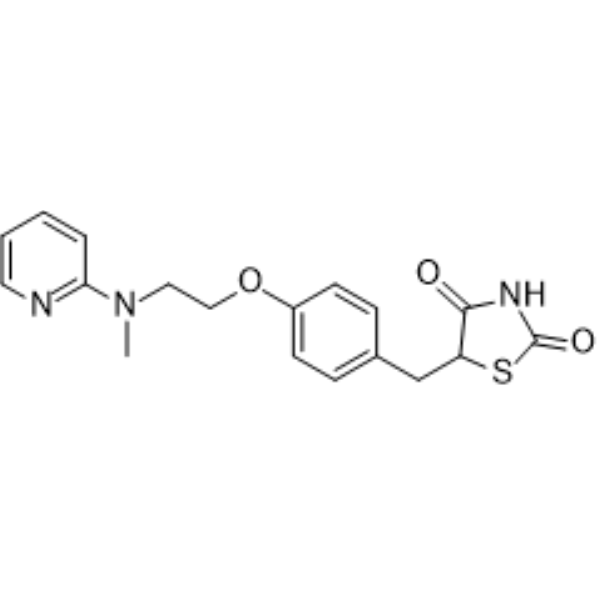 0 ImagesSynonyms: BRL 49653Rosiglitazone (BRL 49653) is an orally active selective PPARγ agonist (EC50: 60 nM, Kd: 40 nM), with blood-brain barrier permeability. Rosiglitazone is an TRPC5 activator (EC50: 30 μM) and TRPM3 inhibitor. Rosiglitazone can be used in the research of obesity and diabetes, senescence, ovarian cancer.
-
Rosiglitazone hydrochloride
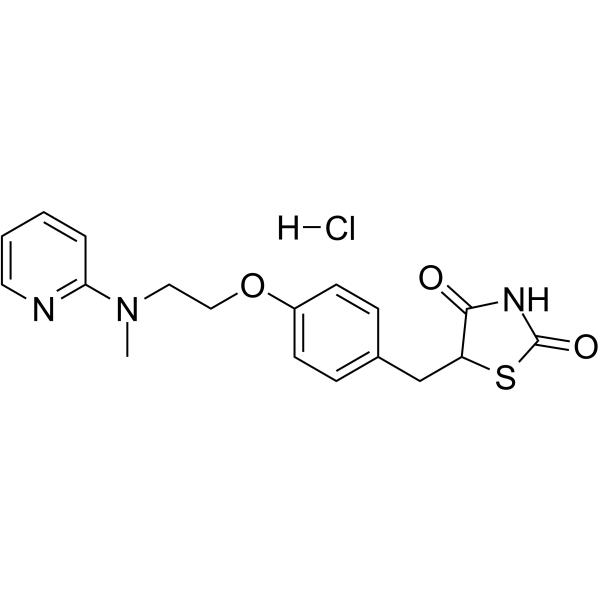 0 ImagesSynonyms: BRL 49653 hydrochlorideRosiglitazone (BRL 49653) hydrochloride is an orally active selective PPARγ agonist (EC50: 60 nM, Kd: 40 nM). Rosiglitazone hydrochloride is a TRPC5 activator (EC50: 30 μM) and TRPM3 inhibitor. Rosiglitazone hydrochloride can be used in the research of obesity and diabetes, senescence, ovarian cancer.
-
Clemizole hydrochloride
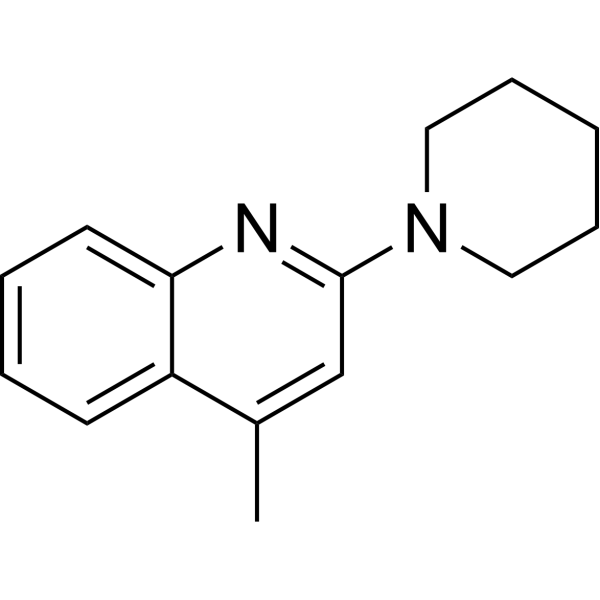
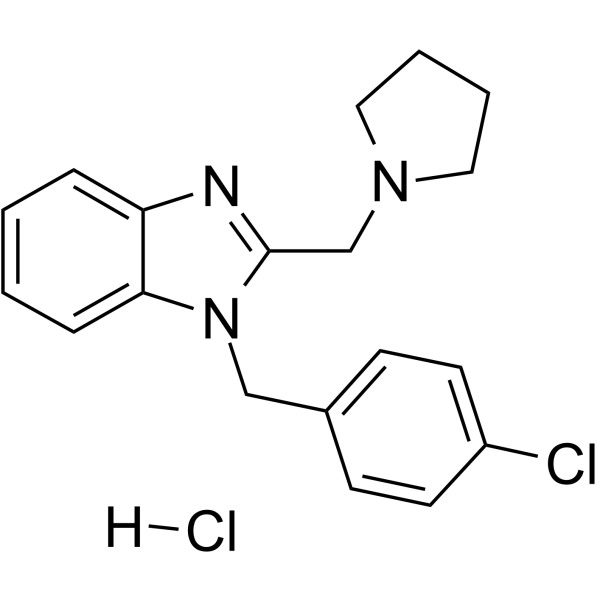 0 ImagesClemizole hydrochloride is an orally active, blood-brain barrier permeable TRPC5 inhibitor, with an IC50 value of 1.05-1.34 μM against mouse TRPC5. Clemizole hydrochloride blocks TRPC1:TRPC5, TRPC3, TRPC4, TRPC6, TRPC7, hERG, hKCNQ1/hKCNE1 and hKv1.5 channels, and activates TRPA1; it modulates 5HT-2B and HTR2A receptors; it inhibits HCV RNA replication, CrtN enzymatic activity, oxidative stress, neuroinflammation, cell apoptosis and bacterial virulence; it maintains blood-brain barrier (BBB) integrity; it enhances DNA repair capacity; it improves cell viability; and it alters cardiac electrophysiological properties. Clemizole hydrochloride can be used in the research of Dravet syndrome, hepatitis C virus infection, Staphylococcus aureus skin infection, Cisplatin (HY-17394)-induced nephrotoxicity, STXBP1-related diseases, traumatic brain injury and xeroderma pigmentosum type C.
-
Oxoglaucine
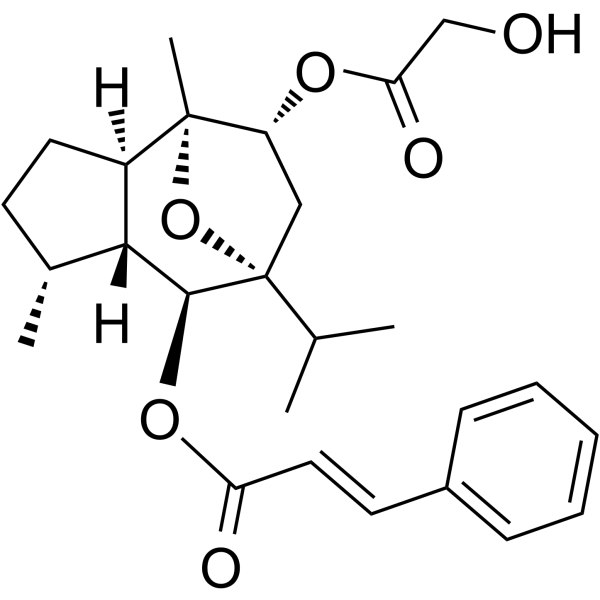
 0 ImagesOxoglaucine (O-Methylatheroline) is a natural product with multiple activities including autophagy activation, anti-inflammation, antibacterial activity, and immunoregulation. Oxoglaucine inhibits the TRPV5/calmodulin/CAMK-II pathway, suppresses TGFβ-induced Smad2 phosphorylation by upregulating Smad7, blocks Ca2+ influx, activates autophagy, alleviates apoptosis and inflammation, inhibits ROS production and the expression of fibrosis markers in hepatocytes, and regulates immune cell populations and responses. Oxoglaucine protects against infections caused by Candida albicans and Klebsiella pneumoniae, and exerts effects on adjuvant-induced arthritis. Oxoglaucine can be used in studies related to arthritis, liver fibrosis, bacterial infections, and fungal infections.
-
JD03-02
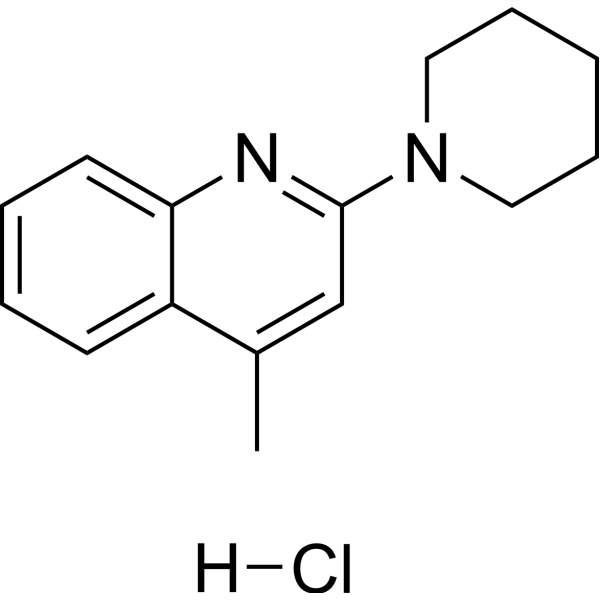
 0 ImagesCat. No.: HY-184164JD03-02 is an orally active, blood-brain barrier-permeable TRPC1/5 heterodimer inhibitor with an IC50 of 0.2 nM. JD03-02 preferentially binds to a unique ligand-binding pocket at the interface of TRPC1-TRPC5, exerts almost no inhibitory effect on TRPC5 homotetramers, and thus avoids side effects such as obesity and hyperkinesia. JD03-02 induces anxiolytic and antidepressant effects in mouse models. JD03-02 can be used in studies related to depression and anxiety disorders.
-
Clemizole
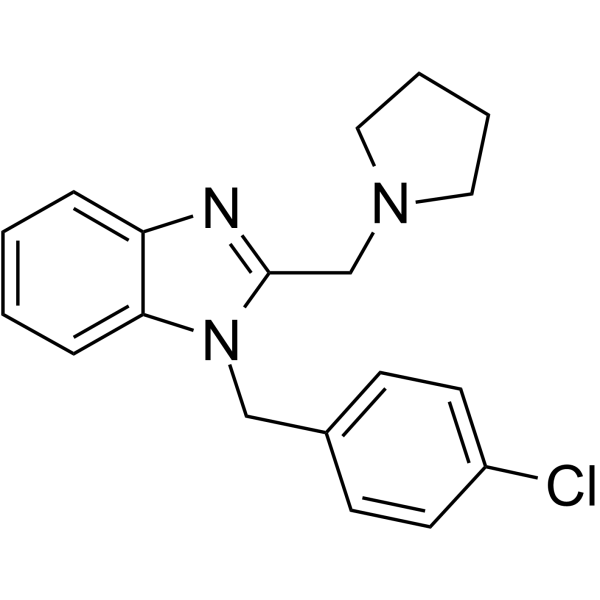 0 ImagesClemizole is an orally active, blood-brain barrier permeable TRPC5 inhibitor, with an IC50 value of 1.05-1.34 μM against mouse TRPC5. Clemizole blocks TRPC1:TRPC5, TRPC3, TRPC4, TRPC6, TRPC7, hERG, hKCNQ1/hKCNE1 and hKv1.5 channels, and activates TRPA1; it modulates 5HT-2B and HTR2A receptors; it inhibits HCV RNA replication, CrtN enzymatic activity, oxidative stress, neuroinflammation, cell apoptosis and bacterial virulence; it maintains blood-brain barrier (BBB) integrity; it enhances DNA repair capacity; it improves cell viability; and it alters cardiac electrophysiological properties. Clemizole can be used in the research of Dravet syndrome, hepatitis C virus infection, Staphylococcus aureus skin infection, Cisplatin (HY-17394)-induced nephrotoxicity, STXBP1-related diseases, traumatic brain injury and xeroderma pigmentosum type C.
-
Clemizole-d4
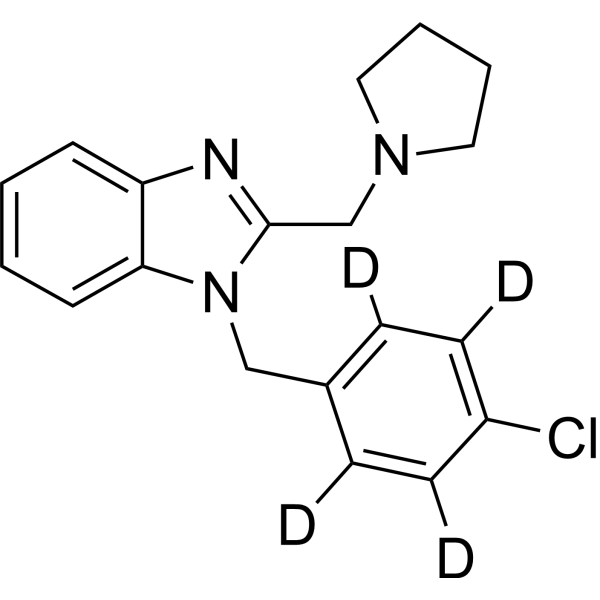 0 ImagesClemizole-d4 is the deuterated-labeled Clemizole (HY-30234). Clemizole is an orally active, blood-brain barrier permeable TRPC5 inhibitor, with an IC50 value of 1.05-1.34 μM against mouse TRPC5. Clemizole blocks TRPC1:TRPC5, TRPC3, TRPC4, TRPC6, TRPC7, hERG, hKCNQ1/hKCNE1 and hKv1.5 channels, and activates TRPA1; it modulates 5HT-2B and HTR2A receptors; it inhibits HCV RNA replication, CrtN enzymatic activity, oxidative stress, neuroinflammation, cell apoptosis and bacterial virulence; it maintains blood-brain barrier (BBB) integrity; it enhances DNA repair capacity; it improves cell viability; and it alters cardiac electrophysiological properties. Clemizole can be used in the research of Dravet syndrome, hepatitis C virus infection, Staphylococcus aureus skin infection, Cisplatin (HY-17394)-induced nephrotoxicity, STXBP1-related diseases, traumatic brain injury and xeroderma pigmentosum type C.
-
Rosiglitazone potassium
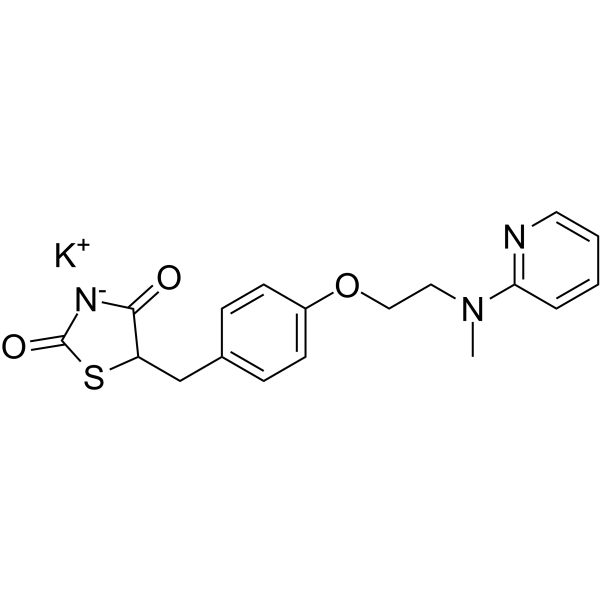 0 ImagesSynonyms: BRL 49653 potassiumRosiglitazone (BRL 49653) potassium is an orally active selective PPARγ agonist (EC50: 60 nM, Kd: 40 nM). Rosiglitazone potassium is a TRPC5 activator (EC50: 30 μM) and TRPM3 inhibitor. Rosiglitazone potassium can be used in the research of obesity and diabetes, senescence, ovarian cancer.
-
TRPC antagonist 1
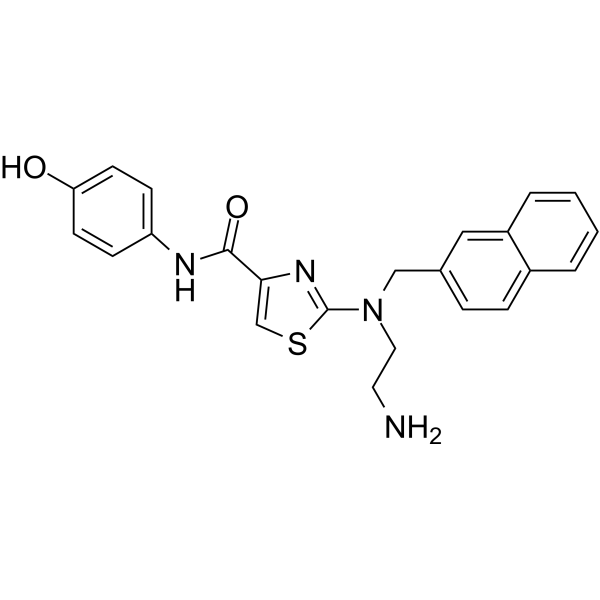 0 ImagesCat. No.: HY-162090CAS No.: 3027139-12-1TRPC antagonist 1 (compound 15g) is a potent TRP channel (TRPC) antagonist with IC50s of 2.4 μM, 12.2 μM, 7.6 μM, 2.9 μM, and 3.4 μM for TRPC3, TRPC4, TRPC5, TPRC6, and TRPC7, respectively. TRPC antagonist 1 displays noteworthy anti-glioblastoma efficacy in vitro against U87 cell lines.
-
TRPC5-IN-5
 0 ImagesCat. No.: HY-172106CAS No.: 738603-63-9TRPC5-IN-5 (Compound ph8) is a TRPC5 inhibitor (IC50: 1.28 μM). TRPC5-IN-5 can be used for research of neurological diseases and renal diseases.
-
TRPC4/5-IN-1
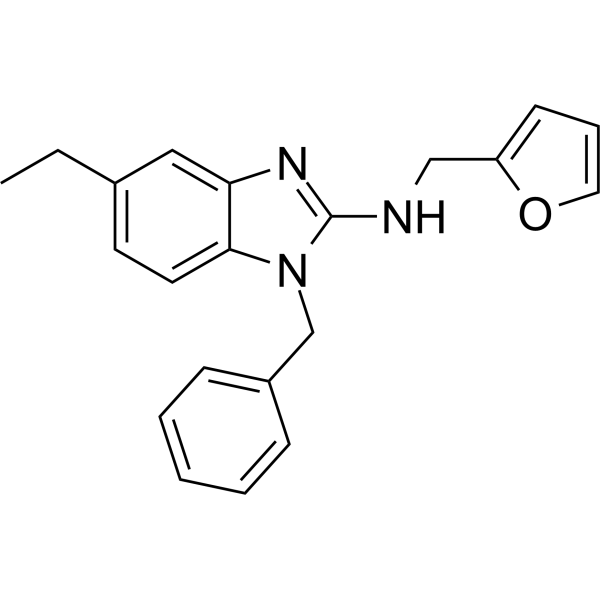 0 ImagesCat. No.: HY-146155CAS No.: 3032263-08-1TRPC4/5-IN-1 is a potent TRP channel 4/5 (TRPC4/5) inhibitor with IC50s of 2.06 μM and 0.54 μM, respectively. TRPC4/5-IN-1 can be used for proteinuric kidney diseases and skin inflammatory diseases research.
-
TRPC5-IN-6
 0 ImagesCat. No.: HY-162584CAS No.: 3047956-65-7TRPC5-IN-6 (Compound 12) is an orally effective transient receptor potential (TRPC5) inhibitor with a IC50 value of 81 nM. TRPC5-IN-6 has good biosafety and low liver and kidney toxicity, and is expected to play an important role in the treatment of chronic kidney disease (CKD).
-
TRPC4/5-IN-3
 0 ImagesTRPC4/5-IN-3 (Compound 32) is the orally active inhibitor for transient receptor potential canonical channel 4/5 (TRPC4/5) with IC50 of 3.6 nM and 5.5 nM. TRPC4/5-IN-3 inhibits hERG channel with IC50 of 6.5 µM. TRPC4/5-IN-3 exhibits good metabolic stability in human/rat/mouse liver microsomes. TRPC4/5-IN-3 exhibits antidepressant and anxiolytic activity in mouse models, exhibits good pharmacokinetic characteristics in mouse with an oral bioavailability of 87%.
-
TRPC5-IN-4
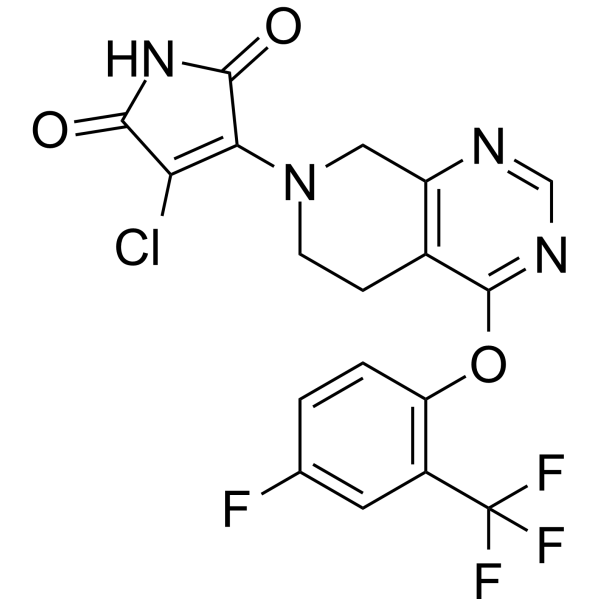 0 ImagesCat. No.: HY-144429CAS No.: 2762315-39-7TRPC5-IN-4 is potent and safe TRPC inhibitor with IC50 value of 14.07 nM and 65 nM for TRPC5 and TRPC4, respectively. TRPC5-IN-4 shows no damage on the cellular component of liver and kidney. TRPC5-IN-4 can be used for the research of chronic kidney disease (CKD).
-
Clemizole sulfate
 0 ImagesCat. No.: HY-30234BCAS No.: 17162-20-8Clemizole sulfate is an orally active, blood-brain barrier permeable TRPC5 inhibitor, with an IC50 value of 1.05-1.34 μM against mouse TRPC5. Clemizole sulfate blocks TRPC1:TRPC5, TRPC3, TRPC4, TRPC6, TRPC7, hERG, hKCNQ1/hKCNE1 and hKv1.5 channels, and activates TRPA1; it modulates 5HT-2B and HTR2A receptors; it inhibits HCV RNA replication, CrtN enzymatic activity, oxidative stress, neuroinflammation, cell apoptosis and bacterial virulence; it maintains blood-brain barrier (BBB) integrity; it enhances DNA repair capacity; it improves cell viability; and it alters cardiac electrophysiological properties. Clemizole sulfate can be used in the research of Dravet syndrome, hepatitis C virus infection, Staphylococcus aureus skin infection, Cisplatin (HY-17394)-induced nephrotoxicity, STXBP1-related diseases, traumatic brain injury and xeroderma pigmentosum type C.
-
BD-1063
 0 ImagesCat. No.: HY-18101CAS No.: 150208-28-9BD-1063 is a selective σ-1 receptor antagonist with inhibitory activity against TRPC5 and TRPM3. BD-1063 exerts anti-hyperalgesic and anti-allodynic effects by inhibiting sustained calcium influx mediated by TRPC5 and TRPM3, and reverses the effects of Carrageenan (HY-125474). BD-1063 also significantly reduces excessive ethanol self-administration behavior. BD-1063 is widely used in studies on the mechanisms underlying neuropathic pain, inflammatory hyperalgesia, and alcohol abuse and dependence.
- 1



